By Gustavo de Arístegui, as published by Negocios.
9 January 2026
I. BRIEF INTRODUCTION
The world enters 2026 with an explosive mix of ambition and fragility: Washington is testing a foreign policy of “fait accompli” (and doing so without embarrassment), Moscow responds with technological and psychological escalations, and the Middle East is experiencing social tremors that once again call into question the stability of regimes that have spent decades buying time through repression and propaganda. In parallel, Europe is trying to do something very European: close agreements and uphold rules… while geopolitics runs over it with military boots and hypersonic missiles.
What matters today is not only “what has happened,” but the pattern: power politics has returned to the table without a napkin, and law — both international and domestic — has become a field of contestation rather than consensus. That is the common thread running through the ten key news stories.
II. THE 10 MOST IMPORTANT NEWS STORIES OF THE LAST 24 HOURS
1. Trump in the NYT: power without inhibitions, international law as “optional,” and a world treated like a chessboard
Facts.
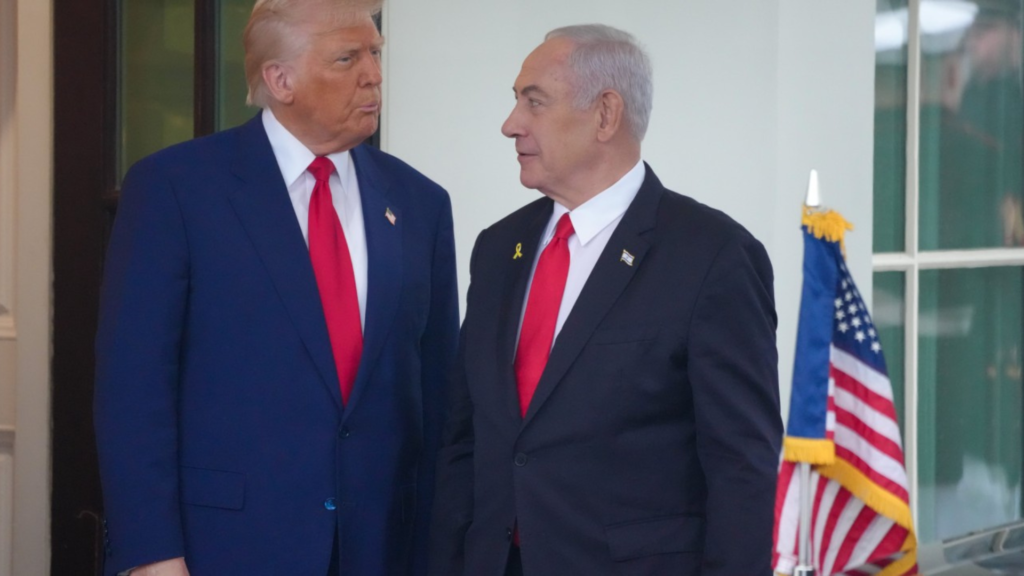
In an interview published on Thursday, Donald Trump stated that his power would be limited by “his own morality” and went so far as to say that he does not need international law, relativizing his obligation to comply with it depending on “the definition” of that law. In the same conversation, he insisted on the importance of “ownership” — with Greenland clearly in mind — and showed little concern over the imminent expiration of the last arms-control treaty with Russia, suggesting that “if it expires, it expires,” and that a “better deal” could be reached by incorporating China.
Implications.
This phrase is not merely a provocation: it is a strategic message. If U.S. leadership signals that rules are open to interpretation and that personal morality is the ultimate restraint, Europe — which lives off norms, treaties, and predictability — is exposed to a double risk: the external one (Russia and China reading the precedent) and the internal one (erosion of the legitimacy of the liberal order). Realism (realpolitik) without legality (rule of law) is not “toughness”; it is a blank check for the strongest actor, and Europe has historically always lost when the world is organized that way.
2. Russia raises the stakes in Ukraine: massive attack and use of the Oreshnik missile
Facts.
Russia claimed to have fired a hypersonic Oreshnik missile (a name meaning “hazelnut”) at Ukraine for the second time, as part of a nighttime attack. Moscow presented this as retaliation for an alleged Ukrainian drone attempt against a Putin residence (which Kyiv denied), and said it struck energy infrastructure and a facility linked to drones. Ukraine confirmed the launch of an Oreshnik from Kapustin Yar and, according to Reuters, a likely target was critical infrastructure in the Lviv region (with the Stryi area cited as a possible objective).
Implications.
Oreshnik is not merely “more firepower”: it is a message to Europe. It is an intermediate-range vector with potential nuclear payload capability and, according to experts cited by Reuters, the ability to carry multiple warheads to strike several targets simultaneously — a feature more typical of longer-range missiles. Politically, this is an escalation designed to stretch deterrence: bringing fear closer to NATO’s border, increasing the psychological cost of supporting Ukraine, and reminding everyone that Russia can raise the bar when it chooses.
3. Kyiv under pressure: drones, fires, and civilian casualties
Facts.
A drone attack on Kyiv left four dead and at least 19 injured, damaging residential buildings, causing fires in several districts, and affecting critical infrastructure, including the water network, according to Ukrainian authorities cited by Reuters. Among the victims was an emergency medic responding to a previous strike, pointing to a “double-tap” tactic aimed at rescue teams.
Implications.
Beyond the daily horror, this pursues three objectives: social exhaustion, erosion of urban morale, and saturation of defenses. When Russia combines drones, missiles, and high-speed weapons, it seeks a simple equation: forcing Ukraine to spend expensive resources every night intercepting cheap means, while the population pays the price in fear, cold, and blackouts. For Europe, the lesson is uncomfortable: the front line is not only in the Donbas; it is in the continental security model, and “fatigue” is as real a weapon as a missile.
4. Venezuela: the U.S. Senate tries to rein in Trump; the White House speaks of prolonged tutelage
Facts.
The U.S. Senate voted to advance a war powers resolution aimed at preventing new military actions against Venezuela without congressional authorization, with support from some Republicans. In parallel, Trump told the NYT that U.S. oversight of Venezuela could last “much longer” than one year and spoke of rebuilding the country “very profitably,” in a context in which Washington controls oil revenues and plans to increase production with corporate participation. Reuters also reported contacts with Colombia and an apparent de-escalation of threats toward Bogotá.
Implications.
Two clashes are unfolding simultaneously: institutional (Congress vs. Executive) and moral (intervention vs. legitimacy). Discussing years-long “tutelage” over Venezuela opens a massive precedent: even if the declared goal is stabilizing a failed state and dismantling criminal networks, the “how” matters. And if that “how” is perceived as business rather than reconstruction, the narrative becomes ammunition for every anti-Western actor on the planet. For those of us who believe in liberal democracy, the end cannot justify just any means: firmness against the Chavista narco-dictatorship must not become a shortcut that erodes the very order we claim to defend.
5. Venezuela: partial releases, internal uncertainty, and five Spaniards returning home
Facts.
Venezuelan authorities announced prisoner releases (including foreigners) as a “gesture of peace,” while NGOs and the opposition denounced confusion and lack of clarity regarding their real scope. Reuters reported the release of five Spanish citizens — including activist Rocío San Miguel — and statements from the Spanish government welcoming the step and calling for the release of all remaining detainees.
Implications.
These releases are a political lever, not a purely humanitarian act. In authoritarian regimes, selective releases buy time, divide the opposition, and offer “gestures” in exchange for international relief. Europe, and Spain in particular, should welcome the return of their citizens without falling into naïveté: the benchmark must be freedom for all political prisoners and an end to repression, not a selective exchange of pieces. And a reminder: Chavismo — though mutable — still understands power as control, not public service.
6. Greenland: Rubio travels to speak with Denmark; the debate shifts from “idea” to “plan”
Facts.
Reuters reported that Secretary of State Marco Rubio is scheduled to meet with Danish leaders “next week” amid Trump’s insistence on exploring the acquisition of Greenland. Denmark has reiterated that Greenland is not for sale, and the very debate over “putting a price” on the territory has become central, with analyses highlighting the impossibility of valuing sovereignty as if it were a company.
Implications.
Greenland is a stress test for Atlanticism. If the United States treats an ally as a negotiable property owner, NATO cohesion suffers; and if Europe responds only with statements, it loses. Plainly put: this is where it will be decided whether the transatlantic bond is a security community or merely a correlation of forces. At the same time, surprise should be avoided: the Arctic is the new strategic chessboard (resources, routes, bases), and China is already watching. Europe needs a voice and muscle, not just indignation.
7. EU–Mercosur: at last, a trade agreement that was almost a legend
Facts.
Reuters noted that EU countries were expected to approve on Friday the green light to sign the Union’s largest free-trade agreement with Mercosur, after more than 25 years of negotiations and months of internal bargaining to secure key support. In parallel, financial media have described attempts by Brussels to “sweeten” the pact in the face of agricultural resistance, though part of the detail remains behind paywalls.
Implications.
This is economic geopolitics in its purest form: diversification of supply chains, market access, and a message to the world that Europe can still close major deals in times of protectionism. Done right, it is a partial vaccine against strategic dependence — including on China — in raw materials and food. Done wrong, it will fuel agrarian populism and the narrative of “Brussels versus the countryside.” The challenge is not signing; it is sustaining the agreement socially, compensating losers, and enforcing real standards.
8. Minneapolis: one death, an FBI-led investigation, and a political crisis over immigration
Facts.
Following the death of Renee Nicole Good at the hands of an ICE agent in Minneapolis, the FBI assumed exclusive leadership of the investigation, leading the state agency (BCA) to withdraw due to lack of access to evidence and testimonies, according to The Guardian and Al Jazeera. The episode sparked protests and a direct clash between state authorities and the federal administration. The Washington Post also described the political escalation and accusations of blocking local participation.
Implications.
Migration policy is becoming an institutional flashpoint. This is not only about borders: it is about trust in the legitimate use of force and whether the federal state acts as arbiter or interested party. When official narratives clash with viral videos, polarization skyrockets and the country enters a loop: every incident becomes definitive proof of what each side already believed. For U.S. stability — and by extension the West — this type of internal fracture is a perfect gift to Moscow, Beijing, and Tehran.
9. Vance “doubles down” and the debate turns toxic: security, propaganda, and culture war
Facts.
According to The Guardian, Vice President J.D. Vance doubled down on the claim that the victim attempted to ram agents and framed the case as part of a “left-wing network,” while federal officials defended the action as self-defense. The case itself has been immediately weaponized politically, with mutual accusations and an increasingly harsh narrative.
Implications.
This reveals a classic risk: when the state turns a case under investigation into an argument of cultural warfare, institutional prudence erodes. And this is not about “wokeness”: it is about state credibility. A strong government does not need to inflame the atmosphere to enforce the law; it needs results, transparency, and proportionality. Otherwise, “toughness” degenerates into noise — and noise into misgovernment.
10. Iran: serious protests, a legitimacy crisis, and a regime that no longer controls the narrative
Facts.
Reuters describes the spread of protests across Iran’s 31 provinces, triggered by economic deterioration (including the collapse of the rial) and expanding into deep political discontent, especially among the young. At least 34 protesters and four members of the security forces were reported killed, with around 2,200 arrests according to HRANA, and an internet blackout (NetBlocks). Reuters’ diagnosis is clear: a legitimacy crisis and growing difficulty for the regime to “manage” the protest–repression–concession cycle as it did in the past.
Implications.
Tehran’s regime is not merely facing protests; it is confronting its own historical failure. For years it sold “resistance” and exported revolution while impoverishing its population and financing proxies. Now the street is sending the bill back. For the West, the red line must be clear: political support for rights and freedoms, maximum pressure against repression, and strategic prudence to avoid military adventures that ultimately strengthen the regime’s victimhood narrative. The fall of a repressive theocracy is not accelerated by slogans, but by isolating the coercive apparatus, supporting civil society, and real international coordination.
11. China and Taiwan: the “Venezuela precedent” fuels fantasies, but the terrain is another planet
Facts.
In a Reuters analysis, some Chinese social media users called for a Venezuela-style “snatch” operation against Taiwanese leaders as a prelude to taking the island. Analysts and officials cited by Reuters argue that a decapitation operation in Taiwan would be far more difficult: layered air defenses, radar coverage, the Taiwan Strait as a natural barrier, and the likelihood of U.S. and allied support. Reuters also highlights doubts about the People’s Liberation Army’s real experience in joint operations and electronic warfare, noting that Taiwan has been preparing for this scenario for years.
Implications.
This piece is gold for reading Beijing: the desire exists, capability is not guaranteed, and escalation risk would be extreme. For Atlanticists, the message is twofold: first, strengthening deterrence in the Indo-Pacific is an investment in peace; second, precedents of rapid interventions feed imitation. If Washington normalizes the idea of “capturing” other countries’ leaders as a shortcut, it not only damages international law — it hands China a narrative justification to attempt the same. And China, unlike Maduro, is not an “isolated” target: it is a systemic competitor.
Note: I have included this item as an eleventh news story due to its direct geopolitical impact and because it connects — disturbingly — with the precedent being opened by the Venezuelan crisis.
III. MEDIA LANDSCAPE
United States (NYT / Washington Post / Fox News / Reuters).
The NYT focuses on a presidency understood as force, with Trump himself relativizing international law and elevating “personal morality” as the limit.
The Washington Post reads Minneapolis as a clash of internal sovereignties (state vs. federation) and a crisis of trust in the use of force.
Fox News aligns with the framework of “prolonged involvement” in Venezuela and reinforces the narrative of firmness.
Reuters provides the factual backbone: Senate, Venezuela, Rubio, Mercosur, Iran, Oreshnik.
United Kingdom (The Guardian).
The Guardian emphasizes the normative cost: “I don’t need international law” not as a quip, but as a symptom of a power drift that unsettles allies and fuels internal crises (Minnesota).
On Ukraine, its emphasis is on escalation and immediate European impact, linking missile use to the NATO frontier.
Agencies (AP / Reuters).
AP adds operational granularity on the Russian attack (drones, missiles, Ukrainian air-force confirmations) and its threat to European security.
Reuters maintains the daily pulse with a clear pattern: U.S. foreign policy is becoming a “model” for allies and adversaries alike, reshaping debates in Taiwan, Europe, and the Middle East.
Arab world (Al Jazeera).
Al Jazeera frames Minneapolis as a rights and jurisdiction controversy, highlighting the FBI’s exclusive control and the conflict with Minnesota.
Russia (TASS).
TASS reproduces the Kremlin’s framing: “justified” retaliation, objectives achieved, and legitimation of Oreshnik use in response to an alleged Ukrainian attack. It is textbook propaganda: inverted causality, victimhood, and “mission accomplished.”
Europe (FT track).
The Financial Times points to internal European tension over Mercosur (compensation for farmers, resistance) and makes clear that the agreement is not just economics: it is European domestic politics on high alert.
IV. RISK TRAFFIC LIGHT
🔴 Red (high risk / immediate escalation)
- Russia–Ukraine: combination of massive attack and use of Oreshnik, with direct impact on Kyiv and a strategic signal to Europe.
- Iran: widespread protests, information blackout, and collapsing legitimacy, with risk of severe repression and regional spillover.
- Internal polarization in the U.S.: Minneapolis as a trigger and erosion of institutional trust; risk of political contagion and street violence.
🟠 Amber (medium risk / structural tension)
- Venezuela under U.S. oversight: Congress–White House struggle and the prolonged administration model opening precedents and resistance.
- Greenland: issue moves from noise to high-level diplomacy with Rubio; risk of transatlantic friction if “ownership” rhetoric persists.
- Taiwan: “capture” fantasies fueled by the Venezuelan precedent; risk of strategic miscalculation.
🟢 Green (window of opportunity)
- EU–Mercosur: if managed well politically, strengthens strategic autonomy and trade diversification; opportunity for European leadership.
- Prisoner releases in Venezuela: humanitarian and diplomatic opportunity if they become complete and verifiable; risk of remaining tactical only.
V. EDITORIAL COMMENTARY
Today’s scene is unsettling for one simple reason: a language of power more reminiscent of the 19th century than the 21st is being normalized. When the President of the United States says his limit is “his morality” and that international law depends on definitions, he is not being “authentic”; he is weakening the only real shield that medium-sized countries — Europe included — have against giants. And no, this is not a naïve plea. Anyone who has seen what Russia does in Ukraine, who understands the terror machinery of the ayatollahs, who has suffered the cynicism of the Chavista kleptocracy, knows that rules are not a lapel flower: they are the load-bearing wall of liberal civilization.
That said, clarity is also required: narco-dictatorships and theocracies are not defeated with moral relativism or the hollow rhetoric of radical progressivism. They are confronted with state capacity, alliances, intelligence, effective sanctions, and an unapologetic defense of freedom. What cannot be done is to fall into the trap of imitating autocrats “because it works.” It does not work: it leaves ruins. Western firmness must be firmness with rules; otherwise, we are not defending anything — we are merely changing masters.