
The West has come to terms, not without pain, that the enemy increasingly resides among us.
By Gustavo de Arístegui, as published by La Razón, 11 September, 2026
Twenty-five years after the attacks of September 11, 2001 , it is worth revisiting an idea that seemed almost heretical at the time: terrorism is not a modern phenomenon. It is a recurring geopolitical crisis, inherent to human history, which has taken on different forms in each era until becoming the multi-headed hydra we know today: a threat capable of inflicting destruction, death, and destabilization that sometimes borders on the absolute.
Terrorism, in fact, is not a 20th-century invention. The Hashashin, or Nizari assassins, who sowed terror among Sunni rulers and Crusaders from their fortresses of Alamut between the 11th and 13th centuries; the Russian revolutionary Sergei Nechaev, who in his 1869 “Catechism of the Revolutionary” codified for the first time a systematic doctrine of political violence; or the anarchists of “propaganda by the deed” who, between the late 19th and early 20th centuries, assassinated a Russian tsar, an Austrian empress, an Italian king, and a US president (McKinley in 1901), and the Spanish prime minister Antonio Cánoas del Castillo, assassinated in 1897, are just a few examples of a phenomenon that has accompanied humanity almost since its origins. What changes from one era to another is not the will to terrorize in order to impose a cause, but the scale of destruction available and the speed with which that terror can spread, as well as its immense capacity for destabilization.
Therein lies the true novelty of contemporary jihadist terrorism: not in its nature, but in its capacity.
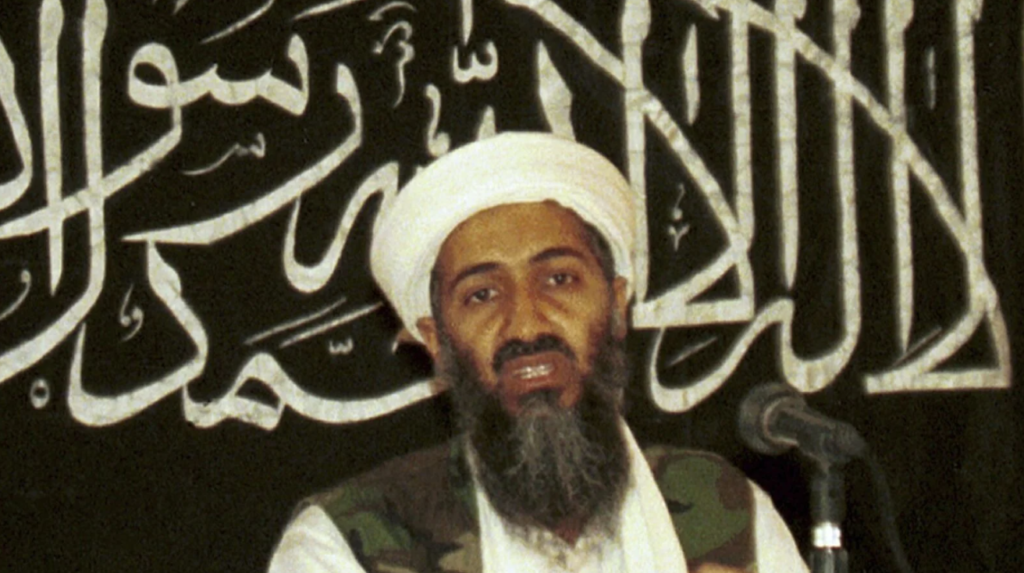
In 1995 I wrote an article in the journal Foreign Policy—published in January 1996—in which I warned that Al Qaeda and its leader, Osama bin Laden, would become one of the most serious threats to the US and the West in the next 20 years. At the time, the warning seemed almost outlandish. Between that warning and the 2001 attacks, there were unequivocal signs that the West either failed to recognize or refused to interpret: the first
attack on the Twin Towers in 1993 , the declaration of jihad against Americans proclaimed by bin Laden himself in 1996 from Afghanistan, the World Islamic Front’s fatwa of 1998 and the almost simultaneous attacks on the US embassies in Nairobi and Dar es Salaam in August of that same year, or the attack on the USS Cole in the Yemeni port of Aden in 2000. Each of these episodes was treated, at the time, as an isolated incident; viewed together, they clearly outlined the lethal and brutal trajectory towards September 11.
This pattern— the manipulation of a fabricated cause to justify horror —is especially visible in jihadist terrorism, which is the subject of this article on the twenty-fifth anniversary of 9/11. It is worth emphasizing unequivocally that we are not talking about a war against Islam, but rather the manipulation of a legitimate and respectable religion—a great civilization—transformed into a brutal and ruthless ideology whose sole objective is to impose itself first on the Islamic world and, from there, on the rest of the planet.
Jihadist ideology has its roots in medieval currents, but its modern intellectual framework was constructed in the 20th century . Hassan al-Banna founded the Muslim Brotherhood in 1928, whose ideological trajectory I have extensively examined in my book, *Islamism Against Islam*. It was, however, another Egyptian, Sayyid Qutb, who became the true father of contemporary jihadism. In *Milestones on the Road*, written largely from prison under Gamal Abdel Nasser’s regime and culminating in his execution in 1966, Qutb developed the concept of modern jahiliyya: the idea that Muslim societies themselves, including their governments, had relapsed into pre-Islamic ignorance and should be combated as such. From this derives takfir, the declaration of apostasy against other Muslims, which would become the doctrinal cornerstone of both al-Qaeda and, above all, ISIS . Qutb’s writings influenced an entire generation of radical Egyptian Islamist intellectuals. Many of them—including Qutb’s own brother, Muhammad, who disseminated his ideas from Saudi Arabia—moved to King Abdulaziz University in Jeddah, where a young Osama bin Laden religiously attended his classes. There, Qutbism came into contact with Saudi Wahhabism; from this fusion, Salafism was born, and from Salafism to jihadism was but a short step, which was soon taken.
It is important to remember that jihadism is not only Sunni: there is also a Shia version , with a substantial difference. Shia jihadism has the backing of a powerful state, with oil revenues , more than 90 million inhabitants, and over two million square kilometers of territory, as well as ideologically fanatical armed forces (the Revolutionary Guard), all at the service of a regime as murderous as it is terrorist: the Islamic Republic of Iran. This Shia jihadism is not limited to Iranian territory itself: its network of allied militias—Hezbollah in Lebanon, the Popular Mobilization Forces in Iraq, the Houthis in Yemen—forms the so-called axis of resistance, a transnational network financed, indoctrinated, and armed from Tehran that multiplies its capacity to project power far beyond its borders. Faced with this state power, Sunni jihadism has only an extraordinarily weak and fractured state at its disposal: Afghanistan. Despite the boundless barbarity of Sunni jihadist terrorist organizations, they are far from monolithic: the fracture separates not only Al-Qaeda from ISIS, but also many factions within each of these groups, which are no longer hierarchical organizations but rather master franchises issuing general directives. Al-Qaeda was, and remains, the organization obsessed with the distant enemy: the influence of the West, the leadership of the United States. Its strategy focused on attacking Western powers, which it considered ultimately responsible for the survival of the Arab regimes it fought. ISIS reversed this priority: it centered its offensive on the immediate enemy, the Islamic governments—Arab and non-Arab—that did not follow its orthodoxy, which it considered apostates. In jihadist doctrine, there is no greater sin than apostasy: it is not about being a bad believer, but about having betrayed the faith. Therein lies the root of the largely irreconcilable confrontation between the two major brands of Sunni jihadism.
That strategic struggle has been resolved, a quarter of a century later, in a way quite different from how many analysts anticipated. Daesh was militarily defeated in 2019, but its regional affiliates—the Khorasan Province in Afghanistan, the West Africa Province around Lake Chad, and the Sahel Province—maintain intense, albeit decentralized, violence. Al-Qaeda, for its part, has found its most powerful franchise in the Sahel: Jamaat Nusrat al-Islam wal-Muslimin (JNIM) carried out coordinated attacks in April 2016 against several Malian towns, including the capital, Bamako, and has extended its operational pressure toward the outskirts of Niamey, the capital of Niger.
The collapse of state authority in the Sahel – aggravated by successive military coups in Mali, Burkina Faso and Niger and by the withdrawal of Western forces – has given these jihadist franchises a terrain for expansion that even Bin Laden himself could not have imagined in 2001.
As President George W. Bush himself reminded us on the night of September 11, 2001, the United States had been targeted precisely because it was the world’s greatest beacon of freedom and opportunity , and nothing would extinguish that light. Between that September and this one, the West overthrew the Taliban, who harbored Al-Qaeda, invaded Iraq, eliminated bin Laden in 2011, and witnessed, barely three years later, the birth of a territorial caliphate that came to rule millions of people in Syria and Iraq. In 2021, the Taliban recaptured Kabul, 20 years after being expelled for the very reason we continue to debate today: harboring a terrorist organization and being a terrorist state themselves. The circle, in a way, has closed in the most disastrous way possible: the Taliban with 20 years of experience in war and terrorism and tens of thousands of victims among Western troops, civilians, and terrorists. On top of everything, the fact that the enemy is no longer exactly the same makes it even more bloodthirsty and much more experienced and lethally effective.
A quarter of a century later, the West has learned, not without pain, to read the warning signs differently. We have come to understand that the enemy no longer necessarily seeks to seize power in distant Islamic countries, but rather lives, with increasing frequency, among us: second, third, and even fourth generations of families who arrived decades ago, radicalized in clandestine mosques, radical madrasas, or, increasingly, through the internet. Some still belong to structured organizations, some simply follow their directives from afar or are franchises of terrorist brands, and finally, there are the lone wolves, whom Europol itself describes as isolated actors undergoing a radicalization process that is indeed organized, even if it lacks a visible hierarchy. The agency’s latest reports on terrorism trends in the EU are conclusive: lone actors linked to jihadist extremism continue to represent the main threat of attack on European soil, ahead of any other structured organization. The apparent solitude of the lone wolf is often deceptive: behind self-radicalization there is usually a virtual community, a mentor at a distance, a narrative shared with thousands of strangers he will never meet in person. This is the evolution of jihadist terrorism in the 21st century: it is no longer an organization with a hierarchy, structure, and clearly defined councils and committees, but a diffuse, dispersed enemy, and therefore much more difficult to defeat.
Twenty-five years after that September morning, the hydra is still alive, and it has grown a multitude of new heads . States governed by the rule of law can contain it, weaken it, and even sever some of its heads. Defeating it absolutely and definitively—I’m afraid I also predicted this in 1996—is not within our reach, for now. There will always be those who know how to transform a tragedy, a humiliation, or an injustice, real or imagined, into ideological fuel, and there will always be desperate individuals willing to light the fuse. The only thing within our power is to remain vigilant, understand the recurring nature of this threat, and not repeat, a quarter of a century later, the same grave errors we made then.