Below is the analysis of global current affairs, structured into key topics for clear and direct understanding, followed by a summary of coverage across major news media
By Gustavo de Arístegui, as published by Atalayar, 11 September, 2026
Introduction
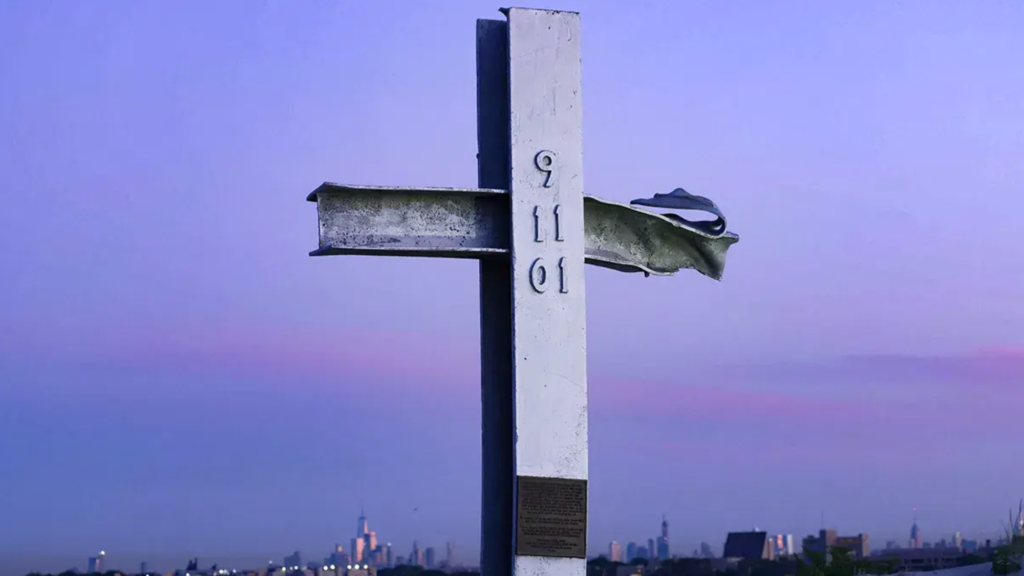
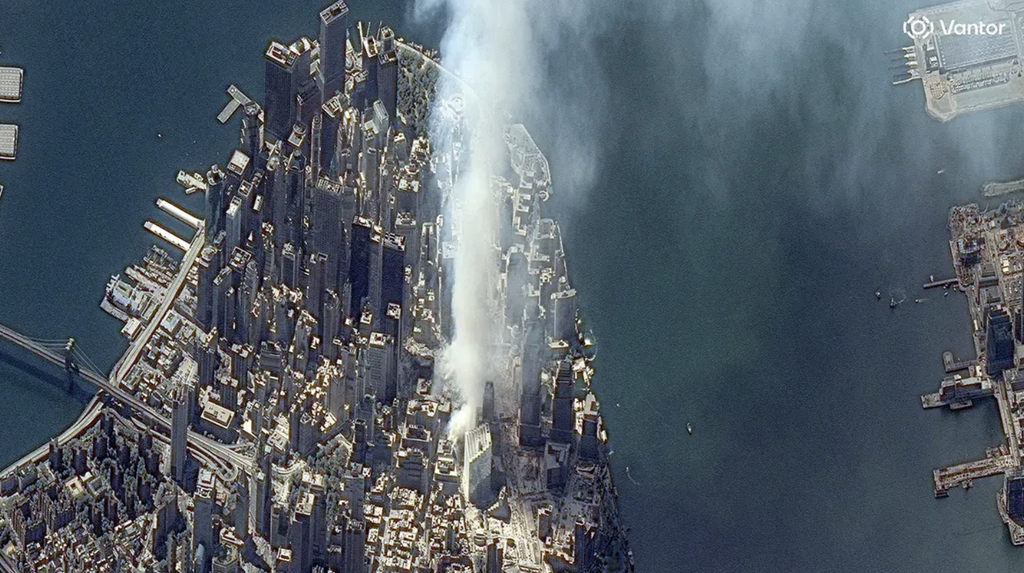
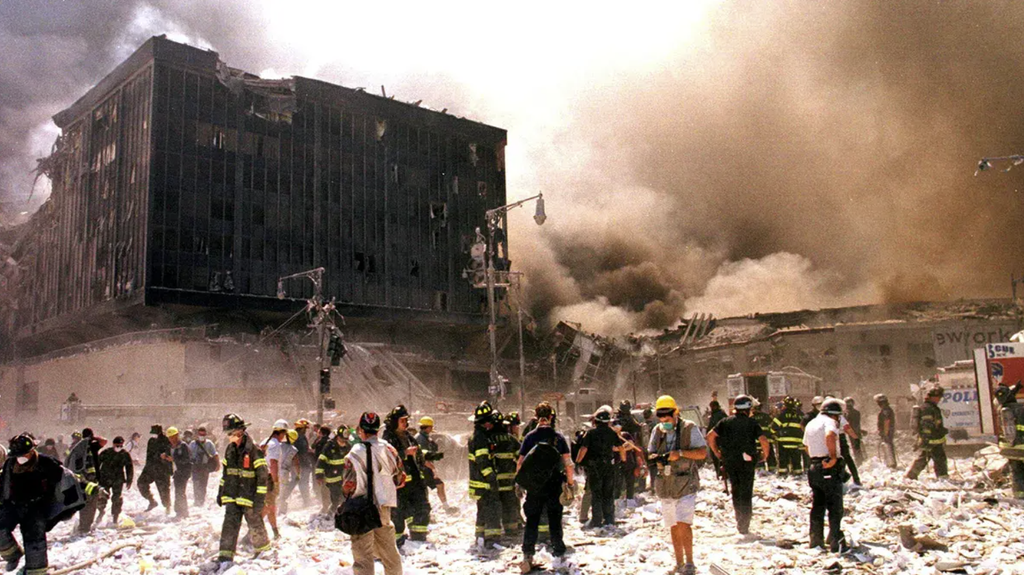
At 8:46 this morning, New York time, the reading of names will pause once again across the 9/11 Memorial plaza. There will be seven moments of silence: six marking each plane impact and the subsequent tower collapses of that morning, and a seventh honouring those who succumbed in the decades since from exposure to the toxic atmosphere of Ground Zero. Twenty-five years represents an uncomfortable historical milestone: long enough for an entire generation of adults to possess no living memory of the pre-9/11 world, yet insufficient for our societies to have assimilated the lessons written with absolute clarity on that Tuesday in September.
This report departs deliberately from our standard daily structure. Rather than examining five or six separate events across the preceding twenty-four hours, the analytical core focuses entirely on a single structural issue—the evolution of jihadist terrorism a quarter of a century after 9/11—relegating daily news developments to our structured Media Review and Risk Indicator sections.
The reasoning is grounded in operational continuity. The developments of this week—the capture of the port of Mokha by Houthi forces, the largest declared wave of attacks against commercial shipping since the start of the Gulf conflict, and the encirclement of the Sahel by Al-Qaeda and Daesh affiliates—are not disparate headlines: they are the active heads of the selfsame hydra that struck New York and Washington on 11 September 2001.
The core thesis of this assessment is straightforward to state and demanding to confront: terrorism is not a twentieth-century invention, but an enduring, recurrent geopolitical crisis inherent to human history, assuming diverse forms throughout the ages until evolving into the multi-headed threat we confront today. What transforms from one era to the next is not the intent to weaponize terror to achieve political objectives, but the destructive capacity deployed and the speed with which intimidation spreads. That is the defining development of contemporary jihadism: not its fundamental nature, but its operational reach.
Genealogy of an enduring threat and its doctrinal origins
Facts
Terrorism is not a modern innovation. The Jewish Sicarii who targeted Roman officials and local collaborators in first-century Jerusalem; the Hashashin or Nizari Assassins who terrorised Sunni rulers and Crusaders from the mountain citadels of Alamut between the eleventh and thirteenth centuries; the Russian revolutionary Sergey Nechayev, whose 1869 Catechism of a Revolutionary codified systematic political violence; and the late nineteenth- and early twentieth-century anarchists practising ‘propaganda of the deed’—who assassinated a Russian Tsar, an Austrian Empress, an Italian monarch, and an American President—represent milestones in a continuous historical thread.
The ideological architecture of modern jihadism, conversely, took shape during the twentieth century around distinct historical turning points. Hassan al-Banna founded the Muslim Brotherhood in 1928. However, it was another Egyptian theorist, Sayyid Qutb, who established its foundational doctrine. In Milestones, composed largely within Egyptian prisons prior to his execution in 1966, Qutb formulated the doctrine of modern jahiliyyah—the premise that contemporary Muslim societies and their governing authorities had lapsed into pre-Islamic ignorance and were legitimate targets of hostility. From this premise emerged takfir—the excommunication of fellow Muslims—which serves as the doctrinal cornerstone for Al-Qaeda and, most acutely, Daesh.
Radicalised Egyptian ideologues, including the author’s brother Muhammad Qutb, relocated to King Abdulaziz University in Jeddah, where a young Osama bin Laden attended their lectures. In that environment, Qutbist radicalism merged with Saudi Wahhabism, consolidating Salafi-jihadism as an actionable military ideology.
In 1995, I authored an analytical study, published in January 1996, warning that Al-Qaeda and its leader, Osama bin Laden, would emerge as one of the most critical security threats to the United States and the Western world over the subsequent two decades. The assessment required no prophetic foresight; it simply required reading serial indicators that contemporary intelligence frameworks treated as isolated occurrences.
The 1993 World Trade Center bombing, bin Laden’s 1996 declaration of jihad from Afghanistan, the 1998 World Islamic Front fatwa, the coordinated August 1998 embassy bombings in Nairobi and Dar es Salaam, and the strike against the USS Cole in Aden in 2000 collectively traced an unambiguous trajectory towards 11 September.
This lineage continues to carry direct administrative consequences: this past January, as reported by Associated Press (AP), the US administration formally designated three branches of the Muslim Brotherhood as terrorist entities, reopening longstanding policy debates regarding where political Islamism ends and organized political violence begins.
Implications
This analytical distinction remains paramount: the issue is not a conflict against Islam, but against the exploitation of a major religious tradition and civilisation, weaponized into a totalitarian ideology whose objective is domination over the Islamic world and beyond. The primary victims of jihadist violence are, overwhelmingly, Muslims. Conflating the faith with extremist doctrine exacerbates the problem and cedes to extremist movements the narrative they seek to construct.
The second implication is procedural. Western intelligence establishments remain structured to process isolated events rather than long-term strategic patterns. September 11 was not a black swan event; it was the cumulative outcome of observable indicators evaluated in isolation, an institutional lag explored in our assessment of how 9/11 did not end in 2001 after decades of strategic attrition. Today’s pressing question is which current indicators are being dismissed as disconnected developments.
Perspectives and Scenarios
Designating Muslim Brotherhood affiliates as terrorist entities will yield meaningful legal and financial impacts if supported by European regulatory enforcement, remaining largely symbolic absent coordinated transatlantic compliance. European policymakers, lacking a harmonised doctrine regarding political Islamism, will face mounting pressure to formalise their legal postures.
State-backed Shia militancy: Tehran, Hormuz, and Bab el-Mandeb
Facts
Jihadist militancy is not exclusively Sunni. A state-backed Shia variant operates backed by sovereign oil revenues, an industrial base, a population exceeding ninety million, an expanse of 1.6 million square kilometres, and an ideologically committed military core: the Islamic Revolutionary Guard Corps (IRGC). Developments over the past twenty-four hours demonstrate this operational capacity.
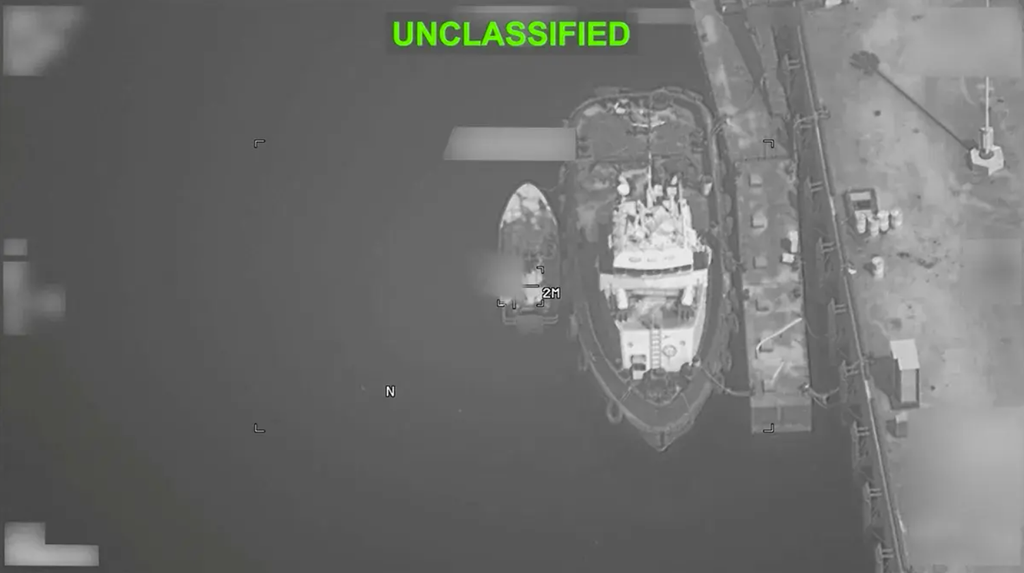
The IRGC announced strikes targeting two US Navy combatants, eight commercial tankers, and ten additional vessels accused of violating its transit regime through the Strait of Hormuz—the most extensive declared maritime interdiction campaign since the outbreak of hostilities, executed in retaliation for the destruction of five Iranian tankers by United States Central Command (CENTCOM) earlier this week. CENTCOM had previously refuted claims of missile damage to American destroyers. Benchmark Brent crude traded near $108 per barrel, up from $101.53 at the previous close, sustaining prices above the hundred-dollar threshold.
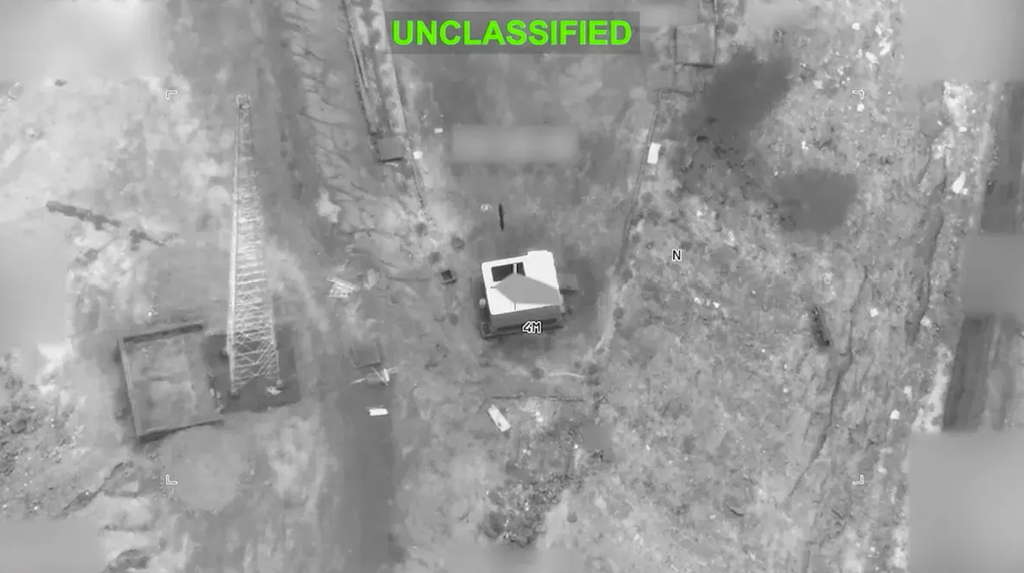
Concurrently, Houthi forces seized the strategic Red Sea port of Mokha along Yemen’s western coastline following sustained combat against Saudi-backed government forces, advancing toward the Hanish Islands. Forces loyal to Yemen’s recognised executive withdrew toward Dhubab, opposite Perim Island, where commander Tareq Saleh established an alternate operations centre.
According to Reuters, the IRGC provided technical assistance and weapons transfers during the offensive. Presidential Leadership Council Chairman Rashad al-Alimi appealed for international intervention, warning that Bab el-Mandeb cannot become another Hormuz nor Yemen another forward base for Iran, across a vital maritime passage regulated by the International Maritime Organization (IMO). Saudi Arabia launched approximately forty retaliatory airstrikes against Houthi assets during the same operational period.
Implications
The distinction between Shia and Sunni militant networks is logistical and fiscal rather than theological. While Sunni networks rely on distributed local financing through extortion, kidnapping, and contraband, Tehran deploys state infrastructure, an indigenous ballistic missile industry, a regional proxy network, and hydrocarbon revenues. These groups—Hezbollah, Iraqi militia networks, the Houthis, and Hamas—are not informal militias; they function as foreign policy instruments of state strategy.
The seizure of Mokha formalises a dual maritime theatre. With Hormuz subject to transit coercion and Bab el-Mandeb threatened along the Yemeni coast, both commercial chokepoints face simultaneous pressure from a shared strategic sponsor, testing deterrence arrangements such as the Mecca Accord. For Europe, reliant on both shipping lanes without maintaining adequate sovereign naval escort capability, the costs manifest directly through marine insurance premiums, commodity spikes, and supply vulnerabilities. Tactical degradation of regional assets without long-term political stabilisation risks repeating past strategic planning deficits.
Perspectives and Scenarios
Baseline Scenario (55% probability): Houthi consolidation along coastal sectors and an attritional conflict around Dhubab and Perim Island, marked by intermittent commercial interdictions, elevated insurance risk surcharges, and Brent prices oscillating between $105 and $120. Escalation Scenario (30% probability): Internationalisation of the confrontation, with Saudi Arabia invoking the Mecca pact to request assistance from Pakistan and Turkey, widening the conflict. Containment Scenario (15% probability): Diplomatic mediation via Oman and US pressure freezing frontline positions without resolving the structural issue. None of these pathways presents a clear Western framework for long-term regional stability.
Decentralised Sunni militancy: the Sahel as an expanding sanctuary
Facts
Sunni extremist militancy remains ideologically and organisationally divided, separating Al-Qaeda from Daesh alongside competing regional factions that operate as regional franchises rather than strictly hierarchical organisations. Historically, Al-Qaeda focused on the ‘far enemy’—the West and American global leadership—whereas Daesh prioritized confronting the ‘near enemy’, targeting regional governments it deemed apostate.
A quarter-century later, that dynamic has evolved along unexpected lines. While Daesh lost territorial control in 2019, its regional provinces conduct sustained insurgencies, and Al-Qaeda has developed its most resilient operational hub across the Sahel.
Jama’at Nasr al-Islam wal-Muslimin (JNIM) expanded from an estimated 2,000–3,000 fighters in 2022 to between 5,000 and 6,000 by 2025, according to assessments by the United Nations (UN). It enforces a persistent fuel blockade around Bamako, executed coordinated deep-strike assaults across central Mali and the capital in April 2026, and expanded armed drone deployments eightfold between 2024 and 2025. Concurrently, the Islamic State Sahel Province (ISGS/EIPS) operates across the tri-border region, staging an assault on Niamey International Airport earlier this year. The Pentagon-affiliated Africa Center for Strategic Studies (ACSS) documented 23,968 terrorism-related fatalities across the African continent in its latest reporting cycle, with 41% concentrated within the Sahel.
In July, intelligence reports cited by The Washington Post revealed ongoing discussions within the White House regarding targeted strikes against JNIM leadership in Mali, with policy determinations pending.
Implications
The contraction of state authority across the Sahel—accelerated by military takeovers in Mali, Burkina Faso, and Niger, the departure of Western counter-terrorism missions, and the deployment of Russian Africa Corps personnel—has created a territorial sanctuary for militant franchises. The strategic reality remains sobering: twenty-five years after operations removed Al-Qaeda’s sanctuary in Afghanistan, affiliates maintain an extensive territorial footprint across the southern approaches to Europe.
For Spain and the Maghreb, the security implications are immediate: migration route instability, frontier pressures, critical energy supply vulnerabilities, and the growing necessity of counter-terrorism coordination with Rabat, Nouakchott, and Algiers.
Perspectives and Scenarios
Unilateral US strike operations against JNIM absent broader European engagement would secure tactical disruptions without addressing underlying governance deficits. A comprehensive strategy—combining institutional capacity building, border management, intelligence sharing, and economic stabilisation—demands long-term resource commitments. The baseline expectation remains continued expansion toward coastal West Africa, ongoing instability across central Mali, and compounding maritime border pressures for Europe.
The internal threat: lone actors and fourth-generation radicalisation
Facts
Over the past twenty-five years, Western security services have adapted to threats emerging domestically: second-, third-, and fourth-generation individuals radicalised within informal networks, radical institutions, or online spaces.
These actors encompass members of structured cells, individuals acting upon remote guidance, and autonomous lone actors, defined by Europol as isolated individuals operating through organised virtual radicalisation pathways absent visible operational hierarchies.
Empirical data reflects this shift: according to findings published by the Spanish Institute for Strategic Studies (IEEE), 334 jihadist suspects were arrested across the European Union in 2024—compared to 266 in 2022 and 260 in 2021—with 48% holding EU citizenship. Globally, approximately 1,979 attacks resulting in 11,000 fatalities were recorded that same year, concentrated primarily across West Africa.
In March 2026, a joint operation between Spain’s National Police and Morocco’s BCIJ disrupted an active Daesh-linked cell, arresting two operatives in Tangier and a primary coordinator in Palma de Mallorca assessed as heavily radicalised and actively preparing imminent attacks.
Implications
The isolated profile of lone actors is often an operational misnomer: individual radicalisation is routinely fostered through online echo chambers, remote handlers, and shared extremist narratives. This characterizes modern extremist recruitment: moving away from rigid command councils toward diffuse networks that prove resilient against conventional surveillance mechanisms designed to track formal organisational command chains.
Bilateral security cooperation between Madrid and Rabat remains one of the most effective operational mechanisms across the western Mediterranean, safeguarding shared stability beyond inherited diplomatic frameworks. Preserving this intelligence coordination from routine political friction remains essential for regional security.
Perspectives and Scenarios
Historical commemorations often serve as symbolic catalysts for autonomous actors. This twenty-fifth anniversary coincides with regional conflicts in the Gulf and amplified propaganda across online platforms. Security services anticipate heightened incitement and increased risks of low-tech, high-symbolism attacks in Western urban centres originating from digitally radicalised individuals.
Memory, legal frameworks, and political polarisation: from Guantanamo to Ground Zero
Facts
A quarter of a century after the attacks, primary defendants have yet to face a final verdict. On 26 August, Air Force military judge Lieutenant Colonel Michael Schrama—the fifth presiding judge assigned to the military commission proceedings since formal arraignment in 2012—scheduled 5 June 2028 as the trial commencement date for Khalid Sheikh Mohammed and co-defendants Walid bin Attash, Ali Abdul Aziz Ali, and Mustafa al-Hawsawi, declining a January 2027 date requested by prosecution teams to resolve outstanding evidence admissibility disputes. A federal appeals court had previously invalidated a negotiated pre-trial agreement that would have removed capital punishment in exchange for guilty pleas.
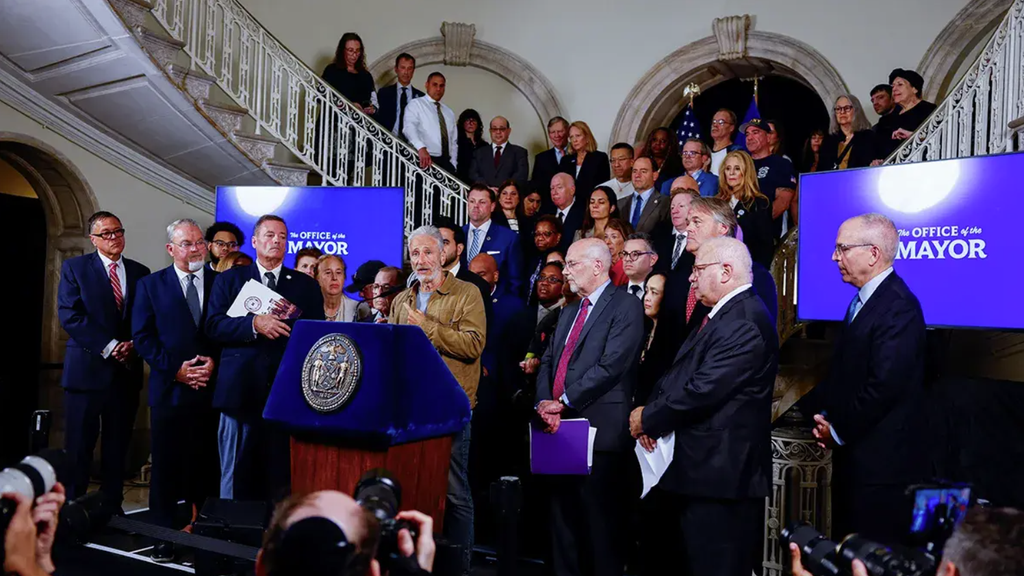
Today’s commemoration unfolds amidst domestic political polarisation. President Trump will address services at the Pentagon, marking the first time a sitting president has not attended the central Ground Zero ceremony, with Vice President Vance representing the administration; as reported by The New York Times, the protocol follows regulations established in 2012 prohibiting political addresses during non-partisan memorial proceedings.
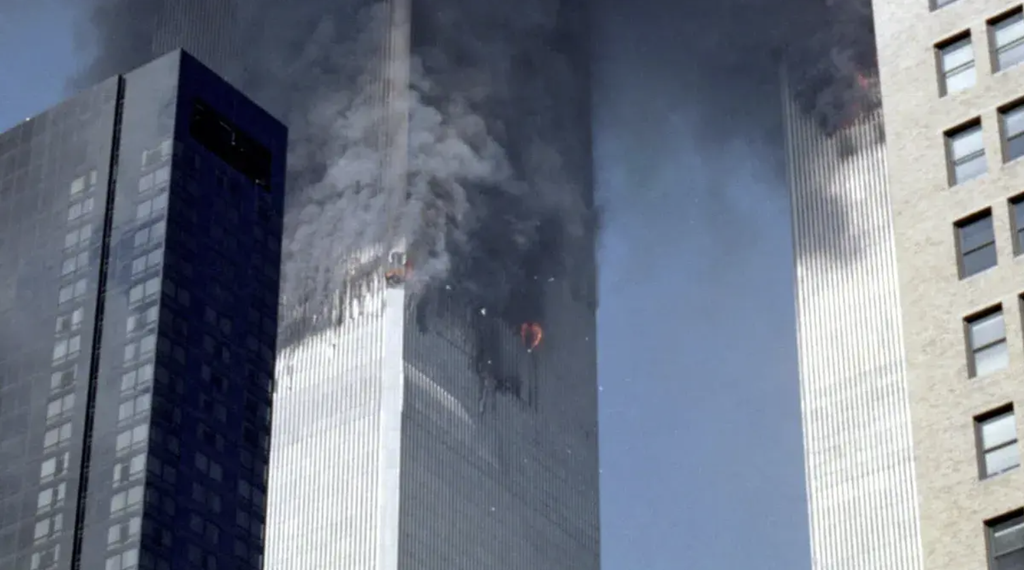
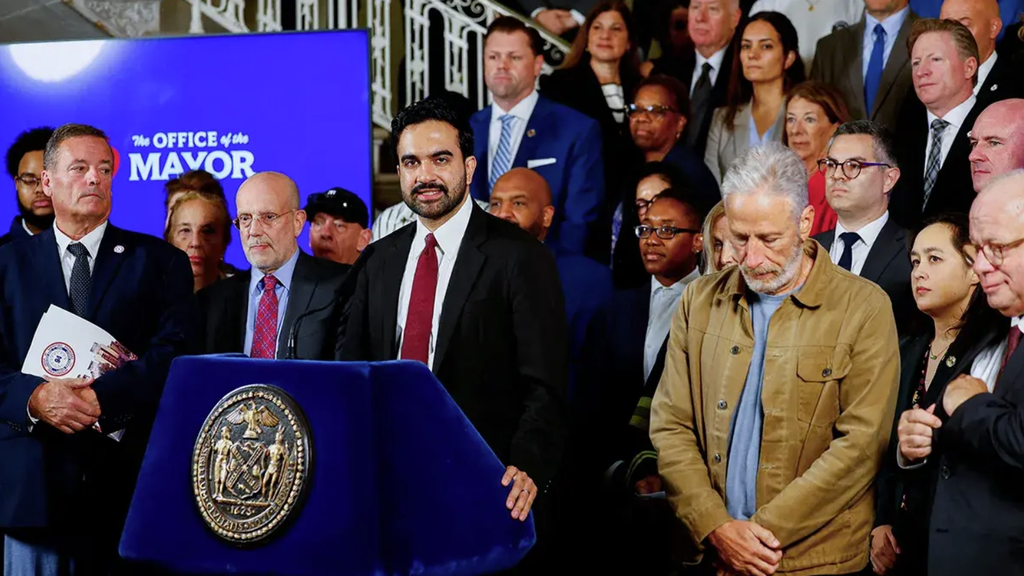
Former Presidents Bush, Clinton, Obama, and Biden will attend the Ground Zero commemoration. The attendance of New York City Mayor Zohran Mamdani, the first Muslim mayor in the city’s history, has drawn public controversy: a petition organised by victims’ families gathered approximately 100,000 signatures opposing his participation, with former Mayor Rudolph Giuliani speaking against his presence on Newsmax, while New York Attorney General Letitia James and Senator Chuck Schumer defended his attendance.
Last week, Mayor Mamdani authorized the release of over 170,000 pages of municipal records documenting that local authorities were aware of severe environmental toxicity surrounding Ground Zero immediately following the collapse despite public reassurances at the time, resolving litigation initiated by 9/11 Health Watch.
Implications
The reality that the confessed architect of the 11 September attacks will appear before a court twenty-seven years after the events underscores profound legal and institutional challenges. The military commission system, burdened by procedural disputes and evidence derived from legacy interrogation programmes, has faced structural delays. The integrity of democratic legal processes relies on consistent adherence to statutory standards.
Furthermore, 9/11 commemorations, which historically served as a unifying civic touchstone in American public life, have grown vulnerable to domestic partisan friction, illustrating the challenges facing national social cohesion.
Perspectives and Scenarios
The 2028 trial schedule remains subject to ongoing procedural litigation given extensive unresolved motions regarding evidentiary records. Concurrently, public discourse surrounding the anniversary reflects broader partisan divides in the lead-up to the 3 November midterm elections.
Media Review
A comparative synthesis of coverage across major international publications over the preceding twenty-four hours.
US Press and Broadcasters
The New York Times led reporting on presidential attendance arrangements for 9/11 commemorations, which CNN expanded by covering addresses at the Pentagon and the Vice President’s representation in Lower Manhattan. CNN and AP detailed procedural updates establishing the June 2028 trial date for Khalid Sheikh Mohammed alongside civic debates surrounding mayoral participation.
The Washington Times reported on energy market reactions, noting Brent crude trading near $108 following maritime strikes and Houthi maneuvers in Mokha. CNBC reported on crude futures surpassing $101. Bloomberg highlighted benchmark pricing and regional statements regarding commercial maritime transit in the Gulf.
UK Press and International Agencies
Reuters provided primary coverage regarding territorial shifts around Mokha, reporting on regional logistical support, alongside assessments of maritime interdictions across the Gulf. The BBC covered procedural rulings issued by Judge Schrama in the Guantanamo military commissions, while The Guardian outlined the judicial timeline of the proceedings. Euronews and continental European agencies led coverage with the anniversary commemorations.
Middle Eastern and Regional Press
Al Jazeera led reporting on Yemeni coastal developments, featuring statements by Presidential Leadership Council Chairman Rashad al-Alimi concerning maritime security in Bab el-Mandeb. Gulf News tracked maritime advisories across Kuwaiti and Bahraini waters. The National reported on loyalist troop deployments near Dhubab and contingency civil defence directives issued in Saudi Arabia. Regional outlets covered movements around the Hanish Islands and Perim.
Specialist Publications and Research Institutes
The Center for Strategic and International Studies (CSIS) published assessments evaluating regional stability in West Africa and insurgent dynamics involving JNIM. The Pentagon’s Africa Center for Strategic Studies (ACSS) released casualty metrics detailing conflict intensity across the Sahel. The Council on Foreign Relations (CFR) assessed supply disruptions impacting Bamako. In Spain, the IEEE published findings examining counter-terrorism trends and European arrest data.
Editorial Commentary
In September 1990, eleven years before aviation hijacked modern history, Bernard Lewis published ‘The Roots of Muslim Rage’ in The Atlantic, framing an emergent civilisational friction that Samuel Huntington would later popularise, warning of an ideological reaction beyond conventional politics. While debate surrounded the thesis, the events of September 2001 demonstrated that strategic analysis often identifies systemic trends long before institutions formulate coherent operational responses.
Twenty-five years on, counter-terrorism operations have secured tactical milestones across numerous theatres without consolidating permanent regional stability. The Taliban governs Kabul, Al-Qaeda maintains an active operational presence across the Sahel, and regional militant networks contest commercial transit across key maritime corridors. The enduring strategic deficit remains the absence of coherent post-conflict political planning: technical operational success unaccompanied by sustainable regional governance architectures.
European strategic policy faces ongoing institutional challenges. Continental capitals that weathered attacks across Madrid, London, Paris, Brussels, Nice, Berlin, and Barcelona continue to debate defence integration, leaving maritime and regional security dependent on external assets. Strategic capability requires consistent fiscal, industrial, and operational commitments. Concurrently, US strategic policy balances professional diplomatic initiatives with domestic political shifts.
George Santayana wrote that those who cannot remember the past are condemned to repeat it. The modern dilemma is not lack of commemoration, but the challenge of translating historical memory into coherent policy. Remembering the victims of 11 September requires maintaining institutional vigilance, understanding the evolving nature of ideological extremism, and ensuring national security policies remain focused on enduring strategic imperatives rather than short-term political considerations.