Gustavo de Arístegui,
May 7, 2026
I. BRIEF INTRODUCTION
The period from May 6th to 7th, 2026, concludes with a realization that no one in this profession can deny: the international system is experiencing one of those phases of volatile warfare in which no actor manages to impose victory, yet neither can afford defeat, and in which diplomacy is forced to operate amidst the noise of the fighting and the fatigue of public opinion. The new round of Iranian attacks against the United Arab Emirates, the pause in the US naval operation Project Freedom in the Strait of Hormuz, the signs of a possible framework agreement between Washington and Tehran conveyed through Pakistani mediation, and the deliberate cynicism of the Kremlin—bombing Ukraine while announcing a unilateral ceasefire for its May 9th parade—compose a picture where the contained systemic fracture remains, paradoxically, the only good news.
Added to this is the prolonged drift of the Chavista narco-dictatorship—now in the hands of the sinister siblings Delcy and Jorge Rodríguez after Maduro’s capture—, the German offensive for a two-speed Europe in defense, and the sharp drop in Brent crude to levels not seen since March. These are distinct pieces of the puzzle, but they should be considered together: what is at stake in all of them is whether liberal democracies retain the will—and the reflexes—to bring order to the world, or whether we will continue to witness the disheartening spectacle of powers adapting to chaos instead of fighting it.
II. THE FIVE MOST IMPORTANT NEWS STORIES OF THE LAST 24 HOURS
1. Hormuz: Project Freedom pause, framework for a potential agreement, and oil price drop
Facts
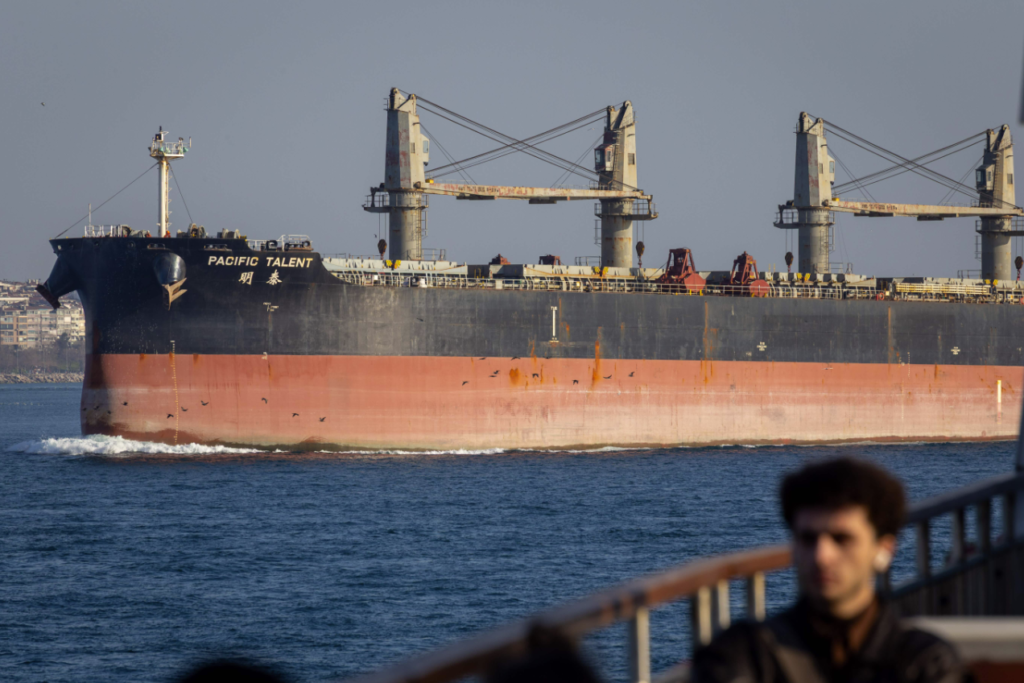
On May 6, President Donald Trump announced a temporary pause in the U.S. naval operation Project Freedom—designed to escort merchant ships through the Strait of Hormuz—citing “great progress” toward a comprehensive agreement with Iran. The pause comes after two particularly tense days in which the Islamic Revolutionary Guard Corps (IRGC) launched ballistic missiles and swarms of drones against the United Arab Emirates—including Al Minhad airbase and the Fujairah terminal—attacked U.S. Navy small boats with no success (the six Iranian small boats were destroyed by AH-64 Apache and MH-60 Seahawk helicopters), and fired approximately ten times at U.S. forces during the ceasefire declared on April 8. Pakistani mediators presented Tehran with a draft framework that includes a halt to nuclear weapons programs, limits on its missiles, the reopening of the strait, and a gradual easing of sanctions. Markets responded with an 8% drop in Brent crude in a single session, to $102 per barrel, after having hit year highs of around $116 just 48 hours earlier.
Implications
Trump’s pause is—it’s important to clarify—neither an Iranian victory nor an American capitulation: it’s a calculated maneuver by someone who wants to test whether Tehran is capable of a coherent political response or whether, on the contrary, the jihadist oligarchy is, as this analyst suspects, overwhelmed by the very paradox of the decapitation produced by Operation Epic Fury . The most revealing indication of the last few hours is not the missiles but the news, leaked by Iran International , that President Masoud Pezeshkian expressed “anger” to General Ahmed Vahidi for attacks against the Emirates that were “completely irresponsible” and carried out without coordination with the civilian government. The regime is not monolithic—it never was—and the power structure remains the IRGC triad: Vahidi as commander-in-chief, Mohamed B. Zolghadr at the CSSN, and Rezaei as acting military advisor to the Supreme Leader. Pezeshkian, systematically overwhelmed, is more useful today for photography than for decision-making.
Perspectives and scenarios
Three paths are emerging. The first is that a preliminary agreement will be reached within 7 to 14 days: possible, but contingent on the Vahidi-Zolghadr faction agreeing to a concession, which, as things stand, they do not appear willing to accept. The second—which is the one the accumulated logic of this conflict points to—is a war of fluctuating intensity that will drag on for months with cycles of escalation and de-escalation, without a full reopening of the Strait and with persistent risk premiums on oil. The third is a relapse into the open, kinetic conflict if Iran perceives that the internal rally around the flag is waning and the regime needs to take a desperate measure. The fall in Brent crude, in this context, is an act of faith by the market: if the agreement is not signed within a reasonable timeframe, the rebound will be severe.
2. Ukraine-Russia: The cynicism of the May 9 ceasefire and Zelensky’s response
Facts
The Kremlin has declared a unilateral ceasefire from May 8 to 9, coinciding with Den’ Pobedi —Victory Day and the military parade in Red Square—while simultaneously launching a barrage of 11 ballistic missiles and 164 drones against five Ukrainian regions on the night of May 5-6: 12 dead in Zaporizhzhia after a glide bomb attack, six in Kramatorsk, four in Dnipro, and two in Kharkiv, in addition to dozens wounded. Volodymyr Zelensky, calling the Russian maneuver “absolute cynicism,” proposed an unconditional and open-ended ceasefire starting at midnight on Wednesday, an offer that Moscow dismissed with its usual indifference. Marco Rubio held a telephone conversation on Tuesday with Sergey Lavrov at Russia’s request, according to official statements, regarding bilateral relations, the war, and the Iranian issue. On the other hand, the Ukrainian Armed Forces attacked the Kinef refinery in the Leningrad region with drones —one of the largest in Russia, with 350,000 barrels processed daily in 2024—.
Implications
It is difficult to find a better illustration of the moral character of Vladimir Putin’s regime than the combination of a ceasefire intended to allow for his grand patriotic ritual with the deliberate bombing of Ukrainian civilians in the preceding hours. This is not strategy: it is contempt. And it is a contempt that confirms the principle I have been outlining since the beginning of the invasion: we are opposed to Russian aggression against Ukraine, opposed to the use of force as a means of acquiring territory, and opposed to any negotiation that rewards the cynicism of the aggressor over the rights of the victim. President Trump’s stance on this matter is the only instance where I maintain open criticism of his foreign policy: the urgency to reach an agreement cannot be equated with surrendering Kyiv to Moscow’s demands.
Perspectives and scenarios
Russia Matters’ figures place Russian advances over the past year at 1,714 square miles—barely 0.7% of Ukrainian territory—at a cost estimated by a high-level Western source at one million Russian military casualties (killed and wounded), compared to 250,000-300,000 Ukrainian casualties. These numbers discredit any narrative of a Russian military victory. What is likely is a prolonged war of attrition on the Donbas front, while the White House and the Kremlin continue to explore a negotiation framework that, in its current form, satisfies neither Brussels nor Kyiv. The European Union, meanwhile, is preparing to tighten the conditions on the €8.4 billion in macro-financial assistance pledged for 2026: a sensible, but belated, decision.
3. Venezuela: The Rodríguez Transition, Treasury Licenses, and Trump’s Foreign Policy in the Hemisphere
Facts
Four months after the capture of Nicolás Maduro and Cilia Flores—carried out on January 3 by U.S. forces on Venezuelan soil—interim president and former vice president Delcy Rodríguez received Kate Forbes, president of the International Federation of Red Cross Societies, in Caracas on May 6, in what is presented as an effort to give the regime a veneer of humanitarianism. On the same day, her brother Jorge Rodríguez , president of the National Assembly, held a parallel meeting with Forbes. The U.S. Treasury Department has issued General License 58 , which temporarily exempts law firms, consultancies, and financial advisors from sanctions to assist the Chavista authorities in restructuring the sovereign debt and that of PDVSA. Maduro, meanwhile, awaits trial in New York on charges of narcoterrorism, cocaine importation, and possession of weapons of war; sanctions against Delcy Rodríguez were lifted in April.
Implications
Here, it’s crucial not to lose sight of our editorial objective. We are—and always have been— against the Chavista narco-dictatorial regime , against the immense mafia organization that Hugo Chávez and Nicolás Maduro have transformed Venezuela into, and we support the attacks against drug-running boats. Maduro’s capture was an act of historical justice that no democrat can lament. But the White House’s decision to negotiate the transition with Delcy Rodríguez herself—to the explicit detriment of María Corina Machado, the 2025 Nobel Peace Prize laureate and a legitimate voice of the opposition—is a deeply questionable move. Delcy Rodríguez is not a moderate alternative: she is, along with her brother Jorge, one of the most hardline figures in the Chavista apparatus, trained in the Venezuelan Marxist tradition and seasoned for years in the international defense of the regime against accusations of electoral fraud and drug trafficking. Replacing a detained Maduro with a ruling Rodríguez is simply changing the facade while keeping the building intact.
Perspectives and scenarios
The most realistic hypothesis is that Washington intends to use Delcy Rodríguez as the orderly manager of an oil opening—Trump has explicitly told her: “First we have to fix this, then we’ll talk about elections”—postponing the full democratic transition. This option is legitimate from a pragmatic standpoint, but it will be harshly judged by all of us who believe that the Chavista regime, in any of its incarnations, remains cosmically corrupt. The Venezuelan democratic opposition, led by Machado and Edmundo González, finds itself in a delicate position: it cannot applaud the pact with the Rodríguezes, but neither can it ignore the fact that without US military pressure, Maduro would still be in Miraflores.
4. A two-speed Europe: Berlin leads the rearmament and the rift with Paris
Facts
German Chancellor Friedrich Merz has solidified Germany’s position as the driving force behind European rearmament: the 2026 defense budget amounts to €82.69 billion for the Bundeswehr, plus €25.5 billion from the special fund, on an explicit trajectory toward 5% of GDP by 2035. German Finance Minister Lars Klingbeil, along with his French counterpart Roland Lescure, convened the E6 format —Germany, France, Italy, Spain, Poland, and the Netherlands—to circumvent the unanimity rule. Berlin has signed a strategic cooperation protocol with Rome (Meloni-Merz, January 27) and is preparing a new bilateral agreement with Warsaw. Meanwhile, the Franco-German-Spanish Future Combat Air System (FCAS) program is languishing due to industrial disagreements between Dassault and Airbus. The European Commissioner for Defense, Andrius Kubilius, has warned that the EU has relied on the United States for approximately 40% of its arms purchases over the past twenty years.
Implications
That Germany—the European nation most reluctant to use force for seventy years—has become the driving force behind continental rearmament is a historical fact whose magnitude we have barely begun to grasp. And that it is doing so while France grapples with Gaullist grandeur and the reality of its suffocating finances, and Italy and Poland gain influence within the alliance, shapes a new European defense geometry where the old Franco-German axis is no longer exclusive. This is good news; the bad news is that it is being driven by the war in Ukraine and the paradox of NATO’s own decapitation , not by a genuine awakening on the part of the mediocre and short-sighted European political class of the 21st century. Spain, in this regard, remains—and it must be said without euphemism—a walking contradiction: Pedro Sánchez’s government maintains a neutrality bordering on irresponsibility regarding Iran, while the Rota and Morón air bases are an active part of the allied logistical apparatus. This contradiction will eventually take its toll.
Perspectives and scenarios
The question is whether the E6 format will achieve real operational effectiveness or whether it will end up being—like so many European “formats”—an intergovernmental marketing tool. The decisive factor will be whether Germany, Poland, and the Nordic countries can pull a budget-drained France and a fragile Italy toward a genuine collective defense effort. The foreseeable collapse of the FCAS, far from being a catastrophe, could be an opportunity to reconfigure European industrial cooperation around smaller, more operational coalitions, abandoning the large, grandiose programs that devour resources without producing capabilities.
5. Markets: Brent crude plummets, but geopolitics still rules
Facts
Brent crude closed on May 6 at $102.22 a barrel, down 6.96% in a single day and 6.45% over the past month, after reaching $116.55 just 48 hours earlier. WTI crude fell below $95. Wall Street, meanwhile, had closed Tuesday with the S&P 500 and Nasdaq at record highs, boosted by corporate earnings—Disney rose 7.61% after reporting its fiscal second-quarter results. Gasoline in the United States, however, remained at a national average of $4.52 a gallon. Approximately 23,000 seafarers of 87 nationalities remain stranded in the Persian Gulf. The United Arab Emirates formally left OPEC on May 1, becoming the third member in seven years to do so.
Implications
The brutal fall in Brent crude over forty-eight hours is not a technical phenomenon: it is the accounting translation of the optimism that markets—always quick to buy into any rumor of peace—have placed in the negotiations brokered by Pakistan. But this movement should be interpreted with a cool head: risk premiums remain high in six-month contracts, indicating that professional traders do not believe in a clean break. The UAE’s withdrawal from OPEC, for its part, confirms an underlying trend: Gulf producers are preparing for a world of declining demand and increasing international competition, in which cartel discipline becomes a burden. It is one of those events that will go unnoticed in the news cycle but will have structural consequences for a decade.
Perspectives and scenarios
If the US-Iran agreement materializes within two to three weeks, Brent crude could stabilize in the $85-$95 range; if the process stalls, a rebound above $120 is entirely plausible. For Spain and Europe, this translates into an energy bill that will continue to put pressure on industrial costs and underlying inflation, at a time when central banks no longer have much room to ease monetary policy without reopening wounds that were so difficult to heal.
III. MEDIA RACK
Anglo-Saxon newspapers— The New York Times , the Washington Post , the Wall Street Journal , and the Financial Times— all agree in presenting the pause in Project Freedom as a calculated decision rather than a concession, although the FT emphasizes that the lack of coordination with Iran and the confusion among marine insurers—reported in statements by NorthStandard—demonstrate the improvised nature of the operation. The Times and The Telegraph stress the fragility of the ceasefire and the doubts surrounding the unity of the Iranian regime. The Guardian maintains its critical stance on the US operation and describes the situation as a “double blockade.” Bloomberg and CNBC focus their coverage on the Brent crude oil crash and the market reaction, while CNN and the BBC highlight the Iranian attacks on the Emirates as a turning point. Fox News and the Washington Times frame the pause as a show of presidential strength. Axios and The Hill report that the administration considers a preliminary agreement with a framework for broader nuclear talks to be imminent.
Continental newspapers — Le Monde and Le Figaro interpret the day through the lens of the consolidation of the “Merz moment” in Berlin and the growing unease at the Élysée Palace regarding the loss of centrality of the Franco-German axis; Libération , with its usual bias, insists on US responsibility in the Iranian conflict; La Croix recalls the humanitarian costs of the blockade. Le Point , L’Express , and Le Nouvel Observateur dedicate analyses to German rearmament and the collapse of the FCAS. LCI and BFM lead with Brent crude and fuel prices. FAZ and Die Welt openly celebrate German leadership in the E6 format; Die Zeit offers a nuanced analysis of the risks of internal fracturing within the SPD. Corriere della Sera highlights the Meloni-Merz protocol as a redefinition of Italian influence; L’Osservatore Romano calls for humanitarian mediation. Helsingin Sanomat and Gazeta Wyborcza insist on Baltic-Polish rearmament as an existential priority; La Tribune de Genève , in a neutral key, glosses the diplomatic difficulties of the Pakistani process.
Arab world and Israel — Asharq Al-Awsat , Arab News , Al Riyadh , and Saudi Gazette present the Iranian attacks on the Emirates as proof that the terrorist organization IRGC does not respect any ceasefire; Gulf News , Khaleej Times , Gulf Today , and Al-Ittihad report Sheikh Abdullah bin Zayed Al Nahyan’s warnings that the Emirates “will not be blackmailed by terrorists.” Al-Jazeera and Al-Arabiya maintain their usual opposing stances: the former blames Washington, while the latter emphasizes the responsibility of the Iranian regime. Yedioth Ahronoth , Israel Hayom, and Jerusalem Post agree that without joint military pressure, the regime would not negotiate; Haaretz introduces critical nuances regarding the lack of a plan for the aftermath. Al-Hayat , An-Nahar , L’Orient-Le Jour, and The Daily Star focus on Lebanon, where the ceasefire remains precarious. The Jordan Times , Al-Rai , The Peninsula Qatar , and Times of Oman are all following the mediation diplomacy. Hürriyet emphasizes the Turkish role; Al-Quds Al-Arabi maintains its usual pro-Palestinian stance.
Asia and the Pacific — The South China Morning Post and China Daily highlight Iranian Foreign Minister Abbas Araghchi’s official visit to Beijing on May 6, presenting it as a demonstration of China’s diplomatic weight. The Times of India , Hindustan Times , and Indian Express provide detailed coverage of the impact of the Iranian attacks on the Indian nationals injured in Fujairah and New Delhi’s position in the Chabahar operation. WION expands on this with analysis of energy geopolitics. The Yomiuri Shimbun and Tokyo Times emphasize the energy costs for Japan and the Japan-Philippines agreement on the transfer of defense equipment. The Straits Times reports on the tensions in the Singapore Strait. Daily Jang and Pakistan Times present Islamabad’s mediating role as a diplomatic success for General Asim Munir and Prime Minister Shehbaz Sharif.
Latin America — Clarín of Buenos Aires, El Mercurio of Santiago, and Reforma of Mexico analyze with concern the Trump-Rodríguez pact in the Venezuelan case and warn of the risk of legitimizing the Chavista dynasty. Foreign Affairs , The Economist , The National Interest , Newsweek , and Time publish in-depth analyses: the Iran-Contra affair remains the central theme of publications from the IISS, RUSI, CSIS, IFRI, and the Economist Intelligence Unit , with special emphasis on the thesis by Jon B. Alterman and Ali Vaez (CSIS/Foreign Affairs) on how China and Russia are exploiting the conflict without paying direct costs. AFP , Reuters , AP , DPA , and TASS provide factual coverage. RT , Vesti and Fakty i Komentarii predictably reproduce the Kremlin’s narrative with bias, while Ukrainska Pravda , Ukrinform , the Kyiv Post and The Kyiv Independent detail the cynicism of the Russian ceasefire of May 9.
IV. RISK TRAFFIC LIGHT
🔴 Strait of Hormuz / Persian Gulf: Project Freedom pause and renewed IRGC attacks; ceasefire held only by thin air. Risk of kinetic relapse: very high.
🔴 Iranian regime (IRGC): Tension between Pezeshkian and the Vahidi-Zolghadr-Rezaei triad. The jihadist oligarchy is proving incapable of a coherent political response.
🟠 Ukraine/Russia: Deliberate cynicism from the Kremlin with bombings before May 9. US-Russia negotiations are progressing through parallel channels without any real concessions from Moscow.
🟠 Lebanon and Hezbollah: The ceasefire remains precarious. The terrorist organization Hezbollah, weakened but not dismantled, retains the capacity for harassment.
🟠 Venezuela / Caribbean: Negotiated transition with Delcy and Jorge Rodríguez. Risk of whitewashing the Chavista narco-dictatorship regime in exchange for oil opening.
🟡 Energy markets: Brent at $102 after a sharp correction. Extreme volatility; 6-month risk premiums remain high.
🟡 European defense: German-French E6 format underway; UAE withdrawal from OPEC; FCAS on the verge of collapse. Real progress, growing fragmentation.
🟡 Spain: Incoherent position of the Sánchez-Albares government: public neutrality while Rota and Morón operate as allied logistics bases. Growing reputational risk.
🟡 Pakistan as mediator: Notable diplomatic success, but at the cost of increased exposure to China and India. Uncertain sustainability.
🟢 South China Sea: Japan-Philippines agreement on defense equipment. No significant escalations in the last 24 hours. Continued vigilance regarding Chinese expansionism is necessary.
🟢 Armenia-Azerbaijan Agreement: Maintains the stability achieved in 2025 under US mediation. A success story of the Trump administration’s pragmatic diplomacy.
Legend: 🔴 critical risk · 🟠 high risk · 🟡 moderate risk · 🟢 low or stable risk.
V. EDITORIAL COMMENTARY
There are days when the analyst’s pen glides effortlessly across the page because events seem to unfold around a central idea. Today, paradoxically, is not one of those days: what we are presented with is a mosaic of fragmented movements—a naval pause here, a cynical ceasefire there, a glimpse of an agreement, a sharp drop in oil prices, an ambiguous Venezuelan transition, and a Europe reluctantly rearming. And precisely for this reason, it is wise to be wary of simplistic explanations. We are living through one of those moments in which the international system neither breaks down nor rebuilds itself; in which wars of variable intensity have become the permanent form of conflict, and where diplomacy operates, at best, on a quagmire of uncertainty and exhaustion.
What is at stake today in the Strait of Hormuz—and this must be stated bluntly—is not merely the resolution of a bilateral crisis between the United States and Iran: it is the litmus test of the West’s willingness to impose a real cost on a jihadist oligarchy that has exported terrorism for forty-seven years and, in its sheer corruption, has made its people hostages to an unparalleled military-religious-economic caste. Project Freedom ‘s pause is prudent—and this analyst supports it—while the possibilities of a serious agreement are explored. But it would be a colossal mistake to confuse prudence with concession. The Trump administration, which in less than a year has achieved a handful of genuine diplomatic successes—Cambodia-Thailand, Gaza, Armenia-Azerbaijan, and others—under the prudent guidance of Secretary Marco Rubio, cannot afford a hasty closure in Tehran that rewards the Vahidi-Zolghadr faction and weakens anyone who could still serve as an interlocutor for a transition. The criticism I have been making remains: there was a decapitation, but no plan for the aftermath. And without a plan, what you get is not peace, but postponement.
The Kremlin’s attitude toward the unilateral ceasefire of May 9 deserves its own commentary. That a regime would bomb homes, workshops, and hospitals in five Ukrainian regions on the eve of a ceasefire declared to celebrate its “Victory Day” speaks volumes about the moral nature of Putinism. It is pure and simple contempt: contempt for human life, contempt for decency, contempt for one’s own word. Those in Europe who continue to call for “understanding” Moscow should read the figures from Russia Matters: one million Russian military casualties in the last year in exchange for 0.7% of Ukrainian territory. There is no Russian military victory worth mentioning. There is only hemorrhaging, sustained by a regime that prefers to bleed its own youth dry rather than admit strategic failure. Trump’s foreign policy on this matter remains, we say it unequivocally, his weakest point. Any agreement that rewards territorial conquest will be a moral defeat for the liberal order, as well as an open invitation to Beijing in Taiwan and to Chinese expansionism in the Pacific, Africa, and Latin America.
The Venezuelan situation also presents us with genuine discomfort. We are—and always have been—in favor of overthrowing the Chavista narco-dictatorship and relentlessly pursuing narco-terrorism. The operation that brought Maduro to a Manhattan court was an act of justice that, moreover, opens a real window for transition for the first time in twenty years. But entrusting the management of that transition to Delcy Rodríguez herself—and, incidentally, to her brother Jorge, president of a fraudulent National Assembly—is a move that should be viewed with suspicion. María Corina Machado is not an option; she is the legitimate option that Venezuelans chose in July 2024 through Edmundo González Urrutia. Pragmatism is necessary in foreign policy; cynicism is not. And the difference between the two will be determined by the electoral calendar. If there are no free elections in Venezuela within six months, we will have replaced one dictator with another.
One last word about Europe. Friedrich Merz’s German leadership in continental rearmament, along with Reagan’s in the 1980s—the best president the United States had in the second half of the 20th century—is the most hopeful example of how a liberal democracy can recover its strategic will when circumstances demand it. The mediocre and short-sighted European political class of the 21st century has not embraced defense out of conviction but out of fear, which makes its awakening more fragile but no less necessary. And here, Spain, once again, is exposed: we are Atlanticists at heart and staunch Europeans, but our government maintains a position that oscillates between public inconsistency and the reality of bases—Rota and Morón—that are operating normally within the allied effort against the jihadist oligarchy in Tehran. One cannot be both a part of it and not be. History, which has a better memory than opinion polls, will ultimately record this hypocrisy.
We close this day with the usual feeling: nothing is resolved, but nothing collapses either; diplomacy is at work, but the fighting continues; the markets are breathing a sigh of relief, but the risk premiums remain. It’s the contained systemic fracture , our particular brand of world order where the only good news is that the bad news wasn’t even worse. But, as I’ve been describing, containment doesn’t mean a solution. And the countdown is on for those with less patience: authoritarian regimes—Tehran, Moscow, Beijing, Havana, Caracas, Managua—are playing on the fatigue of democracies. The question is whether we in the West will have the will not to grant them this victory by attrition.