Gustavo de Arístegui,
May 13, 2026
I. BRIEF INTRODUCTION
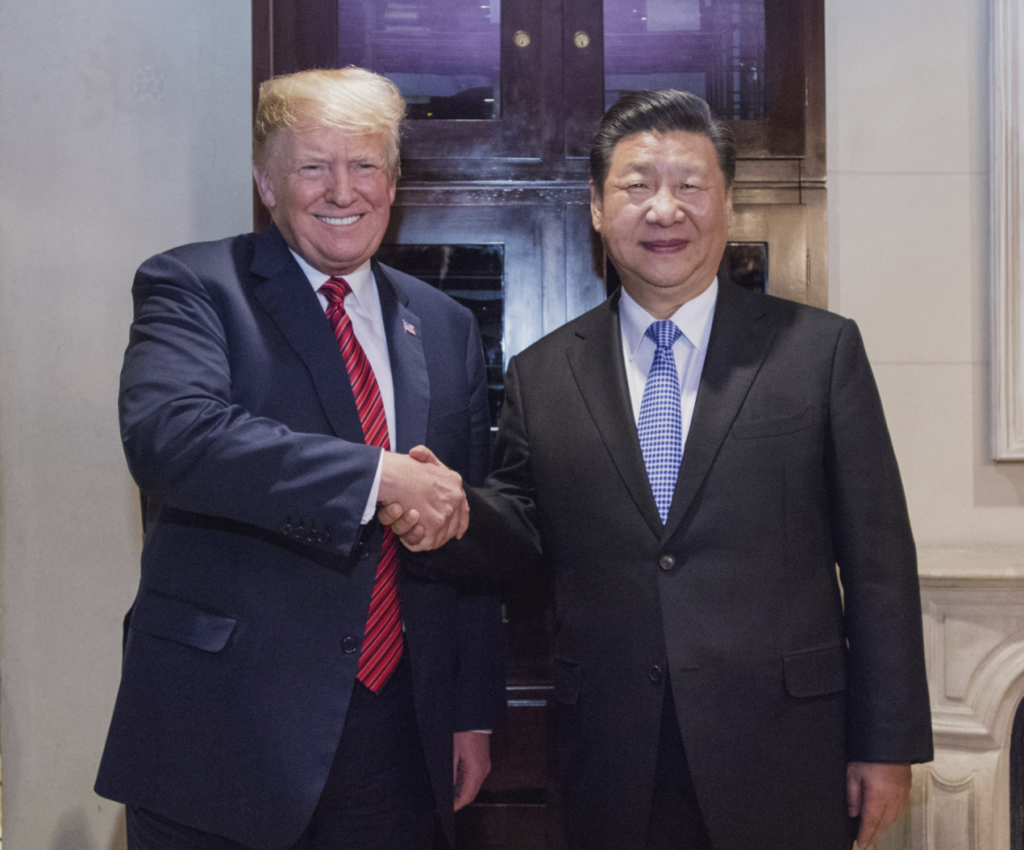
The world awoke on May 13, 2026, on the threshold of one of the most strategically significant bilateral meetings in recent years: the Trump-Xi summit in Beijing, scheduled for May 14 and 15, has captured the attention of foreign ministries and think tanks worldwide. It is no exaggeration to say that what is decided—or left unresolved—in the halls of the Great Hall of the People could alter the global power dynamics for the next decade.
At the same time, the fragile ceasefire between the United States and Iran—that agreement negotiated with great difficulty through Pakistan—remains on what President Trump himself has described as “massive life support.” The most significant development is that Pakistan’s failure as a mediator has been confirmed, and Qatar has resumed its leading role. This is a reason for optimism, as Qatar has a long and proven track record of effectiveness in international mediation, unlike Pakistan, which is more involved in conflicts than in resolving them.
Tehran’s jihadist oligarchy, entrenched in the maximalist positions of the Islamic Revolutionary Guard Corps (IRGC) triumvirate and paralyzed by its own internal contradictions, rejects Washington’s nuclear conditions and continues to condition the reopening of the Strait of Hormuz on reparations that, at this point, serve no other purpose than as a bargaining chip in negotiations that could collapse at any moment. The Pentagon is already considering renaming the operation—from “Epic Fury” to “Operation Hammer”—to reset the constitutional sixty-day clock, an unmistakable sign that a return to large-scale hostilities remains a possibility.
On the Ukrainian front, the Russian war machine continues unabated: while Ukrainian drones continue to strike Russian energy infrastructure in the Baltic and Black Seas, the Kremlin responds with massive attacks on the Kharkiv, Kherson, and Zaporizhzhia regions. President Putin, increasingly isolated and holed up in his bunkers, tightens the security cordon around him—a direct consequence of last summer’s Ukrainian Operation Spiderweb—while his troops advance slowly but steadily in the Donbas. In Venezuela, the sinister siblings Delcy and Jorge Rodríguez consolidate their monopoly over executive and legislative power in a Washington-backed transition that still lacks any real democratic guarantees.
II. MOST IMPORTANT NEWS OF THE LAST 24 HOURS
1. The Trump-Xi summit in Beijing: the world faces the most important meeting in recent years
Facts
US President Donald Trump is already en route to Beijing for his May 14-15, 2026 summit with Chinese President Xi Jinping. It is the first state visit by a US president to China since November 2017—also by Trump during his first term—and the first in nearly nine years. The meeting was initially planned for early April but was postponed due to the Iran-Contra affair. Trump is traveling with the CEOs of Boeing and Citigroup, a clear indication that trade concessions—purchases of soybeans, civilian aircraft, and the rare earth agreement signed at the Busan summit (October 2025)—are on the agenda for the meeting. On May 11, Trump publicly acknowledged discussing arms sales to Taiwan with Xi, breaking with President Reagan’s “Six Assurances,” namely: defense sales without a deadline; Not consulting China before selling arms to Taiwan; not mediating between the PRC and Taiwan; not reviewing or repealing the 1978 Taiwan Relations Act; not pressuring Taiwan to negotiate with China; and not recognizing Chinese sovereignty over Taiwan have caused deep unease in Taipei. According to an analysis published by the Council on Foreign Relations (CFR), China is coming to the summit having successfully withstood Trump’s tariffs through strategic control of rare earth exports, a position of structural strength that analysts at the Center for Strategic and International Studies (CSIS) define as an asymmetric advantage.
Implications
The first implication is systemic: if Trump makes concessions on Washington’s policy toward Taiwan—shifting from “not supporting independence” to “opposing it,” as Beijing demands—we will be facing a paradigm shift with unpredictable consequences for the stability of the Indo-Pacific. Japan, South Korea, and Taiwan are watching the summit with an anxiety that their governments are not concealing. The second implication is related to energy: the price of crude oil remains around $120 per barrel as a direct consequence of the Hormuz Strait crisis, and China—the main buyer of Iranian oil and a partner in the 25-year strategic agreement signed with Tehran in 2021—has a direct interest in the Iran-US negotiations leading to the reopening of the strait, which gives it additional leverage over Washington. The third implication is institutional: the possibility that Trump, in his “transactional” style and partly presided over by outbursts, will make a comment that Beijing could instrumentalize as a change in the US position on the status of Taiwan, is a real risk identified by all major analysis centers.
Perspectives and scenarios
Scenario A (most likely, according to CSIS and CFR ): The summit produces mid-level trade results—Chinese purchases of soybeans and Boeing aircraft, symbolic announcement of a bilateral “Trade Council”—but does not resolve any of the structural disputes (Taiwan, rare earth elements, the Taiwan Strait, fentanyl exports, Iran). Xi emerges strengthened, and Trump declares a “success” to his electoral base.
Scenario B (possible): Trump makes a statement that is interpreted as an implicit concession on Taiwan; Beijing exploits it diplomatically; Indo-Pacific alliances suffer an earthquake of mistrust.
Scenario C (less likely but not impossible): A framework for negotiations on the denuclearization of the Korean Peninsula is announced, with China as mediator, which Trump would sell as a historic diplomatic success comparable to the Abraham Accords. This analyst estimates that the likelihood of implicit concessions on Taiwan is higher than allied foreign ministries would like to admit publicly.
2. The ceasefire with Iran is in critical condition: the Pentagon is considering Operation Hammer
Facts
The ceasefire between the United States and Iran—reached on April 8 through Pakistani mediation by Chairman of the Joint Chiefs of Staff General Asim Munir, Vice President JD Vance, and Special Envoy Steve Witkoff—remains extremely fragile. President Trump has called the latest Iranian proposal “unacceptable” and “stupid,” and declared the ceasefire to be on “massive life support.” According to NBC News, the Pentagon is considering renaming the operation—from “Operation Epic Fury,” launched on February 28, to “Operation Hammer”—in order to reset the constitutional 60-day clock after which the president needs congressional authorization to resume hostilities. Iran’s Islamic Revolutionary Guard Corps (IRGC) continues to effectively block the Strait of Hormuz, even though Iranian Foreign Minister Abbas Araghchi declared the strait formally reopened to all maritime traffic on April 17. In practice, trade has not returned to pre-operational levels. Iran’s underground nuclear facility continues to operate, and the highly enriched uranium—which Tehran said it was prepared to hand over to Washington for mining—has not been transferred.
Implications
The crisis in the Strait of Hormuz is keeping the price of Brent crude around $120 a barrel, with a record high of $166 per barrel for Dubai crude expected in March 2026. Two hundred and thirty loaded oil tankers were waiting inside the Persian Gulf in the third week of April. The International Energy Agency (IEA) released 400 million barrels from its emergency reserves in March, equivalent to just four days of global consumption. Rubio’s position—declaring on May 6 that “Operation Epic Fury has concluded” and that Washington is now seeking only a Memorandum of Understanding (MOU) for future negotiations—represents a complete reversal of the initial demand for “unconditional surrender.” The jihadist oligarchy in Tehran interprets this, not without reason, as an admission that the military objective has not been fully achieved. The IRGC triumvirate—headed by General Ahmed Vahidi, with Mohamed B. Zolghadr leading the Al-Quds Brigades and Rezaei as interim military advisor to Supreme Leader Mojtaba Khamenei—systematically blocks any concessions it deems erode the strategic position of the Iranian Armed Forces.
Perspectives and scenarios
This analyst has been describing the Iranian situation as a contained systemic fracture: the regime has suffered the hardest blow in its history—the death of Ali Khamenei, the destruction of much of its military infrastructure, and the damage to its nuclear facilities—but it has neither imploded nor surrendered. The paradox of the decapitation, which I have been analyzing since the first day of Operation Epic Fury, remains the keystone of this analysis: killing the supreme leader and a large part of the security apparatus without a plan for the aftermath has produced exactly what this analyst warned about—the consolidation of the most radical sectors of the IRGC in the power vacuum. The most likely scenario is the signing of a minimal MOU that allows Trump to declare victory and Tehran to buy time to rebuild its capabilities. The most dangerous scenario—that the ceasefire breaks down before Trump reaches an agreement with Xi on Chinese involvement in Iran—is not improbable.
3. Ukraine: Russian offensive in Donbas and Ukrainian attacks on Russian energy infrastructure
Facts
Over the past 72 hours, the Ukrainian armed forces have carried out a series of long-range drone attacks on high-value Russian energy targets. The port of Primorsk on the Baltic Sea—one of Russia’s main oil export terminals, with a capacity of one million barrels per day—was hit and suffered a fire that was quickly extinguished. Two tankers belonging to Russia’s Ghost Fleet near the port of Novorossiysk on the Black Sea were hit and disabled. President Zelensky confirmed the results, stating, “Each such result further reduces Russia’s military potential.” Kremlin spokesman Dmitry Peskov warned that if Ukrainian attacks on oil infrastructure continue, crude oil prices—already above $120—could rise even further. Simultaneously, Russian troops are continuing their offensive in the Donbas, with advances in the Slaviansk, Lyman, and Konstantynivka sectors. At least eight civilians were killed in Russian attacks in the last 24 hours in the regions of Kharkiv, Kherson, Dnipropetrovsk, Donetsk, Zaporizhzhia, Sumy and Chernihiv.
Implications
The Ukrainian strategy of attacking Russian energy infrastructure—including the shadow fleet Moscow uses to circumvent G7 sanctions—has a dual effect: it erodes the Kremlin’s financial capacity to fund the war and forces Putin to divert defense resources toward protecting his Baltic and Black Sea terminals. According to the Financial Times, President Putin has significantly increased his personal security measures—spending extended periods in bunkers in the Krasnodar region—and the psychological impact of the Ukrainian Operation Spiderweb—117 drones against five Russian air bases in June 2025—remains a real factor in the Kremlin’s decision-making. However, the Russian ground offensive in the Donbas shows no signs of slowing down, and the roughly 1,200-kilometer front line continues to slowly shift in Moscow’s favor in the most active sectors.
Perspectives and scenarios
The Washington-sponsored peace negotiations—the latest round of which took place in Abu Dhabi—remain stalled. Russia rejects any solution that does not enshrine its territorial conquests; Ukraine, backed by its European allies, rejects any agreement that recognizes Russian sovereignty over the occupied territories. The European Political Community summit in Yerevan (May 4) reaffirmed European support for Ukraine but failed to produce any substantive additional military commitments. The new European borrowing law—approved by the European Union (EU) for €90 billion—is a necessary but insufficient financial instrument if it is not accompanied by a real and urgent increase in European military production, which I have been describing, without mincing words, as dramatically inadequate.
4. NATO and airspace: the pattern of Russian provocations persists
Facts
Violations of NATO airspace by Russian drones have become a recurring pattern. The most serious incident occurred in September 2025, when 19 Russian military drones penetrated Polish airspace during a mass attack on western Ukraine, being shot down in part by Dutch F-35s and Polish F-16s—the first documented instance of NATO forces shooting down Russian assets in allied airspace. Polish Prime Minister Donald Tusk invoked Article 4 of the North Atlantic Treaty (the consultation mechanism, preceding Article 5 on collective defense). On May 2, 2026, Romania again scrambled two F-16s in response to Russian drones approaching Romanian airspace during attacks on southern Ukraine. NATO Secretary General Mark Rutte has repeatedly described these incidents as “reckless behavior” by Russia. Polish Foreign Minister Radosław Sikorski demanded the creation of a European “drone wall” to protect EU airspace.
Implications
These violations serve a dual purpose: to test NATO cohesion and response times, and to generate a psychological effect of intimidation on the eastern allies. The fact that Moscow systematically denies intent—resorting to arguments of technical failures or electronic warfare—while the allies accumulate evidence that the trajectories are deliberate, demonstrates that the Kremlin operates in the gray zone of controlled belligerence. What is most worrying for this analyst is Washington’s relatively tepid response under the Trump Administration: the president merely wrote on Truth Social, “What’s going on with Russia violating Poland’s airspace with drones?! Here we go!” without announcing any concrete measures.
Perspectives and scenarios
The pattern of Russian provocations in NATO airspace will continue until the Alliance presents a credible and coordinated deterrent response. The Polish-Baltic proposal to create a missile and drone barrier on NATO’s eastern border deserves more attention than it receives in Brussels. Europe continues to debate whether to increase defense spending to 2%—or 3%—of GDP while its borders are penetrated with impunity by the arsenal of a power that most of its governments still refuse to call an enemy. History teaches us—and Burke, Clausewitz, and Aron bear witness to this—that weakness does not deter: it invites.
5. Venezuela: The Rodríguez brothers consolidate their monopoly on power
Facts
In Venezuela, the Washington-backed transition following Nicolás Maduro’s arrest on January 3, 2026, is proceeding without substantive democratic guarantees. Delcy Rodríguez Gómez—vice president of the deposed dictator—is serving as acting president, temporarily appointed for 90 days, while her brother, Jorge Rodríguez, was re-elected president of the National Assembly during the inaugural session of the 2026-2031 legislature. In just three months, Delcy Rodríguez has replaced 17 ministers, systematically purging Maduro’s inner circle, presumably on direct orders from Washington. Maduro’s son, known as “Nicolasito,” and Cilia Flores’s son, Walter Jacob Gavidia, have lost access to oil contracts with the state-owned company PDVSA. The sanctions lifted by Washington are merely symbolic: only 18 of the 1,861 existing sanctions have been lifted. Jorge Rodríguez himself has publicly called on the Venezuelan diaspora —more than 7.8 million compatriots— to “overcome and forgive” and return to the country, a call that CNN Español has documented as receiving a mostly cold response among exiles.
Implications
What we are witnessing in Venezuela is not a democratic transition: it is the replacement of one apex of the Chavista pyramid with another, endorsed by Washington as the price of Maduro’s capture and as a guarantee of minimal stability in the country with the world’s largest oil reserves. Chavismo without Maduro—represented by the Rodríguez brothers—is a recycled but not a refounded Chavismo: the architecture of the narco-state remains intact, the PSUV controls Parliament with deputies elected in fraudulent elections in 2024, and the democratic opposition remains imprisoned, in exile, or without real access to the political process. Diosdado Cabello—whose reward offered by Washington amounts to $25 million—and General Padrino have emerged as the biggest losers in this internal reconfiguration.
Perspectives and scenarios
This analyst maintains his assessment: the Rodríguez siblings are the presentable face of a cosmically corrupt narco-state that has opted for a controlled transition as its only path to political survival. The question no Western government is asking with sufficient urgency is: what happens when Delcy Rodríguez’s ninety-day interim mandate expires? Will there be free, verifiable, and internationally audited elections? The answer, given Chavismo’s track record, is that there is no binding commitment in that direction. The Atlantic community—including Spain, whose government still lacks a coherent and courageous Venezuela policy—should demand a verifiable electoral timetable as a sine qua non for any further lifting of sanctions.
6. Summit of the European political community in Yerevan: Europe seeks its voice
Facts
The 8th Summit of the European Political Community (EPC) was held on May 4, 2026, in Yerevan, the capital of Armenia, under the joint presidency of the President of the European Council, António Costa, and the Armenian Prime Minister, Nikol Pashinyan. More than 40 heads of state and government participated; Canadian Prime Minister Mark Carney attended as the first representative of a non-European country in the history of the EPC, a notable political signal of Ottawa’s new Atlantic orientation. NATO Secretary General Mark Rutte held bilateral meetings with Zelensky, Starmer, and Macron. Zelensky set three objectives for the summit: to move towards a dignified end to the war, to implement the €90 billion European loan, and to strengthen Ukraine’s air defense and energy sector. Yerevan’s presence was laden with geopolitical symbolism: Armenia is still formally an ally of Russia within the framework of the Collective Security Treaty Organization (CSTO), although Pashinyan has progressively distanced the country from Moscow. The Kremlin reacted by calling Zelensky’s invitation an “unfriendly step.”
Implications
The European Political Conference (EPC) in Yerevan confirmed that Europe, despite its structural limitations, maintains a line of support for Ukraine that does not depend exclusively on Washington. Canada’s participation opens a broader avenue for Western coordination than the traditional EU-NATO format. However, this analyst cannot fail to point out the central inconsistency at the heart of European policy: the same governments that clamor for support for Ukraine are the ones that for years refused to meet the target of 2% of GDP for defense, the ones that suicidally relied on Russian gas—which I have described, and maintain, as industrial suicide—and the ones that today debate for months when and how to reinforce their military capacity while the Ukrainian front bleeds. The case of Spain is paradigmatic of this inconsistency: its Rota and Morón bases actively contribute to operations in the region, while Pedro Sánchez’s government maintains a publicly hostile rhetoric toward Washington that is not only contradictory but directly detrimental to Spain’s credibility as an ally.
Perspectives and scenarios
The European Political Conference (EPC) has proven useful as a forum for political dialogue, but it lacks the institutional strength necessary to be the driving force behind European security. What Europe needs is not more symbolic summits, but a real, verifiable, and binding commitment to increasing defense spending, accelerating the production of ammunition and weapons systems, and developing a long-term strategy that is not subject to the whims of the administration in power in Washington. The question I ask myself—and have been asking myself for years—remains unanswered: Does Europe want to be the subject of history or its object?
III. MEDIA RACK
| HALF | EDITORIAL LINE / FEATURED FOCUS |
| The New York Times | Its cover focuses on Trump’s trip to Beijing, with skeptical analysis of Trump’s ability to negotiate on equal terms with Xi, recalling the asymmetry in the language of the statements from both sides. |
| The Washington Post | It warns of the risk of Trump making implicit concessions on Taiwan; it cites the CSIS highlighting that Xi will seek changes to Washington’s declarative policy on Taiwanese independence. |
| Financial Times (London) | It underlines that the Chinese economy has successfully diversified markets —its exports grew 21.8% year-on-year in the first two months of 2026— reducing its vulnerability to tariff blackmail. |
| The Times (London) | It highlights the violation of Polish airspace by Russian drones in September 2025 as a precedent and the pattern of repeated provocations by Moscow against NATO, compared with European inaction. |
| The Guardian | He published a lengthy piece on the state of the ceasefire with Iran, citing Al Jazeera and the House of Commons Library: the Strait of Hormuz remains not fully open and the agreement is on “life support”. |
| The Wall Street Journal | Analysis of the economic implications of the Trump-Xi summit: Boeing and Citigroup accompany the president; Beijing could buy more soybeans and American planes in exchange for tariff stability. |
| Le Monde | Coverage of the European Political Community summit in Yerevan (May 4, 2026): positively assesses the participation of Canadian Prime Minister Mark Carney as a sign of Ottawa’s Atlantic reorientation. |
| Le Figaro | Editorially critical of Trump’s erratic foreign policy; it highlights that Washington’s silence on Russian violations of NATO airspace undermines the credibility of Article 5. |
| FAZ / Die Welt | Focus on the European defense debate; Berlin analyzes the cost of US lack of planning in Iran and its implications for NATO’s southern flank and the energy supply chain. |
| Corriere della Sera | It highlights Putin’s progressive isolation —who spends time in bunkers and has restricted visits— and the growing internal pressure in Russia in the face of Ukrainian attacks on energy infrastructure in the Baltic. |
| Al Jazeera | Extensive and favorable coverage of the Iranian narrative on the negotiations: frames the MOU proposal as a tactical concession by Washington and underlines Iran’s demand for reparations amounting to $270 billion. |
| CNN / NBC | Reports indicate the Pentagon is considering renaming the operation in Iran “Operation Hammer” to reset the 60-day constitutional deadline; Trump calls the latest Iranian proposal “unacceptable” and “stupid.” |
| CSIS / CFR / Brookings | They agree that the Beijing summit on May 14-15 will be a modest step towards stability, not a resolution of structural conflicts; they warn that China has an advantage after having withstood tariffs on its rare earth elements. |
| Reuters / AFP / AP | News agencies agree: Trump en route to China, Iranian ceasefire in critical condition, Kremlin strengthens Putin’s security in the face of Ukrainian attacks on air bases and Russian shadow fleet in the Baltic. |
IV. RISK TRAFFIC LIGHT
| SIGN | RISK LEVEL | ANALYSIS |
| 🔴 | CRITICAL | Trump-Xi Summit in Beijing (May 14-15): maximum risk of strategic concessions on Taiwan and the Taiwan Strait; the Iranian ceasefire in a state of extreme fragility with the Pentagon considering renaming the operation. |
| 🟠 | HIGH | Russia-Ukraine conflict: Russian offensive continues in Donbas, Ukrainian attacks on Russian energy infrastructure, NATO tension over repeated violations of Polish and Romanian airspace. |
| 🟠 | HIGH | Strait of Hormuz: Iran-US negotiations at a standstill; Trump declares a ceasefire on “massive life support”; the Pentagon is considering resuming large-scale operations under a new operation name. |
| 🟡 | HIGH | Venezuela: The Rodríguez brothers consolidate their control over the Executive and Legislative branches; the Washington-backed transition advances without real democratic guarantees or credible electoral prospects. |
| 🟡 | HIGH | Europe-defense: the debate on the defense budget and European strategic autonomy remains unresolved; failure to meet the 2% of GDP target in several NATO allies exacerbates the transatlantic gap. |
| 🟢 | MODERATE | India-Pakistan: Bilateral tension remains at manageable levels; regional institutions contain the escalation, although border incidents continue to be frequent. |
V. EDITORIAL COMMENTARY
The Trump-Xi summit that begins tomorrow in Beijing is, in its deepest meaning, the encounter between the established power and the rising power—the Thucydides Trap that Graham T. Allison described with such clarity and that Raymond Aron would have analyzed with the same unsettling detachment. The United States arrives in Beijing weakened by the drain on resources caused by the Iran war, by a president whose popularity in the polls is at historic lows, and by the pressure of crude oil prices that Americans pay at every pump. China arrives having demonstrated that it can withstand Trump’s tariffs for months, that it controls 75-80% of the world’s rare earth production and 95% of refining capacity, and that the Iran war has given it additional geopolitical leverage—it is the main buyer of Iranian oil and Tehran’s largest trading partner—that no Chinese strategist would have dared to dream of three years ago.
In this context, the possibility that Trump might concede, even implicitly, on the Taiwan issue—the most dangerous of all—cannot be ruled out. This is the risk of a personal, transactional diplomacy governed by instinct rather than doctrine: the risk that a gesture, a phrase, a poorly worded joint statement could undermine decades of a policy of strategic ambiguity, painstakingly constructed since President Carter’s 1979 Taiwan Relations Act (TRA). Allied foreign ministries in the Indo-Pacific—and, to a lesser extent, in Europe—know this and are trembling. Paradoxically, they are counting on Secretary of State Marco Rubio and the National Security Council to maintain coherence when the president improvises. It is hardly a reassuring plan.
Regarding Iran, this analyst has maintained from the first day of Operation Epic Fury—and I reiterate it today with the same conviction—that killing the supreme leader without a coherent plan for the aftermath is the paradox of decapitation in its purest form. The result is plain to see: the jihadist oligarchy has survived, the IRGC triumvirate is more entrenched than ever in the most radical positions, Pezeshkian’s reformist faction has been systematically blocked, and the Strait of Hormuz—for whose control a premium of tens of millions of dollars per barrel is now paid on world markets—remains a strategic weapon in Tehran’s hands. The truth is that there is no key figure with sufficient moral and political authority and “revolutionary credentials” to impose on the other factions the concessions that Iran must make for peace to be possible.
I wholeheartedly support the need to have acted against the Iranian nuclear program; I criticized from the very beginning and I maintain my criticism of the absolute lack of strategic planning for the day after.
In Ukraine, Zelensky remains the lone wolf in a war where Europe talks a lot and delivers little. The Ukrainian attacks on Primorsk and the Russian phantom fleet are acts of strategic courage that deserve more admiration than they receive in the West. Putin, entrenched in his bunkers and surrounded by a security apparatus that now prevents him from even setting foot in his own Moscow residences, is not winning the war: he is paying a huge price in lives, equipment, and international reputation. But neither is he losing. And in wars of variable temperature—those low-resolution but highly destructive conflicts that no one can win or afford to lose—whoever endures the longest wins. That is why Europe cannot afford to continue debating whether to increase its defense spending while Russia consolidates its positions in Donbas.
I’ll end with Venezuela because it deserves more than a footnote. What the Rodríguez brothers are doing in Caracas isn’t a transition: it’s the continuation of Chavismo by other means, with the tacit acquiescence of Washington, which has decided that minimal stability is preferable to chaos. They may be right tactically. But strategically, enshrining the recycled narco-state model as a form of crisis management in Latin America is a defeat for the values the West claims to defend. The Venezuelan democratic opposition—imprisoned, exiled, or silenced—deserves more than declarations of solidarity from European foreign ministries. It deserves action.