Gustavo de Arístegui,
May 14, 2026
I. BRIEF INTRODUCTION
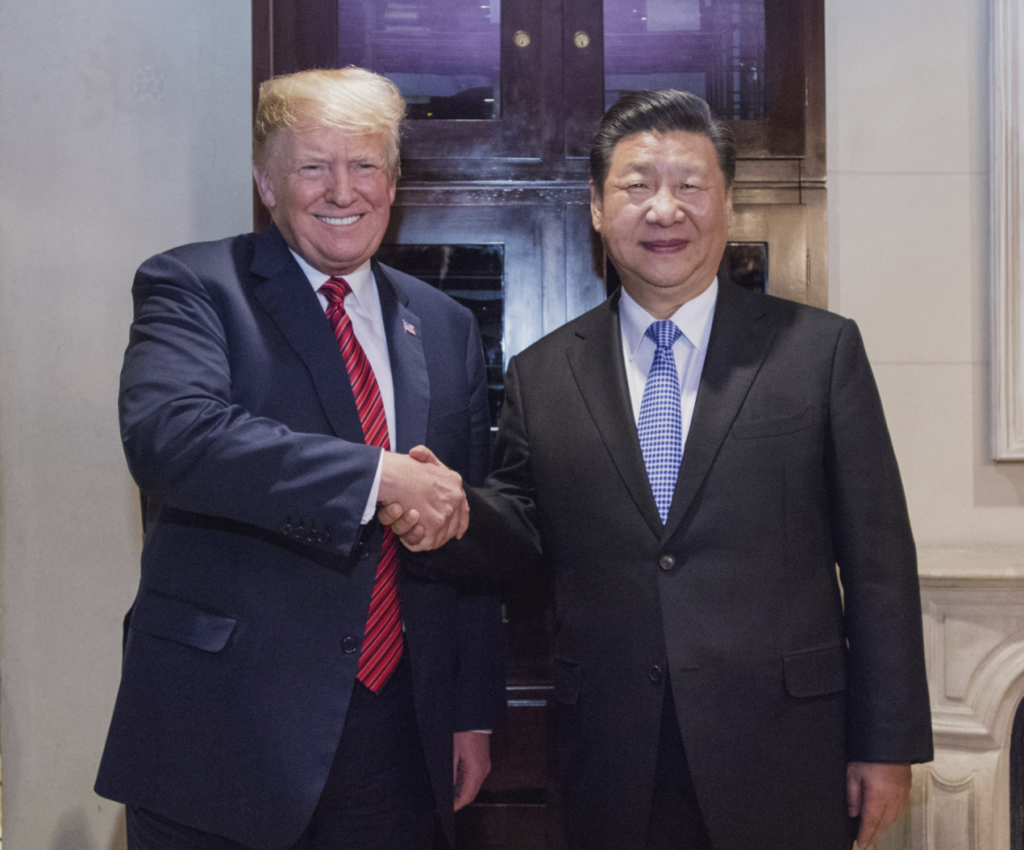
On May 14, 2016, Air Force One landed at Beijing Capital International Airport, ending nearly a decade-long absence of a US president on Chinese soil. Donald Trump, received with state honors by Vice President Han Zheng, was attending the first major bilateral summit in its own right—not on the fringes of a multilateral forum—since Xi Jinping consolidated his power without constitutional limits in 2018. The formal image, the red carpet rolled out before the Great Hall of the People, the hashtag #WelcomeTrumpToChina trending on Weibo: everything suggested diplomatic normalcy. But beneath the carefully staged surface lay fractures of a depth that no joint photograph could conceal.
This analyst believes that the Beijing Summit of May 2026 constitutes the most significant bilateral geopolitical event since the Plaza Accords of 1985—albeit in reverse: back then, the US dictated the terms of currency parity; today, it negotiates from a position of greater equality and balance, although it is not absolute non-parity. The systemic rivalry between the established power and the rising power—the Thucydides Trap in Graham T. Allison’s formulation—has not disappeared; it has mutated into more sophisticated, transactional, and, in some respects, more dangerous forms, because they conceal the underlying antagonism under a veneer of “win-win cooperation.”
This monograph analyzes in depth the five key areas of the summit—trade and tariffs, the Strait of Hormuz and Iran, Taiwan, artificial intelligence and technology, and nuclear control—as well as the power dynamics in which it is framed, the divergent interests of each side, the likely agreements, and the lines that neither will cross. It is complemented by a Risk Assessment and an Editorial Commentary.
II. STRATEGIC CONTEXT: THE ROAD TO BEIJING
2.1. The previous architecture: from the tariff war to the Busan truce
Trump’s second presidency began in January 2025 with an unprecedented escalation of tariffs—duties that at their peak exceeded 140% on Chinese imports—which Beijing absorbed with a resilience that surprised consensus analysts. The People’s Republic of China (PRC) grew by 5% in 2025, extending that momentum into the first quarter of 2026, while rapidly diversifying its export markets and accelerating its technology substitution policy.
Xi Jinping’s response was surgically precise: in April and October 2025, he threatened to restrict rare earth exports—of which China controls between 75% and 80% of global production and 95% of refining capacity—forcing Trump to back down on both occasions. This rare earth “broken glass gun” demonstrated that the Western supply chain, and the American one in particular, had a major structural vulnerability.
The result was the Busan Summit (October 30, 2025, on the sidelines of APEC in South Korea): Trump called it “12 out of 10” and the Chinese press hailed it as “hard-won achievements.” The agreements included a reduction of US tariffs on Chinese goods from 57% to 47%, large Chinese purchases of soybeans, sorghum, Alaskan oil, and Boeing aircraft, a suspension of mutual export controls, cooperation on fentanyl, and an annually renewable agreement on rare earth elements and critical minerals. A reciprocal visit was announced: Trump to China in the spring of 2026; Xi to the US later that year.
Three months later, the US and Israeli attacks on Iran—Operation Epic Fury—delayed the visit, initially scheduled for April. The negotiated reopening of the Strait of Hormuz, partially blocked ever since, became the most pressing item on Beijing’s agenda.
2.2. The asymmetry of power in 2026: who comes in stronger
The Council on Foreign Relations (CFR) and the Center for Strategic and International Studies (CSIS)—reference sources for this analyst—agree on a diagnosis that is uncomfortable for Washington: China arrives in Beijing with greater strategic confidence than in 2017, when Trump was received with a “state visit plus”—dinner in the Forbidden City, a parade through Tiananmen Square, and $250 billion in trade deals. Xi has demonstrated to his cadres that “the East is rising and the West is declining” and that “time and momentum are on our side.”
Trump, however, arrives at a politically delicate moment: the war against Iran has triggered energy inflation, eroding his domestic popularity, and he needs to showcase concrete victories. His delegation—Secretary of State Marco Rubio, Treasury Secretary Scott Bessent, Trade Representative Jamieson Greer, and Defense Secretary Pete Hegseth, who becomes the first Pentagon chief to participate in a presidential visit to China—reveals the breadth of the issues being negotiated, as well as the presence of more than a dozen CEOs, including Elon Musk (Tesla, SpaceX), Tim Cook (Apple), Jensen Huang (Nvidia), and other leaders from the technology and financial sectors. On the surface, the summit appears more like an economic and business mission than a geopolitical confrontation.
However, the CSIS rigorously warns that China’s “anxiety” to hold this meeting—despite its confident stance—reveals that Beijing is not as secure as it claims: Chinese exports to the US fell 11% year-on-year in the first quarter of 2026; market diversification is real but costly; and the instability of the Iranian environment threatens to disrupt the supply of oil, of which China remains the world’s largest buyer.
III. THE FIVE AXES OF THE SUMMIT
3.1. Trade, tariffs and the new bilateral architecture
Facts
The Busan truce expires at its most sensitive point at the end of 2026, when various snapback measures—which will be automatically reactivated if not renewed—take effect. The Trump administration is pursuing three economic objectives in Beijing: (i) extending the truce and establishing its renewal within the framework of a permanent Trade Board and Investment Board; (ii) expanding Chinese purchases of agricultural products (soybeans, beef), energy (Alaska LNG), and aircraft (Boeing); and (iii) gaining greater access for US companies to the Chinese market, which remains one of the most restrictive in the world. During the presidential flight, Trump stated that his “first request” to Xi would be to “open up” the Chinese economy to US companies.
Implications
The Heritage Foundation accurately points out that all the measures agreed upon so far are reversible and that Beijing has proven strategically adept at conceding on verifiable and politically low-cost items—soybean purchases, regulatory suspensions—while preserving its strategic priorities: technology policy, the Indo-Pacific security architecture, and Taiwan. The proposed Trade Board could be a valuable mechanism for “institutionalizing” the economic relationship—a positive point—but it could also become a forum for permanent conflict if there is no political will on both sides. This analyst estimates that the risk of a new, full-blown trade war has been reduced but not eliminated; the bilateral architecture is fragile and overly dependent on the personal chemistry between the two leaders.
Perspectives and scenarios
Scenario A (most likely, 55%): An extension of the Busan truce is announced, along with new Chinese purchases in agriculture and energy, and the formal establishment of the Trade Board. Tariffs remain around 47% as a break-even point. Result: fragile but functional stabilization.
Scenario B (moderately likely, 30%): Partial agreement—new purchases, without a formalized Trade Board—with vague commitments on tariff reductions. Result: strategic ambiguity that benefits China more than the US.
Scenario C (unlikely but possible, 15%): Breakdown or non-agreement on one of the sensitive axes (Taiwan, IA) that contaminates the economic climate and forces a new escalation before the end of the year.
3.2. The Strait of Hormuz and the war with Iran: the all-pervading variable
Facts
The de facto blockade of the Strait of Hormuz by the Iranian jihadist oligarchy—exacerbated after Operation Epic Fury—has sent oil and natural gas prices soaring, hitting the global economy and particularly US inflation. Trump hopes Xi will pressure Tehran to reopen the Strait and accept a peace agreement. The pre-summit signal was striking: Iranian Foreign Minister Abbas Araghchi visited Beijing the previous week, and China presented itself to Washington as the interlocutor that had already exerted pressure on Iran to facilitate the reopening. Chinese citizens interviewed by CNN on the streets of Beijing, however, expressed little desire for their country to become involved in the conflict.
A senior Trump administration official confirmed to reporters—on condition of anonymity—that Trump was expected to “apply pressure” on Xi regarding the Strait of Hormuz. But China is the world’s largest buyer of Iranian oil; its relationship with Tehran is one of profound strategic interest, not merely tactical.
Implications
The Iranian jihadist oligarchy—and the triumvirate of the Islamic Revolutionary Guard Corps (IRGC) headed by General Ahmed Vahidi, with Mohamed B. Zolghadr leading the Al-Quds Brigades—has demonstrated a tenacity that defies models of external pressure analysis. China can persuade Tehran at the margins, but it cannot—and will not—force a complete reversal in Iranian energy policy without offering something in return. The risk that Beijing will sell Washington a symbolic “mediation” that has no real operational effect on closing the Strait is high. For Europe—dependent on hydrocarbon traffic through the Strait of Hormuz—and for Spain in particular, whose official stance toward the US maintains a structural inconsistency that this analyst has been describing since the beginning of the conflict (the Rota and Morón air bases actively support the operation while the government maintains public hostility toward Washington), the outcome of this conflict is of vital importance.
Perspectives and scenarios
Scenario A (likely, 50%): China announces “active consultations” with Iran and commits to “facilitating” the partial reopening of the Strait. No binding operational commitment. Trump sells the outcome as a victory. The reality on the ground changes little in the short term.
Scenario B (possible, 35%): China conveys specific conditions to Tehran for a de facto reopening, in exchange for US guarantees regarding the lifting of secondary sanctions affecting Chinese purchases of Iranian oil. Implicit agreement, never declared.
Scenario C (unlikely, 15%): Xi rejects any active mediation on Iran and the Strait is left out of the joint statement. Maximum residual tension.
3.3. Taiwan: the red line that cannot be crossed
Facts
The People’s Daily, the official newspaper of the Chinese Communist Party, published an unprecedentedly forceful editorial before Trump’s arrival, calling the Taiwan issue “the first red line that cannot be crossed in China-US relations” and “the biggest risk” between the two powers. Before departing, Trump had declared that he would “discuss” with Xi Jinping the US arms sales to Taiwan—the approved arms package being the largest in history—a statement that generated immediate alarm in Taipei and among Washington’s Asian allies. At the same time, US imports of Taiwanese goods—particularly advanced semiconductors—are projected to surpass imports from mainland China by 2026, making Taiwan an absolutely irreplaceable strategic supplier.
Implications
Taiwan Semiconductor Manufacturing Company (TSMC) produces 90% of the world’s advanced semiconductors. Any US concession on arms sales to Taiwan—presented as a goodwill gesture toward Beijing—would redefine the security architecture of the entire Indo-Pacific, erode the credibility of the US security umbrella with Japan, South Korea, the Philippines, and Australia, and send a signal of strategic weakness with incalculable consequences. This analyst believes that a real concession on Taiwan would be the most serious geopolitical mistake of the Trump administration, with systemic effects on the international liberal order comparable to those of withdrawing from Afghanistan in 2021.
The paradox of decapitation—the phenomenon whereby the elimination or neutralization of a destabilizing actor does not automatically produce stability but can exacerbate the power vacuum and unpredictability—is applied in reverse here: if the US “decapitates” its commitment to Taiwan to obtain transactional gains, it does not eliminate the risk; it multiplies it. The power that abandons a defensive line does not buy peace; it buys the next ultimatum at a higher price.
Perspectives and scenarios
Scenario A (most likely, 60%): The US formally maintains arms sales and the language of the Taiwan Relations Act (1979). China protests ritually. The joint statement sidesteps the issue with ambiguous “one China” rhetoric that both sides interpret to suit their purposes. Status quo preserved.
Scenario B (possible, 30%): The US announces a “pause” or “review” of some component of the Taiwanese arms package as a goodwill gesture within the context of a broader agreement. This would be a major red flag for Indo-Pacific allies.
Scenario C (unlikely, 10%): A joint statement that includes explicit US acknowledgment of China’s “legitimate concerns” about Taiwan in terms that go beyond traditional language. Geopolitical earthquake.
3.4. Artificial intelligence, chips and technological competition
Facts
The presence of Jensen Huang—CEO of Nvidia, the manufacturer of the H100 and B200 chips that fuel the artificial intelligence (AI) revolution—in the delegation is not merely symbolic: export controls on advanced chips to China are one of the hottest items on the agenda. Beijing wants to ease restrictions on access to cutting-edge semiconductors; Washington wants to prevent that technology from bolstering the Chinese Communist Party’s military and surveillance capabilities. DeepSeek demonstrated to the world in 2025 that China can achieve AI competitiveness with fewer computing resources—an efficiency that challenged the Western assumption that chip superiority alone was enough to maintain its advantage.
In quantum computing, the US maintains superior raw power (Google Willow, IBM Nighthawk), but China dominates quantum communications (continental quantum key distribution network, its own satellites). The US strategy is the “offensive sword”; China’s, the “impenetrable shield.” In AI, Beijing is pushing for the summit to produce some bilateral governance framework that would grant it regulated access to technology currently denied to it. Washington sees this as a regulatory Trojan horse.
Implications
The CFR notes that Beijing views AI dialogues as “an opportunity to expand China’s access to U.S. technology and close the gap.” This is accurate. Any bilateral “AI security” framework that opens channels for technology exchange without guarantees of rigorous verification structurally benefits China more than the U.S. The “small garden, high fence” policy—selective restrictions on truly critical technologies—is the only model that makes strategic sense, but it requires alliance discipline that the Trump administration has eroded with its attacks on European and Asian partners.
Perspectives and scenarios
Scenario A (likely, 50%): A bilateral working group on “AI governance” is announced. Export controls remain largely in place, but negotiated trade exceptions are created for certain mid-range chips. Nvidia and other companies gain partial access to the Chinese market.
Scenario B (possible, 35%): Export controls are significantly relaxed in exchange for Chinese commitments on exclusive civilian use, without effective verification mechanisms. Short-term benefit for US technology companies; long-term strategic risk.
Scenario C (unlikely, 15%): AI governance agreement with robust verification clauses and compliance mechanisms. The most favorable scenario for international order but the one that requires the greatest mutual trust—which does not exist.
3.5. Nuclear control: the trilateral US-China-Russia proposal
Facts
Trump plans to propose a trilateral nuclear arms control pact between the US, China, and Russia in Beijing. The New START Treaty between Washington and Moscow expired in February 2026 without renewal, eliminating the last formal limits on strategic nuclear weapons. The Pentagon estimates that China currently possesses more than 600 operational nuclear warheads and will exceed 1,000 by 2030; the US and Russia each maintain arsenals of more than 5,000 warheads. China has consistently rejected any participation in arms control frameworks that would put it on par with the two original nuclear superpowers, arguing that its arsenal is proportionally smaller.
Implications
The proposal is politically bold but strategically complex. For China, accepting limits on its nuclear arsenal at this moment—when it is undergoing both quantitative and qualitative expansion—would amount to freezing itself in a position of permanent inferiority vis-à-vis the US and Russia. For Russia, any agreement that brings China to the table has advantages (it multilateralizes the process) and disadvantages (it legitimizes China as a nuclear equal). For the US, it is an opportunity to create a strategic security architecture, but it requires negotiating patience that Trump’s transactional style rarely allows.
Perspectives and scenarios
Scenario A (most likely, 55%): China agrees to “explore” the concept in a working group or within the framework of bilateral strategic consultations. No concrete commitments. The proposal remains in the statement as an aspiration.
Scenario B (possible, 35%): China formally rejects the proposal; the issue is quietly removed from the communiqué so as not to contaminate the rest of the agreements.
Scenario C (unlikely, 10%): Formal start of trilateral negotiations with a defined timeframe. This would be the most significant outcome of the summit from an international security perspective.
IV. MEDIA RACK
CNN (USA): Live coverage from Beijing. Highlights the “easing of tensions” and the “positive and productive” tone described by executives. Elon Musk: “Wonderful.” Tim Cook: peace sign and thumbs up. Jensen Huang: “The meetings went well.” Tone: pragmatic, results-oriented.
AP/Telemundo (US Hispanic): Emphasis on agricultural lawsuits and the “Trade Board.” They point to the “delicate” moment of Trump’s presidency due to inflation linked to the Iranian conflict.
People’s Daily/Xinhua (China): Xi Jinping described the global situation as “a new crossroads” and proclaimed that the US and China “must be partners, not adversaries.” Xinhua highlighted Trump’s “openness” and mutually beneficial cooperation. Tone: Moderately triumphalist.
El País / El Mundo / La Razón (Spain): Extensive coverage. Emphasis on Iran and the Strait. Mention of the complexity of the Spanish position—Rota and Morón bases operational while the government maintains political distance from the operation.
CFR/CSIS (think tanks, USA): The CFR headlines that “China will have the upper hand.” CSIS anticipates “modest progress” toward greater stability and predictability. Both agree that Xi Jinping enters the presidency with more confidence than in 2017 and that the US has less structural leverage.
World Economic Forum (WEF): Marked the summit as “the most important meeting of 2026 for the stability of global markets.” It anticipates that the outcome will determine the trajectory of oil prices and international stock market indices in the second half of the year.
V. RISK TRAFFIC LIGHT
| RISK AREA | LEVEL | ASSESSMENT |
| Strait of Hormuz / Iran | CRITICAL | De facto deadlock in place; China refuses operational engagement; possibility of moderate post-summit diplomatic détente, but without guarantees. |
| US-China trade war | HIGH | Busan truce expires in 2026; summit seeks extension and new structures (Trade Board). Risk of relapse if no agreement is reached. |
| Taiwan | CRITICAL | Red line declared by the Party. US arms sales on the agenda; risk of diplomatic or military repercussions if mismanaged. |
| Rare earths / technology | HIGH | China maintains hegemony in extraction and refining. Agreement renewable annually. US structural vulnerability persists. |
| Artificial intelligence / chips | HIGH | Nvidia (Jensen Huang present) in the delegation; chip export controls under discussion. Irreducible strategic competition. |
| Trilateral nuclear control | HALF | Trump proposes US-China-Russia pact. China resists; arsenal estimated at over 600 operational warheads. Dialogue possible but no agreement imminent. |
| Global financial stability | HALF | Oil prices rise due to the Strait of Hormuz; US inflation; Chinese exports fall 11% year-on-year. Both sides need stability. |
| Indo-Pacific / alliances | HIGH | Indo-Pacific countries are watching the outcome. Any US concessions on Taiwan redefine the architecture of alliances. |
VI. EDITORIAL COMMENTARY
There are summits that change the world, and there are summits that prevent the world from changing for the worse. The Beijing summit of May 14 and 15, 2026, most likely belongs to the second category—and that, in the current state of global geopolitics, is already a considerable achievement.
The systemic rivalry between the United States and China is not the Cold War. There are not two isolated blocs; there are two deeply interdependent economies—China buys soybeans from Iowa; America manufactures iPhones in Zhengzhou—competing for the architecture of the 21st-century international order with weapons that are simultaneously commercial, technological, military, and regulatory. The Thucydides Trap is not a predetermined fate; it is a risk that diplomacy can avert. But averting it requires something that is in short supply in Trump-era politics: strategic consistency.
Xi Jinping arrives at this summit in the strongest position of any Chinese leader in negotiations with the US since Mao Zedong. He absorbed the trade war without flinching; diversified markets; used rare earth elements as leverage; and forced Trump to lower his demands twice. Meanwhile, he has consolidated personal power without constitutional checks and balances and built around China a network of “transactional partners”—Russia, Iran, North Korea, countries of the Global South—that are not allies in the Western sense of the term, but that reduce its strategic isolation. China does not have allies; it has partners of convenience. This is a crucial difference: the solidity of these relationships is fragile, but their tactical utility is real.
Trump, for his part, arrives needing visible victories. The war against Iran—with the Strait of Hormuz in a state of contained systemic fracture, a term I’ve been using to describe conflicts that neither fully explode nor are resolved—has generated an energy price shock that is eroding his domestic popularity. His business delegation—Musk, Cook, Huang—is simultaneously his greatest asset and his greatest weakness: it reveals that corporate interests weigh as much as, or even more than, strategic interests in defining the US negotiating position. When Jensen Huang—whose company has one of its most important markets in China—accompanies the president to negotiate chip export controls, the signal sent to Beijing is unequivocal: there is room for negotiation.
The greatest danger of this summit is not that it will fail. It is that it will achieve the wrong kind of success: producing a visually appealing trade agreement—soybean purchases, Boeing, Alaskan gas; the creation of a Trade Board; the signing photo—while leaving the truly dangerous problems untouched. The Strait of Hormuz will remain closed or partially closed unless China truly puts pressure on the Iranian jihadist oligarchy—and China will not do so without a price. Taiwan will remain the shortest fuse in the international system, and any ambiguity in the language of the joint statement on the Taiwan issue will be interpreted in Taipei, Tokyo, Seoul, and Manila as a sign of weakening American commitment. AI will remain the battleground where the decision is made about who controls the world’s cognitive infrastructures in 2040.
Europe—viewing this summit from the strategic periphery to which it has been relegated by decades of wishful thinking and industrial suicide in defense and energy—has much to lose and little to gain. If the trade agreement between Washington and Beijing is built on bilateral mercantilism that excludes European interests, the continent will be trapped between two giants negotiating over its head. If the Iran agreement does not lead to a genuine reopening of the Strait, European economies will continue to pay an energy premium that is accelerating the deindustrialization I have been calling industrial suicide.
In this context, Spain occupies a position of structural inconsistency that this analyst cannot help but point out with the frankness the situation demands: while the Rota and Morón air bases actively participate in the logistical support of operations in the Gulf, the government in Madrid maintains a language of distance or veiled criticism toward Washington that cannot withstand the slightest scrutiny for consistency. This is not a matter of Atlanticist maximalism; it is a matter of not pretending that the right hand doesn’t know what the left is doing. In foreign policy, inconsistency is not neutrality: it is vulnerability.
The Beijing summit is, ultimately, a mirror. It reflects the true state of the international order: it is not the world of the Cold War—bipolar, predictable, brutally ordered—nor the unipolar moment of 1991, when the US could dictate the rules of the game. It is a world of systemic rivalry between an established power negotiating from relative decline and a rising power negotiating from strategic patience, both aware that total war between them would be the apocalypse for both. The logic of mutually assured destruction—which in the nuclear order is called MAD (Mutually Assured Destruction)—has an economic version in the 21st century: the mutual destruction of global supply chains. This awareness is what prevents direct confrontation. And this same awareness is what causes wars of variable temperature—which no one can win nor afford to lose—to proliferate on the periphery of the system.
Trump and Xi will pose for photos, shake hands, and proclaim themselves “partners, not adversaries.” They’ll be right. And they’ll be lying. Both at the same time. That’s 21st-century geopolitics.