Gustavo de Arístegui,
May 19, 2026
I. BRIEF INTRODUCTION
The global geopolitical chessboard dawns today, May 19, 2026, with a density of simultaneous crises unprecedented in recent decades. The fragile ceasefire between the United States and Iran remains on a knife’s edge, with negotiations on the Iranian nuclear program stalled over the duration of the enrichment moratorium and the unavoidable issue of control of the Strait of Hormuz. On the European front, Belarus has begun joint nuclear exercises with Russia—the first in the current cycle of conflict—raising tensions on NATO’s eastern flank at a time when Ukrainian positions north of Pokrovsk are under extraordinary Russian pressure. In the Western Hemisphere, the extradition of Alex Saab from Caracas to US authorities—euphemistically called a “deportation” by the interim regime of Delcy Rodríguez—opens a new chapter in the dismantling of the financial networks of the Chavista narco-state. Meanwhile, the South China Sea remains the stage for the systemic rivalry between Washington and Beijing, now further strained by Trump’s calls for China to cooperate in reopening the Strait of Hormuz. These five major issues will shape this analyst’s agenda for the coming hours.
II. MOST IMPORTANT NEWS OF THE LAST 24 HOURS
1. Iran — Nuclear negotiations on a knife’s edge: Trump toughens prerequisites
Facts
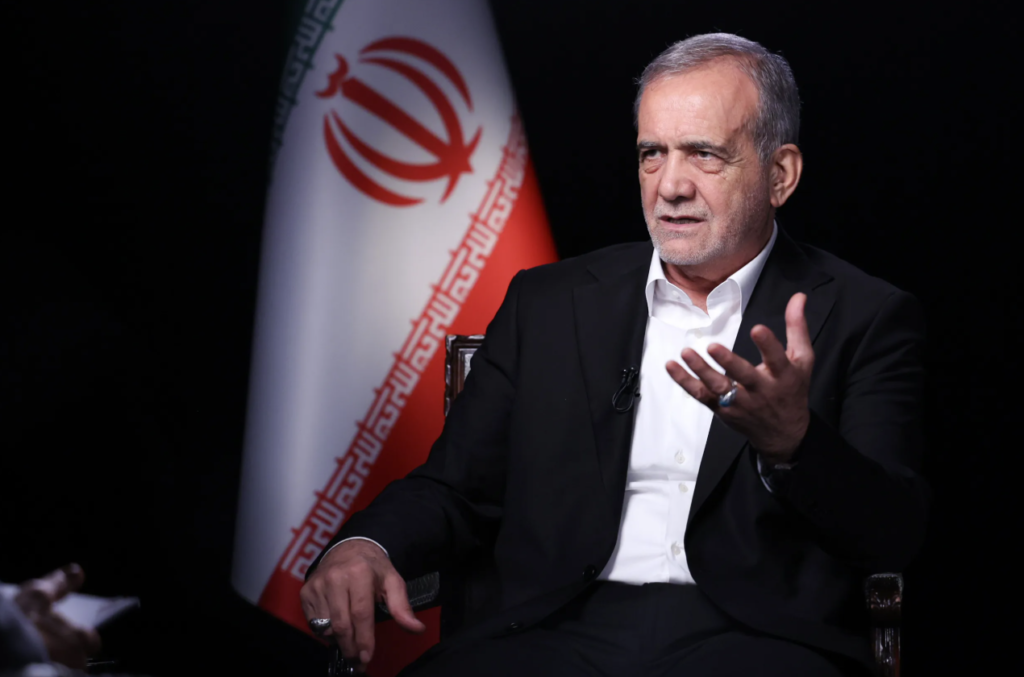
At the time of this writing—after verifying sources with Reuters, Axios, CNN, Al Jazeera, and Iran International— President Trump has imposed five preconditions for Iran to even formally resume peace negotiations: the delivery to the United States of 400 kilograms of uranium enriched to 60%; operation of a single nuclear facility; a freeze on any release of Iranian frozen assets exceeding 25%; no ceasefire guarantees until a final agreement is reached; and a waiver of any war compensation or indemnities. Emirati sources cited by the international press indicate that the accumulated military and economic devastation inflicted on Iran since the start of Operation Epic Fury and the subsequent blockade of the Strait of Hormuz makes it “highly unlikely” that the regime will hold out much longer under the current conditions. At the same time, the hardline faction of the Islamic Revolutionary Guard Corps (IRGC) publicly rejects any delivery of enriched uranium, while reformist President Pezeshkian continues to be systematically sidelined from the negotiation process. The 14-point Memorandum of Understanding (MOU) being drafted by Trump’s envoys—Steve Witkoff and Jared Kushner—and several Iranian interlocutors, through Pakistani mediators, envisions a 30-day negotiation period to address the core issues: opening the Strait of Hormuz, limits on the nuclear program, and a gradual lifting of sanctions.
Implications
This analyst believes that the paradox of decapitation —a concept I have been developing since the beginning of the conflict—takes on its most dramatic dimension here: the Tehran regime lacks interlocutors with sufficient authority to engage with Washington without the backing of the IRGC triumvirate headed by General Vahidi. Pezeshkian is, in practice, a reformist figurehead without real executive power over the nuclear issue or the Strait. General Ghalibaf, Speaker of Parliament, answers to Vahidi, not to the formal executive branch. The jihadist oligarchy that actually governs Iran has found in the closure of the Strait of Hormuz—described by the Iranian parliamentarian himself as “its nuclear weapon”—a deterrent whose power has far exceeded its own expectations. The problem is that this instrument has a devastating economic cost for Iran itself and for the entire global energy economy.
Perspectives and scenarios
Scenario A (medium-high probability): Iran accepts a watered-down version of the 14-point MOU—with the enrichment moratorium negotiated to last between 12 and 15 years, instead of the 20 initially demanded by Washington—and the gradual reopening of the Strait begins within 30 days. The IRGC’s hardliners dissent but do not break the facade of unity. Scenario B (medium probability): Negotiations are suspended again. Trump relaunches Project Freedom naval operations and increases pressure. The Iranian regime uses the renewed tension to consolidate its “holy war” narrative. Scenario C (low but not negligible probability): The accumulated destruction of Iranian infrastructure precipitates an internal implosion of the regime—the true paradox of decapitation—whose “day after” no one in Washington, Jerusalem, or Brussels has even minimally planned. And that, in this analyst’s opinion, is the greatest strategic irresponsibility of the moment.
2. Ukraine — Belarus and Russia begin joint nuclear exercises; Pokrovsk on the brink
Facts
On May 18, the Belarusian Ministry of Defense announced the start of joint military exercises with Russia aimed at “improving the armed forces’ readiness for the use of modern means of destruction, including special munitions”—the official euphemism for tactical nuclear weapons. The exercises involve missile units and fighter jets capable of carrying nuclear warheads, and specifically include the Oreshnik missile system—an intermediate-range missile whose conventional version has already been used twice against targets in Ukraine. In 2023, the Kremlin deployed tactical nuclear weapons outside Russian territory to Belarus for the first time since the collapse of the USSR. Meanwhile, the Kyiv Independent and Ukrinform report that Ukrainian positions north of Pokrovsk are “almost cut off” by Russian superiority in drones and firepower, with 236 engagements in the last 24 hours and more than 1,140 Russian casualties. Russia used 524 attack drones and 22 missiles on the night of May 18 against multiple civilian targets and energy infrastructure.
Implications
Zelensky warned last week that Russia is finalizing plans for operations “from the north”—that is, from Belarusian territory—either against the Chernihiv-Kyiv axis or against the eastern flank of a NATO country. Conducting nuclear weapons exercises in Belarus—a state that shares borders with Ukraine, Poland, Latvia, and Lithuania, all members of the Atlantic Alliance—is not a rhetorical gesture: it is a deliberate signal of escalation. Moscow has calculated, once again, that the Western response will be verbal condemnation followed by passivity. And for the moment, it is not wrong. Russia continues to avoid paying a real and deterrent price for its nuclear bravado, which makes each new demonstration bolder than the last. Trump’s granting of another postponement of oil sanctions against Russia—the second time the Treasury has done so contradicting its own public statements—is, in this context, a completely misguided political signal.
Perspectives and scenarios
The situation north of Pokrovsk could precipitate a tactical breach of Ukrainian lines in the coming days if Russian air superiority—combined drones and missiles—is not met with effective countermeasures. Ukraine’s development of its first domestically produced guided glide bomb, combat-ready according to the Kyiv Defense Ministry, is a technically significant development, although its tactical impact will take time to materialize. The integration of Belarus as a de facto operational nuclear platform is altering the strategic map of NATO’s eastern flank in a way that the Alliance has yet to fully grasp.
3. Venezuela — Alex Saab, handed over to the United States; the Chavista narco-state, facing the mirror
Facts
On May 16, 2026, Colombian-Venezuelan businessman Alex Saab—a self-confessed front man for former narco-dictator Nicolás Maduro, former Minister of Industries for the regime, and the main financial operator of the Chavista corruption and money laundering network—was transferred from Venezuela to Miami under the custody of DEA, FBI, and CIA agents. The interim regime of Delcy Rodríguez labeled the transfer a “deportation”—a textbook example of semantic manipulation—to avoid acknowledging that it was a formal extradition, which would have contradicted years of official narrative regarding Saab’s diplomatic status. SAIME (the Administrative Service for Identification, Migration, and Foreigners) issued a laconic statement indicating that the decision was made because Saab “is involved in the commission of various crimes in the United States of America.” Saab faces charges in Miami of conspiracy to commit international money laundering, bribing Venezuelan officials, and using shell companies in Panama, Hong Kong, Mexico, Turkey, and the United Arab Emirates. He is estimated to have funneled some $350 million from Venezuela to foreign accounts between 2013 and 2020.
Implications
The extradition of Saab is simultaneously a legal victory for the Trump administration and a demonstration of the utter fragility of Delcy Rodríguez’s position at the head of the Chavista transitional regime. By handing over one of the men most intimately linked to the Maduro regime’s financial structure—a man whom Caracas defended for years as a “Venezuelan diplomat” protected by immunity—the interim government undermines its own anti-imperialist narrative in the eyes of the most hardline sectors of Chavismo, represented in the media by figures like Mario Silva, who has already begun to publicly question Rodríguez. Saab’s cooperation with the U.S. Attorney’s Office could be devastating for Maduro and Cilia Flores, both detained in New York awaiting trial on drug trafficking charges, and for dozens of former high-ranking Chavista officials. Transparency Venezuela, for its part, has denounced that the interim government continues to conceal key information about the handling of public funds, including the approximately $3 billion derived from oil sales that, according to Under Secretary of State Michael Kozak, were received by Rodríguez’s administration.
Perspectives and scenarios
Saab’s testimony before the Florida courts will open an unprecedented chapter in the legal history of Chavismo. If he decides to cooperate with the prosecution—which some analysts consider highly likely given the fragility of his position—the implications for the entire Chavista leadership, including Diosdado Cabello, could be seismic. The interim regime is experiencing a profound internal crisis of legitimacy: Saab’s surrender, the reconciliation with the IMF, and the partial amnesties are interpreted by hardliners as a betrayal of Chávez’s legacy. Time is working against Delcy Rodríguez, who administers a cosmically corrupt narco-state in the process of controlled implosion, without any real basis of democratic legitimacy and under constant pressure from Washington.
4. Taiwan and the South China Sea — Chinese military pressure and approval of the Taiwanese defense budget
Facts
Taiwan’s legislature recently passed a bill authorizing an additional $25 billion in defense spending for the period 2026-2033, partly to counter aerial threats from China. The final agreement represented a compromise between the ruling Democratic Progressive Party (DPP)—which demanded increased funding for domestic arms production—and the opposition KMT and TPP parties. In the South China Sea, the People’s Liberation Army (PLA) Southern Theater Command deployed surface combat groups, including Type 055 and Type 052D guided-missile destroyers, to waters east of the Luzon Strait in direct response to the Balikatan 2026 exercises—which, for the first time, included active participation from Japan—and also involved Australia, New Zealand, Canada, and France. The aircraft carrier Liaoning transited the Taiwan Strait heading south as satellite images circulated on Chinese social media showing it operating alongside three destroyers and six guided-missile frigates. Trade negotiations between Treasury Secretary Bessent and Chinese Premier He Lifeng in Paris concluded, with sources cited by Reuters describing them as “remarkably stable.”
Implications
The approval of Taiwan’s extraordinary defense budget, despite its laborious parliamentary process, is an unequivocal sign that Taipei takes the Chinese threat seriously and is responding to Washington’s pressure regarding defense autonomy. Japan’s first operational participation in the Balikatan exercises marks a qualitative turning point in the configuration of the American alliance system in the Indo-Pacific. Tokyo has taken a step that would have been unthinkable just a decade ago, and Beijing has registered it with visible unease—hence the deployment of the Strategic Tactical Command (STC). The interconnection between the Hormuz Strait crisis and the Indo-Pacific is now structural: Trump has partially conditioned his Asian tour on Chinese cooperation to unblock the Strait, demonstrating the extent to which crises feed off each other in an international system undergoing a process of contained systemic fracture.
Perspectives and scenarios
The systemic rivalry between the established and rising powers—the United States and China, respectively—is manifesting itself in the Indo-Pacific with increasing intensity along three simultaneous axes: Taiwan, the South China Sea, and the arc of islands disputed with Japan in the East China Sea. A potential “linking of the three seas”—East China Sea, Taiwan Strait, and South China Sea—in the form of a chain of crises is the scenario that most worries analysts at ISW-AEI and CSIS. The Chinese strategy remains that of “small yard, high fence” in reverse: expanding the yard by creating faits accomplis at sea and on the reefs, while maintaining a seemingly moderate rhetoric in bilateral diplomatic channels. The Thucydides Trap—a concept coined by Graham T. Allison—has never been more relevant to the logic of the two capitals.
5. Middle East — Gaza: Between the paralysis of the peace plan and the pressure on Hamas to disarm
Facts
The Trump-backed peace plan signed in Sharm el-Sheikh in October 2025 is entering its most critical phase. According to the Jerusalem Post and sources cited by Chatham House, Israel has informed UN envoy Nikolay Mladenov that it will not withdraw from the “yellow line” inside Gaza unless Hamas accepts the disarmament framework proposed by the Peace Council. Hamas, which continues to deem the disarmament demand “unacceptable” on what it considers “unilateral” terms, has refused to move forward with the second phase of the agreement until Israel fully implements the terms of the first, including unrestricted access for humanitarian aid. Meanwhile, global attention on Gaza has drastically decreased as a result of the Iranian crisis, which—according to Chatham House analysts—removes the pressure on both sides to fulfill their commitments. Israel has continued to carry out almost daily attacks, citing imminent threats against its forces. The humanitarian situation remains catastrophic: parts of Gaza are experiencing widespread famine.
Implications
Trump’s Peace Plan, arguably the most significant diplomatic achievement of his second term to date, faces a real risk of becoming meaningless if the Israeli far-right bloc—led by Ben-Gvir and Smotrich—succeeds in imposing its agenda of rearmament and the reconquest of Gaza before a viable Palestinian civilian administration is established. Trump’s foreign policy, which in this respect has proven remarkably pragmatic and effective—thanks in large part to the solid work of Marco Rubio—risks losing the ground it has gained if the Iranian distraction prevents rigorous monitoring of the process. Israeli expansionism in the West Bank, which continues unabated, undermines the foundations of any two-state solution and erodes Washington’s diplomatic capital in the Arab world.
Perspectives and scenarios
The convening of the Board of Peace in Washington will give European and Arab governments an opportunity to adjust their positions. The real risk, according to the best available analytical sources, is that the process will lead to the de facto consolidation of a divided Gaza and a partially annexed West Bank—the worst possible scenario for long-term regional stability, although politically convenient for the Israeli far right in the short term. Hamas’s role as a terrorist organization that has never genuinely accepted disarmament or an end to its mission of destroying Israel remains the main leverage point for those sectors of Israeli society opposed to any political solution.
III. MEDIA RACK
The day’s coverage clearly reflects the different editorial and geographical lines of the international press:
The New York Times and The Washington Post focus their coverage on Trump’s hardening of nuclear preconditions for Iran and the risks of a ceasefire collapse. Both publications cite administration sources warning of the possibility of resuming military operations if Tehran does not accept the Memorandum of Understanding (MOU) in the coming days. The Wall Street Journal emphasizes the economic impact of the Hormuz blockade on oil futures markets and US inflation forecasts.
The Times of London and The Daily Telegraph place Belarus’s nuclear exercises at the forefront of their security agendas, underscoring the direct threat to NATO’s eastern flank. The Guardian, from its traditionally progressive perspective, focuses on the humanitarian situation in Gaza and the civilian casualties of the Iran-Iraq conflict, paying scant attention to the strategic dimension of the Belarusian nuclear exercises. The Financial Times combines economic analysis of the effects of the Hormuz blockade with coverage of the Bessent-He Lifeng trade negotiations in Paris.
Le Monde and Le Figaro extensively cover the challenge of the Iranian crisis for European foreign policy, while Libération focuses its critical attention on Trump’s conditions as “disproportionate.” Le Monde underscores the European Union’s inability to project power in any of the open fronts. FAZ and Die Welt address the implications of the Russian-Belarusian nuclear exercises for the European security architecture, calling for an urgent increase in defense spending. Die Zeit adopts a more reflective tone regarding the limits of multilateralism in the current cycle of confrontation.
Corriere della Sera and Vatican media outlets dedicate space to the humanitarian implications of active conflicts, with particular attention to the Middle East. La Croix, Le Point , and L’Express continue to follow the Venezuelan situation with growing concern, where Saab’s extradition is generating debates about the transition and the legitimacy of the Rodríguez government.
Al Jazeera, Al Arabia, and Asharq Al Awsat offer divergent perspectives on the Iranian negotiations: Al Jazeera gives prominent voice to Iran’s rejection of the US-backed MOU, while Al Arabia and Saudi media are notably more supportive of Washington’s pressure on Tehran. An-Nahar Beirut and L’Orient Le Jour anxiously cover the limbo in which Lebanon remains mired, with Hezbollah under pressure to disarm, pressure the terrorist organization resolutely rejects.
TASS and Russia Today attempt to portray the Belarusian-Russian nuclear exercises as “purely defensive” and blame NATO for the escalation. Ukrainian media —Kyiv Independent, Ukrinform, and Kyiv Post— offer the most detailed and reliable picture of the situation on the front lines, with particular attention to the deteriorating positions in Pokrovsk. The South China Morning Post and China Daily present the Bessent-He Lifeng negotiations as a model of “stable and constructive” dialogue, avoiding any mention of the tension over the Strait of Hormuz and Trump’s call for Chinese cooperation. Reuters, AFP, and AP provide the common factual basis upon which all the aforementioned media outlets operate.
The leading think tanks —IISS, RUSI, CSIS, Chatham House, IFRI— agree that the current cycle of simultaneous crises represents the greatest density of concurrent geopolitical risks since the end of the Cold War, with the peculiarity that none of the major powers has a credible “day-after plan” for any of the active hotspots.
IV. RISK TRAFFIC LIGHT
🔴 EXTREME RISK
— Collapse of the US-Iran ceasefire and resumption of military operations in the Strait of Hormuz.
— Extension of the Ukrainian conflict to the Belarusian-NATO flank within the framework of joint nuclear maneuvers.
🟠 HIGH RISK
— Tactical breakdown of Ukrainian lines north of Pokrovsk in the face of Russian drone superiority.
— Collapse of the peace process in Gaza due to mutual breaches and the impact of the Iranian crisis on international attention.
— Escalation of naval incidents in the South China Sea in the post-Balikatan context.
🟡 MODERATE-HIGH RISK
— Internal instability of the Venezuelan interim regime of Delcy Rodríguez in the face of Saab’s extradition and the divisions within Chavismo.
— Residual US-China trade tensions despite Bessent-He Lifeng dialogue.
— Pressure on Hezbollah for its disarmament and possible reactivation of hostilities in southern Lebanon.
🟢 LOW RISK (BUT MONITORED)
— Relative stability of the peace process in Gaza in its initial phase, despite occasional breaches.
— US-Iran nuclear negotiations: there are active channels and diplomatic will in sectors of both sides.
V. EDITORIAL COMMENTARY
The world today, May 19, 2026, watches with astonishing resignation as this analyst has been warning about something since the first negotiations between Washington and Tehran began: no one—absolutely no one in any of the foreign ministries involved—has a coherent and detailed plan for the day after. Not if the Iranian regime gives in. Not if it implodes. Not if it resists. This lack of a post-conflict strategy is, on a moral and intellectual level, almost as serious as the crimes of the regime itself. And this is not empty rhetoric: it is the difference between winning a war and winning the peace.
That said, and being decidedly in favor of maximum pressure on Tehran’s jihadist oligarchy—a terrorist state masquerading as a government whose history of exporting death and instability from the Mediterranean to the Gulf of Aden admits no relativization or euphemism—I feel compelled to point out that Trump’s hardening of preconditions in recent days is more of a tactical outburst than a sustained strategy. Simplifying the demands so that Iranian moderates could return to the negotiating table, as suggested by the regional source cited by CNN, was the right approach. Suddenly raising them—400 kilograms of uranium delivered, a single nuclear facility, zero compensation—is a move that strengthens the most intransigent faction of the IRGC. Marco Rubio, who has proven to be the anchor of reason in this administration, faces the task of steering the negotiations back toward ground where the regime can accept without that acceptance being interpreted internally as surrender.
On the Ukrainian front, the situation is extremely serious in military terms and a monumental act of irresponsibility in Western diplomatic terms. The nuclear exercises by Belarus and Russia are not empty signals: they are gradual, increasingly explicit declarations of intent, which NATO acknowledges but fails to formulate a credible deterrent response to. While Putin celebrated Victory Day with Lukashenko on May 9 in Moscow, Europe was still debating the percentage of GDP it should allocate to defense. Trump’s renewal of oil sanctions waivers for Russia—publicly contradicting what the Treasury Secretary had promised—is precisely the kind of wrong signal that encourages Moscow to continue testing the limits of the Western reaction threshold. This can and should be criticized, regardless of the positive assessment that Trump’s foreign policy deserves on other fronts.
The extradition of Alex Saab to American justice is, on the other hand, unequivocally good news. It demonstrates that Maduro’s capture on January 3rd was not an isolated incident but rather the starting point of a systematic—still incomplete and uncertain—dismantling of the Chavista narco-state’s networks. The interim regime of Delcy Rodríguez, which remains a watered-down version of a mafia-like structure lacking democratic legitimacy, is forced to cooperate with Washington because it has no other option for short-term survival. This does not make it a reliable partner, nor does it make Chavismo a reformed movement. But it does open a window—narrow, drafty, and without guarantees—through which Venezuela could, in the best-case scenario, begin a path toward institutional normalization. This scenario requires constant pressure, rigorous international verification, and a Venezuelan opposition that overcomes its internal divisions. All three factors remain more of a hope than a reality.
Finally, the Indo-Pacific: Taiwan’s legislature’s approval of the extraordinary defense budget is a sign of strategic maturity that contrasts—painfully—with Europe’s inability to do the same. For years, Europe has declared that its security is its responsibility, yet it continues to postpone the decisions that this declaration implies. Japan’s first operational participation in the Balikatan exercises, on the other hand, is the kind of concrete and courageous response that distinguishes those who have grasped the historical moment from those who still inhabit the comfortable world of before February 24, 2022. The triangle of friction between the US, China, and Taiwan will remain the main driver of global instability in the next five years, regardless of how the crises in the Middle East or the stalemate in Ukraine evolve. Ignoring it would be a luxury that the free West can no longer afford.