Gustavo de Arístegui,
May 21, 2026
I. BRIEF INTRODUCTION
The United States Department of Justice exposes —three decades late but with impeccable timing— the criminal nature of the Castro regime by formally indicting Raúl Castro for murder.
The special Reuters investigation confirms what this analyst has been describing for months: that Tehran’s jihadist oligarchy has turned the Strait of Hormuz into a maritime tollbooth with which it extorts world trade.
The New York Times today publishes a comprehensive analysis that confirms the progressive and irreversible takeover of power in Iran by the Islamic Revolutionary Guard Corps (IRGC), confirming point by point the power architecture that this report has described in detail since the beginning of the conflict.
SpaceX announces to the Federal Aviation Administration (FAA) its goal of reaching ten thousand launches annually in five years, a revolution that redefines the geostrategic equation of space.
Cuba is sinking into the greatest crisis in its “revolutionary” history, exacerbated by the systemic corruption of a ruling elite that has transformed the island into a vast mafia organization. Five news stories; one common thread: the breakdown of the international order and the urgent need for liberal democracies to act decisively and clearly before the damage becomes irreversible.
II. MOST IMPORTANT NEWS OF THE LAST 24 HOURS
1. US indicts Raúl Castro for murder: the first criminal accusation in thirty years against the Havana tyrant
Facts
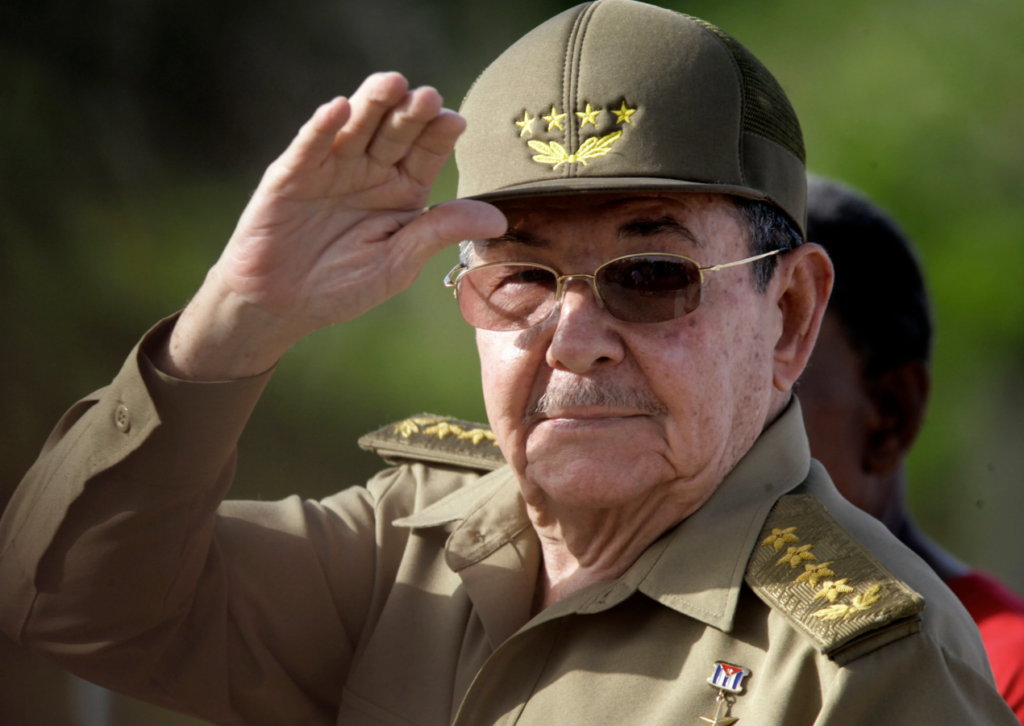
The Federal Grand Jury convened in Miami unveiled on Tuesday, May 20, 2026, an indictment—actually issued on April 23— against former Cuban President Raúl Castro, 94, on four counts of murder, one count of conspiracy to kill U.S. nationals, and two counts of aircraft destruction. The same charges were brought against five other Cuban military officers: Lorenzo Alberto Pérez-Pérez, Emilio José Palacio Blanco, José Fidel Gual Barzaga, Raúl Simanca Cárdenas, and Luis Raúl González-Pardo Rodríguez. The indictment stems from the downing, on February 24, 1996, of two civilian aircraft belonging to the Cuban-American exile organization Brothers to the Rescue, carried out by Cuban MiG fighter jets in international waters—as concluded at the time by the International Civil Aviation Organization (ICAO)—which resulted in the deaths of four people, three of whom were U.S. citizens. Acting Attorney General Todd Blanche announced the indictment at a ceremony held at Miami’s Freedom Tower, a symbol of the Cuban exile community, on the same day that Cuban exiles commemorate Cuba’s independence. The indictment explicitly states that the Castro regime “established and maintained its control over Cuba and its people through a reign that eliminated dissent… and that, through the expropriation and nationalization of private enterprises, it financed those objectives.”
Implications
The indictment of Raúl Castro is a historic event that goes far beyond its immediate legal consequences—which are practically nonexistent, given that the aging tyrant will not leave the island and Cuba will never extradite any of its citizens to U.S. courts. Its significance is political, symbolic, and strategic. On the political front, it constitutes the logical culmination of the Trump Administration’s maximum pressure campaign against the Havana regime, initiated after the capture of Nicolás Maduro in Venezuela in January 2016 and accelerated by the subsequent blockade of Venezuelan oil supplies—which has reduced Cuba’s energy imports by between 80 and 90 percent, according to CiberCuba sources. The parallel with the prosecution of Manuel Noriega in 1992 is telling: the events that gave rise to that case spurred, as former U.S. Attorney Guy Lewis told CNN, the first attempts to bring a similar case against Castro. Thirty-four years later, a seven-page report prepared by Lewis himself reached the hands of high-ranking officials in the Trump Administration, including Secretary of State Marco Rubio. Symbolically, the accusation exposes to the world the criminal nature of the regime—not a revolutionary government, but a mafia organization in the most literal sense of the term—and deprives its heirs of all moral legitimacy. Strategically, it complements the economic strangulation exerted by the more than 240 sanctions imposed since January 2016 and the blockade of oil tankers, while the State Department, under Rubio’s leadership, has publicly identified a mafia-like business network (GAESA) controlled by the Cuban military leadership. It is estimated that the Cuban military leadership controls revenues of approximately sixteen billion dollars. The suspension of operations in Cuba by shipping companies such as Hapag-Lloyd and CMA CGM, and the departure of the Canadian mining company Sherritt International —which owes $277 million to the regime—, complete the picture of accelerated economic collapse.
Perspectives and scenarios
In the short term, the prosecution does not alter Cuba’s internal power equation: the regime will survive the judicial humiliation as long as it has financial oxygen, which is scarce. The most likely scenario is an acceleration of the humanitarian crisis that will progressively erode the system’s foundations. The highest-risk scenario—but not the only one—is a disorderly collapse similar to the one Cuba itself experienced during the “Special Period” after the fall of the USSR, but this time without the Venezuelan lifeline or Russian logistical support. The question the Trump Administration has not publicly answered—and which this analyst has been asking for months—is: Is there a plan for the day after? Does Washington have a roadmap to support a potential Cuban transition, or will it simply exert pressure without a long-term strategic vision? Meanwhile, powerless Europe watches the event unfold with the usual mix of moral unease and political paralysis.
2. Iran turns the Strait of Hormuz into a toll: Tehran’s jihadist oligarchy charges merchant ships “fees”
Facts
A special investigation by Reuters, published on May 20, 2026, documents in detail the control architecture that the Iranian regime has built in the Strait of Hormuz since its closure on April 13. The mechanism deployed by the Islamic Revolutionary Guard Corps (IRGC) operates on three levels: government-to-government agreements (negotiated directly by the Iranian Foreign Ministry with countries that are not subject to US export restrictions), thorough verification of each vessel’s affiliation—expressly excluding those linked to the United States or Israel—and the collection of “security and navigation fees,” the amount of which varies depending on the type of cargo. Two European shipping industry sources told Reuters that vessels not covered by bilateral agreements are paying more than $150,000 per transit. The case of the Agios Fanourios I oil tanker—a 330-meter vessel carrying Iraqi crude oil destined for Vietnam—illustrates the mechanism precisely: blocked off the coast of Dubai since late April, it was able to set sail on May 10 after a direct agreement with Iran brokered by the Iraqi prime minister; it was detained by IRGC patrol boats as it passed Hormuz Island on the pretext of suspected smuggling; it was released hours later without explanation; and it finally reached Vietnamese waters on May 16 with two million barrels of crude oil on board. Reuters warns that the payments constitute a violation of US economic sanctions against the Iranian government.
Implications
What Reuters documents today is exactly what this analyst has been describing for weeks: Tehran’s jihadist oligarchy has transformed one of the world’s major energy bottlenecks—through which 20 to 21 percent of the world’s oil passes—into a source of extortionate income and a first-rate instrument of geopolitical pressure. The strait is not “closed” in the conventional sense: it is under Iranian discretionary control, which opens or closes it according to diplomatic expediency and the volume of “payments.” This system has three far-reaching consequences.
The first is economic: as long as the payments violate US sanctions, any shipping company or government that makes them is exposed to retaliation from the US Treasury, which creates enormous legal uncertainty and raises the cost of marine insurance to historic levels.
The second is strategic: the IRGC demonstrates that, even in a situation of war and under the pressure of the US naval blockade, the regime has the capacity to extract rents from international trade —which strengthens its negotiating position—.
The third is political: the regime has achieved what it sought from the beginning of the conflict, that is, to turn the Strait into a negotiating lever that no external actor —not even the United States— can completely deactivate without enormous costs to the global economy.
Perspectives and scenarios
The consolidation of Iranian control over the Strait of Hormuz strengthens the IRGC’s hardline position in negotiations with Washington. If the provisional ceasefire agreement—established on April 8 with Pakistani mediation—is not consolidated into a credible peace framework, the jihadist oligarchy now has a far more sophisticated instrument of pressure than simply closing the strait: it can gradually reopen it based on diplomatic progress, charge transit fees, and target its adversaries with the mere threat of closing the passage again. The most likely scenario is an indefinite prolongation of this state of controlled ambiguity. The risky scenario is that Washington, irritated by the “fees”—President Trump already warned on April 10 that he opposed any Iranian charges to oil tankers—decides to resume airstrikes, with all the systemic consequences this would entail for crude oil prices and global financial stability.
3. The IRGC consolidates its hegemony: The New York Times confirms what this report has been describing for months
Facts
The New York Times today, May 21, 2026, publishes an extensive analysis of the consolidation of power by the Islamic Revolutionary Guard Corps (IRGC) within the Iranian state. This analysis, conducted with the rigor and byline of one of the world’s leading media outlets, confirms the power structure that this report has accurately described since the beginning of the conflict on February 28. According to the NYT, based on sources close to Iranian decision-making circles and on the assessment of US intelligence (previously published by The Washington Post in March), the Iranian regime has transitioned from a system of clerical primacy—with the Supreme Leader as the final arbiter of all state affairs—to a structure dominated by the IRGC leadership, a shift accelerated by the death of Ayatollah Ali Khamenei on the first day of the war. His son, Mojtaba, elevated to the status of the new Supreme Leader, is surrounded by—and largely controlled by—the commanders of the IRGC, who have restructured the security apparatus into autonomous regional headquarters that answer directly to the Supreme Leader and are empowered to make independent decisions outside of Tehran’s civilian leadership. The IRGC had already anticipated the “decapitation” of its leadership by delegating authority down the chain of command, which explains its operational resilience despite the losses it has suffered. General Ahmad Vahidi, the current commander-in-chief of the IRGC, wields military and political power alongside the new Supreme Leader, according to the Institute for the Study of War (ISW) and US intelligence sources.
Implications
The conclusion drawn from the NYT analysis—and one that this analyst has maintained with identical justification since the beginning of the conflict—is that “the choice facing the Iranian leadership is no longer between moderate and hardline politics, but between hardline politics and even harder politics.” This has direct implications of enormous significance. First, the oft-cited
The paradox of decapitation —that is, the fact that the physical elimination of leaders through US and Israeli attacks has strengthened extremist factions—is palpably and verifiably manifest in the Iranian power structure today: the IRGC is in charge, Pezeshkian is blocked, and Mukhtaba Khamenei acts as the clerical legitimizer of the Corps’ military decisions. The core of the paradox is that the elimination of Ali Khamenei and his closest associates has deprived the regime of a figure capable of imposing the concessions and compromises necessary to achieve a peace agreement.
Secondly, any negotiations with Tehran on the nuclear program, ballistic missiles, missile program and proxy terrorist groups —Hezbollah, Hamas, the Houthis in Yemen and the pro-Iranian terrorist militias in Iraq— must assume that the real interlocutor is not the civilian government of Pezeshkian but the IRGC triumvirate: Vahidi, Zolghadr and Rezaei.
Third, the designation of the IRGC as a terrorist organization by the Council of the European Union in February 2026 takes on exceptional relevance today, even though Europe remains unable to draw the political and security consequences that such a designation should entail.
Perspectives and scenarios
The most likely scenario is that the IRGC will use the ceasefire period to consolidate its internal control, reorganize the networks of its subsidiary terrorist organizations—devastated by Israeli and American strikes—and strengthen its negotiating position. The systemic risk is that delegating authority to mid-level commanders, designed to ensure operational resilience, could lead to episodes of unauthorized escalation—as already happened when the IRGC attacked Turkey, a NATO member, in the early days of the conflict. Washington must understand that it is negotiating with a terrorist and mafia-like organization disguised as an institution, not with a government, and calibrate its proposals accordingly.
4. SpaceX and the space race: ten thousand launches a year as the strategic horizon of the American space power
Facts
The administrator of the U.S. Federal Aviation Administration (FAA), Bryan Bedford, confirmed on May 20, 2026—following his meeting with SpaceX President Gwynne Shotwell—that the company founded by Elon Musk aims to reach 10,000 launches annually within five years. This goal more than quadruples the ambition Musk himself stated on March 31 on his social network X—”in four or five years there will be a launch every hour”—which would equate to approximately 8,760 launches per year. SpaceX conducted 170 launches in 2025 and had already completed 50 in 2026 by the end of April. The entire world conducted around 250 orbital launches last year. The announced target represents a sixty-fold increase over SpaceX’s current rate and a fortieth-fold increase over the global rate. The FAA has approved a total of 195 annual launches for SpaceX, distributed among its four active launch sites. Administrator Bedford noted that to achieve this goal, SpaceX will need to substantially improve its reliability: “We’re going to have to push ourselves, and they’re going to have to improve their reliability.” The next Starship test flight—the twelfth flight test, which will include upgraded versions of the Super Heavy rocket and the Starship spacecraft itself—was scheduled for May 21 from Starbase in Texas.
Implications
The 21st-century space race is not a competition of government budgets—as was the 20th-century race between the USSR and the United States—but a technological acceleration driven by private capital that is redefining the geopolitics of outer space. A horizon of ten thousand launches annually has implications that extend far beyond the aerospace industry. On the military-strategic front, it consolidates the United States’ superiority in space as a combat domain, essential for communications, surveillance, electronic warfare, and the guidance of precision weapons systems. On the economic front, it radically reduces the cost of access to space and democratizes the use of low Earth orbit for civilian and military applications. On the geopolitical front, it opens a technological gap with China—which is pursuing its own space objectives through its national program—that will be difficult to close in the short term, and it complicates competition for any other state actor that seeks to rival the American public-private ecosystem. Trump’s stated goal of returning the United States to the Moon before 2028 thus takes on a dimension that is not only symbolic but also structural.
Perspectives and scenarios
The main obstacle is not technological but regulatory and related to reliability. The FAA will have to radically reform its certification and authorization procedures if it intends to support a launch cadence of this magnitude without compromising the safety of civil airspace. The optimistic scenario is that competition among private players—SpaceX, Blue Origin, Rocket Lab—and regulatory pressure from the Trump Administration will accelerate the timeline. The risky scenario is that a high-impact accident—like the two Starship failures in 2026—will cause a regulatory standstill that frustrates medium-term objectives. In any case, the space race is now also an unavoidable dimension of the US-China strategic competition.
5. Cuba: The collapse of a dictatorship riddled with corruption, incompetence, and ideological fanaticism
Facts
The Cuban crisis of 2026—which began on January 3 after the capture of Nicolás Maduro in Venezuela by U.S. armed forces and the subsequent cutoff of Venezuelan oil supplies—has now reached the dimensions of a systemic collapse that extends far beyond a mere energy crisis. The Trump Administration has imposed more than 240 sanctions against the Cuban regime since January and has intercepted at least seven oil tankers carrying oil shipments, reducing energy imports by between 80 and 90 percent. Secretary of State Marco Rubio, speaking from Air Force One on May 13, described the island’s economic structure as a system in which national wealth is exclusively controlled by a military elite, centered around the GAESA conglomerate—which controls approximately 40 percent of the Cuban economy, including ports, maritime terminals, and the Mariel Special Development Zone—while the civilian population faces an unprecedented humanitarian and economic crisis. The Canadian company Sherritt International suspended all its direct operations in Cuba on May 7, claiming that sanctions make it “materially impossible” to maintain normal activity, at a time when the regime owed it $277 million. Shipping companies Hapag-Lloyd and CMA CGM have officially suspended their operations on the island. Air France canceled Paris-Havana flights at least until June 15 due to a lack of jet fuel. Adding to this are the massive blackouts that left millions of Cubans in Havana and the western part of the island without electricity for 72 hours.
Implications
Cuba today stands as the most complete and most wretched example of what happens when ideological stupidity, structural corruption, and criminal incompetence combine for six decades of absolute power. The Castro brothers’ regime—now in the hands of their heirs, with the sinister figure of Miguel Díaz-Canel as nominal president and the true military powers operating from the shadows—is not an accidental failure: it is the inevitable result of a system designed to extract resources and perpetuate the power of a ruling class that has turned the state into its personal fiefdom. The combination of US economic strangulation, the collapse of Venezuelan support, and the model’s inherent inability to generate wealth is driving Cuba toward a humanitarian crisis that could destabilize the entire Caribbean region. The prosecution of Raúl Castro now adds a judicial dimension to the political and economic pressure.
Perspectives and scenarios
The most likely short-term scenario is a gradual worsening of the crisis without an abrupt collapse of the system, given that the regime retains its monopoly on force and the mechanisms of repression. The increasingly likely scenario is a social explosion similar to that of July 11, 2021, but this time in a context of total economic collapse and without the safety valve of Venezuelan oil. The great unknown remains the same as in the Iranian case: Washington holds the key to the crisis, but has not publicly presented a transition plan that guarantees that the regime’s collapse will not lead to ungovernable chaos. The harsh criticism that the current Cuban political class—including the Trump Administration—deserves is precisely this: it is easier to destroy than to build, and in Cuba, as in the Iran of the post-apocalyptic scenarios, the lack of strategic planning is an irresponsibility with potentially grave consequences.
III. MEDIA RACK
● The New York Times (May 21, 2026): Publishes today the analysis on the consolidation of power of the IRGC in Iran, referenced in news item 3 of this report. It reinforces the narrative of a drift towards the ultra-conservative line within the regime.
● Reuters (May 20, 2026): Special investigation into Iranian control of the Strait of Hormuz, with the Agios Fanourios I case as a prime example. Comprehensive coverage of Raúl Castro’s prosecution and SpaceX’s launch objectives.
● The Washington Post (May 20, 2026): Detailed coverage of Raúl Castro’s indictment before the Miami Grand Jury. US intelligence assessments of the Iranian regime published in March are corroborated by current analyses.
● CBS News / CNN / NPR (May 20, 2026): Extensive coverage of Castro’s prosecution, with statements from prosecutor Blanche and testimonies from victims and Cuban exiles. CNN recounts the three-decade history of the legal case.
● CNBC / NBC News (20/05/2026): They contextualize Castro’s prosecution within the broader framework of the Trump Administration’s pressure against Cuba, comparable to the prosecution of Maduro for drug trafficking.
● Al Jazeera (archive, April 2026): Documentation on the two-week ceasefire agreement between the US and Iran on April 8, mediated by Pakistan, which constitutes the framework in which the current Iranian control of Hormuz takes place.
● Euronews / Times of Israel (April 2026): Analysis of the marginalization of Iranian civilian leadership and the rise of the IRGC, with quotes from the Institute for the Study of War (ISW) and US intelligence sources.
● La Nación (Argentina) / CiberCuba (May 2026): Coverage of Rubio’s sanctions against the Cuban regime and the island’s energy collapse. Figures on the reduction of Cuban oil imports between 80 and 90 percent.
● Cryptopolitan / The Star Malaysia / Daily Maverick (21/05/2026): Multiple international sources report statements from the FAA administrator regarding SpaceX’s goal of reaching 10,000 launches annually.
IV. RISK TRAFFIC LIGHT
🔴 CRITICAL RISK — Strait of Hormuz / US-Iran Conflict: Iran’s consolidation of control over the strait and the collection of extortionate “tolls” from merchant ships threaten to reignite the military confrontation if Washington decides that the regime is violating the ceasefire terms. The IRGC’s operational resilience and its delegation of authority to mid-level commanders increase the risk of unauthorized incidents that could escalate the conflict.
🔴 CRITICAL RISK — Cuba: Humanitarian and energy collapse underway. Economic strangulation, combined with the regime’s systemic corruption and the absence of a transitional framework from Washington, creates a scenario of potential regional destabilization. The prosecution of Raúl Castro could accelerate the internal crisis.
🟠 HIGH RISK — Iranian Power Structure / IRGC: The IRGC’s growing hegemony over the Iranian state apparatus hardens Tehran’s negotiating position and narrows its diplomatic options. Negotiations with Washington require interlocutors with real authority, not representatives of the paralyzed civilian power structure.
🟡 MODERATE RISK — SpaceX / Space Regulation: The goal of ten thousand annual launches introduces regulatory and airspace safety tensions that will need to be rigorously managed. The Sino-American space race increases the risk of orbital incidents.
🟢 CONTAINED RISK — Raúl Castro’s prosecution: The immediate legal impact is limited. The risk of further diplomatic escalation between Washington and Havana is already priced in by markets and regional actors. The legal action has a far-reaching political and symbolic effect that outweighs its immediate legal consequences.
V. EDITORIAL COMMENTARY
The indictment of Raúl Castro for murder is, above all, an act of belated justice—thirty years late—for the four victims of the 1996 downing of the Cuban military aircraft, three of them U.S. citizens, by Cuban MiG fighter jets in international waters. But it is also something more: it is the definitive confirmation, backed by a federal grand jury, that the Castro regime was never a revolution—however much the Western left insists on romanticizing it—but rather a criminal organization that monopolized the state for six decades to enrich itself and perpetuate its hold on power. The fact that Bernie Sanders, Ocasio-Cortez, Ilhan Omar, and the radical wing of the Democratic Party—the self-styled Squad—have coexisted for years with a narrative that glorified the Castros as champions of anti-imperialism speaks volumes about the moral frivolity of that sector of the American left and very little in its favor. Cuba today is an island without electricity, without fuel, without a future—a tragedy of colossal proportions that is the direct result of ideological stupidity, rampant corruption, and the criminal incompetence of a ruling class that has governed through terror for decades. We applaud the Trump Administration’s maximum pressure, but we demand that this pressure be accompanied by a strategic vision for the aftermath: applying pressure without planning the transition is a form of irresponsibility that could turn the regime’s collapse into an uncontrolled humanitarian catastrophe.
Regarding the Strait of Hormuz, what Reuters documents today in its investigation is nothing new to readers of this report: it is the timely and detailed confirmation of what we have been describing for weeks. The jihadist oligarchy in Tehran—we emphasize: jihadist oligarchy, never a theocracy, because the driving force behind its power is greed and the thirst for domination, not faith—has transformed one of the planet’s major energy bottlenecks into an instrument of geopolitical extortion. The Islamic Revolutionary Guard Corps does not act as a praetorian guard serving a supreme leader: it acts as a criminal organization with rifles, missiles, and drones, exactly as it is. The so-called decapitation paradox—we emphasize this concept because it is central to the analysis of this conflict—has produced a result that some in Washington did not foresee or did not want to foresee: attacks against the Iranian leadership have not weakened the regime, but rather hardened it, concentrating power in the hands of the IRGC commanders most inclined toward confrontation. This is the strategic trap in which the United States finds itself, and the only way out is through negotiations that recognize its true interlocutors—the IRGC commanders—and not the civilian rulers who lack real authority.
SpaceX’s America, meanwhile, reminds us that the West’s civilizational power lies not in its militaries—though these are indispensable—but in its capacity to generate disruptive innovation. Ten thousand launches annually for five years: the figure is astronomical in every sense of the word, and represents a qualitative leap in the geostrategic equation of space that no actor—not China, not Russia, not the European Union, which remains unable to agree on a common space policy—is in a position to match in the short term. It would be a mistake, however, to confuse technological supremacy with strategic invulnerability: the history of the 21st century teaches us that the most technologically advanced actors are not necessarily the most effective at managing hybrid conflicts, temperature-shifting wars, and failed state crises.
A world in which Cuba is collapsing, Iran is extorting the seas, the IRGC is monopolizing power in Tehran, and SpaceX aspires to launch a rocket every hour is a world that urgently needs leaders with strategic vision, moral courage, and the capacity for coordinated action. The former are conspicuously absent in Europe, which watches the spectacle unfold with its usual mixture of impotence and inconsistent moralizing. The latter, with all its flaws and contradictions, can be glimpsed in Marco Rubio’s Washington and, when he isn’t driven by outbursts and improvisation, in President Trump’s own. The world cannot wait.