Gustavo de Arístegui,
May 26, 2026
I. BRIEF INTRODUCTION
Five vectors of tension dominate the day, and their intersection paints the most accurate portrait of the strategic disorientation of our time: the Iranian jihadist oligarchy continues to use the digital blackout as a weapon of internal warfare while Pezeshkian tries, in vain, to restore normalcy in the face of the Revolutionary Guard Corps (IRGC), which is the true power; the United States launches new “self-defense” attacks on Iranian positions in the Strait of Hormuz, while negotiations stall in a wording dispute that reveals the depth of the chasm; the QUAD meets in New Delhi and moves—at last—from declarations of intent to concrete action, with a first joint infrastructure project in Fiji and a framework for critical minerals that directly contradicts Chinese extractive hegemony; and Pope Leo XIV publishes “Magnifica Humanitas,” a landmark encyclical that places artificial intelligence at the heart of the Church’s social teaching with an intellectual boldness reminiscent of Leo XIII’s Rerum Novarum. In addition to all this, from the scientific and medical field, there is the first single-drug infusion therapy for cholesterol, which opens a new era in preventive cardiovascular medicine. The complexity of the current situation calls for a rigorous, committed analysis, without concessions to the comfort of a superficial approach.
II. MOST IMPORTANT NEWS OF THE LAST 24 HOURS
1. Iran’s internet blackout: Pezeshkian orders restoration; IRGC questions his authority
Facts
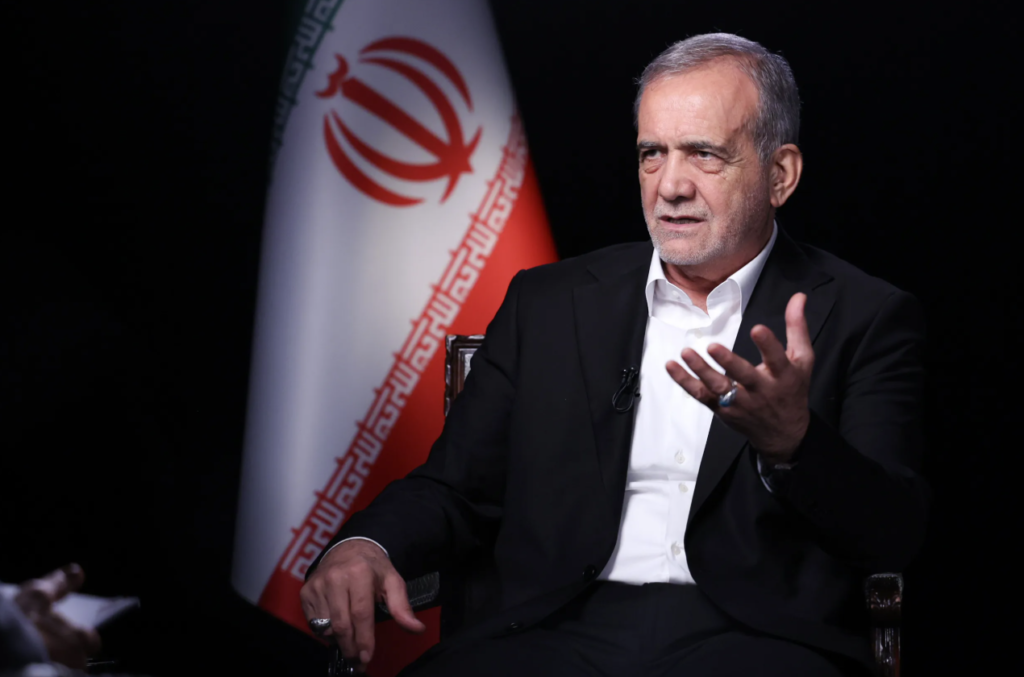
After 87 consecutive days of a near-total internet blackout—the longest recorded in a modern society—Iranian President Masoud Pezeshkian ordered the Ministry of Communications on Monday to restore international internet access to its pre-January state. The restoration was confirmed by Minister Sattar Hashemi and the presidential spokesman, and sources from the semi-official ISNA news agency indicated it would be in effect by Tuesday. However, the IRGC-affiliated Fars news agency immediately questioned the civilian government’s authority to issue such an order, arguing that the decision to restrict internet access was made by the Supreme National Security Council—a body where the Revolutionary Guard wields significant influence—and that only that body can reverse it. The secretary of the Supreme Cyberspace Council, Aghamiri—retained in his position by Pezeshkian himself despite being appointed by the previous government—aligned himself with the IRGC’s stance, voting against reconnection in a meeting where nine votes supported restoration and three opposed it. During the 87-day outage, connectivity plummeted to approximately 1% of pre-war levels, with an estimated direct economic cost of between $35 and $40 million per day. Starlink users have been persecuted with a ferocity that reveals the totalitarian nature of the regime: mass arrests, prison sentences, and, in several documented cases, executions.
Implications
What the Pezeshkian-IRGC confrontation over the internet reveals is not a technical dispute, but the definitive crystallization of the Decapitation Paradox: without Khamenei—the only one with sufficient moral authority and rank to impose internal discipline—the IRGC triumvirate operates as a parallel power that systematically blocks the civilian executive, even in administrative management decisions. Pezeshkian is unable to impose his will when it clashes with the security interests that the Revolutionary Guard considers its own. The digital blackout was not only an instrument of social control during a time of mass protest—which left more than 3,100 dead—but also a deliberate smokescreen to obscure the damage caused by the US and Israeli attacks since February 28. The IRGC transformed the disconnection of 90 million Iranians into an information warfare strategy. The fact that citizens who attempted to circumvent the restrictions using Starlink terminals or VPNs were treated as enemy combatants—persecuted, convicted, and in some cases executed—places this regime at the antithesis of any civilized definition of a state. We are not dealing with a theocracy with an authoritarian dimension: we are dealing with a jihadist oligarchy that uses the state as an instrument of totalitarian domination.
Perspectives and scenarios
Scenario A (probability: 45%): The IRGC partially concedes and allows the controlled restoration of access, with updated filters and intensified surveillance, as a tactical gesture in the lead-up to negotiations with the United States, where Pezeshkian’s image as a reformist interlocutor proves useful. Scenario B (probability: 40%): Pezeshkian’s order is effectively suspended—partial compliance, inoperative in practice—and the dispute drags on for weeks, exacerbating the economic cost and public frustration. Scenario C (probability: 15%): The Supreme National Security Council itself formally endorses the restoration, providing institutional cover for a decision that the IRGC cannot publicly veto without revealing the command dysfunction that this analyst has been describing as a contained systemic fracture.
2. New US attacks on Iran: negotiations remain stalled in a wording dispute
Facts
US military forces on Tuesday carried out what the Pentagon spokesman described as “self-defense” strikes against missile launch sites and vessels belonging to the Islamic Revolutionary Guard Corps (IRGC) in southern Iran, in the Strait of Hormuz area. The explosions were initially reported by Iranian media in the port of Bandar Abbas. Simultaneously, the IRGC announced it had shot down a US Reaper drone that, according to Tehran, had violated Iranian airspace. The strikes came hours after an Iranian delegation led by Parliament Speaker Mohammad Bagher Ghalibaf—who reports to Vahidi, not Pezeshkian—met with Qatari mediators in Doha in coordination with Washington. Secretary of State Marco Rubio, on an official visit to India for the Quadr meeting , acknowledged that the negotiations are stalled due to “wording disputes” and that it will take “a couple of days” to resolve them. The sticking points include the release of frozen Iranian funds in exchange for a partial lifting of the Strait blockade, the restoration of maritime traffic to pre-war levels within 30 days, and the start of “real and time-bound” nuclear negotiations. Iran denied having made any commitments regarding enriched nuclear material.
Implications
The emerging scenario is one of a textbook case of contained systemic fracture: neither total war nor negotiated peace, but a conflict of variable intensity in which exchanges of fire coexist with diplomatic talks without either path negating the other. The new attacks—just as Ghalibaf was meeting with the Qataris—can be interpreted in two ways: they could be a sign of calculated pressure ( American wishful thinking regarding Iranian malleability) or the product of a lack of synchronization between the military command and Trump’s diplomacy. In any case, they reveal the absence of a reliable communication mechanism between the two sides that would allow for distinguishing between a military operation and an escalation. The “drafting” dispute Rubio mentions is, in reality, a dispute over political architecture: Iran cannot sign any agreement that the IRGC interprets as a surrender, and the IRGC cannot accept any text that signifies relinquishing control over the Strait of Hormuz—for whose blockade it has paid a heavy price but from which it derives its main bargaining chip. The absence of a plan for the day after remains this administration’s greatest strategic irresponsibility: attacking without having designed what to do if the regime collapses, negotiates, or resists is a recipe for chaos.
Perspectives and scenarios
Scenario A — Minimal Strait Agreement (probability: 40%): A limited memorandum of understanding (MOU) is signed in the coming days, opening the Strait in exchange for partial sanctions relief and a commitment to subsequent nuclear negotiations. Violence persists at a low level. Scenario B — Tactical Escalation (probability: 35%): Today’s attacks are interpreted by the IRGC as a humiliation that breaks the informal truce, and Tehran responds with attacks on US naval assets, momentarily derailing the negotiations. Scenario C — Prolonged Deadlock (probability: 25%): Talks drag on for weeks without an agreement, with the Strait only partially functional, oil prices at alarming levels, and the global economy paying the price for diplomatic inaction.
3. The Quad operates: port in Fiji, critical minerals framework and maritime surveillance in the Indo-Pacific
Facts
The foreign ministers of Australia (Penny Wong), India (S. Jaishankar), Japan (Toshimitsu Motegi), and the United States (Marco Rubio) held the Quad’s third ministerial meeting since September 2024 on Tuesday at Hyderabad House in New Delhi. The meeting yielded three significant concrete outcomes: first, the announcement of the Quad’s first joint infrastructure project—the construction of a port in Fiji, explicitly designed to address the port capacity deficit in the Pacific islands; second, the adoption of the Quad’s Critical Minerals Framework, which will coordinate investments and economic policies across the entire value chain of mining, processing, and recycling strategic minerals; and third, the launch of the Indo-Pacific Maritime Surveillance Cooperation Initiative, which will leverage the capabilities of each member country to develop a common operational picture of the maritime domain. Rubio insisted before the meeting that Washington wants the Quad to be “a vehicle for action,” not a forum for statements, and confirmed that work is underway on a leaders’ summit for the end of the year, although no date has been set.
Implications
The Quad’s New Delhi meeting has a geopolitical significance that extends beyond its specific agreements: it confirms that the mechanism has moved beyond its embryonic dialogue phase to become a functional alliance of variable geometry capable of producing common infrastructure, regulations, and surveillance. The Fiji port is not a diplomatic whim: it is a direct response to China’s infrastructure diplomacy offensive in the South Pacific, where Beijing has built a network of economic dependencies and strategic presences that threaten Australian and American maritime communication lines. The Critical Minerals Framework, for its part, targets the most vulnerable point in the Western supply chain: China controls between 75 and 80 percent of global rare earth production and 95 percent of refining capacity. Coordinating to diversify this dependency is not a geopolitical luxury: it is a national security necessity for the four countries. Finally, joint maritime surveillance in the Indo-Pacific complements the deterrent against Beijing’s expansionist ambitions in the South China Sea. This analyst believes that the Quad, far from being the Asian NATO that some predicted, is becoming something more sophisticated: a variable geometry architecture that operates without relinquishing the sovereign autonomy of each member.
Perspectives and scenarios
The central question is whether the Quad can sustain this momentum without a leaders’ summit to provide it with a long-term political mandate. Confirmation of a summit in 2026 would be the clearest sign of genuine institutionalization. The risk is that the dispersed agenda (minerals, ports, surveillance, energy, cybersecurity) without strong executive coordination will dilute its impact. Beijing’s reaction will be predictable: it will label the Quad as having a “Cold War mentality” and will pressure each member individually—especially India, which maintains close economic ties with China—to erode the group’s coherence.
4. Magnifica Humanitas: Pope Leo XIV publishes his first encyclical on artificial intelligence
Facts
On May 25, 2026, the 135th anniversary of Leo XIII’s Rerum Novarum, Pope Leo XIV officially presented Magnifica Humanitas (Magnificent Humanity), his first encyclical, signed on May 15. The document—between 110 and 235 pages depending on the edition, divided into five chapters—positions artificial intelligence (AI) as humanity’s great ethical challenge in the 21st century, continuing the social concerns Leo XIII addressed regarding the Industrial Revolution in 1891. The Pope categorically condemns the delegation of lethal and irreversible decisions to AI systems, declaring the use of lethal autonomous weapons systems “not permissible”: “There is no algorithm that can make war morally acceptable.” He warns against the concentration of technological power “in the hands of a few”—with implicit references to large technology companies—and calls for “disarming AI” to prevent it from “dominating humanity.” The encyclical also addresses the environmental impact of data centers, the protection of minors from manipulative AI, the risk of mass disinformation, and the need to ensure that technology serves human work and does not destroy it. Among the experts invited to the presentation was Chris Olah, co-founder of Anthropic.
Implications
Magnifica Humanitas is much more than a pastoral document: it is a geopolitical intervention of the first order. At a time when AI already influences military, political, economic, and social decisions across the globe, the moral voice of the Vatican—addressing 1.4 billion Catholics and engaging with virtually every government in the world—acquires a relevance that transcends theology. The explicit prohibition of lethal autonomous weapons comes in the context of the war between the United States, Israel, and Iran, where drones and precision attack systems guided by algorithms are being used extensively. It is no accident that the document appears now, and the tensions between the Vatican and sectors of the Trump administration—which has used religious arguments to justify military actions—are the immediate context. The comparison of unregulated technological advancement to the Tower of Babel—a civilization that raises its pride to the heavens until God confounds its language—is a powerful and deliberately universal image. Leo XIV demonstrates that he understands the nature of the historical moment better than many political leaders: AI is not just a tool; It is a reconfiguration of power, truth, and moral responsibility. His call to regulate AI before it “dominates humanity” resonates, from an unexpected perspective, with the European Union’s regulatory efforts and with the warnings of scientists in the field.
Perspectives and scenarios
The encyclical will generate intense debate on three fronts: the political-military (the powers with autonomous weapons programs—the United States, China, Russia, and Israel—will have to take a stand in the face of the Vatican’s condemnation); the technological (the major AI platforms will see in the document moral support for the regulations they want to block); and the internal ecclesial (the more conservative sectors of Catholicism that supported Trump will find the implicit criticism of the logic of unlimited military power uncomfortable). This analyst believes that Magnifica Humanitas will go down in history as the text of social teaching that marked the threshold between AI as a tool and AI as autonomous power, in the same way that Rerum Novarum defined labor rights in the industrial era.
5. First single infusion therapy for cholesterol: a revolution in cardiovascular preventive medicine
Facts
British researchers have announced the development of a single-dose infusion therapy for cholesterol, based on gene-editing technology or long-acting antibodies that can permanently reduce LDL (“bad cholesterol”) levels with a single treatment. The announcement, reported by specialist media and major newspapers, represents a significant leap forward compared to daily statins and existing injectable treatments (such as PCSK9 inhibitors), by eliminating the need for chronic treatment adherence, which is the main factor behind the failure of overall cardiovascular prevention.
Implications
Cardiovascular diseases remain the leading cause of death worldwide, claiming more than 17 million lives annually, according to the World Health Organization. A single infusion therapy for cholesterol would have a health impact equivalent, in terms of lives saved, to that of vaccines in the 20th century. The implications are also economic: the pharmaceutical sector for statins and chronic disease treatments is worth hundreds of billions of dollars annually; a disruptive single therapy would reshape that market while simultaneously reducing the systemic cost of cardiovascular disease to public health systems. Remaining challenges include accessibility in developing countries and global production capacity, as well as confirming the durability of the effect in long-term clinical trials.
Perspectives and scenarios
If trials confirm efficacy and safety at five and ten years, this therapy could be approved by 2028-2030, transforming cardiovascular prevention protocols worldwide. The question of global equity—who will have access and at what price—will be the ethical battleground of the next decade in international healthcare.
III. MEDIA RACK
Reuters and Associated Press (AP) lead the coverage of the Iran-Quad axis, with dispatches from Bandar Abbas and New Delhi, respectively. CNN en Español and El Español offer the most detailed live coverage of the Pezeshkian-IRGC dispute over the internet. Iran International—an essential source due to its access to internal sources—reveals the institutional clash between the civilian government and the Revolutionary Guard over the authority to reverse the shutdown. Al Jazeera follows the attacks and the IRGC’s position minute by minute. El Español and El Mundo report on the progress of the negotiations from Secretary Rubio’s perspective. The encyclical “Magnifica Humanitas” is followed by L’Osservatore Romano—with front-page theological and social analysis—as well as by Le Monde, Le Figaro, the Financial Times, Corriere della Sera, the FAZ, and virtually all major Western newspapers, with approaches ranging from the geopolitics of AI regulation (FT, Wall Street Journal) to doctrinal exegesis (La Croix, La Stampa). The New York Times and the Washington Post connect the encyclical to the American debate on AI regulation. Euronews and Infobae offer the most comprehensive analyses in Spanish of “Magnifica Humanitas.” The Week India, Outlook India, and The Manila Times highlight the Quad’s significance for the Indo-Pacific security architecture. Fox News and Iran International agree—from different perspectives—that the IRGC has total control over Iranian strategic decisions, even above the president of the republic. No major Russian media outlet analyzes the Quad today beyond a brief mention, revealing Moscow’s uncomfortable silence regarding a containment architecture that includes India—a key Russian partner—as an active member.
IV. RISK TRAFFIC LIGHT
| RED —RITICORIO | Iran-US conflict: New attacks in the Strait of Hormuz as negotiations remain stalled. Risk of unwanted escalation due to the lack of a reliable de-escalation channel. | |
| RED — CRITICAL | Iranian digital blackout: The dispute between Pezeshkian and the IRGC over the authority to restore the internet reveals a command dysfunction that could lead to unpredictable decisions in the theater of operations. | |
| ORANGE — HIGH | Indo-Pacific tensions / Quad vs. China: The New Delhi meeting intensifies strategic competition in the Pacific. Beijing will respond with diplomatic and economic pressure on the group’s members. | |
| YELLOW — MODERATE | The Vatican’s encyclical “Magnifica Humanitas”: its stance on autonomous weapons creates tension with powers developing military AI systems. Medium-term diplomatic and regulatory impact. | |
| GREEN — LOW | Medical breakthrough in cholesterol: high-impact innovation for global health without immediate geopolitical risk. Monitoring of equitable access and intellectual property. |
V. EDITORIAL COMMENTARY
What is happening in Iran deserves more than the attention of security analysts: it deserves the moral outrage of all who believe in freedom. That a jihadist oligarchy—let’s call it what it is, not a “theocracy,” but an armed jihadist oligarchy that uses religion as an instrument of domination—should condemn its own citizens to death for using a satellite internet terminal is an act of barbarism unparalleled in the history of modern telecommunications. And that the president of the republic, elected on promises of reform, is systematically blocked by the Revolutionary Guard even on something as basic as restoring internet access tells us everything we need to know about who truly governs Iran. The IRGC is not just an army: it is the state within the state, the network that drains all the country’s resources and decides who lives and who dies, who speaks and who remains silent. We support the attacks against this regime, but we demand—and this is the criticism we will not waver in making—that a plan for the aftermath be devised immediately. Attacking without planning what to do when the regime implodes, negotiates, or fractures is a strategic irresponsibility that could turn a military success into a political disaster of incalculable proportions.
The negotiations with Iran perfectly illustrate what this analyst has defined as a contained systemic fracture: a conflict that no one can completely win or completely lose, and where the “wording” dispute that Rubio mentions actually masks the deeper question—can the IRGC accept any agreement without committing political suicide?—to which no one in Washington seems to have an answer. The paradox of the decapitation operates here with all its cruelty: without Khamenei, there is no internal arbiter capable of imposing the discipline necessary to sign a real concession. The three members of the triumvirate—Vahidi, Zolghadr as secretary of the National Security Council, and Rezaei as the Supreme Leader’s military advisor—are all the same, ultraconservative to the core, and none has the moral stature to prevail over the others and drag the regime toward an agreement that will inevitably be presented as a defeat.
The Quad meeting in New Delhi, however, is one of the best pieces of news this Tuesday. That four democracies—two Asian, two Anglo-Saxon—are able to move from dialogue to concrete action on infrastructure, critical minerals, and maritime surveillance is precisely the kind of effective multilateralism that Europe should study with envy and urgently emulate. The Fiji port is not a diplomatic whim: it is the smartest geopolitical response to the debt and dependency trap that China has patiently woven in the Pacific. The Critical Minerals Framework is not bureaucracy: it is the architecture of 21st-century technological sovereignty, because whoever controls rare earths controls the energy transition, the defense industry, and the digital economy. Europe, which falls into the wishful thinking of believing it can maintain both strategic neutrality and market access, would do well to look to New Delhi and learn.
Leo XIV’s encyclical “Magnifica Humanitas” is a historic event that deserves a more extensive analysis than this report allows. Suffice it to say that Leo XIV had the intellectual courage to declare what many political leaders dare not utter: that there are decisions machines cannot make on behalf of human beings, and that automated warfare is no more morally acceptable than conventional warfare—on the contrary, it is potentially more lethal and more irresponsible because it dilutes the chain of accountability to the point of invisibility. The comparison with the Tower of Babel is theologically accurate and politically devastating: a civilization obsessed with technological power that loses the capacity to communicate with itself is precisely the risk we face if we allow algorithms to replace moral judgment. In a world where AI already decides who lives and who dies on a battlefield, the Vatican’s voice is not an anachronism: it is, perhaps, the only global actor that can say what no one wants to hear without anyone being able to accuse it of having a strategic interest.
In short, a day to take note of. Chaos, as I keep saying, is not the absence of order: it is a different order, more complex and more dangerous, which demands more rigor, more courage, and more clarity of thought than the world seems willing to offer.