Gustavo de Arístegui,
June 1, 2026
I. BRIEF INTRODUCTION
The most urgent theater of operations remains the Middle East, where the Israeli offensive in southern Lebanon has taken a qualitative leap with the capture of Beaufort Castle, while the fragile truce between the United States and Iran unravels in Kuwait under fire from ballistic missiles and drones from the IRGC.
In the Indo-Pacific, the arms race between regional powers is accelerating amid uncertainty about Washington’s strategic resolve, and Japanese Defense Minister Shinjiro Koizumi staged a moment of unusual candor at the Shangri-La Dialogue in Singapore by reversing China’s accusation of “new militarism” and pointing directly to Beijing’s expansionism.
In Latin America, Colombia held its first round of presidential elections yesterday with a result that foreshadows an uncompromising duel between the right wing of Abelardo De la Espriella and the left wing of Iván Cepeda’s Historical Pact on June 21.
And in the geostrategic-technological arena, Washington has just hastily closed a legal loophole that for almost a year allowed Chinese companies based outside of China to acquire the world’s most advanced artificial intelligence chips—an oversight, or a miscalculation, with potentially historic consequences. These are six high-voltage news items that this analyst breaks down below:
II. MOST IMPORTANT NEWS OF THE LAST 24 HOURS
1. Israel deepens its incursion into Lebanon: capture of Beaufort Castle
Facts
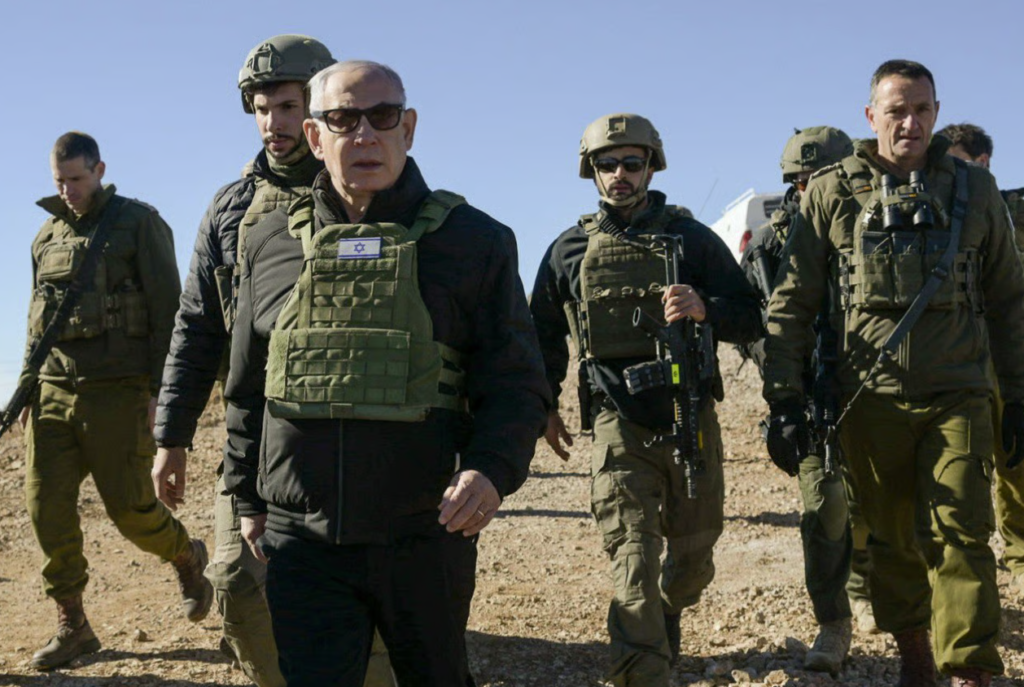
Israeli Prime Minister Benjamin Netanyahu ordered a major advance of Israeli troops in southern Lebanon on Sunday, in direct violation—or, if you prefer, in defiant disregard—of the ceasefire declared on April 17. As part of this offensive, the Israel Defense Forces (IDF) captured Beaufort Castle, a 12th-century Crusader fortress situated on steep hills overlooking the Litani River, about 14.5 kilometers from the Israeli border, near Nabatieh, one of Hezbollah’s major strongholds. The Israeli army raised its flag atop the medieval tower, where the standard of the Golani Brigade, an elite unit with deep symbolic significance in Israeli military history, also flew. Netanyahu described the operation as “a dramatic stage and a turning point” in the campaign against Hezbollah, recalling that in 1982 the castle was the site of one of the bloodiest battles of the first Lebanon War. According to Lebanese government figures, the Israeli incursion since March 2 has resulted in more than 3,370 deaths and displaced over 1,250,000 Lebanese. Israel claims to have eliminated some 3,000 members of the Hezbollah terrorist organization since the start of “Operation Roaring Lion,” with 700 of those deaths occurring in the last month alone. The IDF has also targeted the coastal area of Tyre, destroying weapons storage facilities and terrorist command centers. France has requested an emergency meeting of the United Nations Security Council, and Germany and the United Kingdom have expressed “serious concern” about the expansion of the ground offensive.
Implications
The capture of Beaufort Castle is not merely an aesthetic episode or a propaganda gesture, although it has an undeniable symbolic dimension: it is the materialization of an operational doctrine that Israel has been applying since the outbreak of the conflict with Iran in February. This doctrine consists of depriving Hezbollah of its dominant positions on the ground to ensure that, when a genuine diplomatic agreement is finally reached, the terrorist organization cannot again pose the threat it did before October 7, 2023. The crossing of the Litani River—a historic red line whose overcoming was the unfulfilled objective of the 2006 Lebanon War—means that Israel has now achieved what it failed to do then: control of the high ground that Hezbollah used as a launching pad. The international reaction—condemnation from Paris and the Security Council, and a more lukewarm response from Washington, where President Trump reiterated his support for Israel’s “freedom of action” on Sunday—follows the same old pattern: the international community raises its voice when the images are striking, but lacks the coercive instruments, or the political will, to stop an actor operating with the conviction that its existential security is at stake. The direct meeting between Lebanon and Israel scheduled at the State Department for June 2nd and 3rd is now uncertain, as Beirut can hardly sit down to negotiate while the Israeli army continues its advance.
Perspectives and scenarios
Scenario A (55% probability): Israel continues to exert military pressure while maintaining a partially open diplomatic channel, using ground pressure to force concessions on Hezbollah’s deployment north of the Litani River. Negotiations are delayed but do not break down completely.
Scenario B (30% probability): The expansion of the offensive and the convening of the Security Council generate sufficient diplomatic pressure on Washington to force a waiting period, although without Israeli withdrawal.
Scenario C (15% probability): The Israeli advance triggers an escalation of Hezbollah in northern Israel that overflows the current framework and drags Lebanon back into a spiral of widespread destruction.
2. Kuwait under Iranian fire: new violation of the truce
Facts
In the early hours of June 1, Kuwaiti air defenses intercepted ballistic missiles and drones launched by the IRGC, in the latest episode of an escalation that the US Central Command (CENTCOM) called a “flagrant ceasefire violation.” The IRGC confirmed that it attacked an airbase used in the US attack on Sirik Island, in Iran’s Hormozgan province. The chain of reciprocal actions is as follows: Over the weekend, the United States carried out several attacks described as “self-defense” against Iranian military targets—including missile launch sites and vessels laying mines in the Strait of Hormuz—after shooting down a US drone in international waters. Iran responded by launching five drones in the vicinity of the Strait and by firing a ballistic missile at Kuwait, which was intercepted. CENTCOM specified that the Iranian launch over Kuwait occurred hours after US forces neutralized five IRGC drones and thwarted a sixth launch from a ground control center in Bandar Abbas. Simultaneously, and with diplomatic audacity bordering on disingenuousness, Washington and Tehran continue negotiating a sixty-day extension of the ceasefire and the start of talks on the Iranian nuclear program. Iran insists that any agreement must include a cessation of Israeli operations in Lebanon.
Implications
From the outset of the conflict, Tehran’s jihadist oligarchy has employed a two-pronged approach: negotiating with one hand and firing with the other. This duality is not a temporary tactic; it is the natural expression of a regime that thrives on perpetual tension and views diplomatic dialogue as a means of buying time, not as a path to lasting peace. The extension of the ceasefire and the nuclear talks are not signs of moderation—moderates are nonexistent within the IRGC triumvirate comprised of the commander-in-chief of the Revolutionary Guard, General Vahidi; the secretary of the National Security Council, General Zolghadr; and the military advisor to the leader of the revolution and IRGC puppet, General Mohsen Rezaei, who systematically obstruct the president of the Islamic Republic, Dr. Masoud Pezeshkian, who lacks any real authority or power—but rather a sign that Iran needs time to rebuild its degraded capabilities and maintain the threat it poses to the Gulf. Kuwait, whose sovereignty is being repeatedly violated by a regime that some analysts inexplicably insist on justifying, has expressed its strongest condemnation and reaffirmed its right to self-defense. The fact that the Trump administration continues to negotiate under fire reveals that Washington prioritizes de-escalation over accountability, which, in the short term, is understandable, but sets a very dangerous precedent regarding impunity for Iranian behavior.
Perspectives and scenarios
Scenario A (50% probability): The ceasefire extension is signed in the coming days with minor concessions from both sides, but the exchanges of blows continue at low intensity, in the pattern of “variable temperature war” that we have been describing.
Scenario B (40% probability): The escalation in Kuwait and the pressure from the IRGC make the extension impossible and the conflict returns to a phase of greater intensity.
Scenario C (10% probability): A genuine agreement includes Israel and Lebanon, which —given the current dynamics— is almost impossible in the short term.
3. The Indo-Pacific rearms: Shangri-La dialogue and Washington’s strategic failure
Facts
The Shangri-La Dialogue in Singapore—the most influential security forum in the Indo-Pacific—has dominated the strategic agenda for the past 48 hours. There, Japanese Defense Minister Shinjiro Koizumi rejected with unusual force China’s accusation of “new militarism,” reversing the argument by pointing out that it is China that possesses “a vast arsenal of nuclear weapons and strategic bombers,” and asserting that Beijing’s foreign policy and military activities “are a cause for serious concern for Japan and the international community.” Koizumi emphasized that, for the second year in a row, Chinese Defense Minister Dong Jun has refused to attend the forum, depriving the region of an essential channel of communication. Meanwhile, a Reuters report—widely covered by the Financial Times, the Nikkei Asia Review, and the Atlantic Council—outlines how Indo-Pacific nations are accelerating their rearmament and weaving a web of bilateral and multilateral defense agreements amid uncertainty about the strength of the US strategic commitment. In April, Japan approved its most significant overhaul of arms export regulations in decades, lifting long-standing restrictions on the sale of warships, missiles, and military equipment abroad. The Philippines is strengthening its cooperation with Japan, Australia, Canada, and New Zealand. Taiwan has pledged to spend 5% of its GDP on defense by 2030. The Trump administration’s own National Defense Strategy 2026, while stating the objective of deterring China, introduces what analysts at the Indo-Pacific Studies Center call “structured Indo-Pacific ambiguity”: in practice, it fails to resolve the question of when and how effectively the United States would act in the event of a conflict.
Implications
The systemic rivalry between the established power—the United States—and the rising power—China—with their incompatible models of international order—the Thucydides Trap so lucidly described by Graham T. Allison—is producing a paradoxical consequence in the Indo-Pacific: the relative distancing from the American guarantee is not generating capitulation, but rather accelerated rearmament and new security architectures that do not depend exclusively on Washington. Japan, which for eighty years made constitutional pacifism a defining characteristic, is rapidly becoming the linchpin of the regional security network and a net exporter of defensive capabilities. China’s repeated absence from the Shangri-La Dialogue—where its interlocutors should be the natural recipients of any project for a “community of shared future”—reveals that Beijing does not trust arguments, but rather the balance of power. China has no real allies, only transactional partners; Russia and Iran are partners of convenience, not allies in the full sense of the term.
Washington’s “small garden, high fence” policy regarding critical technologies is a reasoned response to China’s strategy of controlling raw materials, rare earth elements—with a 75-80% share of global production and 95% of refining capacity—and strategic supply chains. This is in addition to China’s actual control of a significant portion of strategically important raw material sources, such as uranium (replacing Canada and France in the Sahel), lithium (controlling a large part of the supply in the Latin American lithium triangle), and copper, among others. Furthermore, China continues to expand its influence into other increasingly important theaters of operation in Africa and Asia (the lithium of Afghanistan, for example).
Perspectives and scenarios
The trend toward regional rearmament is irreversible in the medium term, regardless of the course of US policy. The question is not whether the Indo-Pacific allies will arm themselves, but whether they will do so in a coordinated manner—with the United States as a strategic anchor—or in a disjointed way, which would significantly reduce the deterrent effect. The upcoming QUAD summit (US, India, Japan, Australia) and the evolution of AUKUS (the strategic agreement for the initial supply and subsequent construction of nuclear submarines for Australia between the UK, the US, and Australia) in the coming months will be the barometer of this cohesion.
4. Colombia: Second round between De la Espriella and Cepeda on June 21
Facts
The Colombian presidential elections of May 31st resulted in a first-round outcome in which no candidate achieved the absolute majority required by the 1991 Constitution. With 99.43% of the polling stations reporting, Abelardo De la Espriella—a criminal lawyer from Barranquilla, candidate for the Defenders of the Homeland movement, with declared sympathies for Donald Trump and Nayib Bukele—obtained 43.72% of the vote, approximately 10.3 million ballots. Iván Cepeda—a long-serving senator, candidate for the Historical Pact (a movement situated between the radical left and the far left) of former guerrilla leader Gustavo Petro—reached 40.92%, approximately 9.6 million votes. Voter turnout was 57.84%, higher than in the first round of the 2022 elections. The presidential runoff will be held on June 21st. The differences between the two candidates are fundamental: De la Espriella advocates a hardline policy against organized crime and subversion, a review of the peace agreements, and a shift to the right in foreign policy; Cepeda represents the continuity of the supposed reforms of the Petro government and its orientation towards an increasingly radicalized left that, in some aspects, has strained relations with the United States and the country’s productive sectors.
Implications
Colombia is the third largest economy in South America and the United States’ strongest traditional ally in the region. The outcome of the second round will have direct consequences for anti-narcotics policy—Colombia remains the world’s leading producer of cocaine—, for relations with Venezuela and the Venezuela of the sinister siblings Delcy and Jorge Rodríguez—heirs to Chavista narcoterrorism—, and for Colombia’s position on the peace process, which the Petro administration has managed with a permissiveness that many analysts consider unacceptable. A victory for De la Espriella would represent a major strategic shift in Latin America, with Colombia firmly aligned with the hardline approach and the network of right-wing and center-right governments that have regained ground in the region. A victory for Cepeda would represent the consolidation of a left-wing bloc—Colombia, Venezuela, Bolivia, Cuba, Nicaragua—on the northern flank of South America, with all that this implies for regional stability and for Western interests, not to mention the disastrous economic results of radical and extreme left-wing governments, as fanatical in their ideology as they are cosmically incompetent in managing states and their economies.
Perspectives and scenarios
The polls preceding the first round failed to accurately predict the true margins, necessitating caution in any projections. De la Espriella has the advantage of being the candidate who won in the first round and the energy generated by the vote for change; Cepeda has the machinery of the Historical Pact and the potential to attract votes from candidates eliminated by the so-called progress, which is nothing more than regression and the economic implosion of the failed leftist models in Latin America and the rest of the world . Everything points to a very close second round. The three-week campaign that is about to begin will be decisive.
5. The chip gap: Washington urgently closes a strategic gap
Facts
The U.S. Department of Commerce issued emergency guidance—with the force of a binding clarification—on Sunday, May 31, imposing a licensing requirement for the export of advanced artificial intelligence chips to any entity headquartered or with a parent company in China, regardless of the physical location of the purchasing subsidiary. This measure closes a loophole that had existed since May 2025, when the Trump administration—in one of its most questionable pushes toward trade deregulation—decided not to enforce the “AI Diffusion Rule” enacted in the final days of the Biden administration. That rule regulated global access to AI chips. It is deeply shocking that it was not enforced at all without being replaced by an equivalent regulation; the department inadvertently created the possibility for subsidiaries of Chinese companies based in third countries—Malaysia, Singapore, Vietnam—to acquire the most advanced processors from Nvidia (Rubin, Blackwell) and AMD (MI350x) without a license. A supply chain expert with direct knowledge of the situation estimates that hundreds of thousands of units were exported during the year the breach lasted. Chris McGuire, a former State Department official specializing in technology policy, described the situation as “a HUGE problem,” noting that “Chinese companies have been buying these chips, very likely on a massive scale.” The US official went far beyond the obvious, calling this a strategic catastrophe of the first order. He suggests that the Chinese are capable of building AI models that can compete with American ones in real-world capabilities, and even more seriously, that Chinese engineers can reverse engineer and copy the world’s most advanced chips. All of this stems from an incomprehensible administrative error, not from industrial espionage.
Implications
This episode painfully illustrates the main flaw in the Trump administration’s technology policy: the consistency between the rhetoric of systemic rivalry with China—which this analyst fundamentally shares—and the practice of regulation is intermittent, erratic, and, at times, downright counterproductive. Blocking Chinese access to cutting-edge AI chips is a top strategic priority: Taiwan produces 90% of the world’s advanced chips, and control of this technology is a determining factor in the competition for artificial intelligence supremacy, which by 2026 is projected to mobilize $600 billion in investment from major American cloud providers alone. China has DeepSeek as a benchmark for AI competitiveness with fewer resources, making Chinese access to top-tier American hardware even more dangerous. The damage caused by a one-year gap is difficult to quantify and probably impossible to reverse with regard to chips already exported. The “small garden, high fence” policy only works if the fence is actually up.
Perspectives and scenarios
Sunday’s clarification is necessary but insufficient without a systematic review of supply chains and a functioning end-user verification mechanism (final recipient verification) in third countries. Congress and several think tanks—CSIS, IISS, RUSI—have warned about the vulnerabilities of the export control regime. Pressure for more robust legislative reform will intensify in the coming weeks.
III. MEDIA RACK
Today’s Media Rack reflects coverage massively focused on the Lebanese front and the Iranian situation, with a notable presence of the Indo-Pacific debate in the major Anglo-Saxon and Asian newspapers.
Anglo-Saxon media
Reuters and AP have provided the most robust agency coverage of the capture of Beaufort Castle, with direct statements from the Israeli military and Prime Minister Netanyahu, as well as international reactions. The Times of London and the Daily Telegraph reflect the clash between Trump’s declared support for Israeli “freedom of action” and the growing unease among European allies. The Guardian, true to form, has published pieces critical of the Israeli operation from the perspective of international humanitarian law and its impact on the Lebanese civilian population. The Wall Street Journal and the Financial Times focus their analyses on the consequences of the Indo-Pacific rearmament for regional power balances and the economic impact of the escalation in the Strait of Hormuz on oil prices. The Economist Intelligence Unit has raised its geopolitical risk assessment for the Middle East to its highest level since October 2023.
French and European media
Le Monde and Le Figaro provide detailed coverage of the French government’s decision to convene the Security Council and President Macron’s condemnation of the “unacceptable escalation” in southern Lebanon, a country for which France maintains a historical responsibility and an active military presence in UNIFIL. FAZ and Die Welt reflect the German government’s “serious concern” regarding the Israeli advance, though with a greater understanding of Israel’s security objectives than that expressed by the French press. Libération publishes a report on the displacement of Lebanese civilians that humanizes the cost of the operation. La Croix and Le Point offer complementary perspectives on the implications for the UNIFIL mission.
Middle Eastern media
Haaretz openly criticizes Netanyahu’s strategy, noting that the operation in Lebanon is being carried out without a credible plan for the aftermath. The Jerusalem Post and the Jerusalem Times reflect the triumphalist tone of the Israeli government and public support for the operation. Al Jazeera and Al Arabia offer extensive coverage of the attack on Kuwait and Iran’s violation of the ceasefire, with particular attention to Kuwait’s condemnation. Beirut’s An-Nahar and L’Orient Le Jour express the anguish of Lebanese society in the face of a new spiral of destruction. Asharq Al-Awsat and Arab News reflect Saudi and Gulf concerns about regional stability. Al-Quds Al-Arabi covers the Palestinian dimension of the conflict. Poland’s Gazeta Wyborcza and Finland’s Helsingin Sanomat—countries particularly sensitive to Russian aggression—highlight the parallels between Israeli expansion in Lebanon and the doctrine of faits accomplis on the ground.
Asian and Indo-Pacific media
The Shangri-La Dialogue dominates coverage in the Yomiuri Shimbun, the Japan Times, and Singapore’s Straits Times, which reproduce in detail the exchange between Koizumi and the Chinese representatives. The South China Morning Post and the China Daily reflect the Chinese perspective—”the international community must contain Japanese neo-militarism”—while the Times of India and the Hindustan Times underscore India’s role as an essential balancing power in any regional security architecture. WION, the Indian international news channel, highlights the dynamic nature of defense relations between New Delhi, Tokyo, and Washington. The Indian Express publishes an analysis of the implications of closing the AI chip gap for the Indian tech industry, which could benefit from the reorientation of supply chains.
Latin America
Clarín of Buenos Aires, El Mercurio of Santiago, and Reforma of Mexico City offer extensive coverage of the results of the first round of the Colombian presidential election. Clarín highlights the rightward shift represented by De la Espriella and his sympathies with Bukele and Trump; Reforma analyzes the implications for regional politics of a potential defeat of the Historical Pact. Infobae, in its editions for the entire region, provides the most detailed tracking of the Colombian preliminary vote count.
Think tanks and academic publications
The Atlantic Council publishes a collective analysis of how Indo-Pacific allies are receiving the National Defense Strategy 2026, with contributions from its experts in the Philippines, Japan, Australia, and India. The Munich Security Conference, in its February report, had already documented the accelerated defense spending of Japan, South Korea, Taiwan, and the Philippines. The CSIS warns of vulnerabilities in the chip export control regime. RUSI and the IISS raise their assessment of the risk of direct confrontation in the Indo-Pacific. Foreign Affairs publishes an article on the Thucydides Trap in the context of Asian rearmament.
IV. RISK TRAFFIC LIGHT
MAXIMUM RISK — Escalation in Lebanon: The Israeli offensive crosses the Litani River, violates the April 17 ceasefire, and threatens negotiations. The risk of spillover into a wider regional war, with Hezbollah launching long-range rockets into northern Israel, is high.
MAXIMUM RISK — Iranian aggression on Kuwait and the Strait of Hormuz: Tehran’s jihadist oligarchy continues to attack Kuwait with missiles and drones while negotiating a truce. The ceasefire is extremely fragile. The risk of collapse and a return to open warfare is real.
HIGH RISK — Instability in the Indo-Pacific: Accelerated rearmament and uncertainty about the credibility of the American commitment increase the risk of miscalculation (strategic misunderstanding) by China in the South China Sea or the Taiwan Strait.
HIGH RISK — Colombian runoff: A result that brings a candidate from the Historical Pact to the presidency would consolidate a left-wing bloc in northern South America with very negative regional implications. The polarization makes it impossible to rule out post-election unrest.
MODERATE-HIGH RISK — AI chip control gap: The damage from nearly a year of uncontrolled exports to Chinese entities is now partially irreversible. The risk that China has significantly accelerated its AI capabilities using American hardware is real and difficult to quantify in the short term.
MODERATE RISK — Deterioration of multilateralism: The Security Council’s inability to act on Lebanon—blocked by the cross-veto—confirms the erosion of the UN system as a guarantor of international law. The resulting regulatory vacuum favors actors who operate through the force of faits accomplis.
V. EDITORIAL COMMENTARY
There are days when the world doesn’t give you the option of looking away. June 1, 2026, is one of them. The six news items that make up this report are not unrelated phenomena: they are facets of the same systemic fracture that simultaneously affects the international security order, the technological order, and the political order. And what most worries this analyst is not the severity of each crisis individually—which is considerable—but the inability of the international system to manage them in a coordinated manner.
Let’s start with Beaufort Castle. That Israel has captured a 12th-century Crusader fortress and raised its flag over it says something about the mood of a nation that has been engaged in continuous combat for more than two years. Netanyahu speaks of a “dramatic turning point,” and he is right militarily: crossing the Litani and establishing control of the high ground is a real operational achievement. What Netanyahu lacks—and what no Israeli government since Rabin has had with sufficient clarity—is a plan for the next day. Haaretz’s warning is pertinent and does not come from enemies of the State of Israel: what happens when Israeli troops have dismantled Hezbollah’s terrorist infrastructure in southern Lebanon? Who fills that void? A Lebanese army that has never been able to deploy south of the Litani? UNIFIL, which has demonstrated for twenty years its inability to fulfill the Security Council mandate? The lack of answers to these questions is the structural weakness of a militarily brilliant but politically incomplete strategy.
As for Iran, the jihadist oligarchy in Tehran—which some analysts, with a naiveté or complicity that defies reason, stubbornly insist on calling a “theocracy”—continues to play the oldest and most cynical game in the regime’s playbook: the two-track approach. It attacks Kuwait with ballistic missiles while its representatives negotiate an extension of the ceasefire in Washington. It threatens the Strait of Hormuz while accepting a trickle of oil flow to avoid breaking off talks with Trump. The IRGC triumvirate—Vahidi, Zolghadr, and Rezaei—is neither moderate nor negotiator: it is a survivor. And the survivors of a regime structured around threats and violence understand only one language: the balance of power. The United States continuing to negotiate under fire without imposing proportionate costs for ceasefire violations is, at best, short-term pragmatism and, at worst, an incentive for the jihadist oligarchy to continue attacking with the assurance that there will be no decisive retaliation.
The Indo-Pacific debate at the Shangri-La Dialogue was, by contrast, one of the most illuminating moments of the week. Koizumi said aloud what many were thinking in private: that China’s accusation of Japanese “new militarism” is a projection—almost Freudian in its transparency—of Beijing’s own expansionist ambitions. The fact is undeniable: China has “a huge arsenal of nuclear weapons and strategic bombers”; Japan, whose Constitution still limits the use of force, has taken eighty years to reach the 2% of GDP spent on defense that NATO has recommended for decades to its European members. That Beijing has kept its defense minister away from the region’s most important forum for the second year in a row speaks volumes about its concept of multilateral diplomacy: the negotiating table only interests them when they have the upper hand. When they don’t, they don’t sit down.
Colombia, finally, deserves a paragraph that goes beyond electoral analysis. The result of May 31st is not just the victory of a candidate; it is the reflection of a society tired of a government that has confused peace with impunity and reforms with disorder. De la Espriella has reached the second round because millions of Colombians have decided that the experiment of the Historical Pact—with its permissiveness toward organized crime, its tepid stance toward Venezuelan Chavismo, and its anti-institutional rhetoric—has too high a cost for a country that deserves better. The second round on June 21st is not just the election of a president: it is, to a large extent, a decision about the kind of country Colombia wants to be in the next decade and about its position on a continent where the battle between liberal democracy and authoritarian populism (of the extreme left and extreme right) is far from over.
And regarding artificial intelligence chips, just one thought: when the world’s leading power, the one that has built its leadership on the capacity to innovate and protect its technological advantages, leaves a gap open for a year that allows its main strategic rival to buy hundreds of thousands of the most advanced semiconductors on the planet, we are not facing a bureaucratic error: we are facing a strategic governance failure of the first magnitude. The “small garden, high fence” policy doesn’t work if those managing it leave the back gate unlocked. Sunday’s correction is correct. It comes late. And we still don’t know the true cost of that year of negligence.