I. BRIEF INTRODUCTION
The war that began on February 28 against the jihadist oligarchy in Tehran has entered its negotiated phase without having concluded—and it does so with the unsettling fact that the guns have not fallen silent while the emissaries speak. The array of signals accumulating on this analyst’s desk, from President Donald Trump’s peremptory pronouncement about “nuclear dust” to the new US attacks on southern Iran, including Qatari mediation, the anxiety of the Gulf monarchies, and the decapitation of the military leadership of the Hamas terrorist organization, does not constitute a mosaic of unconnected episodes, but rather the spokes of a single wheel: the hasty formation of a provisional peace structured around a profoundly asymmetrical agreement, from which the ayatollahs’ regime emerges convinced—and its adversaries fearful—that it has won. Regardless of how different reality may be, the perception of the most execrable things on the planet, terrorist organizations of all ideologies and stripes, or dictatorial, authoritarian, revisionist regimes, or all of the above, is a disaster for the next decade, or worse, for the next three decades.
It is important to establish from the outset the thesis that underpins what follows, because without it, the interpretation of events veers toward illusion. The sense of triumph that pervades the revolutionary nomenklatura today is real in its perception and, in part, based on its immediate results; but it is structurally false, propagandistic, desperate, and fragile, and it is so for a reason that I have been describing since the first weeks of the conflict and which constitutes the key to interpreting the entire Iranian case:
The paradox of the decapitation —the surviving leaders of the Revolutionary Guard, all of them hardline ultraconservatives, individually lack the ideological authority, hierarchical rank, and ideological, hierarchical, or personal ascendancy necessary to impose their will on their comrades and extract the concessions that any lasting agreement requires. It is worth emphasizing once again that we are not witnessing the disappearance of the regime’s moderate wing, as they are a minority without the slightest influence, and no moderate was eliminated on February 28. We are facing a paradox of governance: where the late Ali Khamenei, the ideological protégé of Imam Khomeini, could impose internal discipline and settle factional disputes, the triumvirate that succeeds him is a conclave of equals without an arbiter, not even a “first among equals.”
From that single premise, almost everything else follows: why the regime can sign an agreement and yet cannot guarantee anything; why the reopening of the Strait of Hormuz will be negotiated and yet fragile; and why the most likely scenario is neither stable peace nor total war, but that corrosive, intermediate category that will erode the West and finish off Iran’s precarious economy. This is what I have been calling variable-temperature wars —low-intensity conflicts without imminent resolution, but highly destructive, in which no one can win or afford to lose—and managed, only ostensibly, under the umbrella of a barely contained systemic fracture.
II. MOST IMPORTANT EVENTS OF THESE LAST FEW DAYS
1. The asymmetric armistice and the “perceived victory” (as unreal as it is dangerously believed by the regime and its proxies) of the jihadist oligarchy
Facts
Two leading analyses— Arash Azizi’s in The Atlantic , “Why Iran’s Leaders Think They’ve Won,” and Jennifer Kavanagh and Rosemary Kelanic’s in Foreign Affairs, “Trump’s Least Bad Option in Iran”—agree, albeit from opposing perspectives, in outlining the contours of a provisional agreement considered imminent. According to both sources, corroborated by numerous additional reports, the pact would entail the reopening of the Strait of Hormuz with the simultaneous lifting of the blockades imposed by Iran and the United States; a formula for shared sovereignty over the passage between Iran, Oman, and other riparian states; the replacement of the toll with an “environmental protection levy” shared with Oman; and the partial release of billions of dollars in frozen Iranian assets. And, in the nuclear arena, the dilution of highly enriched uranium (more than 1,000 pounds at over 60% and an undetermined amount at at least 83.7%, according to the IAEA) within the country itself instead of exporting it. The scheme would be accompanied—according to the Center for Strategic and International Studies (CSIS)—by a memorandum of understanding and a sixty-day ceasefire . Kavanagh and Kelanic specify, citing US intelligence, that around 70% of Iran’s arsenal and missile launchers survived the campaign. This is a strategic, rather than tactical, catastrophe with unpredictable consequences.
Implications
If these parameters hold true, we are not witnessing a negotiated surrender, but rather what can only be described as a political triumph for the jihadist oligarchy: the regime will not only have survived a joint military offensive by the two powers it feared most, but will emerge with a better agreement than any it rejected before the war. It is important not to sugarcoat this interpretation, however uncomfortable it may be for Western sensibilities: a revisionist and clearly terrorist power that provokes a war, sustains it, and ends it with net gains sends the entire international system—from Pyongyang to Caracas, from Moscow to the Tehran of tomorrow—the message that geostrategic coercion and blackmail yield undeniable results despite the internal disasters the terrorist state may suffer. This is a devastating message for world peace and security. Therein lies, and not in the technical details of the enrichment, the truly terrible strategic price of the pact. The only hope is that in the negotiations of the next 60 days, the US can impose the conditions it tried to extract from the Iranians in the Geneva negotiations of February 27.
This is where the paradox of the decapitation corrects the illusion of the Iranian jihadist oligarchy, which will sell this war as a victory. Although it may have preserved some of its offensive capabilities, its economy, in the midst of an irreversible implosion, has ruined tens of millions of Iranians, and this will ultimately take its toll. The regime’s perception of victory does not mean it can capitalize on it.
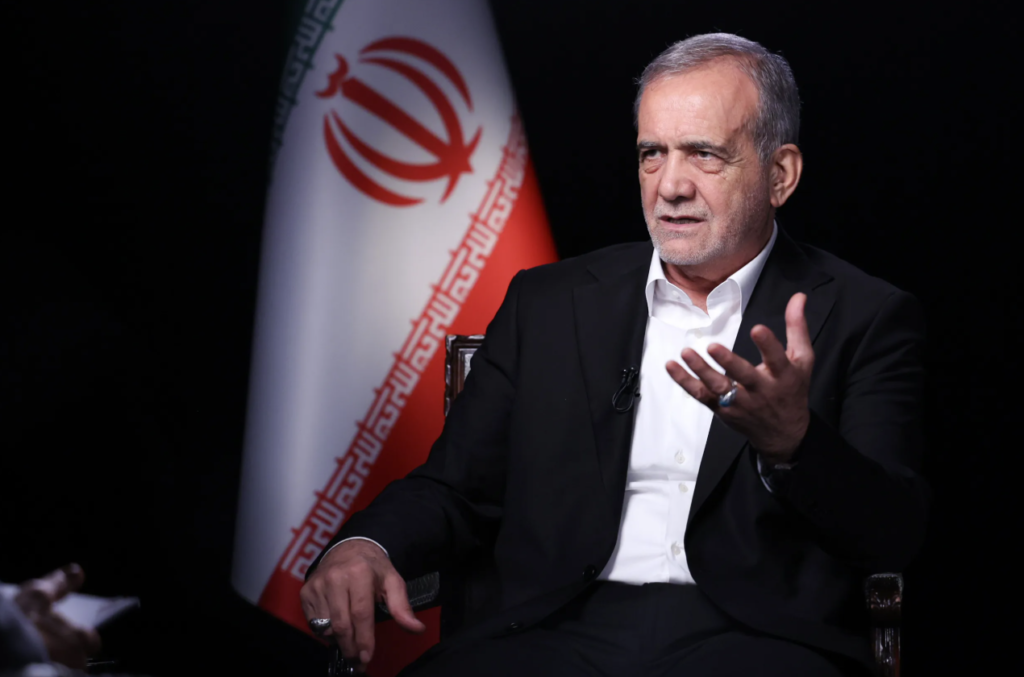
The triumvirate currently in power—General Ahmed Vahidi, commander-in-chief of the Revolutionary Guard; Mohamed B. Zolghadr, secretary of the National Security Council and former commander of the Al-Quds Brigades; and General Rezaei, acting military advisor to the Leader of the Revolution, Mukhtaba Khamenei—lacks the unifying influence of the ousted Ali Khamenei. President Masoud Pezeshkian, of the “reformist” wing, remains systematically blocked, and Mohamad Bagher Ghalibaf answers to Vahidi, not to the presidency. An agreement is only as strong as the chain of command capable of enforcing it; and this chain, deprived of its arbiter/primus inter pares, is precisely what the pact needs and what it lacks.
Perspectives and scenarios
Scenario A —fragile but sustained compliance (estimated probability: 30%)—: the memorandum is implemented, Hormuz is reopened with imperfect verification and the ceasefire is extended beyond sixty days, freezing the conflict in an armed and distrustful truce.
Scenario B — contained systemic fracture (estimated probability: 40%) —: the agreement is implemented partially and intermittently; the factions of the triumvirate interpret and violate it in a disorganized manner precisely because none can discipline the others, and the situation degenerates into awar of variable intensitywith recurring incidents in the Gulf, without a formal rupture but without real pacification. This, in the opinion of this analyst, is the central outcome.
Scenario C — collapse and re-escalation (estimated probability: 30%) —: a kinetic incident, a provocation by proxy terrorists or an internal sabotage maneuver derails the memorandum and reopens the open phase of the conflict.
II. Fire during negotiations: the attacks in southern Iran and the standoff over Hormuz
Facts
While the envoys negotiate (we must emphasize this), the weapons do not rest. The BBC, in a report by Toby Mann, states that the US Central Command (CENTCOM) has launched new attacks on southern Iran against missile sites and vessels attempting to lay mines. Phil Stewart , a Reuters correspondent, confirms and clarifies the situation: the strike targeted a military installation that threatened US forces and commercial traffic in the Strait of Hormuz, and the US military has also intercepted drones launched from Iranian territory. The General Staff of the Kuwaiti Armed Forces, for its part, has issued a statement warning that its air defenses are repelling attacks from hostile missiles and drones. The image of an oil tanker engulfed in flames near the strait eloquently completes the picture of a theater of conflict that continues to burn.
Implications
The vessels caught “laying mines” are the most revealing detail of the entire episode. They demonstrate that Tehran is negotiating the reopening of the Strait of Hormuz with one hand while, with the other, it preserves and exercises its ability to close it—that is, the jihadist oligarchy does not conceive of the Strait as subject to international law, which requires it to be opened unconditionally and without tolls. The Iranian jihadist terrorist state uses the coercive lever of blocking the Strait, a flagrant violation of international law that contradicts its true desire for a peace agreement.
The attack on Kuwait reminds us that the cost of this war is not borne solely by the declared belligerents: the main victims are the Gulf monarchies, unwilling spectators, even though Saudi Arabia was entirely justified in attacking pro-Iranian Iraqi terrorist militias and the UAE targeted objectives within the Islamic Republic of Iran. We are at the very heart of a war of variable temperature: diplomacy and kinetic energy do not follow one another or cancel each other out; they coexist.
Perspectives and scenarios
The simultaneous negotiation and bombing is, paradoxically, stabilizing in the short term—each side demonstrates it can inflict punishment without breaking off negotiations—and destabilizing in the medium term, because it increases the likelihood of a random incident escalating beyond the control of the Iranian command. This leaderless command no longer fully controls its own personnel and officers, to whom it has granted considerable autonomy in response, and this partly explains the absurdity of hostilities amidst the negotiations that we are witnessing today. The risk is not the deliberate decision to reopen the war; it is the accident that no one ordered and that no one now has sufficient authority to defuse.
III. The “nuclear dust”: the granting of in situ dilution and the postponed casus belli
Facts
President Trump has published a threatening proclamation on his Truth Social network, demanding that enriched uranium—which he, with his characteristic rhetorical flair, calls “nuclear dust”—be immediately handed over to the United States for destruction, or, “preferably” and in coordination with the Islamic Republic of Iran, destroyed on-site or at another acceptable location, with the Atomic Energy Commission “or its equivalent” as a witness to the process. This wording aligns with what Foreign Affairs reported: the president had privately agreed to the dilution of the highly enriched uranium within Iran itself, and was now making public what he had already conceded.
Implications
Behind the forceful rhetoric lies a major retreat from the initial maximalist position. The fact that the fissile material remains on Iranian soil—diluted, yes, but under the regime’s custody and with a verification process whose subject (“the Atomic Energy Commission or its equivalent”) is deliberately left vague—shifts the casus belli of the conflict, the nuclear program, from its resolution to its postponement. The public threat to “wipe out an entire civilization,” to which Kavanagh and Kelanic alluded, aligns here with the substantive concession of the “nuclear dust” to outline the characteristic pattern of this presidency: maximum verbal belligerence, remarkable practical flexibility. The problem, as the two analysts from the realist school of restraint warn, is that this combination precisely erodes the credible guarantees that Tehran will demand in order to comply.
Perspectives and scenarios
The in-situ dilution is technically reversible and politically revisable; it leaves the nuclear issue like an ember under the ashes, susceptible to being reignited at the first crisis of confidence. This analyst believes that the nuclear question will not be settled by the provisional agreement, but merely temporarily deactivated, and that it will return to the forefront of the agenda as soon as the sixty-day ceasefire faces its first extension.
IV. Qatar, the only possible mediator: frozen assets and the dispute over the 12 billion
Facts
Euronews, citing Associated Press, reports that an Iranian delegation is in Qatar seeking an agreement regarding frozen assets and the blockade of the Strait of Hormuz. Almost simultaneously, the Turkish news agency Anadolu, reporting by Michael Hernandez, carries the Qatari Foreign Ministry’s denial of claims that Doha had “offered” Iran $12 billion to facilitate a deal with Washington. The Qatari spokesperson dismisses such accounts as mere “desperate attempts to tarnish Qatar’s reputation as a trusted international facilitator.” The only certainty is that Qatar has maintained open channels of communication with the Taliban, the Iranian regime (and its proxies), and Hamas at the direct and unequivocal request of the US and Israel.
Implications
The denial of the $12 billion figure is revealing not for what it denies, but for what the very need to deny it confirms: that the financial architecture of the pact—release of frozen assets, economic incentives, perhaps third-party funds—is as central as the military one, and that the battle for the narrative is already as fierce as the battle for the Strait. The Hormuz “environmental tax” and the release of funds are two sides of the same coin: the monetization of coercion. But Qatar will do nothing, absolutely nothing, in this area without the clear and direct guidance and instructions—more than just a green light—from the US.
Perspectives and scenarios
Qatar will remain essential and, therefore, vulnerable; every self-serving leak—regardless of its source—will seek to influence the terms of the agreement’s release. The release of assets will likely be gradual and conditional, becoming a key indicator of compliance: if funds flow, the agreement breathes easier; if they are blocked, Scenario C could gain traction.
V. The Gulf facing the “new normal”: defensive diversification and the exodus of US suppliers
Facts
The CSIS analysis of the Gulf monarchies’ perception of the agreement describes a mixture of relief and unease. Their main demand—a return to the status quo ante in the Strait—does not appear achievable under the proposed terms; one Qatari official bluntly summarizes the fear: the pact “could leave us hostages to the Iranians.” A chasm of mistrust persists, according to the report’s interviewees, encapsulated in the resigned refrain that “Iran is here to stay.” The response is one of accelerated defense diversification: new agreements with European and East Asian partners—the United Arab Emirates has signed a defense cooperation agreement with France; Qatar, a memorandum with Canada—along with efforts to elevate their guarantees with Washington to the status of a treaty. In that same underlying trend is the news reported by The Guardian: Canada, under Prime Minister Mark Carney, will order its fleet of GlobalEye early warning aircraft from Sweden’s Saab instead of Boeing’s E-7 Wedgetail, and is keeping its order for F-35 fighter jets from Lockheed Martin under review.
Implications
That an ally as close and integrated as Canada would abandon a US supplier in favor of a European one is not a mere industrial anecdote: it is a structural symptom of the price that Washington’s unpredictability—both in tariffs and strategy—is exacting on the cohesion of the Atlantic order. And what Ottawa is doing in the north, the Gulf capitals are doing in the south: protecting themselves, diversifying, hedge. The strategic lesson is stark, and this analyst has been formulating it for some time: when the guarantor of security becomes erratic, those whose security is guaranteed do not rebel; they simply secure it elsewhere—and each alternative policy they take out erodes, to the same degree, the monopoly of influence on which the United States has relied for eighty years.
Perspectives and scenarios
The Gulf’s “new normal” will be one of wary pragmatism: managing Iran through economic interdependence—integrating it into a regional model that relies on stability to deter it—while simultaneously bolstering its own defense with a deliberately diverse portfolio of suppliers. For the European defense industry, and particularly for the programs in which Spain participates, this presents a window of opportunity that would be reckless to miss.
VI. The Abraham Accords Gambit: Diplomacy by Decree
Facts
The New York Times reports on the bewilderment that the presidential proposal to expand the Abraham Accords as a condition for ending the war with Iran has caused in the Middle East. Trump has suggested that recognition of Israel by a list of countries “should be mandatory”; but half of the states he cites—Egypt, Jordan, and Turkey—already maintain relations with Israel, and the other half—Saudi Arabia, Qatar, and Pakistan—have no intention of establishing them in the short term. Two Western diplomats consulted confess that no one takes the idea seriously. Pakistan, which has mediated between Washington and Tehran, responded with a resounding “no”: it does not recognize Israel, and its passports expressly prohibit travel there.
Implications
The episode perfectly illustrates the disconnect between presidential rhetoric—which confuses wishful thinking with decree—and regional reality. Claiming that recognition of Israel is “mandatory” reveals wishful thinking that takes for granted what is merely a desire, unbecoming of diplomacy and, worse, counterproductive: linking the end of the war to a condition that the mediators themselves reject introduces a gratuitous source of friction into the negotiations. Arab-Israeli normalization is a valuable and real process, but it advances through patient persuasion and a calculation of interests, never through imposition.
Perspectives and scenarios
The likelihood of the “mandatory” expansion of the Agreements succeeding is, as regional analysts point out, close to zero. It is foreseeable that the proposal will quietly fizzle out as soon as it encounters Saudi and Pakistani opposition, and that normalization will continue its slow course along the usual channels, independent of the presidential mandate.
VII. The degradation of the axis: decapitation of the military leadership of the Hamas terrorist organization
Facts
The Israel Defense Forces (IDF) have released graphic material documenting the elimination of Mohammed Odeh, head of the military wing and intelligence headquarters of the Hamas terrorist organization, appointed to the position just two weeks prior after the elimination of Izz al-Din al-Haddad. The Israeli diagrams depict virtually the entire terrorist military leadership that planned and carried out the October 7 massacre—including Yahya Sinwar, Mohammed Deif, Marwan Issa, Rafa’a Salameh, Huthayfa Kahlout “Abu Obeida,” and Odeh himself—all of them terrorists, not “militiamen” or “fighters,” a classification this analysis applies without nuance or exception.
Implications
The decapitation of Hamas runs parallel to the war against its Iranian patron, and not by chance: the ring of proxy terrorist organizations—Hamas, Hezbollah, the Houthis, and the rest of the regional branches of the jihadist oligarchy—is crumbling at the same pace as the fate of its parent organization is being negotiated. But the Hamas case illuminates, by contrast, the very paradox of decapitation that defines the Iranian case. Israel can decapitate Hamas precisely because its objective is the destruction of the enemy’s capacity, not its governance; there, decapitation is victory. In Iran, however, the decapitation of the arbiter Khamenei has not destroyed the regime’s capacity—which survives and negotiates from a position of strength—but rather its internal governance, which is a different matter entirely and the true source of the pact’s fragility. Same operation, opposite effects: against the proxy, decapitation resolves the problem; against the parent organization, decapitation complicates matters.
Perspectives and scenarios
The rapid turnover of terrorist leaders—Odeh lasted only two weeks—reveals a structural decline: the organization retains the capacity to appoint successors but not to protect them or maintain coherent leadership. It is reasonable to anticipate that the erosion of this proxy axis will continue and accelerate, depriving Tehran, in the medium term, of one of the levers of regional projection it has relied on for decades.
III. MEDIA RACK
The file being analyzed today draws from a range of sources that should be calibrated for their orientation and degree of reliability before drawing conclusions, in accordance with the usual monitoring protocol of this service.
| Half | Signature | Editorial reading and guidance |
|---|---|---|
| The Atlantic | Arash Azizi | Internationalist center-left. Thesis of the “Iranian victory”; lucid in its diagnosis, melancholic in its tone. A first-rate source on the internal perception of the regime. |
| Foreign Affairs | J. Kavanagh and R. Kelanic | The realist school of containment (Defense Priorities) advocates the “lesser evil” and the moderation of objectives; useful as a counterpoint, but debatable in its acceptance of coercion. |
| The New York Times | Drafting | Liberal establishment. It highlights the disconnect between presidential rhetoric and regional reality; solid in its diplomatic coverage. |
| CSIS | Institutional analysis | A security think tank aligned with the Atlanticist consensus. Essential for understanding the Gulf; well-informed by its regional counterparts. |
| Euronews / AP | Agency | Factual coverage of the Qatari mediation. Informative value over interpretive value. |
| Anadolu | Michael Hernandez | Turkish state agency. Useful for its access to the Qatari and Turkish narrative; read with caution due to its governmental nature. |
| BBC | Toby Mann | British public service. Reliable in kinetic data; cautious, sometimes excessively so, in attribution. |
| Reuters | Phil Stewart | Frontline Defense Correspondent. Highly reliable scoop on the attacks in Hormuz. |
| The Guardian | Drafting | British center-left. Relevant to the reading of the realignment of defense suppliers. |
| IDF | Official channel | Israeli military source. Primary material on the decapitation of Hamas; propagandistic in form, generally verifiable in substance. |
| General Staff of Kuwait | Official statement | Primary source of the collateral cost of the Gulf conflict. |
| Truth Social | Donald Trump | Presidential primary source. Essential and, at the same time, volatile: US foreign policy is written today, in part, on a case-by-case basis. |
IV. RISK TRAFFIC LIGHT
Synthetic evaluation by vectors, according to the usual code —red: high and active risk; amber: latent or evolving risk; green: favorable dynamics—.
| Risk vector | Level | Justification |
|---|---|---|
| Kinetic re-escalation in the Gulf | RED | US attacks, Iranian mines, and the interception of drones during the negotiations themselves increase the likelihood of an accidental incident that no decapitated commander could contain. |
| Iranian nuclear program | AMBER | Dilution in situ deactivates, but does not resolve: the casus belli is postponed, reversible and politically revisable at the first crisis of confidence. |
| Stability of the Strait of Hormuz | AMBER | The agreed-upon reopening coexists with Tehran’s deliberate preservation of its ability to close the border. The reopening is conditional, not guaranteed. |
| GCC Cohesion | AMBER | Simultaneous relief and unease; fear of being “held hostage by the Iranians.” Wary pragmatism, not restored confidence. |
| Energy markets | AMBER | Persistent risk premium while the oil tanker burns and the opening of the passage remains uncertain. Volatility before crisis. |
| Cohesion of the Atlantic order | AMBER | The Canadian defection to Saab and the diversification of the Gulf structurally erode Washington’s monopoly of influence. |
| Spain’s position and consistency | RED | The declared neutrality borders on irresponsibility while Rota and Morón actively support the logistics of the operations. A strategic inconsistency of the first order. |
| Axis of the jihadist oligarchy | GREEN | The accelerated decapitation of Hamas and the degradation of the other proxies, this vector does indeed work in favor of the Atlanticist camp. |
V. EDITORIAL COMMENTARY
It’s best to be blunt, because clarity is the analyst’s primary obligation: the emerging agreement is not a clear victory for the West, and pretending otherwise would be the most futile form of self-deception. It’s true that Iran’s offensive capabilities have been seriously affected and diminished, but they have NOT disappeared.
A war of choice, waged without an exit strategy, ends with a revisionist power surviving, negotiating from a position of strength, and securing a better deal than all those it rejected—a monetized reopening of the Strait of Hormuz, released funds, and uranium remaining on its soil. The ayatollahs’ regime will claim victory, and in terms of public perception, it will not be wrong.
And yet, that victory is fragile, and the instrument that shatters it is the paradox of decapitation . The triumvirate of Vahidi, Zolghadr, and Rezaei can sign whatever they want; what they cannot do is guarantee that what has been signed will be fulfilled, because for that they would need an arbiter capable of disciplining the factions, and that arbiter—the vanished “supreme” one—no longer exists. Hence, the most likely outcome is neither peace nor war, but rather that contained systemic fracture that manages the conflict like a war of variable temperature : destructive, irresolvable, with no possible victor and with no one able to afford to lose. I estimate its probability at 40%, higher than any other scenario.
The second danger—and it is no less significant—is systemic. Rewarding coercion is teaching others how to coerce. Every concession Tehran extracts through the blackmail of the Strait of Hormuz and the threat of nuclear weapons is a lesson taught to all the revisionists on the planet: to Moscow, which takes note; to Beijing, which calculates; and to Caracas and its Chavista narco-state, which applaud. The wishful thinking that underlies the “binding” gambit of the Abraham Accords is the other side of the same coin: the illusion that geopolitical reality obeys decrees published on a social network.
There is, however, an underlying current that the Atlanticist camp should not ignore, and which Canada’s defection to Saab’s GlobalEye missiles illustrates with unsettling clarity: when the guarantor of security becomes erratic, allies do not rebel, they seek security elsewhere. The defensive diversification of the Gulf and of Canada itself is not disloyalty, it is prudence; but each alternative policy that is subscribed to weakens the monopoly of influence on which the West—and particularly the United States—has relied for eight decades. For European industry and strategic autonomy, this represents a historic opportunity; for Atlantic cohesion, a stark warning.
And then there is Spain, whose position I can only describe as a first-rate strategic inconsistency. The stance of neutrality cultivated by the current government borders on irresponsibility and is more hostile toward the American ally than toward the jihadist oligarchy that unleashed this entire conflagration. While this neutrality is proclaimed in public discourse, the Rota and Morón bases are an active part of the logistical support for the operations—that is the material reality, not the rhetoric. I am not calling for maximalism or unconditional alignment here; I am simply calling for consistency: that the discourse align with the facts, and that Spain stop feigning an equidistance that its own facilities belie every day.
I end where I began. No one has won the war, and precisely for that reason, it hasn’t ended. What’s coming is not peace, but its cold and intermittent administration; not order, but chaos managed as if it were order. And in that landscape—that of contained systemic fracture—the only reliable compass will continue to be lucidity, so as not to confuse the regime’s survival with its strength, nor its euphoria with its future.