Gustavo de Arístegui,
June 9, 2026
I. BRIEF INTRODUCTION
June 9, 2026 dawns with a constellation of crises that demand analytical clarity and moral firmness in equal measure.
In the Middle East, June 7th and 8th saw the worst escalation of hostilities between Israel and Iran since the April ceasefire—the first brokered by Pakistan and the second by Washington—exposing the structural fragility of ceasefires lacking a fundamental political framework. President Trump, true to form, used his Truth Social platform to urge the parties to “stop shooting,” while his special envoys Steve Witkoff and Jared Kushner continued negotiations that he himself described as imminently successful, a claim stubbornly contradicted by events on the ground. Against this turbulent backdrop, the jihadist regime of Iran announced a halt to its attacks against Israel; obviously, the Israeli air strikes the previous night were, according to Israeli sources, very forceful and effective.
While the Middle East burns once again, Europe receives two pieces of news of radically opposite nature. The first, a luminous hope: the historic visit of Pope Leo XIV to Spain, culminating on Monday, June 8, with a speech of exceptional intellectual and moral stature before the Cortes Generales—the first time in history that a Pope has addressed the Spanish Parliament—a speech that will leave a lasting mark on the country’s political and moral debate.
The second, and most grim, development is the definitive collapse of the Franco-German sixth-generation fighter jet program, FCAS (in its French acronym, SCAF), buried by the inability of Dassault Aviation and Airbus to agree on the division of labor and technology, and by Chancellor Merz’s decision to inform Macron that the joint path for the piloted fighter-bomber is formally closed. The combination of these two developments paints a disturbing picture of a Europe receiving lessons in moral grandeur from the Vatican while demonstrating a staggering and deeply worrying inability to build its own defense sovereignty.
In the Ukrainian theater of war, operational data for May shows, for the first time since 2023, a net gain in Kyiv—nearly 100 square kilometers—but Russian bombing of civilian infrastructure has reached levels that the UN Security Council has described as recent record highs. Peace diplomacy—Zelensky, Abramovich as Putin’s intermediary, the joint Franco-Anglo-German initiative—is progressing amidst gestures and rejections, with Moscow refusing the offer of direct negotiations. This analyst has been describing a war of fluctuating intensity where every window of détente closes before it can fully open.
II. MOST IMPORTANT NEWS OF THE LAST 24 HOURS
1. Pope Leo XIV delivers a historic and unforgettable speech before the Spanish Parliament.
Facts
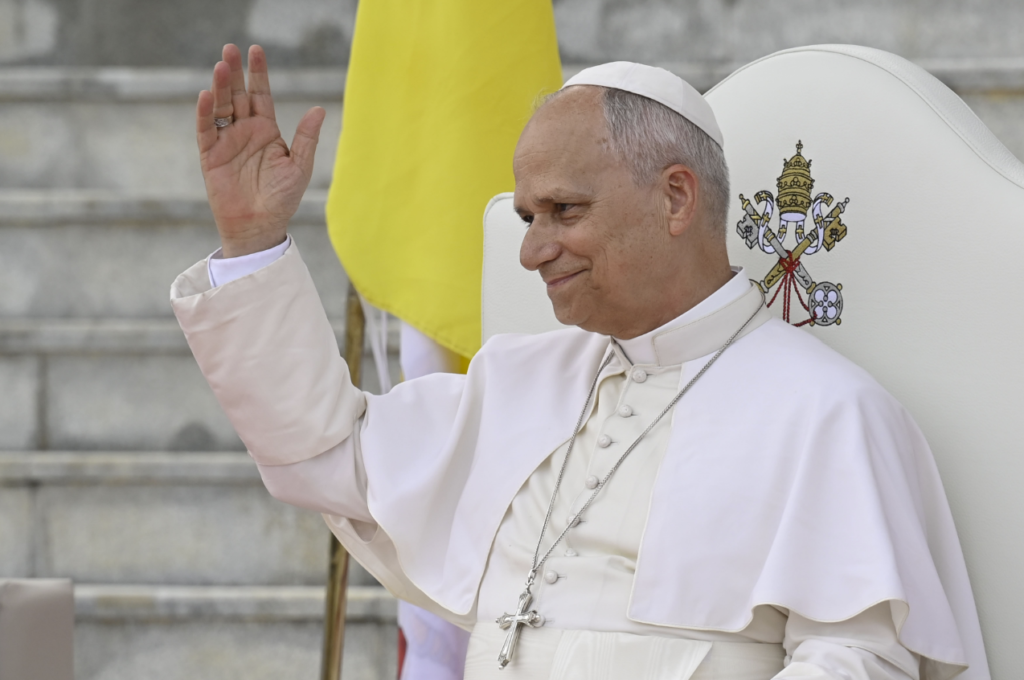
On Monday, June 8, 2026, on the third day of his apostolic visit to Spain, Pope Leo XIV addressed the Congress of Deputies in a solemn session of the Cortes Generales—comprised of members of parliament, senators, regional presidents, and the highest authorities of the State—becoming the first Pope in history to speak to the Spanish Parliament. The event, held in the Palace of the Carrera de San Jerónimo, brought together the entire political class of the country under one roof, in a chamber that listened to the address with rapt attention and gave the Holy Father a seven-minute standing ovation at its conclusion. The address, received by the Speaker of the Congress, Francina Armengol, the President of the Senate, Pedro Rollán, and the Prime Minister, Pedro Sánchez, focused on the inviolable dignity of the human person as the foundation of all just legislation, the defense of life from conception to natural death, the migrant crisis as a moral and legal issue of paramount importance, the ethics of artificial intelligence in the military sphere—quoting his inaugural encyclical, Magnifica Humanitas—, the risks of uncontrolled rearmament, and the indispensable value of international dialogue. The Pope drew upon the tradition of the School of Salamanca and figures such as Don Quixote, Saint Teresa of Ávila, and Unamuno to connect the Spanish humanist legacy with the challenges of the present. This was his first address as Pontiff before the Parliament of a major Western democracy.
Implications
Pope Leo XIV’s address to the Spanish Parliament is, above all, an act of courage. To speak before a Parliament that has just processed the inclusion of abortion in the Constitution and that approved the euthanasia law in 2021—both now in force—with the serenity and firmness of someone who defends principles without resorting to partisan politics demands rhetorical mastery and moral authority of the highest order. The Holy Father did not shy away from directness—”If life ceases to be recognized as a fundamental value, what future can our societies have?”—but he imbued it with a nobility that completely precludes any sectarian condemnation. His warning about artificial intelligence and military artificial intelligence as a field that requires “rigorous ethical oversight” so that life-or-death decisions are not “left to automated systems” is one of the most pertinent reflections delivered this year from any platform. Similarly, his reminder that “weapons can impose a temporary silence but can never build a genuine peace” resonates with particular force in a continent that is desperately rearming itself without having yet built a coherent strategic doctrine.
“Every truly just society is built upon the recognition of the inviolable dignity of the human person. Such dignity precedes any concession by the State and cannot be subordinated to changing social consensus.” — Leo XIV, Congress of Deputies, 8/VI/2026
Perspectives and scenarios
The impact of the speech will be lasting for several very deep and solid reasons.
First: it is the first time that an American Pope, from the United States —of Anglo-Saxon culture and Augustinian theological training— has addressed the Parliament of a large European Catholic State in its language and with direct knowledge of its intellectual tradition; this adds a transatlantic bridge dimension that goes beyond the strictly pastoral.
Second: in the context of the visit of His Holiness Pope Leo XIV, he gathered more than 1,250,000 faithful at the mass in the Plaza de Cibeles and all his events have been massive, figures that speak of the vitality and strength of the Faith in Spain.
Third: the profound divergences with Spain’s social-communist government, though skillfully and courteously managed in official events, are structural and visible: the executive branch promotes the constitutionalization of abortion while the Pope defends the right to life from conception; there is no possible doctrinal reconciliation, only institutional coexistence. The leader of the largest party in the Spanish Parliament, Alberto Núñez Feijóo, in stating that “Spain needs moral role models like Leo XIV,” has perfectly grasped the historical dimension of the moment: the papal visit is a crucial and solid argument for a clear and unequivocal counterpoint to a very serious nihilistic and relativistic drift that this analyst has been denouncing for years.
2. Moral leadership of immense stature: the apostolic visit of Pope Leo XIV to Spain
Facts
The apostolic visit of Pope Leo XIV to Spain, which began on June 6, 2016, is the first papal visit to the country since that of Pope Francis in 2011. Leo XIV—the first pope of American nationality, elected in May 2015—has toured Madrid with an agenda that combines high-level institutional encounters—a reception at the Royal Palace with the Royal Family presided over by King Felipe VI, a meeting with the Prime Minister, and an event at the Congress of Deputies—with gestures of pastoral outreach—a visit to the Episcopal Conference, a meeting with civil society at the Movistar Arena under the theme “Weaving Networks”—and the religious culmination with the Corpus Christi Mass at the Bernabéu Stadium on June 11. The visit, received with enormous anticipation and massive public participation, has revealed the deep roots of the Catholic faith in Spanish society.
Beyond the figures of daily religious practice, the King publicly acknowledged in his welcoming speech “the pain caused” by abuses in the Church, noting that these “are not representative of the vast ecclesial community.”
Implications
Leo XIV has demonstrated during these days in Spain that his moral leadership is not that of a pastoral manager of a declining institution, but rather that of a first-rate intellectual capable of challenging the political class without humiliating it, of defending principles without sectarianism, and of speaking about peace, life, migration, and technology with a conceptual coherence that very few institutions in the world can claim. His inaugural encyclical, Magnifica Humanitas —dedicated to artificial intelligence and drafted in collaboration with researchers from Anthropic—has already positioned the Papacy as a unique intellectual force in the global debate on the future of humanity. In Spain, where the political and cultural divide between an increasingly radicalized secular left and a deeply rooted Christian faith is growing ever more profound, the Pope’s visit acts as a mirror reflecting this tension with an uncomfortable clarity for everyone. The discomfort of Sánchez’s government towards a Pope who unequivocally defends life from conception and the traditional family is palpable, even though it is not politically convenient for them to express it.
Perspectives and scenarios
On a global scale, the pontificate of Leo XIV stands out as one of the most promising since Saint John Paul II, with extraordinarily solid spiritual and moral foundations and one of the most deeply committed in recent decades. His American origins, his time as Superior of the Augustinian Order and missionary in Latin America, allow him to speak to Europe with the authority of one who admires it without the complicity of one who suffers from within; his Augustinian formation gives him a philosophical depth that transcends immediate political debate; and his openness to dialogue with science and technology—without abandoning principles and unwavering morality—lends him singular credibility with new generations. Spain, in particular, will have gained much if this visit achieves what no political poll can quantify: reminding its citizens that there are truths that precede and are superior to parliamentary majorities and positions of power that are not elected.
3. Iran and Israel exchange their worst attacks since April: the ceasefire hangs by a thread once again
Facts
On the night of Sunday, June 7, to Monday, June 8, 2026—the 101st day of the war—Israel and Iran engaged in the most serious escalation of hostilities since the April 8 ceasefire, brokered by Pakistan. The chain of events is as follows: Israel bombed the southern suburbs of Beirut in retaliation for Hezbollah attacks on northern Israel, despite the new Israel-Lebanon ceasefire announced on June 3 with US mediation and flatly rejected by Hezbollah; in response, Iran launched multiple waves of missiles at northern Israel—the first direct Iranian attack from its own territory since the April ceasefire; Israel retaliated with “extensive attacks against strategic defense systems” in Iran. On Monday, President Trump used Truth Social to demand that Israel and Iran “immediately” cease fire, stating that “both sides are seeking an immediate ceasefire” and that final peace negotiations were progressing. Netanyahu declared that Israel had suspended its attacks against Iran, but without formally acknowledging any ceasefire and warning that operations in southern Lebanon would continue. Iran suspended its campaign but warned that it would resume it with “greater severity” if Israeli attacks in Lebanon continued. At the time of this report, Israeli aircraft had resumed attacks in southern Lebanon less than an hour after Iran announced the suspension of its operations.
Implications
This episode confirms the diagnosis this analyst has maintained since the first day of Operation Epic Fury: the successive ceasefires are armistices without a peace architecture, tactical agreements that neither side fully respects because neither has paid the political price of acknowledging its true limitations. Netanyahu continues to believe that military pressure will eventually bring down Tehran’s dictatorial and mafia-like oligarchy; the three generals of the triumvirate who replaced Khamenei after the February attacks—Vahidi, Zolghadr, and Rezaei—lack the personal influence to impose on their peers the discipline required for a negotiated concession; and Trump oscillates between triumphant announcements of “total victory” and urgent calls for them to stop firing. The paradox of decapitation—to which this analyst has dedicated previous analyses—operates here in all its starkness: the three surviving Iranian leaders are all ultraconservatives, and none has sufficient authority to force the other two to accept conditions that smack of surrender. The result is a regime capable of continuing the war but incapable of ending it with dignity.
Meanwhile, Lebanese Prime Minister Nawaf Salam, in an act of remarkable courage, publicly accused Iran of “using Lebanon as a bargaining chip” with the United States: “Have mercy on our south and stop treating its people as mere pawns to improve the terms of your negotiations.” This denunciation of Hezbollah’s terrorist strategy and that of its sponsors in Tehran deserves to be heard and amplified.
Perspectives and scenarios
The likelihood of a ceasefire holding in the coming days is slim as long as Israel maintains operations in Lebanon and the Iranian triumvirate lacks a sufficiently authoritative interlocutor to negotiate real concessions. Trump projects a “nearly final” negotiation, but American prisoners in Iran aren’t even part of the current package—they would only be transferred to the State Department if a framework agreement is reached—illustrating the extraordinary gap between White House rhetoric and the reality on the ground. Scenario B—a prolonged low-intensity war with periodic high-intensity outbreaks—which this analyst assigned a 40% probability to weeks ago, remains the most likely scenario. Regional mediators—Qatar, the United Arab Emirates, and possibly Saudi Arabia—will be crucial if direct negotiations between Washington and Tehran remain blocked by internal disagreements within the Iranian power triad.
4. Ukraine: May’s balance is positive, but the Security Council warns of record levels of civilian casualties
Facts
The commander-in-chief of the Ukrainian army, General Oleksandr Syrskyi, confirmed on June 8 that Ukraine had recovered nearly 100 square kilometers more than it lost in May along the front line, bringing net gains since January 2016 to over 600 square kilometers—the first positive monthly balance for Kyiv since 2023. The main Russian combat effort remains concentrated in the Pokrovsk sector of Donetsk Oblast and in the Slovyansk-Kramatorsk direction, where Russian forces are attempting to seize commanding heights in preparation for an autumn offensive. Simultaneously, the United Nations Security Council met on June 8 at the request of Ukraine and its allies to denounce that Russian attacks on civilian infrastructure—particularly those of the previous week—have reached the highest levels of casualties and destruction since the start of the war. In the diplomatic arena, President Zelensky published an open letter to Putin on June 4th offering a bilateral meeting, having previously met in Kyiv with oligarch Roman Abramovich, who acted as an intermediary for the Kremlin. Putin rejected the offer of direct negotiations. On Monday, June 7th, the prime ministers of France, the United Kingdom, and Germany issued a joint statement with Zelensky proposing an immediate ceasefire, the freezing of the current line of contact as a starting point, and the resumption of negotiations.
Implications
May’s results represent Ukraine’s best operational performance in three years, but this shouldn’t obscure the magnitude of the effort that lies ahead. The Ukrainian campaign of “logistical blockade”—through the massive use of medium-range drones to destroy Russian supply trucks—is bearing fruit, but the second half of the year is historically the bloodiest for Ukraine. The Franco-Anglo-German peace initiative with Zelensky—freezing the line of contact—is politically understandable but strategically problematic: freezing it amounts to legitimizing current Russian conquests, something Moscow knows and is therefore in no hurry to accept a ceasefire that grants it what it wants without negotiation. EU sanctions—Kaja Kallas speaks of a cumulative impact of between $1.2 and $1.5 trillion on the Russian economy—are a significant factor, but Moscow still has the capacity to sustain the war effort, thanks in part to Iranian and North Korean support in munitions. As long as Putin refuses direct negotiations, the war will continue.
Perspectives and scenarios
This analyst maintains that a genuine window for negotiation will only open when two conditions are met simultaneously: that the economic and military costs to Russia reach a threshold the Kremlin can no longer manage internally, and that Ukraine demonstrates the capacity to increase the cost of the occupation to a level unbearable for Russian public opinion. Neither condition has yet been met, although the Ukrainian “logistical blockade” points in that direction. Zelensky’s offer of direct negotiations—rejected by Moscow—gives the Ukrainian president a diplomatic advantage that should not be underestimated: any future diplomatic failure will be attributable to Putin. Furthermore, the Middle East crisis risks absorbing Western media and political attention on Ukraine precisely when Kyiv most needs that support.
5. Merz informs Macron that Germany is abandoning the FCAS/SCAF fighter-bomber: a disaster of strategic proportions for Europe
Facts
On Monday, June 8, 2026, the German newspaper Handelsblatt revealed, citing federal government sources, that Chancellor Friedrich Merz had informed President Emmanuel Macron on the sidelines of the EU-Western Balkans Summit in Montenegro on June 6 that Germany would not build the NGF (New Generation Fighter), the sixth-generation fighter jet and centerpiece of the FCAS (Future Combat Air System) program, known in France as SCAF. The program, which involved Germany, France, and Spain and had an estimated cost of €100 billion (US$116 billion), had been completely stalled for months due to the inability of Dassault Aviation and Airbus to agree on the division of work and technological rights. Merz informed Macron that it was impossible to overcome the deadlock between the two companies. The German trade union IG Metall welcomed the decision. Spain, the program’s third partner, had already begun parallel efforts with an Airbus-Indra study on a potential national system and the Siagen program led by Indra. Belgium, an observer country in the program, had already declared the FCAS “dead” and announced the purchase of eleven additional F-35As. Germany will prepare a new national aviation strategy to be adopted on June 10 and presented at the ILA Air Show in Berlin. France and Germany will continue to cooperate on the “system of systems”—the combat cloud—which is the other component of the FCAS, but the manned fighter is effectively dead.
Implications
What has just happened with the FCAS/SCAF is one of the most serious industrial, technological, and strategic failures in the history of European defense integration. This analyst estimates that its consequences are five different, all serious. First: industrial. Europe loses the opportunity to develop its own sixth-generation air combat platform at a time when the world is moving toward the AI-drone-piloted integration that defines 21st-century air combat; the alternative—buying American F-35s or opting for the Anglo-Italian-Japanese GCAP as an observer country, an option that comes too late for Germany—represents technological and political dependence of the highest order. Second: economic. A €100 billion aerospace R&D contract over two decades represents tens of thousands of highly skilled jobs, hundreds of strategic patents, and a critical mass of engineers in dual-use technologies—civilian and military—that is not easily replaced. Third: technological and scientific. The FCAS was not just an aircraft: it was an ecosystem of onboard artificial intelligence, swarm drones, secure cross-platform connectivity, next-generation sensors, and next-generation propulsion. Losing this program means losing a ten-year technological advantage over China and Russia in the military aerospace field. Fourth: strategic. Europe has been proclaiming its commitment to strategic autonomy for a decade; the demise of the SCAF demonstrates that this autonomy is merely a declaration of intent without industrial substance. Fifth: political. The rift between Paris and Berlin on Europe’s most ambitious defense program comes just as both capitals are vying to lead the continent’s rearmament and as the war in Ukraine makes autonomous deterrence more urgent than ever. It is a sign of weakness that Moscow and Beijing will read with satisfaction.
“SCAF has been on life support for three years.” — Francis Tusa, defense analyst, UK, 8/VI/2026
Perspectives and scenarios
The immediate future of European combat airspace points to a regrettable fragmentation: France will explore a national solution based on the upgraded Rafale or a new program with its Persian Gulf export partners; Germany will seek a role in the GCAP (Global Combat Air Programme) led by the UK, Italy, and Japan, although the program is already moving too fast to accommodate a last-minute entrant on equal terms; Spain—whose position in FCAS was already second-tier—must urgently decide whether to invest in the modernized Eurofighter, pursue the national Airbus-Indra route, or seek a seat in the GCAP. What is clear is that Europe will not have its own operational sixth-generation fighter before 2050, while the US deploys the B-21 Raider, the successor to the F-35, and China accelerates its J-20 and J-35 programs with national urgency. The Europe that preaches strategic autonomy buys American fighter jets and abandons its most ambitious programs on the altar of corporate squabbles between Dassault and Airbus. It’s a strategic disgrace.
III. MEDIA RACK
Summary of the approach of the main international media in the last 24 hours.
| HALF | MAIN FOCUS — JUNE 9, 2026 |
| The New York Times | Front page dedicated to the Israel-Iran missile exchange of June 7-8; profile of the Iranian triumvirate and analysis of Trump’s negotiating paradox; secondary coverage of the Pope’s speech in Spain. |
| Washington Post | Analysis of the failed Lebanon-Israel ceasefire as the trigger for the renewed hostilities; editorial on the inconsistency of Netanyahu’s position —stopping attacks on Iran but continuing in Lebanon—. |
| Financial Times | Opening with the news of the FCAS/SCAF collapse: analysis of the consequences for the European aerospace industry and the balance sheet of Airbus and Dassault; note on the impact on the GCAP program. |
| The Times (London) | Coverage of the Pope’s speech in the Spanish Parliament with emphasis on the frictions with the Sánchez Government; report on the spectacle of the seven-minute ovation in the chamber. |
| The Guardian | Criticism of the Pope’s speech regarding his stance on abortion and euthanasia; analysis of the religious-secular polarization in Spain. |
| Le Monde | Editorial on the failure of SCAF as a defeat for ‘Europe of Defense’; analysis of the consequences for Dassault and the French defense budget. |
| Le Figaro | Praise for the Pope’s moral leadership; coverage of the speech before the Spanish Congress with emphasis on social doctrine; feature article on the pontificate of Leo XIV. |
| FAZ (Frankfurter Allgemeine Zeitung) | Breaking news confirming Merz’s decision to leave the FCAS NGF; analysis of the impact on the Franco-German relationship and the future of the German defense industry. |
| The World | Editorial support for Merz’s decision not to proceed with the joint fighter jet; argument that Germany needs its own program with Airbus at the helm. |
| Corriere della Sera | Coverage of the papal visit to Spain as a prelude to the possible trip of Leo XIV to Italy; analysis of the American pontificate before the European political class. |
| L’Observatore Romano | Full text of the Pope’s speech to the Congress of Deputies; feature article on social doctrine as a guide for democratic legislation. |
| BBC | Chronicle of the Israel-Iran missile exchanges with interactive map; interview with Lebanese Prime Minister Nawaf Salam on the use of Lebanon as a bargaining chip for Iran. |
| CNN | Live coverage of the escalating Israeli-Iranian conflict; analysis of Netanyahu’s declaration—suspension of attacks on Iran without recognition of a formal ceasefire—; interview with Iranian sources about the negotiations with Witkoff. |
| Al Jazeera | Extensive coverage from Beirut and Tehran; criticism of Israel’s double standards —suspending attacks on Iran but continuing in Lebanon— and denunciation of Western silence regarding Lebanese civilian victims. |
| Reuters | Agency flash on the mutual suspension of Israel-Iran operations; separate dispatch with the text of the Merz statement on the FCAS; note on the Ukrainian advance in May. |
| AP | Chronicle of the Pope’s speech in the Congress of Deputies; synopsis of the key points of Leo XIV’s speech on human dignity, life and artificial intelligence. |
| Bloomberg | Analysis of the stock market impact of the FCAS collapse on Dassault and Airbus shares; column on the implications for European defense budgets in the context of the NATO summit in July. |
| Haaretz | A critical report on Netanyahu’s position: he suspends attacks on Iran under pressure from Trump but maintains operations in Lebanon that triggered the escalation; an analysis of the deteriorating US-Israeli relationship. |
| The Jerusalem Post | Coverage of Israeli operations in Lebanon in response to Hezbollah rockets; interview with Israeli military sources on the strategic interpretation of the missile exchange with Iran. |
| Arab News / Asharq Al-Awsat | Analysis of Trump’s statement on the ‘imminent ceasefire’ with editorial skepticism; emphasis on the blockade of the Strait of Hormuz as a lever of pressure on the Gulf economies. |
| Kyiv Independent / Ukrainian Pravda | Front page with data on Ukraine’s net advance in May; extensive coverage of the UN Security Council emergency session; analysis of the Franco-Anglo-German peace proposal with Zelensky. |
| South China Morning Post | Analysis of the FCAS collapse from the perspective of European rearmament and its impact on technological rivalry with China; note on the Pope’s visit to Spain as an indicator of the vitality of Western Catholicism. |
| Politico (Europe) | Analysis of the consequences of the end of the FCAS for European strategic autonomy and the future of the Eurofighter; article on Spain’s position at the crossroads of air defense. |
| The Economist | Feature article on the pontificate of Leo XIV as a ‘papacy of dignity’ in a Europe that forgets its roots; note on the blockade of Hormuz and the price of oil. |
| TASS / Russia Today | Coverage of the Israel-Iran missile exchange with emphasis on civilian casualties; interpretation of the FCAS collapse as a demonstration of European disunity; silence on the Ukrainian advance in May. |
IV. GEOPOLITICAL RISK TRAFFIC LIGHT
Assessment of the main global risk vectors as of June 9, 2026.
| REGION / CONFLICT | RISK LEVEL | DETERMINING FACTOR | |
| Iran — Israel — Lebanon | 🔴 CRITICAL | Missile exchange 7-8/VI jeopardizes April ceasefire; negotiations under maximum pressure. | |
| Strait of Hormuz / Gulf | 🔴 STOP | US embargo in place; civilian flights resumed; fragile détente dependent on Iranian negotiations. | |
| Ukraine — Russia | 🟠 HIGH | Ukraine regains net territorial gains in May; UN warns; Zelensky offers direct negotiations rejected by Moscow. | |
| European defense / FCAS | 🟠 HIGH | The Franco-German split in the program destroys the flagship program and confronts Europe with its strategic weakness. | |
| Spain — Holy See | 🟡 MODERATE | Historic visit by Leo XIV; latent tension with the Government over abortion, euthanasia and militant secularism. | |
| Indo-Pacific / Taiwan | 🟢 SURVEILLANCE | The Chinese-American pulse continues; the risk is contained but structurally growing. |
V. EDITORIAL COMMENTARY
TWO EUROPES BEFORE THE MIRROR: THE ONE THAT KNOWS WHO IT IS AND THE ONE THAT DOESN’T KNOW WHAT IT WANTS
There are days when history chooses to condense itself, and June 8, 2026, was one of those days. In Madrid, Pope Leo XIV filled the chamber of the Congress of Deputies with the moral weight of a speech that spoke of the inalienable dignity of the person, the duty to legislate for the most vulnerable, the danger of entrusting life-or-death decisions to algorithms without conscience, and the illusion of believing that weapons can buy the peace that only comes from justice.
In Berlin and Paris, almost simultaneously, France and Germany signed the death certificate of the FCAS/SCAF program, burying with it the largest technological and military sovereignty initiative Europe had undertaken in decades. It is difficult to imagine a more eloquent metaphor for the two Europes that coexist today: the one that knows who it is and the one that still doesn’t know what it wants.
The visit of Leo XIV to Spain deserves a commentary that goes beyond routine praise, because this pontificate is something qualitatively different from those that have preceded it in recent decades.
Leo XIV is the first Pope of Anglo-Saxon culture to lead the universal Church from Rome, and this combination—the intellectual discipline of the Anglo-Saxon world with the theological depth of the Roman tradition and the Augustinian Order—is producing a magisterium of uncommon coherence and depth, capable of connecting with all believers, from the youngest to the oldest, and even wielding enormous and growing influence among non-believers. His inaugural encyclical on artificial intelligence—written, as is well known, in collaboration with leading researchers in the field—is not a media stunt: it is an act of intellectual responsibility of the highest order, a serious attempt to provide humanity with an ethical compass to navigate the most disruptive technological revolution in history. His choice of Spain for his first major address to a Western democratic parliament speaks volumes about this country’s place in his mind: the humanist legacy of the School of Salamanca, the mystics of the Golden Age, and the legal tradition of the law of nations are not merely historical references for Leo XIV; These are living philosophical arguments that he uses with the ease of someone who has studied them in depth.
What he said in the Congress of Deputies before legislators who have approved abortion and euthanasia was, in essence, this: the dignity of the human person is not a concession from the State, nor can it be subordinated to shifting majorities. He did not say it with the bitterness of a preacher who justly and rightly denounces dehumanizing legislation, but with the serenity of a pastor who is also a philosopher who reasons. And that is precisely what makes his speech so difficult to ignore for anyone with intellectual honesty. The seven-minute standing ovation he received from the entire chamber—including deputies from the party that promotes the constitutionalization of abortion—is one of those signs that deserves in-depth analysis: Spain has listened to the Pope and applauded him; the debate about the profound depth and significance of what he said has only just begun.
And while Madrid was experiencing that rare moment of institutional dignity, the failure of the FCAS was being confirmed in European chancelleries. It is impossible to be sufficiently critical of this disaster without resorting to caricature, so this analyst will attempt to be precise. The FCAS program did not fail for lack of money: there were one hundred billion euros on the table. It did not fail for lack of technical and scientific talent: the Dassault and Airbus teams are among the best in the world. It failed because two national industries, backed by two states that have never truly resolved who is in charge in Europe, were unable to agree on who would lead the aircraft’s design. A discussion about work, industrial property, and the allocation of contracts. The Europe that has been preaching strategic autonomy for the last ten years has demonstrated that, when push comes to shove, corporate national sovereignty outweighs continental collective sovereignty. It is a humiliation.
And it’s a humiliation that comes at the worst possible time. Europe is rearming hastily, with defense budgets growing at a rate that doesn’t correspond to a coherent strategy, without its own next-generation fighter jet, with its eastern flank bleeding in the Russian war against Ukraine and its southern flank ablaze from the Iran-Israeli conflict that threatens to destabilize the entire eastern Mediterranean. The alternative—the GCAP with the United Kingdom, Italy, and Japan—is a late-bird solution, when the seats on the plane have already been allocated and the entry conditions for any potential new partner will be costly and humiliating. The American F-35s—which Germany already operates and which Belgium is now expanding—are excellent aircraft, but they are American aircraft, with protected American technology, and that means strategic dependence at a time when Washington’s foreign policy, under Trump, is demonstrating levels of unpredictability that even the most ardent Atlanticists are beginning to find worrying.
In the Middle East, meanwhile, Tehran’s dictatorial and mafia-like oligarchy continues to demonstrate that the decapitation paradox is an analytical concept with very real consequences: the triumvirate of Vahidi, Zolghadr, and Rezaei, three ultraconservatives without a common arbiter, is incapable of imposing the internal discipline that a genuine peace negotiation would require, and it also lacks the legitimacy to make concessions that Khamenei—inexplicably called ‘supreme’—could have presented as a decision of the regime’s highest leadership. The result is a regime that can wage war but cannot make peace, trapped in the same snare that has placed the world at risk on an incalculable scale. Hezbollah terrorists continue to fire rockets at northern Israel—and that is why Israel is bombing southern Beirut—and Lebanon, once again, is the battleground of a war that is not its own. Prime Minister Salam’s denunciation deserves our full solidarity and attention: “Stop treating us like a mere bargaining chip.” It is the voice of a martyred people that deserves to be heard, and this analyst, for reasons that go beyond geopolitical analysis, wholeheartedly endorses it.
In Ukraine, the net territorial gains in May are good news, but they shouldn’t obscure the fact that the war is now in its third year and that Moscow continues to respond with calculated brutality against Ukrainian civilian infrastructure. Zelensky’s offer of direct negotiations, rejected by Putin, is both a statesmanlike gesture and a demonstration that peace will only come when Russia decides the price of war is unsustainable. The Franco-Anglo-German proposal to freeze the line of contact has the virtue of being pragmatic and the flaw of being premature: proposing a freeze when Ukraine has just gained ground for the first time in three years is a diplomatic miscalculation.
This analyst believes that the snapshot of June 9, 2026, shows us a world where moral authority is so scarce that when it appears—in the figure of a Pope speaking of human dignity before a Parliament that is questioning it—it elicits a seven-minute standing ovation. This speaks volumes about the hunger for principles that exists in a society saturated with materialism and rudderless hedonism. And it also speaks volumes about the responsibility of those of us who have the privilege and the obligation to analyze, explain, and, when necessary, denounce what is happening in this turbulent world.