By Gustavo de Arístegui, as published by Atalayar, 28 June, 2026
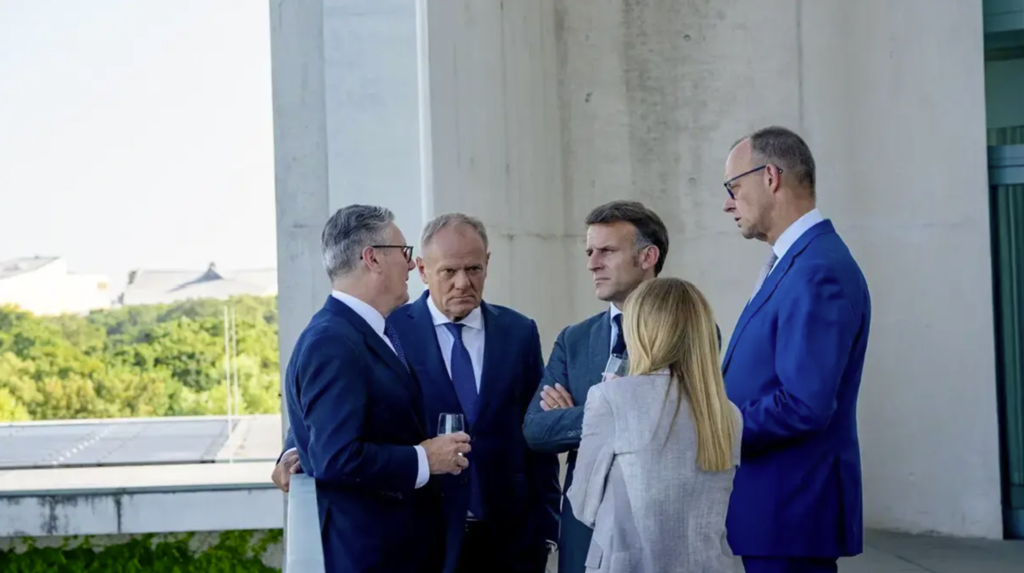
On 24 June 2026, the German Federal Chancellor, Friedrich Merz, hosted a meeting at the Chancellery in Berlin with the heads of state and government of the so-called E5: the President of the French Republic, Emmanuel Macron; the Prime Minister of the United Kingdom, Keir Starmer; the Prime Minister of Italy, Giorgia Meloni; and the Prime Minister of Poland, Donald Tusk.
The meeting had three objectives—to prepare for the North Atlantic Treaty Organisation (NATO) summit scheduled for 7 and 8 July in Ankara, to coordinate security guarantees for Ukraine, and to outline plans to strengthen the Alliance’s European pillar—at a time of marked estrangement between Washington and its European allies. Spain was not invited. Nor does its name appear in the final communiqué.
This is not an isolated incident, but the latest link in a chain of exclusions that has become routine over recent months, from the Euro-Atlantic security summit held in the United Kingdom to the successive video conferences of European leaders convened to discuss the Ukrainian issue. Spain has, quite simply, ceased to be in the room where the future of the continent’s security is decided.
The nature of the forum: why this absence carries more weight than it seems
The E5 is neither a makeshift club nor an ad hoc arrangement. It brings together, by explicit definition, the five European nations with the highest defence spending, and was established in 2024 as a coordination mechanism — originally amongst defence ministries — to sustain support for Ukraine, manage the United States’ gradual withdrawal from the European theatre, and organise joint defence projects.
The criterion for membership is, therefore, defence expenditure: precisely the yardstick by which Spain, by a deliberate decision of its government, brings up the rear. The fact that the forum is based on this metric makes Spain’s absence something qualitatively different from a mere protocolary oversight; it turns it into a diagnosis.
The decisive argument: the expansion that once again left Spain out
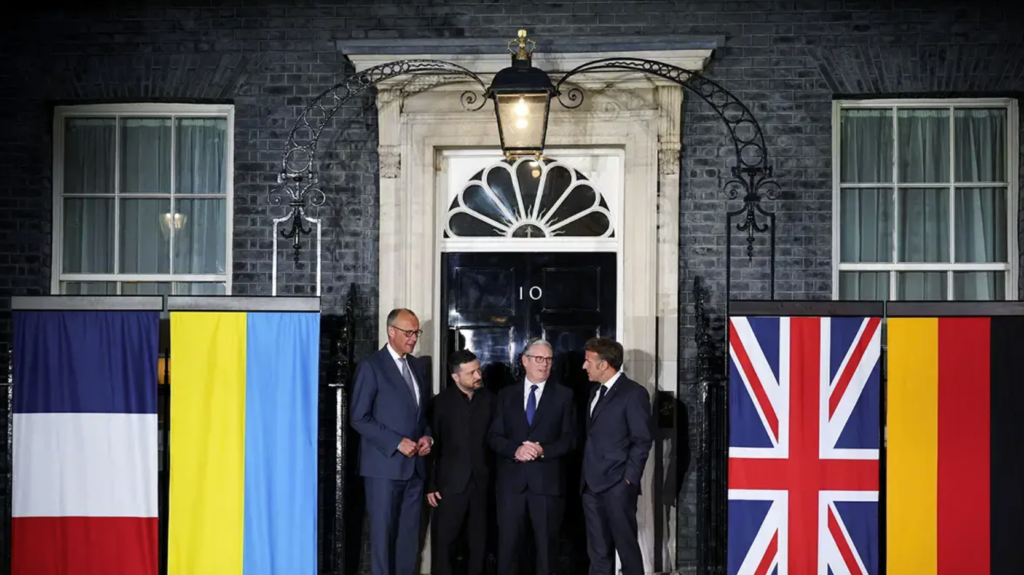
Herein lies, in this analyst’s view, the most damning fact – and the one most frequently overlooked. The format had originated as the E3 – Germany, France and the United Kingdom – and this restricted configuration provoked protests from Rome and Warsaw, which criticised the three capitals for monopolising the talks on Ukraine and preventing the participation of other key partners. The response to this grievance was to broaden the framework: the E3 became the E5, incorporating Italy and Poland, the latter due to its status as an irreplaceable logistical hub for the Ukrainian war effort.
In other words: when the club opened up, when it was expressly adjusted so as not to leave out any major players, Spain was not brought into the equation. It was not excluded because of the narrow scope of the format – that argument has just been rendered invalid by the very expansion itself – but rather in spite of the expansion. The table was enlarged, yet no chair was pulled up for Spain.
Irrelevance versus unreliability
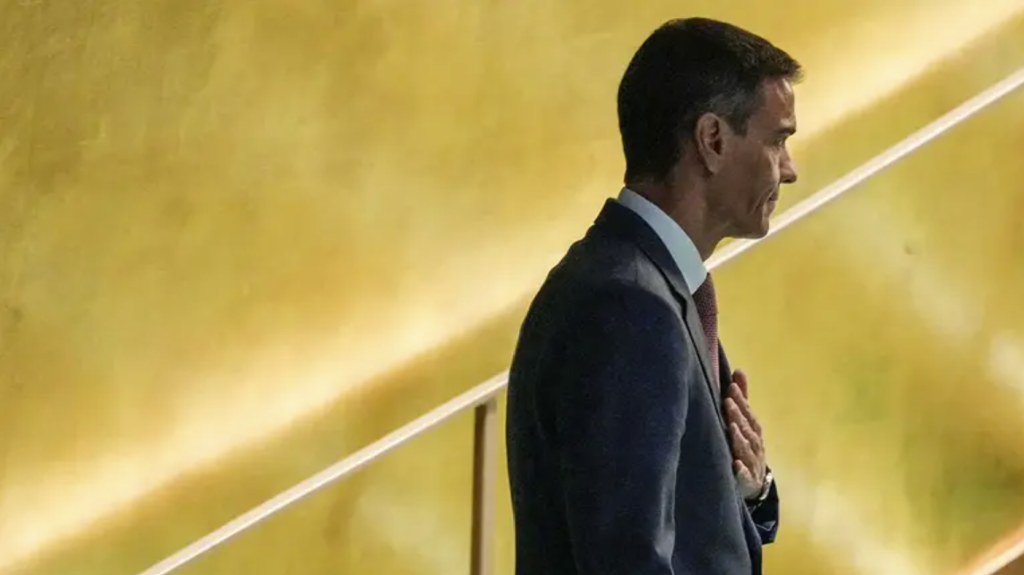
From the above emerges the thesis I maintain and which I consider the keystone of the entire analysis: the Spanish problem has ceased to be one of mere irrelevance and has become something more serious—the perception of unreliability. The distinction is not merely rhetorical. An irrelevant country simply does not count: it is ignored because its contribution is deemed marginal.
A country considered unreliable, on the other hand, is actively excluded, because its presence is perceived not as a neutral asset, but as a risk – of leaks, obstruction, inconsistency or disloyalty. The former is regrettable; the latter is damning. The fact that Spain has moved from one to the other is the exact measure of the deterioration of its international standing under the current government.
The context: defence spending and the spectre of expulsion
This exclusion does not occur in a vacuum. It coincides with the Prime Minister’s resistance to raising defence spending to the threshold agreed with the allies, a stance that has strained relations with Washington to the point where President Donald Trump himself has gone so far as to publicly raise the possibility of expelling Spain from NATO.
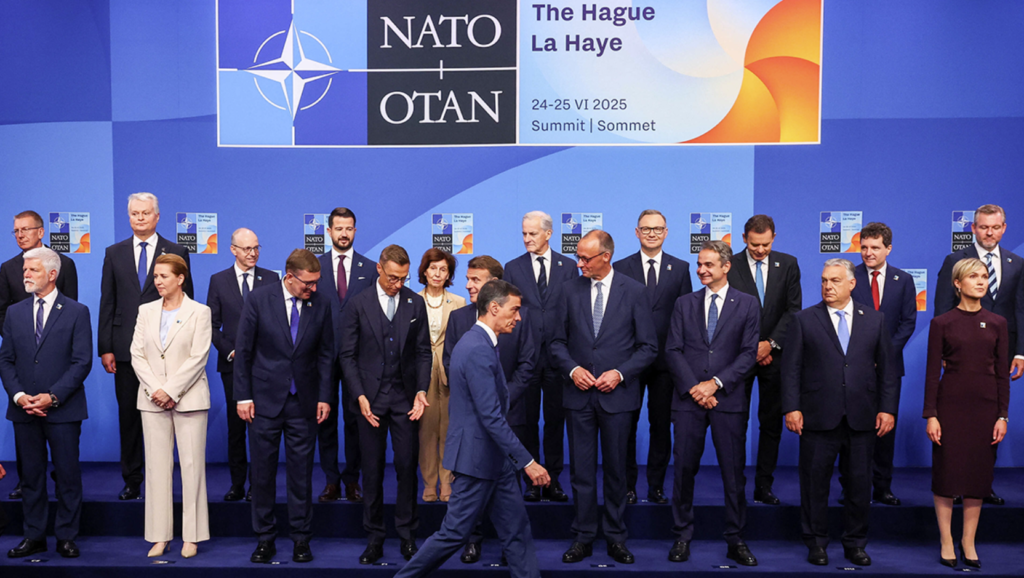
Such a proposal, regardless of its legal feasibility, would be unthinkable in relation to any other major partner and accurately gauges the depth of the discredit that has accumulated. The Ankara summit is also taking place against a backdrop of American irritation with the Europeans over their lukewarm response to the recent campaign against Iran’s terrorist regime, which adds a further layer of tension to an allied framework already under severe strain.
The underlying inconsistency: Rota, Morón and the dual narrative
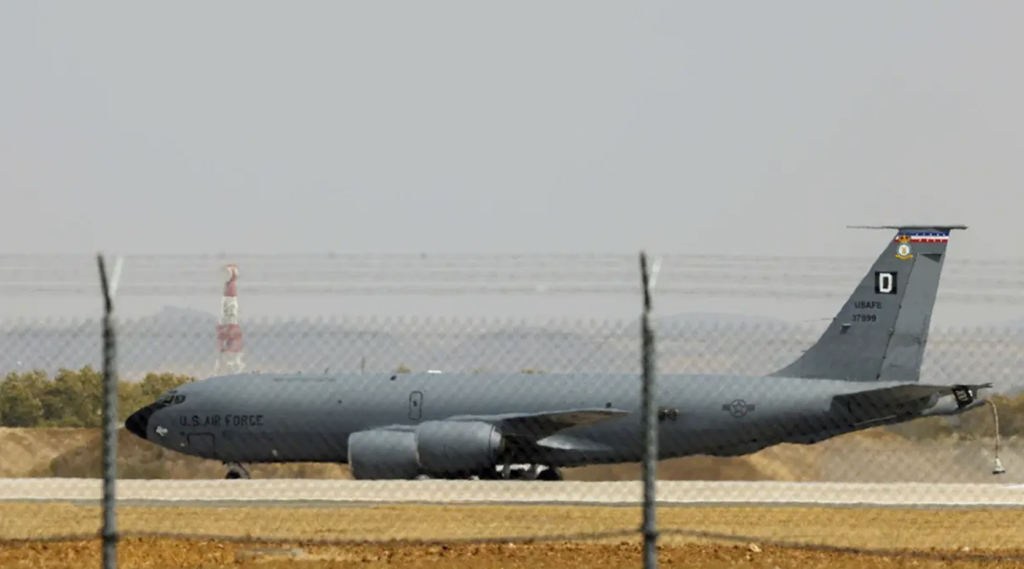
It is worth clarifying the criticism so as not to fall into the trap of the ‘maximalism’ that I so often criticise in others. Spain makes a first-rate contribution to Atlantic security through the bases at Rota and Morón, which actively support the Alliance’s naval and air projection and provide an invaluable service to our common defence.
It is not, therefore, this cooperation that deserves censure – on the contrary, it must be preserved and extolled – but rather the schism between this military reality and a public discourse that contradicts it: a government that cultivates a neutrality bordering on irresponsibility, more hostile in its rhetoric towards the United States than towards the jihadist oligarchy in Tehran itself.
It is this inconsistency between the facts and the narrative that erodes the trust of our partners; and trust, once lost, cannot be restored through press releases. I am not, therefore, calling for a maximalist policy: I am calling for consistency.
Final thoughts
The empty chair in Berlin must ultimately be seen not as an isolated snub, but as the fully-fledged symptom of an illness diagnosed long ago. When Europe’s five major military powers meet to decide the future of continental security and Spain features neither amongst those invited nor in the resulting document, what is evident is no longer merely our loss of influence — which could be remedied with will and resources — but the collapse of our credibility as an ally, a damage of a far deeper nature and one that takes much longer to repair.
Spain has not been forgotten in Berlin: it has been sidelined. And it is important for the public to understand the difference, because at stake here is not a diplomatic nuance, but our nation’s place in the world for the next generation.