Gustavo de Arístegui,
July 3, 2026
I. INTRODUCTION
The day unfolds along a single thread, and it’s worth pulling on it directly because it’s the one I’ve been describing for months: the lack of leadership—the absence, where it’s most needed, of an authority capable of making decisions and, above all, of guaranteeing those decisions—remains the underlying malady of our time. Taiwan is rehearsing its worst nightmare behind closed doors while China flies over it with nuclear-capable bombers; Russia is punishing Kyiv with the deadliest bombing of the year precisely while Washington is deploying its negotiating machine; and behind the scenes of the Iranian affair, it’s emerging that the United States had to warn Tehran that its own Israeli ally was preparing to assassinate the negotiators with whom the White House intended to reach an agreement. Five different arenas, one single grammar: that of power exercised without a guarantor and of force employed without a plan for the aftermath.
A second thread is woven into this one, its European counterpart. While Ukraine’s mediation is entrusted to sons-in-law and real estate agents, and while the continent watches with an empty chair as its security is decided, an eighteen-year-old boy with a ball at his feet projects an image of Spain that its diplomacy fails to convey. What follows is based on facts verified in recent hours and corroborated by multiple sources; projections are reserved for the scenario section, and attributions belong to their authors.
II. THE MOST IMPORTANT NEWS OF THE LAST 24 HOURS
1. Taiwan rehearses its nightmare: the anatomy of Chinese coercion
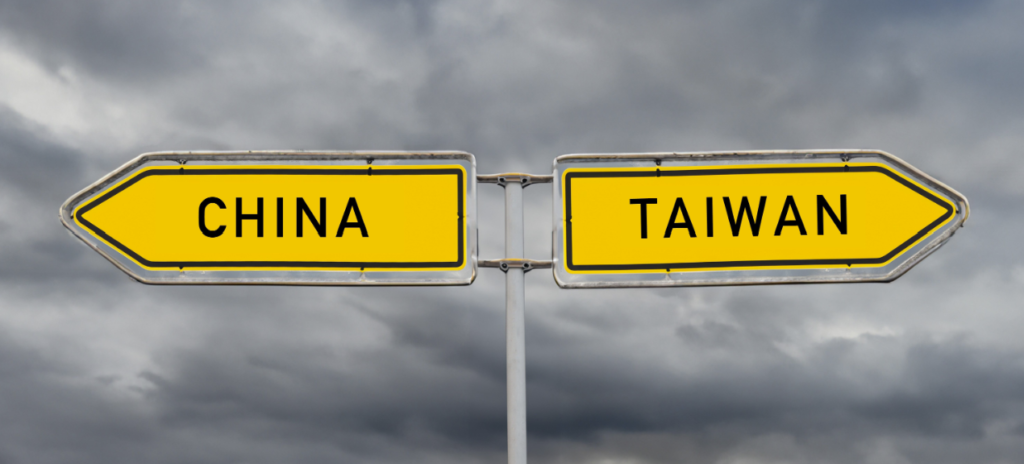
Facts. Reuters obtained exclusive access to a closed-door resilience drill held this week in the mountainous Nantou County of central Taiwan, in which more than 370 civilian and military officials were presented with a cascading scenario: a Chinese naval blockade, a 6.8 magnitude earthquake—with 12 deaths in the simulation—exploited by Beijing to sow chaos, television broadcasts hijacked and replaced with propaganda, infrastructure sabotaged, a bank run, civil unrest, and, as a culmination, a full-scale invasion. The two-day exercise—with a seven-hour tabletop phase followed by a field exercise that included shooting down a Chinese drone threatening a power plant and setting up food distribution points—is part of President Lai Ching-te’s efforts to strengthen the island’s war preparedness. This is not fiction: as the drill was concluding, Taiwan detected a new Chinese “joint readiness patrol” with warships and at least twenty-two aircraft, including nuclear-capable H-6 bombers; Beijing, through its spokesman Zhu Fenglian, branded Lai a “destroyer of peace” in the Strait.
Implications. The scenario encapsulates the entire grammar of contemporary Chinese power, and it does so with a clarity that the West would do well not to disregard. It doesn’t take firing a single projectile to suffocate Taiwan: it suffices to strangle its maritime routes, hijack its information space—the simulation dedicated an entire chapter to disinformation warfare using artificial intelligence—and sow doubt about the West’s willingness to come to its aid. We are, as always, very vigilant regarding Chinese expansionism in Asia, in the South China Sea and the Pacific, and its desire to control strategic raw materials and rare earth elements; and what is at stake here is not only the freedom of twenty-three million Taiwanese—which would be reason enough—but the backbone of the planet’s digital economy, since the most advanced semiconductors in existence are manufactured on the island. The Sino-American rivalry is a systemic competition between an established power and an emerging one with incompatible models; Washington is right to apply the “small garden, high fence” doctrine without succumbing to the temptation of a new Cold War. And let’s not lose sight of the underlying merit: Taiwan’s preparations—despite all its shortcomings, which its own government acknowledges—are precisely what Europe refuses to do.
Perspectives and scenarios. I’m setting the baseline scenario as the maintenance of hybrid pressure in the grey zone ( the area of hostility that falls short of open warfare), with recurring air and naval incursions and escalating disinformation campaigns, but without yet escalating to kinetic action. Deterrence remains effective, but its credibility erodes with each Western hesitation; and a window of opportunity—a natural disaster, a lapse in American attention—would be precisely the trigger this simulation has sought to conjure.
2. Kyiv suffers the deadliest bombing of the year while peace negotiations continue
Facts. In the early hours of Thursday, Russia launched hundreds of drones and dozens of missiles against Kyiv in the deadliest attack of the year on the capital: at least 27 dead—a number that continued to rise as rescue teams cleared debris—more than 90 wounded, and nearly 130 buildings damaged, with impacts recorded at some 30 locations throughout the city. A nine-story residential building was half-demolished on the left bank of the Dnieper River; a hotel, an ambulance station, and a scientific institute burned down, and some 800,000 books were destroyed in the BookChef publishing house warehouse. President Zelensky, who cut short his visit to Ireland to return, partly blamed the allies for not delivering the promised air defenses on time—”if our partners had delivered on time, we would have saved more homes and more lives”—and announced that this would be one of the key issues at next week’s NATO summit in Turkey. Moscow, which claimed responsibility for the “massive attack” as retaliation for Ukrainian strikes on its refineries, reported that Putin had been informed and would increase pressure; UN Secretary-General António Guterres condemned it as part of a “deadly pattern.” Mayor Klitschko declared a day of mourning.
Implications. There is no innocent interpretation possible, and I say this unequivocally: Moscow is bombing civilians precisely while Witkoff and Kushner are carrying out their mediation, and this contrast—the bloodshed in Kyiv versus the handshakes in distant offices—exposes the true nature of Vladimir Putin’s regime. Those who negotiate in good faith do not set fire to hotels or take the lives of nearly thirty innocent people the day before. Our position does not allow for neutrality: we oppose Russian aggression and the use of force to acquire territory, a principle that applies to Ukraine as well as to any border. It is also worth emphasizing the strategic fact that the Institute for the Study of War (ISW) itself has been documenting: the Russian spring-summer offensive of 2026 has failed to achieve significant advances, and the pace in June was a fraction of that of June 2025. That Moscow responds to its paralysis on the front lines with terror against the civilian rear is not strength, but an admission of weakness. And I continue to find shocking the attitude of certain pro-Russian analysts in Spain who whitewash this brutality; cynicism has a limit, and that limit is the coffins of kyiv.
Perspectives and scenarios. The bombing has a dual objective: to break Ukrainian morale and to negotiate from a position of strength forged through terror. The NATO summit in Turkey will be the litmus test: if the allies translate into action—and not just words—the support for the air defenses that Zelensky is demanding, the pressure on Putin could become leverage; if they falter, they will hand Moscow the time that the front no longer allows. As long as Europe does not take its own defense seriously, every drone strike over Kyiv will also serve as an indictment of its strategic abdication.
3. Washington had to warn Tehran that Israel was planning to assassinate its negotiators
Facts. The Washington Post and The New York Times , citing current and former US officials, reveal that in the spring Washington suspected Israel was preparing to assassinate the two top Iranian negotiators—Foreign Minister Abbas Araqchi and Parliament Speaker Mohammad Bagher Ghalibaf—and, through regional intermediaries, warned Tehran to take precautions. This concern intensified after the April 8 ceasefire, when Israel began considering both men “legitimate targets” for leading the talks. The most telling incident occurred on April 12: returning from Islamabad—where he had traveled, escorted by Pakistani fighter jets, to meet with US Vice President JD Vance—Ghalibaf’s plane received a warning that two Israeli fighter jets had entered Iranian airspace from Iraq with the intention of shooting it down, forcing him to make an emergency landing in Mashhad. Recall that the war began on February 28 with an Israeli attack, based in part on US intelligence, that killed Supreme Leader Ali Khamenei and much of his inner circle, including Ali Larijani and Kamal Jarrazi—considered pragmatic—who were killed while in contact with Washington. This revelation illuminates the growing divergence between the two allies: while the United States was moving toward the June memorandum that reopened the Strait of Hormuz, Israel considered—and still considers—it a failure that neither forces regime change nor dismantles the network of terrorist proxies.
Implications. The episode confirms, down to the last detail, the central thesis of these reports: the lack of leadership in Iran. Washington’s need to protect the negotiators of its own ally reveals a playing field where nothing is guaranteed; and the underlying fact, the one I’ve been emphasizing, is the relentless rise of General Ahmed Vahidi, commander-in-chief of the Revolutionary Guard Corps (IRGC) and, by far, the worst possible option: as fanatical as the rest of the triumvirate but far more ruthless and brutal. His rise to power exacerbates the paradox of the decapitation : Vahidi is now first among equals in the leadership, but a primus inter pares is not an absolute arbiter in the manner of the previous “supreme leader”; his primacy rests on force, fear, and fanaticism, not on the ideological, institutional, and religious authority that allowed him to impose discipline and extract concessions. The paradox intensifies instead of resolving: the most bloodthirsty of the three prevails, allowing him to steer and dominate the negotiations, but he cannot—and will not—guarantee their fulfillment. This is not a paradox of moderation, but of governance: a dominant hawk without the legitimate authority—or the will—to comply, who also monopolizes access to a puppet leader who has disappeared, Mukhta Khamenei. Finally, it is necessary to call things by their name: what governs in Tehran is not a theocracy, but a jihadist oligarchy, a terrorist state that exports instability through its proxy terrorist organizations—the terrorist organization Hezbollah in Lebanon and Syria, the Houthis in Yemen, Hamas, and the pro-Iranian terrorist militias in Iraq.
Perspectives and scenarios. The Doha negotiating channel remains open—the Qatari and Pakistani mediators certify “positive progress” on the Islamabad memorandum, and President Trump proclaims that Iran “has agreed to almost everything”—but it hangs by a thread: the internal discipline that Vahidi cannot guarantee and the Israeli temptation of assassination, which would shatter the entire structure. A key scenario: persistent intermittency at the Strait of Hormuz—openings and closures—as a direct signature of a power without a guarantor. A single serious provocation, whether successful or thwarted, would be enough to disrupt the calm.
4. Trump entrusts peace in Ukraine to Witkoff and Kushner: diplomacy as a transaction
Facts. The New York Times details how President Trump has handed over the mediation between Ukraine and Russia to his envoy Steve Witkoff and his son-in-law Jared Kushner, in a bid for the highly personalized diplomacy that defines this White House. The plan—accepted by Kyiv in nearly 90 percent of cases—runs into the same old major obstacle: Russia’s demand that Ukraine withdraw from the Donbas it still controls. The envoys have courted Putin’s emissary, Kirill Dmitriev—whose contacts include dubious business proposals in Russia—while pressuring Zelensky to cede territory to an aggressor that has shown no sign of abandoning its aim to subjugate all of Ukraine. Zelensky, who hopes to meet with Trump on the sidelines of next week’s NATO summit, insists that “the pressure on Russia must increase at the same pace as the work of our negotiating teams.”
Implications. Here I introduce the nuance that has become standard in these reports, and I stand by it: I applaud Trump’s foreign policy when it is pragmatic and realistic and guided by the firmness of Secretary of State Marco Rubio—and there have been many successes in less than a year, from Cambodia-Thailand to Gaza or Azerbaijan-Armenia—but I criticize it unequivocally when it is erratic, transactional, and driven by impulsive outbursts and intuition. Entrusting a negotiation of this magnitude to a son-in-law who is also a real estate developer, without a solid plan for the aftermath and with a clear predisposition to reward the aggressor, is to repeat the original sin I already pointed out regarding Iran and Venezuela: in military terms, outstanding; in planning for the aftermath, a resounding zero. Diplomacy is not a real estate transaction: a country is not closed like a skyscraper, and a peace that rests on Ukrainian capitulation would not be peace, but the consecration of the principle —lethal to the international order— that borders are moved by force.
Perspectives and scenarios. Hope, as I’ve been saying, rests on the system and the level-headedness of those surrounding the president—Rubio at the forefront—prevailing over instinct. The likely scenario: a fragile and reversible ceasefire, without credible guarantees or a framework for rebuilding European security. An armistice is not peace, and a truce without a structure is merely a pause between two wars. The NATO summit will reveal whether the allies are willing to back up, with concrete actions, the only card that truly motivates Putin: force.
5. The “soft power” of football: Yamal and the image of a nation
Facts. On the lighter side of current events, The New York Times ‘ main sports column—published by its sports supplement, The Athletic—dedicates its prime space to Lamine Yamal in its major special report on the 2026 World Cup, to be held in North America. The eighteen-year-old Barcelona winger is already the youngest player to win a major international trophy—he won the 2024 European Championship with Spain the day after turning seventeen—was named best young player of that tournament, and finished second to Ousmane Dembélé in the 2025 Ballon d’Or. Spain is chasing its second World Cup title, sixteen years after its first; Yamal, still recovering from a muscle injury, embodies the enormous expectations placed on the national team.
Implications. This news shouldn’t be dismissed simply because it comes from the pitch: football is one of the most formidable instruments of soft power , and Yamal’s case is a prime example. A country projects itself—and sometimes redeems itself—through the figure of a young man capable of inspiring millions of dreams, a point I’ve been making in my articles on the geopolitics of football: a nation’s positive image is built as much in foreign ministries as in stadiums. Allow me a personal note, as I come from a family that witnessed the dawn of European football firsthand: I know full well that this sport, when it’s truly great, unites what politics divides. And there’s a silent rebuke here that I can’t resist making: Spain—which suffers from a worrying lack of leadership in high politics, with an empty seat at the tables where the continent’s fate is decided—radiates through its football an influence that its diplomacy fails to project. In the face of regimes that use sport as mere image whitewashing (sportwashing), democracies would do well not to cede that ground.
Perspectives and scenarios. The 2026 World Cup will be, beyond the outcome, a formidable geopolitical showcase. A Spain that shines on the pitch has a golden opportunity to remind the world—and perhaps its own leaders—that a nation’s greatness is not limited to the match, but neither should it be squandered outside of it.
III. MEDIA RACK
How the leading international press and main analysis centers are covering the day, with attribution to their authors:
- News agencies and the Anglo-Saxon press (Reuters, AP, AFP, The New York Times, The Washington Post). Reuters secured exclusive access to the Taiwanese military drill and reported on the bombing of Kyiv; the Post and the Times revealed the US warning about the Israeli plan to assassinate Iranian negotiators and the growing rift between Washington and Jerusalem.
- British press (BBC, Financial Times, The Times, The Economist) highlight the operational failure of the Russian spring-summer offensive documented by the ISW and the diplomatic standoff surrounding the NATO summit in Turkey.
- French press (Le Monde, Le Figaro, France Info, LCI, BFM). Le Monde had already placed Putin’s envoy, Kirill Dmitriev, within the orbit of European contacts; the French focus is divided between Ukraine and the Gulf issue.
- Middle Eastern press outlets (Times of Israel, Ynet, Israel Hayom, Al Jazeera, Asharq Al-Awsat, Arab News) provide minute-by-minute coverage of the warnings regarding Araqchi and Ghalibaf, as well as the cooling of relations between Trump and Netanyahu, all viewed through the lens of Israeli national security.
- Asian press (South China Morning Post, The Times of India, Yomiuri Shimbun, Straits Times) prioritize Chinese military pressure on Taiwan and the new joint patrol with nuclear-capable H-6 bombers.
- Russian and Iranian media (TASS, Russia Today, Mehr, Tasnim) reproduce the version of the “massive attack” as retaliation for the attacks on the refineries and the thesis that transit through Hormuz “requires coordination” with Tehran: a symptom, not the source.
- Analysis centers (ISW and its Critical Threats Project, IISS, RUSI, CSIS, IFRI) provide the day’s analytical muscle: the Russian operational failure, General Vahidi’s dominance and his monopoly on access to Mojtaba, and the structural fragility of the Gulf Memorandum.
IV. RISK TRAFFIC LIGHT
● Russian bombing of Kyiv and the Ukrainian front. High risk. The deadliest attack of the year confirms Moscow’s reliance on terror against the civilian rear guard in the face of its paralysis on the front lines.
● Israeli temptation of assassination in the Iranian case. High risk. An attack against Araqchi or Ghalibaf would cripple the Doha canal and precipitate the resumption of war.
● Intermittent traffic in the Strait of Hormuz. Medium risk. A direct result of Tehran’s lack of leadership and the rise of General Vahidi; traffic remains well below pre-war levels.
● Hybrid Chinese pressure on Taiwan. Medium and structural risk. Blockade, disinformation with artificial intelligence and patrols with nuclear bombers, in a gray zone.
● Transactional mediation in Ukraine. Medium risk. Active, but lacking a post-crime framework and predisposed to reward the aggressor.
● Taiwan’s civic-military preparedness. A positive vector. The resilience that Europe refuses to exercise, with all its acknowledged shortcomings.
● Soft power of the 2026 World Cup. Favorable vector. Projection window for democracies —including Spain— against the sporting whitewashing of autocracies.
Short-term reference scenario: prolongation of the limbo of conditional truce in the Gulf —neither full agreement nor open rupture—, with chaotic intermittency in Hormuz as an expression of a regime that has a dominant hawk but lacks a reliable guarantor; and a war in Ukraine in which Moscow compensates for its paralysis on the front with terror over civilians.
V. EDITORIAL COMMENTARY
There is a single underlying flaw that runs through all five of today’s events, and it’s worth naming because it dictates everything that happens: in almost all of them, an operation has been or is being executed with military brilliance, but without any political plan for the day after. We saw it in Iran, decapitated on February 28; we saw it in Venezuela, with the capture of Maduro; we see it now in the mediation of Ukraine, conceived as a transaction and not as a strategic framework. The lesson is repeated, and I repeat it because it applies to everyone: militarily, outstanding; in planning for the day after, a complete failure. The only bright exception is, paradoxically, tiny Taiwan, which at least is preparing—despite its shortcomings—for the worst-case scenario; this is precisely what Europe stubbornly refuses to do.
In Tehran, this deficiency has a name and a rank. The rise of General Vahidi doesn’t resolve the paradox of the decapitation ; rather, it takes it to its purest form: the regime finally has a dominant figure, but the one in charge is precisely the most ruthless and bloodthirsty of the three, a guardian who imposes his will through terror and monopolizes access to a puppet leader who has disappeared. The fact that Washington had to warn Tehran of its own Israeli ally’s plan to assassinate the negotiators is the most eloquent proof of two things at once: that no one in the Iranian leadership guarantees what is signed, and that the rift between the United States and Israel is real, deep, and dangerous. We are, as always, decidedly opposed to Iran’s oligarchic-jihadist regime and its power structure as a terrorist state; we were in favor of reducing its capacity for harm, but highly critical of the glaring absence of a plan for the future.
Russia presents the most brutal face of this same disease. Moscow’s response to its operational failure on the front lines—documented unequivocally by the ISW—by burning hotels and burying nearly thirty civilians in Kyiv is not a show of strength, but an admission of weakness; and to do so while Trump’s envoys court Putin’s emissary exposes the folly of a diplomacy that rewards the aggressor and pressures the victim. Opposed to Russian aggression and the use of force to acquire territory, we refuse to accept that peace should be mistaken for capitulation. I trust—and this is not naiveté, but confidence based on the checks and balances of the system—that Marco Rubio’s level-headedness will ultimately prevail over instinct; but level-headedness, to be of any use, must arrive in time.
And then there’s Europe, which is where it pains me most to write. The same lack of leadership that has emptied the chair in Tehran threatens to empty that of a continent incapable of taking its defense, security, and destiny seriously, and which watches from a position of irrelevance as others decide for it. An Atlanticist at heart and a staunch European, I refuse to accept this abandonment. That’s why it comforts me—and this is no small matter—that an eighteen-year-old with a ball at his feet projects an image of Spain that its leaders fail to convey: football, when it’s great, unites what politics divides, and reminds us that the greatness of a nation is not inherited, it is earned, defended, and exercised. The rest is rhetoric or, worse still, resignation. And this analyst, I assure you, does not resign himself.