Gustavo de Arístegui,
July 10, 2026
I. INTRODUCTION
I am writing this on one of those days when current events confirm, with almost didactic clarity, what I have been describing for months. The provisional ceasefire between the United States and Iran’s oligarchic-jihadist regime has collapsed, and it did so with President Trump declaring it “finished” from the NATO summit in Ankara, amidst two consecutive nights of American airstrikes and Iranian reprisals against Gulf bases. The volatile war has thus escalated once again, just when it seemed to be cooling down.
On the eastern flank, Ukraine is perfecting its energy strangulation of the Russian war machine. And as if there weren’t enough tension, the American press awoke to an Israeli warning of an Iranian plot to assassinate Trump, while Washington rehabilitates postwar Syria. Four issues, one common thread: the growing disproportion between the capacity to destroy and the inability to manage the aftermath. Here are the four news stories that, in my opinion, best explain the last twenty-four hours.
II. THE MOST IMPORTANT NEWS OF THE LAST 24 HOURS
1. The ceasefire with Iran, “ended”: second night of attacks and reprisals over the Gulf
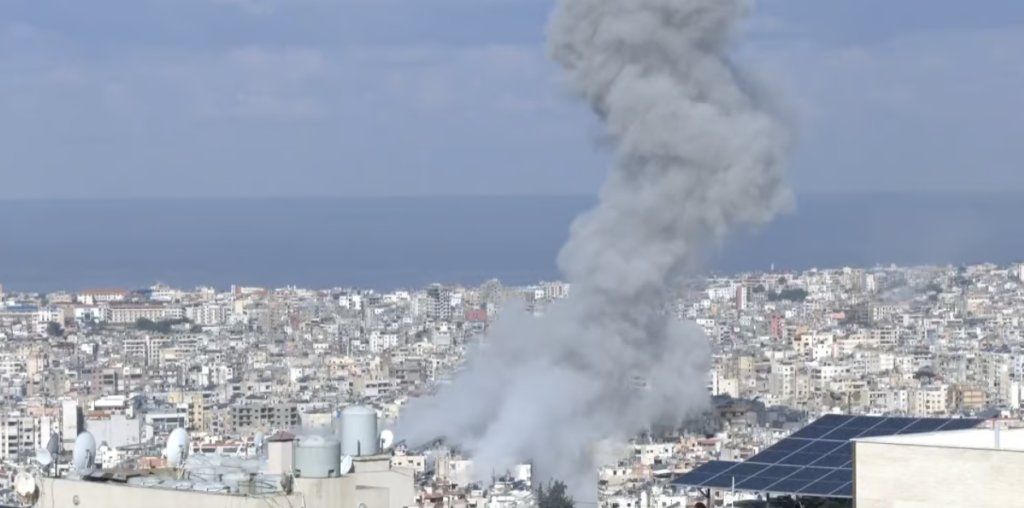
Facts. — From Ankara, at the close of the allied summit on July 7 and 8, President Trump declared the Islamabad memorandum of understanding “finished” and called the Iranian leadership “scum.” The US Central Command (CENTCOM) carried out two consecutive nights of attacks—around eighty targets on Tuesday and about ninety on Wednesday—against air defenses, command and control nodes, coastal radars, anti-ship missile capabilities, and more than sixty Revolutionary Guard speedboats in the vicinity of the Strait of Hormuz. Iran responded by striking US bases in Kuwait and Bahrain—Kuwait claims to have intercepted ten drones, three ballistic missiles, and one cruise missile, with damage from falling debris and one injury—and also issued alerts in Qatar and Jordan. The Speaker of the Iranian Parliament, Mohammad Bagher Ghalibaf, warned with his usual bravado that the Strait of Hormuz would only open “with Iranian arrangements,” not with American threats. By Thursday the 9th, tensions had eased: despite having a list of targets and the aircraft carrier USS Abraham Lincoln ready, Washington forwent another strike and allowed diplomacy—with Pakistan and Qatar acting as mediators—to take its course, aiming for a nuclear agreement by mid-August. Traffic through the Strait of Hormuz plummeted to a mere ten ships in twenty-four hours, compared to the 110 per day before the conflict, due to deliberate interference with satellite positioning (GPS).
Implications. — We are facing the archetype of what I call variable-temperature wars: low-resolution conflicts with extremely high destruction, which no one can win or afford to lose. The strike-pause-strike sequence is not hesitation, but a calibrated escalation in which Washington retains the target list as a bargaining chip—a contained systemic fracture, in my terms. The war, which began on February 28, has seriously degraded the Iranian military apparatus, but leaves two poisoned unknowns: the whereabouts of the highly enriched uranium and the survival of the regime’s hardliners. It is the perfect illustration of my diagnosis of this administration: military planning, a ten out of ten; geostrategic planning for the day after, the great unfinished business. And the Strait of Hormuz, now a weapon, serves as a reminder that global energy security remains hostage to a cosmically corrupt oligarchy.
Perspectives and scenarios. — Scenario A (35%): covert diplomacy prevails, and a patched-up ceasefire is established, leading to a nuclear framework by mid-August. Scenario B (40%): a prolonged “variable temperature” sets in—intermittent clashes without open war, with the Strait of Hormuz as a chronic bottleneck and soaring risk premiums. Scenario C (25%): a miscalculation, excessive retaliation, or an attack reignites all-out war. The total is 100%; and, as I have been warning, the intermediate scenario is the most likely and the most corrosive.
2. Ukraine refines its “far-reaching sanctions” and launches the Patriot license; Russia punishes civilians
Facts. — On July 9, Ukrainian forces intensified what President Zelensky calls “long-range sanctions”: drones struck a dozen Russian oil tankers, a tugboat, and a cargo ship in the Sea of Azov —vessels that supply the Russian military and serve as a “ghost fleet” to evade sanctions—as well as crude oil depots in Tver, Ufa (Bashkortostan), and the Stavropol region, exacerbating Russia’s fuel shortage. Moscow, for its part, launched 94 drones and two ballistic missiles that same evening; Ukrainian air defenses shot down 72, but there were impacts, with a residential building hit in Kharkiv and civilian casualties. In Ankara, Trump pledged to grant Kyiv a license to manufacture Patriot air defense systems—though Kyiv warns that producing the interceptors will take a year or more—and Poland agreed to co-produce and maintain the PAC-3 missiles.
Implications. — Ukraine has understood that the way to subdue an aggressor who refuses to stop the war is to strangle its war economy. The blows against the phantom fleet and the refining industry are legitimate, necessary, and long overdue; they are a healthy exception to the passivity with which the West has for far too long observed the Kremlin’s energy blackmail. We are, without reservation, opposed to Russian aggression and the use of force to acquire territory, and Moscow’s repression of the civilian population—an apartment building in Kharkiv—does not allow for neutrality. The Patriot license is a pragmatic success for Trump; however, European funding must be, as the Ankara Declaration itself states, equitable, predictable, and sustainable, and not just empty promises.
Perspectives and scenarios. — The energy infrastructure war will intensify this summer; the decisive factor is no longer Ukrainian will, but European industrial resilience. Another war with fluctuating intensity that drags on because Europe lacks the resolve to end it.
3. Israel warns Washington of a new Iranian plot to assassinate Trump
Facts. — The Wall Street Journal revealed on Thursday, the 9th—and two sources confirmed to CNN— that Israel shared intelligence with the United States about a new and specific Iranian plot to assassinate President Trump; the warning reportedly arrived “this week.” Washington had been receiving a trickle of indications about threats, but this information was new and had not been verified independently. With remarkable professional honesty, several US officials warn that the Israeli report could be part of an effort to influence Trump’s decision on whether or not to escalate the campaign against Iran; there are, they say, those in the intelligence community who are systematically suspicious of Israeli intelligence. Trump himself declared himself “number one on Iran’s target list.” In Mashhad, a banner was unfurled with the slogan “We will kill Trump,” and anti-American chants were heard. Trump and Netanyahu spoke by phone on Thursday—with relations strained over Lebanon—and the president left Ankara on an older Air Force One, denying that it was for security reasons.
Implications. — The threat is plausible in its nature: the Tehran regime has been promising to avenge Soleimani since 2020, and there is no shortage of legal precedents—a 2024 assassination plot, the March 2026 conviction of a Pakistani citizen linked to the Revolutionary Guard. That Iran exports terrorism and instability is a thesis I maintain without euphemism. However, precisely because the regime is sinister, it is important to view this episode with a cool head: instrumentalizing intelligence to force decisions from others is a game as old as diplomacy itself. The sensible thing to do is to safeguard the president’s protection without being drawn into an escalation by a third party’s calculations. Neither naiveté in the face of Tehran, nor docility toward those who seek to push Washington into the war that suits them.
Perspectives and scenarios. — We can expect increased presidential protection and a political use of the narrative. The question is whether the system’s common sense—and the firm hand of Secretary of State Marco Rubio—will prevail over impulse and outburst. It is in this struggle between institution and intuition that I continue to place much of my optimism.
4. Trump removes Syria from the list of state sponsors of terrorism
Facts. — Between July 8 and 9, President Trump signed the directive to revoke Syria’s designation as a state sponsor of terrorism. The Syrian Foreign Minister released a photograph, alongside President Ahmad al-Sharaa, showing the signed document; Congress now has forty-five days to review the decision.
Implications. — This is another piece of the pragmatic realignment that characterizes this foreign policy when guided by prudence and Rubio’s advice, rather than excess: betting on the stabilization of postwar Syria and removing it from the orbits of Moscow and Tehran. I applaud the pragmatism, but with the reservations that the profession demands: al-Sharaa comes from jihadism, and vigilance against ISIS and Al-Qaeda in its many branches allows no breaks. Lifting sanctions in exchange for verifiable behavior is reasonable; doing so out of mere voluntarism is imprudent. Here, I prioritize caution.
Perspectives and scenarios. — The door is open to sanctions relief and normalization, with the latent risk that the Syrian transition could derail. It is advisable to follow the proceedings in Congress and, above all, the actions—not the rhetoric—of the new government in Damascus.
III. MEDIA RACK
Below, I present, by geographical area and with appropriate contrast, the dominant perspectives of the newspapers and analysis centers I consulted in the last 24 hours. I deliberately refrain from attributing theses to media outlets I was unable to verify today, adhering to the principle of not fabricating anything.
American press reference
The Washington Post / NBC News / The Hill — They focus on the second night of crossfire and Trump’s “it’s over” regarding the memorandum, underscoring the calibrated nature of the US escalation and Iranian retaliation against Kuwait and Bahrain.
CNN — Documents the collapse of traffic through Hormuz and the mediation of Pakistan and Qatar, and previews —with two sources— the Israeli warning about the plot against Trump, tempering the skepticism of some US intelligence.
The Washington Times / Fox / Newsmax — They emphasize the president’s firmness and the cost to Tehran, in a more favorable tone towards a hardline approach; they also report Trump’s pessimism about the usefulness of continuing to negotiate.
Newsweek — Publishes the finest analysis on the five-member collegial leadership and the primacy of Ghalibaf and Vahidi, with the thesis of an Iran that is “militarizing” under Khamenei.
British press, financial and analysis centers
Financial Times (via syndication) / Bloomberg — The first dissects the power of the new commander Vahidi over security, foreign policy and the economy; the second quantifies Ukrainian attacks on Russian oil tankers and the resulting fuel shortages.
Forbes / CEPA / Congressional Research Service — They agree on the diagnosis of a NATO that agrees on a spending floor of 5% without agreeing on what the priority threat is, and on the reproach of the laggards —Spain among them—.
The Economist / EIU — They maintain their reading of a second half of 2026 dominated by the “managed chaos” of Trump, China and the energy markets.
Continental European press
Euronews / Defense News — They reconstruct the sinking of the Franco-German FCAS fighter jet and the Airbus-Dassault rift, and recount the clash in Ankara: the “terrible partner” Spain, the Greenland claim and the Danish anger.
Middle East and Israel Press
The Times of Israel / The Jerusalem Post / JNS — They amplify the WSJ’s exclusive on the Iranian plot, cover the banners in Mashhad and the Trump-Netanyahu conversation, and frame Syria’s removal from the blacklist.
Al Jazeera — Offers the regional counterpoint: the victims in southern Lebanon, President Aoun’s conditions on the Israeli withdrawal, and the Arab reading of the pulse in Hormuz.
Ukrainian press
The Kyiv Independent / Ukrinform / Ukrainska Pravda — They detail the “far-reaching sanctions” against the ghost fleet and Russian refineries, the toll of the night bombing on Kharkiv and Trump’s green light to the manufacture of Patriot.
Russian state media (symptom, never source)
TASS/RT and affiliated aggregators — The nickname “Operation Bitch Slap,” attributed to the New York Post, is circulating, along with unverified rumors about a resale of Turkish S-400s to a Gulf country. I include these as indicators of Kremlin propaganda, never as reliable information.
IV. RISK TRAFFIC LIGHT
🔴 Persian Gulf and Strait of Hormuz: ceasefire broken, real risk of resumption of open warfare and strangulation of maritime traffic.
🔴 Internal Iran: leadership vacuum, concealment of the “supreme leader” and rise of the most ruthless hawks; maximum unpredictability.
🟠 President Trump’s security: Iranian plot denounced by Israel, with due caution regarding its instrumentalization.
🟠 Transatlantic cohesion: Washington-Madrid rupture, Greenland claim and erosion of allied trust.
🟠 Eastern flank: escalating Ukraine-Russia energy war and Russian punishment of the civilian population.
🟡 Europe’s defense: the shipwreck of the Franco-German fighter jet and contagion to the MGCS tank; strategic autonomy in question.
🟡 Syria: Realignment with Washington fraught with unknowns about the reliability of the new power in Damascus.
🟢 Rearguard diplomacy: Pakistan and Qatar’s mediation and the restraint on Thursday the 9th keep open —for now— a window of opportunity for an agreement.
V. EDITORIAL COMMENTARY
Some days are, in themselves, a thesis. Today is one of them. I contemplate a West that knows how to destroy with surgical precision and yet fails to imagine the day after—military planning, a ten out of ten; geostrategic planning, the eternal failing grade—facing a headless jihadist oligarchy that has lost its arbiter and gained its executioners. Because that is the crux of the paradox of decapitation in its most dangerous phase: when the patriarch falls, a moderate does not emerge, but rather the most bestial of the praetorians, capable of piloting the escalation and signing agreements, but incapable—and unwilling—to guarantee that no one will honor it. With a hawk like Vahidi at the head of the Guardians and a “supreme leader” reduced to a ghost, any agreement will be born mortally wounded.
And while Tehran is left without a leader, Europe is determined to lose its bearings. It pains me to write it, but Spain’s humiliation in Ankara is, to a large extent, deserved: those who contribute the bare minimum, deny their airspace to their allies, and confuse neutrality with irresponsibility, cannot then be surprised to have gone from irrelevance to suspicion. It is the same lack of leadership I denounce in the Gulf, only here the empty chair is ours. And as if the picture weren’t eloquent enough, the Franco-German engine—Paris and Berlin, Airbus and Dassault—has blown up the European sixth-generation fighter in a clash of industrial vanities and sovereignty concerns, dragging the main battle tank down with it and confirming that the old continent prefers the rhetoric of strategic autonomy to the far less glamorous effort of truly rearming. May God—and European factories—have mercy on us.
Not everything is bleak, and this analyst resists comfortable neutrality. I wholeheartedly applaud the “far-reaching sanctions” with which Ukraine is strangling the war machine of a Kremlin that refuses to stop, and I celebrate when Trump—guided by Rubio’s wisdom rather than outbursts—grants Kyiv the Patriot missile program or removes postwar Syria from the orbits of Moscow and Tehran. Therein lies the pragmatic foreign policy that has achieved real successes in less than a year. Quite another thing is the erratic, transactional Trump of the trade deal with Spain or the Greenlandic whim: the one who relies on intuition and dramatic gestures more than strategy. I continue to bet, with stubborn optimism, that the system and the voices of reason that surround it will ultimately prevail over impulse. Because in a world veering toward extremes, common sense—that rare commodity—is today the scarcest and most necessary good.