
Gustavo de Arístegui,
July 16, 2026
I. INTRODUCTION
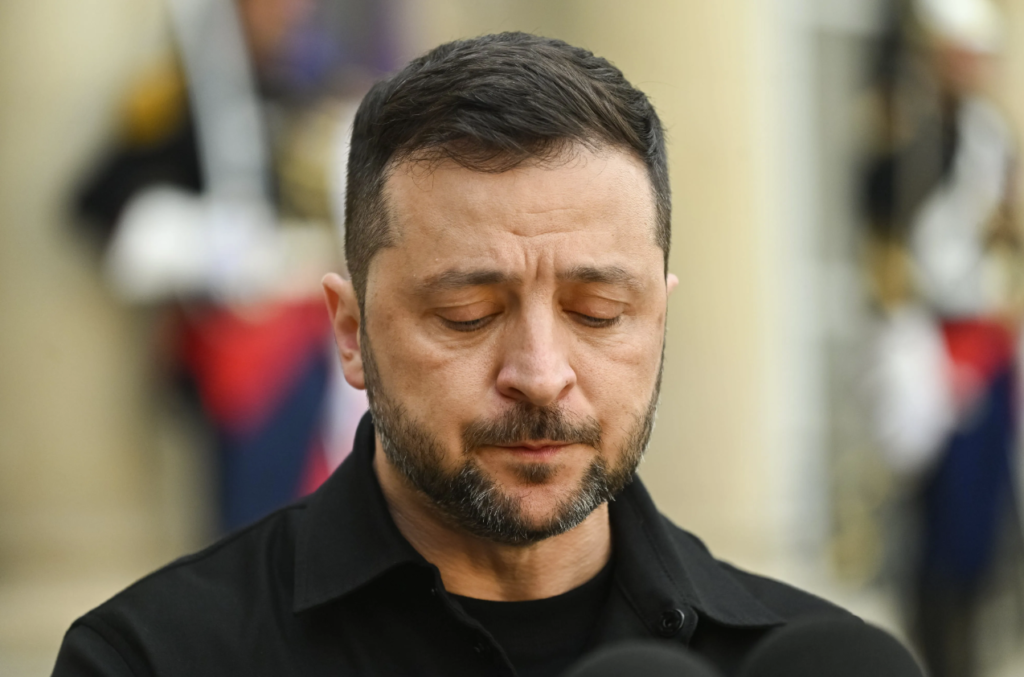
Two stories, or rather three intertwined threads, have dominated the geopolitical landscape for the past forty-eight hours, and all three share, despite unfolding in geographically distant settings, a common denominator: the erosion of authority as an inevitable consequence of protracted war. In Kyiv, President Volodymyr Zelensky, in the midst of the Ukrainian campaign against the Russian phantom fleet and on the eve of a winter predicted to be particularly harsh, decided to dismiss first his prime minister and then, abruptly and unexpectedly, his defense minister—who, in just six months in office, had become the most popular and, above all, most effective face of the Ukrainian resistance. In Tehran, meanwhile, General Ahmed Vahidi is consolidating his position as first among equals of the Revolutionary Guard triumvirate, though this in no way signifies the end of the negotiation paralysis or the dismantling of the extortion system the regime has established in the Strait of Hormuz following the collapse of the Islamabad Memorandum. Let’s proceed step by step, with the factual rigor these analyses demand, and without yielding an inch to the temptation of gratuitous speculation.
II. MOST IMPORTANT NEWS FROM THE LAST 24-48 HOURS
1. Ukraine: the change in the Kyiv leadership and the ousting of the most popular minister of the war
Facts
On Sunday, July 12, President Zelensky announced the dismissal of Prime Minister Yulia Svyrydenko, who had held the position since July 2015, citing the need for “a change in political strategy” and the advisability of assigning each foreign policy priority to someone “with substantial experience.” Parliament—controlled by his party, Servant of the People—approved the resignation on Tuesday, July 14, by a vote of 258 in favor, one against, and five abstentions. According to Ukrainian law, this also triggered the resignation of the entire cabinet. The leading candidate to replace her is Serhii Koretskyi, the current CEO of Naftogaz, the country’s main state-owned oil and gas company, whom Zelensky himself has described as the best-prepared person to assume the leadership of the government in the lead-up to winter.
But the real shock came on Wednesday, July 15, when Zelensky unexpectedly dismissed Defense Minister Mykhailo Fedorov, 35, after a meeting with Commander-in-Chief Oleksandr Syrsky. Fedorov, who had held the position since January of this year, came from the government’s technology wing—for years he was responsible for Digital Transformation and the architect of the Diia platform. In these six months, he had become a true media star of the Ukrainian resistance: under his leadership, Russian forces’ access to Starlink systems was blocked, the drone campaign against Russian logistics in occupied Crimea was intensified, the ministry’s procurement system was audited with price reductions of between 16 and 20 percent, and a reform—”unpopular but extremely necessary,” in his own parting words—of the ministry’s structure was implemented in accordance with NATO standards.
The official reason given by Zelensky’s inner circle, according to parliamentary sources cited by Kyiv Independent and Defense News, is an unresolved systemic conflict between Fedorov and General Syrsky regarding military reform, the recruitment system, and mobilization. According to these same sources, Zelensky himself reportedly stated in a meeting with his parliamentary group that, ideally, both Fedorov and Syrsky should have been dismissed, although he acknowledged that he could not afford to do so at this stage of the conflict. The proposed replacement is Interior Minister Ihor Klymenko, whose parliamentary confirmation was scheduled for this Thursday. The dismissal has sparked spontaneous protests in Kyiv’s Ivan Franko Square, the resignation in solidarity of drone warfare advisor Serhii Sternenko and Colonel Pavel Elizarov, deputy commander of the Air Force, and a notable wave of indignation among veterans and activists, some of whom—including journalist Sergiy Sydorenko—have drawn a parallel with last year’s failed attempt to dismantle the independence of Ukraine’s anti-corruption agencies, calling both decisions moves designed to secure Zelensky’s own political future.
Implications
The first implication, and the most troubling from the standpoint of the cohesion of the war effort, is that Ukraine is allowing itself—in the midst of a Russian war of aggression and with Moscow intensifying its ballistic missile attacks against Kyiv and Kharkiv—a fourth major government reshuffle since the start of the full-scale invasion in February 2022, precisely at the moment when the Ministry of Defense was finally beginning to show tangible results against the Russian offensive thanks to a domestic industry of attack drones, defense drones, and anti-drone systems that has proven, without any exaggeration, to be among the most advanced in the world. This analyst cannot help but underline the paradox: the architect of this success is dismissed at the exact moment that success is becoming evident. The official explanation—a clash with General Syrsky over issues of structural reform and mobilization—is plausible and supported by multiple independent Ukrainian sources, but it by no means exhausts all possible interpretations. And it is important to be precise in distinguishing between verified fact and analytical hypothesis: what follows is not confirmed by any cited source, but rather constitutes this analyst’s reading based on the observed pattern of behavior.
The hypothesis, already suggested by Ukrainian observers as one possibility among several, is that Fedorov’s meteoric rise as a public figure—a veritable rock star of Ukrainian public opinion—may have stirred an unspoken political unease within the presidential circle: that a thirty-five-year-old minister, with genuine popularity and untouched by the wear and tear of nearly four and a half years of wartime leadership, could, in any future elections—currently suspended due to martial law, but which must be held sooner or later—emerge as a serious rival to Zelensky himself. This interpretation is a hypothesis, not a fact, but it finds some indirect resonance in the parallel drawn by Ukrainian journalists—not this analyst—with the anti-corruption agency episode, described by local sources as aimed at securing the president’s political future. If the hypothesis is correct, it would be yet another symptom of a pattern that already worried this analyst: that of a leadership that, subjected to the pressure of a war that drags on without an end date, tends to prioritize political control over the merit of others, with the risk of eroding civil-military trust at the very moment when Ukraine needs it most.
The second implication is strictly military: the replacement of Fedorov with Klymenko, a figure from the Ministry of Internal Affairs without the same technological background or the same level of trust among frontline units, introduces significant uncertainty regarding the continuity of the modernization program for Ukraine’s drone arsenal—precisely the asset that has allowed Kyiv to reverse the momentum of Russian offensives in recent months. The third implication affects Ukraine’s international image among its Western partners: at a time when the NATO Summit in Ankara had just secured Washington’s promise of a production license for Patriot interceptor missiles, the governmental instability in Kyiv—the fourth cabinet reshuffle in just over three years—fuels, whether we like it or not, the rhetoric of those in Europe and the United States who question the long-term institutional reliability of Ukraine.
Perspectives and scenarios
Scenario A (30% probability): Klymenko assumes the Defense portfolio without major upheavals, tensions with General Syrsky are eased through a clearer division of powers, and the Ukrainian war effort continues without relevant disruptions, although with a partial slowdown of the reformist pace set by Fedorov.
Scenario B (40% probability, our central scenario): The Ukrainian government continues to function normally, but Zelensky’s political capital suffers a perceptible erosion both inside and outside Ukraine; comparisons—moderate but persistent—with patterns of personalist power concentration multiply in the Western press and in the Ukrainian debate itself, without this leading to an open institutional crisis or a substantial alteration of the war effort; however, a latent, underlying friction persists between civilian control and military command that will delay—but not prevent—the consolidation of modernization reforms.
Scenario C (30% probability): Civil and military protests intensify, modernization reform effectively stalls under a minister without the same technical ascendancy, and the episode ends up permanently eroding cohesion between civilian power and the Ukrainian military leadership, in a scenario that—if the hypothesis of political mistrust towards a rising figure is confirmed—would also fuel the seeds of a future dispute over post-war political leadership.
2. Iran: the de facto consolidation of Yahidi, the collapse of the Islamabad Memorandum, and the systematic extortion of the Strait of Hormuz
Facts
President Trump declared on Wednesday, July 15, in an interview with Fox Business, that Iran “wants to meet and make a deal,” just as US forces were completing their second wave of attacks in twelve hours and their fifth consecutive night of bombing against Iranian targets—including coastal defense systems, cruise missile depots on Tunb Major Island, facilities in Bushehr, the port of Chabahar, and Hengam Island, near the Strait. Hours later, Iranian Foreign Ministry spokesman Esmaeil Baghaei stated unequivocally that Tehran “has no plans to negotiate” and remains “focused on the defense of the country.” This is not the first time such a discrepancy has occurred: on July 10, after the NATO Summit in Ankara, Trump had claimed that Iran had asked him to continue talks, a claim the Iranian spokesman denied hours later.
The verifiable facts about the internal architecture of Iranian power are as follows: General Ahmed Vahidi, commander-in-chief of the Revolutionary Guard Corps (IRGC), has consolidated his position as primus inter pares of the triumvirate that wields real power in Tehran—completed by Mohamed Bagher Zolghadr, secretary of the National Security Council after the elimination of Ali Larijani, and by General Ali Abdolahi, head of the joint war command. Analyses by the Institute for the Study of War and the Critical Threats Project, based on field sources, agree that Vahidi has prevailed in the internal power struggle against sectors more inclined to negotiation, including reformist President Masoud Pezeshkian—whose attempt to appoint a new intelligence minister was blocked by direct pressure from Vahidi himself—and the Speaker of Parliament and chief negotiator, Mohammad Bagher Ghalibaf, who, according to Iran International sources, has even considered leaving the negotiating team due to the lack of room for maneuver. Simultaneously, and revealingly about the unresolved nature of this internal struggle, the Iranian Parliament—meeting on July 13 for the first time since the outbreak of the war—removed two of the most belligerent members of the hardline faction, Mahmoud Nabavian and Ebrahim Rezaei, from their posts on the National Security and Foreign Policy Committee. The press specializing in Iranian dissent has interpreted this as a partial setback for the hardliners in Parliament. In short, the regime has not resolved its leadership crisis; it has merely shifted it.
Meanwhile, the extortion racket in the Strait of Hormuz continues to operate with the same logic as always: merchant ships, gas carriers, and oil tankers that refuse to pay the passage fee—collected, according to Lloyd’s List, in yuan through the PGSA permit system—are systematically attacked by Revolutionary Guard units, while those that do pay pass through without incident. The immediate consequence has been a collapse in maritime traffic through the Strait—from an average of 110 ships per day before the war to much lower levels in recent days—and a sharp rise in oil prices: Brent crude surged 9.59% on Monday to $83.30 a barrel, its biggest daily increase in more than six years, while West Texas Intermediate rose an additional 9.4%.
Implications
The first and most urgent implication is economic and global energy security: the extortion system of the Strait of Hormuz, which this analyst does not hesitate to describe, once again, as a mafia racketeering mechanism in its most refined version —that of the New York Cosa Nostra transferred to the Persian Gulf—, has every chance of perpetuating itself as long as the Tehran triumvirate retains the capacity to coerce maritime traffic. This analyst has previously estimated the potential revenue from this transit fee at between one hundred and two hundred billion dollars over a two- to three-year period. This sum would finance not only the reconstruction of Iran’s missile system and its air and naval forces, but also the relaunch of its channels of influence in Syria, the reconstitution of its terrorist proxies—Lebanese and Syrian Hezbollah, Hamas, the pro-Iranian terrorist militias in Iraq, and the Yemeni Houthis—and, ultimately, a renewed attempt to regain political, economic, and social control of Lebanon, where it is clearly a minority, with the added objective of preventing Hezbollah’s disarmament and resuming its harassment of Israel. It is therefore imperative that the maritime agencies that act as intermediaries between shipping companies and the Iranian regime, whose complicity borders on criminal, be subjected to a serious investigation and the strictest legal penalties.
The second implication concerns American strategic coherence: President Trump’s statements about an alleged Iranian desire to negotiate, denied hours later by the Tehran government itself, are not an isolated incident, but rather the latest episode in an erratic diplomacy guided more by intuition and impulsiveness than by geostrategic planning. This analyst, who acknowledges and values the undeniable diplomatic successes achieved by the Trump Administration in 2026—Cambodia-Thailand, Gaza, Azerbaijan-Armenia—cannot help but reiterate the diagnosis already formulated in previous reports: military planning and execution, outstanding; geostrategic planning, deficient. Hope, as always, rests on the system and the sound judgment of those surrounding the president—Secretary of State Marco Rubio among them—ultimately prevailing over impulsiveness.
The third implication—the most structural—concerns the very nature of the decapitation paradox in its new phase, which must be rigorously defined. It is not, as one might superficially think, that Vahidi has resolved the regime’s crisis of authority by imposing himself on his rivals: on the contrary, his primacy—based on force, fear, and fanaticism, and not on the supreme ideological, institutional, and religious authority that allowed Khamenei to internally discipline the apparatus and extract concessions—is, precisely for that reason, incapable of guaranteeing any compliance. The regime now has a dominant figure, but it still lacks a reliable guarantor of the concessions that any nominal interlocutor might negotiate. Hence the chaotic intermittency of the Strait of Hormuz: hence Trump can receive a phone call from some Iranian channel while the official spokesperson denies any intention of negotiating hours later. We are not dealing with teams without a referee, but with a dominant hawk that lacks the legitimate authority —and the will— to fulfill what might be agreed upon.
Perspectives and scenarios
Scenario A (30%): Under Qatari or Pakistani mediation, a minimally functional negotiation channel is re-established in the coming weeks, traffic through Hormuz is partially restored, and a fragile truce is opened, without resolving the underlying dispute over the internal authority of the regime.
Scenario B (40%, our central scenario): the chaotic intermittency already described—cycles of bombing, denials, leaked phone calls, and new waves of attacks—persists during the next few months, in a veritable “variable temperature war” that no one can win or afford to lose; the extortion system consolidates itself as a source of income despite Western sanctions on maritime intermediaries, and energy markets remain subject to structural volatility.
Scenario C (30%): The hardline wing of the Revolutionary Guard completes its absolute control of the apparatus, definitively displacing Ghalibaf and any negotiating channels, leading to a more intense escalation over effective control of the Strait, with more direct involvement of the Gulf countries, a more profound oil shock and a horizon, in this analyst’s estimate, of between two and three years until a much larger conflict in the Middle East.
III. MEDIA RACK
The international media landscape, as compared across more than twenty leading publications, presents a convergent picture of the facts but a markedly disparate editorial approach depending on the geopolitical bloc of origin:
| Block/Region | Representative media | Dominant editorial focus |
|---|---|---|
| Anglo-Saxon reference | The New York Times, The Washington Post, Reuters, AP, CNN, CNBC | Detailed factual coverage of the Ukrainian reshuffle, with a favorable tone towards Fedorov and notable skepticism towards Trump’s statements about an imminent negotiation with Iran. |
| Financial-economic | Bloomberg, Financial Times, The Wall Street Journal | Almost exclusive focus on the impact of the partial closure of Hormuz on the price of crude oil and on the risk of Ukrainian institutional instability in relation to the financing of reconstruction. |
| Continental Europe | Le Monde, Le Figaro, FAZ, Die Welt, Corriere della Sera | Cautious tone, with emphasis on the erosion of the Western coalition supporting Kyiv and on the war fatigue of European public opinion. |
| Middle East — factual coverage | Al Jazeera, Iran International | Granular analysis of the internal struggle between Vahidi and the negotiating sectors; Iran International provides the finest detail on the appointment blockade and the Pezeshkian-Vahidi friction. |
| Ukraine / Eastern Europe | Kyiv Independent, Kyiv Post | Critical and local coverage, with ample space for protests and the voices of veterans and activists who openly question the presidential decision. |
| Russia / Official Iran (symptom, never source) | TASS, Russia Today, IRNA, Mehr News | A triumphalist narrative about Ukrainian instability and a systematic minimization of the effectiveness of US bombings; zero informational value, revealing symptomatic value. |
| Strategic analysis centers | Institute for the Study of War, Critical Threats Project | An essential reference source for the factual reconstruction of Iran’s internal power architecture, with methodological reliability far superior to that of the mainstream press. |
IV. RISK TRAFFIC LIGHT
The following table summarizes, using the usual color code for these reports, the level of risk associated with each of the vectors identified today:
| Risk | Level | Explanation |
|---|---|---|
| Civil-military cohesion in Ukraine after Fedorov’s dismissal | AMBER | Latent tension between civilian power and military command; no institutional breakdown, but with active protests and erosion of trust in the Armed Forces. |
| Continued modernization of the Ukrainian drone arsenal | AMBER | Uncertainty about the pace of reform under the new minister, with no signs yet of a reversal of the technological advances achieved. |
| Effective or partial closure of the Strait of Hormuz | RED | Systematic extortion underway, depressed maritime traffic, risk of immediate global energy shock. |
| Stability of international energy markets | AMBER | Volatility already materialized (Brent +9.59%); risk of new peaks in the event of any further escalation in the Gulf. |
| US-Iran military escalation towards a more intense conflict | AMBER | Sustained daily bombings without breaking the current intensity ceiling; risk of escalation if threats against Iranian energy infrastructure materialize. |
| Command fracture within Iran’s terrorist regime | GREEN-AMBER | Partial consolidation of Vahidi without resolution of the authority crisis; contained risk of immediate institutional collapse, but persistent decisional incoherence. |
| Coherence of the Trump Administration’s foreign policy towards Iran | AMBER | Contradictory statements between Washington and Tehran regarding the existence of negotiations; reputational and strategic predictability risks. |
V. EDITORIAL COMMENTARY
There are days when global geopolitics seems determined to demonstrate, with almost didactic precision, that power—when exercised without legitimate authority to support it—ultimately devours those who reap the greatest success under its shadow. That is precisely what has happened this week in Kyiv, and it is also, mutatis mutandis, what has been happening for months in Tehran.
Let’s begin with Ukraine, because this episode deserves a reflection that goes beyond the official press release. Zelensky dismissed, in a matter of three days, his prime minister and the defense minister who, against all odds, had managed to restore Ukraine’s strategic initiative vis-à-vis Russia by developing an indigenous defense industry—attack drones, defense drones, anti-drone systems—which it is no exaggeration to call the most advanced on the planet. This analyst has spent decades observing how leaders subjected to the pressure of a war with no end in sight tend, with almost mechanical regularity, to fear their own popular successes more than their failures. There’s no need to invent anything or speculate wildly to hypothesize—and I emphasize: hypothesis, not a verified fact—that Fedorov’s dismissal was influenced, alongside the official explanation of friction with General Syrsky, by the natural wariness of any long-standing executive power toward a young, popular figure, untouched by the wear and tear of time, who in any potential post-war elections could become a formidable rival. The Ukrainian press itself, not this analyst, has already drawn a parallel with last year’s failed attempt to dismantle the independence of anti-corruption agencies, and has done so in terms that point to the same objective: securing the president’s political future. Zelensky has undoubtedly rendered an extraordinary service to the cause of freedom in his country since February 2022, and this analyst has unequivocally acknowledged this in previous reports; But leadership in times of war demands, precisely because exceptional circumstances permit anything, an exercise in self-control that is not always evident in chancelleries or headquarters. Europe—that mediocre and short-sighted political class that this analyst has been systematically denouncing—would do well to view this episode not as a mere Ukrainian domestic anecdote, but as a symptom of the institutional fatigue that every prolonged war eventually inflicts, even on the best-intentioned democracies.
From Kyiv to Tehran, the pattern—though radically different in nature, since we are not talking about a democracy at war but a terrorist jihadist oligarchy with no semblance of popular legitimacy—confirms, once again, the thesis this analyst has been maintaining for months: the paradox of the decapitation, not in its original formulation—which never claimed that any moderates had been eliminated, because there were none—but in its current, even more unsettling phase. General Ahmed Vahidi is now, de facto, the primus inter pares of the Revolutionary Guard triumvirate that governs Iran from the shadows—completed by Zolghadr and Abdollahi—but a primus inter pares is by no means an absolute arbiter in the style of Khamenei: his primacy rests on force, fear, and fanaticism, not on the supreme ideological, institutional, and religious authority that allowed the old Khamenei to internally discipline the apparatus and extract concessions when it suited him. The paradox, therefore, is not resolved: it intensifies. The one who prevails is precisely the most ruthless and brutal of the three, which allows him to steer and dominate any negotiation, but not to guarantee—because he cannot, and because he also does not want to—its fulfillment. In short, we have a regime with a dominant figure and no reliable guarantor of concessions. Hence the constant trickle of attacks against merchant ships in the Strait of Hormuz, which this analyst will not tire of repeating is not an erratic or random phenomenon, but a perfectly structured system of blackmail, modeled on the racketeering of the Sicilian Mafia and perfected by the New York Cosa Nostra: protection money, passage fees, reprisals against those who refuse to pay. As I wrote a few days ago and continue to maintain without reservation: it is not a state that collects a tax, it is a criminal organization that charges for not killing. And the maritime agencies that act as intermediaries between shipowners and extortionists in this extortion trafficking should be investigated with the utmost rigor and, if necessary, subjected to the full force of the law.
It is also important not to lose sight of the ultimate goal of this entire extortion scheme: the one hundred to two hundred billion dollars that the regime hopes to raise in two or three years will not finance reforms or the well-being of the Iranian people—who are fed up, as this analyst has repeatedly stated, with the plunder, incompetence, and fanaticism of the ayatollahs and the Revolutionary Guard—but rather the relaunch of the missile program, the reconstruction of the air and naval forces, and, above all, the reconstitution of its terrorist proxies: Lebanese and Syrian Hezbollah, Hamas, the pro-Iranian terrorist militias in Iraq, and the Yemeni Houthis. The underlying political objective—to regain control over Lebanon, where they are now clearly in the minority, to prevent Hezbollah’s disarmament, and to resume harassment of Israel—should be enough to dispel any temptation toward complacency in Western foreign ministries. This analyst, who has personally and through his family suffered the violence of terrorism backed by Tehran and its proxies, cannot and does not want to hide the commitment of this analysis to the cause of those who resist this threat.
And yet—and here comes the criticism that must always be included in these pages—President Trump’s foreign policy toward Iran continues to exhibit the same erratic pattern that this analyst has been denouncing since the outbreak of the conflict: bombings night after night, triumphant announcements of imminent negotiations that Tehran itself denies a few hours later, and no discernible roadmap for the day after if the regime capitulates or, more likely, implodes. Military planning and execution: outstanding. Geostrategic planning: deficient. Trump’s foreign policy deserves recognition when it acts with the prudence advised by Secretary of State Marco Rubio—the diplomatic successes of Cambodia-Thailand, Gaza, and Azerbaijan-Armenia are proof of this—but it deserves the most severe criticism when it is driven by intuition, impulsiveness, and transactions without any strategic foundation. This analyst continues to trust that the system, and the good sense of those surrounding the president, will ultimately prevail over impulse.
Finally, one last thought links both of today’s stories: the lack of leadership—that leadership exercised by force in Tehran without the authority to arbitrate, and increasingly exercised in Kyiv through distrust of others’ merit—is, ultimately, the most eloquent symptom of societies and institutions subjected to a tension that neither side can sustain indefinitely without cost. We, from an analytical distance but without ever abandoning our commitment, will continue to observe, verify, and, when necessary, denounce.