Gustavo de Arístegui,
July 22, 2026
I. BRIEF INTRODUCTION
Today’s events confirm that the war in the Middle East and the war in Ukraine share a common symptom: the erosion of leadership. In Kyiv, street protests have forced Zelensky to sacrifice his military chief to preserve internal cohesion after the dismissal of the popular Defense Minister, Mykhailo Fedorov. In the Gulf, Washington is threatening to blow up Iran’s last intact nuclear stronghold, the so-called “Peak Mountain,” while simultaneously improvising between trade sanctions and total bombing. And in the Red Sea, the Houthis—Tehran’s Yemeni arm—are opening a third maritime front with a naval blockade of Saudi Arabia and the threat to close the Bab el-Mandeb Bridge. Three crises, one common denominator: the fragility of leadership and the absence of a long-term strategic plan in Washington, Kyiv, and, of course, Tehran.
II. MOST IMPORTANT NEWS OF THE LAST 24 HOURS
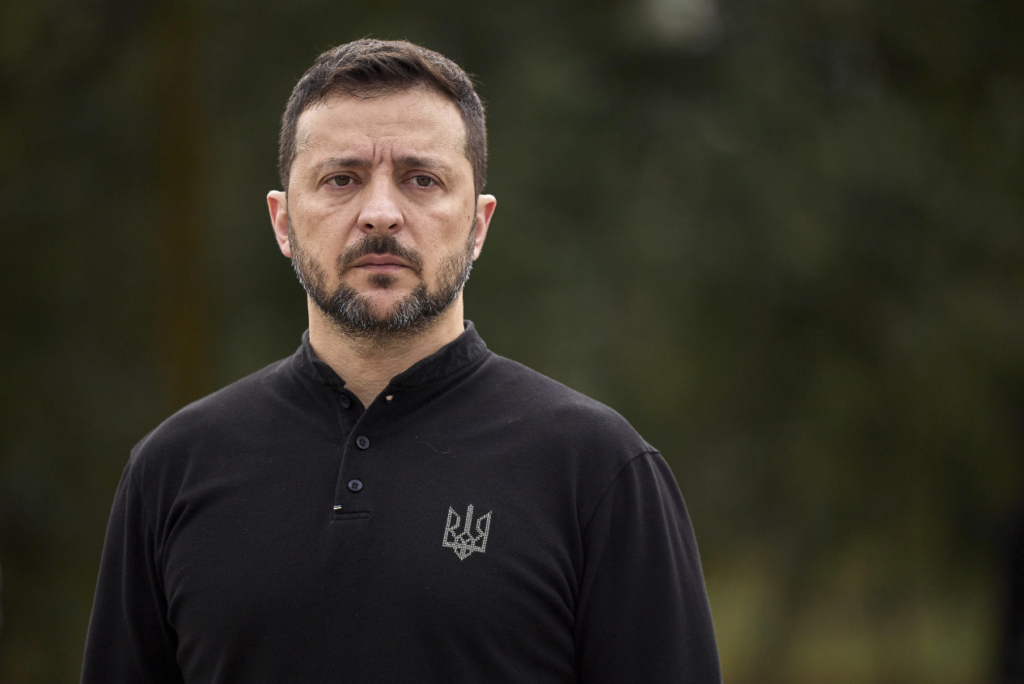
1. Ukraine: Zelensky dismisses General Syrsky after public outcry for Fedorov’s removal
Facts
- Mikhail Fedorov (35 years old), Minister of Defense since January 14, 2026, was dismissed after just six months in office, unleashing the second wave of street protests since the start of the Russian invasion.
- Fedorov, considered the technological modernizer of the Ukrainian Army (promoter of drone warfare), had publicly clashed with the commander-in-chief, General Oleksandr Syrsky, whom he accused of authoritarianism and of not adapting to the new reality of warfare.
- Thousands of protesters in kyiv demanded the reinstatement of Fedorov and the dismissal of Syrsky for several days.
- On Tuesday, July 21, Zelensky dismissed Syrsky and appointed General Mikhail Drapati in his place; he had previously offered Fedorov a prominent position to “unify the technical component of the State,” an offer whose acceptance has not been confirmed.
Implications
This is the first command crisis of this magnitude since the start of the war, marked by massive and sustained demonstrations, and it reveals a fundamental rift between the “modernizing” Ukraine—with its focus on technology, drones, and digital recruitment—and the more traditional military culture embodied by Syrsky. Zelensky himself acknowledges the need for “a reset,” confirming that pressure from the streets, and not just the front lines, is now influencing command decisions.
Perspectives and scenarios
The most favorable scenario sees Fedorov reinstated in a high-profile technology portfolio, while Drapati consolidates the doctrine of drone swarm warfare without fracturing the chain of command. The risky scenario is a military purge in the midst of war that erodes troop morale and is interpreted by Moscow as a sign of political weakness—a temptation difficult to resist on the eve of any new Russian offensive.
2. Iran: Trump threatens to destroy “Peak Mountain” amid the Strait of Hormuz crisis
Facts
- President Trump warned that the United States will attack “very soon” and “very hard” the Iranian nuclear facility Kuh-e Kolang Gaz La, dubbed “Pickaxe Mountain” by US intelligence, near Natanz.
- This facility, dug even deeper than Fordow after the lessons of previous bombings, is the only top-tier Iranian nuclear infrastructure that has survived intact both the US-Israeli offensive of June 2025 (which did hit Fordow, Natanz and Isfahan with GBU-57 bombs) and the February 2026 campaign that ended with Ali Khamenei.
- The announcement comes after the eleventh consecutive night of CENTCOM bombing of Iran and hours after Trump abandoned his own plan to charge a 20% toll on cargo crossing the Strait of Hormuz.
- Oil is trading around $91 a barrel; Goldman Sachs warns it could reach $120 if the strait remains closed in the fourth quarter. Incidents continue: an oil tanker attacked off the coast of Oman, missile alarms sounded in Bahrain, and Iranian drones intercepted over Jordan.
Implications
The survival of “Pickaxe Mountain” belies the successive proclamations of “total eradication” of the Iranian nuclear program and confirms that each previous bombing, far from destroying Tehran’s capabilities, has taught the regime to dig deeper: a paradox of deterrence that the West has unwittingly constructed. Trump’s about-face in just 24 hours—from toll-collecting “guardian” to mountain-buster—portrays, once again, an erratic and transactional foreign policy, dictated by the impulse of the moment rather than by a sustained strategy.
Perspectives and scenarios
If the attack is carried out and achieves its objective, it would represent a symbolic and material blow to the Iranian nuclear program, although with a real risk of a widespread Iranian response against Gulf assets and infrastructure. If it fails or causes significant collateral damage, it will further erode Washington’s credibility with its Gulf partners. A last-minute truce brokered by a third party—Pakistan being the precedent—cannot be ruled out, as happened in April, which would momentarily freeze the escalation without resolving the underlying issue.
3. The Houthis open a third front: naval blockade of Saudi Arabia and threat over Bab el-Mandeb
Facts
- Yemen’s Houthis, an armed Zaidi movement and declared proxy of Tehran, announced on Monday, July 20, a naval blockade “with immediate effect” against Saudi Arabia, following Iranian pressure to close Bab el-Mandeb if Washington continued attacking Iranian energy infrastructure.
- Bab el-Mandeb, just 29 kilometers at its narrowest point, is the gateway to the Red Sea and the Suez Canal: around 15% of world maritime trade passes through it.
- Its complete closure would cut an additional 7% from the world’s oil supply – by blocking the exit of almost all Saudi exports through that route – which would be added to the 10% already lost due to the Gulf War.
- The Houthi movement, which emerged to represent the Zaidi minority and resist Saudi Wahhabism, has controlled Sana’a since 2014 and maintains several US naval groups deployed in the area, including the USS Boxer, the USS Comstock, and the USS Cesar Chavez.
Implications
Tehran demonstrates, once again, its ability to project pressure by proxy without directly exposing its own territory: the Houthis carry out Iran’s demands, extending the Gulf War to the Red Sea and doubling the risk of a global energy stranglehold. This is yet another proof that Iranian-backed jihadist terrorism—Hezbollah, Houthis, Iraqi militias—remains the most effective and least costly foreign policy instrument available to the Tehran regime.
Perspectives and scenarios
The escalation scenario would involve effective Houthi attacks against Saudi oil tankers and terminals in the Red Sea, replicating the pattern of harassment from 2023-2024. The containment scenario would entail a coordinated international naval response—assets are already deployed—to control maritime traffic without opening a fourth front. The greatest risk, and the one requiring the most vigilance, is the de facto merging of the two bottlenecks—the Strait of Hormuz and the Bab el-Mandeb Strait—into a single pincer movement controlling the Gulf’s energy supply.
III. MEDIA RACK
Financial Times / Diario Financiero reports the presidential threat in a context of soaring oil prices and Goldman Sachs’ warnings about Brent crude potentially reaching $120.
The Spanish newspaper details that the Peak Mountain is the only top-tier Iranian nuclear facility that has survived two separate military operations intact, and underlines the inconsistency of Trump’s flip-flop between trade tolls and the threat of bombing.
CNN and Infobae agree in describing the Houthi naval blockade as the opening of a new front that extends the energy threat beyond the Persian Gulf, with a potential impact of 7% on the world’s crude oil supply.
France24 and La Nación (Argentina) describe Syrsky’s dismissal as the culmination of the biggest leadership crisis of Zelensky’s presidency, triggered by Fedorov’s dismissal and exacerbated by internal divisions over the doctrine of drone warfare.
Democracy Now! and TIME place both crises – Hormuz and Bab el-Mandeb – within the same framework: that of an American-Iranian truce that the White House itself recognizes as fragile and still unresolved in its essential points.
IV. RISK TRAFFIC LIGHT
| Political stability in kyiv | ● | Command crisis managed by changing the commander-in-chief; risk of further protests if Fedorov is not reinstated. |
| Direct US-Iran military escalation | ● | Explicit threat to nuclear facility not destroyed after two previous campaigns; tenth consecutive night of bombing. |
| Global energy supply (Hormuz) | ● | Crude oil at $91/barrel with Goldman Sachs projecting up to $120 if the disruption persists. |
| New seafront (Bab el-Mandeb) | ● | Houthi naval blockade declared; total shutdown would add a 7% reduction to the world supply. |
| Washington’s strategic coherence | ● | A 24-hour turnaround between a commercial toll model and the threat of total destruction; the Iranian regime’s lack of a “day after” plan. |
V. EDITORIAL COMMENTARY
Three crises, one underlying message. In Kyiv, Zelensky was right to listen to the people and sacrifice a controversial military commander rather than lose internal cohesion in the midst of a Russian war of aggression: Ukrainian democratic legitimacy, in the face of Kremlin tyranny, remains its best strategic asset, and this management crisis should not be mistaken for a fracture of the national consensus against Moscow.
In Iran, we wholeheartedly support the determination to dismantle, once and for all, the nuclear capabilities of Tehran’s jihadist oligarchy: the very existence of Pickaxe Mountain, untouched after two campaigns, is clear proof that the job was left unfinished. But we demand, once again, what we have been calling for for months: a serious plan for the aftermath, for the power vacuum or the implosion of the regime, which, until now, has been conspicuously absent in Washington. The president’s erratic oscillation—from toll collector to mountain destroyer in twenty-four hours—is not firmness, it is improvisation, and it is worth stating this with the same clarity with which we acknowledge the diplomatic successes that this Administration has undeniably achieved on other fronts. We trust that the level-headedness of a Secretary of State like Marco Rubio will continue to smooth the rough edges of this impulsiveness.
And in the Red Sea, the Houthi blockade confirms, once again, what we have been denouncing: Iranian-backed jihadist terrorism—the Houthis, Hezbollah, and Iraqi militias—is the armed wing through which Tehran wages a war it does not dare to wage directly. Faced with this, the only option is Atlanticist and pro-European firmness, and constant vigilance against any hint of appeasement.