Gustavo de Arístegui,
September 22, 2026
I. INTRODUCTION
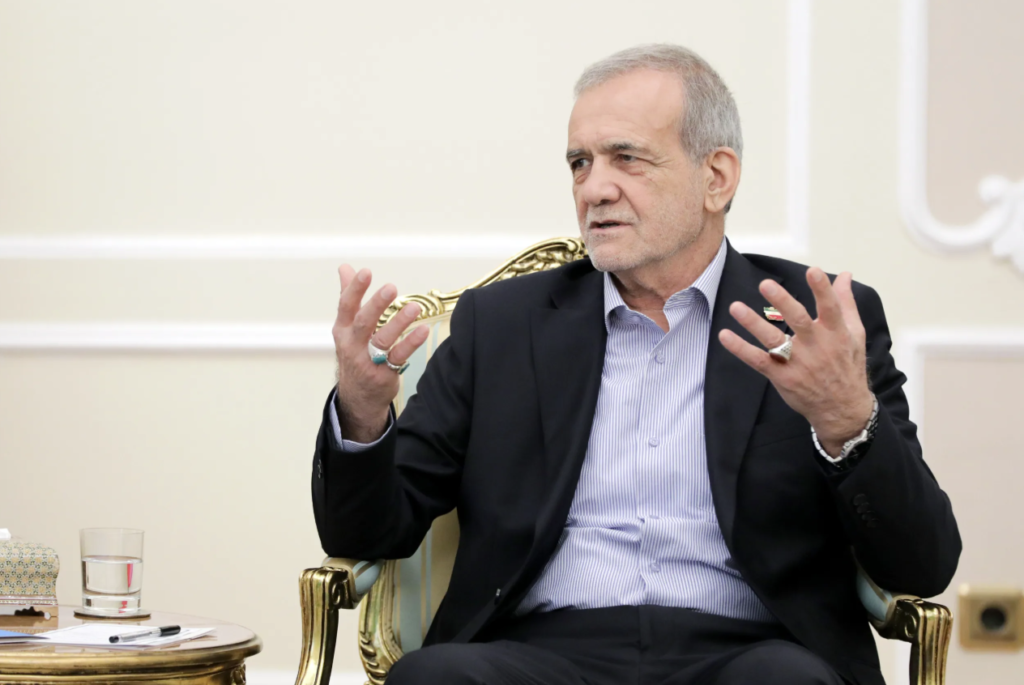
The Iranian regime, through Qatari mediation and a parallel Pakistani channel, has presented Washington with seven conditions for reopening negotiations and ending the war that began with the US and Israeli attacks in late February. The document was presented by Mohsen Rezaei, secretary of the Supreme National Security Council, who outlined it in an interview with Al Jazeera on Saturday, September 19, and reiterated it on the X network with an unequivocal warning: Tehran is prepared for a “decisive war” if Washington rejects its “rights and conditions.” The following day, the Speaker of Parliament, Mohammad Baqer Qalibaf, added that the Strait of Hormuz will not be reopened until all seven conditions are met.
The timing is not accidental. The document comes on the eve of President Trump’s meeting today, September 22, in New York with the leaders of Saudi Arabia, the United Arab Emirates, Qatar, Bahrain, Kuwait, and Oman, on the sidelines of the UN General Assembly’s high-level week, and two days before President Masoud Pezeshkian’s address to the same forum. It also comes after the fourteen-point memorandum of understanding signed on June 17, with a sixty-day negotiation window, expired in August without extension or replacement, and just hours after the Houthi terrorist organization launched its first attack on the Saudi capital in this phase of the war.
This report argues a simple thesis: the Iranian document is not a peace proposal, but a capitulation agreement addressed to the adversary, which systematically reverses the relationship between cause and effect, contains not a single verifiable obligation for Tehran, and uses the closure of the Strait of Hormuz as leverage. The seven demands are analyzed one by one, along with what the document omits, the timeline it adheres to, who signed it, and the scenarios it opens up.
Methodological note
It is important to note from the outset that Iran has not officially published the full list. Rezaei only made public three conditions—an end to the war on all fronts, the release of frozen funds, and the lifting of the naval blockade—which Reuters independently confirmed. The complete list of seven conditions analyzed here was compiled by the Indian press (The Federal) from statements by Iranian officials and largely coincides with what Tehran already demanded in the June memorandum: an end to the war, respect for sovereignty, non-interference, the lifting of the blockade, and the release of funds. It should therefore be treated as the most complete version available, not as a final, official document.
II . MONOGRAPHIC ANALYSIS: THE SEVEN REQUIREMENTS DISMANTLED
The seven conditions share a common logical structure. In all of them, the aggressor is presented as the wronged party, the victim as the debtor, and the cessation of one’s own illicit conduct is offered as a concession. For each condition, we examine what Tehran demands, why it is untenable, and what the Western position should be.
1. Immediate end to the war “on all fronts” with express mention of Lebanon and Yemen
What Tehran is demanding: A general ceasefire that expressly includes the Lebanese and Yemeni fronts, that is, the theaters where Hezbollah and the Houthis operate.
Dismantling. Iran is asking the United States to close the fronts that the regime itself opened through its proxy terrorist organizations. The “all fronts” clause is not an offer of de-escalation, but a protective shield for the Axis of Resistance terrorist network: it demands immunity for Hezbollah and the Houthis without committing to disarming them, ceasing their funding, or cutting off their supply of missiles and drones. The most telling proof came on September 19, when the Houthi terrorist organization launched ballistic missiles, cruise missiles, and drones against Riyadh—setting a fuel depot ablaze near King Khalid International Airport—and against Aramco facilities in Yanbu. While the messenger was presenting the document, its proxy terrorists were bombing the capital of Washington’s main Arab ally. It is also worth emphasizing that the United States cannot single-handedly compromise what is happening in Lebanon, where the main actor is Israel, nor is Tehran offering to do anything equivalent regarding what is happening in Saudi territory or in the Red Sea.
This is a position the West should defend. Any cessation of hostilities on secondary fronts must be conditional upon the verifiable disarmament of Hezbollah and the Houthis, the end of Iranian arms supplies, and the withdrawal of Houthi terrorists from positions they occupy on the Red Sea coast, particularly Mocha and access to Bab el-Mandeb.
2. Complete lifting of the naval blockade of southern Iranian ports
Tehran’s demand: The removal of the US Navy blockade of southern Iranian ports, which has reduced crude oil exports to virtually zero.
Dismantling. The blockade is not the cause of the maritime conflict, but its consequence: it arose in response to the closure of the Strait of Hormuz and Iranian attacks on merchant shipping. Demanding its lifting while the strait remains closed is like demanding the guard withdraw before the thief returns the loot. The June memorandum itself linked the end of the blockade to Iran’s guarantee of safe passage for merchant ships, and it was precisely this clause that Tehran violated. CENTCOM (United States Central Command) has already diverted more than a hundred ships in compliance with the blockade, and its commander, Admiral Brad Cooper, has reported that his forces have had to escort more than a billion barrels of crude oil and some two thousand merchant ships through the Gulf. Furthermore, the blockade is the only lever that is truly impacting the regime’s economy; abandoning it before gaining anything in return would be tantamount to disarming itself in the middle of negotiations.
This is a position the West should defend. The blockade must be lifted in a phased and reversible manner, only after the full and verified reopening of the Strait of Hormuz and the cessation of attacks against merchant shipping, with an automatic reactivation mechanism in case of non-compliance.
3. Release of all frozen Iranian funds worldwide
What Tehran is demanding: The return of assets frozen by US sanctions, the amount of which, according to sources, ranges from the six billion dollars cited by some media outlets to the tens of billions claimed by Tehran.
Dismantling. The experiment has already been tried, and it failed. In September 2023, as part of a prisoner exchange, six billion dollars were transferred from South Korea to accounts in Qatar for supposedly humanitarian purposes; barely a month later, Hamas perpetrated the October 7 massacre, and Washington and Doha agreed to block access once again. Money is fungible: every dollar released for medicine or food frees up another dollar from the Iranian budget for the IRGC (Islamic Revolutionary Guard Corps), the Quds Force, and its terrorist affiliates. In the midst of war, releasing funds is equivalent to financing the reconstruction of the arsenal being fought. Finally, it is worth remembering that Washington is considering the opposite possibility: using these frozen assets to finance the reconstruction of damage suffered by Gulf allies, a formula that has solid grounding in the international responsibility of the aggressor state.
This is a position the West should defend. No funds should be released without a disbursement mechanism controlled by third parties, linked to proven humanitarian needs, and without first addressing the claims of the victims of Iranian attacks and those perpetrated by its proxy terrorist organizations.
4. Complete cessation of military attacks and “assassinations” on sovereign Iranian territory
What Tehran is demanding: A guarantee that the United States will not again attack targets in Iran or eliminate leaders of the regime.
Dismantling. This demand comes from a regime that has spent more than four decades murdering or attempting to murder people beyond its borders. The record is overwhelming: the 1992 bombing of the Mykonos restaurant in Berlin, which German authorities attributed to the Iranian leadership; the 1994 bombing of the AMIA (Argentine Israelite Mutual Association) in Buenos Aires, which killed 85 people and which the Argentine Federal Court of Cassation in 2024 classified as a crime against humanity planned by Iran and carried out by Hezbollah; the foiled 2011 plot to assassinate Saudi Ambassador Adel al-Jubeir in Washington; the plots against journalist Masih Alinejad in New York, which resulted in convictions; and the attack against Alejo Vidal-Quadras in Madrid in November 2023, which the Spanish judicial investigation links to the regime’s inner circle. What is being demanded is not a guarantee of security for the Iranian people, but a safe passage to impunity for the leadership directing the war. It is particularly telling that the spokesperson for the petition is Rezaei himself, who has been subject to an Interpol red notice since 2007 for the AMIA bombing.
This is a position the West should defend. Non-aggression guarantees can only be reciprocal: the end of operations against Iranian territory must be accompanied by a verifiable end to Iranian terrorist operations abroad and the dismantling of Quds Force networks in Europe, the Americas, and the Gulf.
5. End all US interference in Iran’s external affairs
or what Tehran demands. Washington’s commitment not to interfere in Iranian domestic politics.
Dismantling. The regime that demands non-interference has enshrined the export of revolution in its own Constitution, whose Article 154 proclaims support for the struggle of the “oppressed” against the “oppressors” anywhere in the world. Furthermore, it maintains the Quds Force, a military instrument dedicated exclusively to intervening in the internal affairs of other states: Iraq, Syria, Lebanon, Yemen, Bahrain, and, beyond the region, Afghanistan and Central Asia. The non-interference that Tehran demands is strictly one-sided: it claims for itself a principle that it denies to all its neighbors. No government of the GCC (Gulf Cooperation Council) would accept such a clause without explicit reciprocity, and Washington should not sign it.
This is a position the West should defend. If a principle of non-interference is accepted, it must be reciprocal, verifiable, and applicable to the entire region, with Iran committing to cease its support for terrorist organizations and armed groups in third countries.
6. End of US support for “opponents of the revolution”
What Tehran is demanding: that Washington stop supporting, in the regime’s terminology, the “opponents of the revolution.”
Dismantling. This is the most revealing demand in the entire document. The “opponents of the revolution” are not a foreign conspiracy: they are the millions of Iranians who have demonstrated time and again throughout the country, risking their lives in the face of brutal repression. To ask the West to disengage from them is to ask for a license to repress without witnesses, with the United States’ signature on the ground. This clause also refutes the narrative of pro-Russian analysts who attribute the protests to Mossad and the CIA: if the regime needs Washington to stop supporting the opposition, it is because it knows its real problem lies within its own borders. No liberal democracy can commit to abandoning those who defend fundamental rights and freedoms.
This is a position the West should defend. This demand must be rejected unequivocally. The defense of human rights, freedom of expression, and the freedom of Iranian women is non-negotiable and cannot be part of any exchange.
7. Opening of the Strait of Hormuz
What Tehran demands. Formally, the reopening of the strait is listed as the seventh condition; in practice, Qalibaf has presented it as the counterpart that Iran will only grant when the other six are met.
Debunking. Here, the trap is textbook. Tehran presents the cessation of an illegal act as a concession of its own making. The right of transit passage through straits used for international navigation is codified in Article 38 of the UNCLOS (United Nations Convention on the Law of the Sea) and forms part of customary international law; the fact that Iran signed the Convention in 1982 without ever ratifying it does not authorize it to close an international strait. Offering to cease committing an illegal act is not negotiation: it is demanding a ransom. The simultaneous closure of Hormuz and Bab el-Mandeb has caused a displacement of global maritime traffic that can no longer be absorbed by diverting routes, with Brent crude oil above one hundred dollars. Iran is thus holding the world economy hostage to its demands.
This is a position the West should defend. The reopening of Hormuz cannot be the final condition of a package, but rather the first precondition of any negotiation: full, unconditional, and verified.
8. The eighth demand: What the document omits
As telling as what is on the list is what is missing. There is not a single word about uranium enrichment, about stockpiles of material enriched to near-weapon-grade levels, about access for IAEA (International Atomic Energy Agency) inspectors, about the ballistic and cruise missile program, or about the disarmament of proxy terrorist organizations. It is precisely these three issues—nuclear, missiles, and proxy terrorism—that the regime refused to negotiate in Oman and Geneva before the war and that ultimately motivated it.
Worse still: Rezaei has introduced a veiled threat regarding the NPT (Treaty on the Non-Proliferation of Nuclear Weapons). Although he claims that Tehran has not decided to withdraw and that Iran’s nuclear doctrine has not changed, he warns that new sanctions or pressure could alter its future position. The message is transparent: seven demands on the adversary, no obligations of its own, and a nuclear threat in reserve. Such a document is not a starting point for negotiations; it is the very definition of a maximalist position.
9. The extortion calendar
The document follows a precise timeline and has three recipients. The first is Washington’s Arab allies: it arrives just before Trump’s meeting with the six GCC leaders, which, according to Axios, was to focus on US postwar ideas, and coincides with the Houthi attack on Riyadh. The combination aims for a pincer effect: offering the Gulf capitals a negotiated solution while reminding them of the price of not accepting it. Reports that Gulf leaders asked Trump to postpone further attacks by two or three days suggest that the pressure is having some effect.
The second target is American public opinion. With six weeks to go before the November 3 midterm elections, Tehran is banking on fatigue: the Senate has, for the first time, passed a resolution granting war powers to end the conflict, and the White House has even gone so far as to deny that it is a war. A regime that plans in decades knows how to wait for its adversary to plan in election cycles.
The third recipient is Beijing. China has backed the Iran-Omani framework for the Strait of Hormuz, and Wang Yi has advocated for a new security architecture in the Gulf following Foreign Minister Abbas Araqchi’s visit to the Chinese capital. The proposal offers Beijing the opportunity to position itself as the arbiter of a strait through which a significant portion of its own energy supply passes, in line with its expansion of influence from the Indian Ocean to the Mediterranean.
10. Who signs the document: the paradox of the decapitation
The messenger is not President Pezeshkian, a declared supporter of a negotiated solution, but Rezaei, secretary of the Supreme National Security Council since August and a key figure, along with General Ahmed Vahidi at the head of the IRGC, in the hard core that deliberately maintains hostilities as a means of consolidating its internal power. It is the paradox of decapitation in its purest form: the elimination of the previous leadership has not produced a weaker regime more willing to compromise, but rather a more militarized jihadist oligarchy whose legitimacy depends on prolonging the conflict.
This leads to a practical warning regarding the potential meeting between Trump and Pezeshkian in New York, which the US president has said he is “probably” willing to hold. Any commitment obtained from the Iranian president will be worthless if it is not endorsed by those who truly control the military and security apparatus. Negotiating with those who are not in charge is like handing a photo op to those who are.
11. Scenarios
Scenario A — Rejection and controlled escalation (estimated probability: 40%). Washington rejects the demands, maintains the blockade, and responds proportionately to Houthi terrorist attacks, while the Qatari canal remains open. Iran keeps the Strait of Hormuz closed and manages the escalation through its proxy organizations. This is the scenario of the variable-temperature warfare that has characterized the conflict since the spring.
Scenario B — Minimums Memorandum (30%). Under pressure from the markets, the Gulf, and the electoral calendar, a new memorandum is being negotiated, mirroring the one from June: a partial reopening of the Strait of Hormuz in exchange for easing the blockade and a limited release of funds. This is the most dangerous scenario in the medium term because it would leave the nuclear program, the missile arsenal, and the terrorist network intact, and would grant the regime the time it needs to rearm.
Scenario C — Major Escalation (20%). Trump opts for the “annihilation” he has alluded to in an interview with Axios and launches a large-scale campaign against the regime’s military and economic infrastructure. Tactical success would be guaranteed; the geopolitical outcome would depend on the existence of a plan for the day after, which, as of today, is not yet finalized.
Scenario D — Internal Fracture (10%). The combination of the blockade, the economic collapse, and social pressure is causing a fracture within the oligarchy, between the hard core of Vahidi and Rezaei and the sectors that favor a negotiated solution. This is the least likely scenario in the short term and the one that requires the most preparation, because a disorderly implosion without a prior plan could create a power vacuum with unpredictable regional consequences.
III. MEDIA RACK
US press. Fox News has presented the document as a list of seven key demands that Trump is considering before his visit to the United Nations, and has highlighted the presidential warning that Iran must “behave,” along with CENTCOM’s diversion of more than 100 ships in enforcement of the blockade. Axios, which broke the news of the meeting with GCC leaders, emphasized that the US post-war plan will not be finalized until after the midterm elections and reported Trump’s statement about the “big decision” to “annihilate” or not the regime. The Associated Press highlighted that the Houthi attack on Riyadh is the first against the Saudi capital since the escalation that has opened a new front in the Iran-Contra conflict.
International news agencies. Reuters independently confirmed the three conditions made public by Rezaei and released images of the plume of black smoke rising from the fuel depot at King Khalid Airport. AFP reported that the fire in a tank bearing the Aramco logo had been extinguished.
Arab press. Al Jazeera, which obtained the exclusive interview with Rezaei, presented the reopening of the Strait of Hormuz as conditional upon compliance with certain demands, in contrast to other media outlets that described it as an outright refusal. This is a nuance worth noting, as it reflects the leeway Doha is trying to maintain as a mediator. The network also reported on the assessment of the Sana’a Center for Economic and Social Research, which stated that the Houthi terrorists are dictating the timing and levels of the escalation. Gulf News highlighted Trump’s willingness to meet with Pezeshkian and the fact that Washington authorized the Iranian delegation to enter the United States for the General Assembly.
Israeli press. Yedioth Ahronoth, in its digital edition, has focused on Rezaei’s threat regarding the NPT and his claim that Iran has identified US vulnerabilities, noting that the full official list of conditions has not been published.
Overall assessment. International coverage agrees on the essentials—three confirmed conditions, four not officially disclosed, the threat of decisive war, and the closure of the Strait of Hormuz as leverage—but differs in its framing: US media interpret it as a presidential decision and part of the electoral calendar; Arab media, as a mediation effort and a potential threat of regional contagion; and Israeli media, as a nuclear issue. No major media outlet has presented the document as a genuine peace proposal.
IV. RISK TRAFFIC LIGHT
| Level | Risk | Assessment |
|---|---|---|
| ● Red | Simultaneous closure of Hormuz and Bab el Mandeb | Displacement of global maritime traffic no longer absorbable with diversions; Brent above $100; the closure of Hormuz is explicitly subject to the tender. |
| ● Red | Houthi escalation against Saudi territory | The first attack against Riyadh in this phase (September 19) included attempts on Yanbu, Taif, Bisha, and Farasan. The Houthi terrorists are setting the pace of the escalation. |
| ● Orange | Rift between Washington and the GCC | The document aims to divide the allies; Gulf leaders have reportedly asked for a postponement of attacks. Today’s meeting in New York is the decisive test. |
| ● Orange | Threat to the NPT | Rezaei links his future position on the Treaty to new sanctions or pressure. Risk of explicit nuclear blackmail. |
| ● Orange | US Home Front | War powers resolution passed in the Senate and November 3 midterm elections: incentive for a hasty agreement. |
| ● Yellow | Chinese mediation | Beijing supports the Iran-Omani framework for Hormuz and proposes a new security architecture in the Gulf, at the expense of Western influence. |
| ● Yellow | Possible Trump-Pezeshkian meeting | Risk of making concessions to an interlocutor who does not control either the IRGC or the Supreme National Security Council. |
| ● Green | Open mediation channels | Qatar and Pakistan maintain contact; CENTCOM maintains escorts in the Gulf. Diplomatic space preserved. |
V. EDITORIAL COMMENTARY
In 1609, Hugo Grotius published his Mare Liberum in Leiden to defend a principle that seemed self-evident but nevertheless required argument against those who sought to appropriate the oceans: the sea is a common good that no power can close to others. Four centuries later, the Iranian regime is attempting precisely the opposite. Its demands are not limited to concessions; it aspires to have the world recognize that an international strait can become a bargaining chip for an oligarchic-jihadist regime, a terrorist and exporter of instability. Accepting this would be to set back four hundred years in the Law of the Sea.
In 1945, in *The Open Society and Its Enemies *, Karl Popper warned that unlimited tolerance leads to the demise of tolerance itself if it is not defended against those who deny it. Iran’s sixth demand—that the West abandon the “opponents of the revolution”—is an invitation to practice this suicidal tolerance: to renounce one’s own values in exchange for a truce. An open society that agrees to abandon those who fight for freedom ceases to deserve that name.
None of the above absolves Washington of its responsibility. The undeniable tactical and military-strategic success of the campaign launched in February is countered, to this day, by an unmitigated failure from a geopolitical and geostrategic perspective. The White House oscillates between threatening to annihilate the regime and being willing to sit down with a president who lacks real power; its plan for the aftermath will remain unresolved until after the elections. This improvisation, the result of an erratic and transactional foreign policy, is Tehran’s best ally. It is to be hoped that the system, and figures like Secretary of State Marco Rubio, will impose the strategic coherence that the moment demands.
Meanwhile, Europe is once again absent from the table where the price of its energy and the security of its trade routes are decided. The European political class continues to disregard its own defense and merely watches as others negotiate its future.
The response to Iran’s demands must be as simple as it is firm. First, a free Strait of Hormuz, unconditionally. Then, verifiable disarmament of the proxies, an end to their enrichment, and full access for inspectors. Only then can we talk about a blockade, funds, and reciprocal guarantees. Anything else would not be peace, but rather a prelude to the next act of blackmail.