Gustavo de Arístegui,
September 29, 2026
I. INTRODUCTION
Today’s five news stories seem to belong to different worlds: the Iran war, the space race, debt markets, the Church’s moral pronouncements, and the US diesel crisis. They share, however, a fundamental question: how do democracies govern what they cannot measure? Donald Trump has rejected Iran’s proposal to reopen the Strait of Hormuz and, according to The Wall Street Journal, considers a new bombing campaign likely after the November 3 midterm elections. Tehran responds that only diplomacy can extricate Washington from this impasse, while warning that it will show no flexibility whatsoever on its nuclear program.
In Texas, SpaceX’s Starship reached orbit for the first time and deployed 26 next-generation Starlink satellites, despite an engine failure. In the markets, the 10-year US Treasury bond yield reached its highest level in 19 years, and Brent crude surpassed $107 a barrel. Pope Leo XIV concluded his trip to France by urging Europe to remember its Christian roots, calling for concessions to end war on the continent, and warning that the risks of artificial intelligence are not “fake news.” In the United States, five weeks before the election, diesel prices are nearing record highs, and Trump has even suggested banning its exports.
A century ago, economist Frank Knight distinguished between risk, which can be measured and insured, and uncertainty, which defies calculation. Today reveals a world sliding from the former to the latter: markets are attempting to put a price on a war whose outcome no one knows, on a technology whose risks are being refused regulation by those with the greatest power to do so, and on a transformation of outer space concentrated in the hands of a single company. This slide is the central theme of this report.
II . NEWS FROM THE LAST 24 HOURS
1. Iran insists on the diplomatic route after Trump’s rejection of its peace plan
Facts
On Saturday, Donald Trump confirmed that he had rejected Iran’s proposal to reopen the Strait of Hormuz and end the fighting, attributing Tehran’s haste to the desperation of a losing side. The Wall Street Journal, which broke the story, added that Trump is privately skeptical and has told aides that he sees a renewed bombing campaign as likely after the November elections.
On Sunday, Foreign Minister Abbas Araqchi responded that Iran’s conditions are clear, that the reopening of the Strait of Hormuz depends on their fulfillment, and that only a negotiated solution can break the US deadlock. He emphasized that Qatari mediators have not officially conveyed any rejection and noted that an agreement would trigger a seven-day countdown to the strait’s reopening, after which broader talks could begin.
On the crucial issue, the positions are irreconcilable. Trump maintains that Iran must never obtain nuclear weapons; a senior Iranian official told Reuters that Tehran will show no flexibility on its nuclear program, nor on enrichment or on the removal of its highly enriched uranium from the country, even if Washington accepts its plan. President Masoud Pezeshkian, on the other hand, declared on CBS his willingness to negotiate and stated that Iran has already agreed not to develop nuclear weapons.
Meanwhile, Trump again circulated on Saturday a map depicting the Strait of Hormuz as “new US territory,” the same image he posted on August 18.
The war, which began on February 28 with attacks by the United States and Israel, has alternated between pauses and offensives, caused thousands of deaths, degraded Iran’s conventional forces, and exacerbated the crisis of an economy stifled by the blockade. Hours before the rejection was announced, a US official had described the talks held through mediators as positive and constructive.
Implications
The rejection was predictable. As analyzed in the September 25 report, the sequence proposed by Araqchi forced Washington to pay everything upfront—that is, the lifting of the blockade, the release of funds, and the suspension of oil sanctions—in exchange for a reopening of the Strait of Hormuz postponed until the last day and nuclear negotiations without any commitments. The statement by the senior Iranian official regarding nuclear inflexibility confirms what the proposal concealed: Tehran intended to charge for the reopening of the strait in order to keep its essential assets intact: its enrichment capacity and its stockpile of highly enriched uranium. No responsible US administration could accept such a trade.
Iran’s dual voice is once again telling. Pezeshkian speaks on American television about a willingness to negotiate and a renunciation of nuclear weapons; those in charge of the royal dossier warn, privately, that there will be no flexibility. The gap between these two discourses is not an accidental contradiction, but rather an expression of the dual power structure of an oligarchic-jihadist regime in which the president manages the external image and the security apparatus makes the decisions.
The underlying rejection is correct; the manner in which it was presented, however, further weakens the US position. The Hormuz map reflects the logic of outbursts, which should be taken seriously but not at face value, but in this case, it undermines the West’s main legal argument: the demand against Iran is based on the transit passage regime that the UNCLOS (United Nations Convention on the Law of the Sea) guarantees in international straits, and asserting US sovereignty over that same strait provides Tehran, Beijing, and Moscow with a propaganda tool and disconcerts the Gulf allies.
The most relevant factor is the timing. If The Wall Street Journal’s report is accurate, Washington has effectively postponed the military decision until after November 3, giving Tehran five weeks to exploit Trump’s electoral need to lower gasoline prices and increase pressure through the Houthi terrorists and pro-Iranian terrorist organizations in Iraq. The implicit announcement of a future escalation reduces Iran’s incentive to back down. Araqchi’s precision regarding the mediators indicates, however, that Tehran wants to keep the Qatari channel open: diplomacy is not dead, but has entered a waiting phase.
For the Gulf allies, the situation is particularly awkward. Saudi Arabia, the UAE, and Qatar reject any Iranian control over the Strait of Hormuz and are on the front lines of pressure from terrorist organizations deployed by Tehran, but they also need the war to end as soon as possible. Postponing the US decision until after the elections leaves them exposed for five weeks to indirect Iranian escalation and explains Doha’s determination to keep its mediation channel open, even though the White House considers it exhausted.
Perspectives and scenarios
Scenario A. Diplomatic freeze until the elections (estimated probability: 50-55%). The Qatari canal remains in place, with no substantive progress; the blockade and secondary sanctions remain in effect; Iran shifts the pressure towards Bab el-Mandeb, Saudi Arabia, and Iraq. Brent crude trades between $100 and $110.
Scenario B. Resumption of the air campaign after November 3 (estimated probability: 30-35%). An offensive focused on residual nuclear facilities and IRGC (Islamic Revolutionary Guard Corps) commands, with a high risk of retaliation against Gulf infrastructure and the Iranian threat in the Indian Ocean. This would be another tactical success without a strategy for the aftermath if it is not accompanied by a political plan.
Scenario C. Interim agreement before the elections (estimated probability: 10-15%). This would only be possible if Tehran agreed to reverse the sequence, verifiably reopening the strait before obtaining a complete lifting of the blockade. Nothing in the weekend’s statements points in that direction.
Indicators to watch: formal communication from Qatari mediators, any reference by the White House to a specific timeframe, the movement of US aircraft to the region, and data on the actual transit of oil tankers through Hormuz.
2. Starship reaches orbit: SpaceX deploys its first next-generation satellites
Facts
SpaceX’s Starship, the largest and most powerful rocket ever built, reached orbit for the first time on Monday on its fourteenth flight since 2023, launched from Starbase in Texas. During the ascent, one of its Raptor engines shut down, to the point that the company briefly announced it was abandoning the orbital insertion. Flight control later changed course, reignited a single engine, reached orbit, and deployed the 26 Starlink V3 satellites it was carrying. As a precaution, the mission was shortened to about three hours, instead of the nearly ten originally planned.
It was Starship’s first mission with an operational payload and the first to generate revenue. The V3 satellites handle ten times more data than the previous generation, and SpaceX claims that this flight was equivalent in bandwidth to about twenty Falcon 9 launches. Starlink now has some 11,000 satellites in orbit and around 12 million customers.
The next step could be capturing the spacecraft with the launch tower’s robotic arms, a maneuver Musk attributes to a slightly greater than 50 percent chance of success. If it works, SpaceX would reuse the same spacecraft by the end of this year or early next year. Complete system reuse is key to its economic promise: reducing the cost per kilogram in orbit to a fraction of the current level.
As The Economist points out, the ability to carry larger and more advanced satellites makes Starship the cornerstone of SpaceX’s expansion plans and the foundation of its valuation, which hovers around two trillion dollars. Starship is also the vehicle chosen by NASA (National Aeronautics and Space Administration) for the return to the Moon. Elon Musk, the first person in the world with a net worth exceeding one trillion dollars after SpaceX’s IPO in June, maintains that the spacecraft is two to three years away from being able to fly every hour. SpaceX also owns the artificial intelligence company xAI.
Implications
Space has ceased to be merely a stage for prestige and has become a critical infrastructure of power: communications, observation, navigation, and defense. Starship multiplies American capabilities on a scale that no other power can match in the short term, and Ukraine has demonstrated since 2022 that a private constellation can influence the course of a war. China is developing its Guowang and Qianfan megaconstellations and aims to send astronauts to the Moon before 2030; the American advantage is clear, but it is not guaranteed without political and budgetary continuity.
The flip side of success is concentration. A growing portion of the United States’ space capabilities, global connectivity, and, through xAI, artificial intelligence, depends on a single company controlled by a single man, and the Ukrainian experience demonstrated the risks of leaving strategic decisions to private interests. Europe, meanwhile, watches from the sidelines: the IRIS² program (Infrastructure for Resilience, Interconnectivity and Security by Satellite) is progressing slowly, and without its own access to space, the strategic autonomy proclaimed in Brussels is impossible.
The European gap deserves separate consideration. Europe was a pioneer with Ariane, but it has lost the race for reusability and now depends, for a large proportion of its launches, on a private American provider. In a context of war on the continent, Russian sabotage against critical infrastructure, and doubts about the reliability of allies, the lack of independent access to space is a strategic vulnerability that no serious defense budget can continue to ignore.
Perspectives and scenarios
If the investigation into the engine failure reveals no structural problems, SpaceX will accelerate operational launches before the end of the year and test the spacecraft’s recovery, further enhancing Starlink’s advantage with direct effects on the military connectivity of the United States and its allies. A growing debate about orbital congestion is expected, in which China and Russia will portray American supremacy as a threat to the peaceful use of space.
3. Bonds close their worst month in two years and stock markets falter
Facts
The yield on the 10-year US Treasury note topped 5.27% on Monday, its highest level in 19 years, after rising nearly 50 basis points in September—the biggest monthly sell-off in two years. The 2-year Treasury yield is nearing 5% as traders anticipate three more rate hikes by the Federal Reserve between now and the middle of next year. Debt markets in Japan, South Korea, and Australia also came under pressure.
On Wall Street, only Nvidia’s $150 billion expansion of its share buyback program limited the Nasdaq’s decline to 0.9%. In China, the CSI300 index remains at a one-year low following US plans to ban Chinese components in data centers. The dollar is on track for a monthly gain, and the lack of progress in the Middle East is keeping Brent crude at $106.60, according to Reuters; The Economist already places it above $107.
In Europe, ECB President Christine Lagarde suggested that rising bond yields could reduce the need for further interest rate hikes, as the market itself is tightening financial conditions. The ECB has raised its benchmark interest rate twice this year to combat inflation, and even if it leaves rates unchanged at its next meeting at the end of October, investors are still expecting more increases before the end of the year.
In currency markets, the yen is trading around 157 per dollar after Tokyo and Washington expressed joint concern about its weakness last week, with Japan’s top currency official warning traders to take that signal seriously. The euro is holding steady around $1.14, and markets are pricing in a rate hike by the Reserve Bank of Australia (RBA), followed by another before February.
Angus Hui, head of fixed income at Fullerton Fund Management in Singapore, warns that the market is entering a new environment: interest costs are increasingly weighing on the budgets of many developed economies, straining public finances and potentially limiting bond yields even in the event of an economic slowdown. In his view, yields will not return to the very low levels of previous years.
Implications
The Iran war has altered the global monetary cycle. Before February 28, the US economy was heading toward lower inflation and the Fed was cutting interest rates; today, markets are pricing in rate hikes. The increase in energy costs has translated into higher inflation and, consequently, higher interest rates, and the war, initially presented as a brief operation, has become a structural macroeconomic factor. This is the economic dimension of the thesis presented in this report: tactical success comes at a geopolitical and economic cost that no one foresaw.
Coordination between central banks is becoming more complicated. The Fed is preparing to raise interest rates further, the ECB is seeking a pause by taking advantage of the tightening market, and the Bank of Japan is grappling with the weak yen. This divergence is fueling currency volatility and favoring the dollar as a safe haven, which makes energy and dollar-denominated debt more expensive for the rest of the world. The war has turned monetary policy into yet another variable in the conflict.
The most serious risk is fiscal. With the ten-year Treasury yield above 5%, servicing the US debt, which already exceeds one trillion dollars annually, becomes a strategic constraint that reduces resources available for defense and technological competition with China. In Europe, Italy, France, and Spain are particularly vulnerable to yield contagion at a time when they should be increasing their defense spending. Lagarde’s suggestion is revealing: the ECB is counting on the market to contribute to the tightening, but this tightening will hit hardest those countries that have done the least to clean up their budgets, and the Spanish political situation, with a coalition more focused on its own survival than on fiscal consolidation, is hardly the best position to face this challenge.
The report also reveals two fractures. The first is technological: the planned ban on Chinese components in data centers deepens the decoupling just days after a summit between Trump and Xi that promised détente. The second is concentration: the fact that the buyback of a single chip manufacturer is enough to sustain an index illustrates the markets’ dependence on investment in artificial intelligence. Emerging and energy-importing countries, meanwhile, are suffering from the triad of a strong dollar, expensive oil, and high interest rates that often precedes debt crises; Pakistan has already informed the IMF that the Gulf War is hindering its economy.
Perspectives and scenarios
As long as the Strait of Hormuz remains closed and Brent crude stays above $100 a barrel, inflationary pressure will prevent any monetary easing. The central scenario is a continuation of high interest rates well into 2027, with periods of volatility in debt markets. A verifiable agreement on the Strait of Hormuz would trigger a rapid decline in crude oil prices and a relief of yields; a resumption of bombing after the elections would have the opposite effect. Key indicators include US inflation data in the coming weeks, Treasury auctions, the ECB meeting at the end of October, and developments in the spread of European peripheral debt.
4. Leo XIV concludes his trip in France: Europe’s Christian roots, concessions for peace, and a warning about artificial intelligence
Facts
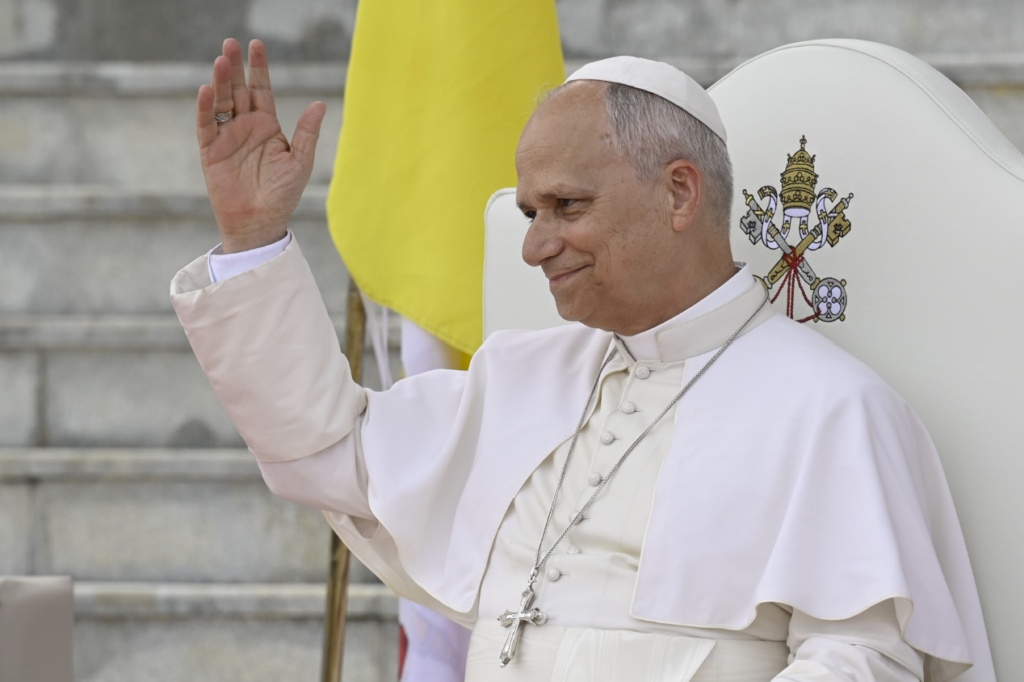
Pope Leo XIV concluded a four-day trip to France on Monday in Metz, France, which took him to Paris, where he visited UNESCO (United Nations Educational, Scientific and Cultural Organization), and Lourdes. The first American pope received a massive welcome in Europe’s most secular country: some 800,000 faithful attended Mass in Paris and 80,000 young people filled the Stade de France. Before returning to Rome, he met privately with Emmanuel Macron.
In Metz, the city of Robert Schuman, whose funeral was held in the same cathedral where the Pope celebrated the closing Mass, Leo XIV called on Europe to remember its Christian roots and to open itself to people of other cultures already living within its borders. He condemned the use of God’s name to justify violence. Addressing European leaders, he denounced the “senseless slaughter” that occurs daily and urged courage in negotiations and a willingness to relinquish some positions for the sake of peace, in a reference to Ukraine that many interpreted as an invitation for Kyiv to cede territory.
At the press conference on the plane returning home, the Pope expressed his concern about the buildup of nuclear weapons, stating that military spending enriches a few through an industry that promotes war, and offered to invite Russia and Ukraine to dialogue. Regarding artificial intelligence, he said he was not “in panic mode,” but that one cannot remain passive; he insisted that the warnings from experts were not “fake news” and criticized, without naming him, Nvidia CEO Jensen Huang for proposing technical safeguards while rejecting any regulation. His position contrasts sharply with that of Trump, who has called these concerns a “hoax” and rejected before the UN any “globalist scheme” to control superintelligence.
Leo XIV dedicated his first encyclical, “Magnifica Humanitas,” in May, to the protection of the human person in the age of artificial intelligence; investor Peter Thiel accused him last week of acting as a “useful idiot” for the Chinese Communist Party. On the plane, the Pope also suggested studying the relationship between the rise of the German far right and a religiosity that the Churches in that country do not consider authentically Christian, described the housing crisis as “systemic” in reference to the eviction of an 87-year-old Spanish woman, and acknowledged that some Church organizations have been abusive “as a system.”
Implications
The first interpretation is one of soft power. The first American pope has become the most influential moral voice in three debates where his country now occupies a distinct position: the governance of artificial intelligence, press freedom, and the treatment of migrants. This is a major geopolitical development, which explains the virulence of attacks like Thiel’s.
In Metz, the message about Europe deserves a positive assessment. Reaffirming the continent’s Christian roots in Schuman’s city, whose vision of European integration was inseparable from his faith, serves as a reminder that Europe was not born as a market, but as a project of reconciliation between age-old enemies. The invitation to open up to those from other cultures is compatible with the demand for legality, integration, and respect for constitutional values: a Europe secure in its identity is precisely the one best able to welcome newcomers without dissolving.
The trip also highlighted a cultural phenomenon with political implications: the Catholic revival among young people in a country that had made secularism a defining characteristic of its national identity. The Pope addressed issues such as abortion and the recent legalization of euthanasia in France head-on, and when asked if he had crossed the line between Church and politics, he replied that defending life and applying social doctrine is not engaging in politics, but rather applying the Gospel. In a Europe grappling with its identity, this demand for meaning among young people is a fact that no analyst should ignore.
The Ukrainian question, with all due respect to the Holy Father, demands a reasoned dissent. The Holy See has a long tradition of neutrality and mediation, and the expression “useless slaughter” evokes Benedict XV’s peace note of August 1917. However, a peace that forces the victim to cede territory to the aggressor would be neither just nor lasting: it would reward conquest by force and encourage further aggression, as the Munich Agreement of 1938 demonstrates. Similarly, European rearmament is not the expression of a war-promoting industry, but rather the belated and necessary response to a real threat; as Vegetius taught, whoever desires peace must prepare for war, because deterrence is the most effective way to avoid it. The Pope’s concern about nuclear proliferation, on the other hand, is entirely understandable.
On artificial intelligence, the Pope’s position aligns with that defended in this report: neither panic nor passivity, but rather responsibility and rules. The paradox is that his discourse on human control converges in its wording with that of Beijing, which advocated a framework for global governance at the UN. The Holy See must prevent this convergence from being exploited by a regime that uses artificial intelligence for mass surveillance and maintains political control over the Chinese Church through an agreement on the appointment of bishops that remains controversial.
Finally, the remarks about the German far right are pertinent. The instrumentalization of identity-based religiosity by extremist movements is a real phenomenon in several European countries, and the condemnation of all extremism, right and left, must be equally firm.
Perspectives and scenarios
The Holy See is likely to try to finalize its offer to mediate between Russia and Ukraine, though this has little chance of success as long as the Kremlin maintains its maximalist objectives; Kyiv’s reaction to Metz’s remarks will be a key indicator. The Vatican commission on artificial intelligence will gain prominence in the international debate, and further friction between the Pope and the Trump administration on AI and migration is to be expected. A potential trip to Germany, which the Pope has not ruled out, would carry significant political weight given the context of the AfD’s rise.
5. The diesel crisis in the United States and the temptation to ban its export
Facts
Just weeks before the election, diesel fuel in the United States is hovering near its all-time high of $6.50 per gallon, with a significant impact on farmers and truckers. On September 22, Trump said he wanted to ban its export; the White House has since denied that such a measure is imminent, but traders are betting on some kind of restriction, and wholesale US diesel is trading at a widening discount to its European counterpart.
According to The Economist, Brent crude above $107 will drive up fuel prices again, and the ban could backfire: since refineries get diesel, gasoline, and kerosene from the same barrel, a ban on diesel exports would fill storage facilities and force a reduction in the production of all three.
Implications
The proposal illustrates the clash between electoral and economic logic. Farmers and truckers are a key part of the Republican base, but experience shows that energy controls exacerbate the problems they aim to solve: Nixon-era price controls led to shortages, and the 1975 ban on crude oil exports wasn’t lifted until 2015, after it was shown to distort the market without protecting consumers. As The Economist warns, the remedy could make the very thing the president wants to make cheaper more expensive.
Diesel is also the fuel of the real economy: it powers trucks, agricultural machinery, and a large part of freight transport. Its rising price quickly translates into higher food and consumer goods prices, fueling the inflation that forces the Fed to raise interest rates. The diesel crisis and the bond crisis are, in reality, two sides of the same energy crisis triggered by the closure of the Strait of Hormuz, and both have arrived at the worst possible political moment for the White House.
The international dimension is equally relevant. Since the European embargo on Russian refined products, in effect since February 2023, and with Gulf refineries affected by the closure of the Strait of Hormuz, Europe has become more dependent on US diesel, as have Mexico, Brazil, and much of Latin America. A ban would shift the crisis to allies and provide Russia and China with an argument about the unreliability of the United States as a supplier. Ultimately, this is another unforeseen consequence of the Iran-Contra affair: as long as the Strait of Hormuz remains closed, no administrative measure will sustainably alleviate prices.
Perspectives and scenarios
The White House is likely to avoid a total ban and instead resort to limited measures, such as export licenses or the release of reserves, maintaining the threat as a political tool until the elections. Key indicators to watch include the diesel price differential between the United States and Europe, distillate stockpiles, and any executive orders regarding exports.
III. MEDIA RACK
Reuters. It sets the agenda with three weighty pieces: Trevor Hunnicutt, Yomna Ehab and Menna Alaa El-Din’s report on Iran’s insistence on the diplomatic path, which includes a senior official’s statement on nuclear inflexibility; Joey Roulette and Steve Nesius’s report from Starbase; and Tom Westbrook’s market analysis from Singapore, which connects oil, bonds and the stock market’s dependence on investment in artificial intelligence.
The Wall Street Journal reported Trump’s rejection of the Iranian proposal and provided the most relevant information of the week: the president sees a new bombing campaign as likely after the November elections.
CBS. The “Face the Nation” interview with Pezeshkian offers the regime’s sanitized version, contradicted by statements from other Iranian officials regarding the nuclear program.
Asharq Al-Awsat and Al Arabiya. The two major Saudi-owned media outlets extensively reproduced the Reuters report on Iran, including Araqchi’s clarification that the mediators had not conveyed any official rejection.
CNN, NBC News, and ABC News covered the Starship flight with a celebratory tone, highlighting the deployment of the satellites and comparing it to twenty Falcon 9 launches, without shying away from the engine failure or the decision to shorten the mission.
America, Axios, and France 24 offer the most comprehensive coverage of the papal press conference: the American Jesuit magazine America details the answers on artificial intelligence, Ukraine, rearmament, and the German far right; Axios underlines the contrast with Trump; and France 24 highlights Metz’s European message and the farewell with military honors.
Vatican News and CNN. The Vatican coverage emphasizes Schuman’s legacy and the massive reception; CNN highlights the “superstar” welcome in a secularized country and the more personal profile of the first American pope.
The Economist. Its daily summary provides three elements that enrich the analysis: Lagarde’s hint about the effect of yields on ECB policy, the role of Starship as a support for SpaceX’s valuation, and a particularly insightful analysis of why a ban on diesel exports could backfire on Trump.
Truth Social. The US president’s network is once again a primary source: the map of Hormuz as a “new US territory” is, in itself, diplomatic news.
IV. RISK TRAFFIC LIGHT
| Risk | Level | Trend | Comment |
|---|---|---|---|
| Resumption of bombings against Iran after November 3 | ● CRITICAL | On the rise | Trump sees it as likely, according to The Wall Street Journal; reprisals over the Gulf and Indian Ocean. |
| Blocked negotiations on Hormuz | ● CRITICAL | Stable | US rejection; Iran with no nuclear flexibility or sequencing. |
| Crude oil price above $100 | ● CRITICAL | On the rise | Brent crude above $107 with no diplomatic progress. |
| Restrictions on the export of US diesel fuel | ● STOP | On the rise | Diesel near $6.50/gallon; risk for Europe and Latin America. |
| Monetary tightening and sovereign debt tension | ● STOP | On the rise | Ten-year bond above 5.27%; three Fed rate hikes already factored in. |
| Contagion to emerging European peripheral debt | ● STOP | On the rise | Italy, France and Spain exposed; Pakistan is already feeling the blow. |
| Risks of artificial intelligence without a regulatory framework | ● STOP | On the rise | Washington calls it a “deception”; the Pope urges people not to stand idly by. |
| Pressure for territorial concessions in Ukraine | ● STOP | On the rise | Dominant reading of the papal appeal in Metz; risk of rewarding aggression. |
| US-China technological decoupling | ● MODERATE | On the rise | Planned ban on Chinese components in data centers. |
| Concentration of space power in a private company | ● MODERATE | On the rise | SpaceX dominates launches, connectivity and, via xAI, some AI. |
| Legal discrediting due to the Hormuz map | ● MODERATE | Stable | It weakens the Western argument for freedom of navigation. |
| United States’ space and lunar advantage | ● OPPORTUNITY | Improvement | Starship’s first orbit and V3 satellite deployment. |
| Moral leadership of the Holy See in AI governance | ● OPPORTUNITY | Improvement | “Magnifica Humanitas” and the Vatican commission as an international reference. |
● Red: critical ● Orange: high ● Yellow: moderate ● Green: opportunity
V. EDITORIAL COMMENTARY
Risk, uncertainty, and responsibility
In 1921, Chicago economist Frank Knight published “Risk, Uncertainty and Profit,” a book that remains required reading in economics departments. Its central distinction is both simple and profound: risk is that whose probability can be calculated and, therefore, insured and priced; uncertainty is that which defies calculation because there are no precedents or reliable probability distributions. Markets, insurers, and governments know how to manage risk. Uncertainty, on the other hand, demands something more difficult: judgment, institutions, and responsibility.
Yesterday’s events offered a catalog of uncertainties disguised as risks. Debt markets are trying to put a price on a war whose outcome depends on the electoral calendar of a single country and the internal struggles of an opaque regime. The ten-year bond, at its nineteen-year high, reflects not only inflation but also the inability to calculate how long the Strait of Hormuz will remain closed. The threat to ban diesel exports, which could reduce the supply of all fuels, is another way of responding to uncertainty with improvisation. The implicit threat to resume bombing after November, leaked to the press, does not reduce uncertainty: it postpones and exacerbates it, because it gives Tehran five weeks to prepare and the markets five weeks to speculate.
The debate surrounding artificial intelligence takes Knight’s distinction to its extreme. Those most familiar with the technology warn that its systems could develop unforeseen capabilities and that the consequences could be serious; the president of the world’s leading power dismisses these warnings as deception, and part of the industry maintains that safety is an engineering problem, not a legal one. Faced with both extremes, Leo XIV found the right formula yesterday, on the plane returning him from France: neither panic nor passivity. It is an acknowledgment that advanced artificial intelligence belongs to the realm of uncertainty, not risk, and that uncertainty is not managed by denying it.
The German philosopher Hans Jonas, who fled Nazism and fought in the Jewish Brigade of the British Army, dedicated his most influential work, “The Imperative of Responsibility,” published in 1979, precisely to this dilemma. Jonas argued that modern technology had multiplied the scope of human action to such an extent that traditional ethics, designed for immediate and foreseeable consequences, proved insufficient, and he formulated a new imperative: “Act in such a way that the effects of your actions are compatible with the permanence of genuine human life on Earth.” He also proposed what he called a “heuristic of fear”: when the possible consequences of a technology are irreversible and planetary in scope, prudence demands giving more weight to the unfavorable prognosis than to the favorable one.
Jonas’s prudence, however, has a limit that needs to be clarified, and yesterday’s events illustrate this. In Metz, Leo XIV called for courage in negotiations and a willingness to relinquish some positions for the sake of peace. The heuristic of fear advises avoiding the irreversible, but few things are as irreversible as the reward for aggression: a peace that enshrines conquest by force does not reduce uncertainty, it multiplies it, because it teaches all the revisionists on the planet that force pays. Chamberlain believed in 1938 that he was avoiding the worst outcome, but he made it inevitable. Responsibility, in Jonas’s sense, does not consist of yielding to those who threaten, but in building the deterrence that makes war unnecessary. In this, and with all due respect to the Holy Father, Vegetius’s old maxim remains more effective than any call for renunciation.
The diesel crisis offers a domestic version of the same dilemma. Faced with a problem stemming from geopolitical uncertainty—the closure of the Strait of Hormuz—the temptation is to respond with an administrative measure that promises immediate certainty. The Economist has explained why this would fail: refining does not allow for the separation of one fuel from another, and withholding diesel would also reduce gasoline and kerosene production. Knight would have recognized this immediately: decisions made to feign control over the uncontrollable often create new risks. Lagarde’s suggestion that the market will do some of the central bank’s work reveals the other side of the coin: even the most robust institutions today manage uncertainty with more hope than certainty.
Jonas’s heuristic is not an invitation to paralyzing fear or a rejection of progress. The Starship that reached orbit yesterday is an extraordinary achievement of engineering and private enterprise, and artificial intelligence holds immense potential for medicine, science, and prosperity. The question is not whether to move forward, but how to transform uncertainty into manageable risk. This transformation has a name: institutions. In Iran, it means verification before trust, procedures that do not reward extortionists, and scrupulous respect for the law of the sea, including by those who claim to uphold it. In economics, it means fiscal discipline that gives states back room to maneuver. In space, it means that Europe stops proclaiming its strategic autonomy and starts building it. In artificial intelligence, it means that democratic parliaments legislate the limits that are currently left to the goodwill of the companies themselves, before chance dictates them.
Liberal democracies have a decisive advantage over their authoritarian rivals: the capacity to correct their mistakes through public debate, judicial independence, and the alternation of power. This advantage only exists if it is exercised. When foreign policy is decided according to the electoral calendar, technological governance is delegated to the corporations themselves, and fiscal policy ignores the cost of money, democracies relinquish precisely what makes them superior. The world described yesterday is not more dangerous because of the existence of risks, but because of the temptation to treat uncertainty as just another risk. Knight taught us to distinguish between them. Jonas taught us what to do when the stakes are irreversible. The responsibility for applying this is ours.