By Gustavo de Arístegui.
June 04, 2025
1. Humanitarian Crisis in Gaza: A Most Serious Humanitarian Tragedy Caused by Israel’s Excesses; Very Poorly Managed by All Parties and Repulsively Exploited by Hamas, the Most Militant Left Worldwide, and Soundbite-Driven Television Activists.
The fact is that yesterday 27 more Palestinians were killed, riddled with bullets by masked individuals who are very likely linked to the terrorist organization HAMAS. The spokesperson for the UN Secretary-General stated that “going to seek humanitarian aid has become a deadly trap,” and in this case, he is right.
Context and Critique of the Figures:
The war in Gaza, unleashed after Hamas’s brutal attack on October 7, 2023, has plunged the Strip into a humanitarian crisis of tragic proportions. However, the figures provided by Tom Fletcher, the UN’s humanitarian aid coordinator, must be treated with rigorous skepticism. Fletcher claimed that 2.1 million Palestinians face imminent famine and that 14,000 babies could die within 48 hours, but these statements were later corrected by the UN itself, which admitted that they referred to malnutrition estimates, not immediate deaths. Such exaggerations, allegedly motivated by Fletcher’s “desperation” to pressure for the entry of aid, undermine the UN’s credibility and divert attention from the real tragedy: a collapsed system where aid is insufficient, partly due to Israeli restrictions, but also due to the inability of the U.S.-backed Gaza Humanitarian Foundation (GHF) to distribute it effectively. Reports indicate that GHF, operational since May 27 in Rafah, has lost control of its distribution centers amid desperate crowds, while armed groups, likely linked to Hamas, loot convoys, worsening the chaos.
Commentary on Greta Thunberg:
And in the midst of this tragedy appears Greta Thunberg, the prophetess of climate activism, proposing to break Gaza’s humanitarian blockade… in a sailboat. Yes, a sailboat that takes a week to cross the Mediterranean with such a laughably small cargo capacity that it would barely feed a handful of people. Brilliant. While Palestinians face a crisis where every hour counts, Thunberg trivializes their suffering with a gesture as performative as it is useless, worthy of an activist reality show. This spectacle of leftist posturing not only trivializes the tragedy, but also ignores the complexity of a conflict in which Hamas, a terrorist group, uses civilians as human shields, and where the solution lies in real humanitarian corridors, not quixotic sea crossings.
Geostrategic Analysis:
Questioning the Figures:
Fletcher’s claims, such as “10,000 aid trucks blocked,” lack verifiable evidence and have been debunked on social media by sources pointing out that the UN itself refused to collect 300 authorized trucks. This suggests narrative manipulation aimed at pressuring Israel, while ignoring that Hamas diverts aid for its terrorist machinery, a practice documented by Haaretz and The New York Times. Far from being a neutral arbiter, the UN appears trapped in a dynamic of exaggeration that reduces the effectiveness of its humanitarian efforts.
Violations of International Law:
There is no doubt that Israeli restrictions on the flow of aid, intensified since March 2, 2025, violate international humanitarian law, which obliges occupying powers to ensure the basic needs of the population. However, speaking of “genocide” is a legally unsustainable hyperbole. The Genocide Convention requires specific intent to destroy a group, something that, although Israel’s actions are disproportionate and open to criticism, has not been conclusively proven. By contrast, Hamas’s attacks against Israeli civilians and its use of the population as human shields constitute clear war crimes, according to Amnesty International and the UN Human Rights Council.
Regional Implications:
The crisis in Gaza reinforces global polarization. Countries such as Brazil and Colombia, which accuse Israel of “genocide,” seek to lead a Global South coalition, while Argentina and Paraguay support Israel as a legitimate response to terrorism. The EU, caught between U.S. pressure and internal criticism, is exploring sanctions against Israel, but its internal divisions limit its effectiveness. Iran, accused of financing Hamas and the Houthis, exploits the chaos to consolidate its anti-Israeli narrative, although its direct influence in Gaza remains limited.
Future Risks:
Without a sustainable ceasefire, the humanitarian crisis will worsen, but the solution does not lie in symbolic sailboats or inflated UN narratives. What is needed are safe humanitarian corridors, supervised by neutral actors, and international pressure that condemns both Israel’s restrictions and Hamas’s terrorist tactics.
Conclusion:
The tragedy in Gaza is undeniable, but Fletcher’s exaggerations and the empty gestures of activists like Thunberg only muddy the waters. The solution lies in diplomatic pragmatism and strict compliance with international law, not in accusations of “genocide” which, while emotionally powerful, lack legal rigor and divert attention from the verifiable war crimes committed by both sides.
2. Tariff Negotiations: Trump’s Game
Context and Developments:
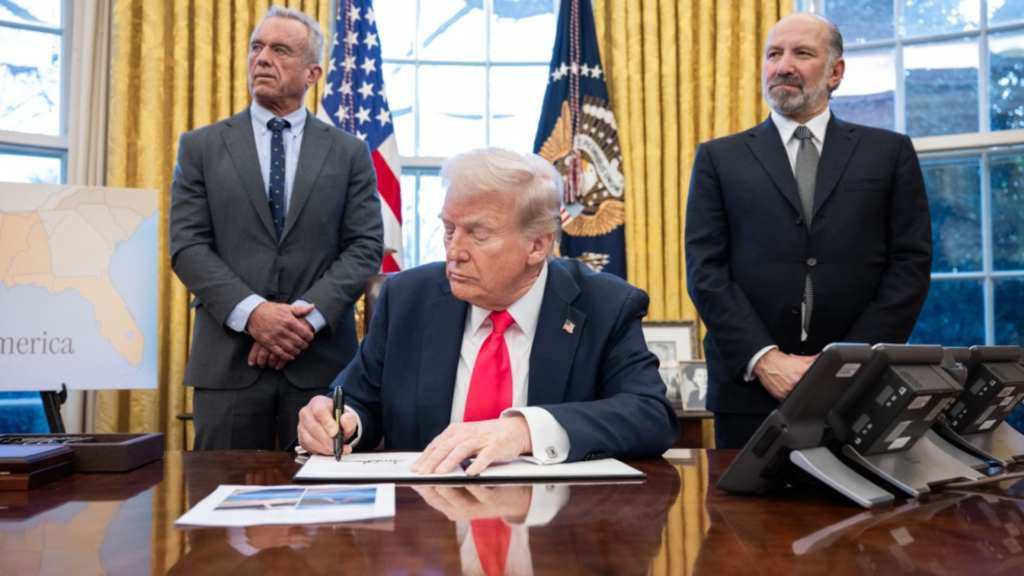
The Trump administration has turned tariffs into a weapon of geopolitical pressure, threatening the EU with 50% duties on steel and aluminum unless it yields in trade negotiations. The United Kingdom, however, has received preferential treatment, with exemptions justified by the “special relationship” and defense alignment. A federal court temporarily blocked the global tariffs, but the White House has resumed its offensive after overcoming this restriction, according to Reuters and The Wall Street Journal.
Geostrategic Analysis:
Trump’s Strategy:
The tariff threat is a classic feature of Trump’s coercive diplomacy, designed to force the EU to relocate production to the United States. The rhetoric of “reciprocity” conceals a protectionist agenda that benefits U.S. industrial sectors but risks a trade war. The EU, led by Kaja Kallas, insists on negotiations based on mutual respect, but its internal fragmentation (Germany and France fear economic losses, while Eastern countries prioritize security vis-à-vis Russia) limits its response capacity.
British Exception:
The preferential treatment granted to the United Kingdom reflects its alignment with the U.S. within NATO and its post-Brexit distancing from the EU. However, London’s suspension of trade negotiations with Israel due to the Gaza crisis could complicate its position. The UK walks a tightrope, benefiting from Trump’s benevolence while remaining vulnerable to European retaliation.
Global Impact:
Trump’s tariffs have stabilized relations with Canada and Mexico within the USMCA, but have alienated partners such as Vietnam and Cambodia, which seek industrial autonomy. China, the implicit target, is accelerating its economic decoupling from the U.S., potentially fragmenting global trade into rival blocs, according to the Financial Times.
Future Risks:
A tariff escalation could drive up global prices and destabilize supply chains. The EU could retaliate with tariffs on U.S. agricultural and technological products, affecting consumers and businesses. The United Kingdom, though favored, must avoid becoming trapped in the crossfire between Washington and Brussels.
Conclusion:
Trump plays chess with tariffs, but his strategy risks a global economic checkmate. The EU must find unity to negotiate, while the United Kingdom, as always, seeks balance between its global ambition and its dependence on allies. On this board, prudence is as valuable as audacity.
3. Elections in South Korea: A Precarious Balance
Context and Developments:
South Korea’s presidential elections on June 3, 2025, following Yoon Suk-yeol’s failed self-coup, have marked a turning point. Although there are no definitive results regarding the winner, candidates from the People Power Party (conservative) and the Democratic Party (progressive) focused their campaigns on security and the economy, avoiding divisive social issues. Relations with China and the trade war with the U.S. are key priorities, according to The Korea Times and the South China Morning Post.
Geostrategic Analysis:
Political Positions:
The conservative People Power Party advocates strengthening the alliance with the U.S. and a firm stance against North Korea, while the Democratic Party seeks pragmatic dialogue with Pyongyang and the maintenance of economic ties with China. Both agree on negotiating with Trump to reduce tariffs, particularly in shipbuilding and energy.
Relationship with China:
China is a vital trading partner, but U.S. pressure to limit the transshipment of Chinese products places Seoul in a delicate position. The new president will need to balance semiconductor and automobile exports with Washington’s demands, according to the Financial Times.
Regional Security:
Military cooperation between Russia and North Korea, including arms transfers that violate UN sanctions, heightens tensions. Seoul will intensify joint drills with the U.S. and Japan, but any miscalculation could escalate conflict on the peninsula.
Future Risks:
South Korea’s dependence on global markets makes it vulnerable to Trump’s tariffs. An overly pro-U.S. stance could alienate China, while rapprochement with North Korea without tangible results would weaken the government. Internal stability will depend on the new leader’s ability to heal the wounds left by the failed self-coup.
Conclusion:
South Korea stands at a crossroads, caught between the ambitions of major powers and the threats posed by its northern neighbor. The new president will need to deploy shrewd diplomacy to prevent Seoul from becoming a pawn on the Asian chessboard, where every move matters.
4. Judicial Elections in Mexico: A Spectacle of Distrust
Context and Developments:
Mexico’s judicial elections on June 1, 2025, the first held by popular vote, were a fiasco with only 13% voter turnout, according to Reforma and El Universal. Hugo Aguilar Ortiz, the new president of the Supreme Court, is a former Zapatista sympathizer, sparking fears of judicial politicization. The reform promoted by MORENA (AMLO’s party) aims to combat corruption, but many view it as an attempt at institutional control.
Geostrategic Analysis:
Crisis of Legitimacy:
The 13% turnout reflects deep distrust in the system, aggravated by the perception that MORENA manipulated the process. Aguilar’s election, given his Zapatista past, reinforces fears of a court aligned with the government, according to Excélsior. His background could tilt rulings toward social causes, but at the expense of impartiality.
Regional Impact:
Institutional instability in Mexico weakens its position in international negotiations, such as those under the USMCA. The U.S. could exploit this perceived fragility to exert pressure on trade and migration issues, according to The Wall Street Journal. Judicial politicization also discourages foreign investment, which is crucial for the Mexican economy.
Future Risks:
If Aguilar prioritizes an ideological agenda, he will face resistance from conservative and business sectors, deepening polarization. The Court will be central to electoral disputes and the review of trade agreements, testing its independence amid external pressures.
Conclusion:
Mexico, with its judicial experiment, is venturing into treacherous terrain. Aguilar Ortiz, with his romantic-revolutionary past, may be a hero to some and a danger to others. Low turnout reflects a weary country where justice, far from being blind, appears to wear a party’s colors. In a world of tariffs and global tensions, Mexico needs strong institutions, not a political circus.
General Conclusion
On this June 4, 2025, the world is a mosaic of crises and ambitions. In Gaza, Fletcher’s exaggerations and Thunberg’s empty gestures only cloud a tragedy that demands real solutions, not inflammatory rhetoric. Trump’s tariffs redraw global trade, with the United Kingdom as a tactical beneficiary and the EU as a victim of its own disunity. South Korea, at its crossroads, must navigate between titans, while Mexico, with its politicized court, risks internal stability and regional influence. Diplomacy is an art requiring surgical precision, not emotional brushstrokes. In a world where Hamas terrorism, Trump’s maneuvers, and institutional fragilities converge, only clarity and pragmatism can prevent the abyss.
Sources Used: Reuters, The New York Times, Haaretz, El País, The Wall Street Journal, Financial Times, The Guardian, Infobae, Reforma, El Universal, Excélsior, Amnesty International, Human Rights Watch.