By Gustavo de Arístegui,
January 27, 2026
I. BRIEF INTRODUCTION
The geopolitical landscape of the last 24 hours confirms a triple structural tension: the protracted war in Ukraine, the escalating tension with the theocratic regime in Tehran, and the acceleration of systemic competition with China, now also playing out in Europe with Keir Starmer’s trip to Beijing and the strategic issue of the Chagos Archipelago. Added to this is a domestic US dimension with a strong external impact: the combination of the political crisis stemming from the death of Alex Pretti at the hands of immigration agents, Trump’s tactical shift on immigration, and the projection of hard power in the Gulf sends an unequivocal message to allies and adversaries alike. Against this backdrop, the excessive public debt in major developed economies limits the room for maneuver to simultaneously sustain the defense of Ukraine, deter Iran, and contain Chinese expansionism.
II. MOST IMPORTANT NEWS OF THE LAST 24 HOURS
1. Deployment of the aircraft carrier USS Abraham Lincoln off Iran
Facts
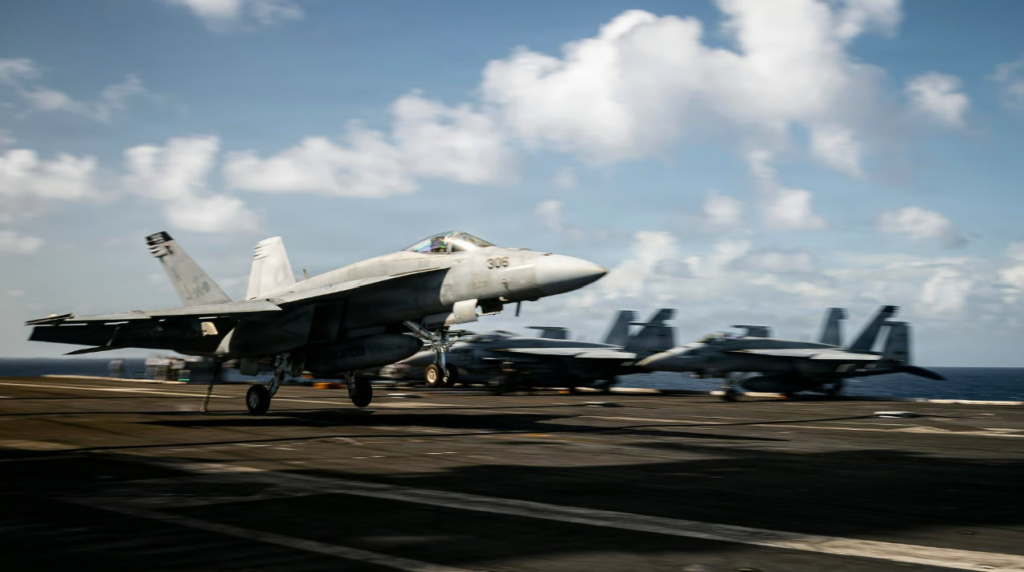
The aircraft carrier USS Abraham Lincoln and its strike group, which includes three Arleigh Burke-class destroyers with advanced ballistic missile defense capabilities, have arrived in the Middle East region, operating between the northern Indian Ocean and the approaches to the Persian Gulf, as a direct response to both the brutal repression of protests in Iran—with a death toll of several thousand according to human rights organizations—and the escalating rhetoric of Tehran and its allied militias in Lebanon, Syria, Iraq, and Yemen.
Trump has described the US naval presence alongside Iran as a “great armada,” publicly stating that “all options” remain on the table, in language deliberately evoking the maximum pressure rhetoric that characterized his first term. Simultaneously, senior State Department officials have indicated that Washington remains open to diplomatic contacts if Tehran is willing to negotiate, in a classic exercise of coercive diplomacy that combines credible threats with a door ajar for dialogue, seeking to fragment the Iranian elite between hardliners and more pragmatic factions.
Implications
The deployment reinforces the credibility of US deterrence following previous threats to intervene if the Iranian regime continued killing protesters in the streets of Tehran, Isfahan, Mashhad, and other cities. It serves as a warning not only to the theocratic regime but also to its proxies throughout the region—Hezbollah in Lebanon, Shia militias in Iraq, the Houthis in Yemen, and what remains of Hamas in Gaza—accustomed to operating with the relative impunity afforded by the absence of a strong Western response over the past decade.
From an Atlantic perspective, this move partially rebalances the perception of regional allies—Israel, Saudi Arabia, the United Arab Emirates, and Bahrain—who feared a tepid response from Washington to a regime that combines state terrorism, the export of sectarian militias, and barely restrained nuclear ambitions. The US naval presence reinforces the regional security architecture and signals to Riyadh and Abu Dhabi that normalization with Israel will not leave them isolated in the face of Tehran.
At the same time, Iran has responded by escalating its threats of retaliation, without specifying concrete targets but hinting at the possibility of attacks against US interests in the region through its proxies, which keeps tensions high and increases the risk of inadvertent escalation due to miscalculation or an uncontrolled incident.
Outlook
If Tehran maintains the current level of internal repression and external activism—including transfers of advanced weapons to allied militias and continuation of the covert nuclear program—the most likely scenario in the short term is a prolonged low-intensity standoff: reinforcement of sectoral sanctions, covert sabotage operations against nuclear and military infrastructure, limited attacks by Iranian proxies against US or Israeli targets, and recurring naval displays of force, falling short of the open frontal clash that neither side desires but which cannot be ruled out
A sudden deterioration—a major massacre of protesters captured in real time by social media, a lethal attack against US or Israeli assets directly attributable to Tehran, or verified progress toward the development of a nuclear weapon—could prompt Trump to order targeted airstrikes against military infrastructure, Revolutionary Guard Corps facilities, and command centers of the Iranian repressive apparatus. This scenario would carry a high risk of regional escalation but could also significantly weaken the regime’s security apparatus and provide a boost to internal protest movements, although there are no guarantees that the resulting transition would be orderly or favorable to Western interests.
In the medium term, the strategic question is whether the regime’s collapse will result from an internal implosion stemming from accumulated economic and social pressure, from sustained international pressure eroding the elites to the point of fracture, or from a combination of both. Any disorderly transition without an international stabilization plan would leave a power vacuum that could be filled by even more radical factions within the Revolutionary Guard Corps, Sunni jihadist groups seeking sectarian revenge, or external actors like Russia attempting to preserve their military bases and strategic positions on Iranian territory.
2. Starmer travels to China and the strategic dispute over Chagos
Facts
British Prime Minister Keir Starmer begins a multi-day visit to China today—the first by a British head of government since 2018—seeking to rebuild trade relations, attract Chinese investment in infrastructure and clean technology, and stabilize channels of dialogue after years of tension over Xinjiang, Hong Kong, industrial espionage, and the ban on Huawei in British 5G networks. The trip comes at a time of heightened tensions between Beijing and Washington, with Trump reimposing tariffs and maintaining pressure on the Taiwan issue, placing London in a delicate position between its main security ally and its second-largest global trading partner.
Meanwhile, the Labour government is forging ahead with the controversial agreement to transfer sovereignty over the Chagos Islands to Mauritius, while maintaining the long-term lease of the strategic Diego Garcia atoll for the joint Anglo-American military base that plays a central role in operations in the Indo-Pacific and the Middle East. The deal has drawn intense domestic criticism from both the Conservative opposition and national security circles, who fear that ceding sovereignty to Mauritius—a country with growing Chinese influence in the form of investments, debt, and port infrastructure—will indirectly open the door for Beijing to dangerously approach a critical node in Western military projection in the Indian Ocean.
Implications
London is attempting to square an increasingly difficult circle: rebuilding economic relations with China to guarantee access to its market of 1.4 billion consumers and attract capital to finance infrastructure, without jeopardizing the transatlantic alliance or the Indo-Pacific security architecture, of which the UK is a key component through AUKUS and its permanent naval presence in the region. The underlying problem is that Beijing systematically combines regional aggression—coercion of Taiwan, militarization of the South China Sea, and pressure on the Philippines and Vietnam—with invasive economic diplomacy that uses investments and infrastructure as instruments of political influence and strategic dependence.
The Chagos issue has become a textbook case of the new archipelago geopolitics, where control of remote islands acquires disproportionate strategic value due to their position on shipping lanes, submarine cables, and as platforms for military projection. More than a mere postcolonial rectification of historical justice toward the Chagossians displaced in the 1960s, many analysts see the risk of opening a door for China, via Mauritius—where Beijing already controls the strategically important port—or through other intermediary actors, to dangerously approach Diego Garcia, complicate base operations, or even install surveillance and intelligence capabilities on adjacent islands.
Outlook
If Starmer returns from Beijing with tangible economic concessions—trade agreements, commitments to investment in nuclear or renewable energy—without visible political concessions on human rights, Taiwan, or restraint in the South China Sea, an intensification of tensions with the Trump Administration and the more Atlanticist wing of Westminster is foreseeable. They are wary of any gesture that appears to be appeasement of Chinese expansionism and that erodes British credibility as a reliable security partner
In the medium term, the Chagos precedent could encourage new claims over strategic enclaves in the Indo-Pacific and the Indian Ocean, where Beijing will systematically seek to exploit legal loopholes, historical disputes, and postcolonial sensitivities to erode the Western military presence, complicate freedom of navigation, and expand its own network of bases and logistical support facilities. The risk is not only Chagos, but also the demonstration effect: if a Western democracy cedes sovereignty over a strategic point due to legal and moral pressures without securing airtight guarantees of exclusive military use, other coastal or island states will see incentives to renegotiate similar agreements with less scrupulous third parties.
The ultimate test will be whether the UK manages to maintain sufficiently robust security clauses in the Chagos Treaty to prevent any direct or indirect Chinese presence in the archipelago, and whether Starmer simultaneously succeeds in ensuring that his trip to Beijing is not interpreted in Washington, Canberra, or Tokyo as the beginning of a British strategic distancing from the Indo-Pacific axis of containment of China.
3. Warning about record debt in advanced economies and its strategic effect
Facts
A comprehensive analysis published today documents that the United States, the United Kingdom, France, Italy, and Japan have reached record levels of public debt, or levels very close to the historical maximum, exceeding 100% of GDP in several cases and approaching thresholds that have historically preceded fiscal sustainability crises, a loss of market confidence, and spiraling interest rates that stifle potential growth. This increase in indebtedness coincides with growing political and social demands for defense spending—with NATO commitments to converge toward 5% of GDP by 2030—, continued financial and military support for Ukraine, an acceleration of the energy transition to reduce dependence on Russian and Chinese hydrocarbons, and the strengthening of social safety nets strained by an aging population, pushing national budgets to their limits and reducing the capacity to respond to future crises.
The report notes that the combination of interest rates normalizing after years of ultra-expansionary monetary policy, structural inflationary pressures stemming from the fragmentation of global supply chains, and an aging population that reduces the tax base while increasing spending on pensions and healthcare, creates a “triple constraint” scenario that will force liberal democracies to make difficult choices between social spending, productive investment, and defense capabilities.
Implications
The convergence between the needs of a “wartime economy”—rearmament, energy resilience, and technological autonomy—and the commitments of the welfare state demands fiscal realism, which much of the political spectrum, from the populist left to certain sectors of the nationalist right, continues to evade through mutually incompatible promises. Unless addressed with structural reforms that prioritize efficient spending over electoral patronage, this dynamic will simultaneously jeopardize internal social cohesion and the capacity for external deterrence against Russia, China, and Iran—actors that are closely monitoring Western fiscal vulnerabilities as potential points of pressure.
The over-indebtedness of liberal democracies offers China and sovereign wealth funds from authoritarian regimes—Saudi Arabia, the Emirates, Qatar, but also Russia through proxies—additional leeway to use financial instruments as levers of political influence, acquiring public debt, buying strategic assets in times of budgetary difficulty, or conditioning financial bailouts on foreign policy considerations, especially in states with more fragile institutions in southern Europe, Latin America, or Southeast Asia.
The paradox is that the Russian military threat, systemic competition with China, and the instability generated by the Iran-militia axis demand more spending on defense and intelligence precisely when the fiscal space to finance it is narrowing, forcing a review of budgetary orthodoxies of recent decades, the elimination of bureaucratic redundancies, the cutting of inefficient subsidies, and the reform of pension and health systems to make them sustainable in the long term without sacrificing their universal character.
Outlook
A gradual shift in major Western economies towards selective fiscal consolidation policies is plausible: cutting inefficient or special interest-grabbing public spending, greater discipline in poorly designed or dependency-incentivizing benefits, and explicit prioritization of defense, technological innovation, energy security, and critical infrastructure as non-negotiable pillars of strategic sovereignty, breaking ideological taboos from both the left and right regarding the untouchability of budget items
The failure to put public finances in order and reconcile defense with welfare would open the field to new cycles of anti-system populism—from the radical left like Podemos or Mélenchon, or from the illiberal right like Orbán or Le Pen—that would capitalize on social frustration, weaken the Atlantic axis through sovereignist or pacifist discourses as the case may be, and objectively facilitate the penetration of Russian, Chinese and Iranian narratives that present the West as an exhausted, corrupt model incapable of defending its citizens.
In the very long term, the fundamental question is whether liberal democracies can simultaneously sustain open societies, competitive market economies, and sufficient military capabilities to guarantee their security, or whether the combination of aging, indebtedness, and political fragmentation condemns them to relative decline in the face of autocracies that do not bear the cost of democratic legitimation or universal welfare systems.
4. Political crisis in the United States over the Pretti case and Trump’s tactical shift on immigration
Facts
The death of Alex Jeffrey Pretti, a 28-year-old U.S. citizen shot dead by Immigration and Customs Enforcement (ICE) agents during a detention operation in Minneapolis last Thursday, has triggered massive protests in at least a dozen U.S. cities, strong media criticism accusing the Trump Administration of militarizing immigration policy, and a major political storm that threatens to erode support for the deportation campaign of undocumented immigrants, a central part of the Republican electoral platform.
According to accounts still under investigation, Pretti was at his home when ICE agents entered looking for another person with a deportation order. Under circumstances that remain unclear, a confrontation ensued, ending with Pretti being fatally shot. The family has denounced the excessive use of force, the absence of a valid search warrant, and violations of identification protocols, while ICE maintains that the agents acted in self-defense against an alleged threat—a version disputed by eyewitnesses.
Faced with social, media, and business pressure from major sectors fearing reputational damage and disruption to supply chains dependent on immigrant labor, Trump has publicly maintained a firm stance against irregular immigration and general support for law enforcement, but has introduced significant nuances in the practical application of the raid campaign: internal instructions to prioritize violent criminals over immigrants without criminal records, greater scrutiny of operations in residential areas, and openness to reviewing use-of-force protocols, attempting to contain the political cost without abandoning his border control agenda.
Implications
The combination of tough rhetoric and tactical operational correctness fits the profile of a second-term Trumpism that is more institutionalized and pragmatic than in 2017-2021, whose objective is to maintain the deterrent effectiveness of immigration policy—reducing irregular flows, increasing deportations—without fueling perceptions of a “police state” or “authoritarianism” that could massively mobilize the progressive electorate and alienate sectors of the business community that, although they share concerns about border security, reject images of police violence against the civilian population.
The Democratic left, particularly the progressive “Squad” led by Alexandria Ocasio-Cortez and Ilhan Omar, as well as Bernie Sanders’ socialist wing, is attempting to exploit the Pretti case to delegitimize Trump’s immigration policy as a whole, equating border control with xenophobia and repression. However, it risks appearing disconnected from the majority concern—including in Hispanic and African American communities—for effective border control, reducing crime associated with human and drug trafficking, and homeland security.
The outcome of this case will have implications that extend far beyond immigration policy: if the internal investigation and eventual legal proceedings determine negligence or excessive use of force, Trump’s ability to hold those responsible accountable without eroding the morale of law enforcement will be a test of his commitment to the rule of law. If, on the other hand, the case is dismissed or the officers involved are simply exonerated, it will fuel narratives of impunity that will strengthen progressive mobilization and complicate governance.
Outlook
The judicial and administrative outcome of the Pretti case will be closely watched as a test of the Trump Administration’s ability to combine institutional accountability with maintaining a firm immigration policy, something key to its credibility both domestically and internationally. In the short term, adjustments to ICE’s operating protocols, greater oversight of middle management, and likely minor legislative reforms regarding the use of force in immigration operations can be expected, without altering the overall architecture of deportation policy
Internationally, any perception of deep internal disorder, accelerated erosion of the rule of law, or extreme polarization that paralyzes the functioning of the federal government would be exploited for propaganda purposes by Russia, China, and Iran to question the strength and viability of the liberal democratic model, undermine allies’ confidence in American leadership, and present their own authoritarian systems as more stable and effective alternatives. Hence Trump’s own vested interest in managing the crisis without abandoning his law-and-order narrative, demonstrating that firmness on security is compatible with respect for fundamental rights and institutional scrutiny.
5. Reaffirmation of European dependence on the United States for defense
Facts
NATO Secretary General Mark Rutte warned yesterday that Europe is “dreaming” if it believes it can defend itself without the United States, underscoring the deep military vulnerability of the European continent to Russia despite budget increases over the past two years, and the unavoidable need to maintain the American strategic umbrella, which includes nuclear capabilities, missile defense systems, advanced satellite intelligence, strategic logistics, and power projection that no individual European state or the EU as a whole can replicate in the short or medium term.
Rutte specified that European allies have not only formally committed to the classic target of 2% of GDP for defense—already achieved by most after the Russian invasion of Ukraine—but are actively working on scenarios of spending 5% of GDP by the end of the decade, which would more than double current spending in absolute terms and reflect a strategic paradigm shift from the post-1991 “peace dividend” mentality to a logic of credible deterrence against large-scale conventional and hybrid threats.
This statement comes amid an internal European debate on strategic autonomy, driven paradoxically both by Trump’s pressure for Europe to assume greater responsibility for its own defense and by pro-European sectors seeking greater independence from Washington on security matters. Rutte settles this debate with a realism that makes both sides uncomfortable: Europe cannot do without the United States, nor is Washington willing to indefinitely maintain disproportionate levels of spending to defend allies who chronically underinvest in their own security.
Implications
Rutte’s message reinforces the classic Atlanticist vision and Cold War realism: European strategic autonomy can only be built from close and organic cooperation with Washington, not as an alternative, equidistant project or one that seeks room for maneuver vis-à-vis the United States, and it demands a definitive abandonment of pacifist fantasies, neutralist reflexes and illusions of a “civilian power” incompatible with the reality of a deteriorating security environment where Russia acts as a revisionist power, China expands its global military influence, and Iran fuels terrorist proxies on three continents.
This brutal honesty also directly challenges European governments that have used the US security shield for three decades—from the fall of the Berlin Wall to the invasion of Crimea—as an implicit subsidy to maintain defense levels far below sustainable levels, funding instead welfare state models that are generous in benefits but structurally deficient, avoiding the difficult choices between social spending and military spending, and postponing indefinitely the modernization of critical military capabilities.
The debate over 5% of GDP is not mere rhetoric: it would mean an increase for Germany from approximately €75 billion to over €200 billion, for France from €50 billion to €130 billion, and for Italy from €30 billion to €100 billion. These increases require not only political will but also tax reforms, a restructuring of budgetary priorities, the rebuilding of atrophied defense industrial bases, and the recovery of strategic security cultures that have been diluted over two generations of Europeans socialized with the belief that history had ended and war was a thing of the past.
Outlook
A gradual but sustained strengthening of industrial cooperation in defense within the transatlantic axis is foreseeable, with the United States as an indispensable provider of critical strategic capabilities—extended nuclear deterrence, ballistic missile defense, space and cyber intelligence, naval power projection—and Europe contributing complementary industrial mass, technological innovation in specific niches, and land capabilities for territorial defense of the eastern flank, in a model of cooperative specialization that is more efficient than costly duplication of capabilities
The failure to translate Rutte’s words and the formal commitments of NATO summits into real national budgets, signed industrial contracts, and deployed operational units would dangerously fuel the arguments of sectors in the United States—both isolationist progressives and unilateralist Trumpists—that advocate a selective withdrawal, prioritizing the Indo-Pacific over Europe, and progressively abandoning security commitments inherited from 1949, mortally weakening NATO’s deterrent credibility and opening up additional revisionist temptations not only in Moscow but also in Beijing regarding Taiwan and in Tehran regarding the Gulf.
In the very long term, the existential question for Europe is whether it can develop sufficient military capabilities to autonomously deter Russian aggression without a US presence—a scenario that would require its own nuclear weapons, which in practice means French nuclear weapons with a credible umbrella extending to the entire EU, something politically and technically very complex—or whether it will maturely and permanently accept that its security structurally depends on the alliance with the United States, which implies aligning positions on other strategic issues—China, Iran, trade—more consistently with US interests.
6. Escalation of protests in Iran and assessment of the repression
Facts
The protests against the Iranian theocratic regime, which began last November with the death in police custody of a young Kurdish woman accused of improperly wearing the hijab, and later expanded into a broader political movement questioning the very legitimacy of the Islamic Republic’s system, continue in multiple cities despite extremely ferocious repression that includes the systematic use of live fire against unarmed protesters, mass arrests with documented torture, accelerated public hangings of activists after summary trials, and prolonged internet and social media blackouts to prevent coordination and documentation of abuses.
International human rights organizations, including Amnesty International and Human Rights Watch, are already raising the death toll to several thousand since the start of the protest cycle — with estimates ranging from 3,000 according to conservative sources to more than 5,000 according to activist networks inside Iran — stressing that the real toll is probably much higher due to the tight censorship, the information blackout imposed by Tehran, the concealment of bodies, and deaths from torture in detention centers not officially recognized.
The protests have evolved from initial slogans about women’s rights and civil liberties to explicit demands for the regime’s downfall, with chants of “Death to the Dictator” referring to Supreme Leader Ali Khamenei, burning of images of Khomeini and Khamenei, and attacks on symbols of theocratic power including regime-controlled mosques and offices of the Basij, the paramilitary militias that form the backbone of repression alongside the Revolutionary Guard Corps.
Implications
The Iranian regime once again demonstrates its dual nature as a terrorist state both internally and externally: the same logic, the same methods, and often the same commands and units that feed, train, and direct Hezbollah in Lebanon, the Shiite militias in Iraq, the Houthis in Yemen, and Hamas in Gaza are applied without dilution against the Iranian population itself, which is turned into an internal enemy simply for demanding basic rights, treated with indiscriminate lethal violence, and subjected to a repressive apparatus that makes no distinction between peaceful protester, political activist, and armed combatant.
The unprecedented combination of social pressure from below—with mobilizations that have penetrated neighborhoods traditionally loyal to the regime and that include sectors of the working class impoverished by sanctions and corruption—and military and economic pressure from outside (US aircraft carriers, tightened sanctions, covert sabotage operations against military and nuclear infrastructure) could be slowly eroding the cohesion of the ruling elites, although there are still no clear signs of a terminal fracture or mass defections in the security forces that sustain the system.
The regime faces a dilemma with no easy solution: if it moderates repression to appease international pressure and avoid the economic cost of new sanctions, it risks the protests growing into something uncontrollable; if it maintains or intensifies repression, it consolidates its international isolation, strengthens Western sanctions, justifies US and Israeli military pressure, and deepens the hatred of broad sectors of its own population, especially educated urban youth and women, who constitute the country’s demographic future.
Outlook
In the short term, the priority of Western democracies should be to support Iranian civil society by all available means—ensuring access to truthful information by circumventing censorship, facilitating secure communications through VPNs and anti-censorship technologies, giving international voice to the diaspora and activists, documenting crimes for future accountability—and simultaneously limiting the operational capacity of the repressive apparatus through targeted sanctions that directly affect commanders of the Basij and the Revolutionary Guard, freezing overseas assets of regime elites, and technological isolation that prevents access to Western-origin digital surveillance and repression equipment
In the medium term, the fundamental strategic question is whether the eventual collapse of the theocratic regime will be the product of an internal implosion—military coup, fracture of elites, total economic collapse, massive popular uprising impossible to repress—of sustained international pressure that combines economic strangulation with support for the opposition and a credible military threat, or of an explosive combination of both factors that triggers an accelerated transition.
The greatest risk is that any disorderly transition, without a coordinated international stabilization plan involving the United States, Europe, Gulf states, and even Russia, could leave a power vacuum that could be filled by even more radical factions within the Revolutionary Guard itself, Sunni jihadist groups seeking sectarian revenge against the Shia population, or by post-Gaddafi Libya-style chaos with state fragmentation, proliferation of militias, and the risk of military arsenals, including nuclear components, falling into the hands of non-state actors. Hence the importance of the West having not only a pressure strategy but also a transition strategy for the day after the regime.
7. Global dimension of the war in Ukraine: attacks on energy infrastructure and power outages
Facts
The Russian attacks in Kharkiv in recent hours have caused widespread blackouts affecting more than 200,000 homes, schools, hospitals, and essential services. This aligns with Moscow’s systematic campaign to destroy energy infrastructure, which has intensified throughout the winter months with the explicit aim of undermining the resilience of Ukrainian society through cold, darkness, and the collapse of essential services. The attacks target electrical substations, thermal power plants, high-voltage lines, and distribution centers, employing a combination of cruise missiles, ballistic missiles, and drone swarms that overwhelm Ukrainian air defenses.
Emergency teams from the national electric company, reinforced by foreign technicians and support from international organizations, are working against the clock to restore the supply amid temperatures that at this time of year usually drop below -10°C in the Kharkiv region, highlighting the structural vulnerability of energy networks in a high-intensity conflict where the enemy has partial air superiority and the ability to launch deep attacks against the entire operational rear.
According to data from Ukrainian energy operators, since October 2022 Russian attacks have destroyed or severely damaged approximately 50% of the country’s electricity generating capacity, forcing massive electricity imports from neighboring EU countries, planned rationing during peak hours, and a critical reliance on diesel generators to keep hospitals, shelters, heating systems, and emergency services operational.
Implications
Beyond the immediate human cost—hypothermia, accidents caused by darkness, collapse of health services in the midst of war—these attacks put intense pressure on the European defense and energy industry to accelerate the production and delivery of short- and medium-range air defense systems, anti-aircraft batteries, anti-missile systems, specialized ammunition, high-capacity emergency generators, rapid repair equipment, spare transformers, and critical electrical grid components, increasingly integrating the military and civilian dimensions of national resilience into a total defense logic.
The war in Ukraine brutally demonstrates that energy is no longer just an economic vector or an instrument of commercial pressure, as Russian gas was for decades, but a direct weapon of hybrid warfare that is added to the conventional arsenal, with strategic lessons that the European Union and NATO must urgently apply to the protection of their own critical infrastructures against possible coordinated sabotage, cyberattacks against industrial control systems, or attacks with cruise missiles or long-range drones in the event of an escalation with Russia beyond the Ukrainian borders.
The Russian campaign against the Ukrainian energy system also has a dimension of ethnic cleansing and slow genocide: making areas under Ukrainian control uninhabitable during the winter, forcing mass displacements of the population towards Western Europe, creating a humanitarian crisis that erodes European political support for Kyiv, and preparing the ground for future annexations by presenting devastated territories as “liberated” from a government that supposedly cannot guarantee minimum living conditions.
Outlook
Ukraine will continue to depend critically on massive and sustained Western aid to keep its energy system operational, forcing European capitals, the European Commission, and international financial institutions to plan for equipment supplies, specialized technical support, repair financing, and the construction of distributed generation capacity not only in seasonal winter-to-winter cycles, but over multi-year horizons of three to five years, assuming that the war may be prolonged and that each winter will repeat the pattern of massive attacks
The Ukrainian experience will predictably accelerate long-postponed debates in Europe on the mass burial of high-voltage power lines to protect them from air attacks, the creation of redundancies and decentralized grids in distribution networks to avoid single points of failure, the reinforced physical protection of substations and power plants through bunkers or point-based missile defense systems, and the development of distributed generation capabilities using renewables and batteries to reduce dependence on large, vulnerable power plants.
In the very long term, the energy warfare model developed by Russia in Ukraine will be studied and replicated by other actors—China in a potential conflict over Taiwan, Iran against its Gulf neighbors, North Korea against the South—which forces a complete rethinking of the architecture of national energy systems based not only on criteria of economic efficiency, environmental sustainability or energy transition, but also on military resilience and the capacity to sustain essential services under prolonged high-intensity attack.
8. Extreme weather and infrastructure vulnerability in the United States
Facts
A powerful winter storm with exceptional characteristics has affected much of the southern and central United States since the weekend, with massive snowfall, ice accumulations of several centimeters, and extremely low temperatures that have dropped to -20°C in normally temperate areas of Texas, Oklahoma, Arkansas and Louisiana, leaving more than 700,000 subscribers without electricity at the peak of the storm, causing the cancellation of more than 5,000 commercial flights, and causing the closure of major interstate highways and schools in multiple states.
The National Weather Service has warned of “potentially catastrophic” ice accumulations across a swath stretching from Texas to the Carolinas, with the risk of downed power lines, trees falling on homes and vehicles, and prolonged disruptions to basic supplies. It estimates that more than 100 million people—roughly one-third of the U.S. population—will face sub-freezing temperatures in the next 48 hours, straining heating systems, pushing power grids to their limits, and overwhelming emergency services.
This extreme weather event comes just three years after the February 2021 winter storm that left millions of Texans without power for days, caused more than 200 deaths, and exposed the fragility of critical infrastructure designed for a more benign climate but now subjected to extreme variability due to climate change, with swings between record-breaking summer heat waves and polar cold in winter.
Implications
The increasing recurrence of extreme weather events—more intense hurricanes, prolonged droughts, flash floods, and heat waves and cold spells outside historical parameters—highlights the urgent need to modernize critical infrastructure in the United States, the world’s leading power, which still operates with electrical grids, water systems, roads, and bridges designed in many cases 50 or 70 years ago for more stable and predictable climatic conditions. This factor will inevitably compete for budgetary resources and political attention with the growing priorities of defense spending, support for Ukraine, and containment of China and Iran, in a context of record public debt that severely limits fiscal space.
The recurring failures of essential services in already intensely polarized federal states—Texas, Florida, Arizona—fuel political narratives from those who question the federal government’s ability to guarantee basic public goods, creating fertile ground for populisms of various stripes: from the left that attributes the problems to excessive privatization and lack of regulation, to the right that blames a rushed energy transition and abandonment of reliable fossil fuels, to libertarians who see in each state failure confirmation that the government is inefficient by nature.
The visible inability to respond effectively and quickly to domestic natural disasters, especially when images emerge of Americans without light or heat for days in the 21st century while the country deploys aircraft carriers in the Persian Gulf, damages the United States’ international image as a model of effective management and competent government, something that its geopolitical rivals—RT, CGTN, Press TV—shamelessly exploit for propaganda purposes to undermine the confidence of allies and global audiences in American leadership.
Outlook
The federal administration and state governments are likely to push through significant new investment packages in the coming months for climate resilience, adapting infrastructure to climate change, upgrading electric grids with smart grid technologies, burying lines in high-risk areas, and strengthening emergency response capabilities, although fiscal space will be very limited by the level of public debt and political battles in Congress will be intense over spending priorities and public-private financing models
In the medium term, if extreme weather events increase as predicted by climate models and the institutional response remains slow, fragmented, or inadequate, an already visible trend of internal migration from southern and western states more vulnerable to droughts, hurricanes, and extreme heat to northern and northeastern states may accelerate, with political, economic, and demographic consequences that are difficult to predict but potentially destabilizing for electoral balances, real estate markets, and social cohesion.
The persistent inability to respond effectively to recurring climate disasters would fuel narratives of national decline, erode citizens’ trust in institutions, and could accelerate dynamics of practical secession—not formal, but in terms of states increasingly assuming powers unilaterally, ignoring federal regulations, or developing completely divergent policies—weakening the country’s cohesion precisely when it faces its most competitive and dangerous geopolitical environment since the Cold War.
9. Global echoes of the captures and operations against Chavismo and the Venezuelan narco-state
Facts
Recent reports and analyses in specialized geopolitical media place Venezuela’s current political “limbo” following the capture of Nicolás Maduro and several high-ranking officials of his regime by US special forces in an operation coordinated with allied Latin American governments, reflecting an uncertain and potentially dangerous transition phase in a country where Chavismo has functioned for more than two decades as a hybrid narco-dictatorship, a transnational criminal organization with state structures, and a platform for projecting influence by Russia, China, Iran, and Cuba in the Western Hemisphere.
The debate in specialized geopolitical analysis forums underlines that the combination of sustained sectoral sanctions, international judicial pressure through drug trafficking accusations in US courts, police and intelligence cooperation to track the regime’s financial assets hidden in tax havens, and covert destabilization operations and selective capture of leaders, were key factors in having sufficiently weakened the Chavista criminal-state network to allow its eventual dismantling.
Venezuela is now in a fragile transitional government situation, with state institutions devastated by decades of corruption and clientelism, armed forces partially co-opted by drug trafficking, a collapsed economy with chronic hyperinflation and mass emigration of a third of the population, and oil infrastructure in a state of semi-abandonment that will require investments of tens of billions of dollars to return to production levels comparable to the 1990s.
Implications
The Venezuelan experience empirically reinforces the realistic thesis that narco-regimes—structures where political, military, and criminal elites merge into a single power network with an economy based on drug trafficking, money laundering, extortion, and the plundering of natural resources—do not yield through mere diplomatic persuasion, rhetorical pressure, condemnations in international organizations, or tepid sanctions, but are only dismantled through a comprehensive strategy of coordinated pressure that combines real financial strangulation, forensic tracking of capital flows, transnational police cooperation, and, when necessary, surgical direct action against their leadership when they make the mistake of exposing themselves outside of territorial sanctuaries.
The current power vacuum in Caracas, without a robust and consensual plan for democratic transition, institutional reconstruction, purging of armed forces infiltrated by drug traffickers, economic reactivation with massive foreign investment, and national reconciliation after 25 years of brutal polarization, opens dangerous windows of opportunity for hostile external actors such as Russia, Iran, China, or even Cuba to try to preserve or strengthen strategic positions in a country that, due to its massive oil reserves—the largest in the world—its geographic position controlling the southern Caribbean and northern access to South America, and its potential as a platform for intelligence and destabilization operations against the United States, remains a coveted piece on the global chessboard.
Outlook
The success or failure of the Venezuelan transition in the next two to three years will inevitably be a paradigmatic reference for the future management of other narco-financed authoritarian regimes in Latin America, such as the repressive apparatuses of Cuba—which depends vitally on Venezuelan oil remittances—and Nicaragua under Ortega, which observe the Venezuelan precedent with evident existential unease and accelerate measures to protect elites and seek new external patrons.
The Atlantic community—the United States, the European Union, and Latin American allies such as Colombia, Brazil, Chile, and Argentina—should seize this historic window of opportunity to promote an open market economy, diversified beyond oil, with a robust rule of law and consolidated representative democracy in Venezuela. This would fully integrate the country into Western energy supply chains to reduce dependence on the Middle East, connect it to hemispheric security architectures, and dramatically reduce its historical vulnerability to penetration by Moscow, Beijing, and Tehran, which have used it as a bridgehead in the hemisphere.
Failure to sustain the Venezuelan transition due to lack of resources, scattered attention, or disagreements among Western actors regarding reconstruction models would open up dark scenarios: from a new nationalist military dictatorship attempting to restore order through an iron fist, to territorial fragmentation with areas controlled by cartels, to a failed state like Libya that would export instability, drug trafficking, refugees, and terrorism to the entire region for decades. Given the strategic stakes at stake, failing to decisively support Venezuelan reconstruction would be a major geopolitical error.
EDITORIAL COMMENT
Today confirms an uncomfortable truth that large sectors of the “well-meaning” in old Europe, entrenched in a ritual pacifism and a moral equidistance that makes no distinction between victims and aggressors, still refuse to admit: history has returned in all its tragic brutality and intends to collect, with compound interest, the accumulated dividends of three decades of strategic naiveté, budgetary irresponsibility in defense, and fantasies about the end of history
When Russian missiles strike schools and kindergartens in Kharkiv, leaving Ukrainian children without light or heat in the dead of winter; when the aircraft carrier Abraham Lincoln maneuvers in front of an Iranian regime that fires shamelessly on its own unarmed citizens, racking up thousands of deaths; when a British prime minister travels to Beijing seeking trade deals while simultaneously opening the door to reviewing the sovereignty architecture in Chagos, risking a vital strategic enclave; and when major Western economies accumulate levels of debt that threaten their ability to simultaneously sustain the welfare state and a credible defense, what is truly at stake is not an academic abstraction for university seminars, but the very continuity of the liberal order that has given Europe and the West its longest period of prosperity, freedom, and peace in its entire millennia-long history.
Faced with this landscape of converging threats and limited resources, the response cannot be either ritualistic pacifism, which confuses peace with capitulation to the aggressor, or the irresponsible populism of armchair politics that simultaneously promises more social spending, lower taxes, and effortless, magical security. What is imperative is a calm but absolutely firm reaffirmation of the Atlantic alliance as the ultimate guarantee of our collective security; a decisive and sustained investment in defense—not against entire populations, but against regimes that have made violence their raison d’être; and a clear foreign policy, without ambiguity or cowardly equidistance, toward narco-states, terrorist theocracies, and revisionist empires that, from Caracas to Tehran, by way of Moscow and Beijing, openly challenge the norm-based international order that we have built.