By Gustavo de Arístegui,
January 28, 2026
I. BRIEF INTRODUCTION
The days of January 27-28, 2026, will be marked by a trade milestone of historic proportions: the free trade agreement between the European Union and India, hailed by both parties as “the mother of all trade agreements.” This pact reshapes trade relations between two of the world’s most important economic blocs at a time of rising US protectionism.
Simultaneously, the Doomsday Clock has moved to 85 seconds to midnight, its closest position to global disaster since its creation in 1947, reflecting a world fraught with nuclear tensions, armed conflicts, and unresolved climate crises. The Ukrainian front continues to bleed with Russian attacks on civilian infrastructure, while President Trump increases tariff pressure on South Korea and the Iranian regime desperately seeks diplomatic channels in the face of the threat of US intervention. In this volatile context, European trade diplomacy emerges as a hopeful counterpoint to US unilateralism, while the nuclear powers continue to find no path to de-escalation on multiple fronts. The planet seems to be moving at two irreconcilable speeds: that of constructive economic cooperation and that of escalating military confrontation, ever closer to the threshold of catastrophe.
II. THE MOST IMPORTANT NEWS OF THE LAST 24 HOURS
1. India and the European Union seal the most ambitious trade agreement in history
FACTS
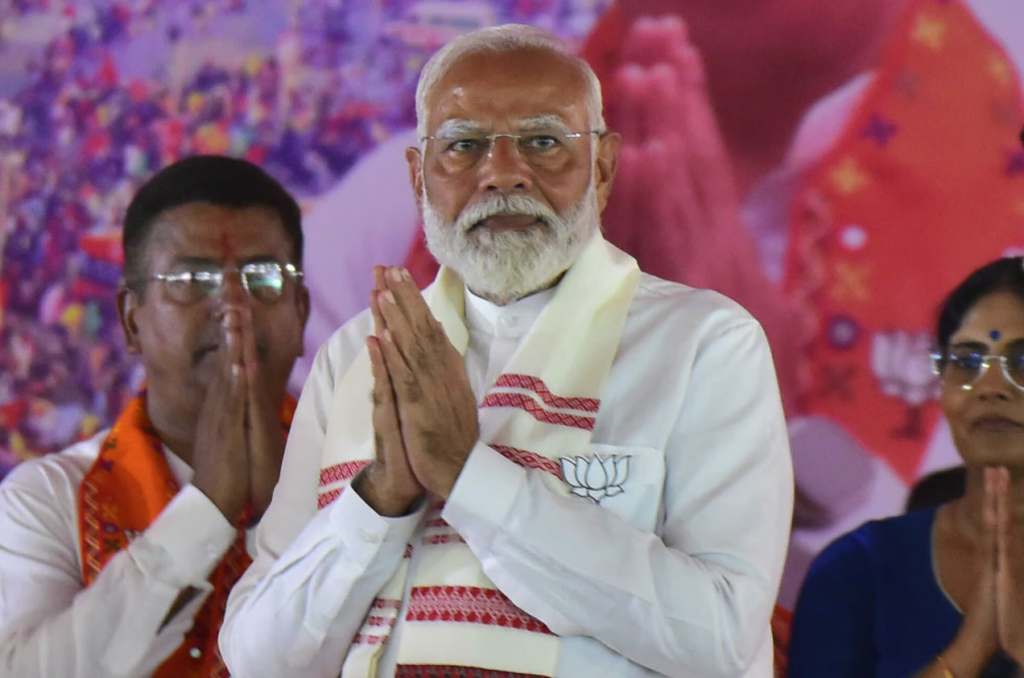
After nearly two decades of intermittent negotiations that began in 2007 and were suspended in 2013 due to disagreements over labor protections and environmental standards, the European Union and India have finally reached a free trade agreement of extraordinary proportions. European Commission President Ursula von der Leyen and Prime Minister Narendra Modi jointly presented the agreement at the EU-India Summit in New Delhi on January 27. Both leaders used the expression “the mother of all deals” to underscore the magnitude of the pact. The agreement will eliminate or reduce tariffs on 96.6 percent of European exports to India, resulting in savings of up to €4 billion annually in customs duties alone. India will phase out tariffs on European cars from the current 110 percent to 10 percent over a transition period. In parallel, the European Union will also reduce tariffs on more than 95 percent of Indian products, including distilled spirits, textiles, and chemicals of strategic importance to New Delhi. Bilateral trade reached $136.5 billion in the 2024-2025 fiscal year, solidifying the trade relationship between the two powers as one of the most dynamic in the world. The European Commission projects that European exports to India will more than double by 2032 as a direct result of this agreement. Final negotiations continued until late on January 27, with agreements reached on crucial provisions relating to intellectual property rights, public procurement, and labor protections.
IMPLICATIONS
This agreement represents a masterstroke of European trade diplomacy at a critical moment for the global economic order. While the United States is wholeheartedly embracing protectionism with escalating tariffs aimed even at traditional allies, Brussels is consolidating its position as the preferred partner of the world’s most dynamic emerging economy. Demonstrative power is crucial: Europe has shown that multilateralism remains capable of producing substantive results after decades of patient negotiation. The European Union will gain the broadest access ever granted by India to an international trading partner, with substantial competitive advantages in key industrial, pharmaceutical, and agricultural sectors. European producers of wines, spirits, and cheeses will find their entry into India’s gigantic market of rapidly expanding middle-class consumers significantly facilitated. European car manufacturers, especially German ones, will gain preferential access to a market where demand for quality vehicles is growing exponentially with the population’s prosperity. For India, the agreement opens the doors to the market of 450 million high-spending European consumers and facilitates the attraction of European technology investment on an unprecedented scale, thus diversifying its traditional dependence on the United States and China. Indian information technology services, a sector in which the country is a world leader, will gain improved access to European markets. The pact also includes explicit clauses on environmental protection, guaranteed labor rights, and women’s empowerment in supply chains, establishing standards that transcend mere commercial transactions. The agreement should also be interpreted as a European response to Trump’s foreign policy. Europe has demonstrated its capacity to operate independently of the transatlantic axis when it considers its interests insufficiently protected by Washington. India, for its part, solidifies its “multi-alignment” strategy, positioning itself as an indispensable partner for both the West and the BRICS bloc, avoiding exclusive dependence on any single power.
PERSPECTIVES AND SCENARIOS
The effective implementation of the trade agreement is expected by the end of 2026, following a complex legal review process that typically takes five to six months. Both parties will need to complete parliamentary and institutional procedures. The European Commission has conservatively projected that European exports to India will double by 2032, although some private analysts estimate even greater increases if supply chains are reorganized to take advantage of the new tariff benefits. This agreement could serve as a paradigmatic model for future European Union trade negotiations with other emerging economies and definitively reinforces Brussels’ position as a global trading actor with an alternative to US unilateralism. If the agreement works as projected, it could catalyze a series of similar pacts between the EU and other Asian nations, consolidating a pro-regulation and pro-sustainability trading bloc that would contrast with the more deregulated US model. India is thus consolidating a position of growing influence in the global economic architecture. With a population of 1.4 billion, a middle class of 300 million consumers, and economic growth rates of 6-7 percent annually, New Delhi represents the economic future of the planet. Its ability to negotiate as an equal with Brussels signals the definitive rebalancing of global economic power from the West to Asia.
2. The Doomsday Clock advances to 85 seconds to midnight
FACTS
The Bulletin of the Atomic Scientists, an organization founded immediately after World War II by researchers who worked on the Manhattan Project, has moved the symbolic Doomsday Clock forward to 85 seconds to midnight. This figure represents the closest humanity has been to global disaster since the clock’s creation in 1947, almost eighty years ago. Last year, the clock stood at 89 seconds, meaning that in just one year, humanity moved four seconds closer to the abyss. The announcement was made on January 27 in Washington at a press conference attended by the world’s leading scientists in nuclear security, nuclear weapons physics, climate change, and biological hazards. The decision to move the clock forward explicitly cites the following as the main causes of this escalation: Russia’s war of aggression against Ukraine, the US and Israeli bombings of Iranian facilities, the border clashes between India and Pakistan with nuclear potential, the continued tensions on the Korean Peninsula, Chinese threats against Taiwan, and the escalating tensions in the Western Hemisphere. The Bulletin of the Atomic Scientists’ statement emphasizes that these conflicts do not occur in isolation, but rather coexist simultaneously, multiplying the statistical risk of an accidental or deliberate nuclear conflagration. The scientists further underscore that traditional nuclear arms control mechanisms—which functioned imperfectly but did work during the Cold War—are currently inoperative or severely weakened. There is no effective direct communication between Washington and Moscow. Crisis lines between New Delhi and Islamabad are precarious. Diplomatic channels between Tehran and Washington remain closed.
IMPLICATIONS
The advancing Doomsday Clock serves as an unequivocal warning from the international scientific community about the accelerating deterioration of global security. This is not theoretical speculation: these are the scientists who have historically advised governments on probabilistic calculations of nuclear risk. The scientists of the Bulletin have explicitly pointed to a widespread “failure of leadership” among nuclear powers and key global strategic decision-makers. The three main threats identified are: first, nuclear weapons and the possibility of their use, whether deliberate or accidental; second, climate change and its uncontrolled acceleration; and third, biological risks exacerbated by the possibility of natural pandemics or, worse still, malicious biotechnological manipulation. To these three historical threats are now added new risks stemming from the accelerated development of disruptive technologies such as artificial intelligence without clear international regulation, and the proliferation of systematic disinformation (information warfare) that erodes the capacity of governments to make rational decisions. The simultaneous mention of multiple active conflicts reveals that the international system traditionally known as “Pax Americana” is undergoing structural transition. No hegemonic authority exists that can impose stability, and multilateral mechanisms—the United Nations, Arms Control Treaties—are paralyzed or ignored by the main actors. Rising China, revisionist Russia, defiant Iran, an internally divided United States, and a fragmented Europe: this is the landscape of fragmentation that explains the despair of atomic scientists.
PERSPECTIVES AND SCENARIOS
The symbolism of the clock transcends the merely academic or symbolic. It reflects the well-founded perception of nuclear security experts, whose role is precisely to calculate the probabilities of existential catastrophe, that the risk of nuclear conflagration is greater today than at any time since the Cuban Missile Crisis in 1962. On that occasion, only two nuclear powers were directly confronting each other. Today, we have multipolar conflicts with nuclear powers entangled in multiple theaters simultaneously. The accumulation of simultaneous tensions—Ukraine with a nuclear power in the theater, the Middle East with Iran challenging the United States and Israel, the Asia-Pacific with China and Taiwan, the Indian subcontinent with India and Pakistan—without any significant détente process underway, portends an extremely volatile 2026. Only a combination of renewed arms control agreements and negotiated resolution of active conflicts could reverse this trend. The probability of this happening in the current geopolitical environment appears statistically low. Analysts observe that none of the major active conflicts has a clear path toward resolution. Ukraine could become frozen in a debilitating stalemate. Iran could decide to escalate its confrontation with the United States. Taiwan could be absorbed. Pakistan and India could miscalculate, with nuclear consequences. The question is no longer whether the risk exists, but how long these conflicts can coexist before some unexpected catalyst sets off a chain reaction.
3. Trump raises tariffs on South Korea from 15% to 25%
FACTS
President Donald Trump has announced, through his direct communication channels, a significant increase in tariffs on South Korean imports, raising them from 15 percent to 25 percent. The measure was communicated via Truth Social, Trump’s social media platform. According to the president’s justification, the tariff increase is a response to what Trump characterizes as unjustified delays by the South Korean National Assembly in ratifying the trade agreement between the two countries. The revised 25 percent tariffs will affect automobiles, pharmaceuticals, lumber, electronics, textiles, and essentially any other product subject to the “reciprocal” tariff policy that Trump has implemented since returning to the White House. This reciprocal tariff policy is based on the theory that if the United States imports more than it exports to a specific nation, it must apply countervailing tariffs to “balance” bilateral trade. The terms of the original trade agreement between Washington and Seoul, reached in 2025, stipulated that South Korea would invest approximately $350 billion in key U.S. industries over the next few years, including semiconductors, shipbuilding, renewable energy, and other critical technologies. The Democratic Party, which governs Seoul, has publicly announced that it will expedite the legislative process for ratifying the agreement to prevent the increased tariffs from being fully implemented.
IMPLICATIONS
This tariff escalation threatens to severely damage the South Korean economy, which is one of the most export-dependent in the developed world. Approximately 40 percent of South Korea’s GDP comes from export activities. The automotive sector, in particular, is critically dependent on unfettered access to foreign markets, especially the United States. In 2025, the South Korean economy grew by a mere 1 percent, its worst performance since 2020, largely due to trade uncertainties stemming from Trump’s policies. Seoul’s ruling Democratic Party, already facing domestic political crises including presidential impeachment, has announced it will expedite parliamentary deliberations to ratify the trade agreement with the United States, with a vote scheduled for next month. South Korea’s special trade envoy will soon travel to Washington to negotiate directly with the Trump administration. This move is clearly framed as an attempt to avert the implementation of the 25 percent tariffs before it is too late. This escalation is part of a series of recent tariff threats made by Trump against multiple traditional allies. Trump has threatened 100 percent tariffs on Canadian goods, in addition to the existing levy. He has proposed an additional 10 percent tariff on nations that oppose his geopolitical ambitions in Greenland. He has threatened Mexico and other partners with tariffs for insufficient cooperation on his immigration and drug control goals.
PERSPECTIVES AND SCENARIOS
Trump’s aggressive tariff policy is generating significant volatility in Asian markets and eroding the confidence of long-term strategic allies. The US dollar is under pressure as global investors simultaneously reassess the Trump administration’s trade policies, the geopolitical risk associated with multiple active conflicts, and the effectiveness of central banks in maintaining monetary stability. While South Korea is likely to expedite ratification of the trade agreement to avoid the impact of the new tariffs, the precedent this sets is deeply troubling: even key US strategic allies are not immune to US trade pressure. This policy could create perverse incentives for Asian allies to seek market diversification and alternative trade partnerships, particularly with China. A China that sees the US punishing its allies could find opportunities to expand its economic influence. The South Korean automotive sector, which has been successfully competing in the US market, could become fragmented: some companies might establish manufacturing operations within the United States to avoid tariffs, with the resulting economic costs of duplicated investment. Alternatively, South Korean companies could redirect exports to other markets, potentially including China or emerging markets, with long-term geopolitical implications.
4. Iran seeks negotiations to avoid a direct war with the United States
FACTS
Iranian President Masoud Pezeshkian has met with Iran’s regional authorities to grant them greater autonomy, including expanded facilities for importing goods and economic assets, amid growing fears that the United States may launch direct military action against the ayatollahs’ regime. According to multiple reports from international media sources citing Iranian news agencies, Pezeshkian also explicitly told Saudi Crown Prince Mohammed bin Salman that Iran is willing to engage in diplomatic negotiations to avert war with the United States. Meanwhile, the Pentagon has confirmed that the USS Abraham Lincoln, a Nimitz-class nuclear-powered aircraft carrier, has completed its deployment through the Strait of Hormuz and arrived in the Persian Gulf, a region where US operations against Iranian targets are concentrated. The carrier’s deployment is an unequivocal demonstration of US power projection capabilities in the region and a clear signal that Washington maintains the military option. Pezeshkian’s diplomatic moves toward Riyadh suggest that the Iranian regime is seeking to neutralize one of the main sources of regional pressure, preventing Saudi Arabia from supporting, facilitating, or actively participating in future US military operations against Iran. The granting of expanded powers to Iranian regional authorities can also be interpreted as organizational preparation for an armed conflict scenario where centralized communications could be disrupted or compromised by US cyberattacks.
IMPLICATIONS
The ayatollahs’ regime is currently cornered on multiple fronts: it faces regular internal protests over political repression and economic collapse, endures an unprecedented regime of US economic sanctions, and now faces increasing direct military pressure. Tehran’s explicit call for negotiations with Riyadh represents an implicit admission of relative weakness. Iran’s track record of following through on diplomatic commitments is abysmal: it has repeatedly signed agreements only to later violate them, particularly regarding its nuclear program and its commitments to curb exported terrorist activities. The explicit mention of US and Israeli airstrikes against Iran in the recent Doomsday Clock report confirms that the military confrontation with the terrorist regime in Tehran has definitively moved from rhetoric to kinetic action (i.e., actual bombing). Iranian proxies—Hezbollah (Lebanon and Syria), the Houthis in Yemen, Hamas in Gaza, pro-Iranian militias in Iraq, and proxy forces in Central Asia—have sown death and destruction for decades with impunity that, until recently, has been virtually total. The fundamental change is that the Tehran regime now faces real consequences for the first time in its recent history. The United States’ ability to project combined air and naval force in the Persian Gulf is overwhelmingly superior to any defensive capability Iran can deploy. Iran’s short-range anti-ship missiles cannot counter the presence of a nuclear-powered aircraft carrier equipped with one hundred fighter jets.
PERSPECTIVES AND SCENARIOS
The negotiations Tehran is proposing would likely include US demands for greater concessions on Iran’s nuclear program and verifiable restrictions on support for regional terrorist proxies. The Iranian regime has historically shown little willingness to accept restrictions that compromise its ability to project regional influence. However, the tangible presence of US military power in the Persian Gulf may focus Iranian minds in ways that previous diplomatic negotiations have failed to do. One potential scenario is the establishment of a precarious modus vivendi where both sides avoid direct confrontation but maintain antagonistic positions. Another, less likely but still possible, scenario is that Iran yields to US pressure and accepts renewed inspections of its nuclear program with more rigorous international verification. The least desirable scenario, from the perspective of regional stability, would be an escalation leading to open war between the United States and Iran, with unpredictable consequences for the global oil supply and the stability of the entire Middle East. The Iranian civilian population, which largely desires freedom, prosperity, and access to the outside world, remains captive to a regime that prioritizes its political survival over national well-being. An eventual fall of the ayatollahs’ regime would be cause for global celebration, but it must be achieved through means that avoid unnecessary humanitarian suffering.
5. The Netherlands reaches an agreement to form an unusually minority government
FACTS
Dutch political parties have reached a significant agreement to form a government that will operate in a minority parliamentary configuration, an unusual, though not unprecedented, arrangement in Dutch politics. The agreement ends several months of extremely complex negotiations following the Dutch general election, which significantly fragmented the country’s political landscape into multiple parties with roughly equal political power. A minority government is one in which the executive does not control a majority of seats in the national parliament. This means that to pass legislation, the government must constantly seek support from opposition party members who voluntarily back specific initiatives. This configuration is more common in Nordic and Scandinavian parliamentary democracies, but it is relatively rare in the post-war Dutch political tradition.
IMPLICATIONS
The formation of a minority government in the Netherlands reflects a deeper shift in European electoral politics: the increasing difficulty of building stable parliamentary majorities in European democracies where the vote is increasingly fragmented. Phenomena such as the rise of far-right parties (Geert Wilders in the Netherlands), the weakness of traditional social democratic parties, and the atomization of political coalitions have made it increasingly difficult to form conventional governments. The Netherlands thus joins other European countries experimenting with unconventional governing formulas in the face of the mathematical impossibility of forming traditional majority coalitions. This reflects deeper changes in European political culture: European voters are simultaneously rejecting established left-wing and right-wing parties, seeking alternatives that promise to break with the post-war consensus that has characterized European politics since 1945.
PERSPECTIVES AND SCENARIOS
A minority government in the Netherlands will depend on ad hoc support from other parties to pass specific legislation, which can lead to chronic political instability or, alternatively, force cross-party consensus on key issues that transcends traditional ideological divisions. The Dutch experience will be closely watched by other European parliamentary systems facing similar challenges of political fragmentation and seeking institutional models that preserve democratic governance in a fragmented political environment. If the Dutch experiment succeeds in producing effective legislation through consensus and the pursuit of complex agreements, it could serve as a model for other European democracies. If it fails and results in legislative paralysis, it could accelerate the trend toward autocratic or semi-authoritarian governments that promise to restore “order” through more centralized forms of executive power.
6. African countries send more money to China than they receive in new loans
FACTS
According to a Reuters analysis citing studies by international finance research institutions, African nations are currently sending more money to China in debt repayments than they receive annually in new loans from Chinese financial institutions. This marks a significant turning point in financial relations between China and the African continent. For roughly two decades, beginning around 2000, China extended massive amounts of credit to African countries, ostensibly to finance infrastructure projects: railways, ports, highways, dams, and power plants. These loans, which Beijing claimed were offered on supposedly favorable terms, effectively trapped many African nations in unsustainable debt dynamics. Chinese loans typically included obligations to hire Chinese construction companies, purchase Chinese equipment, and employ Chinese workers, meaning that most of the capital never actually reached African hands for productive reinvestment.
IMPLICATIONS
The fact that net capital flows have now reversed reveals that we have moved from a phase of expanding Chinese financing to a phase of systematic debt collection. African governments are discovering that many of the projects financed by China generated insufficient economic returns to justify the accumulated debt costs. Ports that no one uses. Railways that carry minimal volumes. Infrastructure projects that were not genuine investment priorities. China could be forced to renegotiate debt terms with multiple African countries to avoid widespread defaults that would significantly damage its image as a development partner for the Global South. Alternatively, and this is what many analysts fear, Beijing could swap debt for strategic assets, consolidating its physical control over critical African resources: strategic ports (such as Hambantota in Sri Lanka, exchanged for debt), cobalt and copper mines, rare earth elements, access to oil, and agricultural assets.
PERSPECTIVES AND SCENARIOS
The West should pay close attention to this dynamic. Through infrastructure financing, China has achieved what Western colonization could not: access to strategic African resources and control over the geopolitics of key African nations. If China consolidates this position through debt-for-asset swaps, it will control supply chains of materials critical to the global technology industry and the world’s energy transition. The West should offer alternative financing options that prevent African dependence on a single creditor with a clear geopolitical agenda. The African Development Bank, Western multilateral institutions, and Western private investment in African infrastructure could compete with the Chinese model. However, this would require political will and financial resources that the West currently seems reluctant to commit to the extent necessary.
7. Boeing reports its best quarterly revenue since 2018
FACTS
Boeing reported total revenue of $23.9 billion in the last quarter of 2025, its best quarterly result since 2018. Deliveries of the American aircraft manufacturer surged significantly in late 2025 after the U.S. Federal Aviation Administration (FAA) relaxed and expanded monthly production limits for the 737 MAX, which had been restrictively imposed following the catastrophic in-flight crash that affected the model. The 737 MAX crashes in Indonesia (2018) and Ethiopia (2019) killed 346 people in two months, leading to the grounding of the model worldwide. The FAA had limited Boeing’s production to 38 aircraft per month as a condition of reauthorization. The liberalization of these limits indicates that the U.S. regulator believes Boeing has implemented sufficient structural safety corrections.
IMPLICATIONS
Boeing’s recovery marks a significant milestone in the company’s rebuilding after years of multiple crises: the fatal 737 MAX crashes, devastating labor strikes in 2014-2015, systemic quality assurance problems, and safety scandals including the in-flight “exploding windows” incident of the 787 Dreamliner. Each of these individual events would have bankrupted most companies. Boeing has survived them all. For the global aviation industry, Boeing’s recovery is essential because the global commercial aviation market is essentially a duopoly between Boeing and Airbus. Had Boeing collapsed, it would have unacceptably concentrated market power in Airbus, resulting in higher prices for airlines and limited supplier selectivity.
PERSPECTIVES AND SCENARIOS
If Boeing manages to maintain quality and safety standards while simultaneously increasing production to meet industry demands, it could regain market share lost to Airbus during the years of crisis. Global demand for commercial aircraft remains robust thanks to the post-pandemic recovery of air traffic, economic growth in emerging markets, and the need to replace aging aircraft in global fleets. However, Boeing’s reputation remains fragile. Any new significant safety incident would have devastating consequences not only for Boeing but potentially for the entire aviation industry, generating distrust among travelers. The company must maintain extreme vigilance over manufacturing processes and quality controls during the production expansion.
8. US intelligence expresses doubts about the cooperation of the post-Maduro Venezuelan leadership
FACTS
According to a Reuters report citing assessments from U.S. intelligence agencies, U.S. intelligence has expressed significant doubts about the willingness of elements within the Venezuelan leadership to cooperate constructively in a post-Nicolás Maduro scenario. The United States continues, in parallel, to develop strategic plans for a Venezuela without the dictator who has ravaged the nation during 26 years of narco-dictatorship. The report suggests that even after the capture or removal of Nicolás Maduro from power, elements deeply rooted in the Chavista regime’s power structure would likely hinder an orderly transition to democracy. These elements include military personnel who have amassed political and economic power, drug trafficking networks embedded within state institutions, and regime loyalists who would seek to shield themselves from prosecution for crimes against humanity.
IMPLICATIONS
The doubts expressed by US intelligence regarding cooperation suggest an uncomfortable diagnosis: that the capture or eventual fall of Nicolás Maduro, while necessary and desirable, would not automatically resolve Venezuela’s structural problems. The Chavista regime is not a single man. It is a mafia-like organization of colossal proportions, deeply entrenched in every state institution, which has amassed power over twenty-five years since Hugo Chávez’s rise to power. The structure of corruption, drugs, and terrorism built during decades of Chavista control does not disappear with the removal of a single leader. Drug trafficking networks that move hundreds of billions of dollars annually do not voluntarily relinquish their power. The military, which has enriched itself by plundering state resources, will not naturally accept accountability. The security services that have tortured political dissidents will not spontaneously reform.
PERSPECTIVES AND SCENARIOS
The democratic reconstruction of Venezuela will require not only military action against the regime’s criminal structures, but also a comprehensive, long-term plan that includes: the systematic dismantling of drug trafficking networks, the prosecution of crimes against humanity through special tribunals or truth and reconciliation processes, the reconstruction of state institutions from the ground up, economic stabilization with international assistance, the replacement of military forces loyal to the regime with new security institutions, and the reconstruction of basic public services devastated by 25 years of corruption and neglect. The Iraqi experience—where the United States and its allies invaded, removed a regime, but failed to build a functioning state, resulting in decades of chaos—should serve as a solemn warning about the risks of military interventions without adequate planning for the “day after.” Venezuela needs more than the fall of Maduro. It needs profound institutional reconstruction. The Venezuelan people, who have suffered under the Chavista regime since 2000, deserve to finally be freed from the yoke that has destroyed what was once one of the most prosperous nations in Latin America, with demonstrably the largest oil reserves in the world.
9. Canada seeks to strengthen trade ties with India after years of diplomatic tension
FACTS
Canadian Prime Minister Mark Carney is scheduled to make an official visit to India in early March 2026, with the explicit goal of rapidly expanding bilateral trade relations and restoring diplomatic normalcy after more than two years of significant tension between the two nations. The visit is interpreted by analysts as a pragmatic shift by Ottawa toward normalizing relations with New Delhi, prioritizing commercial and strategic interests over historical political differences. The diplomatic crisis between Canada and India, which began approximately two and a half years ago, stemmed from Ottawa’s accusations that India had been involved in clandestine activities on Canadian soil. New Delhi categorically denied these accusations. However, the new Carney administration in Canada appears to be adopting a more pragmatic stance: given the commercial interests at stake, India’s geopolitical importance, and New Delhi’s usefulness as a partner in the Asia-Pacific region, normalization is preferable to continued conflict.
IMPLICATIONS
Canada’s rapprochement with India comes at a geopolitically opportune moment. The conclusion of the EU-India trade agreement just days ago demonstrates the dynamism of India’s relationship with the West. Canada, as a North American nation, seeks to secure access to India’s rapidly expanding markets. At the same time, India is of interest to Canada as a counterweight to China’s growing power in the Asia-Pacific region. For Canada, this rapprochement with India is practically obligatory given its historically limited capacity for influence in Asia. India, with its 1.4 billion people, the world’s most dynamic economy, and growing geopolitical ambitions, is a partner that no major Western nation can afford to ignore.
PERSPECTIVES AND SCENARIOS
India has become an increasingly indispensable partner for Western democracies seeking to diversify their supply chains and reduce their dependence on China. Canada, rich in critical natural resources—copper, nickel, lithium, cobalt—and rare earth elements that India desperately needs for its industrial expansion, could benefit significantly from a formal bilateral trade agreement. Carney’s visit in March will be a critical test of whether the two nations can overcome their past political differences and build a pragmatic relationship based on mutual interests. Success in these negotiations could pave the way for future cooperation in technology, defense, scientific research, and academic exchanges.
II. RISK TRAFFIC LIGHT
CRITICAL THREAT (Red)
RISK OF IMMEDIATE ESCALATION
- Ukraine-Russia : Red Level (Escalating). Description: Systematic attacks against civilians continue unabated. US negotiations pressure Kyiv to cede territory
- Iran-United States : Red Level (Escalating). Description: USS Abraham Lincoln deployed in the Persian Gulf. US bombing of Iranian targets underway.
HIGH THREAT (Orange) SUBSTANTIAL RISK, STABLE TREND
- Korean Peninsula : Orange Level (→ High Stable). Description: US tariffs cause economic strain on strategic ally.
- China-Taiwan : Orange Level (→ High Stable). Description: Explicitly mentioned in the Doomsday Clock as a persistent threat.
- Venezuela : Orange Level (→ Uncertain Transition). Description: US doubts about post-Maduro cooperation suggest a complex political transition.
- India-Pakistan : Orange Level (Escalating). Description: Mentioned on the Doomsday Clock as a source of international concern.
MEDIUM THREAT (Yellow) RISK PRESENT, CONTINUOUS MONITORING
- Global Trade Relations : Yellow Level (Increasing Tensions). Description: US protectionism vs. EU-India trade openness creates systemic friction.
- Africa-China : Yellow Level (→ In Transition). Description: Investment in financial flows may generate frictions regarding debt and assets.
- European Political Fragmentation : Yellow Level (Increasing Trend). Description: The Netherlands forms a minority government.
III. EDITORIAL COMMENTARY
The fundamental contrast of this geopolitical day could not be more eloquent, nor more disturbing: while the most eminent atomic scientists on the planet advance the Doomsday Clock to its closest position to disaster in seventy-nine years of history, reaching 85 seconds to midnight, the European Union and India simultaneously demonstrate that trade diplomacy is still capable of producing agreements of historic scope that benefit billions of people. We live in times of dangerous paradoxes. We simultaneously live in the best of all possible trade scenarios and in the worst of all imaginable existential security scenarios
Regarding the India-EU agreement:
This agreement represents precisely the kind of constructive economic multilateralism that the international order needs at a time of fragmentation and uncertainty. Faced with Washington’s aggressive tariff unilateralism—which today punishes even staunch allies like South Korea—Brussels and New Delhi are opting for patient negotiation, the pursuit of mutually beneficial compromises, and the building of lasting relationships. It is no coincidence that this agreement comes after almost two decades of frequently stalled talks: truly robust trade deals require sustained time for trust-building, not threatening tweets posted at 3 a.m. However, it would be naive to celebrate this achievement without critical nuances or reservations. European tariffs on Indian cars are being lowered, but competition between European and Indian producers will be fierce. India gains access to European markets but also accepts European sustainability standards and labor rights that will eventually push up its production costs. This is the natural balance of a genuine agreement: everyone gains something, everyone gives something up.
Regarding the Doomsday Clock:
The global scenario painted by the Bulletin of the Atomic Scientists as the Doomsday Clock is moved forward to 85 seconds is terrifying. This is not a metaphor. It is the professional verdict of experts who have studied for decades the existential risks facing humanity: the combination of uncontrolled nuclear proliferation, accelerating climate change, artificial intelligence without clear international regulation, and multiple armed conflicts raging simultaneously in different geographical theaters constitutes a potentially lethal cocktail for civilization. Russia’s war of aggression against Ukraine continues to wreak unparalleled havoc. Yesterday, a passenger train in Kharkiv. Tomorrow, likely, additional civilian targets. Four years ago, no one in their right mind would have predicted that a massive Russian invasion would be possible in the twenty-first century. Yet it happened. It happened because international leadership failed to stop the aggression in its early stages. It happened because the deterrent mechanisms that functioned imperfectly during the Cold War have rusted through decades of institutional neglect.
Regarding Iran:
Tehran’s current appeals to Riyadh for negotiations are an implicit admission of weakness. The ayatollahs’ regime faces direct US military pressure for the first time in its modern history. The USS Abraham Lincoln aircraft carrier in the Persian Gulf is a compelling argument that no amount of revolutionary rhetoric can counter. The Doomsday Clock’s explicit mention of US and Israeli airstrikes against Iran confirms that the military confrontation with Tehran’s terrorist regime has moved from diplomatic rhetoric to actual, tangible action. This is good. Iranian proxies—Hezbollah spreading terrorism from Lebanon and Syria, the Houthis destabilizing Yemen and attacking international shipping, Hamas perpetrating massacres of civilians, pro-Iranian militias in Iraq, and proxy forces in Central Asia—have sown death, destruction, and instability for far too many decades with impunity that was virtually total until very recently. If the ayatollahs’ regime is now trembling and seeking to negotiate, it is because it is finally facing real consequences for the first time in its existence.
Regarding Venezuela:
The doubts expressed by U.S. intelligence regarding the cooperation of Venezuela’s post-Maduro leadership are understandable and reflect an uncomfortable reality: that Nicolás Maduro is the face of the regime, not its root cause. Chavismo is a cunning system entrenched in every state institution for a quarter of a century. Its dismantling will require more than the capture of one man: it will require systematic institutional reconstruction from the ground up. The Venezuelan military, which has enriched itself by plundering state resources, will not naturally accept accountability. The security services, which have tortured political dissidents, will not spontaneously reform. The drug trafficking networks that move hundreds of billions of dollars annually will not voluntarily relinquish their power. This is reality. However, the prospect of a Venezuela free from the Chavista regime is a cause for genuine hope. The Venezuelan people finally deserve to live in freedom, prosperity, and opportunity. Just three decades ago, Venezuela was one of the most prosperous nations in Latin America, with some of the world’s largest oil reserves. That this has been transformed into widespread misery under the Chavista regime represents a historical crime against humanity.
Regarding China and Africa:
The reversal of financial flows between China and Africa, where African nations now send more money to Beijing in debt repayments than they receive in new loans, should raise alarm bells in every Western foreign ministry. Through the financing of infrastructure projects, China has achieved what Western colonization failed to fully accomplish: guaranteed access to strategic African resources and control over the geopolitics of key African nations. The West should be watching this with the utmost attention. If China consolidates its position through debt-for-strategic-asset swaps, Beijing will control supply chains of materials critical to the global technology industry and the world’s energy transition: rare earth elements, cobalt, copper, lithium, gold and diamond deposits—all in the hands of a regime that does not hesitate to use its control over strategic materials as a geopolitical weapon. The West should respond by offering alternative financing options that prevent African dependence on a single creditor with a clear geopolitical agenda. The African Development Bank, Western multilateral institutions, and Western private investment in African infrastructure could all compete with the Chinese model. However, this would require political will and the mobilization of financial resources that the West currently seems reluctant to commit on the necessary scale. This could be a strategic error of historic proportions.
Final Reflection:
We close this day of analysis with an uncomfortable reflection: 85 seconds to midnight is not a poetic metaphor. It is the technical verdict of experts who have studied for decades the specific existential risks facing humanity. Only responsible leadership—the kind that atomic scientists sorely miss in the current international system—can pull us back from the abyss. Unfortunately, this type of leadership is scarce in a world where nuclear powers and key strategic decision-makers seem to prefer confrontation over cooperation, imposing their will over sincere dialogue, and defending their own interests over preserving the common good of humanity. We live in paradoxical times, certainly. Times of unprecedented commercial opportunity and times of existential danger unparalleled in recent history. The fundamental question we face is whether our capacity for economic cooperation can eventually translate into political and security cooperation. The coming months will tell us much about this.