By Gustavo de Arístegui,
January 30, 2026
I. BRIEF INTRODUCTION
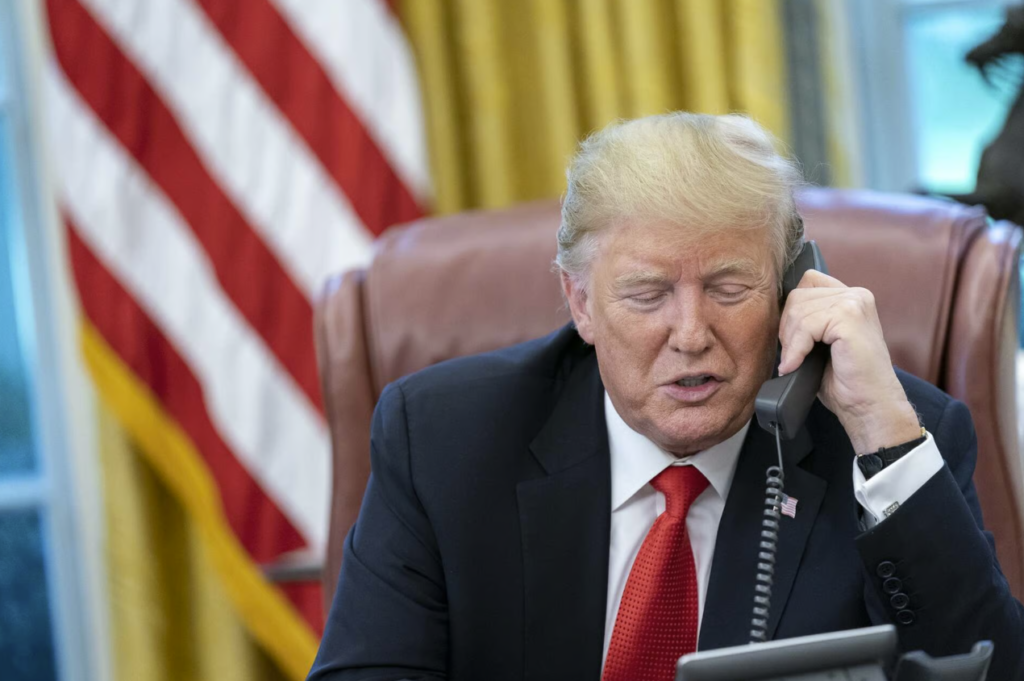
The day of January 30, 2026, was marked by events of extraordinary geopolitical significance that highlight the profound transformations of the international order. From Washington, President Trump announced the appointment of Kevin Warsh as the new chairman of the Federal Reserve, signaling a shift toward more accommodative monetary policies that could redefine the global financial architecture. On Capitol Hill, the Senate reached a last-minute agreement to avert a partial government shutdown, although the migration crisis and the actions of federal agents kept the country on edge.
Caracas is at the forefront of one of the most significant shifts in Latin American energy policy with the parliamentary approval of a law opening the Venezuelan oil sector to foreign companies, reversing two decades of Chavista nationalism. Meanwhile, the European Union has taken the historic—and long-delayed—decision to designate Iran’s Islamic Revolutionary Guard Corps as a terrorist organization in response to the brutal repression of protests that has cost thousands of lives.
In Asia, Xi Jinping continues his relentless military purge with the dismissal of General Zhang Youxia, demonstrating an unprecedented concentration of power that raises questions about the operational capacity of the People’s Liberation Army. Trump warns the United Kingdom about the dangers of strengthening trade ties with Beijing, while Keir Starmer seeks to rebalance Sino-British relations. On the horizon loom scenarios of extreme tension: a possible US attack on Iran, a renewed nuclear arms race following the expiration of the New START treaty, and crucial elections in Japan that could strengthen the front against Chinese expansionism in the Pacific.
II. MOST IMPORTANT NEWS OF THE LAST 24 HOURS
1. Trump nominates Kevin Warsh to chair the Federal Reserve
Facts
President Donald Trump has confirmed that he will announce his nomination of Kevin Warsh as the new Federal Reserve chairman on Friday, replacing Jerome Powell when his term expires in May. Warsh, who served as Fed chairman from 2006 to 2011 under President George W. Bush, was a finalist in 2017 when Trump ultimately chose Powell. Prediction markets give Warsh an over 80% chance of being nominated following his visit to the White House on Thursday. The nomination must be confirmed by the Senate, where Republican Senator Thom Tillis has threatened to block any nominee until the Justice Department’s investigation into Powell is resolved.
Implications
The nomination of Warsh represents a turning point in US monetary policy. Unlike Powell, who has maintained a cautious approach to the inflationary pressures stemming from Trump’s tariffs, Warsh is known for favoring lower interest rates, aligning himself with the president’s demands for aggressive rate cuts to stimulate economic growth and reduce the cost of servicing the national debt. However, Warsh also supports reducing the central bank’s balance sheet, which introduces a layer of complexity to his profile. This nomination undermines the independence of the Federal Reserve, a cornerstone of US economic stability for decades. Trump has intensified his attacks on Powell, even going so far as to use a Justice Department investigation into the renovation of the Fed headquarters to pressure the current president.
Perspectives and scenarios
If the nomination is confirmed, a more accommodative monetary policy can be expected, which could boost stock markets in the short term but increase inflationary risks in the medium term, especially in a context of tariff protectionism. The credibility of the Federal Reserve as an independent institution will be seriously questioned, which could have repercussions in bond markets and on the international perception of the dollar as a reserve currency. The confirmation process will be a crucial test for the balance of power in Washington and for the Senate’s ability to defend institutional autonomy against pressure from the Executive branch.
2. Last-minute agreement to avoid a partial shutdown of the federal government
Facts
Democratic and Republican senators have reached an agreement to separate funding for the Department of Homeland Security (DHS) from the package of five other appropriations bills, thus averting a partial government shutdown that was set to expire on January 30. The five bills will be voted on before the weekend, while the DHS will receive a temporary two-week extension to allow for negotiations on restrictions to immigration operations. The House of Representatives, which is in recess until Monday, must approve these measures, so a brief, albeit limited, shutdown over the weekend appears inevitable.
Implications
The budget crisis arises in the context of two fatal shootings by federal agents in Minneapolis, including the killing of Alex Pretti, a nurse at the veterans’ medical center, by a Border Patrol agent. Democrats are demanding structural reforms in immigration agencies, including a ban on roving patrols, mandatory use of body cameras, uniform use-of-force codes, and a ban on agents wearing masks. The Trump administration has rejected these conditions, arguing that its crusade against illegal immigration is a national priority. This confrontation highlights the clash between Trump’s hardline immigration strategy and concerns about police brutality and civil rights violations.
Perspectives and scenarios
The temporary agreement does not resolve the underlying differences. Over the next two weeks, the White House and Congress must negotiate mechanisms for controlling and overseeing immigration agencies. If no compromise is reached, we could see a prolonged shutdown of the Department of Homeland Security, affecting thousands of federal employees and jeopardizing critical national security functions. The political polarization surrounding immigration makes a lasting solution difficult to foresee. Trump could attempt to govern by executive order, which would trigger legal battles and exacerbate the institutional crisis.
3. Venezuela opens its oil sector to foreign companies
Facts
The Venezuelan parliament, controlled by the Chavista regime, unanimously approved a legislative reform allowing foreign companies to manage oil fields in the country with the world’s largest proven crude oil reserves. The reform, backed by interim president Delcy Rodríguez, dismantles the monopoly of state oil company PDVSA and authorizes concessions at the risk and expense of private companies. Rodríguez immediately signed the measure in a ceremony with oil workers. The reform modifies the landmark 2001 Hydrocarbons Law, a symbol of the Chavista nationalist project, and incorporates the models of the 2020 Anti-Blockade Law, which favor private investors. The United States has responded by partially lifting oil sanctions against Venezuela.
Implications
This reform represents one of the most dramatic shifts in recent Latin American history. Chavismo, which for more than two decades championed oil nationalism as its ideological banner, is capitulating to pressure from Washington and the country’s economic devastation. The measure is a direct consequence of the US military capture of Nicolás Maduro in early January, an unprecedented operation that left Delcy Rodríguez at the helm of a puppet government. Trump has been explicit in his demand that US companies have access to Venezuelan resources, even proposing the deployment of private military contractors to protect oil installations. However, executives like the CEO of ExxonMobil have expressed reservations about investing in Venezuela, describing the country as “uninvestable” in its current state. The reform establishes a maximum royalty rate of 30%, allowing the government to adjust the percentages according to the needs of each project.
Perspectives and scenarios
The opening of Venezuela’s oil sector raises fundamental questions about national sovereignty and the country’s political future. While it could attract foreign capital to revitalize a collapsed industry, it also consolidates Venezuela’s subordination to US interests. Washington’s control over Venezuelan oil exports —with revenues channeled through Qatari banks under US supervision—reduces Caracas to the status of a client of the empire. This situation is unacceptable from any perspective that defends national dignity and the right of peoples to decide on their resources. What Trump presents as “peace diplomacy” is, in reality, the brutal imposition of one-sided terms on a devastated nation. The Venezuelan democratic opposition, led by figures such as María Corina Machado and Edmundo González, has been sidelined in this process, demonstrating that Washington prioritizes access to resources over the country’s democratization.
4. The European Union designates the Iranian Revolutionary Guard as a terrorist organization
Facts
The European Union’s foreign ministers have unanimously agreed to designate Iran’s Islamic Revolutionary Guard Corps (IRGC) as a terrorist organization, a measure that will formally take effect in the coming days. The decision, announced by High Representative Kaja Kallas, comes in response to the brutal crackdown on anti-government protests that have rocked Iran since late December, leaving an official death toll of 3,117 according to Tehran, although independent sources estimate at least 6,221 fatalities and are investigating more than 12,900 additional cases. France, the last reluctant country, changed its position on Wednesday, allowing the necessary consensus to be reached. The designation entails asset freezes, a ban on financing, and travel bans for all IRGC members, many of whom were already subject to individual sanctions. At the same time, the EU has imposed sanctions against 15 individuals and 6 entities responsible for human rights violations, including Interior Minister Eskandar Momeni and Attorney General Mohammad Movahedi-Azad.
Implications
It is frankly incomprehensible that Europe has taken 47 years to adopt a measure that should have been obvious from the founding of the IRGC following the 1979 Islamic Revolution. Few organizations in the world embody brutality, fanaticism, and utter lack of scruples like this praetorian guard, which answers directly to Supreme Leader Ali Khamenei. The IRGC is not merely a military arm of the Iranian state; it is the primary instrument of internal repression and regional destabilization, controlling nuclear and ballistic missile programs, and funding and arming terrorist organizations such as Hezbollah in Lebanon and Syria, the Houthis in Yemen, Hamas in Gaza, and pro-Iranian militias in Iraq. With between 125,000 and 190,000 personnel, the IRGC has become a “state within a state,” controlling vast sectors of the Iranian economy and wielding pervasive influence over every aspect of the country’s political and social life. The European decision follows similar designations adopted by the United States (2019), Canada and Australia.
Perspectives and scenarios
The designation of the IRGC as a terrorist organization has both operational and symbolic implications. It will facilitate European police cooperation through Europol, allow for the arrest of IRGC members within the EU, and simplify asset freezing by requiring only proof of membership, not participation in specific terrorist acts. However, it seems clear that the IRGC has been directly involved in the planning, training, arming, and execution of terrorist attacks in the Middle East and other parts of the world. Hezbollah could not have reached Saudi Arabia, Yemen, Buenos Aires (attacks against the Israeli embassy and the AMIA Jewish Cultural Center), or Madrid (El Descanso Restaurant) with its vile claws without the support of the Revolutionary Guard.
Israeli Foreign Minister Gideon Sa’ar hailed the decision as “historic,” noting that Israel had been working toward this outcome for years. Tehran responded vehemently, calling the move a “major strategic blunder” and accusing Europe of fanning the flames of regional conflict. Iranian Foreign Minister Abbas Araghchi denounced Europe’s “hypocrisy” for acting against Iran while remaining silent about the Israeli “genocide” in Gaza. Despite fears of a complete diplomatic rupture, Kallas indicated that diplomatic channels with Iran would remain open. The move comes at a time of heightened tension between Washington and Tehran, with Trump deploying what he described as a “massive armada” toward Iranian waters and warning that “time is running out” for the regime to negotiate its nuclear program.
5. Xi Jinping decapitates the Chinese military leadership with the purge of General Zhang Youxia
Facts
China’s Defense Ministry announced Saturday that it has opened investigations into General Zhang Youxia, vice chairman of the Central Military Commission and the highest-ranking uniformed officer after Xi Jinping, accusing him of “serious violations of discipline and the law,” a common euphemism for corruption and political disloyalty. Simultaneously, General Liu Zhenli, head of the Joint Chiefs of Staff Department, was also placed under investigation. With these latest purges, five of the six uniformed members of the Central Military Commission appointed in October 2022 have been dismissed or are under investigation, leaving only General Zhang Shengmin, who is in charge of the anti-corruption campaign. Zhang Youxia, a decorated veteran of the 1979 Sino-Vietnamese War and the son of a founder of the PLA during the Mao era, was considered “untouchable” and a close confidant of Xi Jinping due to the decades-long family ties between the two families.
Implications
This purge constitutes the largest decapitation of China’s military leadership since the Mao era, surpassing even the upheavals of the Cultural Revolution. Xi Jinping has completed one of the most systematic purge campaigns in the history of the People’s Republic, affecting more than 200,000 officials and at least 17 generals of the People’s Liberation Army since 2012. The downfall of Zhang Youxia—despite his revolutionary pedigree and personal ties to Xi—demonstrates that no one is safe in the current system. The timing of the purge is significant: January 2026 marks the last annual training cycle before the 2027 deadline Xi has set for the PLA to be prepared for an invasion of Taiwan. Analysts speculate that Zhang may have been purged not for personal corruption but for professional disagreements with Xi’s accelerated timeline for joint operations. Zhang had implemented conferences on basic training in 2023 and combined training in 2024, but had not finalized a joint training model by January 2026, suggesting that the Chinese military machine is not ready for the 2027 target.
Perspectives and scenarios
The absolute concentration of power in Xi Jinping’s hands creates a strategic paradox: while the Chinese leader seeks to ensure unconditional loyalty by systematically eliminating any potential sources of dissent, he is simultaneously dismantling the operational capabilities of the armed forces. With the Central Military Commission effectively reduced to Xi and an anti-corruption official, military decision-making has become concentrated to an unprecedented degree, eliminating institutional checks and balances and increasing the risk of miscalculations. The US ambassador to China, David Perdue, has noted that Xi seeks “total control” of the military apparatus. For Taiwan, this situation offers a temporary window of strategic relief while the PLA focuses on internal discipline rather than operational readiness, but in the long run, a more formidable, albeit unpredictable, threat could emerge once Xi rebuilds the command with ideologically vetoed successors. Internal instability within the Chinese system and doubts about the PLA’s cohesion increase the risks of unwanted confrontations in the Taiwan Strait and the South China Sea.
6. Trump warns the UK against closer trade ties with China
Facts
President Donald Trump warned on Thursday that it is “very dangerous” for the United Kingdom to deepen its trade ties with China, following an 80-minute meeting between Prime Minister Keir Starmer and President Xi Jinping in Beijing. Starmer, making the first visit by a British prime minister to China in eight years, is seeking to restore a “strategic partnership” with Beijing after years of strained relations. Trump was even more emphatic about Canada, where Prime Minister Mark Carney also visited China this month, reaching preliminary agreements to reduce tariffs on selected goods: “It’s even more dangerous, I think, for Canada to get into business with China.” Before his trip, Starmer told Bloomberg that the UK would not have to choose between the United States and China, arguing that it can strengthen economic ties with Beijing without angering Trump or damaging relations with Washington.
Implications
Trump’s warnings expose the inherent contradictions in Britain’s strategy of “rebalancing” the two superpowers. Starmer is attempting to navigate an impossibly fine line: maintaining the strategic alliance with the United States on defense and security while expanding trade relations with China, the world’s second-largest economy. This position is structurally untenable in a context of escalating Sino-American rivalry. During their meeting in Beijing, Xi warned that if major powers fail to respect international law, the world risks sliding into a “jungle,” a clear allusion to Trump’s unilateralism. Starmer raised human rights concerns with Xi, including the imprisonment of Hong Kong pro-democracy activist Jimmy Lai and the treatment of the Uyghur minority, though Downing Street declined to provide details of these discussions. The Prime Minister also sought Xi’s assistance in disrupting the supply of Chinese-made boat engines used for smuggling people across the English Channel.
Perspectives and scenarios
Trump is right to point out the dangers of uncritically strengthening trade ties with China, but he must recognize and respect the sovereignty of his allies. The United Kingdom, like any nation, has the right to manage its own economic relations. However, allies also have a responsibility to be sensible in their foreign policy and limit their agreements with China to strictly economic and commercial matters, without this implying blessing or whitewashing Chinese aggression and expansionism in the South China Sea, the Pacific, Africa, and Latin America. China defines itself as an enemy of the West—not an adversary, not a rival, not a competitor, but an enemy—which demands strategic coherence from Western democracies. This is not the most opportune moment to legitimize, through uncritical agreements, the foreign and geoeconomic policy of a regime that knows no bounds in its ambition. Analysts like Gabriel Wildau of Teoneo suggest that Starmer is seeking a “rebalancing” rather than a “structural reset” with China, aware that any rapprochement that is too close would attract “unwanted attention” from Western allies. A comprehensive UK-China trade deal seems unlikely, but even limited sectoral agreements will generate tensions with Washington in the Trump era.
7. Maximum tension: Is a US attack against Iran imminent?
Facts
Arab and Muslim powers have launched a last-minute diplomatic effort to avert a military conflict between the United States and Iran, as Washington deploys what Trump has described as a “massive armada” to the region with “great power, enthusiasm, and purpose.” The US president warned last week that “time is running out” for Tehran to negotiate a deal on its nuclear program, though on Thursday he softened his rhetoric, expressing hope for avoiding military action and a preference for further talks. Tensions have flared following the brutal crackdown on protests in Iran and mounting pressure on the regime. Arab officials are seeking to mediate before the situation reaches a point of no return, aware that an armed conflict between Washington and Tehran would have devastating consequences for the entire region.
Implications
The world is on the brink of a conflict that could redefine the regional order in the Middle East and have global ramifications. Trump has oscillated between explicit military threats and expressions of preference for a diplomatic solution, a pattern characteristic of his “maximum pressure” negotiating style. However, the buildup of US military forces in the region is not merely rhetoric: it indicates real preparations for possible operations against Iranian nuclear facilities and IRGC command centers. The Tehran regime, weakened by the crackdown on protests that has cost thousands of lives and facing devastating economic sanctions, might be tempted to respond through its regional proxies—Hezbollah, the Houthis, Iraqi militias—triggering a regional conflagration that would draw in Israel, Saudi Arabia, and other actors. The European designation of the IRGC as a terrorist organization, announced on the same day as these diplomatic maneuvers, adds pressure to the regime but also reduces its options for an honorable exit.
Perspectives and scenarios
Three scenarios are plausible in the coming weeks. The first, diplomatic, would require Iran to accept significant limitations on its nuclear program in exchange for the gradual lifting of sanctions—an unlikely outcome given the regime’s nationalist pride and its perception that nuclear weapons are the ultimate guarantee of survival. The second scenario, of limited surgical strikes against Iranian nuclear infrastructure, could satisfy the Trump administration’s domestic demands for a show of force without triggering a full-scale war, although Iranian retaliation through proxies would be inevitable. The third scenario, of open war, would be catastrophic: massive US attacks against Iran would lead to the closure of the Strait of Hormuz (through which a third of the world’s oil passes), sending global energy prices soaring, while Iran would activate all its regional proxies, plunging the Middle East into unprecedented chaos. Arab mediators are working against the clock, knowing that a US-Iran conflict would have no clear winners but would devastate economies and populations throughout the region.
8. New nuclear arms race after the expiration of the New START treaty
Facts
The United States and Russia are on the brink of a new nuclear arms race following the collapse of negotiations to renew the New START treaty (New Strategic Arms Reduction Treaty), which is set to expire soon. This agreement, signed in 2010 and which limited the number of deployed nuclear warheads by each side to 1,550, has been the last surviving pillar of the Cold War arms control architecture. Without a new treaty, both Washington and Moscow will be free to expand their nuclear arsenals without restrictions for the first time in decades. The situation is further complicated by China’s increasing nuclear modernization, which has significantly expanded its arsenal in recent years without being bound by any arms limitation treaty with the traditional superpowers.
Implications
It is imperative to distinguish between two distinct but related phenomena: on the one hand, the urgent need for Europe to assume its own defense after 80 years of dependence on the US nuclear and military umbrella; on the other, the dangerous arms race for next-generation nuclear weapons combined with technologies such as hypersonic missiles that destabilize the strategic balance. The first is a long-overdue process of political maturation that the Trump administration has accelerated by questioning Washington’s unconditional commitment to European security. The second represents an existential threat to humanity. The expiration of New START eliminates mechanisms for mutual verification, on-site inspections, and data sharing that for decades allowed both superpowers to monitor each other’s arsenals, significantly reducing the risks of misunderstandings or accidental escalation. Without these safeguards, the world returns to a situation of strategic uncertainty comparable to the most dangerous moments of the Cold War.
Perspectives and scenarios
The prospect of a trilateral arms race between the United States, Russia, and China—with expanded nuclear arsenals, hypersonic delivery systems, and integrated cyber warfare capabilities—is deeply troubling. The economic costs will be astronomical, diverting resources from urgent social needs toward the production of instruments of destruction. The risks of accident, misunderstanding, or inadvertent escalation will multiply exponentially in the absence of communication and verification channels. China, which has never been a party to bilateral nuclear arms control agreements, complicates any future solution by demanding to be treated as an equal in any trilateral negotiations, something Washington has historically rejected. Europe, caught between these dynamics and aware of its strategic vulnerability, faces the paradox of needing to increase its conventional defense capabilities precisely when the global nuclear balance is disintegrating. The international community lacks effective institutional mechanisms to curb this trend, and the United Nations has demonstrated its impotence on issues of nuclear disarmament.
9. Panama’s Supreme Court annuls Chinese port contracts in the canal
Facts
Panama’s Supreme Court has annulled the port contracts of CK Hutchison Holdings, a Hong Kong-based conglomerate controlled by tycoon Li Ka-shing, which operated strategic port facilities at both entrances to the Panama Canal. The court’s decision represents a significant blow to China’s attempts to consolidate strategic positions in this vital artery of global trade, through which approximately 6% of global maritime trade and 16% of U.S. trade pass. The ruling complicates CK Hutchison’s plans to sell the port operations, which had been under negotiation. Panama severed diplomatic relations with Taiwan in 2017 to establish ties with Beijing, a move that raised concerns in Washington about Chinese influence over critical infrastructure near the United States.
Implications
This court decision represents a significant victory in containing Chinese expansionism in the Western Hemisphere. Control of port facilities in the Panama Canal gives Beijing the potential to disrupt or monitor maritime traffic in times of crisis, as well as provide intelligence on U.S. trade patterns. Washington has repeatedly expressed concern about the Chinese presence in Panama’s strategic infrastructure, fearing that in the event of a conflict over Taiwan or in the South China Sea, Beijing could use its port control as a tool for pressure or retaliation. The Panamanian Supreme Court’s decision—regardless of its specific legal grounds—demonstrates a growing awareness in Latin America of the risks of allowing China to control strategically important assets. This trend is part of the broader context of Sino-U.S. geopolitical competition in the region, where Beijing has aggressively expanded its influence through massive loans, infrastructure investments, and trade agreements.
Perspectives and scenarios
The annulment of Chinese port contracts raises questions about the future of the Canal’s management and Panama-China relations. Beijing will likely pressure the Panamanian government to reverse the court decision or negotiate new agreements that safeguard its interests, leveraging its considerable economic influence in the country. The United States, for its part, will seek to capitalize on this opportunity to reduce the Chinese presence in the region, possibly by offering alternative investments or pressuring for port operations to be transferred to American or trusted allies. The case illustrates a broader trend in Latin America, where several countries—including Argentina, Brazil, and Chile—are reassessing their relationships with China amid concerns about unsustainable debt, the environmental impact of Chinese projects, and excessive strategic dependence. However, the economic reality is that China has become the primary trading partner for many Latin American countries, limiting the room for maneuver for governments that need investment and market access. The challenge for Latin America is to navigate this geopolitical competition while protecting its sovereignty and national interests without becoming a pawn in the superpower standoff.
10. Crucial elections in Japan to strengthen the front against China
Facts
Japan is holding crucial parliamentary elections that could give Prime Minister Sanae Takaichi a strengthened mandate to consolidate her bold foreign policy of confrontation with Chinese expansionism. Takaichi, who recently took office, has adopted a significantly tougher stance than her predecessors toward Beijing, aligning herself closely with Washington in containing China in the Indo-Pacific. The elections come as the Chinese Coast Guard has dramatically intensified its patrols around the Senkaku Islands (Diaoyu Islands in Chinese), territories under Japanese administration but claimed by China, with 134 patrols conducted in the past five years and a near-daily presence planned through 2025. This escalation demonstrates China’s growing assertiveness in disputed waters and Beijing’s determination to change the status quo through a constant presence and gradual coercion.
Implications
A solid electoral victory would allow Takaichi to deepen Japan’s strategic transformation initiated in recent years. Tokyo has abandoned decades of postwar constitutional pacifism, increasing defense spending to 2 percent of GDP (equivalent to more than $100 billion annually), developing preemptive strike capabilities, and forging closer security alliances with the United States, Australia, India (the Quadrilateral), and Southeast Asian countries. The near-permanent presence of Chinese Coast Guard vessels in the Senkaku Islands is not merely symbolic: it represents a deliberate “gray zone” effort to erode Japan’s effective administration of the territories without resorting to direct military force that would trigger a U.S. response under the mutual defense treaty. China seeks to establish a new normal in which its constant presence becomes accepted, setting a precedent for future territorial expansion.
Perspectives and scenarios
A strengthened electoral mandate would allow Takaichi to accelerate Japan’s remilitarization and deepen coordination with regional allies to contain Chinese expansion. Japan could further increase its military presence in the Senkaku Islands, installing permanent radars and increasing patrols by its own Coast Guard and Self-Defense Forces. Tokyo would also seek to expand its defense ties with the Philippines, Vietnam, and other countries facing Chinese pressure in the South China Sea. However, this growing confrontation raises the risks of maritime incidents that could inadvertently escalate. A clash between Chinese and Japanese vessels, especially if it results in casualties, would trigger a major diplomatic crisis and possibly draw the United States into its mutual defense treaty obligations. China, engaged in its largest military purge in decades and with the People’s Liberation Army in a state of internal turmoil, could be particularly unpredictable in its response to perceived challenges. The fundamental question is whether Japan and its allies can maintain effective deterrence against Chinese aggression without crossing thresholds that lead to accidental or deliberate armed conflict. The Indo-Pacific has become the most dangerous geopolitical theater on the planet, where rivalry between established and emerging powers could trigger the next great war.
III. INTERNATIONAL MEDIA RACK
US MEDIA: The New York Times, The Washington Post, and The Wall Street Journal lead coverage of Kevin Warsh’s nomination to the Federal Reserve, highlighting the implications for central bank independence. CNN and CNBC analyze financial markets in light of the prospect of a more accommodative monetary policy. Fox News emphasizes China’s military purges as evidence of instability in Xi Jinping’s regime. Politico and The Hill provide in-depth coverage of the Senate budget crisis and the role of the Minneapolis shootings as a catalyst for the confrontation over DHS funding.
BRITISH MEDIA: The Times, The Telegraph, The Guardian, and the Financial Times prominently feature Trump’s warnings about Starmer’s rapprochement with China, with divergent analyses of the viability of Britain’s superpower balance strategy. The BBC provides detailed coverage of the EU’s designation of Iran’s IRGC as a terrorist organization, contextualizing the decision within the brutal crackdown on protests.
CONTINENTAL EUROPEAN MEDIA: France’s Le Monde and Le Figaro cover the Macron government’s decision to finally support the designation of the IRGC as a terrorist organization after years of resistance. Germany’s Frankfurter Allgemeine Zeitung and Die Welt analyze the Chinese military purges and their implications for European security in the face of Beijing’s expansionism. Italy’s Corriere della Sera contextualizes the IRGC decision within the broader framework of US-Iran tensions.
INDO-PACIFIC MEDIA: The Times of India and Hindustan Times highlight the Japanese elections as crucial to the regional balance of power vis-à-vis China. The Yomiuri Shimbun and other Japanese media outlets offer extensive coverage of Chinese patrols in the Senkaku Islands. Hong Kong’s South China Morning Post provides an insider’s perspective on Xi Jinping’s military purges. Singapore’s Strait Times analyzes the regional implications of the US-China-Western allies triangle.
LATIN AMERICAN MEDIA: Clarín of Buenos Aires, El Mercurio of Santiago, and Reforma of Mexico cover the opening of Venezuela’s oil sector as a capitulation by Chavismo to US pressure. The prevailing analysis highlights Washington’s control over Venezuelan resources and the implications for national sovereignty. The Panamanian Supreme Court’s decision regarding Chinese ports receives significant coverage as an example of Latin American resistance to Beijing’s expansionism.
MIDDLE EAST MEDIA: Al Jazeera, Al-Arabiya, and Arab media provide extensive coverage of diplomatic efforts to avert a US-Iran war, highlighting the role of regional intermediaries. The Jerusalem Post and Israeli media celebrate the European designation of the IRGC as a terrorist organization, attributing it to years of diplomatic pressure from Tel Aviv. Lebanese media outlets such as L’Orient-Le Jour analyze the implications for Hezbollah of the increasing pressure on its Iranian backer.
RUSSIAN AND UKRAINIAN MEDIA: Russia Today, TASS, and Kremlin-controlled media downplay the significance of the expiration of the New START treaty, blaming the West for the collapse of arms control. Ukrainian Pravda, Kyiv Independent, and other Ukrainian media contextualize the nuclear arms race within the framework of Russia’s war of aggression against Ukraine and Moscow’s nuclear threats.
INTERNATIONAL NEWS AGENCIES: Reuters, AFP, Associated Press, and DPA provide balanced, factual coverage of all major events, serving as primary sources for media outlets worldwide. Their coverage is distinguished by rigorous verification and appropriate historical context.
IV. GEOPOLITICAL RISK TRAFFIC LIGHT
🔴 CRITICAL RISK (Imminent conflict or major crisis):
• US-Iran tensions: The deployment of US military forces and presidential threats indicate a real possibility of attacks within days or weeks. Last-minute Arab diplomatic efforts may prove insufficient. • Taiwan Strait: Chinese military purges create operational uncertainty and increase the risk of miscalculations. Xi Jinping may seek an external distraction through military adventure against Taiwan.
🟡 HIGH RISK (Significant tension with potential for escalation):
• South China Sea and Senkaku: Near-daily Chinese patrols increase the likelihood of incidents between Chinese and Japanese coast guards. Elections in Japan could harden Tokyo’s response. • Nuclear arms race: Expiration of New START eliminates verification safeguards, increasing the risk of misunderstandings and accidental escalation between nuclear superpowers. • US migration crisis: Democratic-Republican clashes over DHS funding and actions by federal agents could trigger a prolonged government shutdown.
🟢 MODERATE RISK (Situations to monitor):
• UK-China relations: Trump’s warnings complicate Britain’s rebalancing strategy, but open conflict between Western allies seems unlikely in the short term. • Post-Maduro Venezuela: Oil liberalization generates economic opportunities but consolidates dependence on Washington. Internal political instability remains latent. • Panama Canal: Cancellation of Chinese contracts is a strategic victory, but Beijing will maintain economic pressure on the Panamanian government.
V. EDITORIAL COMMENTARY
The events of January 30, 2026, crystallize the fundamental trends that are redefining the international order in this quarter of a century. We are witnessing the definitive end of the Atlanticist era as we have known it for eight decades, not because the United States is abandoning its global leadership—Trump maintains an aggressively interventionist foreign policy—but because the nature of that leadership has been radically transformed. The appointment of Kevin Warsh to the Federal Reserve symbolizes the subjugation of traditionally independent institutions to presidential whims, eroding fundamental pillars of global economic stability.
Europe, with its belated but welcome designation of the Iranian IRGC as a terrorist organization, demonstrates its capacity for independent action when moral outrage outweighs diplomatic considerations. It is incomprehensible that it took 47 years and thousands of deaths in the streets of Tehran to recognize the obvious: that the Revolutionary Guards constitute a terrorist organization that perpetrates atrocious crimes against its own people while sowing instability from Lebanon to Yemen. This belated but correct decision must be complemented by a coherent European policy toward all autocratic regimes that threaten international security.
The situation in Venezuela is particularly painful. The capitulation of Chavismo to US demands, formalizing the handover of national oil resources under the euphemism of “opening up to foreign investment,” constitutes a national tragedy that no democrat can celebrate. That the execrable Chavista regime—a vast criminal organization dedicated to drug trafficking and repression—must fall is indisputable. That it falls through a US military intervention followed by the imposition of a puppet government that auctions off national resources to the highest bidder is unacceptable. Venezuelans deserve to recover their democracy and their dignity, not simply to change masters.
Xi Jinping’s military purges reveal the inherent fragility of autocratic systems where the absolute concentration of power breeds paranoia and instability. By systematically eliminating competent officers for fear they will challenge his authority, Xi weakens the operational capacity of the People’s Liberation Army precisely when he needs it most robust for his territorial ambitions. This self-inflicted paradox of despotism offers a temporary window of respite for Taiwan and its allies, but it also increases the risk that a cornered and unpredictable regime will resort to military adventure as a release valve for internal pressures.
Trump’s warning to the UK about its ties with China is fundamentally correct in its diagnosis—autocratic regimes are not neutral trading partners but strategic adversaries that will use economic interdependence as a geopolitical weapon—but problematic in its implementation. Democratic allies are not vassals who must ask Washington for permission on every foreign policy decision. The challenge lies in forging a Western consensus on how to engage with China: maintaining trade channels for non-strategic sectors while blocking Chinese access to critical technologies, sensitive infrastructure, and national security sectors. This differentiation requires diplomatic sophistication that seems to be in short supply in the age of the presidential tweet.
The tension between the United States and Iran requires a calm analysis that distinguishes between viable strategic options and catastrophic scenarios. A US military operation against Iran need not escalate into a regional conflagration if executed with surgical precision, focusing exclusively on the nerve centers of the regime’s power: the office of Supreme Leader Ali Khamenei, the headquarters of the Islamic Revolutionary Guard Corps, the Ministry of Intelligence and Security, the Ministry of the Interior, the Public Prosecutor’s Office, and other key institutions of the repressive apparatus. The key is to avoid innocent civilian casualties, which would allow the regime to exploit the suffering of its own people to consolidate its power through nationalist narratives and quell the protests that threaten it. If Washington chooses the military route—a decision that must be carefully weighed against diplomatic alternatives—it must do so with impeccable intelligence, precision weaponry, and objectives strictly limited to dismantling the regime’s repressive capacity without providing Tehran with propaganda ammunition. The European designation of the IRGC as a terrorist organization—shameful in its delay, particularly given the French resistance—marks a diplomatic turning point that must not be squandered through disproportionate military action that would allow the regime to portray itself as a victim to its population. The objective must be to empower the Iranian people by eliminating the instruments of their oppression, not to unite the country under a nationalist banner against perceived external aggression.
The nuclear arms race looming after the collapse of the New START treaty represents a collective failure of the international community. For decades, arms control prevented the uncontrolled proliferation of nuclear arsenals and significantly reduced the risks of accidental nuclear war. That patiently constructed edifice is crumbling as major powers prioritize marginal military advantages over the collective survival of humankind. Europe, caught between rival nuclear superpowers, must urgently develop robust conventional defense capabilities without succumbing to the illusion that more nuclear weapons equate to greater security.
The cancellation of Chinese port contracts in Panama and the crucial elections in Japan demonstrate that resistance to Chinese expansionism is taking shape in multiple theaters simultaneously. China has overextended its influence through aggressive tactics that elicit defensive reactions even from countries that initially sought constructive relations with Beijing. China’s “wolf warrior diplomacy,” combined with debt-trap practices and flagrant violations of international law, is producing the opposite of its intended result: instead of intimidating neighbors and competitors into submission, it is forging increasingly cohesive coalitions of resistance.
In this turbulent landscape, Western democracies face an existential test. We must defend our values and interests against autocratic regimes without abandoning the principles that distinguish us from them. This requires military strength, yes, but also ethical consistency, respect for international law, and solidarity among allies. The temptation to respond to authoritarianism with authoritarianism of our own, or to sacrifice democratic principles for fleeting tactical advantages, must be resisted. The battle for the world order of the 21st century will not be won simply through the accumulation of military or economic power, but by demonstrating that liberal democratic systems can meet complex challenges while maintaining their moral integrity and delivering prosperity and security to their citizens.
The emerging world is more dangerous, multipolar, and unpredictable than at any time since the end of the Cold War. Old certainties have evaporated. The institutions that regulated international relations for decades are eroding. The balance of power is constantly being reconfigured. In this fluid context, the temptation of isolationism or fatalism must be rejected. Western democracies retain formidable advantages—economic, technological, military, and moral—if we have the wisdom to use them strategically and the will to maintain unity in the face of adversity. The challenge of our era is not simply to win the geopolitical competition against rival autocracies, but to forge an international order that is both robust enough to preserve peace and flexible enough to accommodate the legitimate interests of all nations. This difficult but essential balance is the task before us.