By Gustavo de Arístegui,
February 11, 2026
I. BRIEF INTRODUCTION [1][2][3]
The geopolitical landscape of the last 24 hours has been shaped by three intersecting and mutually reinforcing axes: the silent escalation of several conflict zones (Ukraine, the Middle East, the Indo-Pacific), the gradual erosion of the international liberal order, and a clear resurgence in the geopolitical instrumentalization of the economy—energy, raw materials, interest rates, trade routes—as a tool of strategic pressure. Faced with an increasingly fragmented international system subject to the logic of faits accomplis, liberal democracies continue to exhibit a worrying mix of strategic fatigue, internal division, and a dangerous tendency toward moral complacency. Meanwhile, authoritarian regimes—from Moscow to Tehran and Beijing—exploit every crack on the Western flank, relying on their proxies and hybrid warfare—cyberattacks, disinformation, energy blackmail—to advance their revisionist agendas.[2][3][4][5][1]
II. MOST IMPORTANT NEWS OF THE LAST 24 HOURS
1. Sustained US-Iran tension and oil prices
Acts [5][1][2]
– Indirect negotiations between Washington and the Tehran regime continue in a climate of maximum mistrust, with the nuclear issue and the repression of protests as a backdrop.[2][5]
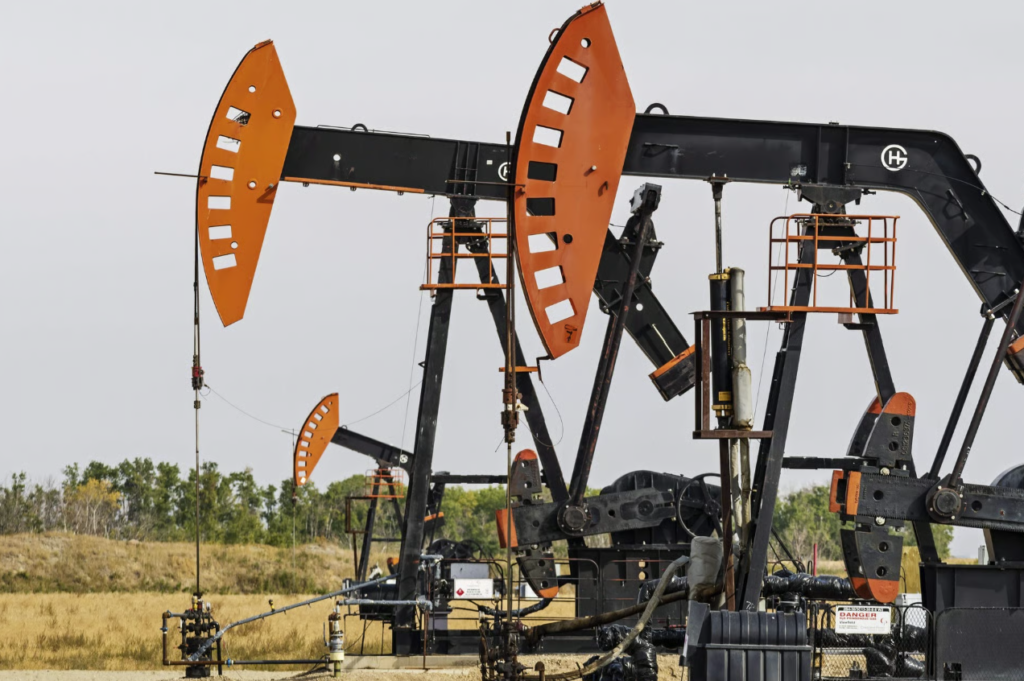
– Energy markets have reacted nervously: oil remains stable but supported by the risk of a new clash in the Persian Gulf, with analysts explaining that mere geopolitical uncertainty is providing a floor for prices.[1]
– In parallel, pressure is maintained on Iranian proxy networks (Hezbollah, militias in Syria and Iraq, Houthis in Yemen), which are subject to sanctions, covert operations and diplomatic pressure by the US and Israel and their allies.[4][5]
Implications [4][5][1]
– The theocratic regime in Tehran is attempting to play a double game: to show internal strength through the brutal repression of protests and to flex regional muscle through its armed satellites, while seeking to alleviate economic pressure by negotiating cosmetic limits to its nuclear program.[5]
– Western democracies are once again faced with the false dilemma between “stability” and principles: the temptation to buy time with tactical concessions to the regime, in exchange for a negative peace in the short term, undermines in the medium term the credibility of the non-proliferation system and the message of defending human rights.[4][5]
– Any direct US-Iran escalation or uncontrolled action by its proxies would have an immediate impact on the price of crude oil, global inflation and the stability of critical routes such as the Strait of Hormuz or the Red Sea.[1][4]
Perspectives and scenarios [2][5][1][4]
– Scenario 1 (tense continuity): the “no agreement” is prolonged with intermittent contacts, gradual sanctions and an unstable equilibrium in which Tehran continues to technically advance towards the nuclear threshold while the United States calibrates the pressure and avoids an open confrontation.[5][4]
– Scenario 2 (controlled escalation): An attack by an Iranian proxy or a naval incident forces a limited response from the United States or Israel with specific military objectives, without crossing the threshold of a regional war, but drastically raising the political risk premium in energy markets.[1][4]
– Scenario 3 (reinforced strategic pressure): Under US leadership, the Atlantic axis strengthens the sanctions regime, financial persecution and support for Iranian civil society, with the aim of limiting the regime’s ability to finance terrorism and export instability, without yet betting on an open regime change.[2][5]
2. Ukraine: from positional warfare to political war of attrition
Acts [3][4][2]
– On the Ukrainian front, the conflict remains a war of attrition: Russia combines targeted offensives, artillery and drone attacks, and cyber and information pressure, while Ukraine tries to preserve resources, defend critical infrastructure and keep the Western support agenda alive.[3][2]
– The discussion in European capitals and in Washington is now focused not only on the amount of military aid, but also on the time horizon and the political sustainability of that support in the face of public fatigue.[4][2]
– The Kremlin continues to use energy, cyberattacks and disinformation as levers to fracture Euro-Atlantic unity and fuel radical and populist forces within the EU.[3][4]
Implications [3][2][4]
– Russian aggression against Ukraine remains the litmus test of the international system: if the conquest of sovereign territory by force becomes normalized, it opens the door for other revisionist actors—Iran in its neighborhood, China in the South China Sea or in Taiwan—to calculate that the cost of aggression will be acceptable.[2][4]
– For Europe, Ukraine is no longer an “external issue” but a matter of internal security: the boundary between the defense of kyiv and the defense of European capitals is increasingly conceptual rather than geographical.[3][4]
– The Russian narrative, supported by state media and propaganda platforms, attempts to present the war as an inevitable and “frozen” conflict, while seeking to erode internal consensus in democracies divided by populist noise.[4][3]
Perspectives and scenarios [2][3][4]
– Scenario 1 (protracted war): the front stabilizes with minor variations and the key becomes the internal resistance of Ukraine and the political resilience of Western democracies to sustain their aid for years.[4][2]
– Scenario 2 (imposed ceasefire): Moscow attempts to force negotiations by force, taking advantage of a possible fracture of Western unity and aiming to consolidate territorial gains without giving up on an imperial Russia.[2][4]
– Scenario 3 (Atlantic reinforcement): A renewed push from Washington and the main European capitals offers kyiv long-term guarantees, qualitatively superior military aid and a clear horizon of Euro-Atlantic integration, increasing the strategic cost for Russia.[3][4][2]
3. Indo-Pacific: China, economic pressure and militarization of the environment
Acts [6][1][4][2]
– The Indo-Pacific region remains at the center of strategic competition between the United States and China, with a sustained increase in naval and air tensions around Taiwan and in the South China Sea.[6][4]
– A recent strategic report warns that geopolitical differences are deepening and alerts to the fragility of the international order and the erosion of traditional alliances, especially around the upcoming Munich security conference.[6]
– Economically, China continues to suffer pressures: deflation in producer prices and the slowdown in domestic consumption underline the decoupling between Beijing’s geopolitical ambition and the limitations of its economic model.[1]
Implications [6][1][4]
– Beijing combines an assertive foreign policy —harassment of neighboring ships, pressure on Taiwan, expansion in the insular Pacific, strategic investments in Africa and Latin America— with an economy that is beginning to show clear signs of structural fatigue.[6][1][4]
– The militarization of the South China Sea and the constant standoff over Taiwan are a direct challenge to freedom of navigation, international law and the principle that force does not confer rights over other people’s territories.[6][4]
– The combination of military pressure and economic dependence creates an environment conducive to geopolitical blackmail: control of trade routes, strategic ports and critical raw materials becomes a tool of pressure on vulnerable partners.[1][4][6]
Perspectives and scenarios [1][4][6]
– Scenario 1 (contained competition): Intense but managed rivalry is maintained, with controlled incidents and a deterrent balance based on alliances such as the Quad and AUKUS, along with the US umbrella over Japan and Korea.[4][6]
– Scenario 2 (serious incident): A poorly managed naval or air clash in the Taiwan Strait or the South China Sea forces a crisis that tests Washington’s security commitments and the rapid response capabilities of democracies.[6][4]
– Scenario 3 (economic reconfiguration): The partial decoupling of strategic supply chains—semiconductors, rare earths, pharmaceuticals—accelerates, reducing China’s ability to weaponize trade, but raising short-term transition costs.[1][4]
4. Europe, between inflation, energy and strategic security
Acts [7][3][4][1]
– The EU continues to grapple with a cocktail of persistent inflation, high energy prices and increasing defense and security spending demands, all against a backdrop of rising geopolitical tensions and internal fragmentation.[7][4]
Recent reports underline that energy prices and inflation continue to put pressure on European economies, as the bloc considers how to strengthen its strategic autonomy without falling into protectionism or breaking with open capitalism.[7]
– The European security agenda is shifting: more focus on defense, energy resilience, protection of critical infrastructure and reducing dependence on authoritarian regimes.[3][4]
Implications [7][4][1]
– The EU’s transition from a “normative power” to a geopolitical actor requires abandoning naiveté: it is no longer enough to regulate, it is necessary to be able to deter, defend and guarantee strategic supplies in a world where interdependence has become a weapon.[7][4]
– The energy issue is inseparable from security: diversifying suppliers, strengthening interconnections and supporting technologies that reduce dependence on autocracies is a geopolitical priority, not just an environmental one.[7][4][1]
– The risk is that the political space will be colonized by right-wing and left-wing populisms that exploit social unrest, promoting illiberal agendas that erode the European project from within.[7][4]
Perspectives and scenarios [3][4][7][1]
– Scenario 1 (reform and strengthening): The EU moves towards a more integrated defense, greater fiscal coordination in strategic spending and a smart industrial policy that protects critical sectors without falling into autarky.[4][7]
– Scenario 2 (fragmentation): the combination of economic crises and ideological polarization fuels Eurosceptic governments that block common policies and return the continent to a logic of every man for himself.[7][3][4]
– Scenario 3 (renewed Atlanticism): Strong leadership in Washington and major European capitals revitalizes the transatlantic relationship, coordinating the response to Russia, Iran and China and strengthening NATO’s role.[3][4][7]
5. Global markets: signs of cooling and geopolitical nervousness
Acts [8][9][1]
– Recent US retail sales data show stagnation, which has led to a fall in Treasury bond yields and a rally in gold and silver as a safe haven amid perceptions of an economic slowdown.[1]
The yen has strengthened, supported by confidence in a more responsible fiscal policy in Japan, while Asian markets closely monitor Chinese inflation figures and the upcoming decision by the Federal Reserve.[1]
– Governments around the world are sharply increasing their public debt, driven by pressure from social and defense spending and by geopolitical shock, raising questions about fiscal sustainability and interest rate stability.[9][8]
Implications [8][9][1]
– The combination of high debt, geopolitical tensions and demographic changes is shaping a structurally more volatile environment, where central banks’ room for maneuver is reduced and monetary policy decisions have a greater political charge.[8][1]
– Emerging markets, especially those with energy dependence and fiscal fragility, are the most exposed to a possible tightening of global financial conditions or a new oil price shock.[8][1]
– Geoeconomics takes hold: sanctions, technology export controls, investment restrictions and tariff wars are now integrated into the arsenal of foreign policy tools, reshaping supply chains and trade alliances.[9][8][1]
Perspectives and scenarios [9][8][1]
– Scenario 1 (soft landing): major economies manage to slow down without entering a severe recession thanks to prudent monetary policies and a geopolitical environment that, although tense, does not spiral out of control.[8][1]
– Scenario 2 (geopolitical stagflation): a new energy shock resulting from a conflict in the Middle East or an escalation in the South China Sea triggers inflation and forces the maintenance of high interest rates in a context of low growth.[8][1]
– Scenario 3 (accelerated reorganization): the strengthening of blocs —the Atlantic, the expanded BRICS and intermediate actors— accelerates the regionalization of trade and investment, with implications for European competitiveness and Spain’s position.[9][8][1]
6. Security and hybrid warfare: cyberattacks and information control
Acts [2][4][3]
– Recent reports on the global geopolitical risk situation underline the increase in hybrid threats: cyberattacks against critical infrastructure, disinformation operations coordinated from authoritarian regimes and the use of digital platforms as a political battleground.[2][4]
– New warnings are being issued about information manipulation in Europe and North America, with particular attention to campaigns aimed at undermining confidence in democratic institutions, electoral processes and traditional media.[4][3]
– Intelligence services from several countries point to the convergence between transnational organized crime, cybercrime, and the political agendas of hostile powers.[2][4]
Implications [3][4][2]
– Democracies must understand that the front line is no longer just on conventional battlefields, but on servers, social networks and payment terminals: hybrid warfare seeks to paralyze without firing a single shot.[4][2]
– The instrumentalization of social resentment and identity agendas is a weapon of destabilization: both left-wing and right-wing extremisms often unconsciously become vectors of the narrative of revisionist powers.[3][4]
– Security structures must adapt to the new environment, strengthening public-private cooperation, media literacy and the capacity for rapid response to cyber threats and disinformation campaigns.[2][4][3]
Perspectives and scenarios [4][2]
– Scenario 1 (defensive hardening): regulatory frameworks and cyber defense capabilities are consolidated at the national and European levels, with closer coordination between Atlantic allies.[2][4]
– Scenario 2 (offensive advantage of autocracies): Authoritarian regimes exploit regulatory slowness and internal divisions in democracies to further expand their capacity for influence and sabotage.[4][2]
– Scenario 3 (new democratic consensus): convergence is achieved between States, technology companies and civil society in defense of freedom of expression, informational truthfulness and the protection of the public sphere.[2][4]
7. The Middle East: the regional chessboard after the pressure on Iran and its “proxies”
Acts [5][1][4]
– The region is experiencing a rebalancing after the latest clashes between Israel and Iran and the operations against armed groups such as Hezbollah and pro-Iranian militias in Syria and Iraq.[5][4]
– The Gulf countries seek to consolidate their political and economic influence, signing security and technology agreements with Washington and reinforcing their role as key suppliers of energy and capital in the international system.[4]
– Tensions in the Red Sea and the Gulf of Aden, where the Houthis have threatened and attacked maritime traffic, are keeping Western shipping companies, insurers and marine authorities on high alert.[1][4]
Implications [5][1][4]
– The Iranian regime is on the defensive: its internal repressive apparatus is busier than ever, while its proxies are subjected to military, financial and diplomatic pressure; but it remains a dangerously unpredictable actor.[5][4]
– Agreements between Washington and Gulf partners strengthen the Atlantic axis in a region where China and Russia are trying to gain ground by taking advantage of every flank opened by Western vacillations.[1][4]
– The security of shipping routes in the Red Sea and the Bab el-Mandeb Strait is a critical piece of global trade; any prolonged deterioration would push up logistics costs and, in turn, inflation.[1][4]
Perspectives and scenarios [5][1][4]
– Scenario 1 (reinforced containment): A coordinated strategy by the US, Europe, and Israel is consolidated to limit the military capabilities of pro-Iranian militias, without entering into a direct war with Tehran.[5][4]
– Scenario 2 (calculation breakdown): a miscalculation in Tehran or a massive attack by one of its “proxies” triggers a strong response that can reconfigure the regional balance.[5][4]
– Scenario 3 (selective normalization): Some Arab states deepen their rapprochement with Israel and Washington, betting on a shared economic and security modernization agenda in the face of Islamist extremism and Iranian expansionism.[1][4]
8. Latin America: debt, political tensions and the shadow of narco-authoritarianism
Acts [9][8][3]
– Several Latin American countries face a tightening of international financial conditions, with higher financing costs and pressures on sovereign debt, in a context of weak growth and persistent inequality.[9][8]
– The region remains politically fragmented: radical left-wing governments coexist with more pragmatic ones, while organized crime and drug trafficking expand their capacity to penetrate institutions.[8][3]
– The situation in authoritarian regimes such as Venezuela, Cuba and Nicaragua continues to be a focus of concern for the region’s democracies and for the EU and the US, both for human rights reasons and for its regional impact.[8][3]
Implications [9][8][3]
– The risk that some governments will use social pressure and economic unrest as a pretext to advance the concentration of power, the weakening of the separation of powers and the questioning of the free press remains high.[8][3]
– Narco-authoritarianism and the infiltration of criminal organizations into state structures threaten to turn some countries into platforms of instability, mass migrations and illicit trafficking to North America and Europe.[9][8]
– The international response ranges from sanctions, diplomatic pressure and security cooperation, but still lacks a coherent and sustained strategy that combines economic incentives with democratic firmness.[8][3]
Perspectives and scenarios [9][8][3]
– Scenario 1 (authoritarian stagnation): regimes such as Venezuela or Cuba are maintained through repression, external support and underground economy, prolonging the humanitarian crisis and the brain drain.[8][3]
– Scenario 2 (gradual reform): some countries manage to articulate centrist consensus supported by independent institutions and responsible economic policies, offering an alternative of stability and progress.[9][8]
– Scenario 3 (social shock): the combination of inflation, insecurity and institutional discrediting provokes mass protests that can lead to both democratizing reforms and even more radical populist solutions.[3][8]
9. Reconfiguration of alliances and the role of intermediary actors
Acts [10][7][2][4]
– Several analyses point to the emergence of intermediate actors —India, Brazil, Indonesia, South Africa, Turkey— who seek to maximize their strategic autonomy, negotiating simultaneously with the West and with revisionist powers.[10][2][4]
– There is an intensification of flexible forums and formats —extended BRICS, regional agreements, ad hoc summits— in which these actors try to gain ground against the major powers.[10][7][4]
– This dynamic is reflected in foreign policy decisions that often avoid clear alignments in key votes on Ukraine, sanctions, or condemnations of systematic human rights violations.[7][2][4]
Implications [10][7][2][4]
– The world is moving away from the classic bipolar scheme and towards a more fragmented system, with blocs and sub-blocs in which liberal democracies risk losing influence if they do not offer attractive and credible proposals for cooperation.[7][4]
– Competition for investment, access to raw materials and diplomatic support shifts towards these intermediary actors, who become partial arbiters of the new equilibrium.[10][7][4]
– The moral consistency of Western discourse is under scrutiny: when “friendly” autocracies are tolerated while “enemy” ones are condemned, it facilitates the narrative of those who accuse democracies of double standards.[10][7][4]
Perspectives and scenarios [10][7][2][4]
– Scenario 1 (inclusive Atlanticism): the Euro-Atlantic axis redefines its strategy, not as an exclusive front, but as the core of a wider community of like-minded democracies and states that share an interest in the rules-based order.[7][4]
– Scenario 2 (disordered multipolarity): overlapping agendas and temporary alliances proliferate, increasing unpredictability and the risk of strategic misunderstandings.[10][7][4]
– Scenario 3 (rigid blocs): the pressure of crises leads to clearer alignments, with a sharp division between a democratic bloc and an authoritarian one, reducing the room for maneuver of intermediate actors.[7][2][4]
10. Public opinion, polarization and culture war in democracies
Acts [11][3][7][4]
– Western societies are experiencing increasing polarization, fueled by social networks, information “bubbles” and a political climate that rewards stridency over responsibility.[11][3][7]
– Issues such as gender ideology, “wokism” and identity politics have become central battlegrounds, often displacing the focus from structural issues such as productivity, education or demography.[7][4]
– This climate is exploited by both internal political extremists and external powers interested in weakening the cohesion of democracies.[11][3][4]
Implications [11][3][4][7]
– A democracy exhausted by permanent culture war has less energy to sustain a coherent foreign policy, invest in defense or defend its values abroad.[4][7]
– The erosion of moderate space favors simplistic solutions and strongman rule, weakening the institutional checks and balances that distinguish liberal democracies from personalist regimes.[11][7]
– The credibility of the “mainstream” depends on its ability to offer security, prosperity and freedom without falling into relativism or identity dogmatism.[11][7][4]
Perspectives and scenarios [11][3][7][4]
– Scenario 1 (moderate recentering): a common-sense reaction emerges that revalues the politics of agreements, reformism and the defense of freedoms against the ideological excesses of both extremes.[7][4]
– Scenario 2 (normalization of the extreme): radical forces consolidate themselves as permanent actors in governments and parliaments, conditioning key policies and eroding trust in the system.[11][3][7]
– Scenario 3 (institutional resilience): despite the noise, institutions resist, the separation of powers works and civil society reorganizes itself around shared values of freedom, equality and human dignity.[3][4][7]
III. MEDIA RACK [6][11][5][8][2][3][1][4][7]
– Atlanticist and economic reference media (Financial Times, Wall Street Journal, The Economist, CNBC, Reuters, Bloomberg): focus on the economic slowdown, persistent inflation, public debt and the relationship between geopolitical tensions (Middle East, Ukraine, China) and nervousness in energy and financial markets.[9][8][3][1][4][7]
– Mainstream American and British press (NYT, Washington Post, The Times, The Guardian, The Telegraph, BBC, CNN, Fox News, Politico, The Hill): combine coverage of external conflicts (Ukraine, Iran, Indo-Pacific) with internal political battles, polarization and upcoming election contests, underscoring public fatigue with long wars.[11][3][4]
– Continental European media (Le Monde, Le Figaro, FAZ, Die Welt, Die Zeit, El País, Corriere, La Repubblica, etc.): insist on the issue of European strategic autonomy, the impact of the energy crisis and the need to strengthen common defense and resilience against Russia and China.[3][4][7]
– International news agencies (AP, AFP, Reuters, DPA): prioritize the bare facts—military movements, central bank decisions, macroeconomic figures, diplomatic agreements—and offer the common thread of major ongoing conflicts.[8][9][1][3]
– Reference media in geopolitical analysis (Foreign Affairs, Foreign Policy, Stratfor, Geopolitical Monitor): emphasize the erosion of the liberal order, the competition between democracies and autocracies, the rise of intermediary actors and the role of technology, energy and raw materials in the new geopolitics.[12][10][2][4]
– Press from authoritarian or aligned regimes (China Daily, Russia Today, TASS, Iranian state media): present an alternative narrative that downplays Russian aggression, emphasizes the mistakes of the United States and the EU, and exploits internal divisions in Western democracies.[6][3][4]
IV. RISK TRAFFIC LIGHT [6][5][8][2][1][3][4][7]
– Red – Immediate critical geopolitical risk
– Escalation in the Middle East linked to Iran and its proxies (Hezbollah, militias in Syria and Iraq, Houthis, Hamas): high potential impact on energy prices, maritime routes and regional security.[5][1][4]
– War in Ukraine: persistence of Russian aggression, risk of Western fatigue and the normalization of border modification by force.[2][3][4]
– Amber (orange) – High and structural risk
– Strategic competition in the Indo-Pacific (China–USA, South China Sea, Taiwan): military tension and economic pressure with risk of serious incident.[6][1][4]
– Hybrid warfare (cyberattacks, disinformation, election interference): a constant threat to critical infrastructure and the quality of democracy in Europe and North America.[2][3][4]
– Instability in Latin America due to economic crisis, debt and the advance of narco-authoritarianism: risk of mass migrations, institutional deterioration and expansion of criminal networks.[9][8][3]
– Green – Risk contained but to be monitored
– Debt and monetary policy dynamics in advanced economies: currently under control, but sensitive to energy or financial shocks.[8][9][1]
– Reconfiguration of alliances and the role of intermediary actors: a source of uncertainty, but also of opportunities for active diplomacy by liberal democracies.[10][4][7][2]
– Cultural battle and polarization in consolidated democracies: a latent risk that can be mitigated if the center-right and center-left forces reunite around a project of modernization and defense of freedoms.[11][3][4][7]
V. EDITORIAL COMMENTARY [12][11][5][6][8][1][3][4][7][2]
The international day confirms it once again: the real risk to the free world lies not only in Putin’s tanks, the missiles of the ayatollahs, or Chinese warships, but in the temptation of democracies to succumb to weariness, cynicism, and the comfort of moral relativism. When we accept that the use of force to modify borders is “a reality with which we will have to live,” when we look the other way in the face of mass repression in Tehran or systematic human rights violations in authoritarian regimes in Latin America, what is eroded is not only the security of third-party countries, but the very backbone of our own liberal civilization.[5][8][3][4][7][2]
Russian revisionism, Chinese expansionism, and Iranian state terrorism are not isolated phenomena or historical accidents: they are the contemporary expression of something much older, the will to power of those who consider individual liberty, the separation of powers, an independent press, and free elections to be obstacles that must be neutralized. For this constellation of regimes and proxies, the “West” they criticize is not so much a geographical place as a political idea: that no leader is above the law, nor any ideology above human dignity.[11][6][5][4][7][2]
That is why it is not enough to denounce Putin’s Russia, the Iran of the ayatollahs, or the prison regimes of Havana, Caracas, or Managua; it is also essential to take responsibility for our own inconsistencies. Liberal democracy cannot be defended with empty rhetoric while flirting with the most clumsy protectionism, tolerating censorious “Wokism” in universities and the media, or scorning the legacy of exemplary transitions like the Spanish one, which demonstrated that it is possible to move from dictatorship to freedom without leaping into the revolutionary abyss.[11][5][8][3][4][7]
Atlanticism is not a nostalgia for the Cold War, but the conviction that democracies are best defended together, coordinating their economic, military, and cultural power against those who want to replace the rule of law with the law of the strongest. At a time when populist noise seeks to erase the boundaries between center-right and far-right, between social democracy and identity-based radicalism, it is worth remembering that the true front line lies elsewhere: in the uncompromising defense of the market economy, the well-managed welfare state, equality before the law, and civil liberties against any project—left or right—that aspires to turn the citizen into a subject.[11][8][4][7][2]
The news of these past 24 hours, in short, brings us back to the same fundamental question: do we want to continue being subjects of history or are we willing to accept the role of objects in the hands of autocrats, fanatics, and political mafias? The answer will not come with solemn declarations, but with budgets, alliances, internal reforms, and a cultural battle that unapologetically reclaims the best of our liberal and Western heritage.[6][5][8][11][3][4][7][2]
Sources
[1] Global Market Headlines | Breaking Stock Market News | Reuters https://www.reuters.com/markets/
[2] Stratfor: The World’s Leading Geopolitical Intelligence Platform https://worldview.stratfor.com
[3] World News | Latest Top Stories | Reuters https://www.reuters.com/world/
[4] Geopolitical Risk Dashboard | BlackRock Investment Institute https://www.blackrock.com/corporate/insights/blackrock-investment-institute/interactive-charts/geopolitical-risk-dashboard
[5] Iran at geopolitical crossroads as protests pressure regime https://www.dw.com/en/iran-protests-islamic-republic-sanctions-united-states-trump-china-russia-geopolitics/a-75492953
[6] Deepening geopolitical differences highlighted before … https://global.chinadaily.com.cn/a/202602/11/WS698bd86da310d6866eb38994.html
[7] European Union’s Stage: From Crisis to Strategic Renewal https://moderndiplomacy.eu/2026/02/11/european-unions-stage-from-crisis-to-strategic-renewal/
[8] Latest News & Videos, Photos about geopolitics https://economictimes.indiatimes.com/topic/geopolitics
[9] Econ World | News Reshaping The Global Economy | Reuters https://www.reuters.com/markets/econ-world/
[10] The Geopolitics: Home https://thegeopolitics.com
[11] Geopolitics News | Latest News https://www.newsnow.co.uk/h/World+News/Geopolitics
[12] Geopolitical Monitor https://www.geopoliticalmonitor.com
[13] Top News Headlines In Cambodia, Indonesia, Laos… https://www.bernama.com/en/world/news.php?id=2522565
[14] Speech by the President: European Parliament plenary debate https://ec.europa.eu/commission/presscorner/detail/es/speech_26_376
[15] International: Top News And Analysis https://www.cnbc.com/world/