By Gustavo de Arístegui,
February 13, 2026
I. BRIEF INTRODUCTION
In the last 24 hours, the geopolitical landscape has combined three main vectors: the attempt to rebuild the transatlantic relationship in Munich under the shadow of Trump’s “policy of tariffs and threats,” the hypertrophy of investment in artificial intelligence with the Anthropic case as its emblem, and a series of political movements—from Hungary to Alberta, Bangladesh, and Thailand—that are testing the resilience of liberal democracies against illiberal, national-populist, or outright secessionist projects. All of this is unfolding against an economic backdrop marked by a brief inflationary relief in the United States and an unusual glimmer of rationality regarding tariffs in the trade agreement between Washington and Taipei, while Southeast Asia seeks political stability in a key country like Thailand, essential for security and strategic balance in the region.[1][2][3][4][5][6][7][8][9][10][11][12][13][14]
II. MOST IMPORTANT NEWS OF THE LAST 24 HOURS
1. Munich: Rubio tones down the tone, the transatlantic rift persists
Facts
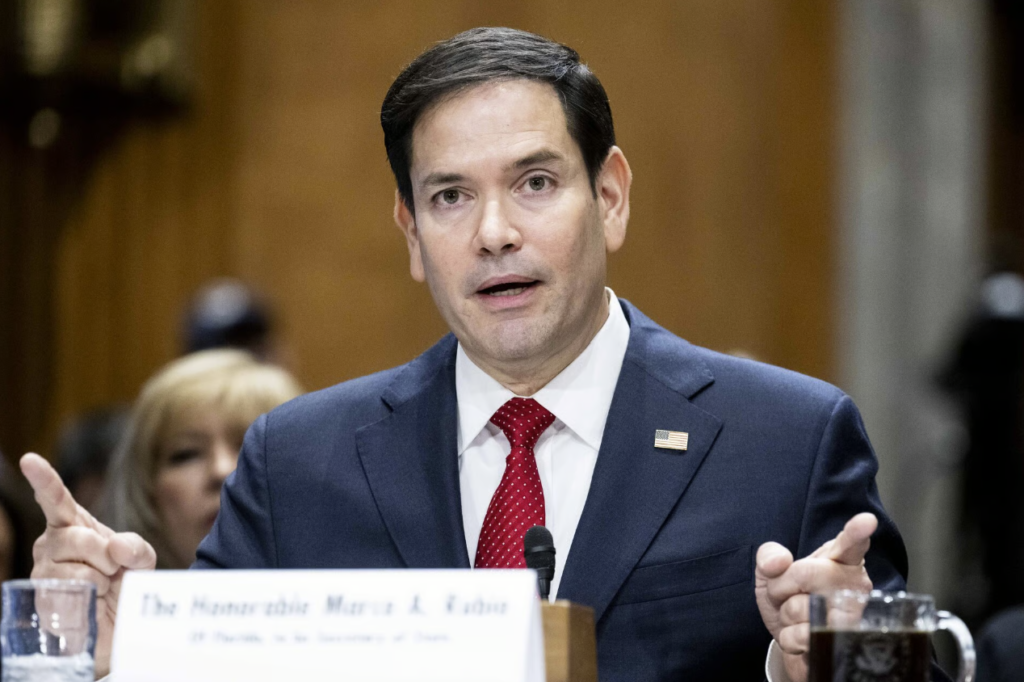
– US Secretary of State Marco Rubio arrives at the Munich Security Conference warning of a “defining moment” for transatlantic ties, but with a noticeably more conciliatory tone towards Europe compared to Vice President JD Vance’s aggressive speech at the previous edition.[4][5][6][15]
The context is a Trump presidency that has brought the Atlantic alliance to the brink of collapse with threats to annex Greenland, imposed indiscriminate tariffs on allies and rivals, and exhibited a discourse that many European leaders describe as hostile to the European project.[6][15][16][17][4]
Implications
– For a demanding Atlanticist, Rubio’s presence offers an opportunity to lower the temperature, but it should not obscure the reality: Washington’s transactional logic remains intact, and strategic trust has been eroded by years of improvisation and threats to the security architecture built after 1945.[15][17][18][4][6]
– Europe, shaken by Russian aggression in Ukraine and a global trade war, is being pushed to strengthen its autonomy in defense and economic resilience without breaking ties with the United States; this requires clarity: yes to cooperation with a firm White House against Putin, no to fantasies of dismantling NATO or turning the Atlantic link into a marketplace of ultimatums and overreaction.[18][19][20][4][15]
Perspectives and scenarios
– Central scenario: NATO continuity, increased European defense spending and a more acrimonious but functional relationship with Washington, provided that the more radical wing of “America First” does not prevail over the realistic pragmatism that today embodies —with all its shadows— Trump’s foreign policy.[5][21][4][15]
– Risk scenario: if the logic of tariffs, threats and gestures such as the nod to internal separatisms of allies is consolidated, Europe will tend to seek its own balances, weakening the cohesion of the Western bloc to the benefit of Moscow, Beijing and Tehran.[16][22][23][4][6]
2. Thailand: Seeking stability at a Southeast Asian pivot
Facts
– Prime Minister Anutin Charnvirakul’s Bhumjaithai party achieved a more comfortable victory than expected in the February 8 general election, putting it in a strong position to lead coalition negotiations and form a new government.[2][3][1]
– The results reflect a conservative realignment: Bhumjaithai consolidates its position against the progressive People’s Party, while markets react with a rise of around 4% in the Thai stock exchange, interpreting the result as a reduction in the risk of political instability.[3][24][1][2]
Implications
– Thailand is a central piece of the balance in Southeast Asia: a relatively stable coalition led by Anutin, with an agenda of stability and growth, reinforces the country’s role as a pivot between the great powers, in a context of intense competition between China and the United States for influence in the region.[25][26][1][2][3]
– The victory of a conservative and nationalist bloc, with promises to strengthen security on the Cambodian border and maintain economic stimulus, favors predictability, but may also relegate to the background fundamental reforms in terms of freedoms and political openness demanded by more reformist sectors.[24][27][28][1][25]
Perspectives and scenarios
– Central scenario: formation of a coalition government led by Bhumjaithai with junior partners, maintaining control of key ministries (finance, foreign affairs, trade) and prioritizing macroeconomic stability, tourism and investment, with a prudent balance of foreign policy between Beijing, Washington and Tokyo.[26][1][2][3]
– Risk scenario: If coalition negotiations become entrenched, or if the new majority opts for nationalist and restrictive measures, the country could return to cycles of institutional gridlock, weakening its role as a reliable partner in ASEAN and opening up more space for Chinese influence in infrastructure and security.[28][29][3][25]
3. Anthropic: extreme symbol of the AI bubble
Facts
– Anthropic has closed a new $30 billion funding round that puts its valuation at $380 billion, more than double that of its previous round in September, making it one of the most valuable private companies in the world.[7][9][30][31]
– The operation has been led by major investors and sovereign wealth funds such as GIC and Coatue, with participation from Nvidia, Microsoft, Amazon and Google, interested in central positions in the generative AI infrastructure.[9][30][31][32][7]
Implications
– This volume of capital contrasts with the plummeting decline of traditional IT services, consulting and software companies, and reflects a phenomenon of concentration of technological and economic power in a handful of AI champions capable of influencing entire sectors, from security to media.[30][31][7][9]
– From a liberal but not naive perspective, the AI “bubble” is worrying for two reasons: first, because of the financial risk of a sharp correction; second, because the power to define what is seen, what is hidden and how public information is filtered is transferred to corporations whose democratic control is, to this day, very limited.[31][7][9][30]
Perspectives and scenarios
– Likely scenario: increasing regulation in the US and Europe, attempting to balance innovation and control, with the risk that a hyper-regulated EU will fall behind the United States and China, reproducing in AI the gap that already exists in digital platforms.[7][30][31]
– Risk scenario: if the correction comes late and poorly, there may be an impact on employment, asset valuation and confidence in the Western technological project itself, just when democracies need to demonstrate that their model is compatible with growth, security and freedom.[14][33][9][30][31]
4. Sanofi: the new CEO facing the challenge of European healthcare autonomy
Facts
– Sanofi has appointed Belén Garijo, a former executive at Merck KGaA, as its new chief executive, with the aim of reviving a stagnant drug portfolio, finding a replacement for the best-selling drug Dupixent and regaining favor with skeptical markets.[34][35]
– The new CEO comes with experience in negotiating price deals with the Trump administration, but also with a mixed track record in research and stock market performance in her previous role.[35][34]
Implications
– Sanofi is a pillar of European health autonomy: its ability to innovate in vaccines and medicines is essential so that Europe does not depend on vulnerable supply chains or regimes that instrumentalize health as a geopolitical weapon.[36][34]
– The relationship with Washington will necessarily be pragmatic: Trump has shown that he can pressure pharmaceutical companies on prices, but also reach compromises that strengthen production and security of supply if this fits with his “America First” agenda.[34]
Perspectives and scenarios
– If Garijo manages to impose discipline in R&D and reorient the company towards high value-added solutions, Sanofi can strengthen its European position in health without breaking ties with the US, something key to any serious strategy of strategic autonomy.[34]
– If it fails, the space will be filled by American and, increasingly, Chinese pharmaceutical companies, with the consequent risk of dependence in a sector as sensitive as the pharmaceutical industry.[36][34]
5. Hungary: the rise of Tisza and the erosion of the illiberal laboratory
Facts
– A new poll places the Tisza party, led by Péter Magyar, ahead of Fidesz in voting intentions, while the number of undecided voters falls, indicating a consolidation of the alternative to Prime Minister Viktor Orbán.[8]
– Tisza’s advancement comes after years of tension with Brussels over the rule of law, Hungary’s attitude towards Ukraine and the perception of capture of institutions and media by Orbán’s entourage.[8][36]
Implications
– If it crystallizes, the upheaval in Hungary would be a blow to the illiberal model that has served as inspiration for other European leaders, and would strengthen the position of those who, from the democratic center-right, argue that one can be conservative without undermining the separation of powers or flirting with Moscow.[8][36]
– For Ukraine, the loss of a reluctant government within the EU would facilitate the continuation of military and financial aid, and weaken Russian influence in the heart of Central Europe.[20][36][8]
Perspectives and scenarios
– In the short term, a very aggressive internal campaign is expected, with intensive use of the media apparatus controlled by Fidesz and rhetoric that will present Tisza as a threat to “traditional values” and Hungarian sovereignty.[8]
– In the medium term, a Hungary reintegrated into the European mainstream would strengthen the bloc that defends the territorial integrity of Ukraine and respect for borders against Putin’s aggression.[20][36][8]
6. Alberta: Washington’s flirtation with an allied separatism
Facts
– Alberta separatist leaders have stepped up their efforts to promote the province’s secession from Canada after holding meetings with Trump administration officials, causing outrage in Ottawa.[22][23][37]
– The promoters of the “Alberta exit” allege fiscal and regulatory grievances, especially in energy matters, and hope to capitalize on the discontent of a part of the population that believes that the federal government of Mark Carney does not respect its oil and gas potential.[23][38][22]
Implications
– For Washington officials to openly receive separatists from an allied democracy constitutes a serious diplomatic blunder: that is not done to an ally, and if it is done to an adversary, it is done under the table and with full awareness of the cost.[39][22][23]
– In Atlanticist terms, the gesture sends a toxic message: the territorial and political unity of democracies is not a value in itself, but a bargaining chip, something that can only benefit revisionist powers that dream of a fragmented West.[38][22][23]
Perspectives and scenarios
– Alberta separatism is likely to remain a minority movement, but the precedent will weigh on the bilateral relationship and may fuel victim narratives in other western regions.[40][41][22][23]
– The only responsible way out is a swift and clear end by Washington to any support for secessionism in Canada, reaffirming that its disagreements with Carney will be settled in the realm of policy, not territorial integrity.[22][23][38]
7. Bangladesh: victory for the nationalist center-right
Facts
– The Bangladesh Nationalist Party (BNP) has won around two-thirds of the seats in elections that represent a major upset against the hegemony of the Awami League, paving the way for the son of former rulers of the country to assume the head of government.[9]
– The victory comes against a backdrop of social weariness with inflation, accusations of authoritarianism and a widespread perception of corruption among the outgoing elites.[9]
Implications
– The triumph of a nationalist center-right opens the door to a rebalancing between India and China, and a possible bet on a more open economy oriented towards foreign investment in a country that is key to textile supply chains and the stability of the Bay of Bengal.[20][36][9]
– The risk, as always in the region, is that the large majority will be used to settle scores with the opposition and erode freedoms and the rule of law, fueling extremism in the medium term, including radical Islamism.[42][9][20]
Perspectives and scenarios
– Constructive scenario: The BNP uses its mandate for pro-market reforms, institutional modernization and a balanced foreign policy that limits Beijing’s penetration and protects cooperation with India and the West.[42][9][20]
– Risk scenario: authoritarian drift, repression of the opposition and opening of spaces for religious radicalism and criminal networks in a demographically explosive country.[42][9][20]
8. US-Taiwan Agreement: Rational Tariffs in a Sea of Protectionism
Facts
– Washington and Taipei have concluded a reciprocal agreement that sets a 15% tariff on US imports from Taiwan, in line with the treatment given to Japan and South Korea, and obliges Taiwan to reduce or eliminate tariffs on virtually all US products.[10][11][12][43][44][45]
– The agreement includes commitments for Taiwanese purchases of US goods worth tens of billions of dollars between 2025 and 2029, especially in liquefied natural gas, oil, civil aircraft, engines, power grid equipment and industrial machinery.[11][12][43][44][45][10]
Implications
– This is a rare piece of good news on the tariff front: it strengthens economic interdependence with a key Indo-Pacific democracy, consolidates more resilient high-tech supply chains, and sends a clear message to Beijing about the cost of trying to isolate Taiwan.[45][46][10][11][36]
– For Europe, the move is a call to take its own “de-risking” strategy seriously in the face of China, diversifying suppliers of semiconductors and strategic materials without falling into autarky.[46][11][45][36]
Perspectives and scenarios
– Central scenario: deepening economic and technological cooperation, increased cross-investment and closer coordination on AI standards, chips and cybersecurity among advanced democracies.[44][10][11][45]
– Risk scenario: Beijing’s response in the form of economic or military pressure in the Taiwan Strait, forcing a reinforcement of the deterrent apparatus in an already tense region.[45][46][36]
9. US inflation: a respite that may be brief
Facts
– Recent data place US inflation at around 2.5% year-on-year at the beginning of 2026, its lowest level since the middle of the previous year, after several months of stabilization around 2.7%.[12][13][34]
– Several analyses warn, however, that the cumulative impact of the new tariffs and the fragmentation of supply chains could raise inflation again to 2.7% in 2026, even with more moderate growth.[33][14][34]
Implications
– The Federal Reserve is walking a tightrope: the margin for cutting rates without reigniting inflation is small, and a miscalculation could further erode confidence in the social contract among middle classes that have not yet fully recovered their purchasing power.[14][33][44][34]
– Politically, a partial respite in prices favors the governments in power, but it does not deactivate the breeding ground for anti-system populisms that exploit accumulated discontent, from the most radical Trumpism to the identity left and “woke”.[33][14][34]
Perspectives and scenarios
– Central scenario: incomplete disinflation, with inflation slightly above target, while central banks try to avoid an outright recession.[12][14][33]
– Risk scenario: an inflationary surge fueled by tariffs, energy shocks or geopolitical tensions would reopen debates about the sustainability of the welfare state and expansionary policies without structural reforms.[14][33][34]
10. Munich and Ukraine: European security against the clock
Facts
– In parallel to the transatlantic debate in Munich, the Kremlin has indicated that the next round of talks on Ukraine is scheduled for next week, trying to project the image that the conflict is moving towards some kind of settlement.[19][18][20]
– Ukraine insists it will not accept agreements that legitimize territorial acquisitions by force, while its European partners debate how to sustain military and financial support in a context of fatigue and budgetary tensions.[15][18][19][20]
Implications
– Accepting “peace” in exchange for territory would be a moral and strategic defeat: it would open the door to a world in which borders are changed by invasions, something incompatible with a European and Atlanticist vision that considers the territorial integrity of Ukraine as a red line.[18][46][36][20]
The real question for Europe is not whether it can afford to support kyiv, but whether it can afford not to: a partial success for Putin would encourage other revisionisms, from the Baltic to the Indo-Pacific.[46][18][36][20]
Perspectives and scenarios
– Likely scenario: prolongation of the conflict with phases of high and low intensity, and a Europe forced to increase its military spending and industrial coordination if it wants to remain anything more than a rich and fearful spectator.[15][18][36][46][20]
– Risk scenario: A poorly designed agreement, unfairly freezing front lines, would undermine the confidence of Eastern European countries in the Western umbrella and strengthen all regimes that look nostalgically at the map of their old empires.[18][36][46][20]
III. MEDIA RACK
| Number | Medium / Agency | Relevant contribution in the last 24 hours
| 1 | Reuters | Key coverage of Munich, Alberta, Hungary, Sanofi, Thailand, US-Taiwan agreement, Ukraine war and US inflation. [10][11][8][47][9][36][4][20][34][2][3] |
| 2 | US News | Development of the impact of Trump’s policy on the Atlantic alliance and details of the trade agreement with Taiwan. [48][43] |
| 3 | The Straits Times | Asian perspective on Munich, the US-Taiwan tariff agreement and the regional reading of the Thai elections. [33][44][45][1] |
| 4 | The New York Times | Analysis of Anthropic’s valuation and the interest of major technology companies. [13][30] |
| 5 | The Guardian | A critical look at Anthropic’s funding round and its impact on the global AI race. [49][31] |
| 6 | Morningstar | Relationship between tariffs, inflation and expected price behavior in 2026. [33][14] |
| 7 | TradingEconomics | US Inflation Data and Macroeconomic Trends. [12] |
| 8 | Asian and geopolitical media and think tanks | Structural context on Thailand, the Indo-Pacific, China, Bangladesh and European autonomy in security. [25][26][27][28][29] |
IV. RISK TRAFFIC LIGHT
– Red (tall)
– 🔴 Cohesion of the democratic West: The combination of aggressive tariffs, threats to the transatlantic architecture and gestures such as support for separatists in Alberta erodes trust between democracies and strengthens revisionist powers.[47][4][10][11][23][22][33]
– 🔴 Ukraine and Russian territorial revisionism: any temptation to accept territorial concessions as the price of a sham “peace” would undermine the rules-based international order and leave Europe more vulnerable.[19][36][46][18][20]
– 🔴 Strategic stability in Southeast Asia: An unstable Thailand or one held hostage by fragile coalitions would open the door to greater Chinese penetration and military tensions on a key axis connecting the Indian, Pacific and South China Seas.[1][2][3][25]
– Yellow (medium)
– 🟡 AI Bubble: The concentration of power and capital in companies like Anthropic poses financial, regulatory and democratic risks if clear limits are not placed on their influence.[13][49][30][31][7][9]
– 🟡 Political transition in Hungary and Bangladesh: options to strengthen liberal democracy, but also risk of polarization and authoritarian regression if the new majorities do not act with restraint.[50][9][20][8]
– 🟡 Inflation and tariffs: the current respite may be short-lived if the logic of tariffs and the fragmentation of supply chains intensifies.[12][33][14][34]
– Green (opportunity)
– 🟢 US-Taiwan tariff agreement: strengthens a key Indo-Pacific democracy, diversifies supply chains and offers a smart “risk-reduction” model against dependence on China.[43][10][11][44][45]
– 🟢 Sanofi’s strategic renewal: possibility of strengthening European health autonomy and its capacity to respond to future crises, from a market logic and transatlantic cooperation.[4][34]
– 🟢 Possible shift in Hungary: if Tisza consolidates, an internal illiberal hotbed within the EU may be weakened and cohesion against Russian aggression strengthened.[50][36][20][8]
V. EDITORIAL COMMENTARY
The day confirms that the free world lives between hope and the temptation of geopolitical suicide. Hope, because the growing pressure on illiberal models like Orbán’s, the possibility of a rebalancing in Bangladesh, Ukrainian resilience, the search for stability in Thailand, and the tariff agreement between the US and Taiwan show that there is still capacity for rectification, for reaffirming liberal democracy and the well-regulated market. Temptation of suicide, because at the same time we witness how a part of the Western leadership irresponsibly plays with the territorial integrity of allies, flirts with isolationism, and turns tariffs into a weapon of domestic politics, forgetting that its strength lies in the network of alliances and the credibility of its word.[2][3][10][11][23][47][1][4][22][33][36][45][9][15][18][20][8]
Thailand aptly illustrates the dilemma: voters have rewarded the promise of stability and growth, weary of decades of stagnation and political upheaval, but stability alone is not enough if it is not anchored in a clear horizon of reforms, respect for freedoms, and a smart balance vis-à-vis China. A country that controls a strategic position on Southeast Asian trade routes cannot afford to become a mere chessboard for others to play on, nor an economic protectorate of any power.[29][3][24][25][28][1][2]
In Munich, Rubio’s more conciliatory tone is welcome, but it shouldn’t lull a Europe that has learned the hard way that defense can’t be improvised and that rhetorical pacifism doesn’t stop tanks or drones. Intelligent Atlanticism doesn’t consist of applauding every move Washington makes, but rather in maintaining an alliance of equals, firm against Putin, vigilant against Chinese expansion, and uncompromising to Islamist terrorism or the theocratic regimes of Tehran and their proxies. This implies defending Ukraine, demanding seriousness in relations with allies like Canada—not playing Russian roulette with secession—and committing to sensible agreements like the one reached with Taiwan.[10][11][23][38][43][4][19][22][36][46][15][18][20]
The explosion in value of Anthropic and generative AI is, in part, a success story of human ingenuity and public-private cooperation, but also a warning: if we allow the technological oligopoly to become an opaque political power, we will be handing over the public sphere to algorithms that no one controls and that can be captured by ideological or geopolitical agendas alien to the general interest. The response cannot be technology phobia or refuge in degrowth, but rather clear rules, real competition, and a redoubled effort to ensure that AI serves freedom and not the other way around.[49][13][30][31][7][33][9][14]
Meanwhile, the somewhat moderating inflation in the United States and the first adjustments in Europe should not deceive us: the cultural and economic battle is still ongoing. It is about defending a market economy that generates prosperity, a sustainable welfare state, and a political culture that does not bow down to either neoliberalism or identity-based nationalisms that promise simple solutions to complex problems. In this arena, the liberal center-right has the responsibility—and the opportunity—to offer a serious, reformist, and proudly Western project that is an alternative to the extremes on both sides.[33][36][46][12][14][18][20][34]
Sources
[1] Thailand’s ruling party readies for coalition talks after big election win https://www.straitstimes.com/asia/thailands-ruling-party-readies-for-coalition-talks-after-big-election-win
[2] Thailand’s ruling party readies for coalition talks after big… https://www.reuters.com/world/asia-pacific/thailands-bhumjaithai-prepares-coalition-talks-after-big-election-win-2026-02-09/
[3] Will Thailand’s election deliver a stable government? https://www.reuters.com/world/asia-pacific/will-thailands-election-deliver-stable-government-2026-02-09/
[4] Rubio strikes warmer tone as Trump’s upheaval of Atlantic… https://www.reuters.com/world/europe/trumps-upheaval-atlantic-alliance-loom-over-munich-security-forum-2026-02-13/
[5] Rubio strikes warmer tone as Trump’s upheaval of Atlantic ties looms over Munich meet https://au.marketscreener.com/news/rubio-strikes-warmer-tone-as-trump-s-upheaval-of-atlantic-ties-looms-over-munich-meet-ce7e5ddadb88f622
[6] Trump’s upheaval of the Atlantic alliance to loom over Munich… https://wmbdradio.com/2026/02/12/trumps-upheaval-of-the-atlantic-alliance-to-loom-over-munich-security-forum/
[7] Anthropic clinches $380 billion valuation after $30 … https://www.reuters.com/technology/anthropic-valued-380-billion-latest-funding-round-2026-02-12/
[8] Reuters reports that Trump administration officials have signed a … https://www.facebook.com/TheNationThailand/posts/reuters-reports-that-trump-administration-officials-have-signed-a-trade-agreemen/1333422115477786/
[9] Geopolitical Monitor https://www.geopoliticalmonitor.com
[10] US, Taiwan finalize deal to cut tariffs, boost purchases of US goods https://www.reuters.com/business/aerospace-defense/us-taiwan-finalize-deal-cut-tariffs-boost-purchases-us-goods-2026-02-12/
[11] US, Taiwan finalize deal to cut tariffs, boost purchases of US goods https://uk.finance.yahoo.com/news/us-taiwan-finalize-deal-cut-220651039.html
[12] US, Taiwan Finalize Deal to Cut Tariffs, Boost Purchases of US Goods https://www.usnews.com/news/top-news/articles/2026-02-12/us-taiwan-finalize-deal-to-cut-tariffs-boost-purchases-of-us-goods
[13] United States Inflation Rate https://tradingeconomics.com/united-states/inflation-cpi
[14] Start-of-year price increases seen lifting monthly US … https://www.reuters.com/business/start-of-year-price-increases-seen-lifting-monthly-us-consumer-inflation-january-2026-02-13/
[15] Munich Security Conference: Rubio flies in amid testing times for US-Europe ties https://www.theguardian.com/world/live/2026/feb/13/munich-security-conference-rubio-flies-in-amid-testing-times-for-us-europe-ties-live
[16] Trump’s upheaval of the Atlantic alliance to loom over … https://wkzo.com/2026/02/12/trumps-upheaval-of-the-atlantic-alliance-to-loom-over-munich-security-forum/
[17] Trump’s Upheaval of the Atlantic Alliance to Loom Over Munich Security Forum https://www.usnews.com/news/world/articles/2026-02-12/trumps-upheaval-of-the-atlantic-alliance-to-loom-over-munich-security-forum
[18] As leaders descend on Munich, Ukraine’s fate hangs in the … https://www.politico.com/news/2026/02/13/munich-security-conference-ukraine-fate-00779545
[19] Zelenskyy arrives in Germany to participate in Munich… https://www.pravda.com.ua/eng/news/2026/02/13/8020864/
[20] Kremlin says next round of peace talks on Ukraine is set for next week https://www.reuters.com/world/kremlin-says-next-round-peace-talks-ukraine-is-set-next-week-2026-02-13/
[21] Rubio to attend Munich Security Conference amid frayed … https://www.reuters.com/world/rubio-lead-us-delegation-munich-security-conference-chairman-says-2026-02-09/
[22] Alberta separatists step up efforts to leave Canada after… https://www.reuters.com/world/alberta-separatists-step-up-efforts-leave-canada-after-meeting-with-trump-2026-02-12/
[23] Alberta Separatists Step up Efforts to Leave Canada After Meeting With Trump Officials https://www.usnews.com/news/world/articles/2026-02-12/alberta-separatists-step-up-efforts-to-leave-canada-after-meeting-with-trump-officials
[24] Thailand’s Bhumjaithai set for coalition talks after surprise election win https://www.aljazeera.com/news/2026/2/9/thailands-bhumjaithai-set-for-coalition-talks-after-surprise-election-win
[25] Thailand’s 2026 election heats up in high-stakes power fight https://www.nationthailand.com/news/politics/40060620
[26] Roadmap to the 2026 election: Thailand set to have new… https://www.nationthailand.com/news/politics/40055980
[27] Thailand’s snap House election and constitutional … https://anfrel.org/thailands-snap-house-election-and-constitutional-referendum-data-dive-issue-no-26/
[28] Thailand 2026: Election and Constitutional Referendum Explained https://www.mcg-asia.com/featured-insights/thailand-2026-election-constitutional-referendum
[29] 2026: Thai politics beyond snap general elections https://www.youtube.com/watch?v=mA-DQDEq7Dc
[30] Anthropic Pushes Its Valuation to $380 Billion With New Funding Round https://www.nytimes.com/2026/02/12/technology/anthropic-valuation-380-billion-funding.html
[31] Anthropic raises $30bn in latest round, valuing Claude bot maker at $380bn https://www.theguardian.com/technology/2026/feb/12/anthropic-funding-round
[32] Anthropic raises $30 billion in Series G funding at $380 … https://www.anthropic.com/news/anthropic-raises-30-billion-series-g-funding-380-billion-post-money-valuation
[33] Inflation Set to Rise as Tariff Costs Hit Consumers in 2026 | Morningstar https://www.morningstar.com/economy/inflation-set-rise-tariff-costs-hit-consumers-2026
[34] Sanofi’s new CEO needs to fix drug pipeline and navigate … https://www.reuters.com/business/healthcare-pharmaceuticals/sanofis-new-ceo-needs-fix-drug-pipeline-navigate-trump-2026-02-13/
[35] Sanofi’s new CEO needs to fix drug pipeline and navigate Trump https://www.marketscreener.com/news/sanofi-s-new-ceo-needs-to-fix-drug-pipeline-and-navigate-trump-ce7e5ad3d18ef521
[36] Stratfor: The World’s Leading Geopolitical Intelligence Platform https://worldview.stratfor.com
[37] Alberta separatists step up efforts to leave Canada after… https://www.marketscreener.com/news/alberta-separatists-step-up-efforts-to-leave-canada-after-meeting-with-trump-officials-ce7e5ad3db81f524
[38] Liberal Leader Mark Carney sworn in as 24th Prime Minister https://gowlingwlg.com/en-ca/insights-resources/articles/2025/mark-carney-24th-prime-minister
[39] Canadian separatists optimistic after meetings with Trump officials https://www.nbcnews.com/politics/trump-administration/canadian-separatists-alberta-meetings-trump-officials-rcna258230
[40] Canadian separatists optimistic after meetings with Trump… https://www.aol.com/articles/canadian-separatists-optimistic-meetings-trump-101300653.html
[41] Alberta Separatists Step Up Efforts to Leave Canada After Meeting With Trump Officials https://www.newsmax.com/world/globaltalk/alberta-separatists-canada-trump-officials/2026/02/12/id/1245849/
[42] Rubio strikes warmer tone as Trump’s upheaval of Atlantic ties looms over Munich meet https://www.marketscreener.com/news/rubio-strikes-warmer-tone-as-trump-s-upheaval-of-atlantic-ties-looms-over-munich-meet-ce7e5ddadb88f622
[43] US, Taiwan finalize deal to cut tariffs, boost purchases of US goods https://finance.yahoo.com/news/us-taiwan-finalize-deal-cut-220651039.html
[44] US, Taiwan finalize deal to cut tariffs, boost purchases of … https://www.straitstimes.com/asia/us-taiwan-finalize-deal-to-cut-tariffs-boost-purchases-of-us-goods
[45] Anthropic Finalizes $30 Billion Funding at $380 Billion Value https://www.bloomberg.com/news/articles/2026-02-12/anthropic-finalizes-30-billion-funding-at-380-billion-value
[46] Denmark and Greenland leaders to meet Rubio at Munich conference https://www.reuters.com/world/denmark-greenland-leaders-meet-rubio-munich-conference-2026-02-13/
[47] Inflation rate eased to 2.8% in February, lower than expected https://www.cnbc.com/2025/03/12/cpi-inflation-report-february-2025.html
[48] US, Taiwan finalize deal to cut tariffs – Reuters https://www.reuters.com/video/watch/idRW514813022026RP1
[49] The Geopolitics: Home https://thegeopolitics.com
[50] Trump’s upheaval of the Atlantic alliance to loom over Munich… https://www.investing.com/news/world-news/trumps-upheaval-of-the-atlantic-alliance-to-loom-over-munich-security-forum-4504319
[51] 2026 Thai general election – Wikipedia https://en.wikipedia.org/wiki/2026_Thai_general_election
[52] Timeline for the 2026 General Election Following Prime… https://en.thairath.co.th/scoop/theissue/2901819
[53] Thailand election 2026: can ‘orange wave’ break… https://www.scmp.com/week-asia/politics/article/3338561/thailand-election-2026-can-orange-wave-break-conservative-grip-power