By Gustavo de Arístegui,
February 19, 2026
I. INTRODUCTION
In the last 24 hours, a disturbing qualitative leap has been confirmed in the military escalation of the regimes most dangerous to Euro-Atlantic security—North Korea and Iran—while the Ukrainian front enters a phase of slow-motion warfare that no European intelligence service considers close to a just and stable peace. At the same time, the global chessboard is being reshaped: Beijing is accelerating its project to dominate the rules of world trade in the long term, Yoon Suk Yeol has become an exemplary case of democratic punishment for an attempted self-coup in South Korea, and the Eurozone is opening a delicate power struggle surrounding the succession of Christine Lagarde at the ECB, where Fernández de Cos’s candidacy is emerging as a technically sound option against nationalist-partisan maneuvers.
Iran, under the ayatollahs, is reinforcing and securing sensitive facilities amid heightened tensions with the United States, while continuing to use Western hostages as a tool of strategic pressure, as illustrated by the terrible fate of the British biker couple sentenced to 10 years for alleged espionage. Meanwhile, Hamas is consolidating its iron grip on Gaza precisely as the Trump administration attempts to implement an ambitious—and fragile—peace plan, necessitating swift and coordinated action to prevent Tehran from rebuilding its funding and arms supply channels for its terrorist proxies.
On the domestic front of Western democracies, the Epstein case has taken on an even more worrying national security dimension with the arrest of Andrew Mountbatten-Windsor (formerly Prince Andrew) for alleged misconduct in public office related to the use of sensitive information and the leaking of correspondence linked to Jeffrey Epstein. The pattern—a network of elite contacts, parties, thousands of potentially compromising photos and videos—fits all too well with the classic recruitment and blackmail tactics of hostile intelligence services, including the old KGB and its successors.
In this context, lucid Atlanticism, the defense of representative liberal democracy, and the rejection of both Wokism and extremist populisms of the right and left are not a rhetorical alibi: they are the lifeline of a Western order that today suffers simultaneous attacks from Moscow, Tehran, Beijing and their satellites, but also from within our own societies.
II. THE 10 MOST IMPORTANT NEWS STORIES OF THE LAST 24 HOURS
1. North Korea deploys 600 600mm rocket launchers with tactical nuclear capability
Facts
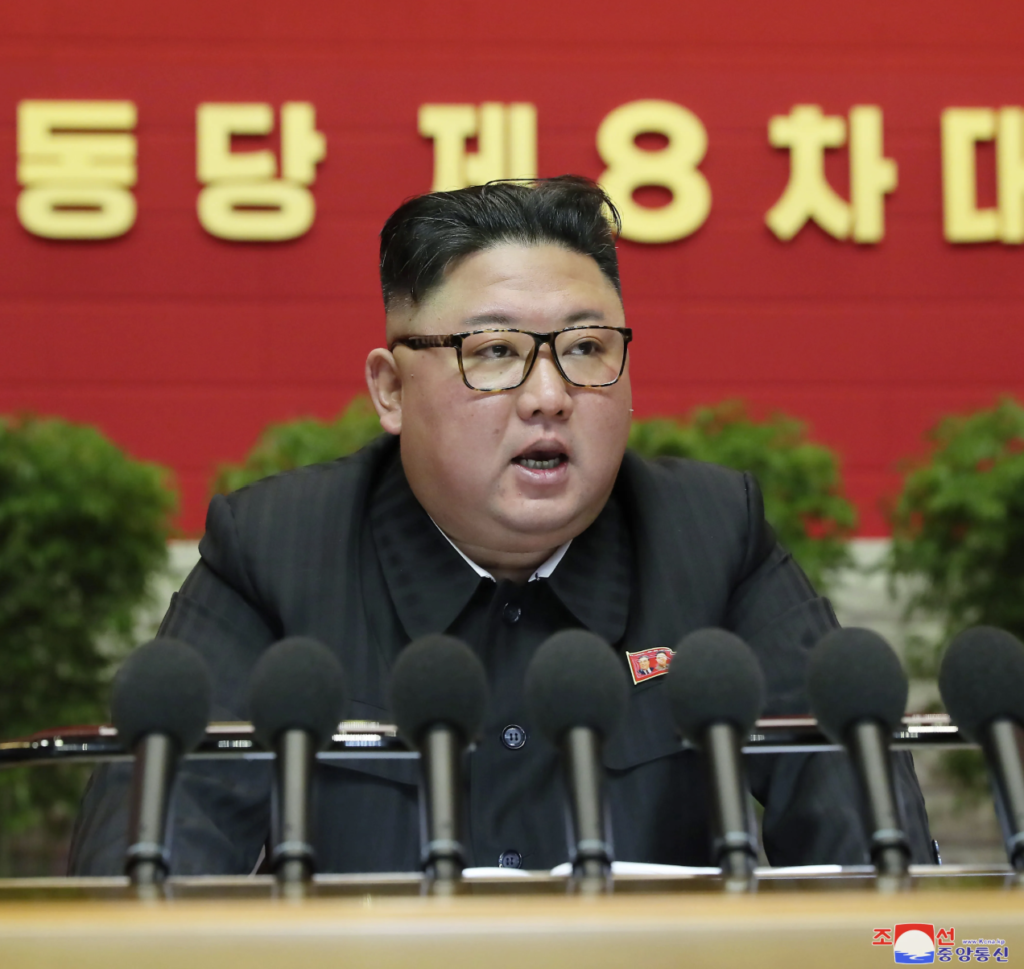
– Kim Jong Un presided in Pyongyang over the deployment ceremony of 50 new launch vehicles for 600mm rocket systems, capable, according to North Korea itself, of carrying tactical nuclear warheads and with a range over the entirety of South Korea.
– The regime’s propaganda has presented these systems as “revolutionary artillery” that “incorporates artificial intelligence” into its guidance systems, claiming that “no other country has an equivalent system.”
Satellite images and independent analysis confirm several dozen mobile launch platforms, although arsenal estimates point to about 50 nuclear warheads available and fissile material for another 30-40.
Implications
The delivery of 600 medium-range missile launchers (in doctrinal terms, long-range rocket artillery) with tactical nuclear capability is not “deterrence”; it is a calculated provocation and a frontal challenge to the security of South Korea, Japan, and the entire US deployment in the Pacific.
– The regime’s attempt to sell this qualitative leap as a mere deterrent reinforcement masks a dangerous logic of “normalizing” the use of tactical nuclear weapons in a limited conflict, lowering the political and psychological threshold for their use.
This deployment effectively consolidates North Korea as a fully operational tactical nuclear power in the North Asian theater and complicates any future negotiations, as Pyongyang now seeks not only guarantees of survival, but also the capacity for offensive coercion.
Perspectives and scenarios
– In the short term, we can expect a response of reinforcement of US and South Korean missile defense systems, further expanded maneuvers, and probably new US and Japanese naval and air deployments in the area.
– In the medium term, the progressive integration of artificial intelligence into North Korean guidance and command-control systems increases the risk of miscalculations, accidental launches, or cyber interference that could trigger an uncontrolled escalation.
The most likely scenario remains a high-intensity “regional cold war,” with a constant exchange of displays of force, although the increased risk of missile crises with a very narrow reaction window will require a review of deterrence doctrines in Northeast Asia.
2. Former South Korean President Yoon Suk Yeol sentenced to life imprisonment for attempted self-coup
Facts
– Former South Korean President Yoon Suk Yeol has been sentenced to life imprisonment by a Seoul court for attempting to impose martial law and paralyze the National Assembly in December 2024, which the court described as a “self-coup”.
The court found him guilty of inciting insurrection, highlighting the mobilization of troops to seal off Parliament and arrest key politicians; the prosecution had asked for the death penalty, but South Korea has maintained a de facto moratorium since 1997.
Other high-ranking officials, including former Prime Minister Han Duck-soo, have already received long sentences, in a clear sign that the judiciary intends to set a strong precedent against any authoritarian temptation.
Implications
– The case of Yoon is a lesson in democratic hygiene: an elected president who tries to mutilate the separation of powers and militarize politics ends up in jail for life, not in golden exile or in a negotiated transition.
– For the Korean peninsula, the contrast is stark: while in the north Kim reinforces a nuclear dynastic regime, in the south a mature democracy uses the rule of law to defend itself against its own excesses.
– In regional terms, this ruling reinforces Seoul’s moral legitimacy against Pyongyang and sends a message to other Asian democracies tempted by illiberal drift: there is a real cost for those who believe themselves to be above the Constitution.
Perspectives and scenarios
– Yoon’s defense will likely appeal to the Constitutional Court, but it is unlikely that a sentence so legally reasoned and with clear social support for institutional cleansing will be substantially reviewed.
– In the short term, no internal stability shocks are expected in South Korea, although this episode will fuel polarization: the right will accuse the government of “politicized justice” and the left will claim it is the “definitive vaccine” against temptations of self-coup.
– For Western allies, the case reinforces the value of South Korea as a resilient democracy on the front line of the Indo-Pacific against the totalitarian regimes of China and North Korea.
3. British biker couple sentenced to 10 years in Iran: hostages of a brutal regime
Facts
A British couple – Lindsay and Craig Foreman – who were on a round-the-world motorcycle trip have been sentenced in Iran to 10 years in prison for alleged espionage, after a trial of just three hours in which they were not allowed to present an effective defense, according to their family.
The two men, both in their fifties, were arrested while crossing Iran en route to a long-distance trip and have consistently denied the accusations; their relatives claim to have seen no evidence of espionage.
The British government has condemned the sentence and called it unfair, in a context of strong tension between the West and Tehran over the nuclear program and Iranian support for armed groups in the Middle East.
Implications
– This case is another textbook example of the brutal Ayatollahs’ hostage diplomacy , which uses Western citizens as bargaining chips and sends a relentless message: “all nationals of Western countries are potential hostages.”
The combination of summary trials, judicial opacity, and accusations of espionage without evidence is part of a broader strategy by Tehran to force concessions on other issues – primarily sanctions and the nuclear program.
– From our editorial line, this case underlines the deeply mafia-like and terrorist nature of the Iranian regime, light years away from any standard of the rule of law: we are talking about a system that practices de facto kidnapping as a foreign policy tool.
Perspectives and scenarios
London is likely to attempt a mix of diplomatic pressure and discreet negotiation, possibly via third parties (Qatar, Oman) to secure the couple’s release, but Tehran will try to maximize the price.
– The accumulation of cases of this type could lead the EU and the UK to raise the travel warning level for Iran to an even more restrictive level and coordinate additional sanctions against those responsible for the judicial and security apparatus.
– The precedent reinforces the argument that any new negotiations with Tehran – whether nuclear or regional – must be accompanied by clear red lines on hostages, with automatic costs if the regime crosses that threshold.
4. China accelerates its project to dominate world trade “beyond Trump”
Facts
Extensive research reveals that Beijing is taking advantage of the uncertainty generated by Washington’s current trade policy to accelerate some 20 trade agreements, many of them years in the making, with the EU, Gulf states and a wide range of Indo-Pacific countries.
The explicit objective is to place China at the center of a new multilateral trade architecture, consolidating its value chains and preferential access to strategic raw materials, despite concerns about overproduction, restrictions on access to its market and weak domestic demand.
Western diplomats admit that, if these agreements succeed, Beijing could reverse more than a decade of US trade containment policy and make its advantage in manufacturing and intermediate technology structural.
Implications
– For those of us who closely follow Chinese expansionism, this strategy confirms that Beijing is playing the long game: while US multilateral leadership is devalued, China is filling the void, securing supplies of rare earth elements and expanding its footprint in Africa, Latin America and the Indo-Pacific.
– This is not just trade: it is pure geoeconomics; every market access agreement, every investment in infrastructure or in ports in the Indian Ocean (Sri Lanka, Maldives) or the Pacific also reinforces a logic of military and political projection.
– European passivity, fragmented among national agendas, facilitates Beijing’s game: while environmental or labor clauses are being discussed, China weaves irresistible investment packages for indebted governments thirsty for liquidity.
Perspectives and scenarios
– In the short term, we will see US diplomacy attempt to rebuild ad hoc trade coalitions – with Canada, Mexico, Japan, Korea, and possibly India – to limit dependence on China in critical sectors.
Europe faces a dilemma: either it defines its own industrial and commercial strategy, coordinated with the US, or it risks becoming a mere end market dependent on both Chinese suppliers and US security.
The most worrying scenario is the consolidation of a de facto “Chinese bloc”, with its own technological, financial and logistical ecosystem, capable of dictating prices and standards – especially in critical raw materials and intermediate technologies – to the rest of the world.
5. Ukraine: European intelligence services do not believe a peace agreement will be reached this year
Facts
– On the sidelines of the Munich Security Conference, the heads of five European intelligence services conveyed skepticism about the possibility of reaching an agreement by 2026 to end Russia’s war of aggression against Ukraine, despite claims by the Trump administration that a deal is “reasonably close”.
– Most of them agree that Moscow has no real interest in a quick peace and is using talks with Washington to seek sanctions relief and new business opportunities, without giving up its territorial objectives in Ukraine.
Meanwhile, on the ground, the war has become a conflict of attrition and positions, with relatively stable lines but a constant trickle of casualties and destruction of critical infrastructure in Ukraine.
Implications
– We are facing a new chapter in the slow-motion war in Ukraine: the lightning offensive of 2022 has given way to an entrenched, but no less dangerous, conflict, where Russia is counting on the weariness of the democracies and on internal divisions in the EU and NATO.
– The Russian offer of economic “macro-agreements” in exchange for sanctions – valued at trillions of dollars – fits with classic Kremlin patterns: buying favors in the western periphery while freezing an illegitimate territorial status quo.
– From our editorial line, the use of force as a means of acquiring territories cannot be accepted: any agreement that legitimizes annexations through faits accomplis would be a devastating precedent for the international order.
Perspectives and scenarios
– The most likely scenario for 2026 is the consolidation of a relatively stable front, with limited offensives and a long-term race in the production of weapons, drones and ammunition, where Western industrial capacity will be decisive.
– In the short term, the success or failure of the Trump administration in putting together a security package for Ukraine – financial, military and political – will set the tone for the war: lukewarm support would encourage Moscow to prolong the conflict indefinitely.
– In the long term, the European security architecture is at stake: if Ukraine remains a “neutralized buffer”, we will have sent a message of vulnerability to other neighbors of Russia; if it integrates into the Euro-Atlantic family, the Kremlin’s strategic defeat will be unequivocal.
6. Hamas strengthens its control over Gaza as Trump pushes for a peace plan
Facts
– The Trump administration is preparing the first meeting in Washington of its “Board of Peace” to oversee the transition in Gaza under a plan that conditions the Israeli military withdrawal on the disarmament of Hamas and the creation of a new Palestinian police force.
Israeli intelligence reports cited by official sources indicate that Hamas is “rebuilding its power from the ground up,” placing loyalists in administrations, security forces, and local structures, and attempting to integrate up to 10,000 of its police officers into the planned new force.
– Trump hopes that several countries will contribute troops to a multinational stabilization force and support the training of new Palestinian forces, in a context of fragile ceasefire and humanitarian devastation in the Gaza Strip.
Implications
– It was clear that Hamas – a mafia-like and terrorist organization – was not going to disarm voluntarily or give up its oppression of Gaza; every institutional loophole is seen as an opportunity to infiltrate its ranks and maintain its coercive power.
The risk is clear: if the peace plan is implemented without robust mechanisms for verifying and excluding Hamas militants, the “new Gaza” risks becoming a disguised version of the old regime of terror.
– For our editorial line, it is essential to act quickly to prevent Iran from rebuilding its financing and arms channels to Hamas and the rest of its proxies (Hezbollah, Iraqi militias, Houthis), because every poorly managed truce has historically been used by Tehran to rearm.
Perspectives and scenarios
The success of the Peace Board will depend on its ability to avoid becoming a weakened substitute for the UN Security Council and to impose real conditionality on both the Palestinian leadership and Israel.
– In the short term, we will see an intense tug-of-war between Washington, Jerusalem and the Arab capitals over the composition of the multinational force and over security guarantees for Israel.
The worst-case scenario would be a failed transition leaving a power vacuum exploited by Hamas and other jihadist groups; the best-case scenario would be a professional Palestinian security structure, not captured by terrorists, capable of guaranteeing internal order and coexistence with Israel.
7. Iran repairs and fortifies sensitive facilities after attacks and amid heightened tensions with the US.
Facts
Recent satellite images show that Iran has built a kind of concrete shield over a new building in a sensitive area of the Parchin military base and covered it with earth, thus reinforcing its protection against potential air strikes.
– At the remote Fordow complex, photos indicate that Tehran has filled the entrances of three tunnels with earth, burying access to the underground facility and hindering both bombers and potential special forces operations.
Independent analyses underline that, although some of the infrastructure damaged in previous attacks has not yet fully recovered its operational status, the pattern points to a systematic effort to make nuclear and military facilities more resilient.
Implications
– It was clear that the ayatollahs’ regime was going to accelerate its nuclear program and fortify the remaining facilities: every protracted negotiation, every doubt and hesitation from the West translates into more time to reinforce tunnels, disperse material and improve defenses.
– The filling of tunnels and the construction of concrete and earth shields have a clear purpose: to reduce the effect of penetrating munitions and precision attacks, complicating any option of a preemptive Israeli or American attack.
– In our editorial line, the Tehran regime is not a rational actor in the liberal sense; it is a revolutionary, terrorist and expansionist regime that understands every gesture of Western goodwill as a sign of weakness that it must exploit.
Perspectives and scenarios
– In the short term, the combination of “physical shielding” of facilities and naval displays of force in the Persian Gulf suggests that Tehran is preparing for a scenario of prolonged tension, with the risk of “gunboat diplomacy” incidents.
– In the medium term, if the regime of independent inspections and sanctions on key sectors (drones, missiles, Revolutionary Guard) are not strengthened, the Iranian nuclear program will continue to approach the weapons threshold dangerously close.
The most dangerous scenario would be a regional proliferation race, in which Saudi Arabia, Turkey, or Egypt would be forced to consider similar options, effectively eroding the non-proliferation regime.
8. National security dimension of the Epstein case: arrest of Andrew Mountbatten-Windsor
Facts
British police have arrested Andrew Mountbatten-Windsor, formerly Prince Andrew, for alleged misconduct in the exercise of public functions, following the publication of a large archive of emails related to Jeffrey Epstein.
– Some of the suspicions focus on the possible leak of confidential government reports – relating to official business trips to Asia – to Epstein, in a context of close personal relationship and presence at private events.
Buckingham Palace has stated that the King is prepared to “support” the investigations, while the detainee denies any wrongdoing; the investigation is situated on the border between corruption, abuse of power and potential risk of leaking sensitive information.
Implications
Beyond Epstein’s abominable sex crimes and the destruction of countless victims’ lives, the case increasingly points to a sophisticated network for recruiting informants and agents, with patterns reminiscent of the KGB: parties, orgies, compromising material, and access to political and financial elites.
The combination of diplomats, businessmen, high-ranking officials, and members of royal families in controlled and recorded environments is pure gold for any hostile intelligence service that wants to recruit through blackmail; the figure of the French diplomat who leaked documents from the Permanent Representation to the UN fits perfectly into this scheme.
The arrest of Andrew Mountbatten-Windsor, most likely for leaking UK “Top Secret” documents to Epstein, is not just a tabloid scandal: it is a potential case of Western national security penetration.
Perspectives and scenarios
– The British – and eventually American – investigation will have to determine whether there was transmission of information abroad and whether that information reached the hands of rival intelligence services (Russian, Chinese or others).
– If high-level leaks are confirmed, we can expect a strengthening of security and counterintelligence protocols surrounding public officials, including members of royal families, with special attention to their private lives and networks of friends.
This case should serve as a reminder that hybrid warfare is not fought only in cyberspace or social media, but also in the sphere of human weaknesses, where the sophistication of blackmail networks can surpass the imagination of many policymakers.
9. Battle for succession at the ECB: Fernández de Cos on the shortlist and French maneuvers
Facts
– Leaks suggest that Christine Lagarde could leave the presidency of the European Central Bank before the end of her term in October 2027, with the aim of ensuring that France – and President Macron in particular – maintain control over the selection of her successor.
– Pablo Hernández de Cos, former governor of the Bank of Spain, is on the shortlist of candidates, along with other profiles such as Klaas Knot or Joachim Nagel, according to international economic press reports.
The Spanish government has declared that it will seek to secure an “influential position” on the ECB’s Executive Board, but its domestic policy moves point to a partisan sectarianism that has historically damaged the prospects of some of the country’s best technical profiles.
Implications
– The maneuver of a possible early departure of Lagarde to allow Macron to decisively influence the election of the next ECB president is, in political terms, a devious move that once again places national interests above community logic.
– For a government – like the Spanish one – to prefer to stay out of the ECB Council, due to ideological sectarianism, rather than support a qualified candidate like Fernández de Cos is the exact opposite of patriotism, a sense of duty to the state, and political responsibility.
The temptation to “re-Francize” the ECB with a view to a presidential candidacy for Lagarde herself would be, if confirmed, yet another episode of instrumentalizing the heart of the European monetary system for domestic policy purposes.
Perspectives and scenarios
– In the short term, the mere rumor of an early exit generates uncertainty about the continuity of monetary policy at a time of still incomplete disinflation and slowing growth in the Eurozone.
– In the medium term, the choice of a more technical and independent profile – such as Fernández de Cos – would strengthen the credibility of the ECB and its ability to withstand pressure from both indebted governments and populist movements.
– If, on the contrary, a distribution of seats based on national interests prevails, the European project will continue to erode from within, fueling the discourse of those who see Brussels as a mere battleground of state interests and not a true common good.
10. Geopolitical realignment: Board of Peace, trade tensions and the Ukrainian chessboard
Facts
President Donald Trump has convened the first meeting of his Board of Peace in Washington, with representatives from more than two dozen countries, to address ongoing conflicts such as Gaza, Ukraine, and territorial disputes in Asia. The Board members have pledged $5 billion for the reconstruction of Gaza, a far cry from the estimated $70 billion needed.
– In parallel, the White House is considering a thorough review of the North American trade agreement with Mexico and Canada (USMCA), even contemplating scenarios in which Canada would be excluded from a new framework, which would strain one of the cornerstones of North American trade.
The discreet negotiations between Washington and Moscow on Ukraine combine security and economic aspects, with Russian offers of hydrocarbon and raw material contracts worth trillions of dollars in exchange for sanctions relief, while Ukraine shows negotiating flexibility under enormous pressure and Russia does not give an inch.
Implications
The Peace Board represents a bold attempt to create an alternative or complementary conflict resolution mechanism to traditional multilateral institutions, but its effectiveness will depend on whether it achieves tangible results or remains merely a declarative structure. The absence of key European allies and doubts about governance and transparency create uncertainty about its actual capacity to influence the Board.
The review of the USMCA in a tone of open confrontation with Canada – even considering its exclusion – fractures one of the pillars of regional trade and reinforces the perception that Washington prioritizes bilateral agreements, which opens up space for China to expand its influence in the global trade architecture.
– On the Ukrainian front, talks with Moscow show a worrying pattern: while Kyiv accepts painful territorial and security compromises under US pressure, the Kremlin remains inflexible, using the negotiations to buy time, sanctions relief and advantages on the ground, without giving up its strategic objectives.
Perspectives and scenarios
The Peace Board can become a useful instrument if it achieves tangible results in Gaza, the Caucasus, or the Balkans; if it remains a mere declarative forum, it will add institutional noise to an already saturated system. The lack of European participation and the opaque governance structure are significant obstacles.
– Trade tensions in North America could lead to reconfigurations of supply chains, with Mexico as a potential short-term beneficiary and Canada forced to diversify further towards Europe and Asia, but with the structural risk of fragmentation of the North American trade bloc.
In Ukraine, the risk is that the talks will lead to an agreement that sacrifices Ukrainian territorial integrity in exchange for lucrative economic contracts with Russia, legitimizing the use of force as a means of territorial acquisition and sending a devastating signal to other neighbors of revisionist powers. Any agreement that freezes de facto borders without real security guarantees for Ukraine would set a dangerous precedent for the international order.
III. MEDIA RACK (view by publications and agencies)
| Media / Agency | Main focus in the last 24 hours | Dominant editorial focus |
|——————–|——————————|——————————–|
| The New York Times | Ukraine, US-EU tensions over digital regulation and trade, the Andrew Mountbatten-Windsor case | Critical of Trump, concerned about Western fragmentation. |
| Washington Post | Internal dynamics in Washington surrounding the Board of Peace and sanctions policy, echoes of the Epstein case | Liberal-progressive, emphasis on the risks of “personalized diplomacy”.
| The Times / The Telegraph | Andrew case, British national security, connection to the Epstein legacy | Conservatives emphasize damage to the monarchy and its international reputation.
| The Guardian | Condemnation of Yoon in South Korea, human rights in Iran and Gaza | Progressive, focus on abuses of power and the civil rights dimension. |
| WSJ / Financial Times | Lagarde and the ECB succession, global trade tensions, China’s trade deal strategy | Economic liberalism, concerns about financial stability and institutional credibility. |
| Le Monde / Le Figaro | Strategic realignment of Europe in the face of Trump, the war in Ukraine, and Russian pressure | Le Monde, more social-liberal, Le Figaro, more conservative; both emphasize the need for European defensive reinforcement.
| FAZ / Die Welt / Die Zeit | Economic cost of the war in Ukraine, internal debates on Russia and defense | German-European approach, increasingly critical of any rapid normalization with Moscow. |
| Corriere della Sera | War in Ukraine, EU-Russia tensions, effects on the Italian economy | Centrist, concerned about the energy and industrial impact.
| BBC / CNN / AP / Reuters | Panoramic view: North Korea, Iran, Gaza, Ukraine, the Peace Board and the Andrew case | Informative tone, emphasis on verification and global context.
| Fox News | Domestic dimension of the Trump agenda (border, drug trafficking, “woke”) and positive emphasis on his firmness abroad | Conservative, in favor of a hardline approach against drug trafficking and “wokeism.” |
| The Economist | Structural impact of four years of war in Russia, the value of reopening the Russian economy, and frictions in the Gulf | Analytical, critical of Putin, and wary of fragmentation of the economic order.
| Foreign Affairs / National Interest | Doctrinal debates on containing China, the future of NATO, and dilemmas in Ukraine | Strategic approach, diversity of schools (realists vs. liberal-internationalists).
| SCMP / China Daily | Beijing-aligned reading of trade deals, emphasis on “win-win” and criticism of Trump’s protectionism | Pro-China narrative, downplays concerns about expansionism. |
| Yomiuri Shimbun / Japanese press | Concern over North Korean escalation, coordination with the US, and debate on offensive capabilities | Conservative-moderate, very attentive to deterrence and alliance with Washington. |
| Yedioth Ahronoth / Haaretz / Jerusalem Post | Internal debate on Trump’s peace plan, the future of Gaza, and the Hamas threat | Plurality of approaches, but consensus that Hamas remains the central threat. |
| Al-Jazeera / Al-Arabiya / Gulf media | Intensive coverage of Gaza, the role of the Peace Board, Iranian maneuvers, and the power struggle between Saudi Arabia and the UAE | A mix of national and pan-Arab agendas; attention to maintaining a balance with Washington.
| Ukrinform / Kyiv Independent | Ukrainian perspective: distrust of “macrodeals” with Russia and demand for security guarantees | Firm rejection of territorial concessions and focus on Western military aid. |
IV. RISK TRAFFIC LIGHT
– Military escalation in Northeast Asia (North Korea / Korean Peninsula): RED
– Nuclear and regional proliferation around Iran: RED
– War in Ukraine (conventional front and negotiation): RED AMBER
– Internal stability of Gaza and threat from Hamas: AMBER RED
– Reconfiguration of the global trade order and Chinese economic expansion: AMBER
– Institutional credibility of Western democracies (Epstein/Andrew case): AMBER
– Eurozone stability and ECB governance: GREEN AMBER
– Conflicts in other regions (Sahel, Africa, Balkans, etc.): Stable AMBER
V. EDITORIAL COMMENTARY
Today’s events serve as a stark reminder that threats to the Western liberal order are not an academic abstraction, but a tangible reality manifested in missiles, reinforced tunnels, Tehran’s prisons, and self-coup trials. Kim Jong Un’s deployment of 600 600mm rocket launchers with tactical nuclear capability has nothing to do with the responsible “deterrence” of nuclear democracies; it is a blatant provocation, a deliberate act of intimidation directed at Seoul, Tokyo, and Washington, and a bid to normalize the tactical nuclearization of regional conflict.
Meanwhile, the acceleration of Iran’s nuclear defenses and the use of innocent civilians—like the British biker couple—as hostages serve as a reminder that the ayatollahs’ regime is not simply a tougher negotiating partner than usual, but a terrorist state that has made blackmail, extraterritorial assassinations, and the export of militias (Hezbollah, Houthis, Hamas, Iraqi militias) its trademark. Every hesitation, every poorly conceived “window of opportunity” in the negotiations, translates into more concrete over tunnels, more rockets aimed at our cities, and more hostages in their prisons.
Meanwhile, the war in Ukraine is sliding into a dangerous routine, a kind of background noise that some would prefer to ignore. We cannot allow this. The fact that Europe’s leading intelligence services consider a peace agreement this year unlikely does not mean we should resign ourselves to a bad peace tomorrow. Accepting that Russia can consolidate territories seized by force would amount to signing the death warrant of the basic principle that has protected Europe since 1945: borders are not changed with tanks. Whoever gives ground in Donbas today will have to explain tomorrow why they should defend Riga, Tallinn, or Warsaw.
Against this backdrop, China’s economic maneuvering and the power struggle over the ECB reveal another dimension of the dispute: geoeconomics. Beijing has understood better than many Western powers that power is no longer measured solely in armored divisions, but in supply chains, trade agreements, and control of strategic raw materials. And in Europe, instead of reinforcing our monetary architecture with top technical experts—like Fernández de Cos—we are preoccupied with backroom maneuvers to ensure France retains its share of influence and some governments sacrifice national interests on the altar of partisan sectarianism. It is the fastest path to irrelevance.
Faced with this situation, the response cannot be isolationism or resignation, nor can it be far-right populism or the infantilizing neoliberalism that weakens our democracies from within. Our position is clear: a firm defense of representative liberal democracy, a market economy with a sustainable welfare state, unwavering commitment to Atlanticism, responsible Europeanism, and zero tolerance for dictatorships, be they the narco-dictatorship of Chavismo in Venezuela, the Castro regime in Cuba, the Sandinista regime, the theocracy of Tehran, Russian expansionism, or Beijing’s hegemonic project.
In this arena, Washington plays a decisive yet ambivalent role. Its firm stance against drug trafficking, jihadist terrorism, and certain ineffective international bureaucratic inertias is necessary. However, the temptation to transform European security and Ukraine’s territorial integrity into bargaining chips within major bilateral agreements with Moscow—or to fragment the American trade system in pursuit of tactical advantages—poses structural risks to the Western order. The challenge for Europeans—and for all of us who believe in the liberal center-right mainstream—is not to demonize or uncritically follow Washington, but to be capable of acting like adults: defending our interests and values, investing in our own defense, coordinating when there is a convergence of principles, and drawing clear red lines when fundamental principles are at stake.
Today more than ever, being Atlanticist does not mean being subservient; it means sharing values and responsibilities. And being pro-European does not imply turning a blind eye to the incompetence or sectarianism of some national governments, but rather demanding that they rise to the occasion for a continent that either defends itself or will end up being the playing field where others decide its fate.
***
Sources
[1] Trump to preside over first meeting of Board of Peace with… https://www.reuters.com/world/us/trump-preside-over-first-meeting-board-peace-with-many-gaza-questions-unresolved-2026-02-19/
[2] Trump’s ‘Board of Peace’ to hold first meeting, with key US… https://www.nbcnews.com/world/gaza/trump-board-of-peace-first-meeting-gaza-un-israel-rcna259509
[3] ‘Proof of concept’? What Trump can achieve in first ‘Board… https://www.aljazeera.com/news/2026/2/19/proof-of-concept-what-trump-can-achieve-in-first-board-of-peace-meeting
[4] Trump launches his ‘Board of Peace’ with billions pledged… https://www.cnn.com/2026/02/18/politics/trump-launches-board-of-peace
[5] Trump gathers members of Board of Peace for first meeting… https://www.npr.org/2026/02/19/nx-s1-5719053/trump-gathers-members-board-of-peace-first-meeting
[6] Trump Mulls a North American Trade Pact Without Canada https://www.nytimes.com/2026/02/19/business/economy/trump-canada-mexico-usmca-trade.html
[7] Oil Rises as Investors Weigh Outcome of Trump–Zelenskiy Meeting https://english.aawsat.com/business/5224146-oil-rises-investors-weigh-outcome-trump%E2%80%93zelenskiy-meeting
[8] Trump launches Board of Peace at signing ceremony in Davos https://www.aljazeera.com/news/2026/1/22/trump-launches-board-of-peace-at-ceremony-in-davos
[9] What Trump’s pledge to redo his own trade agreement with Canada and Mexico could mean https://www.cnn.com/2024/12/15/politics/usmca-trump-mexico-canada-trade
[10] What If Trump Gets His Russia-Ukraine Deal? https://carnegieendowment.org/emissary/2026/02/trump-russia-ukraine-deal-what-if
[11] President Trump Ratifies Board of Peace in Historic … https://www.whitehouse.gov/articles/2026/01/president-trump-ratifies-board-of-peace-in-historic-ceremony-opening-path-to-hope-and-dignity-for-gazans/
[12] USMCA Review 2026 – CSIS https://www.csis.org/analysis/usmca-review-2026
[13] Trump says good talks ongoing on Ukraine https://www.reuters.com/world/europe/trump-says-good-talks-ongoing-ukraine-2026-02-07/
[14] Trump signed his Gaza ‘Board of Peace’ into being. Here’s who’s on it — and who isn’t https://www.cnbc.com/2026/01/22/who-is-on-trumps-gaza-board-of-peace.html
[15] 2025–2026 United States trade war with Canada and Mexico https://en.wikipedia.org/wiki/2025%E2%80%932026_United_States_trade_war_with_Canada_and_Mexico