By Gustavo de Arístegui,
February 26, 2026
I. INTRODUCTION
The events of February 26, 2026, laid bare, once again, the extent to which the geopolitical landscape has become volatile, interdependent, and dangerously naive on the part of too many Western elites. The combination of China’s strategic leverage over rare earth elements, the constant nuclear blackmail from the jihadist regime in Tehran, Europe’s slow awakening to the vulnerability of its critical infrastructure, the military awakening of a historically neutral Ireland, Beijing’s punitive restrictions on the Japanese defense industry, and the high-tension incidents in the Florida Straits paint a very clear picture: either we react with composure, firmness, and realism, or others will decide for us.
In this context, Washington’s agenda under President Donald Trump combines increasing pressure on Iran, a thorough review of critical supply chains—from chips to aircraft engines—and a much firmer stance against Latin American dictatorships, including the dying Castro regime, which is attempting to survive through internal repression and external distractions. Added to this is Beijing’s escalation against Japan for daring to defend Taiwan and modernize its defenses, and the stagnation of negotiations on Ukraine, which continues to resist Russian aggression now in its fourth year and which its allies cannot afford to let go of.
Each of these news items, considered in isolation, would have its own significance. Taken together, they paint a worrying picture of the fragmentation of the international order, in which strategic raw materials have become geopolitical weapons, diplomacy is conducted under explicit military threat, critical infrastructure is a piece on a global chessboard, and traditionally neutral countries are forced to abandon decades of pacifist inertia in the face of increasingly real threats. These are not times for complacency, but for strategic clarity.
II. MOST IMPORTANT NEWS OF THE LAST 24 HOURS
1. China tightens the noose on the rare earths around the US aerospace and semiconductor industries.
Facts
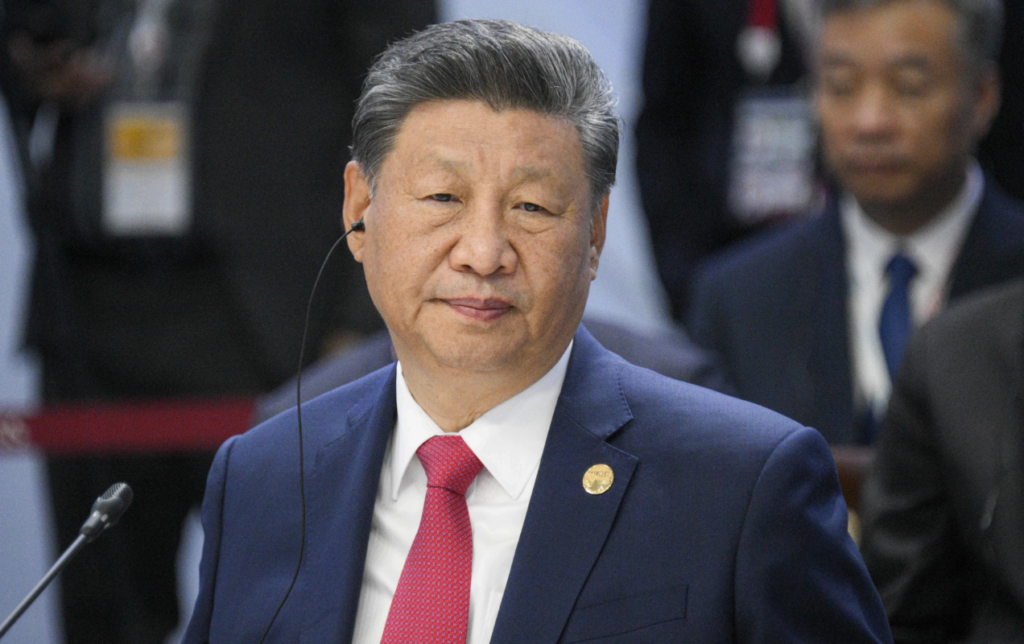
Key suppliers to the U.S. aerospace and semiconductor industries are facing a critically worsening shortage of rare earth elements, to the point that at least two companies have begun turning down orders from certain customers to conserve supplies for major aircraft engine manufacturers. The bottleneck is particularly acute for yttrium, essential in the coatings that allow engines and turbines to operate at extreme temperatures, and for scandium, crucial for manufacturing 5G chip components and high-strength aerospace alloys. Chinese exports of yttrium products to the United States plummeted from 333 tons in the eight months before the April 2025 restrictions to a mere 17 tons in the eight months following—a 95 percent drop. Yttrium prices have surged 60 percent since November and are now 69 times higher than they were a year ago. The United States has no domestic production of scandium, and existing stockpiles are measured in months, not years. These tensions come just weeks before the planned summit in Beijing between Presidents Trump and Xi Jinping, where a trade thaw is on the table, conditioned, among other things, on China easing its restrictions on the export of critical minerals.
Implications
This is a matter of paramount importance that is not receiving the attention it deserves. China’s near-monopoly on rare earth elements is a geostrategic power lever of the first order, incomparably more destabilizing than many conventional arsenals. China not only concentrates extraction but, even more seriously, a significant portion of processing and refining, which is where the West’s industrial dependence truly lies. We are facing a systemic vulnerability: without yttrium, scandium, and other critical elements, the value chain of such sensitive sectors as military aviation, space, defense electronics, and digital infrastructure itself grinds to a halt. The problem is neither circumstantial nor technical: it is political and strategic. Between European complacency and the timidity of many Western elites, Beijing has patiently built a capacity for structural coercion that it is now beginning to use as a disciplinary message to Washington and its allies.
Perspectives and scenarios
In the short term, the Trump Administration will attempt to combine negotiating pressure with emergency measures: accelerated diversification of suppliers, creation of strategic reserves of critical minerals, and support for extraction and refining projects in allies such as Australia, Canada, Greenland, and certain African countries. In the medium and long term, either the United States and Europe seriously commit to a coordinated strategy for commodity resilience, including incentives, regulation, and mining and technology alliances, or Western technological superiority will be at the mercy of Beijing’s political calculations. The most likely scenario is a game of selective pressure by China to remind Washington who is in charge in this arena, without yet reaching a complete cutoff that would also damage the Chinese economy itself. But it would be a historic irresponsibility for the Atlantic nations to continue reacting late and poorly, naively trusting that interdependence replaces deterrence and security of supply. The Trump-Xi summit in March will be a crucial test: in the best-case scenario, a partial agreement will be reached that restores some of the flow of exports, but structural dependence will persist. What is urgently and strategically essential is to drastically accelerate the development of alternative supply chains and establish strategic reserves worthy of the name. This is, without exaggeration, a matter that must be addressed with the same urgency as conventional military threats.
2. Iran promises nuclear flexibility under the threat of US attacks: the same old script
Facts
The third round of indirect talks between the United States and Iran on the nuclear dispute resumed this Thursday in Geneva, amid heightened tensions marked by the largest US military deployment in the Middle East since the 2003 invasion of Iraq. Special Envoy Steve Witkoff and Jared Kushner are leading the US delegation, while Iranian Foreign Minister Abbas Araqchi is heading the Iranian side, with Omani Foreign Minister Badr Albusaidi mediating and IAEA Director General Rafael Grossi participating. Tehran claims it will come with seriousness and flexibility, but insists on limiting the agenda to nuclear issues and the lifting of sanctions, refusing to address its ballistic missile program, which Washington considers designed to strike the United States and destabilize the region. Iran has presented a proposal that includes partial concessions: a willingness to eliminate its stockpile of uranium enriched to 60 percent, increased international monitoring, and a temporary suspension of enrichment for three to five years, a timeframe calculated to extend beyond Trump’s term. Secretary of State Marco Rubio has emphasized that Iran’s refusal to discuss missiles is a major problem. Vice President JD Vance has stated that Washington has evidence that Iran is attempting to rebuild its nuclear program. The aircraft carrier USS Gerald R. Ford is sailing toward waters near Israel, and a dozen F-22 fighter jets have been deployed to Israeli territory for the first time for potential combat operations.
Implications
The script is the same as always with the jihadist regime in Tehran. Faced with the imminence of a US attack, they offer partial concessions, including an implicit acknowledgment that they will abandon elements of their nuclear weapons programs. But here lies the blatant contradiction that the international community should point out much more firmly: if Iran did not have a military nuclear program, as it has relentlessly maintained for decades, how can it renounce what it supposedly does not have? If it admits, even implicitly, that it is abandoning a military component, it is acknowledging that it has systematically lied to the international community. Tehran’s strategy is one of calculated deception: buy time, ease sanctions, consolidate its network of pro-Iranian militias and terrorist groups (Hezbollah, Hamas, Iraqi militias, Houthis, and other proxies), and present itself as a reasonable actor forced to concede only by Washington’s intransigence. Faced with this narrative, the Trump Administration’s firm stance—maximum pressure, deterrent deployment, and clear red lines regarding nuclear weapons—is currently the only language the ayatollahs’ regime understands. The fact that Supreme Leader Khamenei is facing the most serious crisis of his 36 years in power, with a collapsed economy and renewed protests, gives Washington a position of strength that would be unforgivable to squander.
Perspectives and scenarios
In the short term, we could see a limited, technically complex, and politically ambiguous agreement that allows both sides to buy time: Iran would obtain some sanctions relief, and the United States would buy a few months of calm. The risk is repeating the mistakes of previous agreements: insufficient controls, weak verification, and an architecture that allows Tehran to advance discreetly while presenting the world with diplomatic smiles and empty promises. The scenario of targeted military action cannot be ruled out if a flagrant breach of commitments or a move toward a nuclear weapon is proven. What is absolutely non-negotiable is that Iran cannot possess nuclear weapons. Beyond the military dimension, the real challenge is political and moral: continuing to tolerate a regime that exports terrorism and instability through its proxies is a ticking time bomb for the entire Middle East and for the security of Europe.
3. France rescues the United Kingdom from the Chinese grip on its electricity grid
Facts
French energy company ENGIE has reached an agreement to acquire UK Power Networks (UKPN), the UK’s main electricity distributor, for £10.5 billion (approximately $14.2 billion) from the Hong Kong-based conglomerate CK Hutchison Group, controlled by tycoon Victor Li, son of Li Ka-shing. UKPN manages electricity distribution to more than 8.5 million customers across approximately 192,000 kilometers of lines in London and southeast England, making it a critically important infrastructure asset for British energy security. The CK group acquired these assets in 2010, and since then, its expansion into critical infrastructure, including ports in the Panama Canal, has raised concerns in the United States and other countries. With this acquisition, ENGIE strengthens its position in regulated networks and makes the UK its second most important market. ENGIE shares rose as much as 7.6 percent after the announcement, reaching their highest level since September 2009. The operation will be financed with approximately 5 billion euros in debt and hybrid securities, a divestment program worth 4 billion euros, and a capital increase of up to 3 billion euros.
Implications
For years we have been pointing out that China uses large conglomerates based in Hong Kong to acquire controlling positions over critical infrastructure: ports, power grids, telecommunications, and logistics hubs of high geostrategic value. The case of CK Hutchison and the Panama Canal ports was a major warning, which Washington took very seriously, even if Trump’s diplomatic tactics were sometimes clearly lacking. Brexit left the United Kingdom without the regulatory umbrella of the European Union against the predatory appetites of China and other Western adversaries, increasing its exposure to strategically sensitive capital flows. Paradoxically, it is now a major French company that is coming to the rescue, restoring control of the British power grid to a leading European player. There are few things more strategic than a national power grid, and having it in the hands of an allied European company is positive news for the security of the entire West. The operation also underlines the need for professional management of energy infrastructure, far removed from ideological extremism and the dangerous and irresponsible exaggerations of an energy transition catastrophically designed by the European Union, more concerned with slogans than with security of supply and the stability of electrical systems.
Perspectives and scenarios
In the short term, the operation should consolidate more professional management, less constrained by the political interests of extra-regional powers. However, it remains to be seen how relations will develop between ENGIE, the British regulator, and London’s energy policy, which will have to balance decarbonization ambitions with the reality of security of supply. In the medium term, we are likely to see more re-Europeanization of strategic assets previously sold off without much strategic foresight to Chinese capital or other investors with high geopolitical risk. Europe urgently needs a clear doctrine on the protection of its critical infrastructure: ports, electricity grids, gas pipelines, submarine cables, satellite ground stations, and data centers. This is not about closing the door to foreign investment, but about understanding that some assets are almost as sensitive as a military base and, therefore, must remain in reliable hands. The fact that a French company has to rescue the United Kingdom from China’s grip on its electricity grid speaks volumes about the shortcomings of a political class that has looked the other way while fundamental keys to sovereignty were handed over.
4. Ireland breaks its de facto neutrality in the face of the Russian threat in the Atlantic
Facts
The Irish government has published its first National Maritime Security Strategy, a landmark document for a country that has made neutrality a defining characteristic since its independence. The strategy, which covers the period 2026-2030, explicitly acknowledges that Russia poses a threat to all and that submarine cables, energy interconnectors, and other critical infrastructure in Irish waters are targeted by the Kremlin. The plan includes expanding the naval fleet from eight to twelve surface vessels, renaming the Irish Naval Service to the Irish Navy and the Air Corps to the Irish Air Force, acquiring a multi-purpose combat ship with anti-submarine capabilities, a five-year defense plan of €1.7 billion, acquiring sonar technology through a €50 million contract with the French company Thales, deploying sonobuoys from military aircraft to detect hostile submarines, and negotiating bilateral cooperation agreements with the United Kingdom and France for joint naval patrols in Irish waters, including the possibility of Royal Navy and French Navy vessels patrolling waters under Irish jurisdiction. The Government is also preparing urgent legislation to grant the Defence Forces boarding and inspection powers against vessels of the Russian shadow fleet.
Implications
Something profound is shifting in the geostrategic world when Ireland, the last great European symbol of an almost identity-based neutrality, is forced to make a complete about-face in its effective defense strategy. Austria was neutralized by Soviet imposition after the Second World War, which is not the same thing; Ireland, by history and conviction, prided itself on a neutral, indeed neutralist, DNA, which now clashes with the brutality of real threats. Can anyone doubt the gravity of the threats looming over the West when even Dublin acknowledges that Russia is a threat to everyone and that its submarine cables are in danger? The repeated incursions of the Russian spy ship Yantar into Irish waters, the incident involving allegedly Russian drones during President Selenio’s visit in December 2025, and the vulnerability of the submarine cables connecting Europe to North America (three-quarters of the cables in the Northern Hemisphere pass near or through Irish waters) are more than enough reasons to abandon irresponsible naiveté and confront the challenges and threats head-on with courage. There is no longer room for the kind of naive pacifism that mistakes the absence of conflict for the absence of enemies.
Perspectives and scenarios
In the short term, we will see a significant increase in practical interoperability between the Irish naval forces and those of the United Kingdom and France, as well as closer coordination with NATO in the area of monitoring submarine cables and pipelines. The possibility of Royal Navy and French Navy vessels patrolling waters under Irish jurisdiction represents an unprecedented qualitative shift in the security posture of a country that, until very recently, was entirely dependent on others for its defense. In the medium term, this Irish shift may contribute to a cultural change in several European countries still reluctant to invest seriously in defense, reminding them that security is not a luxury, but a prerequisite for prosperity. If Russian hybrid warfare continues to escalate, with cyberattacks, infrastructure sabotage, and disinformation, the logical next step will be an even more structured Irish participation in Western cooperative defense frameworks, even while maintaining certain formal neutrality for domestic consumption. The Irish presidency of the European Union, scheduled for July 2026, will inevitably accelerate this process. The underlying message is clear: without hard power and solid alliances, neutrality is an illusion.
5. Shooting in Cuban waters: the Castro dictatorship and its weapon of mass distraction
Facts
Cuban coast guards fired on a Florida-registered speedboat that had entered Cuban territorial waters on Wednesday, February 25, near Cayo Falcones off the northern coast of Villa Clara province, killing four people and wounding six. According to the Cuban Ministry of the Interior, the vessel was carrying ten Cuban citizens residing in the United States, armed with assault rifles, pistols, improvised explosive devices (Molotov cocktails), bulletproof vests, telescopic sights, and camouflage uniforms, and their objective was to carry out an infiltration for terrorist purposes. Cuba claims that the occupants of the speedboat opened fire first on the patrol boat, wounding its commander, and that the border forces returned fire. Cuba identified one of the deceased as Michel Ortega Casanova, whose brother stated that he was a truck driver with U.S. citizenship who had lived in the United States for twenty years. Secretary of State Marco Rubio stated that the United States would conduct its own independent investigation. Florida Attorney General James Uthmeier has ordered the state Attorney’s Office to cooperate with federal authorities, stating that the Cuban government does not deserve trust. Congressman Carlos Giménez called the incident a massacre and demanded that the Cuban regime be relegated to the dustbin of history.
Implications
The strange incident of the Cuban coast guard shooting down the speedboat demands rigorous scrutiny that goes beyond simply accepting the Castro dictatorship’s self-exculpatory version. So far, many international media outlets, including some European ones, have merely reproduced, almost without nuance, the Cuban communist regime’s account, as if the official narrative of a dying dictatorship were a neutral and reliable source. It would be appreciated if, at the very least, European media outlets stopped treating as gospel what is nothing more than propaganda from a failed communist regime. The Florida attorney general has done well to open an investigation to determine exactly what happened and to prevent the communist dictatorship from getting away with it. In any case, given the high tension between Washington and Havana following Maduro’s capture, the blockade of oil supplies, the revealed secret talks between Rubio and Raúl Castro’s inner circle, and the declared policy of regime change, the incident serves as a perfect smokescreen to distract public opinion from the incompetence, inefficiency, and disastrous management of communism, as well as the utter ineptitude of its leaders. It is, in the truest sense of the term, an extremely effective Weapon of Mass Distraction. The Cuban regime uses these kinds of incidents to project an image of strength and sovereignty to its own population, increasingly desperate due to the collapse of basic services, the ongoing energy crisis, and the mass exodus of citizens, and to try to stem the growing pressure from Washington. It is no coincidence that the incident occurred one day after the thirtieth anniversary of the downing of the Brothers to the Rescue planes, an episode that remains vivid in the memory of the Cuban-American community.
Perspectives and scenarios
In the short term, a battle of narratives will ensue: the Cuban regime will insist on the version of external aggression to justify internal repression, while the United States will attempt to focus on the responsibilities of the Castro regime’s security apparatus. If the independent investigation determines that the occupants were U.S. citizens or residents, the pressure on the Trump administration to respond firmly will be enormous, especially given the political weight of the Cuban-American community in Florida. New sanctions or additional symbolic measures are possible, but the real battleground will be public opinion, particularly in Latin America and Europe. In the medium term, the incident fits into the broader strategy of increasing pressure on Latin American dictatorships: Cuba, Venezuela, Nicaragua, and their organized crime and drug trafficking networks. If it is confirmed that the vessel was linked to trafficking networks—whether of people, drugs, or weapons—the case will reinforce the discourse on the need to combat drug-running boats and the mafia structures that sustain these regimes with a firm hand. The execrable Castro regime finds itself in an increasingly unsustainable situation, and these types of incidents are both a symptom of its desperation and a tool of its propaganda.
6. China punishes Japan for defending Taiwan: restrictions on 40 defense entities
Facts
China’s Ministry of Commerce announced on Tuesday, February 24, a ban on exporting dual-use goods (civilian and military) to 20 Japanese entities and the addition of another 20 to a strengthened watch list, effective immediately. Among the affected companies are subsidiaries of Mitsubishi Heavy Industries involved in shipbuilding and aircraft engines, divisions of Kawasaki Heavy Industries, Fujitsu, and the Japan Aerospace Exploration Agency (JAXA). The watch list includes Su Baru, Itochu Aviation, and Mitsubishi Material, among others. According to Beijing, the measures are aimed at curbing Japan’s remilitarization and nuclear ambitions. Tokyo lodged a formal protest, calling the restrictions utterly unacceptable. The measures follow comments by Prime Minister Sanae Takaichi in November, in which she suggested Japan might intervene militarily if China attacked Taiwan, and after her landslide election victory on February 8, which gave her a stronger mandate to accelerate Japanese rearmament to 2 percent of GDP in defense spending.
Implications
This move fits into Beijing’s systematic pattern of using its control over raw materials and supply chains as a weapon of geopolitical coercion. As with rare earth elements against the United States, China seeks to punish Japan for its growing assertiveness on defense and, above all, for its explicit support of Taiwan. The inclusion of the Japanese space agency and key companies in the Japanese defense industrial complex sends an unequivocal message: China is prepared to inflict real economic damage on those who challenge its red lines in the Indo-Pacific. It is telling that the measures were adopted immediately after Takaichi’s landslide election victory, as if Beijing wanted to make it clear that a solid democratic mandate does not impress it and that the pressure will intensify, not ease. Prime Minister Takaichi is right when she says that Japan faces the most severe and complex security environment since the end of World War II, and the Chinese measures only confirm the urgency of Japanese military modernization. Western allies must remain vigilant in the face of this latest display of coercive Chinese expansionism in Asia, and should view the restrictions on Japan as a warning to all countries that dare to challenge Beijing’s hegemonic ambitions.
Perspectives and scenarios
The confrontation between China and Japan will intensify in the coming months. Takaichi has a solid democratic mandate to continue rearmament and deepen the alliance with the United States. China, for its part, shows no intention of easing its pressure. The Taiwan issue remains the most dangerous potential trigger for conflict in the Indo-Pacific. Japan’s inclusion in the sanctions regime should prompt Tokyo to further diversify its sources of critical minerals and strengthen technological cooperation with allies such as Australia, South Korea, and the European Union. Significantly, in this regard, South Korea and the United Arab Emirates have signed a defense cooperation memorandum of understanding with a potential value exceeding $35 billion, consolidating an Indo-Pacific-Gulf axis that strengthens deterrence against Iran and, indirectly, against China.
Other key pieces in the background: Ukraine and energy
The United States and Ukraine are preparing a prosperity package in Geneva for the reconstruction of the Ukrainian economy, while the military front remains at a standstill and Moscow maintains its armed aggression. The war in Ukraine is entering a phase in which the economic dimension—reconstruction, aid, and investment—becomes as strategic a tool as arms supplies, and where the real commitment of the United States and Europe will be measured in billions, not just in declarations. We oppose Russian aggression against Ukraine and the use of force as a means of acquiring territory; this is a matter of principle that admits no nuances or equidistance. Meanwhile, the rise in oil prices, driven by tensions surrounding Iran and uncertainty in several supply hotspots, with Brent crude nearing $71 a barrel, continues to fuel market unease, reminding Europe of the cost of having opted for a poorly sequenced and governed energy transition. The defense of Ukraine is inseparable from the defense of the European project itself, and energy security is not guaranteed by poorly designed green dogmas, but by diversification, investment in reliable networks, and a realistic foreign policy. It is equally significant that South Korea and the United Arab Emirates have signed a defense cooperation memorandum of understanding with a potential value exceeding $35 billion, consolidating an Indo-Pacific-Gulf axis that strengthens deterrence against both Iran and, indirectly, China’s hegemonic ambitions. The global security architecture is mutating toward flexible networks of allies who share the same concerns, and Europe cannot afford to remain on the sidelines of this transformation.
III. MEDIA RACK
Reuters leads the day’s coverage with its exclusive report on rare earth elements, extensive information on the Geneva negotiations, ENGIE’s acquisition of UKPN, Ireland’s new maritime strategy, and the boat incident in Cuban waters. The Washington Post dedicates a lengthy analysis to the nuclear talks with Iran, highlighting that Trump’s war clock is ticking. The New York Times and NPR focus on the military dimension of the US deployment in the Middle East and offer balanced analyses of both the Cuban shooting and China’s restrictions on Japan. The Wall Street Journal, Bloomberg, and CNBC cover the ENGIE-UKPN deal and its financial implications in detail, while Morningstar and the Financial Times analyze the regulatory valuation and geopolitical risks associated with assets controlled by Chinese conglomerates. The Times and The Telegraph of London both cover the sale of UKPN, with the latter providing particular detail on the Anglo-Irish naval cooperation that would allow the Royal Navy to patrol Irish waters. The Guardian, RTE, and DW delve into Ireland’s shift in maritime security. CNN, Fox News, CBS, and NBC provide extensive coverage of the Cuba incident, with special attention to the accounts of the families of the deceased.
In the continental European press, Le Monde and Le Figaro cover the ENGIE deal as a milestone for the French company, while Liberation addresses the Geneva negotiations with a focus on regional implications. FAZ and Die Welt closely follow Chinese restrictions on Japan and their implications for German industry, which is also dependent on Chinese supplies. Corriere della Sera covers the nuclear negotiations with an emphasis on Omani mediation. The Tribune de Genève offers local coverage of the talks.
Israel Hayom publishes a revealing critical analysis of Iran’s lack of real flexibility in its pre-talk position, while Haaretz and the Jerusalem Post cover Indian Prime Minister Narendra Modi’s visit to Israel. Al Jazeera provides live coverage of the Geneva talks and extensive reporting on the Cuban incident, albeit with a notable bias in giving undue credence to the Castro regime’s version of events. Al Arabiya and The National (UAE) focus on the implications of the military deployment for the Gulf states. Channel News Asia and the Deccan Herald highlight the regional dimension of the negotiations.
Nikkei Asia, Asia Times, South China Morning Post, and Taipei Times lead the coverage of China’s restrictions on Japanese entities, with Asia Times offering an in-depth analysis of the impact on Japan’s defense industry. China Daily and Global Times present the measures as legitimate to curb Japanese remilitarization, in a propaganda exercise that is increasingly unsurprising. The Straits Times covers the tensions from a Southeast Asian perspective. WION and The Times of India highlight Modi’s visit to Israel and the growing opportunities for Indo-Israeli technological cooperation. Russia Today and TASS offer biased coverage of the Geneva negotiations, portraying Iran as a victim of US aggression, in a narrative that seeks to undermine the Western position. Ukraine Pravda, Ukrinform, and kyiv Independent note with concern that Washington’s divided attention between Iran, Cuba, and multiple fronts complicates the prospects for continued support for kyiv. Clarín, El Mercurio and Reforma cover with particular intensity the Cuban incident and the consequences of Maduro’s fall for the balance of power in Latin America, while Marine Link and Helsingin Sanomat focus on the implications of the Irish turn for the security of the North Atlantic and the Baltic.
IV. RISK TRAFFIC LIGHT
| RISK AREA | LEVEL | COLOR |
| US-Iran confrontation / Risk of military conflict | CRITICAL | RED |
| Dependence on Chinese rare earth elements / Aerospace and chips | CRITICAL | RED |
| Iran nuclear proliferation | CRITICAL | RED |
| Russia-Ukraine War / Stalled Negotiations | CRITICAL | RED |
| Vulnerability of critical infrastructure (electrical, cables, ports) | HIGH | RED |
| China-Japan escalation / Restrictions and Taiwan | HIGH | ORANGE |
| US-Cuba tensions / Florida boat incident | HIGH | ORANGE |
| Russian submarine threat / Atlantic cables | HIGH | ORANGE |
| Latin American dictatorships (Cuba, Venezuela, Nicaragua) | HIGH | ORANGE |
| Global jihadist terrorism | MEDIUM-HIGH | ORANGE |
| Erosion of Western credibility / Wavering policies | HALF | YELLOW |
| Re-Europeanization of strategic assets (ENGIE/UKPN) | CHANCE | GREEN |
| Atlantic-Indo-Pacific axis (USA, Europe, Korea, Gulf) | CHANCE | GREEN |
V. EDITORIAL COMMENTARY
What we see in this news cycle are not isolated incidents, but pieces of the same mosaic: a struggle between liberal democracies, often culpably distracted, and a constellation of dictatorships, autocracies, and mafia regimes that have learned to exploit our weaknesses. China has understood better than anyone that, in the 21st century, controlling strategic raw materials, refining chains, and logistics hubs is equivalent to controlling the industrial decision-making capacity of your competitors, without firing a single shot. The restrictions on the Japanese defense industry for the “sin” of defending Taiwan and modernizing its armed forces are simply another expression of this same coercive logic.
Iran, for its part, has spent decades practicing a perverse art: denying the obvious—its nuclear military ambitions—while simultaneously weaving a web of militias and terrorist groups that stretches from the eastern Mediterranean to the Gulf of Aden. When pressure mounts, it offers flexibility, promises to abandon a program it claims not to have, and hopes that, once again, Western capitals will prefer the mirage of appeasement to the political cost of firmness. The Trump administration’s position, with its combination of maximum pressure and a willingness to negotiate, is the right approach, and the diplomatic successes achieved in less than a year in multiple theaters, from Gaza to Azerbaijan-Armenia, confirm this.
In Europe, the case of the British electricity grid and the Irish shift should serve as a stark wake-up call. For years, critical assets have been sold off to the highest bidder, the free movement of capital has been mistaken for geostrategic naiveté, and a dogmatic energy transition has been designed, more concerned with slogans than with security of supply and the stability of electrical systems. The fact that ENGIE has to rescue the United Kingdom from China’s grip on its electricity grid speaks volumes about the shortcomings of a political class that has looked the other way while fundamental keys to sovereignty were surrendered. And that Ireland, the last bastion of European neutrality by conviction, is forced to seek joint naval patrols with the United Kingdom and France to protect its undersea cables from the Russian threat should shame those who continue to preach a naive pacifism from the comfort of their offices.
Meanwhile, in our Latin American neighborhood, the old Cuban dictatorship continues to resort to the classic playbook: controlled tension, propagandistic victimhood, and highly symbolic violence to unite its supporters and distract from the misery they themselves create. It would be appreciated if, at the very least, the European media stopped treating as gospel what is nothing more than propaganda from a failed communist regime. The Trump Administration deserves recognition for its hardline policy against Latin American dictatorships and drug trafficking, two sides of the same coin that have enjoyed shameful impunity for far too long.
However, it must be pointed out, with all due respect but clearly, that the restrictions on international free trade being promoted by President Trump are not in line with the thinking of the unparalleled and great President Reagan, for whom free trade was a fundamental pillar of American global leadership. The greatness of this Administration’s foreign policy lies in its pragmatism and realism; it would be regrettable if it were hampered by protectionism that, in the long run, weakens the very alliances that underpin Washington’s position of strength.
Faced with this situation, our position is clear and consistent: an unequivocal defense of representative liberal democracy, a market economy with social justice, a well-managed welfare state, Atlanticism, and a strong and serious Europe in defense. We categorically reject dictatorships of any kind, from Tehran to Caracas, from Havana to Moscow or Beijing, and we maintain maximum vigilance against Chinese expansionism and jihadist terrorism in all its forms, from Hezbollah and Hamas to ISIS, Al-Qaeda, Al-Shabaab, Boko Haram, the Taliban, and the jihadist organizations of Southeast Asia. The threat of jihadist terrorism has not disappeared simply because it has ceased to make headlines; it remains a deadly reality in Africa, Asia, and potentially in Europe, and it demands constant vigilance and unwavering international cooperation.
This is not about succumbing to hysteria or irresponsible adventures, but about recovering reason and common sense: without industry, without energy security, without control over strategic raw materials, and without credible military capability, values remain mere rhetoric. We support representative liberal democracy, the market economy, universal social security, and a well-managed welfare state, which has nothing to do with the ruin to which European left-wing parties invariably lead when they come to power. We believe in common sense and pragmatism in the face of extremism of any kind: no to neoliberalism, radical gender ideology, and relativism; yes to equality between men and women, yes to the uncompromising defense of fundamental rights and freedoms, and non-discrimination on any grounds.
The Spanish transition demonstrated that it is possible to combine freedom, stability, and progress when there is leadership and civic courage. The figure of King Juan Carlos I as the architect of our democracy remains an example that history is made by the men and women who dare to face the challenges of their time head-on. Now it is time to demonstrate that our democracies still have that courage to respond with firmness, composure, and, above all, with a strategy commensurate with the challenges looming over the free world.