By Gustavo de Arístegui,
March 9, 2026
I. BRIEF INTRODUCTION
The world awoke on Monday, March 9, 2026, under the weight of a confluence of extraordinary crises that are redrawing the global geopolitical map with a speed unprecedented since the end of the Cold War. At the epicenter of it all is the conflict unleashed on February 28 by Operation Epic Fury—the joint US-Israeli military campaign against the Islamist regime in Tehran—whose cascading consequences are unfolding with an inertia that no international actor expected to manage simultaneously. The death of Ayatollah Ali Khamenei in the early hours of the conflict, the ensuing succession crisis, and the energy chaos resulting from the effective closure of the Strait of Hormuz constitute the three axes around which the global instability of this day revolves.
Barely ten days have passed since the start of hostilities and we are already facing a scenario of systemic collapse: the price of oil has exceeded one hundred dollars per barrel—with peaks of one hundred and ten—, the Iranian jihadist oligarchy has chosen Khamenei’s own son, Mojtaba—a fanatic with an ultra-hardline profile, lacking sufficient religious credentials and devoted to the Revolutionary Guard—as Khamenei’s successor, the conflict between Pakistan and Taliban Afghanistan has escalated into “open war” with tens of thousands of displaced people, and the regional mediators who in other circumstances could act—Saudi Arabia and Qatar—are too busy licking their own wounds inflicted by Iranian attacks on their energy and civilian infrastructure to attend to other fires.
In this context, today’s analysis builds upon the reflections I developed in my article published in La Razón on March 8th, where I warned that the West’s dilemma is not winning the war—the tactical superiority of the United States and Israel seems indisputable—but winning the peace, an undertaking for which there is no roadmap and whose absence constitutes the greatest strategic threat of the moment. What we are witnessing confirms, hour by hour, this diagnosis: military victory is possible; political victory, regime change, or a watered-down version of it is, for now, an enigma that worries all serious analysts.
II. MOST IMPORTANT NEWS OF THE LAST 24 HOURS
1. The risks and threats that the Iranian regime poses to its neighbors and the world
Facts:
The Tehran regime—or what remains of it under the fractured leadership of an emergency triumvirate or the new Leader of the Revolution—has maintained its strategy of regional aggression with a ferocity that belies any optimistic view of an imminent surrender. Bahrain accused Iran of deliberately attacking a drinking water desalination plant, directly striking the civilian infrastructure of a sovereign state uninvolved in the conflict, a flagrant violation of International Humanitarian Law. Qatar Energy was forced to halt operations at the world’s largest liquefied natural gas (LNG) export facility after an Iranian drone attack, with energy repercussions already stretching from Europe to Asia. Four oil tankers have been hit in the Gulf since the start of hostilities, and tanker traffic through the Strait of Hormuz—through which 20 percent of the world’s oil passes—has fallen from an average of 24 transits per day to just four in the first few days, with periods of near-total standstill. US Defense Secretary Pete Hegseth confirmed that Iran has attacked troops in Saudi Arabia, killing one US service member.
Implications:
What the Iranian regime is demonstrating, even from its position of tactical weakness, is precisely the thesis I have repeatedly defended in my articles and analyses: that the terrorist and jihadist nature of the Iranian state is not a rhetorical pose but a doctrine of conduct that is applied with complete consistency even under fire. Attacking a water treatment plant in Bahrain, destroying the world’s largest LNG facility, sinking oil tankers in international waters—these actions are not rational responses of survival; they are the expression of an ideology that instrumentalizes civilian suffering as a deliberate geopolitical weapon. The Islamic Revolutionary Guard Corps (IRGC), the backbone of this strategy, demonstrates that its capacity for harm remains and will continue to do so as long as the physical apparatus for projecting force is not dismantled at its root.
Secretary of Defense Pete Hegseth noted that Iranian attacks against its Gulf neighbors have strengthened the unity of the resistance coalition around Washington, but it is equally true that this unity comes at a human, economic, and infrastructural cost to the Gulf monarchies that no insurance or financial guarantee can compensate for in the short term. The Iranian threat does not end with the death of Khamenei Sr.; it branches out, spreads, and finds new centers of gravity in the Revolutionary Guard, Hezbollah, Iraqi Shia militias, and potentially the Yemeni Houthis, who could intensify their presence in the Gulf of Aden.
Perspectives and scenarios:
The most worrying short-term scenario is the expansion of the conflict into the maritime space of the Indian Ocean and the Gulf of Aden, should the Houthis decide to open a second front in support of Tehran by attacking shipping lanes in international waters. This would jeopardize the Suez Canal-Red Sea route, which was already severely disrupted in 2024. According to recent reports, Italian intelligence services have warned of the risk that the entire eastern Mediterranean region could be affected by this cascading instability.
In a second scenario , if Washington succeeds in dismantling Iran’s attack capability over the Strait of Hormuz in the coming days —as Energy Secretary Chris Wright has promised—, market logic would absorb the shock.
The worst-case scenario, that of a prolonged war lasting weeks or months, would see oil at one hundred and fifty dollars cease to be an academic projection and become a devastating reality.
2. Scenarios and perspectives of the Iran-US-Israel conflict
Facts:
The conflict is now in its tenth day, with neither side having achieved a clear political objective beyond the initial tactical success—the elimination of Ali Khamenei and the severe damage inflicted on the regime’s nuclear and security apparatus. The United States, according to statements by Secretary of State Hegseth, is only considering victory, but admits that the war “will drag on for some time.” The White House has not responded to the appointment of Mukhta Khamenei as the new Supreme Leader. Trump, for his part, is not seeking an agreement and has publicly ruled out a ceasefire, while the Iranian Parliament, through its Speaker Mohammad Bagher Qalibaf, has reiterated that Tehran is also not seeking a cessation of hostilities. The Revolutionary Court in Tehran was destroyed in airstrikes; the regime’s internal security infrastructure has suffered severe blows, but the apparatus of repression and retaliation continues to function.
Implications:
As I pointed out in my article in La Razón on March 8, winning the war does not guarantee winning the peace. This warning—which some might interpret as pessimistic rhetoric—now finds daily empirical confirmation. Israeli Brigadier General (retired) Eran Ortal has publicly acknowledged that “there is no precedent for regime change through an air campaign.” Former US diplomat Philip H. Gordon has noted that Washington currently has neither a clear way out nor a natural outcome for the campaign. And political analyst Sharan Grewal warns—with solid historical basis—that external military pressure tends to strengthen the most radical elements of any regime and marginalize the moderates, who are precisely the ones who could facilitate a negotiated transition.
The internal dynamics of Iran—with an emergency triumvirate torn between President Pezeshkian’s conciliatory signal on Saturday and his immediate reversal under pressure from hardliners on Sunday—accurately illustrate this phenomenon. The very appointment of Mojtaba Khamenei, which I will return to in News Item 3, is the most compelling demonstration that the regime’s hawks have won the internal battle and that any prospect of unconditional surrender—Trump’s demand—is, for the moment, a pipe dream.
Perspectives and scenarios:
The strategic horizon contemplates three main scenarios.
The first scenario —the most favorable for the Western coalition—would be an internal collapse of the regime precipitated by the confluence of military punishment, the economic collapse accelerated by sanctions, and the explosion of Iranian popular anger accumulated over years of repression, women’s protests, corruption, and poverty. This scenario is possible but uncertain, and would require a popular uprising that the IRGC would try to suppress with extreme violence, posing a moral and strategic dilemma for Washington if it were to use air power to deter such repression.
The second scenario—the most likely in the short term—is a prolonged low-to-medium intensity conflict, in which Iran maintains the capacity to inflict regional damage while resisting regime change, consolidating Mojtaba Khamenei and the IRGC in power under conditions of total war that reinforce his determination internally and his authoritarianism.
The third scenario , the most dangerous, is that of an accidental or deliberate escalation towards the use of weapons of mass destruction or an attack on critical infrastructure of a major power, which could drag previously secondary actors —China, Russia, Turkey— into positions that could irreversibly complicate the international order.
3. Mujtaba Khamenei, Iran’s new supreme leader: hardliners win the internal battle
Facts:
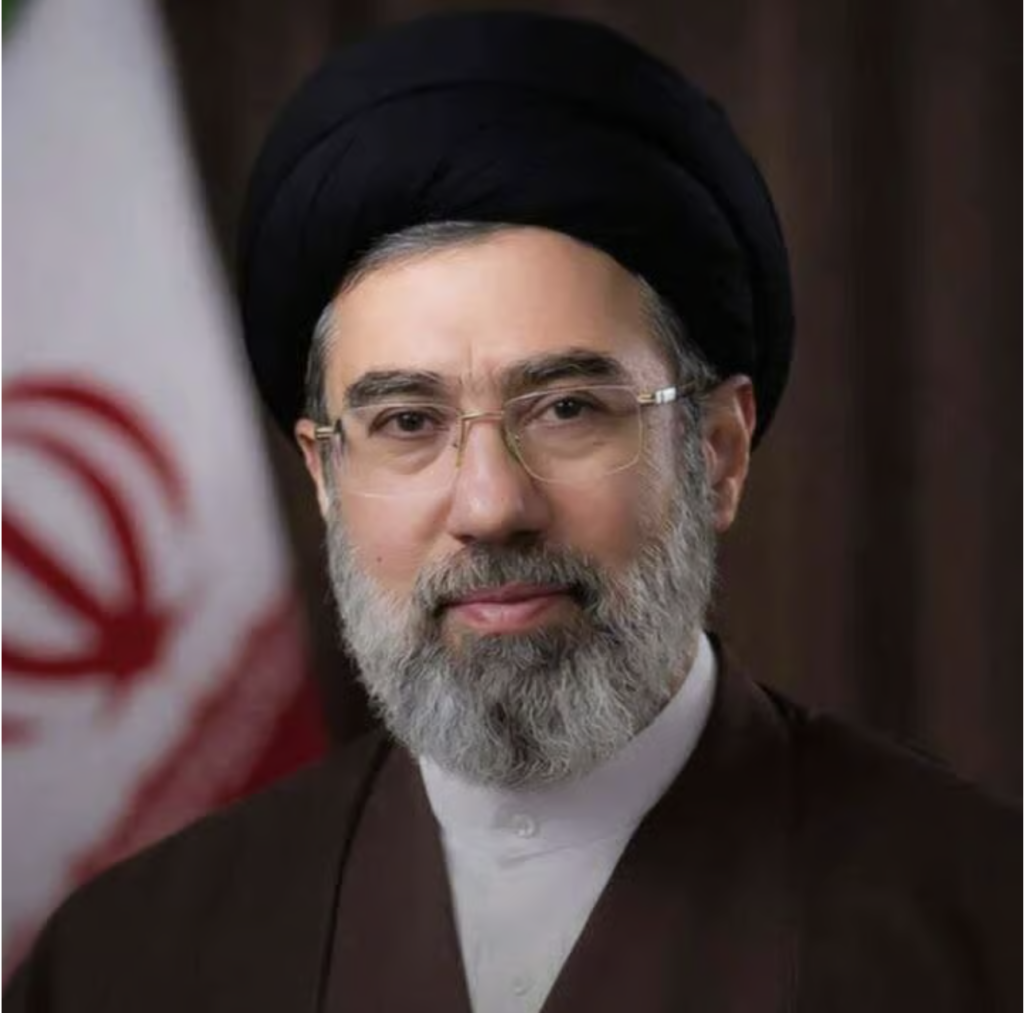
Iranian state television confirmed in the early hours of Sunday, March 8, 2026, that the Assembly of Experts—the eighty-eight-member, highly radical clerical body with the sole power to elect the Supreme Leader—had designated, “by a decisive vote,” Mojtaba Hosseini Khamenei as the third leader of the Islamic Republic of Iran. Mojtaba, fifty-six, is the son of Ayatollah Ali Khamenei, who was killed in the initial attacks of Operation Epic Fury on February 28. Minutes after his confirmation, the IRGC issued a statement declaring its “total obedience and self-sacrifice” to the new leader. Trump asserted that Mojtaba “won’t last long” without US approval. Prior to the announcement, Israel had threatened to attack whoever was chosen.
Mukhta Khamenei’s profile is as revealing as it is unsettling. He has never held public office nor been elected to any government position. His clerical rank is that of Ayatollah—the lowest level in the Shia hierarchy—far below the threshold of religious legitimacy required for the office of Supreme Leader, which should be held at least at the level of Grand Ayatollah and, to possess full doctrinal authority, at the level of Grand Ayatollah with Maryjah (doctrinal reference). He is, strictly speaking, missing three rungs in the Shia religious hierarchy: Ayatollah, Grand Ayatollah, and Grand Ayatollah with Maryjah. This is no minor detail: it is a profound breach of theological legitimacy that the moderate clerical establishment will not overlook. The very regime that for decades criticized the Shah’s hereditary monarchy has just institutionalized its own dynastic version of sacred-political power. The historical irony would be admirable if it weren’t so dangerous.
There are biographical elements in Mojtaba’s life that explain the depth of his hatred and radicalism: the death of his mother, Zahra Haddad Adel, and his father in the same Israeli attack, and the fact that several of his longtime associates in the Revolutionary Guard have fallen in the conflict. Personal rage combines here with ideology to construct a profile that, under the current circumstances, guarantees a maximalist and aggressive continuation of the regime’s terrorist project. On Saturday, President Pezeshkian had apologized to the Gulf neighbors for the attacks on civilian targets—an unprecedented conciliatory gesture in the regime’s rhetoric—but on Sunday, under immediate pressure from the hardliners, he publicly backtracked, declaring: “The more pressure they put on us, the stronger our response will be.” The Revolutionary Guard then launched another wave of missile and drone attacks against civilian targets in its neighbors.
Implications:
The appointment of Mojtaba Khamenei is the clearest possible sign that the regime’s ultra-conservative faction—with the IRGC as its backbone—has won the internal succession battle and is not considering any scenario of negotiation or capitulation. The selection of a candidate whom Trump himself deemed “unacceptable” and who was sanctioned by Washington in 2019, under the pretext that he was chosen because he was “hated by the enemy,” is a declaration of ideological as well as political war. Hezbollah, the regime’s Lebanese proxy, has already published an image of Mojtaba presenting him as “leader of the blessed Islamic revolution”: the message to the Shia world is one of absolute continuity in the agenda of exporting terrorism and hostility toward the West and Israel.
The fracture between the pragmatic wing of the regime—Pezeshkian and some sectors of the moderate clergy—and the hardline IRGC and the new Khameneis is real, but, for the moment, politically irrelevant: the hardliners control the weapons, the money of the bonyads (state foundations), and now, formal supreme power. There are no conditions for this fracture to become a catalyst for change without an escalation of military or economic collapse, which has not yet occurred.
Perspectives and scenarios:
The appointment of Mojtaba as the third Supreme Leader—only the second transition of power since 1979—closes the door to any negotiation process in the short term. Trump has made unconditional surrender his public demand and does not foresee an agreement; Tehran, with Mojtaba at the helm, does not either. The period that is beginning is, therefore, one of prolonged war with the continuation of the Iranian jihadist project under a new leadership that some Western analysts mistakenly consider a family-dynastic regime.
The most important conclusion we can draw from this “election” is that the Revolutionary Guard Corps (IRGC) has imposed its candidate, just as Khomeini’s inner circle did with his father, Ali Khamenei, but for very different reasons. Ali Khamenei was the executor of Imam Khomeini’s legacy and ideological testament, and therefore, despite his lack of ecclesiastical credentials (for lack of a better term), he was respected and revered. His son, Mukhtaba Khamenei, is not a leader; he is a puppet in the hands of the Revolutionary Guard Corps and the ultra-radical sectors of the regime. He is the instrument, the face, the executor of the ultra-radicals’ plan of action.
4. Oil above $100: the energy shock and the risk of global stagflation
Facts:
West Texas Intermediate (WTI) crude oil futures reached $108 a barrel on Sunday—briefly peaking at $110—their highest level since July 2022, while Brent crude, the global benchmark, rose 16 percent to the same $108 range. Since the start of hostilities on February 28, oil prices have increased by more than 25 percent. The average price of gasoline in the United States reached $3.45 a gallon, a 16 percent increase in just one week, according to the American Automobile Association (AAA). The Strait of Hormuz, through which 20 million barrels of oil pass daily—20 percent of global production—has become a de facto exclusion zone: the average number of transits fell from 24 ships per day to just four in the first few days. Qatar Energy halted exports from the world’s largest LNG (Liquefied Natural Gas) terminal. Saudi Arabia, the Emirates, Kuwait, and Iraq have been forced to reduce production due to their inability to export the extracted barrels.
Implications:
The economic implications of this energy shock are of the highest order and global reach, with particular severity for Europe and Asia. Goldman Sachs had already warned that a five-week closure of the Strait of Hormuz could drive Brent crude to $100—a level already surpassed in just 10 days, not 5 weeks—and Kpler projections point to $150 per barrel before the end of March if the situation does not normalize. The investment bank Nomura has indicated that the conflict “will cause many central banks to maintain interest rates for now,” burying expectations of a rate cut by the Federal Reserve that was anticipated at its March meeting or, at the latest, in the summer. The terrifying term stagflation ( a combination of economic stagnation and high inflation) is reappearing in the vocabulary of economists and analysts with an insistence not seen since the oil crisis of the 1970s.
Swissquote analyst Ipek Ozkardeskaya succinctly summarized the diagnosis: “As growth in most regions continues to recover from the pandemic, trade tensions, and geopolitical stagflation risks may reappear depending on how long the tensions in the Middle East persist.” Barclays economist Emmanuel Cau clarifies that the shock occurs “against a backdrop of favorable growth and policy conditions and resilient corporate profits,” which offers some cushioning but does not eliminate the threat. Asia is the most vulnerable flank: China, India, Japan, and South Korea receive 75 percent of the oil and 59 percent of the LNG transiting the Strait, and their central banks face the same dilemma as the rest: raise interest rates to combat energy inflation or maintain them to avoid stifling growth.
Perspectives and scenarios:
The central question is one of duration, not direction . If the Strait of Hormuz reopens in the coming days—as Energy Secretary Wright promised—the shock would be severe but absorbable, given that global strategic reserves are at reasonable levels, especially in China.
If the shutdown lasts for weeks or months , we would face a reshaping of the global energy landscape with permanent inflationary consequences: the return of inflation would eliminate any possibility of interest rate cuts in 2026, eroding consumption, employment, and growth in most of the developed world. The IMF estimated that the conflict could add between 0.7 and 0.8 percentage points to inflation in Asia; in Europe, where natural gas storage is already significantly depleted after winter, the impact could be even more severe. The paradox is that the United States, as a net oil exporter, could benefit from high prices in its energy accounts while suffering from domestic inflation—a tension that Trump will have to manage in the lead-up to the midterm elections.
5. Pakistan-Afghanistan: open war with no prospects for peace
Facts:
The conflict between Pakistan and Taliban-controlled Afghanistan—overshadowed in the media by the war in Iran, but of similar gravity on a regional scale—shows no signs of de-escalation. Islamabad launched Operation Ghazab Lil Haq in late February in response to attacks by Afghan authorities on Pakistani military bases along the Durand Line, the 2,640-kilometer border drawn in 1893 that Kabul has never recognized as legitimate. Pakistani airstrikes have hit Kabul, Kandahar, Paktika, and military bases in 23 areas of Afghanistan—the first time since the Taliban regained power in 2021 that the Pakistani air force has attacked the Afghan capital. The number of displaced Afghans exceeds 66,000, according to the IOM (International Organization for Migration), with at least 56 civilians killed—24 of them children—according to UNHCR (the UN Refugee Agency). Pakistani Defense Minister Khawaja Asif formally declared a state of “open war” on February 27, stating that “Islamabad’s patience has run out.”
The underlying cause of the conflict is structural: Islamabad accuses the Taliban regime of harboring the Tehrik-e-Taliban Pakistan (TTP, the Pakistani faction of the Taliban) and Daesh/ISIS-K (Islamic State Khorasan Province) on Afghan territory. These groups are responsible for a surge in attacks within Pakistan in 2025 and 2026, including a suicide bombing at a Shiite mosque in Islamabad that killed 36 people. The Taliban systematically deny this harboring, but their historical alliance with the TTP makes this denial hardly credible. The question of why Islamabad created and encouraged the Afghan Taliban in the 1990s, only to find itself now in open warfare with them, is one of the most bitter geopolitical lessons of the last generation.
Implications:
The Atlantic Council published an analysis by Michael Kugelman, dated March 5, that concludes with a stark statement: “It is difficult to imagine any outcome that is stabilizing.” The conflict’s natural mediators—Saudi Arabia and Qatar—are now too preoccupied with the fallout from the war in Iran to intervene with the necessary dedication, according to a recent analysis that emphasizes the likelihood of finding a lasting solution is “remote, at best.” India, which trades with Afghanistan through the Iranian port of Chabahar—where it also has strategic interests—sees that corridor threatened by the instability in Iran, adding an Indo-Pakistani geopolitical dimension to an already explosive conflict. China has attempted to mediate, with its ambassador in Kabul meeting with the Taliban foreign minister on March 4, but Beijing lacks sufficient leverage over Islamabad to impose a solution.
It is important to remember that Pakistan is a nuclear power with ongoing tensions on its eastern border with India—the two countries fought their worst conflict since 1971 in May 2015—and that it now simultaneously faces instability on its western Afghan border and the risk of contagion in Balochistan stemming from the Iranian crisis. A scenario of Pakistani state collapse or war on two simultaneous fronts would be a geopolitical catastrophe of incalculable proportions given the country’s nuclear arsenal.
Perspectives and scenarios:
The best-case scenario is the signing of a new internationally mediated ceasefire, which Atlantic Council analysts consider, at best, a temporary band-aid that would not address any of the structural causes of the conflict: the dispute over the Durand Line, the TPP’s presence on Afghan soil, the forced expulsion of nearly one million Afghans from Pakistan by 2025, and the Pakistani military’s instrumentalization of the conflict to consolidate its control over domestic politics. The worst-case scenario is a protracted war compounded by the spread of Iranian instability in Balochistan, the activation of the Indo-Pakistani flank, and the proliferation of jihadist terrorism throughout the region, transforming the heart of South Asia into a second arc of global instability.
III. MEDIA RACK
Global media coverage over the past 24 hours confirms the preeminence of the Iranian conflict and its ramifications as the central focus of the international media agenda, with notable differences in approach depending on the geopolitical blocs of reference.
Anglo-Saxon media:
The New York Times and The Washington Post maintain intense coverage of the Iranian conflict, with the NYT highlighting Pezeshkian’s thwarted attempts at reconciliation—”Iranian operatives made contact to discuss terms for ending the conflict,” according to a report that briefly rattled European gas markets—and the WashPost focusing on Washington’s strategic dilemma: the absence of a post-conflict roadmap and the danger of repeating the mistakes of Iraq in 2003. The Times of London and The Telegraph emphasize Europe’s energy vulnerability in the face of the Strait of Hormuz crisis and the risk that the Iranian war could trigger a new wave of inflation that would undermine the continent’s fragile economic recovery. The Guardian adopts a more critical tone toward the operation, underscoring the humanitarian cost in Iran and Lebanon and questioning the legality of regime change through airstrikes. The Financial Times focuses its analysis on the implications for central banks and the potential for stagflation, while the Wall Street Journal balances its coverage of the conflict with an analysis of the opportunities for the US energy sector. The Economist puts forward the hypothesis that the Iranian crisis could accelerate a long-term reconfiguration of the global energy order, with American and Arab oil filling the void left by Tehran.
French and German media:
Le Monde dedicates its front page to the “question of legitimacy” surrounding Mukhta Khamenei’s appointment, noting the historical paradox that the Islamic Republic—born in opposition to hereditary monarchy—is now replicating its own logic of dynastic succession. Le Figaro applauds the Western coalition’s firmness and underscores the need for France and Europe to assume a more active role in managing the aftermath. Libération maintains its skepticism regarding the US strategy. Die Welt and the Frankfurter Allgemeine Zeitung (FAZ) lead the German coverage with analyses focused on the energy impact—Germany relies on the now-disrupted European LNG markets—and the implications for European defense policy. Die Zeit offers a far-reaching analysis of the reconfiguration of the international order that the Iranian conflict is accelerating.
Gulf and Arab media:
Arab News and Asharq Al-Awsat, with their respective Saudi and pan-Arab perspectives, document with evident alarm the Iranian attacks on civilian infrastructure in the Gulf—especially the attack on the Bahraini desalination plant—and express implicit support for the US-led coalition, albeit with the caution imposed by their geographical proximity to the theater of operations. Al Jazeera maintains a more critical coverage of the Western coalition, with particular emphasis on Iranian and Lebanese civilian casualties. Gulf News UAE and Khaleej Times underscore the need to restore stability in the Strait of Hormuz as an absolute economic priority for the Emirates.
Israeli and Asian media:
The Jerusalem Post and Israel Hayom offer triumphalist coverage of the initial military successes, though with growing concern about the lack of a clear political horizon. Haaretz maintains its critical stance regarding the risks of a conflict with no clear end in sight. The South China Morning Post and China Daily reflect Beijing’s position: concern about the impact on Chinese energy supplies and a call for negotiations, without explicitly condemning either side. The Times of India and Hindustan Times focus on the threats to the Iranian-Afghan trade corridor that India uses to access Central Asia. Japan’s Yomiuri Shimbun highlights the risk to the energy security of the Asian arc posed by the closure of the Strait.
Russian and Ukrainian media:
Russia Today and TASS adopt the narrative framework of Western imperialist aggression, without the slightest critical analysis of Iranian state terrorism. Ukrainian publications—Kyiv Post, Kyiv Independent, Ukrinform—view with a mixture of strategic relief and logistical concern how the center of gravity of global attention momentarily shifts toward the Middle East, easing the pressure on the Ukrainian front but absorbing Western resources and attention that Kyiv needs.
IV. RISK TRAFFIC LIGHT
🔴 RED — IMMEDIATE CRITICAL RISK
Prolonged closure of the Strait of Hormuz and global energy shock leading to stagflation. Escalation of the Iranian conflict toward the use of unconventional weapons or an attack on high-capacity Saudi infrastructure. Expansion of the Pakistan-Afghanistan conflict with the risk of indirect nuclear spillover.
🟠 ORANGE — HIGH RISK
The consolidation of Mukhta Khamenei as Supreme Leader and the continued, extremely aggressive Iranian terrorist and nuclear program under the IRGC’s control. The activation of the Houthis as a second front in the Gulf of Aden. The contagion effect of the collapse of regional mediators (Saudi Arabia, Qatar) is preventing de-escalation on other active fronts.
🟡 YELLOW — MEDIUM RISK TO BE MONITORED
China and Russia’s stance on the Iranian conflict in multilateral forums. Inflationary impact on European and Asian economies with the risk of a technical recession in the second quarter. Weakening of NATO’s credibility in the face of the crisis if European allies fail to formulate a common position. Spillover of jihadist terrorism from the Pakistan-Afghanistan-Iran arc into Central Asia and the Caucasus.
🟢 GREEN — RELATIVE STABILIZATION FACTORS
Global strategic oil reserves are at reasonable levels, especially in China, allowing for the absorption of a short-lived shock. The United States, as a net exporter of crude oil, is comparatively less exposed to energy shocks. The tactical unity of the military coalition around Washington has been reinforced, paradoxically, by Iranian attacks on Gulf states. The technological and intelligence capabilities of the IDF (Israel Defense Forces) and CENTCOM (United States Central Command) are capable of progressively degrading Iran’s attack capabilities in the Strait.
V. EDITORIAL COMMENTARY
There comes a point in every major geopolitical crisis when the rhetoric of tactical victory begins to clash with the harsh realities of strategy, and that point, for Operation Epic Fury, has arrived with unusual speed. Ten days after American and Israeli bombs killed Ali Khamenei in the heart of Tehran, the regime not only remains in power, it has just chosen its most bellicose successor, his own son, in what constitutes a deliberate provocation to both Washington and the moderate clerical establishment that could have brokered a negotiated solution.
The appointment of Mukhta Khamenei deserves to be analyzed with the dispassionate objectivity of an analyst, but also with the firmness of a democrat who refuses to remain neutral in the face of regimes of a terrorist nature. This man is not simply a cleric of the moment elevated by exceptional circumstances: he is the embodiment of the most radical project of Shia political Islam, sanctioned by Washington in 2019, identified by the US Treasury as the executor of the regime’s “destabilizing regional ambitions,” singled out as responsible for the 2009 electoral manipulation that unleashed the Green Movement—drowned in blood—, operationally linked to the IRGC, the Quds Force, and the Basij, and now, according to all indications, possessing deposits of highly enriched uranium that could be used for the development of nuclear weapons. The fact that this individual was chosen because he is “hated by the enemy” —as explained by a member of the very radical Assembly of Experts, the true Senadeo-Intervenor-Inspector of the Regime— says everything there is to know about the nature of the regime that the West is facing.
The mistake made by those on the Western left—both the once moderate and the ultra-radical—not to mention some completely outlandish sectors of the paleo-isolationist far right—who try to humanize or understand the Tehran regime as if it were a normal government subject to normal pressures, is the same mistake made with Nazi Germany in the 1930s and the Soviet Union in the 1950s: mistaking the tactical rationality of the interlocutor. Indeed, the Iranian regime negotiates when it suits it, signs agreements that it coldly violates, sends signals of détente that it withdraws five minutes later under pressure from radicals—with a feigned moderation that simply does not exist. Iran is not a theocracy—a definition that grants the clergy a legitimacy it has not earned—but rather a jihadist oligarchy that uses religious trappings as a tool of domination, exactly like Daesh/ISIS or Al-Qaeda, only with a state apparatus, an oil economy, and a network of proxies articulated on a regional scale.
In this context, the central warning of my article in La Razón on March 8th is even more relevant than when I wrote it: winning the war—if it is won, which is tactically likely—does not guarantee winning the peace. The recent history of Iraq, Libya, and Syria should be enough to prevent anyone in Washington or Tel Aviv from indulging in premature triumphalism. General Ortal is right when he states that “there is no precedent for regime change through an air campaign.” And Sharan Grewal ’s warning —that external military pressure strengthens hardliners and reduces the space for “moderates” (who are nothing more than “less brutal”)—is confirmed in real time with the election of the ultra-radical Mukhta Khamenei, a puppet of the Revolutionary Guard.
What the West urgently needs to build is a post-conflict transition strategy that involves the Iranian diaspora, the internal democratic sectors crushed during forty-five years of repression, the Gulf Arab states that have as much interest as the West in the definitive dismantling of Tehran’s jihadist project, and the multilateral institutions capable of supporting an Iranian democratic transition—the first in the history of that great people with a millennia-old civilization who deserve infinitely better than the tyranny they have suffered since 1979. Without such a strategy, tactical victory will be, as so often in history, the prelude to a geopolitical disaster of greater magnitude.
Regarding the Pakistan-Afghanistan conflict, it is crucial not to fall into the trap of viewing it as a minor fire swallowed up by the larger conflagration in Iran. Two nuclear-armed states—one of them Pakistan—engaged in open warfare in the heart of South Asia, with no mediators available, no structural solution in sight, and the risk of Taliban contagion spreading throughout the region, constitute a significant and independent geopolitical threat. Jihadist terrorism—TTP, Daesh-K, and Al-Qaeda in its various forms—will find in this crisis a window of opportunity that will not be presented a second time. Vigilance on this front, though currently overshadowed by the Middle East, must be maintained with full intensity.
The world that dawns on March 9, 2026, is, without any euphemism, more dangerous than it was two weeks ago. The task of analysis—and the responsibility of journalism committed to truth and the values of the democratic West—is to say this clearly, without subservience to narratives of fear or narratives of easy triumphalism.