By Gustavo de Arístegui,
March 11, 2026
I. BRIEF INTRODUCTION
The world awoke this Wednesday, March 11, 2026, to find the Strait of Hormuz transformed into the planet’s largest geopolitical and geoeconomic theater of operations: the scenario that for decades was a theoretical nightmare for strategic planners and energy risk analysts has become a reality with a starkness surpassing even the worst NATO simulation exercises. Operation Epic Fury—the joint US-Israeli offensive against Tehran’s jihadist oligarchy launched on February 28—enters its eleventh day with escalating intensity and no convincing signs of a negotiated solution in the short term.
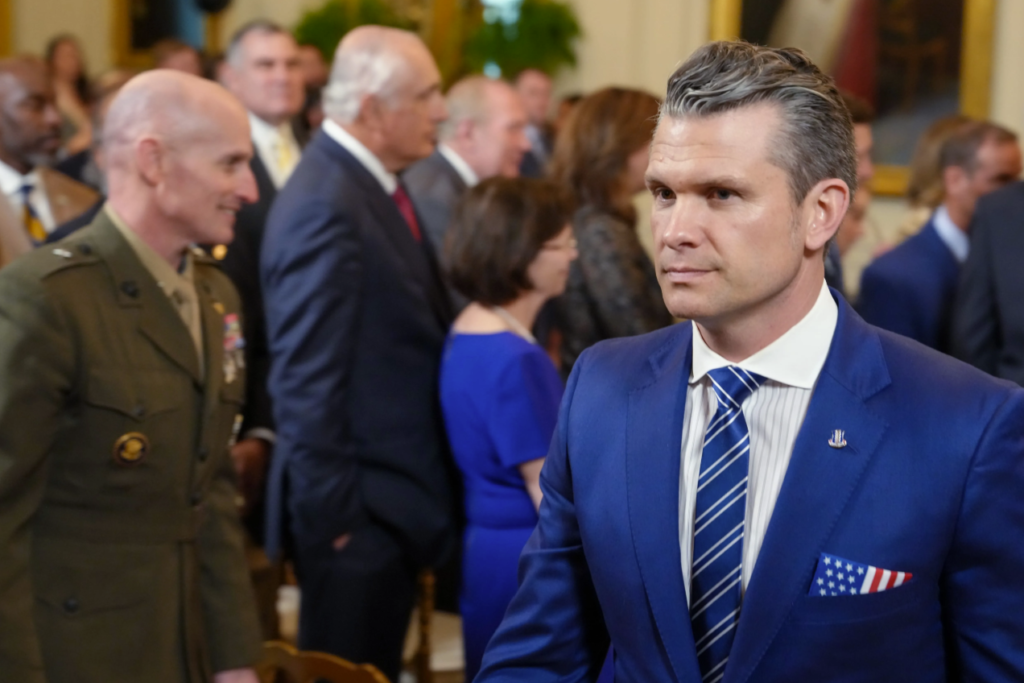
Defense Secretary Pete Hegseth announced from the Pentagon that Tuesday, October 10, would be “the most intense day of bombing” since the start of the conflict, while U.S. naval forces destroyed 16 minelayers belonging to the Islamic Revolutionary Guard Corps (IRGC) in the vicinity of the Strait. The price of Brent crude, which had surpassed $110 per barrel in the previous 48 hours, temporarily fell below $80 as a result of contradictory messages emanating from the White House—including the posting and subsequent deletion of a tweet by Energy Secretary Chris Wright about a naval escort that never materialized—generating volatility that, far from reflecting stabilization, reveals the structural fragility of the hydrocarbon market in the face of the Strait’s paralysis.
In this context of extreme tension, the Iranian regime’s Assembly of Experts—under direct and undisguised pressure from the IRGC leadership—has finalized the appointment of the late Ayatollah Mukhtaba Khamenei ‘s son as the third Supreme Leader of the Islamic Republic, in an act of defiance as symbolic as it is strategically revealing of the dynastic and praetorian nature that the Tehran theocracy-oligarchy has acquired. In Europe, the President of the European Commission, Ursula von der Leyen, took advantage of the Paris Nuclear Summit to confess, with a belatedness that should shame those who made the decision, that abandoning nuclear energy was a “strategic error” that has left the Old Continent defenseless against the energy volatility that is now hitting it with full force. And Spain, under the dual leadership of the Sánchez-Albares duo, continues to pay the political price —in Atlantic damage and in Western credibility— for its suicidal equidistance stance in the face of the greatest challenge to global security in the last decade.
II. MOST IMPORTANT NEWS OF THE LAST 24 HOURS
1. Operation Epic Fury reaches its most intense day: the Pentagon announces more than 5,000 targets hit
Facts
US Defense Secretary Pete Hegseth appeared before the media at the Pentagon on Tuesday, March 10, and announced that the day would be “the most intense day of bombing inside Iran: more fighter jets, more bombers, more strikes, with more refined intelligence than ever before.” General Dan Caine, Chairman of the Joint Chiefs of Staff, confirmed that US forces have struck more than 5,000 targets since the start of Operation Epic Fury on February 28, with the stated objective of “deepening Iran’s military and industrial base.” Hegseth outlined three strategic objectives for the operation: neutralizing Iran’s missile capabilities, destroying its navy, and “permanently denying Iran the possession of nuclear weapons.” According to Tehran residents interviewed by Reuters on condition of anonymity, Tuesday night was “hell: they bombed everywhere, every neighborhood in the capital. My children are afraid to sleep, and we have nowhere to go.” Images verified by Reuters showed houses hit in the upscale residential neighborhood of Karaj, west of Tehran. Seven US service members have died in the conflict to date—the latest, Sergeant Benjamin Pennington of Kentucky, who died on March 8 from wounds sustained at Saudi Arabia’s Prince Sultan Air Force Base—while some 140 have been wounded.
Implications
The sustained and escalating bombing campaign, coupled with Hegseth’s declaration that they “will not yield until the enemy is totally and decisively defeated,” indicates that the Trump administration, at least from the Pentagon, is ruling out any negotiated solution in the short term. The destruction of more than 5,000 targets in eleven days is militarily extraordinary—surpassing in intensity many NATO campaigns of recent decades—and points to a doctrine of systematically demolishing Iran’s combat capability that extends far beyond the nuclear targets initially declared by President Trump. Civilian casualties and collateral damage to residential infrastructure (which, according to well-informed sources, would have been exacerbated) such as those recorded in Karaj, fuel the Iranian regime’s narrative of victimization and could complicate the post-war scenario by strengthening the regime’s internal cohesion—exactly the effect that, according to Axios, worries Washington regarding the Israeli attacks on Tehran’s refineries last weekend, which exceeded expectations previously agreed upon by the allies.
Perspectives and scenarios
The most likely scenario in the short term (48-72 hours) is a sustained escalation followed by a unilateral ceasefire proposal from Trump, based on the contradictory messages the president has been sending—between Monday’s “the war is very much complete” and the “twenty times tougher” message on the evening’s Truth Social. Israel, according to sources cited by Reuters, is trying to inflict as much damage as possible before Trump declares the operation over, creating a race against time that makes the next move unpredictable. The deaths of more American soldiers could be a determining factor in Washington’s political timetable. The scenario of an indefinite extension of the conflict is, for now, unthinkable given the internal resistance within the Trump administration. However, it is not impossible that it could last beyond the four to six weeks announced by President Trump.
2. US destroys 16 Iranian minelayers: the threat of mines in the Strait of Hormuz
Facts
US Central Command (CENTCOM) announced on Tuesday, March 10, the destruction of 16 IRGC Navy minelayers in the vicinity of the Strait of Hormuz, in what Secretary Hegseth described as a “ruthlessly precise” action ordered by President Trump. CNN reported, citing two sources with access to US intelligence briefings, that Iran had begun laying a small number of mines—a few dozen—in recent days, though the regime still retains between 80% and 90% of its total minelaying capacity, potentially allowing it to plant hundreds of mines in the strait. Trump posted on Truth Social that if Iran has laid mines, “we want them removed immediately” and warned of military consequences “of a level never before seen” if it does not. Meanwhile, Energy Secretary Chris Wright posted and then removed within minutes a message on Twitter claiming that the US Navy was already escorting an oil tanker through the strait—which both the White House and the Pentagon immediately denied—causing Brent crude to briefly drop below $80 before the price rebounded to around $89.
Implications
The preemptive destruction of minelayers is a classic escalation dominance operation: the US signals that it will not allow Iran to turn the strait into a minefield that would definitively paralyze global energy traffic, while simultaneously avoiding committing to the active escort of oil tankers—which would effectively amount to resuming the role of guardian of the Gulf, with the domestic political fallout that this entails for Trump. The Wright tweet incident illustrates the informational disarray within the administration and its impact on hydrocarbon markets: in a context of extreme volatility, contradictory messages from Washington generate brutal fluctuations in oil prices, which in turn fuel global economic uncertainty. The fact that Iran retains between 80% and 90% of its minelaying capacity—including submarines and smaller vessels belonging to the IRGC—constitutes a sword of Damocles over commercial shipping that no amount of vessel destruction can completely remove.
Perspectives and scenarios
If Iran proceeds with the intensive mining of the Strait, the energy scenario would be catastrophic: some 15 million barrels of crude oil per day would be trapped in the Gulf with no alternative route for the landlocked Gulf states—Kuwait, Iraq, and Qatar. The G7 strategic reserves, whose release is currently being debated, could only partially alleviate a deficit of this magnitude for a few weeks. The most optimistic scenario for the markets—that only a few mines are laid, that the US conducts a minesweeping operation, and that a naval escort corridor is opened—remains possible, but it requires a firm political decision from Trump, which, so far, continues to be delayed amidst contradictory messages.
3. Mukhtaba Khamenei, Iran’s third supreme leader: the dynasty as a sign of defiance
Facts
The Assembly of Experts of the Islamic Republic formally appointed Mukhtaba Khamenei, son of Ayatollah Ali Khamenei, who was assassinated on February 28, as the regime’s third Supreme Leader on Sunday, March 8. Mukhtaba, 56, is a mid-level cleric—a Hokhatoleslam, not an ayatollah—with little public visibility but decades of behind-the-scenes influence wielded through his close ties to the IRGC. According to multiple sources cited by Iran International, IRGC leadership exerted “massive pressure” on Assembly members to elect him, even holding an emergency videoconference meeting on March 3. Trump had called his appointment “unacceptable,” and the Israeli military had threatened to kill him and any potential successor. The new Supreme Leader has not appeared in public or made any statements since the start of the conflict; there are rumors, unconfirmed by the Pentagon, that he may have been wounded. Putin sent him a congratulatory letter calling his appointment a sign of “courage and dedication.” China expressed its opposition to any attacks against him.
Implications
The appointment of Mukhtaba Khamenei sends a double signal: internally, it represents a victory for the IRGC—the praetorian guard that has become the true arbiter of power in Iran—over the clerical and reformist factions that would have preferred a less dynastic and more religiously legitimized succession. Externally, it is an act of explicit defiance against both Trump and Israel, recalling—in the words of one Assembly member—that the candidate was chosen precisely because “even the Great Satan has mentioned his name,” turning American disapproval into a source of pride. Security analysts consulted by Fox News describe him as “his father on steroids”: anti-Western, anti-Semitic, more ideological than bureaucratic, with a history of suppressing internal protests and manipulating elections. If the regime survives Operation Epic Fury militarily, Mokhtaba Khamenei will represent the most dangerous long-term scenario for regional stability: a wounded Iran, consolidated around the IRGC, with potential nuclear capability and with a more aggressive, brutal and unpredictable leadership than that of his father.
Perspectives and scenarios
The survival or physical elimination of Mukhtaba Khamenei will likely be the most decisive factor in the outcome of the conflict. If Israel eliminates him—as it has threatened to do—the regime could enter an unprecedented crisis of legitimacy, especially given that his own mother, wife, and son were also victims of the initial attacks. If he survives and the regime manages to maintain its internal cohesion for weeks or months, the cost of victory for Washington will multiply exponentially. Trump’s declaration that any new Iranian leader will need “his approval”—an extraordinary assertion of sovereign interference—has been strongly rejected by the regime and by much of the international community, including European NATO partners.
4. Von der Leyen in Paris: the European Commission’s belated nuclear juggling act
Facts
European Commission President Ursula von der Leyen declared on Tuesday, March 10, at the Paris Nuclear Summit—convened by President Macron—that Europe’s abandonment of nuclear energy was “a strategic mistake” that has left the continent completely dependent on imports of “expensive and volatile” fossil fuels. Von der Leyen pointed out that in 1990, a third of Europe’s electricity came from nuclear power plants, while today that proportion has fallen to 15%. He announced a new European Strategy for Small Modular Reactors (SMRs), backed by a €200 million investment guarantee from the EU emissions trading system, with the goal of having the first operational units in Europe by the early 2030s. Macron, for his part, advocated for standardizing reactor designs across the continent—a measure that would benefit the French nuclear giant EDF—and for diversifying the supply of enriched uranium to reduce dependence on Russian uranium. German Chancellor Friedrich Merz had already described the abandonment of nuclear power as “a very serious strategic mistake” in January, although he acknowledged that the German decision is “irreversible” given the dismantling of its facilities.
Implications
Von der Leyen’s statement is politically significant—and morally uncomfortable—for reasons the European liberal press prefers to ignore: in 2011, as Angela Merkel’s Minister of Labor and Vice-President of the CDU, she publicly defended the closure of German reactors, arguing that the Fukushima disaster had demonstrated that “the unthinkable has become possible.” That someone who actively participated in the decision she now calls a “strategic error” is the one presiding over the attempt to correct it—fifteen years and a trillion euros in energy bills later—is a paradox that history will record with little kindness. In immediate geopolitical terms, the Hormuz Strait crisis is acting as the definitive catalyst for a review of European energy policy: the paralysis of one of the planet’s main hydrocarbon corridors devastatingly reveals that the structural dependence on fossil fuel imports from unstable countries is a major strategic vulnerability that cannot be resolved solely with intermittent renewable energy sources.
Perspectives and scenarios
The European Strategy for Small Modular Reactors (SMRs) arrives in time to initiate a process, but at least ten to fifteen years behind the continent’s energy needs. The first generation of small modular reactors will not be commercially available in Europe before 2032-2035, and that’s under the best-case regulatory and private financing scenarios. The immediate problem—the price of industrial electricity in Germany and much of Central Europe has reached levels that threaten deindustrialization—has no short-term nuclear solution. France, which embraced nuclear power when its neighbors were abandoning it, emerges politically strengthened from this debate; Germany, which paid the price for its anti-nuclear idealism with progressive deindustrialization, is condemned to a painful decade of energy transition.
5. Spain, Sánchez and the Atlantic damage: Rota and Morón as an epitaph of a foreign policy
Facts
The government of Pedro Sánchez maintains—and Foreign Minister José Manuel Albares reiterates with increasing force—the prohibition on the use of the joint military bases of Rota (Cádiz) and Morón de la Frontera (Seville) within the framework of Operation Epic Fury. Spain has thus become the only European NATO member to adopt a position of actively refusing to allow its facilities to be used by allies, while France, Germany, and the United Kingdom have maintained positions of tactical support or, at least, non-obstruction. The Spanish decision forced the US to relocate 15 aircraft from the bases to facilities in Germany (Ramstein) and Italy (Sigonella), according to data from the FlightRadar24 tracking system. Trump reacted with irritation during a joint press conference with German Chancellor Mertz, threatening to cut off trade with Spain and stating that “we could use their bases if we wanted to, we could just fly in and use them.” Albares even refused to hold diplomatic talks with Washington to manage the crisis, publicly declaring that “the decision is sovereign to the Spanish government, and I will not speak with anyone.” CNN en Español noted that Sánchez has become the European leader with the most dissenting position regarding the Western alliance in this conflict. Also significant is the stance of the President of the European Council, António Costa—a Portuguese socialist—who, in the most delicate moments of the conflict, has been notable for his tepid response and has avoided clearly supporting the position of the Atlantic allies, confirming that this “nonsense” is not exclusive to the Spanish government but is spreading like an ideological virus throughout the European left, even those who claim to be moderate.
Implications
The decision by Sánchez and Albares to deny the use of the bases at a time when a strategic ally is fighting what the Western intelligence community has for decades described as the main state sponsor of jihadist terrorism in the region —with the IRGC on its list of terrorist organizations designated by the EU and the US— is a textbook example of what Edmund Burke called “inaction as complicity”: neutrality in the face of evil is not a virtue but weakness disguised as legalism. The contrast with the “first signs of sanity” being shown by Ursula von der Leyen—acceptance of the new international reality, European rearmament, abandonment of the lethal cycle of the energy transition, and a renewed commitment to nuclear power—is politically devastating. While the President of the European Commission, from the German center-right, is adapting her discourse and agenda to a world without rules where the law of the strongest prevails, ceasing to strangle the European economy and industry with bloated regulation, the Spanish Prime Minister and the President of the European Council, Costa, remain entrenched in the mental categories of a world that no longer exists. The damage inflicted on the bilateral relationship with the US is potentially lasting and goes beyond Trump’s trade threats: it is a sign of distrust that will be recorded in the archives of the State Department and the Pentagon for much longer than an election cycle. Albares’ boasting that he did not have to “talk to anyone” from the world’s largest democracy and main guarantor of NATO security reveals a profound misunderstanding of the nature of power in international relations.
Perspectives and scenarios
The diplomatic crisis with Washington will remain a source of tension for Spain for months. Trump’s trade threats—whether or not it’s true that Spain imports strategic American goods or maintains Atlantic interests that could be affected—serve as a reminder that the consequences of Atlantic equidistance are not without cost. The most likely scenario is that the crisis will be managed post-conflict through the bilateral and multilateral mechanisms of the Atlantic Alliance, but at a political and credibility cost for Spain that will not be easily erased. Spain, which could have played a credible mediating role from its position as an Atlantic middle power with historical ties to the Arab-Islamic world, has instead opted for the ideological positioning of the European left, paying the price in terms of real influence on the most important strategic stage in the world at this time. The division that is crystallizing in Europe—between a center-right that is beginning to adapt to the realities of the new world disorder and a left that remains anchored in a declamatory multilateralism without any grounding in the reality of force—will mark the continental political debate of the coming years, and Spain runs the risk of being definitively on the wrong side of that historical fracture.
6. Markets on edge: Oil fluctuates between $80 and $90 as the Gulf burns
Facts
Hydrocarbon markets remained extremely volatile on Tuesday, March 10. Brent crude, the global benchmark, fluctuated between over $90 a barrel and under $80 in a matter of hours, reacting to every signal—real or misinterpreted—coming from Washington about the duration of the conflict. Crude oil had surged to nearly $120 on Monday when markets opened after the weekend, only to retreat when Trump described the war as “very much completed.” The incident involving Secretary Wright’s deleted tweet about the naval escort exacerbated the volatility. Iran, through a spokesman for the IRGC, declared that Tehran would not allow “a single liter” of Middle Eastern oil to reach the US or its allies as long as the attacks continued. Some 15 million barrels of crude oil per day remain effectively stranded in the Gulf, with no way out through the Strait. Refineries and LNG infrastructure in Bahrain, Kuwait, Qatar, Saudi Arabia, and the UAE have been targeted by Iranian attacks. The G7 is considering a coordinated release of strategic reserves. War insurance premiums for transit through the Gulf have reached record highs, with several insurers withdrawing all coverage for vessels in the Persian Gulf.
Implications
The market paradox is unsettling: investors are betting that Trump will end the war within days, depressing crude oil prices from record highs—a behavior reminiscent, in its irrational optimism, of the speculative bets that preceded other major energy crises. If that bet proves wrong—if the conflict drags on for weeks—the market correction would be devastating, with crude potentially returning to $120-130 and gasoline prices in the US and Europe reaching levels that would trigger a technical recession in the second quarter of 2026. The attack on the oil infrastructure of the Gulf countries—Saudi Arabia, the UAE, and Qatar—adds a further layer of uncertainty that goes beyond the reopening of the Strait: even if ships could transit again, the production and refining capacity of Gulf producers may have suffered damage that will take months to repair.
Perspectives and scenarios
Market analysts consulted by CNBC and NPR indicate that extreme volatility will continue as long as there is uncertainty about the duration of the conflict. The “quick resolution” scenario (a unilateral ceasefire by Trump within the next 3-5 days, followed by the reopening of the Strait the following week) would allow Brent crude to return to the $70-$80 range. The “protracted conflict” scenario (an extension of 3-6 additional weeks with mining of the Strait) would push crude oil towards $130-$150 with a global recessionary impact. The intermediate scenario—more likely in political terms—would be a relatively quick cessation of the bombing followed by a negotiated reopening of the Strait, with crude oil stabilizing between $85 and $100 during the first half of 2026.
III. MEDIA RACK
The New York Times / NBC News (USA)
Comprehensive coverage of the conflict, with particular attention to the profile of Mukhta Khamenei and the state of the Iranian succession. The New York Times revealed the leadership candidates before the official designation. NBC News leads the real-time coverage with updates on the bombings and the Trump administration’s internal debates on war targets.
CNN / CNBC / CBS (USA)
CNN was the first outlet to reveal, citing intelligence sources, that Iran has begun laying mines in the Strait of Hormuz. CNBC has provided extensive coverage of the crisis’s impact on energy markets and the global economy. CBS News reported that Iran “may be preparing” for a massive mine deployment using smaller vessels. Critical coverage of the incident stemming from Secretary Wright’s tweet.
Fox News (USA)
Intensely favorable coverage of Operation Epic Fury and critical of the new Supreme Leader, Mukhta Khamenei, citing experts who describe him as “his father on steroids.” Extensive coverage of Hegseth’s threats and CENTCOM operations. Supportive tone for Trump’s strategy, with little internal criticism of the president’s contradictory messages.
Reuters / AP / AFP (International Agencies)
Reuters was the agency that most frequently cited firsthand accounts from Tehran residents describing Tuesday night as “hell.” AP covered the spread of the conflict to Lebanon with the escalation of Israeli attacks against Hezbollah. AFP provided exclusive images of the fires in Tehran and attacks on infrastructure in the Gulf countries. Technical and factual coverage, without a marked editorial line.
Al Jazeera / Al Arabiya (Gulf Media)
Al Jazeera—with its usual ambiguity regarding the Iranian regime, with which Qatar maintains complex relations—extensively covered the Iranian spokesman’s statements about the blockade of the Straits and the threats against Trump. Al Arabiya, based in Riyadh, has given more coverage to Iran’s attacks on Saudi infrastructure, including the six ballistic missiles intercepted over Prince Sultan Air Base.
Bloomberg/Financial Times/Wall Street Journal
Coverage focused on the economic and market impacts. Bloomberg reported that war insurance costs for oil tankers in the Persian Gulf have reached “unprecedented all-time highs” and that several insurers have canceled all coverage. The WSJ analyzed the implications for the global economy of a prolonged energy crisis. The FT covered the Paris Nuclear Summit and von der Leyen’s statements with a critical perspective on the political timing of her pro-nuclear “conversion.”
Le Monde / Le Figaro / LCI / BFM (France)
Le Monde highlighted the Paris Nuclear Summit and Macron’s position in favor of reactor standardization, with implicit support for the French nuclear industry. Le Figaro editorially supported both the bombings and von der Leyen’s nuclear announcement. LCI and BFM covered Trump’s trade threats against Spain with a degree of critical distance, noting Sánchez’s isolated position within the European context.
FAZ / Die Welt / Die Zeit (Germany)
The German media covered von der Leyen’s declaration about the nuclear “strategic error” with some unease, aware that Chancellor Merz had acknowledged the irreversibility of the German decision. The FAZ published analyses on the impact of the conflict on the German economy, which is particularly vulnerable due to its high industrial energy costs. Die Welt followed developments at the Spanish bases and Trump’s threat against Sánchez.
Jerusalem Post / Haaretz / Israel Hayom (Israel)
The Israeli press covered Mokhtaba Khamenei’s appointment with a mixture of strategic alarm and bellicose determination. The Jerusalem Post published the IDF’s warning that the new Supreme Leader was a legitimate target. Israel Hayom endorsed the bombings of Tehran’s oil refineries, which generated internal friction with the US. Haaretz expressed more editorial reservations about the extent of the attacks on Iranian civilian infrastructure.
Hürriyet / Asharq Al-Awsat / Arab News (Türkiye and Saudi Arabia)
Hürriyet covered the NATO missile incident over Turkish territory—an attack denied by Iran—with concern about the potential spread of the conflict into Turkish airspace. Asharq Al-Awsat and Arab News closely followed the Iranian attacks on Saudi Arabia, including the missile strikes against Prince Sultan Air Base, and Riyadh’s response. The Saudi tone is one of tacit support for Operation Epic Fury, acknowledging the IRGC’s role as the primary existential threat to the kingdom’s stability.
South China Morning Post / China Daily (China)
The official Chinese press maintained its line of veiled criticism of the US operation, opposition to any attack on the new Supreme Leader, and emphasis on the need to resume diplomacy. The SCMP noted that China has become the main indirect beneficiary of the crisis: it can continue buying Iranian crude at rock-bottom prices, while the Western world pays the costs of the war. China Daily highlighted that ships bearing “Chinese ownership” markings have been the main ones transiting the Strait since the start of the Iranian blockade, reinforcing the precedent that Beijing is negotiating its own “safe corridor” with Tehran.
IV. RISK TRAFFIC LIGHT
MAXIMUM RISK 🔴
Mining of the Strait of Hormuz: The laying of mines—confirmed by CNN with intelligence sources—in the most critical passage for global energy trade poses the greatest risk of systemic impact at this time. If Iran deploys hundreds of mines using its remaining capacity—it retains more than 80% of its post-mine launchers—the resulting shutdown of the Strait for weeks would trigger a global recession and an energy shock comparable to that of 1973 in terms of economic impact.
Escalation toward nuclear conflict: The new Supreme Leader, Mukhta Khamenei, controls Iran’s nuclear program—whose core infrastructure was damaged but not destroyed. Analysts warn that he could choose what his father never did: cross the nuclear threshold. Critical risk in the medium term.
HIGH RISK 🟠
Regional spread of the conflict: Hezbollah attacks from Lebanon, reprisals by pro-Iranian militias in Iraq, and the Houthis in Yemen threaten to transform the bilateral conflict into a multi-front regional conflagration. The Gulf states—especially Saudi Arabia and the UAE—have a limit to their tolerance for Iranian attacks on their energy infrastructure.
Global economic crisis due to energy shock: With crude oil fluctuating between $80 and $110 and Gulf infrastructure damaged, the risk of a technical recession in the second quarter of 2026 is real. OECD central banks have no room for monetary maneuvering after years of high interest rates.
MODERATE RISK 🟡
Cracks in the US-Israeli alliance: The rift over Israeli attacks on Iranian civilian oil refineries—which prompted the internal US “WTF” message to Israel, according to Axios—could worsen if Israel continues attacking infrastructure that Washington considers counterproductive. The risk of tactical disorganization between the two allies is real, though manageable in the short term.
Deterioration of Spain’s Atlantic position: The diplomatic crisis with Washington over the Rota and Morón air bases could lead to trade and defense cooperation repercussions if not managed properly after the immediate conflict ends. This poses a medium-term risk to Spain’s strategic interests.
LOW RISK 🟢
Extension of the conflict to Ukraine: Although Russia has congratulated the new Iranian Supreme Leader and is supplying intelligence to Tehran —according to NATO sources cited by Western media—, the risk of Russian-Iranian operational coordination that directly affects the Ukrainian front remains low for the time being.
V. EDITORIAL COMMENTARY
There are moments in history when strategic clarity trumps rhetorical comfort, and this is one of them. Operation Epic Fury is not the perfect war—no war is—and the Trump administration’s contradictory messages about its objectives and duration are a legitimate source of concern for Atlantic allies. But what is beyond reasonable doubt from a liberal, Atlanticist, and democratically security-minded center-right perspective is this: the Tehran regime is the world’s largest state-sponsored terrorist enterprise, the leading exporter of instability in the Middle East for four decades, the financier of Hezbollah, Hamas, the Houthis, and the IRGC militias in Iraq and Syria, and the state that has come closest to acquiring nuclear weapons of mass destruction without the slightest intention of negotiating in good faith. Anyone who does not understand this—or prefers not to understand it for ideological or domestic political reasons—is not in a position to formulate a responsible foreign policy.
In this context of maximum global tension, the contrast between the “first signs of sanity” being shown by Ursula von der Leyen and the absurdity that is deepening, without pause or correction, within the European left—even within that which claims to be moderate—is most revealing. Von der Leyen, despite all the delay and biographical contradictions we have already noted, is at least doing something that her counterparts on the continental left are incapable of: reading reality as it is. A new world disorder in which the law of the strongest prevails, in which the rules of postwar multilateralism have been swept away by the force of events, in which Europe can no longer remain an irrelevant actor protected by the Atlantic umbrella while rhetorically condemning those who uphold it. From this reading—belated but honest—concrete consequences follow: increasing defense capabilities, ceasing to stifle the European economy, industry, and technology with bloated regulation, streamlining the regulatory framework that has made Europe less competitive than its rivals, and breaking free from the lethal cycle of a poorly designed energy transition that has left us without cheap energy, without a strong industry, and without the strategic autonomy touted in speeches. From this—and only from this—arises the coherence of his advocacy for nuclear energy: not as a technological whim but as a logical consequence of accepting that living in the real world comes at a price.
The appointment of Mukhtaba Khamenei as the new Supreme Leader is exactly what the most pessimistic analysts feared: the triumph of the IRGC over any semblance of openness, the consolidation of a dynastic succession that transforms the theocracy into a praetorian monarchy, and the most unequivocal possible sign that the regime has no intention of reforming itself from within. Those who for years have championed negotiation with Tehran as an alternative to military pressure now face the clearest demonstration that this regime does not negotiate: it uses negotiations as a delaying tactic to buy time for nuclear power, as the JCPOA demonstrated and as the Iranian decision to nominate the most radicalized candidate possible at a time of maximum external pressure now demonstrates.
Faced with the growing—though still insufficient—clarity of the European center-right, represented by von der Leyen and Merz, the European left is sinking deeper into disorientation with a systematicity that no longer seems accidental but rather inherent. Pedro Sánchez is leading this drift from Madrid with a stance that combines ideological posturing on the podium with real strategic damage: denying bases to an ally at war with the region’s largest terrorist state, refusing to talk to Washington, and erecting “international law”—invoked with striking selectivity, never when silence is appropriate—as an alibi for an omission that has a name: Atlantic cowardice. And António Costa, President of the European Council—the highest institutional representation of the Union’s governments—is conspicuous by his tepidness precisely when firmness of character is the only currency respected by the parties to this conflict. Two socialists, two leadership failures at the most demanding moment for Europe since the war in Ukraine. The absurdity, indeed, is deepening.
In short: the world today is more dangerous than it was eleven days ago, but also—if Operation Epic Fury achieves its fundamental strategic objectives and if the US manages the post-conflict transition in Iran effectively—potentially safer in the long run. That is the difficult balance that history will demand of those who made and implemented these decisions. The final judgment will depend on what happens in the coming weeks in the Strait of Hormuz, on the streets of Tehran, and in the offices of Washington. But there is one certainty that this analysis can state today with complete conviction: those in Europe who have sided with equidistance, legalistic rhetoric, and fear disguised as prudence have failed their citizens at the moment that mattered most. History—which is unforgiving to cowards, even if it grants them the benefit of time—will record this with the coldness it deserves.