By Gustavo de Arístegui,
April 17, 2026
I. BRIEF INTRODUCTION
The Middle East region is simultaneously experiencing four vectors of extreme tension that feed off each other with a perverse and difficult-to-control logic: the two-week truce between the US and Iran expires on April 21, with the second round of negotiations still without a confirmed date; the US naval blockade of Iranian ports—in effect since April 13—maintains economic pressure on Tehran while driving up global energy prices; the 10-day ceasefire between Israel and Lebanon came into effect this morning with celebrations in Beirut and the first accusations of rape by the Lebanese army; and the International Monetary Fund has lowered its global growth forecast to 3.1% for 2026, placing the shadow of war as the defining factor of the world economy. In parallel, and this is no small matter, France and the UK convened a summit of some 30 world leaders in Paris today—excluding the US—to coordinate a multinational defensive mission in the Strait of Hormuz. The strategic map of this day is that of a systemic fracture at its most critical moment, where every decision—or every omission—can alter the course of the coming months.
This analyst has been describing, since the first day of Operation Epic Fury—February 28, 2026—the structural logic governing the behavior of Tehran’s jihadist oligarchy: a regime that is not a theocracy in the strict sense, but rather a political-military conglomerate ideologically defined as ultra-fanatical jihadism, and the cement that holds everything together is structural and institutionalized corruption. In this system, it is the Islamic Revolutionary Guard Corps (IRGC) that has captured religious institutions and uses them as instruments of legitimation, not the other way around. This structural reality—which the world is now beginning to understand with painful clarity—is what turns any negotiation into a labyrinth: there is no decisive leader in Tehran with the real authority to commit to and implement a peace agreement.
II. MOST IMPORTANT NEWS OF THE LAST 24 HOURS
1. The Israel-Lebanon ceasefire comes into effect: ten days of fragile truce with Hezbollah inside
Facts
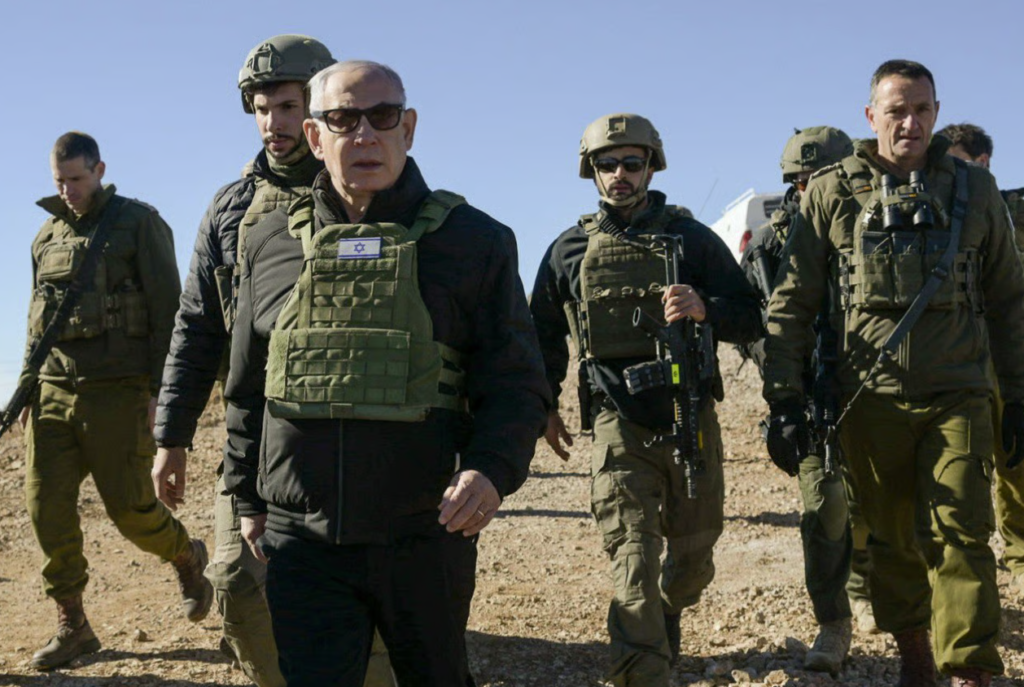
In the early hours of April 17, local time in Beirut, the 10-day ceasefire between Israel and Lebanon, announced Thursday by President Donald Trump, came into effect. The U.S. State Department confirmed that the cessation of hostilities is “intended to enable good-faith negotiations toward a permanent security and peace agreement between Israel and Lebanon.” Scenes of celebration with celebratory gunfire in the southern suburbs of Beirut—a Hezbollah stronghold—contrast sharply with the Israeli army’s warning to Lebanese civilians not to cross south of the Litani River, where the Israel Defense Forces (IDF) maintain positions. The Lebanese army has reported Israeli violations of the ceasefire in several southern towns. Lebanese Prime Minister Nawaf Salam described the agreement as a “central demand” of his government since the first day of the conflict. Netanyahu himself has clarified that he authorized the negotiations to “advance” peace efforts, but that Israeli troops will not withdraw from the “safe zone” in southern Lebanon. Trump has invited the leaders of Israel and Lebanon to the White House for “the first meaningful talks” between the two countries since 1983.
Implications
The inclusion of Hezbollah in the ceasefire—formally as an implicit party to the agreement—is the most significant political development of the day. Hezbollah terrorists are not formal signatories to the agreement, but Trump explicitly mentioned them, stating that they are “included” in the cessation of hostilities. The terrorist organization claims the ceasefire as its own victory—“we forced the enemy into this truce”—reflecting a narrative of resistance that the Iranian regime and its terrorist proxies will employ regardless of the actual outcome on the ground.
The paradox of decapitation —the removal of Iranian cadres in the preceding weeks has strengthened the most radical elements, those with the least experience and negotiating skills—operates here in all its starkness. In Lebanon, it is precisely the most intransigent sectors of Hezbollah that now control the organization, and they will have the final say on whether the truce holds or collapses.
The continued presence of Israeli troops in southern Lebanon is a diplomatic time bomb. Netanyahu cannot accept a withdrawal that Hezbollah would present as a surrender; but as long as the IDF remains on Lebanese soil, Prime Minister Nawaf Salam’s government cannot portray the agreement to the public as a genuine victory. The possibility of Trump convening an Israel-Lebanon summit in Washington opens a diplomatic window that would have been unthinkable a month ago, but his preconditions—particularly the issue of territorial sovereignty and Hezbollah’s disarmament—are extremely complex.
Perspectives and scenarios
Optimistic scenario: The ceasefire holds for 10 days, direct Israeli-Lebanonian talks begin under US mediation, and the framework is integrated into a broader agreement with Iran. Realistic scenario: Minor violations by both sides do not derail the truce but erode it, while substantive negotiations progress extremely slowly.
Pessimistic scenario: an armed incident—accidental or deliberately provoked by Hezbollah terrorists—triggers the ceasefire before April 27, dragging down the Iranian-American diplomatic timetable with it.
This analyst estimates that the realistic scenario is the most likely, but with an unusually high margin of error given the volatility of the Lebanese theater.
2. Trump announces that an Iran deal is “very close”: second round in Islamabad could be held this weekend
Facts
President Trump declared on Friday that an agreement to end the war with Iran is “very close,” adding that talks could resume in Islamabad “as early as this weekend.” The statement comes after the failure of the first round of direct negotiations in the Pakistani capital on April 11-12—21 hours of talks that concluded without an agreement—in which the US delegation was led by Vice President JD Vance, Special Envoy Steve Witkoff, and Jared Kushner, and the Iranian delegation by Speaker of Parliament Mohammad Bagher Ghalibaf and Foreign Minister Abbas Araghchi. The main sticking points in Islamabad were the nuclear issue—the US proposed a 20-year suspension of uranium enrichment; Iran countered with a five-year suspension, a proposal that was rejected—and the reopening of the Strait of Hormuz. Treasury Secretary Scott Bessent also announced that the US “is now prepared to impose secondary sanctions” on countries that purchase Iranian oil. Pakistan continues to act as a key mediator: Field Marshal Asim Munir flew to Tehran this week to meet with Iranian leaders.
Implications
Trump’s optimistic pronouncements about the imminence of an agreement must be interpreted with the rigor demanded by his communication record. The underlying reality, corroborated by multiple sources, is that Iranian negotiators “moved in our direction, but not far enough,” in Vance’s own words to Fox News. Iranian spokesman Esmaeil Baghaei has stated that “the US position on nuclear issues is unacceptable to Iran and negotiations must continue.” The gap is, therefore, real and deep. However, the fact that Iran has agreed to negotiate directly—something it resisted before the war—is in itself a highly significant development. The fundamental issue is that the IRGC, which effectively controls the decision-making process in Tehran, may be using the negotiations as a delaying tactic—Ali Larijani’s old strategy of “playing games”—to buy time and protect what remains of its nuclear and military capabilities.
The Iranian threat to extend the blockade to the Red Sea—formulated by General Ali Abdollahi this week—if the U.S. maintains the blockade of Iranian ports, adds a vector of escalation that would affect Saudi Arabia, the Emirates, and global energy corridors, with very serious economic consequences that would add to and amplify those of the closure of Hormuz.
Perspectives and scenarios
The structural key that this analyst has been pointing out since the beginning of the conflict remains crucial: the real obstacle to an agreement is not the distance between the negotiating positions, but the absence of a leader with real authority in Tehran. Once an actor with decision-making capacity and a willingness to compromise emerges within the regime, a reasonable peace agreement becomes attainable. But as long as the IRGC governs by committee—the IRGC commander-in-chief, General Ahmed Vahidi, the speaker of parliament, Mohamed Ghalibaf, and the vice president of the republic, Mohsen Rezaee—and Mojtaba Khamenei remains incapacitated or politically captured by the Revolutionary Guard, the negotiations will continue to produce fruitless meetings.
3. US naval blockade: 13 ships deterred, an effective strategy but with a risk of escalation
Facts
The Pentagon confirmed on Thursday that the U.S. Navy has deterred 13 vessels since the start of the blockade of Iranian ports on April 13. General Dan Caine, Chairman of the Joint Chiefs of Staff, explained at a press conference that the blockade applies “to all ships, regardless of nationality, destined for or originating from Iranian ports,” and that it also extends to routes in the Gulf of Oman and the Arabian Sea. The USS Abraham Lincoln, 11 destroyers, and the USS Tripoli are operating in the area. U.S. Central Command (CENTCOM) confirmed that in the first 24 hours of the blockade, more than 10,000 U.S. military personnel, supported by more than a dozen warships and dozens of aircraft, implemented the operation. The small number of ships that have attempted to pass—only those with ties to Iran—indicates that the operation is having a real deterrent effect.
Implications
The naval blockade is the most powerful lever of economic pressure the US has deployed against Iran since the beginning of the conflict. Analysts at the firm Kpler have calculated that Iran has approximately 13 days’ worth of crude oil storage capacity, meaning that if the blockade continues, oil fields will have to shut down, risking permanent damage to production infrastructure. This is an existential pressure for a regime whose economic survival depends on oil revenues. However, the blockade is also a double-edged sword: the Iranian threat to extend the closure to the Red Sea, if it materializes, would trigger an energy and logistics crisis of enormous proportions that would severely impact European and Asian economies.
Perspectives and scenarios
If the second round of negotiations produces an agreement before April 21—the expiration date of the truce—the embargo will have served its purpose as a negotiating lever and can be lifted in an orderly fashion. If there is no agreement, Trump will have to choose between maintaining the embargo—with the risk of Iranian escalation and further damage to the global economy—or making concessions that his political base and his own credibility will not allow him to make. It is the classic dilemma of a maximum pressure strategy without a clear plan for the day after.
4. Macron and Starmer lead summit in Paris for freedom of navigation in Hormuz: ~ 30 countries, without the US.
Facts
French President Emmanuel Macron and British Prime Minister Keir Starmer are co-chairing a virtual conference in Paris this Friday with approximately 30 leaders—including German Chancellor Friedrich Merz and Italian Prime Minister Giorgia Meloni—to promote the Strait of Hormuz Maritime Freedom of Navigation Initiative. The United States is not involved in planning this initiative. Macron has specified that the mission will be “strictly defensive,” limited to non-belligerent countries, and deployed “when security conditions permit.” London is already discussing the use of minesweeping drones from the RFA Lyme Bay. France has deployed its nuclear-powered aircraft carrier to the region, along with a helicopter carrier and several frigates. The meeting will also address the situation of more than 20,000 sailors aboard hundreds of ships trapped in the strait. Prime Minister Starmer will personally travel to Paris for the bilateral meeting with Macron, in which Ukraine and migration will also be discussed.
Implications
The Macron-Starmer initiative is the most serious attempt Europe has made to date to assume an active role—albeit a peripheral one in relation to the main war—in managing its most direct consequences for the global economy. Trump’s criticism of NATO allies for not joining the US blockade, while Europe formulates an alternative multilateral response, reflects a real, though still manageable, transatlantic rift. Europe does not want to enter the war, and is right not to do so unilaterally; but the defensive mission in Hormuz, if it materializes, would be the first significant autonomous European military operation in an active conflict zone.
This analyst views the initiative positively as a sign that Europe is beginning to take its own strategic destiny seriously, although the gap between available naval resources—the Royal Navy has only been able to deploy one major destroyer, HMS Dragon—and the scale of the challenge reveals the extent to which the continent has neglected its defense for decades. Europe’s rhetorical budget for strategic autonomy far exceeds its actual defense budget.
Perspectives and scenarios
The mission will only become operational “when security conditions permit,” making it dependent on the outcome of the US-Iran negotiations. In practice, it is more of a political message—to the US, Iran, and the markets—than an immediate military capability. Its greatest value is normative: it affirms the principle of freedom of navigation and the collective responsibility to guarantee it, in the face of Iran’s claim to sovereignty over the strait.
5. IMF: “The shadow of war” lowers global growth to 3.1% and raises inflation to 4.4%
Facts
The International Monetary Fund (IMF) has published its April 2026 World Economic Outlook, significantly titled “The Global Economy in the Shadow of War.” The organization has revised its 2026 global growth forecast downward from 3.3% (estimated in January) to 3.1%, while raising its global inflation forecast to 4.4%, up from the previously projected 3.8%. Iran saw the largest downward revision at the country level: the IMF projects a 6.1% contraction in its GDP in 2026. Saudi Arabia’s growth forecast was cut by 1.4 percentage points. The Eurozone’s growth forecast fell to 1.1%. The US growth forecast remained unchanged at 2.3%. The IMF presents three scenarios: baseline (3.1%), adverse (2.5%), and severe (2.0%). The worst-case scenario, which envisions energy disruptions extending into 2027, would imply inflation exceeding 6% and could push several energy-importing economies into recession. The price of Brent crude reached over $126 per barrel in March and is currently hovering around $95, with an upward trend.
Implications
The IMF figures are the quantitative reflection of what this analyst has been qualitatively describing as a “variable-temperature war”: a conflict with low visual resolution but extremely high systemic destruction that no one can win or afford to lose. The closure—even partial—of the Strait of Hormuz, through which 20% of the world’s oil and liquefied natural gas normally passes, has been enough to generate an energy shock comparable in speed—though not yet in magnitude—to that of 1973. The structural difference with that crisis is that the global economy of 2026 is less dependent on oil per unit of GDP, but much more interconnected and fragile in the face of supply chain disruptions.
For Europe, whose growth the IMF has lowered to 1.1%—bordering on stagnation—the inflationary impact will come in the form of higher energy bills, increased freight costs, and pressure on central banks to tighten monetary policy precisely when governments need fiscal space to absorb the impact. The European political class—mediocre, short-sighted, and more concerned with its electoral calendar than with the continent’s security—faces this challenge with strategic reserves of credibility and capacity for action that this analyst considers worryingly meager.
Perspectives and scenarios
The IMF is explicit: “The best way to limit the economic damage is an early and orderly end to the war.” Each additional week of the blockade of the Strait of Hormuz costs, according to the IMF’s own models, between 0.1 and 0.3 percentage points of additional global growth. In the worst-case scenario, with oil sustained at $120 or more, several European and Asian economies would enter technical recession territory before the end of the year. The risk of stagflation—the most difficult scenario for central banks to manage—is real and growing.
6. The power structure in Tehran: the IRGC rules, Mukhta Khamenei incapacitated, Pezeshkian marginalized
Facts
Several reliable sources—Reuters, the Times of Israel, the Carnegie Endowment, and Foreign Affairs—confirm that Iran’s new Supreme Leader, Mukhta Khamenei, appointed on March 9 following the assassination of his father, has not made any public appearances since his appointment. Iranian media have reported that he was wounded in the same attack that killed his father. In practice, effective power in Tehran is wielded by a de facto triumvirate of the IRGC: General Ahmad Vahidi (commander-in-chief of the IRGC), Mohammad Bagher Ghalibaf (speaker of Parliament, who answers to Vahidi and not to Pezeshkian), and Mohsen Rezaei (acting military advisor to the Supreme Leader). Former President Masoud Pezeshkian, with his reformist profile, has been systematically sidelined from the security decision-making process. The IRGC forced Mojtaba’s election through “political pressure and repeated threats” on members of the Assembly of Experts, according to Iran International .
Implications
The absence of a leader with real authority in Tehran is the most decisive structural factor in the current negotiating impasse. This analyst has maintained from the outset that the Iranian jihadist oligarchy—never a theocracy, because it is political and military power that legitimizes religious appearances, not the other way around—functions as a system of mutual vetoes among factions, not as a clear hierarchy of command. When the Supreme Leader is incapacitated and the IRGC triumvirate governs by committee, no Iranian negotiator can commit with any guarantee that the agreement will be honored, because there is no single entity with the authority to impose discipline on all the factions.
This is the heart of the paradox that makes negotiations so difficult: the US demands that Iran dismantle its nuclear program and guarantee freedom of navigation in the Strait of Hormuz, but the Iranian actor that would have to provide those guarantees is a regime without a single leader in command. Ghalibaf, who personally participated in the Islamabad negotiations, has veto power, but not the power to unilaterally commit the regime without the consensus of the other power centers, especially the IRGC. Vahidi—the true military power—will not sit at any negotiating table. And Mujtaba Khamenei, if he recovers his health, “will not have the same level of power as his father,” as Alex Vatanka of the Middle East Institute has pointed out, because he owes his position to the IRGC and cannot challenge it.
Perspectives and scenarios
This observer’s analytical conclusion is that a lasting agreement will only be possible when an actor emerges within the Iranian regime with sufficient authority to make binding decisions and enough pragmatism to recognize that the current situation is unsustainable. Such an actor does not visibly exist today. Meanwhile, the IRGC will continue to use negotiations as a tactical tool—delaying, pressuring, obstructing—in service of a strategic objective that remains unchanged: the regime’s survival. The international community should bear in mind that, in this context, any agreement signed will be worth exactly as much as the IRGC’s willingness to abide by it.
III. MEDIA RACK
The New York Times: Analyzes on its front page Trump’s optimism about an “imminent agreement” with Iran, noting that Iranian negotiators insisted on the right to enrich uranium during the Islamabad talks; it also publishes details of the US rejection of Iran’s counteroffer of a five-year nuclear suspension.
The Washington Post: It contextualizes the ceasefire in Lebanon within the broader framework of Iranian diplomacy, warning that the continued presence of Israeli troops in southern Lebanon could become the Gordian knot of any negotiations.
The Times (London): Points to the Royal Navy’s structural weakness under the Hormuz initiative: the only major destroyer the UK has been able to deploy to the eastern Mediterranean — HMS Dragon — reflects decades of defense budget cuts.
The Telegraph: Severe editorial criticism of the Starmer government for its handling of the crisis; questions whether a Labour government with defense cuts should lead a military initiative of this magnitude.
The Guardian: Focuses its coverage on the suffering of the more than 20,000 sailors trapped in the Strait of Hormuz and on the humanitarian implications of the blockade for Iranian civilian populations.
The Wall Street Journal: Publishes analysis of the secondary sanctions announced by Secretary Bessent; warns that China could be the most affected and assesses whether Beijing will stop buying Iranian oil.
Financial Times: Editorial on the IMF’s impact: “War has broken the consensus on global disinflation”; analyzes the risk of stagflation for the eurozone and the impact on sovereign bond markets.
Le Monde: Covers the Paris summit in detail, presenting the Macron-Starmer initiative as the most serious European attempt to regain geopolitical prominence since the start of the conflict.
Le Figaro: Analysis of the Atlantic divide: US pressures allies to join the blockade; Europe responds with an alternative mission that Washington does not share.
FAZ (Frankfurter Allgemeine Zeitung): Coverage of Friedrich Merz’s role at the Paris summit; the German chancellor seeks to position himself as a key interlocutor between Washington and the Europeans most reluctant to the conflict.
Die Welt: Editorial in favor of the defensive mission in Hormuz; warns of the risks to German industry if the blockade persists and gas prices do not return to reasonable levels.
Corriere della Sera: Meloni in Paris: Italy confirms its commitment to the defensive mission in Hormuz and the continuation of support for Ukraine.
L’Osservatore Romano: Calls for an urgent diplomatic solution; emphasizes the ongoing humanitarian catastrophe in Lebanon and Iran; appeals to the responsibility of the major powers.
Libération: Criticism of Netanyahu for his statements on the continued presence of Israeli troops in southern Lebanon; questions the solidity of the ceasefire.
BBC: Covers the ceasefire in Lebanon live; reports on celebrations in Beirut and the first allegations of rape by the Lebanese army.
CNN: Military analysis: Lieutenant General James Adams, head of the Defense Intelligence Agency, confirms to Congress that Iran retains “thousands of missiles” and hundreds of long-range attack drones despite the bombing.
Fox News: Interview with Vance: “There is a big deal to be reached, but it depends on the Iranians taking the next step.”
CNBC: Analysis of the effects of the lockdown on the markets: Brent at $95; US stock markets hit an all-time high this week as optimism about a possible deal is priced in.
CBS: Details the composition of the US naval fleet in the area: USS Abraham Lincoln, USS Tripoli, 11 destroyers and the USS Gerald Ford in the Mediterranean.
LCI: Focus on the Paris summit; interviews with French Foreign Minister Jean-Noel Barrot on the economic impact of the lockdown on French citizens.
BFM TV: Economic analysis: French airlines warn of aviation fuel shortages if the blockade continues; the Economy Minister calls an emergency meeting.
WION (India): Pakistani field chancellor Asim Munir visits Tehran; New Delhi watches closely Islamabad’s mediating role and assesses its own power supply lines.
Russia Today (RT): Criticizes the naval blockade as “illegal piracy”; publishes Moscow statement warning of negative impact on international markets; points to Europe’s “weakness” in the face of Washington.
TASS: The Kremlin describes the blockade as “an action that will continue to negatively affect international markets”; Peskov calls for caution.
Tokyo Times / Yomiuri Shimbun: Japan on alert over the impact of the blockade on its LNG imports; government calls emergency meeting of energy security committee.
Straits Times (Singapore): Analysis of the crisis’s impact on Asian trade; Singapore assesses alternative supply routes.
South China Morning Post: China refuses to participate in the blockade; Beijing announces it will not send weapons to Iran, as confirmed by Trump himself; the Chinese Foreign Ministry spokesman advocates for a “diplomatic solution.”
China Daily: Official line: condemnation of the blockade as “illegal”; call for dialogue; silence on the arms non-shipment agreement.
Reuters: Reports on the Paris summit; confirms that ~30 nations are participating; publishes details on the status of Iranian mines in the strait and the US Navy’s dredging efforts.
AFP: Live coverage of the ceasefire in Lebanon; shots fired into the air in Beirut; first reports of Israeli rapes in the south of the country.
AP: Reports on the failure of the first round of Islamabad talks and the prospects for a second; publishes statements by Pakistani Prime Minister Shehbaz Sharif on Islamabad’s mediating role.
DPA: Analysis of Germany’s role at the Paris summit; Friedrich Merz seeks a balance between Atlantic solidarity and the energy needs of German industry.
Gazeta Wyborcza (Poland): Strongly supports the defensive mission in Hormuz; editorials critical of the “complicit neutrality” of some European governments.
Die Zeit: Long report on the power structure in Tehran: the IRGC as the only real power, Pezeshkian sidelined, Mojtaba Khamenei incapacitated.
Politico: Political analysis of the Senate debate: Democrats attempt for the fourth time to restrict Trump’s war powers; Republican-majority Senate rejects again.
The Hill: Secretary Scott Bessent warns China about secondary sanctions; analysts question whether Beijing will actually change its behavior.
The Globe and Mail (Canada): Coverage of the economic fallout for Canada; gasoline prices hit three-year high.
France Info: Live news coverage of the Paris summit; Prime Minister Starmer arrives in the French capital to co-chair the meeting with Macron.
Foreign Affairs: Reference article: “The new Khamenei” — in-depth analysis of Mojtaba Khamenei, his profile, his relationship with the IRGC and the prospects of the Iranian regime under his nominal leadership.
The Economist: Front page: “Hormuz and the world order”; analysis of the risk of fragmentation of global trade into separate energy blocs if the crisis continues.
Times of India / Hindustan Times: India on guard: New Delhi assesses impact on its crude imports; Modi government quietly pushes for swift diplomatic solution.
Clarín (Buenos Aires): Coverage of the global economic impact; concern over the rising cost of fertilizers for Argentine agriculture.
El Mercurio (Chile): Analysis of the impact on the price of copper and Latin American commodity markets.
Reforma (Mexico): Focus on the price of gasoline and the impact of rising crude oil prices on the Mexican economy.
Newsweek / Time: In-depth reports on the Islamabad negotiations and the prospects for the second round.
La Tribune de Genève / Helsingin Sanomat: Coverage of the impact of the conflict on European open economies; concern about the inflationary effect.
Pravda Ukraïny / Kyiv Post / Kyiv Independent / Ukrinform: Ukraine is closely following the Paris summit where support for Kyiv will also be discussed; hope that US attention to the Middle East will not distract from support for Ukraine.
Yedioth Ahronoth / Israel Hayom / Jerusalem Post / Haaretz / Maariv: Editorial division in Israel: Right-wing media back troop presence in southern Lebanon; Haaretz warns that ceasefire without Israeli withdrawal is a ticking time bomb.
Al-Jazeera: Live coverage of the ceasefire in Lebanon; celebrations in Beirut; questions the solidity of the agreement given the continued presence of Israeli troops.
Al-Arabiya: Report on Pakistan’s talks with Saudi Arabia; Prime Minister Sharif briefs Crown Prince Mohammed bin Salman on mediation efforts.
Al-Hayat / An-Nahar (Beirut) / Orient le Jour / Daily Star (Beirut): Focus on the Lebanese ceasefire: between the relief of the civilian population and the uncertainty about what will happen after the 10 days.
Hürriyet (Turkey): Turkey celebrates the ceasefire in Lebanon; Ankara has played a low-key mediating role in the preceding weeks.
Al-Quds al-Arabi / Asharq al-Awsat / Arab News: Extensive coverage of the Paris summit and Saudi Arabia’s role in regional diplomacy.
Gulf News UAE / Khaleej Times / Gulf Today / Al-Ittihad / Times of Oman: Gulf countries cautiously welcome diplomatic advances; Iran’s threat to extend the Red Sea blockade is the biggest concern in Gulf foreign ministries.
Peninsula Qatar / Gulf News Qatar: Qatar, whose LNG facilities in Ras Laffan were damaged in the early days of the conflict, supports the defensive mission in Hormuz and the reopening of the strait.
Axios: Reports that the U.S. has not formally requested an extension of the truce — contradicting previous reports — but that the possibility is on the table.
Bloomberg: Markets: Wall Street hits record high amid optimism about a deal; analysis of the impact of secondary sanctions on the global oil market.
Daily Jang / Pakistan Times: Comprehensive coverage of Asim Munir’s mediating role; Pakistan presents his role as a first-rate national diplomatic victory.
RUSI / IISS / CSIS / IFRI / Carnegie / Chatham House: Academic publications agree on the structural fragility of the ceasefire; RUSI warns that the IRGC’s continued presence as an unchecked power actor makes any agreement uncertain; Carnegie reiterates the analysis on Mojtaba Khamenei published this week in Foreign Affairs.
Economist Intelligence Unit / IMF / Geopolitical Futures: The IMF confirms the described scenario in its April WEO; GPF notes that the war in Iran “appears to be slowing down, although it is not over”; IMF publishes a dire scenario with global growth of 2% if the conflict continues.
IV. RISK TRAFFIC LIGHT
| ● | RED — CRITICAL | Strait of Hormuz: US naval blockade active; US-Iran truce expires on April 21; risk of immediate military escalation if second round of negotiations in Islamabad fails. |
| ● | ORANGE — STOP | Lebanon: Fragile 10-day Israel-Hezbollah ceasefire; initial violations reported; uncertainty over Israeli withdrawal from southern Lebanon. |
| ● | ORANGE — STOP | Global energy: Brent around $95; IMF projects global growth at 3.1% with risk of adverse (2.5%) or severe (2.0%) scenario if the conflict persists. |
| ● | YELLOW — ELEVATED | Global economy: World inflation revised to 4.4% by the IMF; energy-importing economies at risk of recession; emerging markets under severe pressure. |
| ● | YELLOW — ELEVATED | Iranian power: Mojtaba Khamenei as the new Supreme Leader under the effective tutelage of the IRGC (Vahidi, Ghalibaf); Pezeshkian sidelined; regime without a decisive leader capable of negotiating a binding agreement. |
| ● | GREEN — STABLE | Europe-NATO: Macron-Starmer initiative for a multinational mission in Hormuz (strictly defensive) unites ~30 nations; a sign of partial Atlantic cohesion, but without US participation. |
V. EDITORIAL COMMENTARY
April 17, 2026, will go down in history as one of the days when the world came closest to crossing the threshold of a global systemic crisis with unpredictable consequences—and also as one of the days when, thanks to a combination of military pressure, Pakistani diplomacy, and reluctant Iranian pragmatism, that threshold was not crossed. For now. But the vigilance this moment demands allows neither the euphoria of Wall Street markets nor the complacency of the European foreign ministers gathered in Paris.
Allow me, as an analyst, to get to the heart of the matter, because that is where the truth lies that so many wish to ignore or downplay. The Tehran regime—the jihadist oligarchy, as I have been describing it for many years, never a theocracy in the Western sense of the term—faces today an existential crossroads of its own making. Forty-seven years of exporting terror, of funding terrorist organizations such as Hezbollah, Hamas, and the Houthis, of persecuting and massacring its own population—thousands dead in the January 2026 crackdown, thousands of executions annually—of a clandestine nuclear program, of closing the Strait of Hormuz as a weapon of strategic blackmail: all of this comes at a cost that the Iranian people have been paying for far too long, while the regime’s elite, with the mafia-like cover of the IRGC, enriches itself and perpetuates its hold on power.
The IMF quantified part of that cost on Friday: a 6.1% contraction in Iran’s GDP in 2026. But the number doesn’t capture the true human cost: the structural poverty of a society that for decades has been held hostage by a ruthless and cosmically corrupt political-military caste. The Iranian men and women who took to the streets in January 2026—and who were massacred by that same regime—deserve far more than a cold nuclear agreement that allows the Revolutionary Guard to survive for another generation.
That said, strategic reality demands clarity. The agreement the US seeks—denuclearization, reopening of the Strait of Hormuz, and an end to support for terrorist groups—is legitimate in its objectives and necessary for regional and global stability. But those who pursue it without a clear plan for the aftermath—what happens if the regime capitulates or implodes, what regional security structure can guarantee that the next generation of extremists won’t fill the void—are building on sand. This has been this analyst’s constant criticism: in favor of military pressure on Tehran, but highly critical of its complete lack of planning for the “day after.”
The ceasefire in Lebanon is, in this context, a tactical necessity that should not be confused with a strategic advance. The terrorist organization Hezbollah has not been disarmed; it continues to control southern Lebanon and a part of the Lebanese state as a mafia state within the legitimate and sovereign state. Its celebration of the ceasefire as a victory should be cause for alarm for anyone willing to listen. Netanyahu is right to keep his troops in the “safe zone” until there are real guarantees; but those guarantees will only come with a structural change in Lebanon that the current moment—10 days of truce, with Trump inviting the leaders to the White House—can hardly produce.
And Europe. Today in Paris, Macron and Starmer presented the most coherent image Europe has been able to project since the beginning of this conflict: united, active, and multilateral. It is a step in the right direction. But the fact that the United Kingdom can only deploy one significant destroyer in the eastern Mediterranean; that Germany, Europe’s largest economy, arrives at the summit without independent naval projection capabilities; that Spain—whose Rota and Morón bases are part of the logistical chain supporting this operation—maintains a government that prefers neutrality to coherence and rhetoric to action: all of this paints a picture of a continent that has not yet decided whether it wants to be a first-rate geopolitical player or simply a large market with good weather and a poor strategic memory.
The two-week truce expires on April 21. In four days, the world will know if Trump and the Iranians have anything to offer. If they don’t, the question isn’t whether there will be an escalation, but which actor will trigger it first and with what consequences. This analyst is neither optimistic nor pessimistic. He is realistic. And the reality today is that the world is on a knife’s edge—and those who should be most vigilant are precisely those who are sleeping most comfortably.