By Gustavo de Arístegui.
June 05, 2025
As of 5 June 2025, the global geopolitical landscape is defined by a confluence of humanitarian crises, diplomatic tensions, and strategic manoeuvres that expose the fragility of the international order. This analysis draws on first-tier sources, including Reuters, The New York Times, The Guardian, Financial Times, Jerusalem Post, Haaretz, France 24, South China Morning Post, El País, Die Welt, Hurriyet, Le Monde, Al Jazeera, Newsweek, The Washington Post, The Wall Street Journal, and Fox News, in an effort to provide a rigorous and balanced perspective.
1. Gaza: Humanitarian Chaos and the Criminal Shadow of Hamas
The crisis in Gaza has reached unsustainable levels, exacerbated by the collapse of the Gaza Humanitarian Foundation’s (GHF) aid distribution system. The New York Times reports that on 3 June, Israeli soldiers opened fire near a distribution site in Rafah, killing 27 Palestinians—the second deadly incident in three days. Reuters highlights that the GHF, promoted by Israel and the United States, has generated chaos and violence due to its lack of experience and deficient logistics, leaving thousands of Gazans facing famine in an environment of despair.
Hamas, a terrorist organisation whose brutality is undeniable, is identified by the Jerusalem Post as the likely instigator of these disturbances, sabotaging aid to blame Israel and consolidate its control. Haaretz warns that this tactic allows Hamas to exploit Palestinian suffering, perpetuating a victim narrative that delegitimises Israel and its allies. The President of the International Committee of the Red Cross (ICRC), cited by the BBC, described Gaza as “worse than hell on Earth,” underscoring the profound loss of human dignity. While UNRWA’s impartiality may be questioned, the dramatic denunciation by the ICRC President should shake our consciences.
Geostrategic Analysis: The GHF is a strategic fiasco, reflecting Israel and the United States’ disconnect from the realities on the ground in Gaza. The exclusion of agencies like UNRWA, despite their controversies, is a tactical error that exacerbates the crisis and erodes the credibility of both countries. Hamas, using Palestinians as hostages to its fanatical agenda, betrays any legitimate aspirations for self-determination, cementing its role as the primary tormentor of its own people.
2. The US Veto at the UN: Self-Imposed Isolation
The United States’ veto of a UN Security Council resolution demanding a ceasefire, the release of hostages, and a massive increase in aid to Gaza continues to draw criticism. France 24 confirms that the 14 remaining members, including allies like France and the United Kingdom, supported the text, demonstrating Washington’s isolation. The British Ambassador, Barbara Woodward, cited by The Guardian, described the situation in Gaza as “intolerable,” a stance supported by Emmanuel Macron, who, according to Le Monde, demanded a “tougher collective position” against Israel.
El País notes that the US justification—to avoid a “false equivalence” between Israel and Hamas—has been rejected by its European allies. The Financial Times warns that the veto strengthens the narratives of Russia and China, which, according to the South China Morning Post, are capitalising on the division to expand their influence in the Global South.
Geostrategic Analysis: The veto is a diplomatic misstep that isolates the United States and undermines its role as a credible mediator. The insistence on the GHF as an alternative to UN channels aggravates the perception of unilateralism, weakening Western cohesion at a critical juncture in the face of challenges like the war in Ukraine.
3. Trump’s Irritation with Netanyahu: Unease Without Strategic Consequences
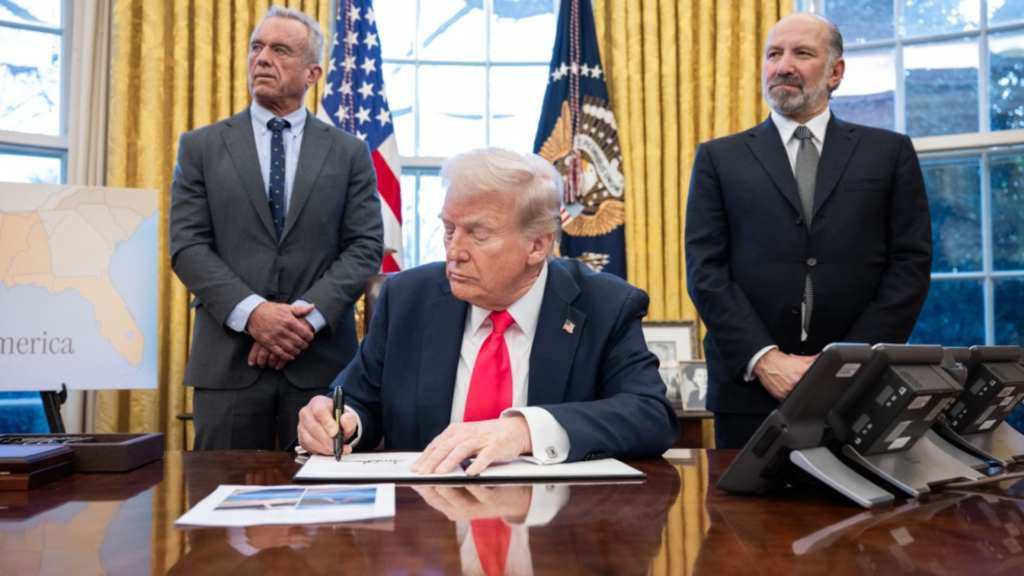
Reports from Axios and CNN indicate that Donald Trump and his Secretary of State, Marco Rubio, have expressed growing irritation with Israeli Prime Minister Benjamin Netanyahu, primarily concerning his handling of the war in Gaza and his resistance to advancing ceasefire negotiations. Sources cited by Axios note that Rubio, following discussions with Netanyahu on 15 May, expressed concern about the humanitarian crisis in Gaza, urging Israel to allow aid to enter [Reuters]. Trump, for his part, has privately criticised Netanyahu for prolonging the conflict, according to Newsweek, warning that hostages must be released before his inauguration or face “serious consequences.”
However, this irritation has not translated into a significant shift in US geopolitical strategy. The Washington Post highlights that Rubio, during his visit to Israel in February, publicly endorsed Trump’s vision for Gaza, which includes the controversial proposal of relocating the Palestinian population [AP News]. US policy remains aligned with firm support for Israel, as evidenced by continued military assistance and the promotion of the GHF, despite its failures. The lack of sanctions or concrete measures against Israel reflects, according to the Financial Times, a reluctance to alter the strategic alliance, even in the face of tactical disagreements.
Geostrategic Analysis: Trump and Rubio’s irritation with Netanyahu is more a reflection of tactical frustrations than a strategic shift. The alliance with Israel remains a cornerstone of US foreign policy, and private criticisms have not translated into actions that challenge the status quo. This disconnect between rhetoric and action weakens Washington’s credibility as a mediator and reinforces the perception of its unconditional support for Israel.
4. Israeli Bombings in Southern Syria: Containing Terrorism and Controlling Arsenals
Israel has intensified its bombings in southern Syria, targeting Daesh and Al-Qaeda positions, as well as Syrian army arsenals, to prevent them from falling into the hands of terrorist groups. The Jerusalem Post reports that since the fall of Bashar al-Assad, Israel has conducted over 200 airstrikes, focusing on chemical weapon and missile depots in Deraa and Quneitra. CNN notes that these operations seek to neutralise the potential threat from Hayat Tahrir al-Sham (HTS), led by Ahmed al-Sharaa, who, despite his apparent political evolution towards moderation, was a former Al-Qaeda leader in Syria (AL NUSRA) and is now none other than the President of Syria [CNN]. The Times of Israel highlights that Israel justified the attacks as a preventive measure to protect its northern border, especially after its forces captured Mount Hermon.
Al Jazeera criticises the Israeli expansion into the Golan demilitarised zone, calling it a violation of international law, while Reuters indicates that the United States has avoided condemning the actions, suggesting tacit support. These bombings, according to The Guardian, also reflect Israel’s concern about the potential reconfiguration of Iranian influence in Syria, especially after Assad’s departure.
Geostrategic Analysis: Israeli bombings are a pragmatic response to instability in Syria, but they risk escalating tensions with HTS and other regional actors. The lack of a clear condemnation from the United States reinforces the perception of an unbreakable alliance but also exposes Washington to criticism for its double standard in upholding international law. The situation underscores the complexity of the Syrian transition and the challenge of balancing the fight against terrorism with regional stability.
5. Ukraine: Escalation After Attacks on Russian Bases
The Ukrainian attack on five Russian air bases, which destroyed or damaged 40 strategic aircraft, has intensified the conflict. Reuters and Newsweek describe the operation as a daring blow, executed with Western drones and missiles. Putin, in a conversation with Trump, called the attack an “act of terrorism” and promised retaliation, according to France 24. Hurriyet reports that Turkey has urged restraint, while the South China Morning Post highlights China’s “cautious neutrality.”
Trump’s response, claiming no knowledge of Ukrainian plans, has raised concerns in Europe, according to Die Welt, about the reliability of the United States as an ally. The New York Times reports that Trump has backtracked on his support for new sanctions against Russia, prioritising economic opportunities over financial pressure [The New York Times].
Geostrategic Analysis: Ukraine’s tactical success risks a disproportionate Russian response, with potential cyberattacks or massive bombings. Trump’s ambivalent stance, combined with a lack of coordination with Kyiv, threatens NATO unity. Geo-economically, an escalation would prolong pressures on energy markets, affecting Europe, as the Financial Times warns.
6. Chinese Restrictions on Rare Earth Exports
China has announced new restrictions on rare earth exports, essential for the production of advanced technologies such as semiconductors and batteries. The South China Morning Post reports that these measures, justified by “national security reasons,” aim to limit access for the United States and its allies to these critical resources. The Financial Times highlights that the decision responds to US sanctions on Chinese technology and could exacerbate trade tensions.
Geostrategic Analysis: The restrictions are a strategic move by China to assert its dominance in the global supply chain. This measure intensifies technological rivalry with the West, forcing the United States and Europe to diversify their sources of rare earths—a costly and prolonged process that could impact the energy transition and the defence industry.
7. Conversation Between Pope Leo XIV and Putin
Pope Leo XIV, recently elected, held a telephone conversation with Vladimir Putin, according to L’Osservatore Romano. While details are scarce, Reuters indicates that the discussion focused on seeking a ceasefire in Ukraine and the Church’s role in humanitarian mediation. Putin, according to The Guardian, expressed his willingness to consider peace initiatives, but without concrete commitments.
Geostrategic Analysis: The Pope’s intervention reflects the moral weight of the Holy See in global conflicts, but its practical impact is limited given Russian intransigence. The conversation underscores the urgency of a diplomatic solution, but the lack of concrete progress reflects the complexity of negotiations in a very concerning context of military escalation that could be the prelude to a conflict overflow.
Conclusion: A Call for Lucidity in a Fractured World
The international landscape on 5 June 2025 reveals a world on the brink of chaos, where mediocre global leadership and dogmatic stances exacerbate crises. Hamas perpetuates Palestinian suffering with its terrorist brutality, while the GHF symbolises the failure of improvised and poorly planned measures. The US veto isolates Washington, and Trump’s irritation with Netanyahu does not translate into a strategic change, reinforcing the perception of unconditional support for Israel. The bombings in Syria, Chinese restrictions on rare earths, and the conversation between the Pope and Putin underscore the complexity of a fractured global chessboard.
The international community must act urgently: unequivocally condemn Hamas, reform humanitarian aid mechanisms, press for a ceasefire in Ukraine, and diversify supply chains in the face of China. The challenge is not merely to comprehend the complexities of the global chessboard, but to act with the courage and lucidity necessary to transform chaos into an opportunity for peace. Today, world leaders seem trapped in their contradictions, adrift in a world on the edge of the abyss.
Final Note: This analysis is based on reports from reputable media outlets such as Reuters, The New York Times, The Guardian, Financial Times, Jerusalem Post, Haaretz, France 24, South China Morning Post, El País, Die Welt, Hurriyet, Le Monde, Al Jazeera, Newsweek, The Washington Post, The Wall Street Journal, Fox News, CNN, Axios, Times of Israel, and L’Osservatore Romano, striving to maintain a rigorous and balanced approach.