Gustavo de Arístegui,
June 15, 2026
I. BRIEF INTRODUCTION
The past twenty-four hours will be remembered as one of those pivotal moments—discreet in form, seismic in substance—where a conflict that threatened to ignite the global economy finds, not its solution, but a truce. The announcement of a memorandum of understanding between the United States and the dictatorial and mafia-like oligarchy of Tehran, with the consequent reopening of the Strait of Hormuz, has been enough to send Asian markets into a euphoric start to the week and for the price of oil to loosen the noose that had been tightening around the neck of global growth for months. It is important, however, not to confuse this relief with victory: what has been resolved is the strait crisis, not the nuclear issue; what has been agreed upon is a timetable, not a new framework.
This analyst has been describing the Iranian episode as a textbook case of contained systemic fracture—one of those wars with variable temperature that no one can fully win nor afford to lose—and nothing in the available text suggests revising this diagnosis. The agreement deactivates the energy blackmail that the ayatollahs’ dictatorship had turned into its last effective weapon, but it postpones the truly arduous task for a sixty-day window. Meanwhile, the Lebanese front remains the region’s flashpoint, Ukraine is petrified in a seemingly endless process of attrition, China is quietly reaping the dividends of the crisis, and Europe—true to its shortsightedness—watches its sixth-generation fighter jet program evaporate just when it most needs to take its own defense seriously. We will address all of this, with verified facts and unvarnished judgment, in the pages that follow.
II. THE MOST IMPORTANT NEWS OF THE LAST 24 HOURS
1. United States-Iran Agreement: Memorandum of Understanding and Reopening of the Strait of Hormuz
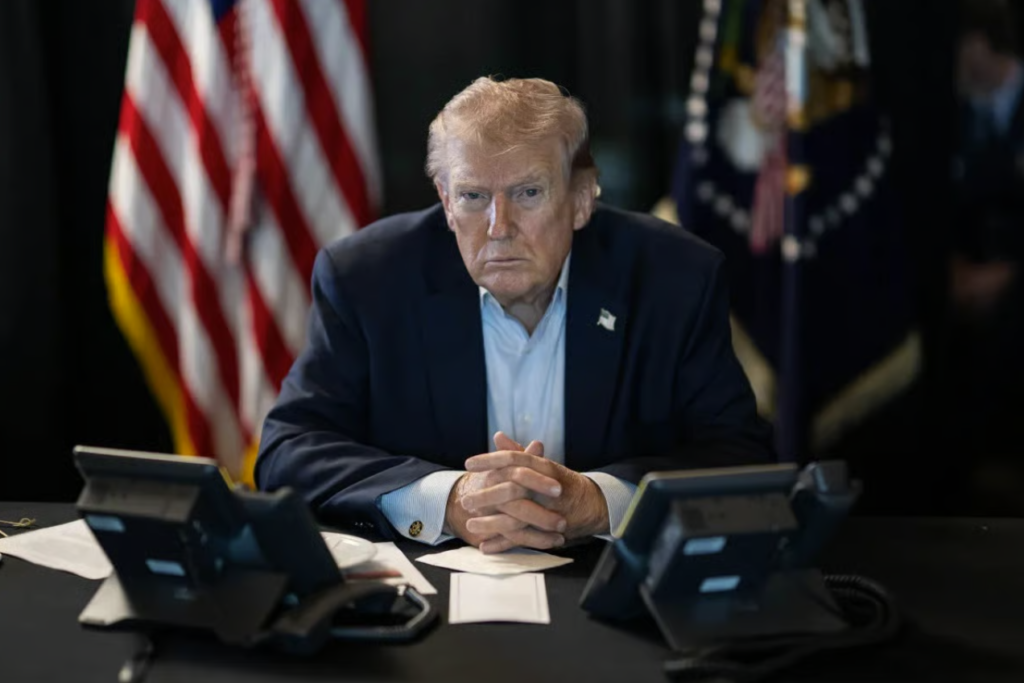
Facts. On June 14, Pakistani Prime Minister Shehbaz Sharif—the lead mediator—announced that Washington and Tehran had finalized the text of a memorandum of understanding, to be signed on Friday, June 19, at a ceremony in Switzerland. Iranian Deputy Foreign Minister Kazem Gharibabadi confirmed the completion of the agreement; negotiators from the Emirate of Qatar traveled to Tehran and held seventeen hours of talks to finalize the deal. Minutes after the announcement, President Trump announced the immediate lifting of the US naval blockade and authorized the “toll-free” reopening of the strait. The fourteen-point draft agreement released by the Iranian news agency Mehr calls for an immediate and permanent cessation of hostilities on all fronts—including Lebanon—the suspension of oil and some financial sanctions, the release of some $24 billion in frozen Iranian funds (half of which would be released before the start of the final negotiations), Tehran’s reaffirmation of its commitment not to produce nuclear weapons under the Non-Proliferation Treaty, the presentation of reconstruction plans by the United States and its allies, and a reduction of the U.S. military presence in the region. The following sixty days are reserved for the most contentious issues: nuclear enrichment, remaining sanctions, and resolutions from the Security Council and the International Atomic Energy Agency. Macron demanded the resumption of unrestricted and toll-free maritime traffic as an essential condition for stability; Starmer offered to support the technical talks; and the Emirate of Qatar welcomed the agreement as a step toward sustainable peace.
Implications. This is a victory in crisis management, not strategic design. The US administration has achieved its immediate objective— wresting control of the chokepoint through which nearly 20% of the world’s oil and liquefied natural gas passes from the ayatollahs’ dictatorship —and it has done so, it must be acknowledged, by acting with the prudence instilled by Secretary of State Marco Rubio, rather than by impulsive actions and improvised deadlines. But the agreement confirms our thesis: transactional foreign policy, guided more by intuition than by a plan, can resolve a crisis while leaving the problem unresolved. Here, time has been bought and Tehran has been given financial oxygen—24 billion is no small sum for a cosmically corrupt regime—in exchange for promises verifiable only on paper. The paradox of the decapitation continues to operate in all its starkness: after the elimination of the regime’s leadership, the hardliners who remain lack the ideological authority, hierarchical rank, and dominant personality to impose their will on their peers and force them to make concessions; it is not a paradox of moderation—there are no moderates left—but of governance. Whoever signs the 19th is not guaranteed the ability to fulfill what they have signed.
Perspectives and scenarios. Scenario A (45%): The signing on the 19th materializes, the strait normalizes within weeks, and the sixty-day window produces an imperfect but operational nuclear framework. Scenario B (40%): Partial compliance—effective reopening of the strait, but stalled nuclear negotiations and a fragile agreement riddled with incidents and extensions, which is the outcome most consistent with the erratic nature of Iranian power after the decapitation. Scenario C (15%): An incident on the Lebanese front or a disaffected faction of the Revolutionary Guard Corps derails the signing and returns the region to the point of open fracture. The cumulative probability that the strait will remain operational in the medium term is high; the probability that the nuclear issue will be truly resolved is low.
2. Market reaction: stock market euphoria in Asia and oil price collapse
Facts. The opening of Asian stock markets on Monday, June 15, translated the diplomatic relief into tangible results. Tokyo’s Nikkei 225 index rose around 5.5% in the first few hours; South Korea’s Kospi advanced as much as 5.7%; Taiwan’s Taiex gained nearly 2.7%, and Australia’s ASX 200 climbed around 1.5%. Hong Kong’s Hang Seng briefly rose by 1% before giving up much of its momentum. Futures on the US S&P 500 and Nasdaq indices also traded higher in after-hours trading. Oil, which during the crisis had reached highs not seen since 2022—with Brent crude above $100 a barrel and the US benchmark nearing $117 at its worst— fell sharply amid the prospect of renewed Gulf crude flows.
Implications. The collapse in crude oil prices is, in macroeconomic terms, the most tangible news of the day for the average citizen. A sustained drop in the price of oil alleviates imported inflation, reopens the door to interest rate cuts by the Federal Reserve and other central banks, and eases the financial strain on major importers—from India to Spain itself. However, it’s important not to get carried away: what the markets are pricing in is a scenario of compliance, and markets, like diplomacy, have short memories. The geopolitical risk premium hasn’t disappeared; it has simply gone dormant, and an incident in the Strait of Hormuz or the Beirut port of Dahieh would be enough to violently reawaken it.
Outlook and scenarios. Baseline scenario (60%): Brent crude stabilizes within a moderate range, and the stock market rally continues until the agreement is finalized. Relapse scenario (25%): A setback in implementation reignites volatility and sends crude back on an upward trend. Downward overreaction scenario (15%): Relief becomes overwhelming, and the market anticipates an overly optimistic normalization, exposing itself to a correction. The sum of these three scenarios encompasses all plausible outcomes.
3. Lebanon within the agreement: “permanent” ceasefire on paper, Hezbollah terrorism in practice
Facts. The draft memorandum explicitly includes the immediate and permanent cessation of military operations “on all fronts, including Lebanon.” But the reality on the ground contradicts the text. On June 7 and again on June 14, Israeli aircraft bombed Dahieh—the southern suburb of Beirut—in response to drone attacks by the terrorist organization Hezbollah; the Iranian retaliation was averted at the last minute by Washington’s intervention to avoid derailing the agreement. In the talks held in early June in the US capital, Israel and Lebanon had agreed to a conditional ceasefire that required a “complete ceasefire” by Hezbollah; the terrorist organization, through its leader Naim Qassem, flatly rejected it and made any truce contingent on a prior Israeli withdrawal from southern Lebanon. President Joseph Aoun described that framework as a “last chance.” The next Israeli-Lebanese talks are scheduled for the week of June 22.
Implications. Allow me, for reasons known to the reader of these reports, a word of personal caution: no region of the world is closer to me or more painful than Lebanon, that martyred state whose tragedy I have followed closely all my life. And precisely for this reason, I insist on calling things by their name. Hezbollah is not a “militia” or a “resistance group”: it is a terrorist organization, the armed wing and proxy of Tehran’s dictatorial and mafia-like oligarchy, and every one of its members is a terrorist. The Lebanese clause of the agreement is, on paper, its most ambitious element and, on the ground, its weakest link: it presupposes that Tehran can order its proxy to do what its proxy refuses to do as long as Israel occupies positions in the south. Herein lies the frayed wire of the entire structure. Hezbollah’s exclusion from the talks and its rejection of their outcome make Lebanon the most likely scenario for a relapse.
Perspectives and scenarios. Scenario of supervised containment (50%): the combined pressure from Washington, Tehran—now interested in profiting from the thaw—and the Lebanese state maintains a stumbling calm, with sporadic violations. Scenario of localized relapse (35%): a new exchange of fire in Dahieh or on the border breaks the clause without dragging the entire region into conflict. Scenario of reopening the front (15%): the terrorist organization’s refusal and an Israeli miscalculation reopen open warfare. The total of these scenarios adds up to 100%.
4. Ukraine: The front petrifies while diplomacy hibernates
Facts. While the world’s attention was focused on the Middle East, Russia’s war of aggression against Ukraine continued its bloody routine. The Ukrainian General Staff reported around 118 combat clashes as of the night of June 14, with the Pokrovsk and Huliaipole areas being the most intense. A Russian attack on Kharkiv set fire to the city’s art museum and left several wounded; in Dnipro, the death toll from a previous bombing reached seventeen. On the other side of the scale, long-range Ukrainian attacks continued to strike Russia’s energy rear, with the Kuibyshev refinery among the targets halted. Independent assessments agree on one diagnosis: Russia retains the capacity to attack, but is finding it increasingly difficult to translate tactical gains into operational success. The attempted truces in the spring —the Orthodox Easter truce in April, the “Victory Day” truce in May— did not result in any armistice.
Implications. Ukraine illustrates the other side of volatile wars: a conflict that no one knows how to win and that neither side can afford to lose, stuck in a plateau of attrition. The immediate risk for Kyiv is not military, but one of attention: that the thaw in the Gulf will shift the diplomatic focus and ease the pressure on the Kremlin just as the Russian front shows signs of fatigue. Our position remains the same and allows for no comfortable nuances: we are unequivocally opposed to Russian aggression and the use of force as a means of acquiring territory, and only moderately critical of the US administration regarding its dealings with Moscow, trusting that the good sense of those surrounding the president will ultimately prevail over the temptation of compromise.
Perspectives and scenarios. Scenario of continued attrition (60%): the front remains stagnant throughout the summer, with no decisive progress or serious negotiations. Scenario of renewed diplomatic pressure (25%): the success in Hormuz emboldens Washington to revive mediation efforts, with uncertain results. Scenario of Russian escalation (15%): Moscow takes advantage of the global distraction for a concentrated offensive. These three outcomes exhaust the spectrum.
5. China, the great silent beneficiary of the Hormuz crisis
Facts. The rise in Asian stock markets was centered in an Asia breathing a sigh of relief, and no one is breathing more discreetly than Beijing. Throughout the crisis, China—the world’s largest importer of crude oil—exhibited remarkable energy resilience: only around 10% of its oil now transits through the Strait of Hormuz, thanks to a network of onshore pipelines and a diversified portfolio of nearly fifty suppliers. At the summit in Beijing in mid-May, President Xi Jinping pledged to Trump to buy more American crude and to stop supplying military equipment to Iran. Chinese diplomacy repeated its mantra—”the use of force is a dead end”—while avoiding involvement in the reopening of the strait that Washington was demanding.
Implications. Here we must be especially vigilant, remaining true to our understanding of Chinese expansionism as advancing by subversion as much as by presence. The so-called Operation Epic Fury, conceived as a show of force to the world, has had an uncomfortable side effect: as Ali Wyne of the International Crisis Group has observed, it has punctured the illusion of American omnipotence by revealing that Washington could not reopen the Strait of Hormuz on its own and needed, even if only tacitly, the cooperation of its main strategic competitor. China hasn’t moved a single ship, and yet it emerges strengthened: it confirms its multipolar narrative, improves its energy bill, and allows itself the luxury of rhetorical equidistance. It’s the “small garden, high fence” approach applied in reverse—letting the rival wear itself down in someone else’s yard while fortifying one’s own. For Beijing, Russia and Iran are transactional partners, never true allies; and it is precisely this coldness that allows it to win without playing.
Outlook and scenarios. Consolidation of advantage scenario (55%): China capitalizes on the thaw, buys cheap crude, and deepens its penetration in the Gulf without assuming security costs. Trade friction scenario (30%): The commitment to buy US oil clashes with tariff tensions and is only partially fulfilled. Reluctant involvement scenario (15%): Beijing is drawn into an unwanted guarantor role. The total adds up to 100%.
6. Europe and its defense: from the collapse of the FCAS to Spain’s ambivalence towards the Ankara summit
Facts. The European flip side of the day is as eloquent as it is depressing. On June 8, at the ILA air show in Berlin—the same venue where the program was presented in 2018—Chancellor Friedrich Merz confirmed the demise of the Future Combat Air System (FCAS/SCAF), the Franco-German-Spanish sixth-generation fighter project valued at around €100 billion. Nine years and some €4 billion spent without a single aircraft flying, buried by the governance dispute between Airbus and Dassault over the division of labor and design leadership (“best-athlete”). The collapse also casts doubt on the MGCS main battle tank program. Meanwhile, the rival GCAP program—a joint effort between the UK, Italy, and Japan—is progressing, the US is racing with its F-47, and China has already flown two sixth-generation prototypes. On the eve of the NATO summit scheduled for July in Ankara, the Spanish government remains ambivalent: President Sánchez had written to Secretary General Rutte calling the 5% of GDP target “unreasonable,” despite the fact that Spanish defense spending grew by 50% last year, exceeding the 2% threshold for the first time in three decades.
Implications. Here, condensed into a single document, is the criticism I have been leveling at the mediocre and short-sighted European political class of the 21st century: incapable of taking its own defense, security, and destiny seriously. That the continent’s greatest project of strategic autonomy should founder in a boardroom squabble, at the very moment when Washington is reducing its presence in the Middle East and questioning the burden-sharing (free-riding, defensive parasitism) within the Alliance, is a historical irony. Europe has never had more reason to cooperate in defense and has never shown less willingness to do so. The Spanish case contains a particular inconsistency: a public stance of neutrality bordering on irresponsibility, more hostile to Washington than to the real threats, coexisting with bases—Rota and Morón—fully operational within the Atlantic security architecture. We are not criticizing cooperation: we are criticizing the inconsistency between military reality and rhetoric.
Perspectives and scenarios. Realignment scenario (50%): Spain and Germany reluctantly gravitate, belatedly, towards alternative formulas or the GCAP, accepting technological dependence. Paralysis scenario (35%): The void persists without a substitute, weakening the European defense industrial base. Galvanizing reaction scenario (15%): The double blow—the US withdrawal and the failure of the FCAS—finally spurs a serious European initiative. The sum totals 100%.
III. MEDIA RACK
Summary of the treatment that the main international newspapers and analysis firms have given to the dominant news of the day —the agreement between the United States and the dictatorial and mafia oligarchy of Tehran and the reopening of the Strait of Hormuz— and its energy, Lebanese and European derivatives.
| Half | Dominant angle of coverage |
|---|---|
| The New York Times | He frames the memorandum as a tactical triumph of maximum pressure, but emphasizes that the essential element—the nuclear program—is deferred to a sixty-day window without any guarantees of verification. |
| The Wall Street Journal | Markets and energy reading: the reopening of the strait as a turning point for global inflation and the Federal Reserve’s monetary policy. |
| The Washington Post | It focuses on the fragility of the Lebanese front and the uncertainty of the “day after,” noting that the Iranian regime is signing weakened but not defeated. |
| Financial Times | A sober analysis of the collapse in oil prices and the rebound in Asian indices; it warns that the geopolitical risk premium does not disappear, it only becomes dormant. |
| The Times / The Telegraph | They highlight the Anglo-Saxon mediating role and the British willingness to support the technical talks; a tone of restrained relief. |
| The Guardian | He insists on the Lebanese humanitarian cost and the doubts about international legality; skeptical of the victory narrative. |
| Le Monde / Le Figaro / Liberation | Paris asserts its leading role: Macron demands toll-free maritime transit and offers support for the nuclear and ballistic missile programs. Figaro celebrates; Libération offers a more nuanced perspective. |
| FAZ / Die Welt / Die Zeit | The German press links the US withdrawal with the European strategic vacuum and the recent collapse of the FCAS; self-criticism on dependency. |
| Corriere della Sera | Mediterranean and energy context; attention to the impact on prices and on Vatican peace diplomacy. |
| L’Osservatore Romano | It welcomes the cessation of hostilities as a sign of reconciliation, following the message of Leo XIV during his recent trip to Spain. |
| Reuters / AP / AFP / DPA | Factual and chronological coverage: completion of the text, scheduled signing in Switzerland on the 19th, lifting of the naval blockade and reopening of the strait. |
| Bloomberg / CNBC | Real-time data: Nikkei and Kospi surge, crude oil falls, US futures rise; focus on the Asian energy chain. |
| BBC / CNN / CBS | A cautious, ongoing news report: the agreement “has been reached” but “has not yet been signed”; they recall the previous missed deadlines. |
| Fox News / Washington Times | They present the outcome as a vindication of the hardline policy and presidential firmness; praise for Marco Rubio as a prudent architect. |
| Al Jazeera / Al Arabiya | Doha and Gulf issuers emphasize Qatari mediation and the imminent resumption of traffic; a tone of regional protagonism. |
| Asharq Al-Awsat / Arab News / Al Riyadh | The Saudi press frames the agreement as stabilizing the Gulf and an opportunity for reconstruction; caution about Tehran’s true intentions. |
| An-Nahar / L’Orient-Le Jour | Beirut experiences the “permanent ceasefire” with wary hope: the text promises, but the bombings on Dahieh remain fresh. |
| The Peninsula / Gulf News / Times of Oman | Media outlets in the Emirate of Qatar and the Gulf celebrate the opening of the strait and the guarantee of free navigation as a regional public good. |
| Jerusalem Post / Israel Hayom / Haaretz | Israel views the agreement with suspicion: relief regarding the Iranian front, concern about the Lebanese clause and the continued threat from Hezbollah. |
| Yedioth Ahronoth / Maariv | Internal debate on whether the ceasefire “on all fronts” ties the hands of the Defense Forces against the terrorist organization in southern Lebanon. |
| Russia Today / TASS / Vesti | Moscow downplays the American success and presents it as proof of a multipolar order; silence on its own losses in Ukraine. |
| Kyiv Independent / Ukrainska Pravda / Ukrinform | Fears that the diplomatic focus on the Middle East will leave Ukraine without attention and pressure on the Kremlin. |
| South China Morning Post/China Daily | Beijing downplays its role and displays “energy sufficiency”; it presents the negotiation as confirmation that “the use of force is a dead end.” |
| The Times of India / WION / Hindustan Times | New Delhi celebrates the relief in crude oil prices —vital to its trade balance— and highlights Islamabad’s mediation with restrained irony. |
| The Economist / Foreign Affairs / Newsweek / TIME | Background analysis: they distinguish between the end of the Strait crisis and the absence of a lasting architecture; they warn of the risk of the “day after”. |
| RUSI / IISS / CSIS / IFRI / EIU | Strategic cabinets agree: a victory of crisis management, not of design; they underline the silent beneficiary China and the European atrophy. |
IV. RISK TRAFFIC LIGHT
Color-coded reading of the risk level and pressure on each theater in the coming weeks: 🔴 critical · 🟠 high · 🟡 watch · 🟢 favorable.
| Light | Scope | Risk assessment |
|---|---|---|
| 🔴 | Strait of Hormuz / energy | The agreement reopens the route, but the physical deactivation —mine removal, normalization of insurance and transit— takes weeks; any incident would reignite the risk premium and the price. |
| 🟠 | Lebanon — Hezbollah | The “permanent” ceasefire exists only on paper; the terrorist organization demands a prior Israeli withdrawal and rejects the June 4th ceasefire. A potential flashpoint for immediate relapse. |
| 🟠 | Iran — nuclear program | The sixty-day window brings together the most difficult issues: enrichment, residual sanctions, and resolutions from the Security Council and the IAEA. Without an internal arbiter, Iran’s decision-making is erratic. |
| 🟠 | European defense / FCAS | The collapse of the Franco-German-Spanish program leaves Europe without its own sixth-generation fighter jet just as Washington is reducing its presence. Aggravated structural incapacity. |
| 🟡 | Ukraine | A petrified front and hibernating diplomacy; Russia attacks without converting and Ukraine strikes back. A war of attrition with no end in sight. |
| 🟡 | Indo-Pacific / China | Beijing emerges as a silent beneficiary of the Hormuz crisis; a persistent gray area opposite Taiwan in the Pratas. High vigilance, deferred risk. |
| 🟡 | Spain — Holy See | Following the apostolic visit of Leo XIV (June 6-12), the contrast between the institutional gesture and the ambivalence of the Government towards the 5% of NATO puts a strain on the Spanish foreign narrative. |
| 🟢 | Global markets | Asian stock market euphoria and relief in the oil market; reopening of the door to interest rate cuts. Real optimism, although conditional on the signing of the agreement on the 19th materializing. |
V. EDITORIAL COMMENTARY
Illusion of peace with Iran
There are days when diplomacy seems to prove the pessimists wrong, and June 14th seemed to be one of them. I won’t be the one to withhold the recognition that wresting control of the Strait of Hormuz from the dictatorial and mafia-like oligarchy of Tehran without the region erupting completely is well deserved. But it’s wise not to be dazzled by the flash, because what the world celebrates as a historic understanding is not, strictly speaking, an agreement. This is not an agreement: it’s an announcement seeking a signature—an announcement that its own authors describe in contradictory terms and that will be signed, if it is signed at all on the 19th in Switzerland, by a regime incapable of guaranteeing its fulfillment. Five cracks run the length of the structure, and it’s worth examining them one by one.
The first point is the most basic and the most devastating. It is not a theocracy that signs—it never was, and that is why we refuse to call it that—; it is a jihadist, dictatorial, and mafia-like oligarchy that rents its consent for sixty days. After the regime’s decapitation, no authority remains in Tehran with the rank, ideological stature, or dominant personality to impose a concession on its peers and enforce it: it is the paradox of decapitation in its purest form. And from this, the obvious follows: a signature extracted from a headless oligarchy is binding on no one.
The second rift is that there isn’t one agreement: there are two, and they contradict each other. What Washington presents as disarmament, Tehran sells as a victory; what was announced as the dismantling of the nuclear program is merely a promise to negotiate it later, postponed to a sixty-day window that is, in effect, a blank check. Let’s call things by their name: entrusting the fox with disarming the henhouse isn’t arms control; it’s whitewashing a threshold nuclear capability disguised as disarmament.
The third is silence, which in diplomacy speaks louder than clauses. The text is silent about ballistic missiles—the sword the regime will continue to sharpen—, silent about its status as the leading state sponsor of terrorism and its proxies, and silent about the effective guarantee of passage through the Strait of Hormuz, entrusted to the goodwill of those who have made the strangulation of the strait their last weapon. What an agreement doesn’t say is often the only thing that truly matters.
The fourth flaw is the sequence, designed in reverse. Concessions come before the corresponding obligations, funds are released before anything is verified, and there is no automatic snapback of sanctions to put a price on non-compliance. Thus, the regime obtains the only commodity it has sought from the beginning: time. Time to breathe, to recapitalize, to rearm, and to wait for the West, true to form, to become distracted.
And the fifth point, which is close to home and deeply painful for me: a regional peace is being announced without Israel and with Lebanon abandoned to its fate. A regional peace without Israel and without automatic sanctions is a truce with an expiration date. And leaving Hezbollah’s arsenal untouched—that terrorist organization which was not part of the pact and has already rejected it through its own leaders—is to hold the martyred Lebanese state hostage in perpetuity. No peace agreement can stand if its weakest link is held hostage.
Let the assessment be clear, then, without triumphalism or defeatism. The silence of the cannons is good news, and no sectarianism should tarnish it. But we are not witnessing the end of a conflict, but rather its management; and the most likely path is not peace, but a coma induced by concessions without any reciprocal value—a freeze that each capital will rush to dress up as a victory. That is why it is worth repeating, even if it is uncomfortable: let us not confuse the absence of bombs with the achievement of peace. What is being signed this week in Switzerland is not peace with Iran; it is, merely, its mirage. We will remain vigilant.