Gustavo de Arístegui,
June 22, 2026
I. INTRODUCTION
The week dawns with the geopolitical pendulum swinging, once again, between diplomacy and outburst. On the tranquil Swiss peninsula of Bürgenstock, overlooking Lake Lucerne, the first substantive round of talks concluded last night under the Memorandum of Understanding signed last week by the presidents of the United States and Iran. The mediators—the Emirate of Qatar and Pakistan—described it as “positive and constructive” and established a roadmap toward a final agreement within sixty days. And yet, while their negotiators were agreeing on a de-escalation plan in the Strait of Hormuz, President Trump threatened, on Truth Social and Fox News, to “hit Tehran very hard” again and to “seize control” of the waterway. This simultaneity—the outstretched hand and the closed fist at the same dawn—condenses the contained systemic fracture that I have been describing since the launch of Operation Epic Fury: a conflict that no one can win or afford to lose, one of those variable-temperature wars of low resolution and very high destruction that define this disoriented century.
To that central game are added today five fronts of the first order: the consolidation of General Ahmed Vahidi at the head of the Revolutionary Guard and the decisive question of who really governs in Tehran; the strategic isolation of Israel, left “out in the cold” by an agreement it did not negotiate; the largest drone campaign of the entire war in Ukraine, which has brought the fire to the heart of Moscow; the rightward shift in Colombia with the very close victory of Abelardo de la Espriella and the defeat of a fanatical far-leftist who, had he been elected, would have ended up plunging the country even further into violence (more than 12,000 homicides in Colombia by 2026) and the capitulation to narco-terrorist gangs; and the decline of Sir Keir Starmer in London, pushed towards the exit door by the overwhelming victory of the charismatic mayor of Greater Manchester, Andy Burnham, in Makerfield. Six news stories, one central theme: the inability of the 21st century’s ruling classes to keep up with the times.
II. THE MOST IMPORTANT NEWS OF THE LAST 24 HOURS
1. Bürgenstock: The first round of the MoU concludes “in a constructive climate” as Trump threatens to seize Hormuz
Facts.
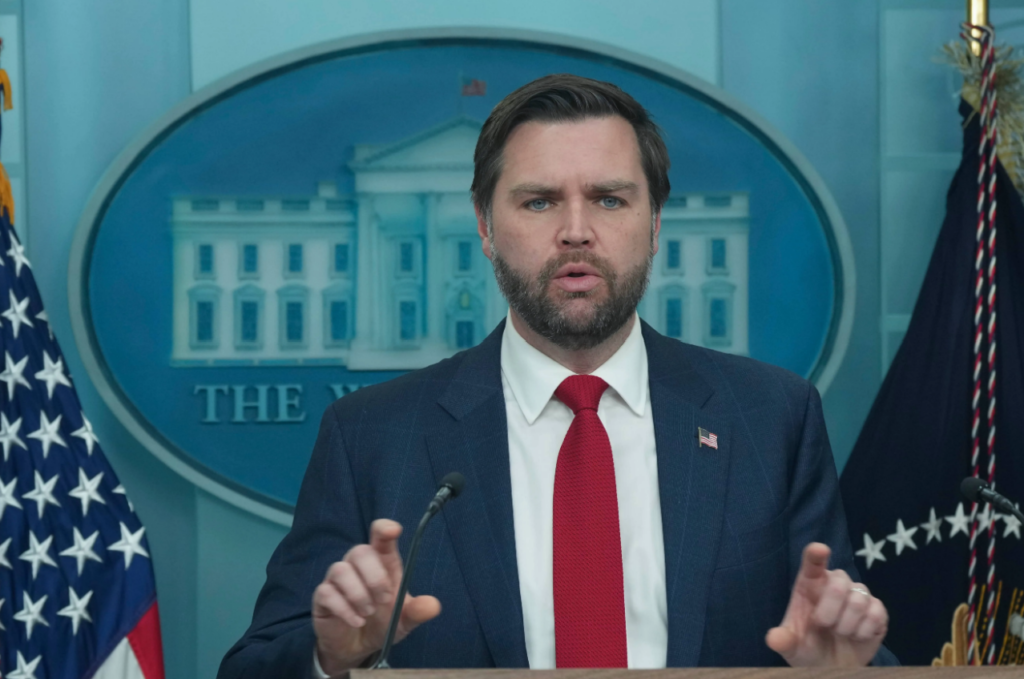
At the Bürgenstock complex near Lucerne, the first high-level session concluded in the early hours of the morning under the fourteen-point memorandum signed Wednesday by Donald Trump and Masoud Pezeshkian. The US delegation was headed by Vice President JD Vance, accompanied by envoy Steve Witkoff and Jared Kushner; Qatar, the true architect of the agreement, acted as mediator, and Pakistan—represented by Prime Minister Shehbaz Sharif and Field Marshal Asim Munir—was also present. The mediators’ joint statement announced the creation of a “High-Level Committee” for political oversight and a roadmap toward a final agreement within sixty days, with technical working groups focused on the nuclear dispute, sanctions, and dispute resolution. A line of communication was also established for the “safe passage” of commercial vessels through the Strait of Hormuz, as well as a de-escalation channel for Lebanon. Minister Abbas Araqchi proclaimed the suspension of oil sanctions, the release of frozen assets, and a “grand reconstruction plan.” All of this, however, came under the shadow of threats from Trump, who vowed to “hit Iran very hard again” if Hezbollah did not cease its attacks and warned Pezeshkian to “watch his mouth.” Tehran, which on Saturday had again declared the strait closed, lodged a formal protest through Tasnim.
Implications.
It’s wise not to be dazzled by the Swiss-style choreography. The so-called Islamabad Memorandum is not a peace treaty but a commitment to negotiate—its structural weakness, which I analyzed in detail last week, is precisely that: a framework that confuses photography with architecture. That the same dawn should bring together the mediators’ “constructive” communiqué and the bravado of “seizing the strait” paints a picture of the erratic and transactional foreign policy of the American president, governed more by intuition and impulsive outbursts than by doctrine or a clear strategic plan. My fundamental criticism remains: Iran’s jihadist, dictatorial, and mafia-like oligarchy was attacked without a serious plan for the aftermath, and today its reconstruction is being negotiated without verifiable guarantees of nuclear dismantling.
Perspectives and scenarios.
Scenario A (35%): Technical groups are making progress and an imperfect truce is being maintained, with Hormuz semi-open and oil in a high band but without collapse.
Scenario B (40%): the truce continues without a substantive agreement —neither verifiable nuclear disarmament nor Israeli withdrawal from Lebanon—, in an unstable, low-temperature equilibrium.
Scenario C (25%): An incident in Hormuz or in southern Lebanon reactivates the kinetic phase and derails the process. The probabilities add up to 100%.
2. Who really governs in Tehran: General Vahidi and the paradox of the decapitation
Facts.
Brigadier General Ahmed Vahidi has been commander-in-chief of the Islamic Revolutionary Guard Corps (IRGC) since March 1, following the death of his predecessor, Mohammad Pakpur, on the opening day of Operation Epic Fury, February 28—the same attack that killed Ali Khamenei. His son, Mukhtaba Khamenei, who has disappeared from public view, was elevated to leader despite reportedly being wounded and in hiding. Multiple investigations—by the Institute for the Study of War (ISW), the Washington Institute, and Iran International—concur that Vahidi effectively wields power, imposing his decisions on the “supreme” leader, Mukhtaba Khamenei, blocking appointments by President Pezeshkian, and ensuring that sensitive positions are filled by the IRGC during wartime. On March 25, he forced the appointment of Mohammad Bagher Zolqadr as secretary of the National Security Council, following the elimination of Ali Larijani. Vahidi is subject to an Interpol red notice for the AMIA bombing (Buenos Aires, 1994) and successive layers of US and European sanctions.
Implications.
We are at the analytical heart of the crisis, which is only illuminated by the paradox of the decapitation . It is not—I insist, because the common misconception is wrong—that the moderates have been eliminated, because there were none. The paradox is one of governance: the hardliners who remain individually lack the ideological authority, the hierarchical rank, and the dominant personality to impose their will on their peers and force the acceptance of negotiated concessions that Vahidi, without real authority , is trying to impose through threats and intimidation . Khamenei Sr. could impose internal discipline; the IRGC triumvirate—Vahidi as commander-in-chief, Zolqadr on the national security council, and Rezaei as acting military advisor—are equal, without a clear leader, for the moment. Hence, Ghalibaf and Araqchi cannot make decisions without the approval of the Revolutionary Guard, and on Friday the IRGC overruled the minister himself by reopening and closing the Hormuz border within hours. Whoever controls the war controls the negotiations; and whoever controls both is this jihadist oligarchy .
Perspectives and scenarios.
As long as Vahidi believes that intermittent confrontation serves his interests better than a pact, any truce will be merely a ceasefire to allow for rearming. The question is not whether Iran wants a deal, but whether the IRGC commander believes he needs one: and all indications are that he is betting on Trump losing patience before he does.
3. “Israel out in the cold”: Politically wounded Netanyahu maintains the security zone while the truce with Hezbollah hangs by a thread
Facts.
Israel is not a party to the memorandum, and therein lies its predicament. Tehran demands, as a condition, the Israeli withdrawal from southern Lebanon; Netanyahu counters that the Defense Forces will remain in their “security zone”—a strip of about 40 kilometers inside Lebanese territory—”for as long as necessary,” and reiterates that Iran “will not have nuclear weapons.” A ceasefire with Hezbollah was reached on Friday after the deadliest escalation since the signing of the agreement, but it is fragile: the terrorist organization considers the mere Israeli presence a violation, and Israel accuses its terrorists of firing more than 50 projectiles. Domestically, the opposition is intensifying: Yair Lapid described Netanyahu as “weak, sick, isolated, and impotent”; Ehud Barak spoke of “arrogance and blindness”; Avigdor Lieberman, of “catastrophe.” Elections are this fall. Trump himself, speaking from the G7 summit in France, expressed irritation with Israel’s handling of what he called its “little war” with Hezbollah.
Implications.
From day one, I have maintained a position that is now vindicated: I support attacks against the Iranian nuclear program, but I am severely critical of the complete lack of planning for the aftermath. Netanyahu led Trump into a war oversold in its objectives and has found that the president is pulling him out of the conflict before Israel feels ready, tying his hands in Lebanon before he can achieve his stated goals. The result is paradoxical and bitter: Iran emerges negotiating its reconstruction; Israel, isolated, watches its enemy proxies—Hezbollah in Lebanon, Hamas in Gaza—still standing. What should have been demanded is not maximalism, but strategic coherence, which has been conspicuously absent.
Perspectives and scenarios.
The Lebanese truce is the weakest link in the entire structure: a single Hezbollah missile, a single Israeli incursion into Beirut, would be enough to derail the entire Bürgenstock. Netanyahu, weakened and with elections looming, has conflicting incentives; and a cornered prime minister is, historically, a risk factor for further escalation, not for moderation.
4. Ukraine takes the war to the heart of Moscow: the biggest drone campaign hits the Gazprom Neft refinery and cripples Russian logistics
Facts.
On the night of June 18, Ukraine launched its largest drone attack of the entire war against Moscow, striking the Gazprom Neft refinery southeast of the capital for the second time in a week. Russia claimed to have shot down 555 drones, some 180 of them near Moscow. A new generation of medium-range drones—the FP-2 and the Behemoth, with a range of 50 to 300 kilometers—is crippling Russian supply lines, isolating Crimea, and causing fuel shortages. According to the ISW, medium-range missions have increased twenty-eightfold in a year, redefining the depth of the “kill zone.” The Kremlin is promising “massive group attacks,” and Lavrov is labeling the Ukrainian strikes “terrorist.” Zelensky is presenting them as a response to the Russian bombing of the Pechersk Lavra monastery and as an impetus for diplomacy. With the Iranian front concluded, Trump refocuses his attention on Ukraine: he announces the dispatch of Witkoff and Kushner to Moscow, promises more assistance to kyiv and urges Putin to “make a deal”.
Implications.
My position is unequivocal: I oppose Russian aggression and the use of force as a means of acquiring territory. What the drone campaign demonstrates is that technological asymmetry can reverse the logic of a war of attrition; Kyiv has finally found a way to shift the cost of the war onto Russia itself. I do, however, maintain a moderate criticism of Trump regarding his negotiations with Moscow: his inconsistency—now he re-engages, now he disengages—gives Putin the most valuable asset: time. And I will not remain silent in the face of the shocking attitude of certain pro-Russian analysts in Spain, who spread misinformation and justify repression, even going so far as to attribute internal protests to the CIA and Mossad.
Perspectives and scenarios.
The simultaneous “strength and vulnerability” of Ukraine—as headlined this week by The Economist—highlights the dilemma: it hits hard, but depends on renewed American engagement and Russian defenses that are learning. If Witkoff and Kushner arrive in Moscow with a proposal that rewards the territorial status quo, Europe—absent from the table—will once again be the object, not the subject, of its own security.
5. Colombia turns to the right: De la Espriella, backed by Trump, wins by a narrow margin and Cepeda challenges the recount
Facts. Abelardo de la Espriella, a 47-year-old lawyer with dual Colombian-American citizenship and an outsider with no prior elected office, won the June 21 runoff election against leftist Senator Iván Cepeda, an ally of outgoing President Gustavo Petro, by a razor-thin margin: approximately 49.7% to 48.7%, fewer than 250,000 votes, the closest race in the country’s recent history. With nearly thirteen million ballots cast, he is the most voted-for candidate in Colombian history. Cepeda acknowledged the preliminary count but announced he would challenge the results in 33,000 polling stations. De la Espriella—a proponent of a “tough on crime” approach, mega-prisons like those in El Salvador’s Bukele, and a free-market agenda and culture war—received congratulations from Trump, Milei, Noboa, and Flavio Bolsonaro. He will take office on August 7, although his movement only has four seats in the Senate.
Implications.
The defeat of the Colombian Bolivarian left, which has presided over a disastrous term under the inept and radical president Gustavo Petro, who flirted with the idea that “we’re back to being like Venezuela,” should bring us relief. Despite the narrow margin and the polarization of Colombian society, the rejection at the polls of this new brand of Marxism, with its cruelty and incompetence as old as the ideology itself, is very good news.
But consistency demands caution: right-wing and left-wing extremism are not the formula for a sensible government that respects fundamental rights and serves the interests of its citizens. Nevertheless, it deserves a vote of confidence, as it is more than likely that exercising power will moderate it. In any case, it was by far the best option.
The Latin American conservative wave—Milei, Noboa, Bukele—responds to a legitimate weariness with insecurity and drug trafficking; but the strongman approach has ruined the region too many times. Yes to the end of Chavismo and its narco-terrorism; no to its mirror image.
Perspectives and scenarios.
Without a parliamentary majority, De la Espriella will have to choose between building bridges or forcing the issue by appealing to his popularity; the latter, with the country divided in two, would be reckless. Washington regains a partner in the fight against drug trafficking and terrorism, but the legal challenges to the election results and the power struggle with the Petro faction promise a tense transition until August 7.
6. The downfall of Keir Starmer: Burnham sweeps Makerfield and is poised to become Britain’s next prime minister after Starmer’s resignation
Facts.
Andy Burnham, until a week ago the mayor of Greater Manchester, comfortably won the Makerfield by-election on June 18—54.8% of the vote, nearly 25,000 ballots, more than doubling the Labour majority—and is sworn in today, Monday, as a Member of Parliament, with the stated intention of challenging for the Labour Party leadership. After a weekend of reflection at Chequers, the country residence of the prime ministers, Sir Keir Starmer has announced his resignation and is preparing the timetable for his departure. He is the sixth British prime minister in a decade. The crisis had been brewing for months: a collapse in popularity since the landslide victory of July 2014, broken promises of growth and public services, the scandal surrounding the appointment of Peter Mandelson—a friend of the late Epstein—as ambassador to Washington, resignations in the Ministry of Defense over military spending, the loss of the Welsh Senedd, and the debacle in the local elections, all coinciding with the unstoppable rise of Reform UK, Nigel Farage’s party. Former Health Secretary Wes Streeting would run if there is a contest; Foreign Secretary Yvette Cooper is among those urging him to step down. Even Trump weighed in, predicting his resignation and blaming immigration and energy policies.
Implications.
Six prime ministers in ten years is not a mere anecdote: it is symptomatic of the mediocre and short-sighted political class I have been denouncing, incapable of offering stability or direction. But the fact that should truly worry mainstream liberals is the hollowing out of the reasonable center: while Labour is preparing to veer towards its moderate wing with Burnham, Reform UK is leading the polls on the populist right. I reject both extremes equally. It is also worth noting Starmer’s only international asset—his Atlanticist role in consolidating European support for Ukraine and mitigating the shockwaves of the Iranian conflict—which makes the moment of transition particularly delicate: the United Kingdom, a nuclear power and permanent member of the Security Council, is changing its helmsman in the midst of the Iranian post-war period and with the war in Ukraine still raging.
Perspectives and scenarios.
If Starmer resigns in an orderly fashion, the question is whether Burnham will secure a coronation or face a contest with Wes Streeting and other contenders. In either scenario, the mayor of Greater Manchester is the undisputed favorite and, barring a major upset, will be the next occupant of Downing Street. The underlying challenge, however, is not Burnham: it is whether Labour can rein in Reform UK without sacrificing common sense, or whether London will remain trapped in the chronic instability that has already consumed five prime ministers.
III. MEDIA RACK
III. MEDIA RACK
What the main international newspapers and services are saying in the last few hours (own summary, verified with several sources):
The Economist — titles its “World in Brief” with Trump’s threats at the conclusion of the first round of Iran talks and the victory of the hard right in Colombia; in separate pieces it addresses “Israel out in the cold” and the “strengths and vulnerabilities” of Ukraine.
CNN reports on the “constructive” conclusion in Switzerland, the secure passage line through Hormuz and the clash between Trump’s threats and Iranian protest; it also documents the drone campaign that is strangling Russian logistics to Crimea.
NBC News — highlights the sixty-day roadmap agreed in Bürgenstock and reports the presidential warning to “strike again” at Iran for its proxies in Lebanon.
NPR — focuses its coverage on the Lebanese ceasefire and Netanyahu’s insistence on maintaining the “safe zone”; it analyzes the Israeli prime minister’s isolation.
ABC News — reconstructs the timeline from Epic Fury (February 28) to the signing of the MoU, with Vance proclaiming “great progress”.
CBS News — highlights Araqchi’s position that the Israeli presence in Lebanon constitutes a violation of the memorandum, and Trump’s rebuke of the handling of the “little war”.
The New York Times — delves into the fractures of Iranian factions and Vahidi’s role in the succession and capture of the State through crisis management.
The Washington Post / The Washington Times — examine the domestic cost of an unpopular war and Trump’s pivot to Ukraine once the Iranian front was “closed”.
The Wall Street Journal / Bloomberg / CNBC — focus on oil tensions, the release of strategic reserves and the effect of Hormuz on energy markets.
Financial Times — analyzes Iran’s reconstruction and the redirection of frozen assets to the Gulf States.
Reuters / AFP / AP / DPA — They release the joint statement from Qatari and Pakistani mediators and images of the Gazprom Neft refinery in flames.
Le Monde / Le Figaro / Libération — analyze the Iranian post-war situation, Israel’s isolation, and the uncertainty surrounding European leadership after London’s woes.
La Tribune / La Croix / Le Point / France Info — follow the impact of the Hormuz dispute on energy markets and the British political earthquake.
FAZ / Die Welt / Die Zeit / Handelsblatt — examine, from Berlin, the shockwave of the Iranian conflict and the continuity of European support for Ukraine in the face of the change in Downing Street.
The Times / The Telegraph / The Guardian / The Observer / BBC — focus their coverage on Starmer’s imminent resignation and Burnham’s landslide victory at Makerfield, along with Trump’s diplomacy between Iran and Ukraine.
Al Jazeera / Al-Arabiya — document the Israeli attacks in southern Lebanon and the emergence of Vahidi as an arbiter in the negotiations.
Haaretz / The Jerusalem Post / Yedioth Ahronoth / Israel Hayom — report on the opposition offensive —Lapid, Barak, Lieberman— against an “isolated” Netanyahu on the eve of the elections.
An-Nahar / L’Orient-Le Jour / The Daily Star (Beirut) — report on the return of civilians to the southern villages and the fragility of the truce.
Arab News / Asharq Al-Awsat / Gulf News / Khaleej Times — are paying attention to the de-escalation line in Hormuz and the mediating role of Qatar and the Gulf States.
Ukrainska Pravda / Kyiv Independent / Kyiv Post / Ukrinform — celebrate the reach of the drone campaign and quote Zelensky: “It is time for the war to end.”
TASS / Russia Today / Vesti — amplify the Russian promise of “massive group attacks” and Lavrov’s narrative about Kiev’s “terrorism”.
The Times of India / Hindustan Times / Indian Express / WION — follow Gulf diplomacy, Pakistan’s mediating role and the realignment of energy markets.
South China Morning Post / China Daily — highlight how Beijing is capitalizing on Western distractions — from the Middle East to European instability — while maintaining its grip on rare earth resources.
Clarín / El Mercurio / Reforma — interpret De la Espriella’s victory as part of the Latin American conservative wave, with congratulations from Milei and Noboa.
Foreign Affairs / The National Interest / Politico / Axios / The Hill — discuss the transactional nature of Trump’s diplomacy and the risk of rewarding the territorial status quo in Ukraine.
Bulletins from RUSI, IISS, CSIS, IFRI and The Economist Intelligence Unit — agree in pointing to the capture of the Iranian state by the IRGC and the decline of European cooperation in defense as underlying trends.
IV. RISK TRAFFIC LIGHT
| Scope | Level | Reading |
|---|---|---|
| Persian Gulf / Strait of Hormuz | ● Critic | Intermittent closure and reopening; agreed safe passage line but reversible at the first opportunity. |
| Iran: Power Structure (IRGC / Vahidi) | ● Critic | Iran’s terrorist regime, captured by the IRGC triumvirate; negotiation depends on who controls the war. |
| Lebanon / Israel–Hezbollah | ● High | The ceasefire is fragile; the Israeli presence in the “safe zone” could derail the MoU at any moment. |
| Ukraine War | ● High | Far-reaching drone campaign and Trump’s imminent re-engagement; risk of a pact that rewards the territorial status quo. |
| United Kingdom / Labour transition | ● Moderate | Starmer’s imminent fall and Burnham’s rise; a predictably orderly handover, but with Reform UK on the rise and doubts about European leadership in Ukraine. |
| European defense / FCAS | ● Critic | Burial of the sixth-generation fighter; Franco-German fracture that drags down the MGCS and exposes European strategic incapacity. |
| Latin America / Colombia | ● Moderate | Rightward shift by a narrow margin; challenge to the recount and weak mandate until the inauguration on August 7. |
| Venezuela (Chavista regime) | ● High | The narco-regime of the Rodríguez brothers, pressured by the regional wave and by attacks on drug boats. |
| China / Indo-Pacific | ● Moderate | Beijing capitalizes on European fragmentation in combat aviation and maintains the struggle for rare earth elements and maritime routes. |
| Energy markets / oil | ● High | Volatility due to Hormuz; release of US strategic reserves to contain the price. |
| Spain — Holy See | ● Stable | No significant developments in the last 24 hours; relationship is proceeding normally. |
Legend: ● critical ● high ● moderate ● stable
V. EDITORIAL COMMENTARY
There are days when geopolitics presents itself with almost pedagogical clarity, and this is one of them. Six seemingly disparate news items—a Swiss resort, an Iranian general accused of mass terrorism, an Israeli prime minister cornered, a swarm of drones over Moscow, the Colombian elections—together paint a portrait of an era bereft of statesmen. The common thread is the disproportion between the magnitude of the challenges and the insignificance of those who must confront them.
In Bürgenstock, choreography has once again been mistaken for substance. I celebrate, as much as anyone, that the cannons have fallen silent; but a memorandum that is merely a promise to negotiate and not a substantive agreement resolves nothing: it postpones. And it postpones, moreover, on a cracked foundation, because on the other side of the table there is no interlocutor with the authority to comply. That is the paradox of the decapitation : the Iranian jihadist oligarchy survived the decapitation, but it did so by fragmenting into a triumvirate of equals without a referee; Vahidi commands, but he cannot impose discipline as Khamenei did. Negotiating with someone who cannot control their own people is building on sand. I warned of this from day one, and I reiterate it: the attack was launched without a plan for the aftermath, and the void has been filled by the most ruthless, not the most sensible.
Israel is paying the price for that improvisation today. I maintained—and events bear me out—that it was possible to support the attack on the nuclear program while simultaneously condemning the lack of planning without reservation. The result is a prime minister caught out of the fight before it was won, while Hezbollah—a terrorist organization, and each of its members a terrorist—remains standing. I wasn’t asking for maximalism; I was asking for consistency. And I reiterate this same demand, without hesitation, to the Spanish government, whose stance of neutrality borders on irresponsibility: there is a blatant inconsistency between the military reality at Rota and Morón—active components of operational logistical support—and the government’s public pronouncements. I am not demanding blind alignment; I am demanding, once again, consistency.
On Ukraine, my compass remains unwavering: against Russian aggression and against the use of force to annex territories. Kyiv’s fires targeting Moscow’s refineries are not terrorism—no matter how much Lavrov proclaims it and the usual pro-Russian analysts who spread misinformation among us echo it—but rather legitimate self-defense that shifts the cost of the war onto those who started it. My criticism, moderate but firm, is directed at Trump’s inconsistency: his foreign policy, when prudent and guided by Marco Rubio’s advice, has yielded genuine diplomatic successes; when governed by intuition and impulsive actions, he hands Putin the only asset the Kremlin cannot manufacture: time. I trust that the system and the good sense of those around him will ultimately prevail; but trust does not excuse vigilance.
Colombia and the United Kingdom complete the picture at their extremes. In Bogotá, the pendulum has swung to the right by a hair; I welcome the rejection of Bolivarianism, but as a center-right liberal who rejects extremes equally, I will never confuse the end of Chavismo with the enthronement of a plebiscitary strongman who rules by decree over half the country. And in London, the fall of Sir Keir Starmer—the sixth prime minister in a decade—elevates to the forefront the problem that most worries me about mature democracies: chronic instability and the hollowing out of the sensible center. That Labour is preparing to veer towards its softer wing with Andy Burnham while Reform UK stalks it from the populist right paints a picture of a European politics that has forgotten how to govern with common sense.