Gustavo de Arístegui,
June 24, 2026
I. INTRODUCTION
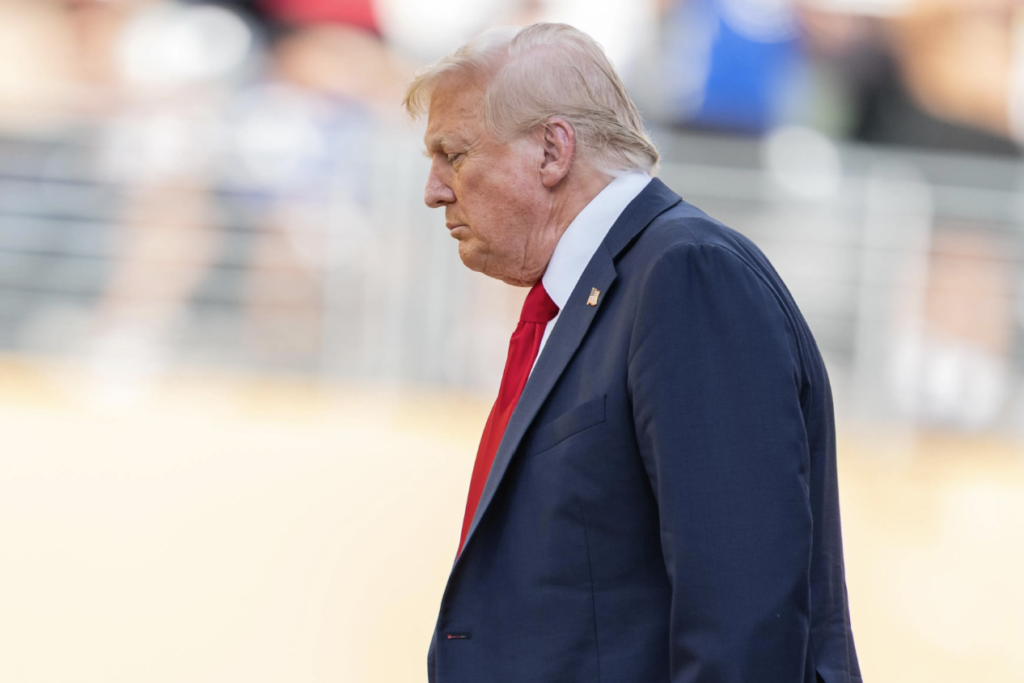
The day leaves an image that summarizes, better than any commentary, the character of this US foreign policy: President Trump celebrates a roadmap (memorandum of understanding) with Tehran abroad while, on the same day, his own Senate rebukes him for the first time with a war powers resolution . It is the exact snapshot of a power that advances by intuition and impulsiveness, reaps a real de-escalation, and sees it challenged at home for a lack of plan, narrative, and foresight regarding the “day after.”
The backdrop is not peace, but what we have been calling a contained systemic fracture : a war that does not end and an agreement that does not solidify. While Bürgenstock’s diplomacy sets sixty-day deadlines, in Tehran the consolidation of power around the brutal commander-in-chief of the Revolutionary Guard, General Ahmad Vahidi, is being completed. In Spain, the sentencing of former minister José Luis Ábalos to more than twenty-four years in prison—and the cascade of cases closing in on the social-communist government—shakes the country’s institutional credibility and resonates strongly in the international press. On the eastern flank, Ukraine matures its deep-seated campaign while Washington declares itself, with transactional detachment, “thousands of miles” from the conflict. In the Americas, Venezuelan oil flows without a democratic transition. And, in the background of it all, China sharpens its rare earth weapon. Six fronts, one thread: the distance between a showy gesture and strategy.
II. MOST IMPORTANT NEWS OF THE LAST 24 HOURS
1. Bürgenstock and the Senate: the agreement Trump celebrates abroad and the reprimand he receives at home
Facts
The Lake Lucerne Summit talks, held at the Bürgenstock complex—owned by the Emirate of Qatar—and mediated by Qatar and Pakistan, lasted approximately 18 hours and concluded on Monday with a roadmap for reaching a final agreement within 60 days. A high-level committee and working groups were agreed upon to address nuclear issues, sanctions, and dispute resolution; a “communication line” across the Strait of Hormuz to prevent incidents; and a deconfliction cell with Lebanon and the mediators to maintain the ceasefire. Vice President JD Vance announced that Iran had agreed to “invite” inspectors from the International Atomic Energy Agency (IAEA) again, calling it a “major milestone,” while the U.S. Treasury maintained a general license for the sale of Iranian crude oil until August 21.
The euphoria was short-lived. On Tuesday, the Iranian Foreign Ministry contradicted Vance and Trump by denying that any visit was scheduled and reaffirming its “sovereignty” over the Strait of Hormuz—where ships must request permission from a newly created Strait Authority. Trump retorted that Iran “is mistaken” and that he would comply “100 percent” with the inspection, warning that he would do “whatever it takes” if Tehran failed to comply. Meanwhile, the U.S. Senate passed a war powers resolution by a vote of 50 to 48, ordering the withdrawal of forces from the conflict with Iran without express congressional authorization. Four Republicans—Rand Paul, Susan Collins, Lisa Murkowski, and Bill Cassidy—voted in favor; Democrat John Fetterman voted against it; the absences of McConnell (hospitalized) and McCormick facilitated the outcome. The House of Representatives had already passed the resolution on June 3 (215-208). This is the first time such a resolution has passed both houses of Congress, although it is not binding and will not reach the president’s desk. Meanwhile, the Pentagon is requesting approximately $80 billion to finance the campaign.
Implications
The memorandum is a de-escalation disguised as a victory, not a resolution. It leaves out the ballistic missile program and the proxy network; it grants the lever of sanctions and oil from the outset—giving away the card before even playing the hand—and entrusts sixty days of technical talks with what weapons failed to achieve in four months of war. The Senate vote, however symbolic, is historically significant: the first bicameral rebuke of a war the Administration initiated unilaterally and now needs Congress to fund. Even more relevant is what it reveals: the erosion of Trump’s own coalition, with Republicans of the caliber of Wicker, Cotton, and Cruz uncomfortable with the MOU. The void of the “day after” (the day after) that we denounced back in February reappears, undiminished.
Perspectives and scenarios
Regarding the central question —the trajectory of the ceasefire and the roadmap— we are working with three scenarios that add up to 100%:
Scenario A (30%): The roadmap holds for sixty days; technical talks limp towards a partial agreement and Hormuz remains intermittently open.
Scenario B (40%): “neither peace nor war”—the most likely outcome—; recurring minor breaches, the Strait of Hormuz open and closed at will, and sparks flying in Lebanon. The agreement neither collapses nor consolidates: a textbook case of a war with variable temperature.
Scenario C (30%): collapse; an incident in Hormuz or southern Lebanon, or a breach over IAEA access, reactivates limited attacks within the timeframe.
2. Vahidi and the Praetorianization of Tehran: Who Really Rules After the Decapitation
Facts
Brigadier General Ahmad Vahidi, commander-in-chief of the Islamic Revolutionary Guard Corps (IRGC) since March 1, 2026—following Pakpour’s death—now acts as the true center of gravity of Iranian power. Wanted by Interpol since 2007 for the AMIA bombing in Buenos Aires (1994, 85 dead) and sanctioned by Washington and Brussels for the 2022 repression, founder of the Quds Force and military architect of Hezbollah, Vahidi now makes political and military decisions alongside the new “leader”—inexplicably called “supreme”—Mukhtaba Khamenei. According to the Institute for the Study of War and US intelligence assessments, he has systematically blocked President Pezeshkian, overruled Foreign Minister Araghchi and Speaker of Parliament Ghalibaf—who answers to him, not Pezeshkian—and on March 25th forced the appointment of Mohammad Bagher Zolghadr as Secretary of the Supreme National Security Council. This is the Vahidi-Zolghadr-Rezaei triumvirate, all ultraconservatives. The Foreign Ministry’s denial of the IAEA inspections today is clear proof that civilian diplomacy doesn’t make the decisions: the military decides.
Implications
It is important to clarify the concept that best explains this moment. The paradox of the decapitation lies not in the elimination of moderates—there were none—but in the fact that the survivors, all hardliners, lack the ideological authority, rank, and dominant personality necessary to impose themselves on their peers and force the acceptance of concessions. Khamenei Sr. could enforce internal discipline; the triumvirate are equals without an arbiter. It is, therefore, a paradox of governance, not of moderation. The operational consequence is devastating for the West: the civil-diplomatic channel cannot sign anything that the Praetorian Guard is unwilling to ratify, so every Western concession risks being coveted and later denied. Faced with this jihadist oligarchy—which is never a “theocracy” —wishful thinking is the worst possible advisor.
Perspectives and scenarios
As long as Vahidi controls Hormuz, the appointments, and the final say, the negotiations will remain hostage to Iran’s internal power struggle. The Foreign Ministry’s denial is not a mere protocol misunderstanding: it’s a clear indication of who’s in charge. Most likely, the triumvirate will make measured gestures of openness without yielding an inch on the substance, prolonging the ambiguity for as long as it suits them.
3. Spain: the conviction of Ábalos and the cascade of scandals of the social-communist government, with echoes in the international press
Facts
On Monday, June 22, Spain’s Supreme Court unanimously sentenced former Transport Minister and former PSOE Secretary of Organization José Luis Ábalos to 24 years and three months in prison for organized crime, bribery, embezzlement of public funds, and influence peddling in the so-called “mask case” (Koldo case). His former advisor, Koldo García, received a 19-year and eight-month sentence; the middleman Víctor de Aldama received a four-and-a-half-year suspended sentence in recognition of his cooperation. The scheme rigged the awarding of contracts for medical supplies during the pandemic—13 million masks to State Ports and Adif—in exchange for bribes, with monthly payments of €10,000 to Ábalos for “fixed expenses.” It is the first firm conviction of a former minister of Pedro Sánchez —only the fifth minister imprisoned since the Transition and the highest sentence ever imposed on a former minister—, and the court itself warned of the “serious deterioration of public trust in the political system” caused by corruption.
The ruling comes not in isolation, but as part of a cascade of cases closing in on the coalition government (PSOE-Sumar): Santos Cerdán, Ábalos’ successor as Secretary of Organization, is imprisoned and facing charges; the president’s wife, Begoña Gómez, has been ordered to stand trial by jury, with her passport confiscated and a travel ban imposed; her brother, David Sánchez, is accused of preferential treatment in obtaining a public job; and former president José Luis Rodríguez Zapatero is under investigation for alleged organized crime, influence peddling, and document forgery related to a loan to an airline. The president—who is not charged in any of these cases and who denounces them as an “obscene farce” and politically motivated—defended the continuity of his government on Tuesday with a laconic “we’re still in power” and appeared before Congress today, Wednesday the 24th, to address the investigations implicating those close to him.
International press reaction
The international reaction has been immediate and severe. Bloomberg led the way with the imprisonment of the former Socialist deputy prime minister in a graft case ; Euronews called it a major blow for Sánchez; AFP and Reuters described it as a severe blow to a fragile minority Socialist government, besieged by a succession of cases threatening to bring down the coalition; and CNN portrayed how the investigations are piling up around the president’s inner circle. The contrast highlighted by AFP itself is revealing: Sánchez’s clashes with the Trump administration and his virulent criticism of Israel have elevated him to the status of a global progressive star, while the scandals erode his domestic standing. The international press, however, converges on two points of caution that should not be forgotten: that the president has not been personally charged —the presumption of innocence applies— and that the episode constitutes, above all, a litmus test for the independence of the Spanish justice system.
Implications
There is a paradox that cannot be ignored: the PSOE, which in 2018 ousted the People’s Party through a vote of no confidence under the banner of regeneration, now faces corruption entrenched in the very heart of its organizational structure. And yet, the truly good news is institutional: the separation of powers is functioning, as is an independent judiciary that doesn’t consider the defendant’s party affiliation—the best legacy of that exemplary Transition we have always defended. Dependence on separatist partners, the inability to pass a budget, and legislative paralysis paint a picture of a cornered Executive whose external authority—just when Europe most needs serious governments—is visibly undermined. Disaster for Spain (not for the PSOE) is inevitable. It will be VERY difficult to rebuild our country’s image and credibility. In any other democracy, the government would have fallen months or even years ago. WE WILL SOON PUBLISH A FEATURE ON THIS DRAMATIC AND SHAMEFUL SITUATION.
Perspectives and scenarios
In the short term, it is most likely that Sánchez, a skilled survivor, will weather the storm thanks to his parliamentary majority, even without a budget. But the accumulation of problems—Ábalos’s conviction, Cerdán’s imprisonment, Begoña Gómez’s trial, Zapatero’s case—and any new revelations will keep the legislature deadlocked and the specter of early elections alive if a coalition partner breaks ranks. The disconnect between the image of a “progressive star” abroad and that of a government besieged by corruption at home will become increasingly difficult to maintain.
4. Ukraine: “far-reaching sanctions” and Washington’s transactional detachment
Facts
Russian occupation authorities in Crimea suspended fuel distribution on Tuesday in the middle of the summer season, a sign of the peninsula’s growing isolation as Ukraine intensifies its offensive. With its FP-5 Flamingo cruise missiles, Kyiv is striking targets more than 900 kilometers from the front lines—the Kuibyshev refinery in Samara and the VNIIR-Progress plant in Cheboksary, which manufactures components for Russian drones and missiles—in what President Zelensky calls “long-range sanctions” against the Kremlin’s military-industrial-energy base. Moscow claims to have shot down 326 drones. Adding to this is another violation of NATO airspace: a drone originating from Russia entered Latvian airspace. At the recent G7 summit in Evian, Trump met with Zelensky but told reporters that the conflict “doesn’t affect us… we’re thousands of miles away.”
Implications
We reiterate our principled position: we oppose Russian aggression and the use of force as a means of acquiring territory. The unfolding of the Ukrainian deep strike alters Moscow’s cost equation and demonstrates that technological asymmetry can compensate for asymmetry in mass. But Washington’s transactional detachment—that “thousands of miles”—and the withdrawal of US assets shift the burden onto a Europe that has just torpedoed its own flagship fighter jet. Drone incursions into allied airspace, meanwhile, flirt with the threshold of Article 5 without crossing it: another war of variable temperature, low resolution, and high destruction, which no one can win or afford to lose.
Perspectives and scenarios
Ukrainian pressure on Crimea and Russian fuel logistics will continue to increase; the crucial factor will be whether Europe fills the void left by Washington. If it fails to do so, Western “fatigue”—not the battlefield—will dictate the pace of any future negotiations.
5. Venezuela: oil extraction without democratic transition
Facts
Since the capture of Nicolás Maduro on January 3—he is currently awaiting trial in New York—Vice President Delcy Rodríguez has been serving as interim president, and her brother Jorge presides over the National Assembly. The two-person power structure has passed a hydrocarbons law that reduces royalties (capped at 30%) and transfers disputes to foreign jurisdictions, while the U.S. Treasury grants licenses to Chevron, BP, Repsol, and SLB—formerly Schlumberger—and requires that revenues be deposited into an account under its control. Production hovers around 1.07–1.18 million barrels per day. On June 12, a joint operation between Washington and Caracas killed Niño Guerrero, leader of the Tren de Aragua gang. However, more than 400 political prisoners remain, and the Council on Foreign Relations estimates that some $8 billion worth of crude oil has been traded in four months, without transparency or a roadmap to democracy. Opposition leader and Nobel laureate María Corina Machado calls for a real transition in her “Panama Manifesto”.
Implications
We maintain our unequivocal position: against the execrable Chavista narco-dictatorial regime—that immense mafia organization—and in favor of its immediate downfall, just as we support the attacks against the drug-running boats. But Maduro’s fall does not equate to the end of Castro-Chavismo: the Rodríguez brothers inherit the narco-state apparatus intact and refurbish it with a technocratic veneer. And here our criticism of Trump’s transactional policy resurfaces: oil extraction cannot replace democratization. Granting licenses in a vacuum of planning—without an electoral calendar, without the release of prisoners, without independent institutions—risks legitimizing a repackaged dictatorship. The same “day-after” void that we denounced in Iran, now in the Caribbean.
Perspectives and scenarios
If Washington does not condition sanctions relief on verifiable democratic steps, the most likely outcome is the consolidation of a Chavismo without Chávez or Maduro, one that serves US energy interests and is shielded from the opposition. Bipartisan pressure in Congress to audit the oil system will be the key indicator to watch.
6. China sharpens its rare earth weapon: MP Materials and USA Rare Earth blacklisted
Facts
On June 22, China’s Ministry of Commerce (MOFCOM) added ten US companies to its export control list, including MP Materials and USA Rare Earth—the two rare earth champions backed by the Pentagon to reduce dependence on China—in retaliation for the US expansion of its list of Chinese military-related entities. The measure is entity-specific, not a blanket restriction, and coexists with the partial suspension of the strictest regulations, in effect until November 10, 2026. The stock market reaction was subdued, but the strategic message is clear: the companies poised to break Western dependence are now themselves targets of litigation. China controls around 70% of mining, 90% of processing, and more than 90% of global manufacturing of permanent magnets—with bottlenecks in heavy rare earths (dysprosium, terbium, yttrium)—which power defense, semiconductors, automotive, and artificial intelligence data centers.
Implications
We are, and remain, very vigilant regarding Chinese expansionism and its attempt to control strategic raw materials and rare earth elements. Beijing practices the “small garden, high fence” (selective restrictions on critical technologies) approach in reverse: it transforms its processing dominance into an instrument of geoeconomic coercion, striking precisely at the firms designed to emancipate themselves from its control. This is the logic of those who have “transactional partners,” never true allies. And the timing is not accidental: China is taking advantage of the Western bandwidth absorbed by Iran and Ukraine to squeeze where it hurts most, knowing that replacing its supply chain requires years and colossal investments.
Perspectives and scenarios
We expect a measured approach—neither a complete rupture nor full détente—in which Beijing uses concessions as a negotiating tool. The ex-China production capacity coming online this summer will barely diminish, in the short term, a structural dependence that will remain the West’s industrial Achilles’ heel.
III. MEDIA RACK
Comparative reading of the main newspapers and services of the last twenty-four hours, grouped by areas:
Leading Anglo-Saxon newspapers (NYT, Washington Post, WSJ, Financial Times, The Times, The Telegraph, The Guardian, The Economist) focus their front pages on the day’s two-pronged narrative: Bürgenstock’s roadmap and, above all, the Senate’s rebuke of Trump. They dissect the leaked fourteen-point MOU, warn that it grants access to oil and imposes sanctions, and emphasize that missiles and proxies are excluded. The Economist and the FT add their economic analysis of the Strait of Gibraltar and oil prices.
US networks and digital outlets (CNN, Fox News, CBS, NBC, Axios, Politico, The Hill, CNBC, Bloomberg, National Interest, Washington Times, Newsweek, Time, USA Today, The Daily Beast). Fox amplifies the “nuclear honesty” and the presidential warning; CNN and NBC frame the Senate vote as a historic rebuke; Axios revealed the details of the IAEA invitation. Bloomberg and CNBC prioritize rare earth elements and oil. The Hill reports on Trump’s threat of tolls in the Strait of Hormuz.
The French press (Le Monde, Le Figaro, Libération, La Croix, Le Point, L’Express, Le Nouvel Observateur, LCI, BFM TV, France Info, La Tribune de Genève) focuses its attention on the Swiss summit—due to its geographical proximity—and on southern Lebanon, where La Croix emphasizes the humanitarian aspect. Le Figaro and Le Point also closely follow the Spanish legal storm and the ongoing debate on European defense.
German press (FAZ, Die Welt, Die Zeit) highlight the transatlantic drift and the debate on European defense following the sinking of the joint fighter jet, and note Ábalos’s condemnation as yet another symptom of the fragility of one of the few remaining left-wing governments in Europe.
International echo of the Spanish case (Bloomberg, AFP, Reuters, Euronews, CNN). They converge in describing the conviction as a “major blow” to Pedro Sánchez—the first final sentence against one of his former ministers—and portray an Executive cornered but clinging to power; they agree in recalling the presumption of innocence of the president, who was not formally charged, and in presenting the ruling as proof of the independence of the Spanish justice system.
Italy and the Vatican (Corriere della Sera, L’Osservatore Romano). Corriere focuses on the Mediterranean and energy dimensions; L’Osservatore Romano emphasizes the protection of Lebanese civilians and the call for peace, in line with the Holy See’s diplomacy.
Arab world and Israel (Al-Jazeera, Al-Arabiya, Asharq Al-Awsat, Arab News, Al Riyadh, Saudi Gazette, Gulf News, Khaleej Times, Peninsula Qatar, Al-Ittihad, An-Nahar, L’Orient-Le Jour, Jordan Times, Yedioth Ahronoth, Israel Hayom, Jerusalem Post, Haaretz, Maariv). The Gulf breathes a sigh of relief at the reopening of the Strait of Hormuz; the Israeli press is divided between those who see it as a sign of Hezbollah’s containment and those who denounce its abandonment; Lebanese newspapers focus on Israeli attacks in the south despite the ceasefire. Al-Jazeera emphasizes Qatari and Pakistani mediation.
The Russia-Ukraine news axis (RT, TASS, Vesti versus Ukrainska Pravda, Ukrinform, Kyiv Post, The Kyiv Independent). Kremlin-backed outlets downplay the impact of Operation Flamingo and exaggerate the 326 drones shot down; Ukrainian outlets emphasize Crimea’s isolation and the deep-seated campaign. This divergence is, in itself, a map of cognitive warfare: it’s worth remembering the shocking role of those who, also in Spain, spread misinformation and justify repression.
Asia (South China Morning Post, China Daily, The Times of India, Hindustan Times, Indian Express, WION, Yomiuri Shimbun, The Straits Times). China Daily presents the veto on MP Materials and USA Rare Earth as a “defensive” measure; the Indian press assesses the impact of its energy bill on the Strait of Hormuz and Delcy Rodríguez’s tour in search of investors; the SCMP monitors the Sino-Indian and South China Sea tensions.
News agencies (Reuters, AFP, AP, DPA). Simultaneous factual coverage of the roadmap, the Senate vote, and Chinese retaliation regarding rare earth elements, a common basis for the rest of the media.
Think tanks and specialized publications (CSIS, IISS, RUSI, IFRI, ISW, The Economist Intelligence Unit). CSIS quantifies the cost of the war (between $34 billion and $42 billion) and analyzes coercion using rare earth elements; ISW documents the effective control of the IRGC and Vahidi over the state apparatus; IFRI monitors the Caucasus; the EIU models de-escalation scenarios without resolution.
IV. RISK TRAFFIC LIGHT
| Vector | Dominant risk | Level | Trend |
|---|---|---|---|
| Iran — ceasefire and roadmap | Iran’s terrorist regime: uncertain compliance with the MOU; no missiles or proxies | 🔴 | ↗ rise |
| Strait of Hormuz / energy | Conditional and reversible reopening; “Strait Authority” in the hands of the IRGC | 🟠 | → stable |
| Lebanon — southern front | Hezbollah (terrorist organization); Israeli attacks despite the ceasefire | 🔴 | ↗ rise |
| Ukraine — Russia / NATO | Ukrainian deep-sea campaign; drone incursions into allied airspace | 🟠 | ↗ rise |
| Venezuela | Social-communist government: Rodríguez duumvirate without democratic transition | 🟠 | → stable |
| Spain — institutional crisis | Socialist-communist government: Ábalos’s conviction and a cascade of lawsuits; legislative paralysis | 🔴 | ↗ rise |
| China — Indo-Pacific and raw materials | Coercion with rare earth elements; pressure in the South China Sea | 🟠 | ↗ rise |
| European defense / FCAS | Collapse of the sixth-generation fighter; tripling of programs and dependence on the F-35 | 🔴 | ↗ rise |
| Spain — Holy See | Stable institutional relationship; no immediate source of friction | 🟢 | → stable |
| US — coalition cohesion | War powers resolution and republican rifts over the Iranian MOU | 🟡 | ↗ rise |
Legend: 🔴 critical 🟠 high 🟡 moderate 🟢 contained Trend: ↗ rising · → stable · ↘ falling
V. EDITORIAL COMMENTARY
Some days are worth a treatise on political science, and this is one of them. On the very day that President Trump unveils a roadmap for Tehran to the world, his own Senate reminds him—for the first time in both chambers—that the Constitution reserves the decision on war to Congress. This is not a mere anecdote: it is the epitome of a pragmatic and realistic foreign policy when guided by prudence and the advice of Secretary Rubio, but erratic and driven by excess and impulsiveness when it relies on intuition. We, who applaud the confrontation with the jihadist oligarchy, cannot help but reiterate the objection we have maintained since February: there was—and still is—no plan for the aftermath, for the event that the regime capitulates or implodes.
In Tehran, the military is filling that void. The paradox of the decapitation is revealing its most dangerous face: there is no shortage of hawks, but rather a referee capable of imposing discipline on them and selling a concession without appearing weak. Vahidi and his triumvirate can veto, delay, and deny; they cannot sign a credible peace. That is why the denial regarding the inspections is not background noise, but the main theme. Anyone who negotiates with Tehran trusting in the rationality of the civilian interlocutor will fall into the trap of wishful thinking , which has so often cost the West dearly.
And it’s worth turning our attention back to home, because Ábalos’s sentence of more than twenty-four years in prison is not a mere legal setback: it’s a symptom of a breakdown. The social-communist government that came to power in 2018 promising to regenerate public life is now witnessing how corruption has taken root in the heart of its machinery, while cases continue to mount against the president’s inner circle. Let’s be fair and committed at the same time: none of this, for the moment, criminally condemns Pedro Sánchez, who is protected by the presumption of innocence; but all of it demands a political responsibility that the “we’re still here” attitude is scandalous about. The good news, the one that truly matters, is that Spanish justice acts independently and without regard for political affiliation: it is the best legacy of that exemplary Transition and of the Crown that brought it about, and the most resounding refutation of those, both within and outside the country, who doubt the solidity of our democracy.
In the Caribbean, Maduro’s fall was good news that we celebrated; the consolidation of power by the Rodríguez brothers without a democratic transition would be bad. It’s best not to trade a narco-dictatorship for its revamped version in exchange for barrels of oil. And, behind it all, China reminds us with its rare earth elements that the true battle of the century is for strategic supply chains. Faced with extremism from both sides, faced with the noise and the outbursts, we remain where we believe the future is won: in reason, in the mainstream , in representative liberal democracy, and in the uncompromising defense of the values that have made the West prosperous and free.