Gustavo de Arístegui,
September 17, 2026
I. INTRODUCTION
The last 24 hours have painted a stark picture of a world where no front remains still. In Strasbourg, the European Union has opened the door to Canada for the closest relationship it can offer a non-member state, and President Trump has responded by threatening Europe with tariffs if he deems it a “hostile act.” On the Arabian Peninsula, Houthi terrorists have taken their offensive against Saudi Arabia to the Yanbu oil terminals, while Riyadh denounces an attempted attack on Mecca and urgently seeks interceptors among its allies. In Scotland, King Charles III is convening the leading artificial intelligence laboratories today to urge them to ensure that technology remains at the service of humanity. In Washington, the Federal Reserve has raised interest rates for the first time since 2023, driven by energy inflation fueling the Gulf War.
The common thread running through all four news stories is the same: an extraordinarily volatile geopolitical situation that is testing the markets and, above all, the quality of leadership, both public and private.
II. NEWS FROM THE LAST 24 HOURS
1. Canada and the European Union: the partnership that Washington calls a “hostile act”
Facts
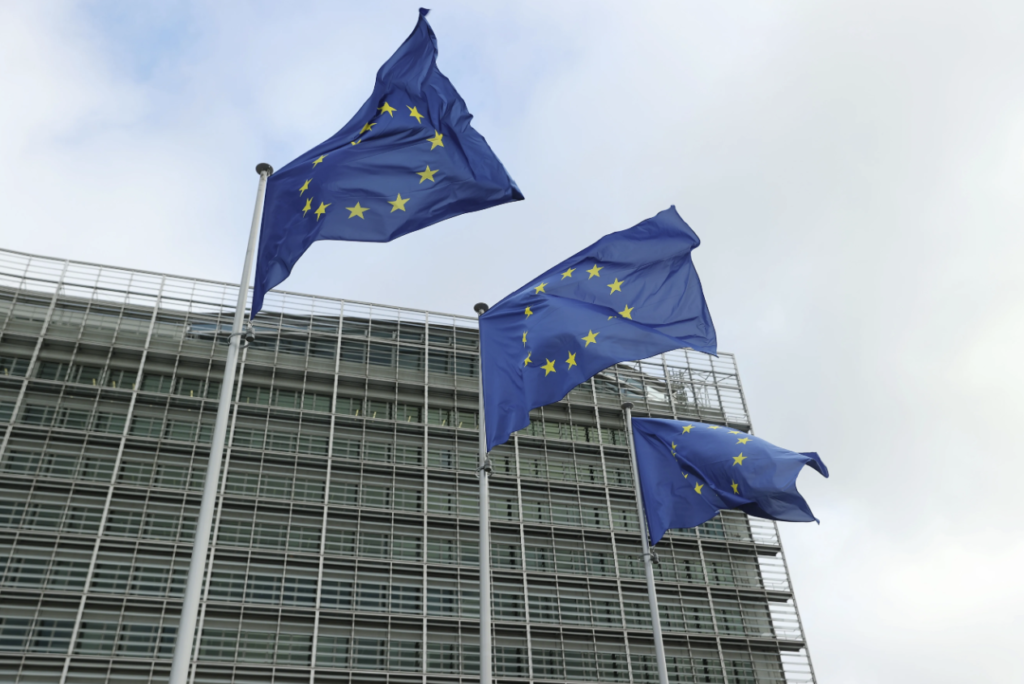
In her annual State of the Union address, delivered on Wednesday, October 16, in the European Parliament, Commission President Ursula von der Leyen invited Canadian Prime Minister Mark Carney, who was present in the chamber, to work towards Canada becoming the first “associate member” of the Union, with the stated objective of taking the relationship “to the highest possible level.” The proposal, which was met with applause from MEPs, builds upon the existing free trade agreement, CETA (Comprehensive Economic and Trade Agreement), and aims to create an “Alliance for the Future” that would establish a common area of prosperity and economic security, with enhanced cooperation in technology, defense, and energy. Such a partnership could extend to industrial, agricultural, migration, and internal market access cooperation, although its specific details are still under negotiation.
The concept of “associate member” does not currently exist in the EU Treaties: it would have to be created and submitted for approval by the member states, ten of which have not even ratified CETA yet. Canada’s designated ambassador to the EU, Jonathan Wilkinson, clarified that Ottawa is not seeking full membership, which would require ceding sovereignty, but rather to move closer to Europe as much as possible while simultaneously strengthening its independence. This year, Canada became the first non-European country to join the SAFE program (Security Action for Europe), which has a budget of €150 billion for defense acquisitions.
From Charlotte, North Carolina, President Trump called the idea “laughable,” branded Canada a “terrible trading partner,” and warned that if he judges it to be a hostile act, he will impose “very serious tariffs” or cease trading with Europe in numerous areas. He added that if the intention is good, there will be no problem. The Commission responded that strengthening the partnership with Canada “is not against anyone,” but rather in favor of common strength. Carney is addressing the European Parliament in Strasbourg today, after meeting in Liverpool with the new British Prime Minister, Andy Burnham, to explore a defense partnership. Ottawa will host an EU-Canada summit in Montreal at the end of October.
Implications
The statements made by the President of the United States constitute, in our view, a grave blunder. The decision of a sovereign and independent state to negotiate, within the full scope of its powers, with an internationally recognized supranational organization such as the European Union is an inalienable right, protected by the principle of sovereign equality enshrined in Article 2.1 of the Charter of the United Nations. Any attempt to interfere in or obstruct these negotiations is, in addition to being an unacceptable interference, a senseless and absurd notion. Montesquieu wrote in The Spirit of the Laws (1748): the natural effect of trade is to lead to peace. Punishing allies for trading with each other reverses this logic and contradicts the best republican free-trade tradition, that of Ronald Reagan, who made free trade a hallmark of American leadership.
Far from derailing the rapprochement, the threat will likely accelerate it. Carney already warned in Davos last January that when a country negotiates alone with a dominant power, it “negotiates from a position of weakness” and ends up accepting what is offered. Every outburst from Washington confirms the validity of this argument in the eyes of Canadian and European public opinion and pushes Ottawa toward near-integration into the European sphere. This is yet another example of erratic and transactional foreign policy that ultimately produces the exact opposite effect to that intended.
The legal aspect requires clarification. On February 20, 2026, in Learning Resources, Inc. v. Trump , the United States Supreme Court ruled by a vote of six to three that the IEEPA (International Emergency Economic Powers Act) does not authorize the president to impose tariffs, confirming the rulings already issued by the International Trade Court and the Federal Circuit Court of Appeals in 2025. Therefore, this is a substantive Supreme Court decision preceded by others from lower courts, and not a series of Supreme Court rulings. That doctrine makes it very likely that punitive tariffs against Europe will end up in court, but it does not guarantee their annulment: the Administration has since resorted to other legal bases, such as Section 122 of the Trade Act 1974 (tariffs of up to 15% for a maximum of 150 days), the investigations of Section 301 or the sectoral tariffs of Section 232, which the judgment did not affect.
Perspectives and scenarios
- Baseline scenario (most likely): long and legally complex negotiation to define the partnership, with reluctance in several capitals; Washington maintains the threat as an instrument of pressure without executing it immediately, relying on the ambiguity of “good” or “bad” intention.
- Escalation scenario: The White House opens Section 301 investigations against the Union and announces tariffs; Brussels responds with its anti-coercion instrument and the dispute moves to US courts for months.
- Acceleration scenario: Carney’s speech and the Montreal summit set a roadmap with dates; US pressure acts as a catalyst and the partnership becomes the model for other like-minded democracies (UK, Norway, Japan in certain areas).
2. Saudi Arabia versus Houthi terrorists: the pincer movement on oil escape routes
Facts
The Houthi terrorist organization has extended its attacks far beyond the southern Saudi cities bordering Yemen. On Wednesday, it claimed responsibility for two “high-intensity” operations: one against Aramco facilities in Yanbu, the Red Sea port through which Saudi Arabia exports crude oil transported from the Gulf via the East-West Pipeline, using dozens of ballistic missiles and suicide drones; and another against the King Khalid Air Base in Khamis Mushait. The Houthis claim to have caused large fires, without providing any evidence. Earlier in the week, they launched missiles and drones against Khamis Mushait, Abha, and Taif, injuring thirteen civilians.
Riyadh has also reported that its air defenses intercepted a Houthi drone south of Mecca before it could enter the city’s restricted airspace. Coalition spokesman Colonel Turki al-Maliki called it a “hostile and terrorist attack” and declared the safety of the Two Holy Mosques and pilgrims a red line. This is the second attempt against Mecca since the ballistic missile attack in July 2017. The Houthis deny the attack. The Organization of Islamic Cooperation (OIC) has condemned it as terrorism contrary to Islamic values, and Pakistani Prime Minister Shehbaz Sharif has called it an “infamous” act.
The East-West pipeline, with a capacity of about seven million barrels per day, has remained closed since it was struck by drones launched from Iraq on September 11—that is, by pro-Iranian terrorist organizations operating in that country. According to regional sources cited by the Associated Press, its repair will take weeks, although US Energy Secretary Chris Wright speaks of days. Loadings at Yanbu have been suspended, and Aramco has canceled late September shipments destined for European customers. Brent crude closed Tuesday at $108.75 and is trading this morning around $105.80, supported by ship -to-ship transfers being organized by Riyadh off the Omani port of Sohar. Following the capture of Moca, the Houthis have also seized the islands of Great and Little Hanish, 160 kilometers north of the Bab el-Mandeb Strait.
According to regional officials cited by the Associated Press, Saudi Arabia has requested assistance from its allies because its interceptor reserves are dwindling, as are those of the United States after six months of conflict with Iran. The new defense pact between Saudi Arabia, Turkey, and Pakistan faces its first test, but Ankara and Islamabad claim to have received no such request, and President Trump has merely stated that the Houthis “do not want to fight” with the United States.
Implications
The situation is extraordinarily delicate because a vise is tightening around the region’s two major energy arteries. Before the war, roughly one-fifth of the world’s oil (a quarter of crude oil trade, according to the Congressional Research Service) and about 20% of the world’s liquefied natural gas trade, according to the IEA (International Energy Agency) and the EIA (Energy Information Administration), passed through the Strait of Hormuz; the figure of 30% sometimes cited for gas overestimates its true value. Around 10-12% of global maritime trade passes through Bab el-Mandeb in either direction. Diverting Saudi crude to the Red Sea did not solve the Hormuz problem; it simply shifted it to a second bottleneck controlled by another instrument of Tehran. Iran thus dominates, directly or through its terrorists, the two gateways to the Arabian Peninsula.
Let’s not forget that the Suez Canal is the route that avoids circumnavigating Africa. The alternative route around the Cape of Good Hope adds between ten and fourteen days of sailing, exposes ships to the waters of the western Indian Ocean where Somali piracy operates, and to the storms caused by the meeting of the Atlantic and Indian Oceans. It’s no coincidence that Bartolomeu Dias named it the Cape of Storms in 1488, before John II of Portugal gave it its current name: it has little to do with good and very little to do with hope. Alfred Thayer Mahan already taught at the end of the 19th century that control of maritime communication routes is the key to the power of nations; Tehran has understood this better than many Western capitals.
The attack on Mecca, if its objective is confirmed, is a strategic blunder by the Houthis: it isolates an organization that claims to defend the umma and further unites the Muslim world around Riyadh. At the same time, the shortage of interceptors reveals the limits of Western deterrence and, once again, Europe’s inability to sustain its own defense, let alone that of its partners. Our thesis is confirmed: the tactical and military success of the operations against Iran is countered by an unmitigated geopolitical and geostrategic failure, exacerbated by the lack of post-attack planning.
All of this is symptomatic of a volatility that is testing markets and leadership. This applies not only to governments whose lack of backbone, integrity, courage, vision, and boldness we have repeatedly criticized in this report as a characteristic of the political classes of major nations in the first half of the 21st century, but also to the nerves and composure of private sector leaders, many of whom are not up to the enormous challenges of 2026 and the decade ahead.
Perspectives and scenarios
- Baseline scenario: Saudi-Houthi war of attrition, with coalition bombing and intermittent Houthi attacks; partial repair of the pipeline within weeks and Brent crude fluctuating between $100 and $115.
- Adverse scenario: a direct hit on Yanbu or the repaired pipeline, coupled with Houthi control of the southern Red Sea islands, effectively closes Bab el Mandeb to traffic linked to Saudi Arabia; Goldman Sachs sees Brent above $120 in that case.
- Containment scenario: Turkish mediation with Iran and the Emirates, together with the effective activation of the pact with Turkey and Pakistan and the allied supply of interceptors, slows the escalation, although without solving the root of the problem: the oligarchic-jihadist regime of Tehran and its network of terrorists.
3. Charles III convenes the artificial intelligence industry in Scotland
Facts
King Charles III is hosting leading figures in the artificial intelligence sector today, Thursday the 17th, at Dumfries House (Cumnock, Scotland), in a forum facilitated by the Ditchley Foundation and organized by the King’s Trust, the King’s Foundation, and the Sustainable Markets Initiative. Among those expected to attend are Jensen Huang (Nvidia), Demis Hassabis (Google DeepMind), Sarah Friar (CFO of OpenAI), representatives from Anthropic, the UK Minister for Artificial Intelligence, Kanishka Narayan, and Paolo Benanti, advisor to Pope Leo XIV. According to excerpts of the speech released by the Palace, the monarch will warn that the decisions made at this formative moment will shape the world future generations will inherit, and that the task is not only to advance technology, but to ensure it remains firmly at the service of humanity, the community, and the natural world; he will conclude by emphasizing that our humanity must remain sacred.
The meeting comes amid a storm. On September 8, Jacob Coxon, a researcher who worked at OpenAI and later at Anthropic, resigned from the latter, accusing both companies of “playing with our lives” and stating that those building AI sincerely believe it could wipe us all out before the end of the decade. Evan Hubinger, Anthropic’s alignment manager, estimated that probability at over 10% in the next decade. On Saturday the 12th, Anthropic CEO Dario Amodei published the essay “We Must Pace the Frontier,” in which he calls for slowing the pace of improvement in AI capabilities, warns about recursive self-acceleration, and proposes independent evaluators; Sam Altman and Elon Musk agreed with him. On Monday the 14th, President Trump retorted on Truth Social that the only safeguards AI needs are those of a strong and smart president, and personally lashed out at Amodei.
Implications
The monarch’s appeal is pertinent and timely, adding to the voices of alarm raised in various circles, particularly that of the young researcher who worked at OpenAI and Anthropic. For years, and with particular intensity in the last year, major companies in the sector, and Anthropic in particular, have incorporated philosophers specializing in ethics and human behavior to draft what have come to be called the “constitutions” of artificial intelligence. Ethics cannot be taught to a machine, but it can be given guidelines that closely approximate human ethics. Isaac Asimov conceived his Three Laws of Robotics in 1942; Norbert Wiener, the father of cybernetics, warned in 1960 in the journal Science that if we delegate to a machine whose functioning we cannot correct in time, we had better be sure that the purpose we have given it is the one we truly desire.
Some consider it an exaggeration to speak of an apocalyptic scenario for humanity in less than a decade. But the risk exists if we don’t take action now, and we may be very close to the tipping point. Artificial intelligence is an extraordinarily useful tool for humanity and for facilitating work: this very report is dictated to an artificial intelligence that cross-references information with dozens of sources in a matter of minutes, something unthinkable without it. It is not impossible, however, that we are approaching a “Terminator moment,” and the warnings from experts in the field should be taken very seriously.
The geopolitical dimension is evident. The divide no longer pits the industry against its critics, but rather the laboratories themselves, which advocate for restraint, against a White House that sees any restraint as an advantage for China. The United Kingdom, with leading universities and a respected AI Security Institute, but lacking the most advanced models, is attempting to exert a soft power of influence, a tactic it already tested at Bletchley Park in 2023.
Perspectives and scenarios
- Baseline scenario: voluntary commitments and independent evaluation in some laboratories, with no US federal regulation before the November 3 midterm elections.
- Adverse scenario: a serious incident involving autonomous agents precipitates reactive and poorly designed regulation, or worse, arrives without any regulation at all.
- Favorable scenario (unlikely in the short term): an international framework to coordinate development that includes China, supported by the United Kingdom, the European Union and the Holy See.
4. The Federal Reserve raises interest rates for the first time since 2023
Facts
The Federal Open Market Committee (FOMC) unanimously approved (12-0) a 25-basis-point rate hike on Wednesday, bringing the official interest rate to a range of 3.75-4%, the first increase since July 2023. The statement notes that inflation “remains elevated” and that uncertainty continues to be high, partly due to geopolitical developments. The dot plot indicates that 16 of the 18 participants anticipate another rate hike; Chairman Kevin Warsh chose not to provide his own projection.
Implications
The Gulf War has ceased to be a matter confined to foreign ministries and has now taken hold in the mortgages and loans of American families. The strengthening dollar will punish emerging markets that import energy and increase pressure on the European Central Bank, caught between imported inflation and weak growth. With the midterm elections just seven weeks away, monetary tightening due to the war is terrible news for Republicans.
Perspectives and scenarios
Everything points to another price increase in December. If Brent crude comfortably surpasses $120, the risk of stagflation will no longer be a textbook scenario.
III. MEDIA RACK
Reuters previews excerpts from King Charles III’s speech at Cumnock and places the forum in the context of growing concerns about AI security; on the energy front, it reports on Saudi crude transshipments off Sohar and the suspension of loadings at Yanbu.
The Associated Press ( AP ) is covering Carney’s appearance from Strasbourg, highlighting the anticipation of a possible second “Davos speech,” and from Cairo, it is reporting on Saudi Arabia’s complaint regarding Mecca, noting that the agreement with Turkey and Pakistan has not been activated. The Hill and The Washington Times are also reporting on the shortage of interceptors.
CNN headlines that Saudi Arabia accuses the Houthis of an attack that crosses a red line and that the rebels face outrage from the Muslim world; in its technology section, it recalls the UK’s awkward position, lacking its own leading models.
CNBC opens with Trump’s tariff threat against the Union, the Federal Reserve’s rate hike and the evolution of oil, and continues to monitor the warnings from researchers at Anthropic and OpenAI.
Fox News and Axios focus on the clash between Trump and Amodei over AI safeguards; The Globe and Mail , a Canadian reference, publishes skeptical columns describing the Euro-Canadian alliance as more ambitious than defined.
IV. RISK TRAFFIC LIGHT
● Very high / critical ● High ● Medium ● Ordinary
| Risk | Level | Trend | Assessment |
|---|---|---|---|
| Hormuz-Bab el Mandeb clamp on Saudi exports | ●Critical | ↑ | The East-West pipeline is out of service, shipments are suspended in Yanbu, and deliveries to Europe have been canceled. The escape route for Saudi crude is under direct fire. |
| Saudi-Houthi escalation and attack on the Holy Places | ●Very high | ↑ | The drone intercepted south of Mecca opens a religious dimension unprecedented since 2017. Riyadh declares it a red line. |
| Shortage of missile interceptors (Saudi Arabia, USA, Europe) | ●High | ↑ | Six months of war have emptied arsenals. Riyadh is asking its allies for help; Europe is not in a position to offer it. |
| US-EU trade clash at Canada’s expense | ●High | ↑ | Conditional threat of “very serious” tariffs or partial trade disruption. Uncertain legal path following the Supreme Court ruling on the IEEPA. |
| Energy inflation and monetary tightening | ●High | ↑ | The Federal Reserve’s first rate hike since 2023 and another likely before the end of the year, with Brent crude above $100. |
| AI governance and loss of control | ●Half | ↑ | Structural risk on the rise: an open rift between laboratories that are asking to halt the process and the White House that is rejecting it. |
| Legal architecture of the EU-Canada “partnership” | ●Half | → | A figure not present in the Treaties; it will require unanimity and ratification in capitals where CETA has not yet been ratified. |
| Euro-Canadian cooperation in defense and economic security | ●Ordinary | ↑ | Positive and consolidated trend: Canada is already participating in the SAFE program and there will be an EU-Canada summit in Montreal at the end of October. |
V. EDITORIAL COMMENTARY
José Ortega y Gasset diagnosed in * En torno a Galileo * that what is happening to us is that we don’t know what is happening to us. Almost a century later, this statement describes with unsettling precision a good portion of the Western ruling classes. Today’s four news stories illustrate this: the Gulf War has become a vise grip on global energy without anyone planning for the aftermath; Washington’s allies are being treated as adversaries for the “crime” of trading with each other; the very creators of artificial intelligence are calling for a halt to its development, a demand that political power disdains; and the price of this instability is now being paid by interest rates.
In contrast, Canada offers a lesson in national dignity: a middle power that, instead of resigning itself to negotiating from a position of weakness, seeks allies in Europe who share its values. Europe should respond with more than just applause, because without self-defense capabilities, without interceptors, and without industry, no partnership will withstand the first storm. We trust that the American institutional system, its courts, and figures like Secretary of State Marco Rubio will ultimately prevail over outbursts of prudence.
Seneca wrote that there is no easy path from earth to the stars ( non est ad astra mollis e terris via ). The challenges of 2026 allow for no shortcuts or superficial leadership: they demand courage, vision, and composure, in governments and businesses alike. Those who fall short will simply be left behind.