By Gustavo de Arístegui,
February 16, 2026
I. BRIEF INTRODUCTION
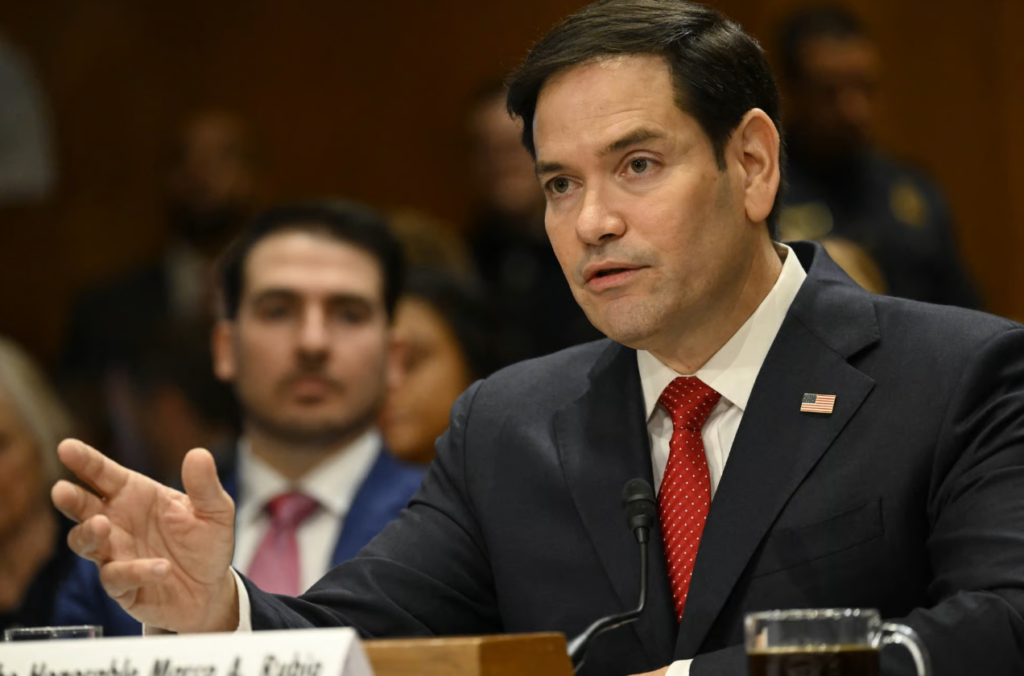
The geopolitical axis of the last 24 hours has been Munich: Marco Rubio’s speech establishes a doctrine that does not seek to destroy the liberal democratic order, but rather to overcome the complacent inertia with which Western elites interpreted the end of the Cold War: the “end of history,” unbridled globalization, and a naive belief that trade would replace politics and geopolitics. Faced with this self-satisfaction, Rubio proposes a civilizational offensive: an unapologetic defense of the West, reindustrialization, strengthening NATO, and a demand for mature European allies, not eternal protégés. On the European side, Kaja Kallas’s reaction encapsulates the problem: a speech full of platitudes and appeals to “unity” that fails to address the core of the criticism, caught between an aversion to “Europe-bashing” and the inability to articulate a strategy commensurate with the Russian-Chinese threat. At the same time, Beijing is accelerating its nuclear rearmament, Washington is addressing a sanctioned oil tanker linked to the Venezuelan narco-regime, and Tehran is again exploring sanctions relief in exchange for nuclear cosmetics: the chessboard is becoming increasingly clear and less kind to the naive.[1]
II. MOST IMPORTANT NEWS OF THE LAST 72 HOURS
1. Rubio’s speech in Munich: The West as a civilizational project
Facts
In Munich, Marco Rubio articulated a defense of the transatlantic alliance from an openly civilizational perspective , mixing classic reassurance with a program of breaking with conformist globalism and the West’s mistaken interpretation of the end of the Cold War.[1]
– It begins by recalling the origin of the Munich Conference in the midst of the Cold War, with Germany divided, the Wall recently erected and the confrontation between communism and freedom as an existential framework.[1]
– It presents NATO and the transatlantic alliance as a “historic alliance that saved and changed the world,” highlighting the world wars, the Cold War, and the shared sacrifices on the battlefields.[1]
– It thus introduces the idea of continuity: what was done together in the 20th century (containing communism, rebuilding Europe, defending freedom) must now be repeated in the face of new threats, avoiding repeating the complacency of the post-Cold War era.[1]
Rubio insists that the US and Europe are united “spiritually and culturally”, describing America as “the child of Europe” and claiming common Christian and cultural roots.[1]
– He defends “Western civilization” as a specific legacy (Christian faith, rule of law, political freedom, economic creativity) that should be protected from internal erosion and external rivals.[1]
– It rejects the idea that the Western way of life is “just one among many” and asserts pride in one’s own historical legacy in the face of narratives of guilt and shame.[1]
– It identifies a set of “errors” of Western elites in recent decades: excessive faith in unregulated free trade, deindustrialization, outsourcing of strategic capabilities and energy dependence.[1]
– It attacks the architecture of multilateralism as it has functioned: it criticizes the UN’s inability to resolve crises such as Ukraine or Gaza and questions the transfer of sovereignty to international organizations that do not protect either prosperity or security.[1]
– He denounces climate policies that, in his opinion, have put the West at a competitive disadvantage (“climate cult”), eroded its industrial base and weakened its defense capabilities.[1]
– It situates mass migration as a “crisis” that transforms and destabilizes Western societies, not as a marginal phenomenon.[1]
– He links this dynamic to the erosion of cultural cohesion and the loss of confidence in Western identity itself, framing it in a narrative of “civilizational erasure”.[1]
– It points to a “malaise of hopelessness and complacency” in European and North American societies, which would fuel the feeling of inevitable decline of the democratic West.[1]
– He reaffirms that the US does not want to distance itself from Europe, but rather to “revitalize” the alliance and build a “new Western century,” but makes clear that “the broken status quo is over.”[1]
– It demands that Europeans seriously increase their defense spending and military capabilities: Washington wants “strong allies who can defend themselves,” not dependent partners that tempt adversaries to test NATO.[1]
– He rejects the idea of allies “anchored in guilt and shame”; he wants allies proud of their legacy, willing to defend it and take on costs to ensure its survival.[1]
– It proposes a joint Western “reindustrialization” agenda: rebuilding production bases, critical supply chains and its own defense capabilities.[1]
– He insists that the new alliance should not be limited to military matters or restoring industries of the past, but should exploit “new frontiers” (space, artificial intelligence, advanced technologies) as the engine of a “new Western century”.[1]
– It calls for regaining control of borders and not “externalizing or subordinating” Western power to systems outside its control, combining economic, technological and migratory sovereignty.[1]
– Reiterates the need for Russia to cease its aggression in Ukraine and confirms the US willingness to maintain sanctions and military support to sustain Ukrainian defense.[1]
– He is open to a negotiated “fair and sustainable” solution, but makes it clear that, in the meantime, the cost to Moscow must continue to rise.[1]
– It frames the conflict within a broader clash over the form of the international order, where the priority is the defense of Western sovereignty against Russian and Chinese revisionism, without delegating that defense to ineffective multilateral institutions.[1]
– He concludes by insisting that the US and Europe “belong together” and that “our shared destiny awaits us,” evoking the idea of a new century of shared prosperity if the West regains confidence and will.[1]
– He summarizes his proposal as a “revitalized alliance” capable of defending its people, protecting its interests and preserving the freedom to choose its own destiny, not as a “global welfare state” that seeks to atone for historical sins.[1]
– The argumentative structure combines three layers: historical memory, diagnosis of decline and program of civilizational renewal, with a more diplomatic tone than other Trumpian references, but with a clearly post-liberal and sovereignist ideological content within the democratic field.[1]
Implications
Reading certain articles in Le Monde, in much of the center-left press, and, more worryingly, in segments of the supposedly serious European center-right, and comparing that reading with Rubio’s actual text and tone, forces one to ask an uncomfortable question: Did they hear the same speech, or are they so blinded by anti-Trumpism that they automatically reject everything that comes from this administration, whether good, bad, excellent, or terrible? It is legitimate to be critical of Trump’s excesses; what is intolerable, intellectually speaking, is turning that necessary criticism into a negative religion that prevents one from recognizing a speech that is impeccable in both substance and form, simply because it is signed by the Secretary of State of a president they detest.[1]
A significant portion of European commentary has reacted to the Munich blond as if it were still listening to last year’s Vance, or rather, to the caricature they themselves constructed of Vance, unable to distinguish between an openly civilizational message—one that unabashedly champions the defense of the West, NATO, liberal representative democracy, and the market economy—and the bogeymen they have invented to feel morally superior. To deny the merits of this discourse—its recovery of the historical thread of the Cold War, its denunciation of the post-Cold War globalist mirage, its call for a mature Europe that spends on defense and abandons its constant self-blame—is as sectarian as those who are incapable of recognizing Trump’s errors and see only virtues in him: anti-Trump fanaticism and pro-Trump fanaticism are, in the end, two sides of the same intellectual impoverishment.[1]
Perspectives and scenarios
If this doctrine is consolidated under the Trump presidency, the transatlantic axis will move toward a demanding model: less free strategic subsidy to a reluctant Europe and more shared responsibility in defense, energy, reindustrialization, and migration control. For European capitals, the dilemma is simple: either they take advantage of the outstretched hand—tough in tone, but clear in its commitment—or they take refuge in anti-American victimhood, at the risk of being left without an umbrella just as the darkest clouds gather on the Russian and Chinese horizon.[1]
2. China’s accelerated nuclear rearmament
Facts
Recent reports supported by satellite imagery detail a significant expansion of Chinese nuclear facilities (plutonium production complexes and silo fields) that point to a rapid increase in Beijing’s strategic arsenal. This describes a shift from the doctrine of a “credible minimum arsenal” to a target of hundreds of new warheads and advanced delivery systems, including long-range missiles and hypersonic capabilities.[1]
Implications
The fact that mainstream media and analysts not aligned with the “hardliners” are highlighting this shift demonstrates that the narrative of “Chinese nuclear restraint” has been refuted by events. Nuclear rearmament, coupled with the militarization of the South China Sea, pressure on Taiwan, and the capture of key infrastructure in Africa and Latin America, confirms that China’s project is to alter the global balance, not to integrate meekly into it.[1]
Perspectives and scenarios
Without a combined response—modernizing Western deterrence, strengthening alliances in Asia, missile defense, and reducing strategic dependencies on Beijing—the risk of limited nuclear coercion in regional crises will increase, particularly in the Taiwan Strait and the Indo-Pacific energy routes. Rubio’s rhetoric and Chinese rearmament together form the map of a long-term competition that has already begun.[1]
3. Ukrainian reading of Rubio’s speech
Facts
An internal Ukrainian analysis describes how Rubio canceled a meeting with Europeans on Ukraine to express his displeasure with the negotiations with the Chinese minister and to emphasize the futility of seeking the key to peace in Beijing. It portrays the Secretary of State as a “firefighter” arriving in Munich to salvage what remains of traditional transatlantic ties, alarmed by the prospect of a Europe that is “sovereign” in economic and defense matters but lacks real power, while reaffirming that the US will not leave NATO and demanding that Europe shoulder the brunt of the deterrence effort against Russia. The text acknowledges that Rubio does not believe Ukraine is losing the war, rejects the notion that a withdrawal from Donetsk would lead to a just and sustainable peace, and advocates for intensified sanctions against Russia and its energy buyers if Moscow demonstrates a lack of willingness to negotiate. [1]
Implications
Even when it aims to be critical, this analysis is forced to admit the essential point: the Trump Administration, through Rubio, is not preparing a surrender for Ukraine, but rather a peace that does not enshrine the legitimacy of using force to change borders. The real danger for Kyiv does not come from Washington—which maintains the pressure—but from a weary Europe, tempted by appeasement and seduced by “creative” formulas that, in reality, amount to rewarding the aggressor.[1]
Perspectives and scenarios
Rubio is trying to prevent Europe from delegating to China and to ensure that President Trump takes the lead in negotiations with Russia, thus opening a silent power struggle over who defines the European security architecture of the 21st century. The responsible scenario involves a hard peace, with solid guarantees for Ukraine and a sustained cost for the Kremlin; the dangerous scenario involves a “peace” drafted in Brussels to soothe consciences, not to restrain Moscow.[1]
4. Kaja Kallas’s strategic superficiality
Facts
In Munich and in recent speeches, EU High Representative Kakha Kallas reiterated the classic script: Russia “does not want peace,” it is essential to maintain and strengthen sanctions, and Europe will stand by Ukraine “for as long as it takes.” She subtly criticized the US “Europe-bashing” and rejected the idea that the continent is on the verge of “civilizational erosion,” but without presenting a concrete roadmap in terms of capabilities, spending, or internal reforms.[1]
Implications
The problem is not what he says, but what he doesn’t say: Kallas strings together platitudes about values, unity, and sanctions, but avoids the central question that Rubio throws in Europe’s face—are you prepared to pay the material, political, and cultural price of defending yourselves?—. While Washington, whether we like it or not, is articulating a clear doctrine, Brussels remains trapped in moral commentary, as if the right words were enough to compensate for the lack of hard power.[1]
Perspectives and scenarios
If the EU does not translate its rhetoric into action—rearmament, reindustrialization, energy reforms, effective border control—its role will be reduced to that of commentator on its own decline. In that scenario, real security will continue to be guaranteed by others: the United States when it comes to taking risks, China in trade and raw materials, and Russia and Iran in the art of destabilization.[1]
5. Interdiction of the Venezuelan oil tanker Verónica III
Facts
US forces have boarded the Panamanian-flagged oil tanker Veronica III in the Indian Ocean, after tracking it from the Caribbean. The vessel, identified as sanctioned and linked to the transport of Venezuelan crude (and to networks also connected to Russian and Iranian interests), is the second tanker carrying Venezuelan crude intercepted in a month, as part of a maximum pressure campaign against the Chavista narco-dictatorship and its clandestine financing networks.[1]
Implications
This type of operation embodies the only effective logic against a narco-state: systematic interdiction of its financial, logistical, and energy arteries, beyond national borders. The message to intermediaries, insurers, and flag states of convenience is clear: under the Trump presidency and with Rubio at the State Department, Venezuelan oil is not a neutral commodity, but the economic lifeblood of a mafia organization that must be strangled.[1]
Perspectives and scenarios
If this trend continues, the margin for Caracas, Tehran, and Moscow to move sanctioned crude oil will narrow, but the temptation to use third countries as a cover will increase. The key will be to forge a coalition of democracies willing to bear short-term economic costs to dismantle a model that combines drug trafficking, corruption, and hostile geopolitical penetration in the Western Hemisphere.[1]
6. Merz and Macron explore a new European security framework
Facts
German Chancellor Friedrich Merz and French President Emmanuel Macron are exploring ways to strengthen European security in Munich: increased defense spending, possible joint debt to finance capabilities, and a coordinated boost to the military industry. All of this is being discussed under explicit pressure from Washington for Europe to assume a much larger share of the effort against Russia, without weakening its ties with NATO.[1]
Implications
The paradox is clear: the “Trump shock” has achieved what decades of diplomatic admonitions could not—placing defense at the heart of the European agenda. However, the temptation persists to present this shift as a reaction to Washington’s “hostility,” rather than acknowledging that the problem is internal: a Europe that has lived too long as a security protectorate, devoting its energies to identity debates while others rearmed.[1]
Perspectives and scenarios
If a more robust European pillar takes shape within NATO, it is good news, provided that the Gaullist reflex of turning it into an anti-American identity project is avoided. The reasonable balance remains clear: more Europe, yes, but within a strong Atlantic alliance, without impossible equidistance between Washington and those who want to rewrite the rules of the game against it.[1]
7. Iran explores a new energy and nuclear agreement
Facts
Tehran has indicated its willingness to accept additional commitments on the nuclear front if Washington seriously discusses sanctions relief, mentioning possible agreements in energy, mining, and civil aviation. Meanwhile, Iranian officials are traveling to Europe to explore indirect avenues for understanding, while the regime maintains its military and financial support for Russia in Ukraine and its proxies in the Middle East.[1]
Implications
The script is familiar: offer technical adjustments to centrifuges, enrichment levels, and timelines in exchange for economic oxygen that allows continued funding of Hezbollah, Hamas, Iraqi Shiite militias, the Houthis, and the entire galaxy of terrorism and destabilization linked to Tehran. Repeating the mistake of confusing a partial nuclear agreement with a regime transformation would be not only naive but also irresponsible: Iran’s problem is not only what it enriches, but what it exports.[1]
Perspectives and scenarios
The most likely scenario is a phase of hard-nosed negotiations, with Trump and regional allies aligned in applying pressure, and an EU trying not to be left out of the picture. Any significant sanctions relief without structural changes in Iranian regional behavior will be interpreted by Moscow, Beijing, and the rest of the anti-Western axis as a sign of weakness that will invite further rounds of defiance.[1]
III. MEDIA RACK
– Leading US and British press outlets (NYT, Washington Post, FT, WSJ, The Times, The Telegraph) highlight Rubio’s more “polite” tone compared to other Trumpian spokespeople, but focus on his civilizational shift, his tough discourse on migration, and his demand for Europe to spend more on defense.[1]
– Newspapers such as Le Monde, Libération or The Guardian filter the discourse almost exclusively through the anti-Trump prism, highlighting its proximity to Vance and ignoring the coherence of the strategic diagnosis.[1]
– German media (FAZ, Die Welt, Die Zeit) combine relief at the commitment to NATO with unease at the pressure to abandon European military comfort.[1]
– Agencies such as Reuters, AFP, AP, DPA prioritize the factual angle: content of the speech, official reactions, Chinese nuclear rearmament, interdiction of the Veronica III and initiatives on Iran.[1]
– International networks (BBC, CNN, Fox, Al-Jazeera, WION) open debate on the future of NATO, Rubio’s “civilizational rhetoric”, the risk of a nuclear arms race in Asia and the tightening of sanctions on Venezuela and Iran.[1]
IV. RISK TRAFFIC LIGHT
– Red
– Structural escalation between China and the West due to nuclear rearmament and competition for raw materials, shipping routes and technology in Asia-Pacific.[1]
– Consolidation of the Russia-Iran-Venezuela axis, with energy, military and intelligence cooperation, while exploring cracks in the sanctions regime.[1]
– Amber
– Transatlantic friction if a part of the European elites continues to interpret the Rubio doctrine through anti-Trump prejudice, blocking the fundamental reforms in defense and reindustrialization that Europe needs.[1]
– Risk of a “partial agreement” with Iran that eases sanctions without changing the regime’s regional behavior or its support for terrorism.[1]
– Green
– Doctrinal clarification in Washington: firm defense of Ukraine, coordinated pressure on Moscow, Beijing, Tehran and Caracas, and demand for shared responsibility from allies.[1]
– Start of serious debates in Europe on common debt for defense and strengthening of the military industrial base, although still in the exploratory phase.[1]
V. EDITORIAL COMMENTARY
Rubio’s speech in Munich has served as a revealer, not only of the Trump Administration’s doctrine, but also of the shortcomings and neuroses of a large part of the European elite. Where there is a clear commitment to rescuing the best of the liberal order—representative democracy, market economy, firm alliances between democracies—from the mental prison of feel-good globalism, many have preferred to see an “illiberal” bogeyman to attack from the comfort of moralizing columns. It is easier to repeat the mantra of “Trumpism in disguise” than to acknowledge that, while Europe was getting lost in incestuous debates, Russia was invading Ukraine, China was rearming and expanding its influence, Iran was perfecting its combination of centrifuges and proxies, and the Venezuelan narco-dictatorship was turning the state into a transnational criminal platform.[1]
The contrast between Rubio and Kallas is telling: one offers a tough but coherent narrative, with priorities, clear enemies, and defined allies; the other strings together clichés about “unity,” “values,” and “sanctions” without answering the basic question of any strategy: what are we willing to sacrifice to win? Europe risks becoming a spectator of its own irrelevance if it responds to the era of competition between powers with more bureaucracy and more inclusive language, but without hard power or moral clarity in the face of dictatorships, narco-regimes, and jihadist terrorism.[1]
Against this backdrop, the compass that emerges is clear: unapologetic Atlanticism, unwavering support for Ukraine, containment of Chinese expansionism, encirclement of Tehran and its tentacles, systematic harassment of the Chavista narco-dictatorship, and a firm defense of liberal democracy—including the cultural battle against Wokism, radical gender ideology, and the relativism that denies the legitimacy of our own civilization. This is not about idealizing anyone or granting blank checks, not even to President Trump, but rather about distinguishing between those who, with their flaws, have understood that we are facing a moment of historical rupture, and those who remain entrenched in a strategic slumber that the real world can no longer afford.[1]