By Gustavo de Arístegui,
February 18, 2026
I. BRIEF INTRODUCTION
Geneva is becoming the diplomatic capital of the world today, not by geographical chance, but because two of the most dangerous conflicts on the planet—the war in Ukraine and the Iranian nuclear issue—are being played out simultaneously in the city on Lake Geneva, with the same American interlocutors—Steve Witkoff and Jared Kushner—acting as brokers of a diplomacy unprecedented in its scope and audacity. Added to this, on the same day, are the formal launch of the first projects in Japan’s $550 billion investment package in the United States, new revelations about the alleged Chinese nuclear test of 2020, and the confirmation—with an ECB spokesperson contradicting the Financial Times in real time—that Christine Lagarde could step down as president of the European Central Bank before October 2027.
The backdrop to all this diplomatic and economic activity is a rapidly changing international order: Russia continues to bomb Ukraine while negotiating in Switzerland, Iran temporarily closes the Strait of Hormuz during military exercises while its diplomats discuss “guiding principles” with Washington, China denies conducting nuclear tests while expanding its arsenal at a rate unseen in decades, and Venezuela—following Maduro’s capture in early January—has yet to complete its democratic transition, with hardliners of the regime entrenched in power. Latin America, the most vulnerable flank of the Western Hemisphere, once again displays its institutional weakness with Peru, a country that has now had eight presidents in ten years. This is no ordinary Tuesday: it is a day that concentrates, with rare intensity, the lines of force that will define the world’s security architecture and political economy in the coming years.
II. MOST IMPORTANT NEWS OF THE LAST 24 HOURS
1. Geneva, diplomatic capital: Ukraine-Russia talks and US-Iran nuclear talks in parallel
Facts
In an unprecedented event in contemporary diplomacy, the city of Geneva hosted two historic rounds of negotiations on February 17 and 18: the third round of trilateral talks between the US, Ukraine, and Russia, and the second round of indirect talks between the US and Iran regarding the Persian nuclear program. Both negotiations were led by the same American pair—Special Envoy Steve Witkoff and President Donald Trump’s son-in-law, Jared Kushner—who traveled in the morning to the Permanent Mission of Oman in Chambésy to address the Iranian issue, and then crossed the city to the InterContinental Hotel to preside over the talks on Ukraine. The image of these two negotiators navigating two of the world’s most volatile crises on the same day perfectly encapsulates the Trump Administration’s diplomatic strategy: to concentrate decision-making power, reduce bureaucracy, and advance on a compressed timeline.
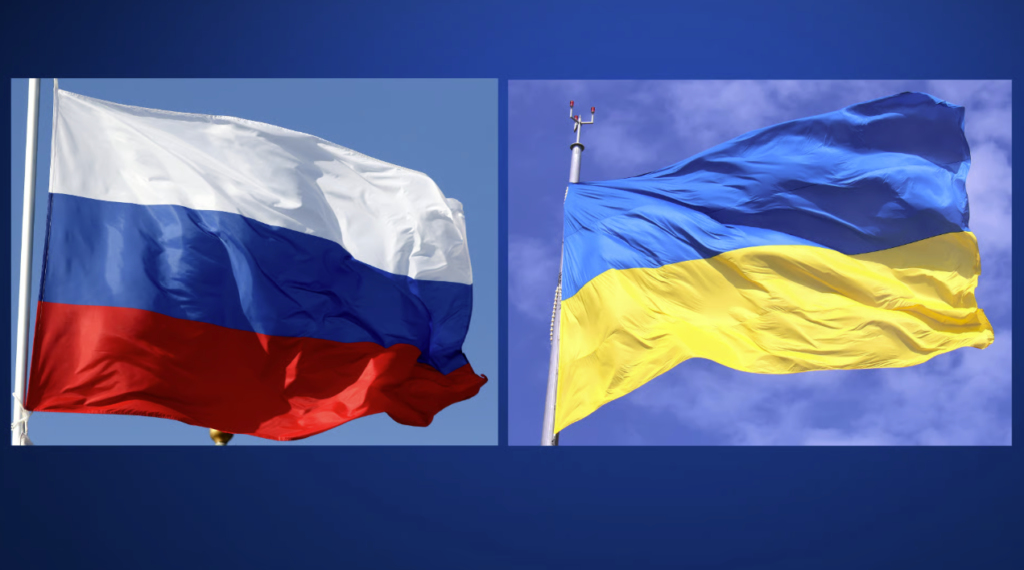
In the Ukrainian chapter, Russia and Ukraine sat facing each other around a horseshoe-shaped table, with the Ukrainian delegation led by Rustem Umerov—Secretary of the National Security and Defense Council—and the Russian delegation by Vladimir Medinsky, Putin’s advisor and a well-known ultranationalist who had already represented Moscow in the failed Istanbul talks in March 2022. The talks, described by Moscow as “difficult, but business-like” and by Kyiv as focused on “practical and mechanical issues of possible solutions,” concluded without any substantive progress, though without a formal breakdown in relations. Before the talks began, Russia launched nearly 400 drones and 29 missiles against 12 Ukrainian regions, leaving tens of thousands of residents of Odesa without heating or running water. Ukrainian President Volodymyr Zelensky denounced the attacks, saying they reinforced the impossibility of trusting Moscow. Trump, for his part, warned that “Ukraine must come to the negotiating table quickly,” adding pressure on kyiv without offering proportionate guarantees.
On the Iranian front, Foreign Minister Abbas Araghchi described the talks as “serious, constructive, and positive,” stating that both sides had reached shared “guiding principles,” though he clarified that the road to an agreement would be long and complicated. Omani mediation once again served as the conduit. Crucially, right at the start of the talks, Iran announced the temporary closure of parts of the Strait of Hormuz for military exercises by its Revolutionary Guards—an intimidating signal that did not go unnoticed—briefly shutting down a waterway through which 20% of the world’s oil flows. Washington, for its part, has simultaneously deployed a second carrier strike group to the Gulf, along with more than 50 F-35, F-22, and F-16 fighter jets in the region, and is keeping the option of military action open. The combination of diplomacy and military pressure is explicit: negotiations are taking place under the shadow of an ultimatum.
Implications
The simultaneous nature of both negotiations reflects the Trump Administration’s philosophy: to resolve, or at least manage, the two main sources of global instability before summer through high-pressure diplomacy that combines economic incentives with credible military force. We welcome the ambition and realism of this approach, which far surpasses the multilateralist voluntarism that characterized previous administrations. In the case of Ukraine, however, our position is unequivocal: pressuring Kyiv to cede territories illegally occupied by Russia is not realism, it is capitulation disguised as pragmatism. The use of force to alter sovereign borders—as Putin has done since 2014—cannot receive diplomatic validation without destroying the pillars of the rules-based international order. Russia attacked Kyiv and Odesa while its diplomats were negotiating in Switzerland: that gesture speaks volumes about Moscow’s good faith.
In the Iranian case, the situation is more ambiguous but no less urgent. Tehran’s willingness to discuss “guiding principles” is a minimal step forward, insufficient to describe the situation as promising. The ayatollahs’ regime has amply demonstrated its skill in buying time while simultaneously pushing forward in a centrifuge. Washington’s position of demanding the dismantling of the nuclear program, an end to ballistic missile development, and a cessation of support for its proxy terrorist groups—Hezbollah, Houthis, Hamas, and Iraqi militias—is the correct one. Any agreement that does not include these three elements will be a tactical victory for Tehran and a strategic defeat for the region’s liberal democracies.
Perspectives and scenarios
The best-case scenario in Ukraine would be an internationally monitored ceasefire that preserves Kyiv’s territorial integrity or at least does not legally enshrine Russian conquests, combined with robust security guarantees—ideally with NATO or equivalent commitments—and an ambitious reconstruction framework. The worst-case scenario, which appears most likely if pressure on Zelensky is not offset by equivalent guarantees for Ukraine, is a de facto freeze in the conflict that Russia uses to rearm, regroup, and relaunch aggression at the opportune moment. In Iran, the best-case scenario is a robust agreement with intrusive IAEA verification and sanctions relief conditioned on verifiable changes in regional behavior. The worst-case scenario is a cosmetic agreement that grants Tehran economic oxygen without real commitments, accelerating nuclear proliferation in the Middle East.
2. Lagarde announces – and the ECB denies – her early departure from the European Central Bank
Facts
The Financial Times exclusively reported on Wednesday that Christine Lagarde plans to step down as president of the European Central Bank before her eight-year term expires in October 2027. According to sources cited by the British newspaper, Lagarde wants outgoing President Emmanuel Macron and German Chancellor Friedrich Merz to oversee the selection of her successor, anticipating the possibility that Marine Le Pen or her ally Jordan Bardella—who are leading in the polls for the French presidential elections in April 2027—might have a say in this crucial appointment. Within hours, an ECB spokesperson denied the reports, stating that Lagarde “will remain focused on her mission.” The news comes just ten days after François Villeroy de Galhau, governor of the Bank of France, announced his own early resignation, also leaving Macron the option to appoint his successor.
Among the strongest candidates to succeed Lagarde are Klaas Knot, former governor of the Dutch central bank and considered the “Goldilocks” candidate for his balance between orthodoxy and pragmatism; Pablo Hernández de Cos, former governor of the Bank of Spain; Joachim Nagel, president of the Bundesbank; and Isabel Schnabel, a member of the ECB’s Executive Board. The negotiation of the successor, as in 2019 when Lagarde came to power in a last-minute agreement between Macron and Angela Merkel, will inevitably be a political process disguised as a technical one.
Implications
Lagarde’s resignation—whether confirmed or not—is not occurring in the context of an acute monetary crisis: inflation is hovering around the 2% target, interest rates are at a neutral level, and eurozone growth is approaching its potential. This facilitates a technically orderly transition. But the risk lies not in the economic situation, but in politics. The capture of the ECB by partisan interests—the president of Europe’s most powerful institution chosen not for competence but for ideological preferences regarding debt, public spending, or independence from governments—would be a direct threat to the credibility of the euro and to market confidence. For a committed European and defender of responsible fiscal orthodoxy, safeguarding the ECB succession against the advance of extremists is both urgent and necessary, although it must be acknowledged that the chosen procedure—precipitating the departure to prevent Le Pen from deciding it—also has its own democratic weaknesses.
Perspectives and scenarios
In the best-case scenario, Berlin and Paris reach a consensus with the other eurozone partners on a technocratic, pro-European, and predictable candidate—Knot or Hernández de Cos would be strong contenders—who will preserve the ECB’s mandate of price stability and independence. In the worst-case scenario, negotiations become a bargaining chip in the backrooms of European power, producing a compromise candidate who inspires neither respect in the markets nor confidence among citizens. The decline in eurozone bond yields and the euro’s stability in response to the news suggest that markets are not yet anticipating turbulence, but this calm could be deceptive if the succession becomes overly politicized.
3. The first projects of the Japanese investment package get underway: $36 billion in energy and critical minerals
Facts
On February 17, President Donald Trump formally announced the launch of the first three projects under the historic US-Japan trade agreement, in which Tokyo pledged to invest $550 billion in the United States in exchange for a reduction of tariffs on Japanese exports to 15%. The first round of investments totals $36 billion and focuses on three initiatives: a massive 9.2-gigawatt natural gas-fired power plant in Ohio, operated by SoftBank’s subsidiary SB Energy, which the president described as “the largest in history”; a deepwater crude oil export terminal in the Gulf of Mexico, off Brazoria County, Texas, with the capacity to generate $20 billion to $30 billion in annual exports; and a synthetic diamond powder facility in Georgia, a critical material for the semiconductor industry, where China currently dominates the global market. US Commerce Secretary Howard Lutnick stated that “Japan provides the capital and the infrastructure is built in the United States.”
The agreement, finalized in July 2025, includes a penalty clause: if Japan fails to finance the approved projects within 45 days, tariffs will revert to 25%. Experts like economist Richard Katz had initially questioned the viability of the commitment, pointing out that only 1-2% of the package constitutes actual direct investment, with the remainder consisting of loans and guarantees from the Japan Bank for International Cooperation. Japanese Prime Minister Sanae Takaichi’s visit to the White House, scheduled for March 19, will provide political support for the agreement’s implementation.
Implications
This package transcends its economic dimension to become a geopolitical statement of the first order. At a time when China is expanding its presence in the Indo-Pacific, accelerating the modernization of its nuclear arsenal, and attempting to control supply chains for critical minerals in Africa, Asia, and Latin America, the fact that Washington’s main ally in Asia is channeling hundreds of billions of dollars toward American reindustrialization in energy and semiconductors is a far-reaching strategic response. The synthetic diamond plant in Georgia is emblematic: reducing dependence on China for a material critical to the chip industry is exactly the kind of supply chain reconfiguration that the Atlantic West needs. It is fair to point out that the tariff component of the agreement raises concerns from a free trade perspective—we prefer the Reagan model of multilateral openness—but it is undeniable that Trump’s tariff pressure has generated results that decades of multilateral pleas failed to achieve.
Perspectives and scenarios
The best-case scenario is the consolidation of a shared investment ecosystem between the US, Japan, and Indo-Pacific allies that reshapes the Western industrial landscape, reducing dependence on China in critical sectors. The risk scenario is an excess of conditions that distort free trade and fuel retaliation from Beijing, or that Japanese investments—mostly loans with public guarantees, not private capital—fail to materialize at the promised volume, highlighting the somewhat symbolic nature of the agreement.
4. US presents new details of alleged Chinese nuclear test of 2020
Facts
On February 17, Assistant Secretary of State for Arms Control and Nonproliferation Christopher Yeaw revealed new intelligence details about what the U.S. government describes as a clandestine underground nuclear test conducted by China on June 22, 2020, at the Lop Nur test site in the Xinjiang Uyghur Autonomous Region. Yeaw cited data from a remote seismic station in Kazakhstan that recorded a magnitude 2.75 explosion 720 kilometers from the test site. “There is very little chance that it was anything other than a single explosion,” the official stated at an event hosted by the Hudson Institute in Washington. According to Yeaw, China may have used a technique known as “decoupling”—detonating the device inside a large underground cavity—to reduce the seismic signal and conceal the true magnitude of the test. The Pentagon estimates that China already has more than 600 operational warheads and projects to reach more than 1,000 by 2030, which would represent the fastest pace of nuclear expansion since the Cold War. Beijing called the accusations “outright lies.”
The revelations come against the backdrop of the expiration of the New START Treaty between the US and Russia, and the Trump administration’s efforts to bring China into a tripartite nuclear arms control regime, which Beijing consistently rejects, arguing that its arsenal is far smaller than those of the US or Russia. The Comprehensive Nuclear-Test-Ban Treaty Organization (CTBTO) indicated that its monitoring system did not detect seismic evidence of a test in the area, although its minimum detection threshold (500 tons of TNT) could have fallen below the level of the alleged test.
Implications
If the US accusations are confirmed—and there are serious reasons to take them with the gravity they deserve, given the technical credibility of the official who presented them—the world would be facing the most significant breakdown of the international nuclear non-proliferation regime since North Korea’s tests between 2006 and 2017. China would be doing exactly what it accuses Washington of intending to do: reactivate covert tests to modernize its arsenal and develop warheads for its DF-17 hypersonic missiles, whose proliferation has been documented by satellite imagery. For the Atlantic theater, this transforms the deterrence equation: it is no longer a bipolar US-Russia balance, but a strategic triangle in which Beijing aspires to have comparable deterrent capabilities. Monitoring of Chinese expansionism—in the South China Sea, the Pacific, Africa, and Latin America—must now be extended with greater urgency to the nuclear domain.
Perspectives and scenarios
The best-case scenario, currently very distant, would be China’s incorporation into a tripartite arms control framework with intrusive verification mechanisms, something Beijing has categorically rejected. The worst-case scenario, more plausible in the short term, is a spiral of deployments and counter-deployments—hypersonic missiles, anti-satellite missiles, multiple warheads—that increases the risk of miscalculation and regional crises in Taiwan or the Himalayas, and that encourages proliferation in third countries in the region such as South Korea, Japan, or even Australia.
5. Peru: the “Chifagate” scandal and the removal of José Jerí, the eighth president in ten years
Facts
Peru’s Congress impeached interim president José Jerí on February 17, just four months after he took office, amid the scandal popularly known as “Chifagate.” Leaked videos showed Jerí entering a Chinese restaurant and other establishments linked to Chinese businessman Zhihua Yang at night, wearing a hood. Yang’s businesses held multimillion-dollar contracts with the Peruvian state in sectors such as energy and infrastructure and were under judicial investigation. Jerí had failed to declare these meetings, which unleashed the political storm that culminated in his removal by a highly fragmented Congress. Peru thus becomes the country with the most presidents in a decade: eight in ten years, in a political system that combines weak hyper-presidentialism, fluid political parties, a fragmented political class, and an opaque and increasingly worrisome relationship with Chinese capital and interests. General elections are scheduled for April.
Implications
The Peruvian episode is a textbook example of what a liberal democracy should not be: fragile institutions incapable of selecting and retaining leadership, parties without ideology or local roots, and Chinese economic penetration that systematically exploits the institutional vacuum to capture strategic contracts in key sectors. The fact that the epicenter of the scandal is a Chinese businessman with energy and infrastructure contracts reinforces the pattern we have been denouncing: Beijing uses its economic muscle—investments in ports, energy, mining, and infrastructure—to build a network of dependencies that facilitates its political influence. Latin America, a region where the end of Chavismo in Venezuela opens new opportunities, cannot allow the institutional instability of countries like Peru, Bolivia, or Ecuador to serve as a back door for Chinese or Iranian strategic interests.
Perspectives and scenarios
The best-case scenario is that Congress appoints a successor who will guarantee competitive elections in April with minimal transparency and promote a minimal agenda of institutional reform. The most worrying scenario, which recent Peruvian history makes sadly plausible, is that the string of impeachments will fuel public discontent and open the door to populist options from the radical right or left, or that chronic instability will become leverage for greater foreign influence in redefining the country’s strategic direction.
6. Venezuela: A month and a half after Maduro’s capture, the transition has not started
Facts
Six weeks after the historic U.S. military operation on January 3, 2016, that captured Nicolás Maduro and his wife Cilia Flores—who were taken to a U.S. Navy ship and later to New York to face charges of drug trafficking and terrorism—Venezuela has still not completed its democratic transition. Vice President Delcy Rodríguez, deeply implicated in the regime’s repression and corruption, serves as interim president with the support of the most hardline elements of the Chavista apparatus: Defense Minister Vladimir Padrino López and Interior Minister Diosdado Cabello remain in their posts. The U.S. embassy in Caracas has resumed operations with a chargé d’affaires, and Venezuela has appointed Félix Plasencia as its representative in Washington, in what Foreign Minister Yván Gil described as “the beginning of a new era.” However, political prisoners have not been fully released, and the electoral register has not been audited. According to analysts from RAND, CSIS, and CFR, the situation is more akin to a redistribution of power within the Chavista elites than a genuine democratic transition.
Implications
The capture of Maduro was an extraordinary tactical success for the Trump Administration and a devastating warning to other despots in the hemisphere: narco-dictatorships have a price. However, as Winston Churchill warned in another context, it is not the end, nor even the beginning of the end. The structure of the regime—corrupt military, captured judiciary, armed militias, drug trafficking networks—remains intact. If Washington chooses to back Delcy Rodríguez and the Chavista remnants instead of Edmundo González, the legitimately elected candidate, or María Corina Machado, the true democratic leadership, the risk of a Libya or an Iraq in the Caribbean becomes palpable. Firmness must be accompanied by a credible next-day strategy.
Perspectives and scenarios
The best-case scenario is that the combination of US pressure, an accelerating economic crisis, and internal erosion of Chavismo forces a transition that brings González to power and unleashes the potential of Venezuelan civil society, opening the country to private investment—starting with oil—and severing Caracas’ ties with Moscow, Beijing, and Tehran. The risk scenario, which the most serious analysts consider the most likely in the short term, is that Rodríguez and Cabello consolidate an authoritarian continuity under a “transitional” label, obtaining sanctions relief without genuine reforms, while Russia and China maintain their strategic presence in the country.
7. Cuba: the historic window of opportunity that cannot be closed prematurely
Facts
The debate over Cuba has returned to the forefront in Washington and Latin American capitals, amid unprecedented economic pressure on Havana—where blackouts now last 18 to 20 hours a day and the economy has contracted by more than 30% since 2020—discreet negotiations linked to potential energy and tourism agreements with the Trump Administration, and signs of generational exhaustion within the Castro regime. Maduro’s capture has cut off part of the supply of subsidized Venezuelan oil that artificially sustained the system, accelerating its decline. Sources close to the Trump Administration indicate that conditions are being explored: limited tourism openings and private investment in specific sectors in exchange for the release of verifiable political prisoners and electoral commitments.
Implications
The Castro regime is an anachronistic one-party dictatorship that has spent decades exporting instability, intelligence agencies to oppress Maduro and the Nicaraguan Sandinistas, and covert operations to destabilize democracies in the region. There is no moral or strategic reason to offer unilateral concessions to Havana without verifiable reciprocal commitments in human rights, press freedom, and open elections. The red line is clear: not a single dollar of investment or a single tourist as foreign currency for the regime without real reforms, an end to repression, and an electoral calendar with international guarantees. The failure of Obama’s thaw, which offered concessions without demanding reforms, must not be repeated.
Perspectives and scenarios
The best-case scenario is sustained and coordinated pressure from the US, the EU, and Latin American democracies, combining economic strangulation with a clear offer of conditional normalization, precipitating a transition that frees the eleven million Cubans from the Castro regime. The risky scenario is that the regime will use the situation to secure minimal resources for survival—tourism revenue, selective investment—without relinquishing power, prolonging its agony at the cost of more repression and greater dependence on Russia and China.
8. Demographic implosion in Europe: the clock that nobody wants to look at
Facts
The latest Eurostat data confirms the trend that specialists have been warning about for years: Europe remains mired in a demographic implosion with systemic consequences. The average fertility rate in the European Union stands at 1.46 children per woman, well below the generational replacement threshold of 2.1. Spain, with a rate of 1.19, is one of the most affected countries. At the same time, the aging population is increasing the pressure on pension, healthcare, and long-term care systems, while the pool of active contributors is shrinking. The ratio of working-age people to retirees, which was four to one in the 1980s, is now approaching two to one in several eurozone countries and is projected to reach one to one in the coming decades.
Implications
The demographic time bomb—inverted, but equally destructive—is already one of the main vectors of strategic fragility for the European continent. Fewer workers mean less potential GDP, less tax revenue, and more pressure on social spending, in a cycle that ultimately calls into question the very sustainability of the welfare state as we understand it. The temptation for the left is to respond with more debt and more spending without reforms; for the far right, with closed borders and identity politics, which also solve nothing. The only sensible path—and the only one a liberal center-right can coherently defend—involves combining smart family policies (reduced taxes for families with children, genuine work-life balance, access to housing), orderly, legal immigration geared toward the needs of the labor market, and welfare state reforms that make it sustainable without destroying it.
Perspectives and scenarios
The best-case scenario is a Europe capable of embracing demographic realities and boldly reforming its social model, preserving the essence of the welfare state—universal social security and quality public services—without succumbing to fiscal ruin. The worst, sadly the most likely if inaction persists, is a toxic combination of increased debt, chronic stagnation, and growing cultural polarization, with the double risk of illiberal populism and postmodern relativism eroding the democratic legacy of the second half of the 20th century.
9. Warner Bros. rejects Paramount’s revised offer: Hollywood’s strategic realignment
Facts
Warner Bros. Discovery rejected Paramount Global’s latest revised merger proposal, though it left the door open to a final offer in the coming days. The rejection doesn’t definitively close the deal, but rather reflects differences regarding valuation, operational synergies, and governance structure in a sector facing increasing pressure from streaming platforms and audience fragmentation. The US audiovisual entertainment industry is undergoing a phase of accelerated consolidation due to the dual pressure from tech giants—Netflix, Amazon, Apple, and Disney+—and the need for scale to compete globally.
Implications
Corporate maneuvering in Hollywood has a geopolitical dimension that extends beyond financial statements: whoever controls the major studios also controls part of the global narrative, the image of liberal democracy, and the cultural battle against the excesses of the Wok movement and illiberal narratives emanating from authoritarian regimes. A consolidation that preserves genuine diversity of content and strengthens the capacity of the Western film industry to project values of freedom, the rule of law, and equality is welcome. A concentration that impoverishes debate, surrenders control to purely ideological or financial criteria, or allows platforms controlled by Beijing to gain cultural influence, would be the worst possible outcome.
Perspectives and scenarios
The best-case scenario is a restructuring of the sector that gives Western production companies the scale needed to compete with tech giants and Asian platforms, while preserving editorial diversity and the ability to generate quality content that reflects the values of the free world. The risky scenario is excessive concentration that reduces competition and homogenizes content around ideological or financial criteria, while platforms linked to authoritarian states fill the void.
10. Europe loses American tourists and seeks Asian substitutes: a shift with geopolitical risks
Facts
Data released this week shows that tourism from the United States to major European destinations—Spain, France, Italy, and Germany—has slowed considerably, while tour operators intensify their efforts to attract Chinese and Indian visitors. Rising travel costs, adjusted spending priorities among the American middle class, and competition from alternative destinations in the Caribbean and the Indo-Pacific partly explain this trend. At the same time, the reopening of travel corridors with Asia and the expansion of the Chinese and Indian middle classes are creating new opportunities that several European countries are actively pursuing.
Implications
The shift in tourist flows has a far from trivial geoeconomic interpretation. Europe, in need of revenue amid slowing growth and increasing tax pressure, is becoming more dependent on large contingents from authoritarian regimes or democracies with institutional fragility. In the medium term, this dependence could influence regulatory, investment, and diplomatic decisions: those who need Chinese tourists will find it more difficult to criticize Beijing in international forums, just as happened with Russian gas before 2022. The Ukrainian experience should have taught Europe that economic dependence on strategically hostile actors is a vulnerability that comes at a high price.
Perspectives and scenarios
A reasonable scenario is for Europe to intelligently diversify its source markets, maintaining its appeal to American visitors—strengthening the transatlantic relationship in its cultural and tourism dimensions as well—while incorporating Asian flows without creating systemic dependencies. The risky scenario is an excessive reliance on Chinese tourist flows which, in a context of geopolitical conflict with Beijing, could become a lever of economic pressure, similar to the weapon of Russian gas or rare earth elements in the industrial sector.
III. MEDIA RACK
The coverage of the ninety sources analyzed for this report reflects a clear thematic convergence around the Geneva diplomatic day, with significant editorial nuances depending on the source:
The Financial Times, The Wall Street Journal, and The Economist lead the analysis of the ECB—with particular attention to Lagarde’s succession and its political dimensions—and the Japanese investment package, highlighting doubts about the agreement’s true structure and the ratio of equity to government-guaranteed loans. The Economist emphasizes the fragility of the European growth model and the aging population as a structural risk factor.
The New York Times, The Washington Post, Reuters, AFP, and AP are focusing their coverage on the Geneva talks—both the Ukrainian and Iranian fronts—with an emphasis on Trump’s pressure on Kyiv and Tehran’s mixed signals. The Washington Post is publishing additional details about China’s alleged 2020 nuclear test, supporting the US narrative with analysis from independent experts. The Guardian and the Financial Times are criticizing the dynamics of US pressure on Ukraine, pointing to the risk of an unjust peace.
The Times of London and The Telegraph adopt a more pro-Atlantic stance and are critical of Moscow, insisting that no agreement should enshrine Russian territorial conquests. The BBC balances geopolitical analysis with the human dimension of the war, recounting the impact of Russian bombing on the civilian population of Odessa.
Le Monde, Le Figaro, and Libération all agree on the importance of Lagarde’s early departure for the European political architecture, though with varying degrees of emphasis: Le Figaro applauds Macron’s maneuver to preserve the ECB’s orthodoxy; Le Monde and Libération are more skeptical about the legitimacy of the process. FAZ and Die Welt stress the technical expertise of the German candidates for the succession—Nagel and Schnabel—and the need for the eurozone to maintain monetary discipline. Die Zeit analyzes the European demographic context in depth.
Corriere della Sera and L’Osservatore Romano are closely following the Venezuelan transition process and the Cuban situation, with a focus on human rights that aligns with the Holy See’s position on Latin American dictatorships. Italian coverage of the Geneva talks is more pessimistic than its Anglo-Saxon counterpart regarding the prospects for peace in Ukraine.
Al Jazeera, along with major Gulf media outlets—Arab News, Asharq Al-Awsat, and Al-Arabiya—are prioritizing the nuclear talks with Iran, with coverage ranging from skepticism regarding Tehran’s good faith (the Saudi and Emirati position) to Al Jazeera’s more neutral approach, reflecting Qatar’s non-alignment stance. Israeli media outlets—Jerusalem Post, Haaretz, and Israel Hayom—are highlighting Benjamin Netanyahu’s public demand for the complete dismantling of Iran’s nuclear program as a condition for any agreement, and are monitoring the US military deployment in the region with alarm.
Ukrainian media outlets—Kyiv Independent, Ukrainska Pravda, and Ukrinform—present a dual narrative: cautious hope regarding the negotiations, and outrage at the accompanying Russian bombing. The Russian Pravda and TASS describe the talks as “complicated” and blame Kyiv and Europe for hindering progress. Japanese media—Yomiuri Shimbun and Japan Times—emphasize the geostrategic importance of the investment agreement in strengthening the Washington-Tokyo axis against Beijing. China Daily and the South China Morning Post reject the US nuclear accusations and frame the Japanese package as a disruption of free trade.
IV. RISK TRAFFIC LIGHT
🔴 IMMEDIATE RISK — MAXIMUM ALERT
● US-Iran nuclear negotiations (Geneva): insufficient agreement underway. Tehran accepts “guiding principles” but refuses to negotiate missiles and a proxy network. The closure of the Strait of Hormuz as a pressure tactic during the talks and the deployment of a second US carrier strike group to the Gulf increase the risk of an unintentional military incident.
● Covert Chinese nuclear test (Lop Nur, 2020): If US accusations are correct, the international non-proliferation regime is quietly eroding. The expansion of China’s arsenal to more than 600 warheads—with a target of 1,000 by 2030—transforms the global strategic equation and increases the risk of proliferation in the Indo-Pacific.
● Ukraine-Russia talks in Geneva: risk of an “unjust peace.” Trump’s pressure on Kyiv without equivalent guarantees, Russian bombing coinciding with the negotiations, and Moscow’s position focused on buying time rather than ceding territory. An agreement that enshrines Russian conquests would destroy the West’s deterrent credibility.
● Venezuela: Transition blocked. Hardliners of Chavismo—Cabello, Padrino López—remain in power. Risk that the US will legitimize an authoritarian continuity disguised as a “transition,” squandering the historic opportunity created by Maduro’s capture.
🟡 RELEVANT RISK — ACTIVE MONITORING
● Succession at the ECB: potential politicization of the process given Lagarde’s early departure. Risk that negotiations between Paris and Berlin will produce a weak consensus candidate, eroding the central bank’s independence precisely when Europe most needs monetary credibility.
● Peru and Chinese penetration in Latin America: the “Chifagate” scandal is symptomatic of a systemic pattern. Peruvian political instability, with elections in April, could open the door to populist options or greater dependence on Beijing in strategic sectors.
● Cuba: The window of opportunity may be closing. If Washington prioritizes energy agreements over genuine democratic conditions, the Castro regime will gain economic oxygen without relinquishing power, thus prolonging the dictatorship.
● Tourist dependence on Asian flows: the fall of US tourism to Europe and the shift towards Chinese and Indian visitors may create geoeconomic vulnerabilities similar to pre-2022 Russian energy dependence.
● European demographic implosion: political inaction in the face of accelerated aging and falling birth rates compromises the sustainability of the welfare state and Europe’s strategic competitiveness.
🟢 STRATEGIC OPPORTUNITY — SEIZE
● Japanese investment package in the US: the first $36 billion in energy and critical minerals sets a precedent for reindustrialization of the Atlantic-Indo-Pacific axis and reduction of Chinese dependence on semiconductors and energy.
● Capture of Maduro and Venezuelan transition: If Washington supports González and Machado instead of the Chavista remnants, Venezuela could initiate a historic transition that changes the balance of power in the Western Hemisphere and deprives Cuba, Nicaragua, Iran, and Russia of a key ally.
● US-Iran nuclear talks: if the agreement includes the three non-negotiable pillars —end of high enrichment, renunciation of ballistic missiles, cessation of support for proxies— it could be a historic milestone for regional stabilization.
● European demographic debate: growing awareness of the problem opens the door to reforms of the welfare state, family policies and orderly immigration frameworks that strengthen social cohesion without sacrificing fiscal sustainability.
V. EDITORIAL COMMENTARY
There are days that concentrate, with rare intensity, the lines of force that will define the world order for years to come. This February 18, 2026, is one of them. Geneva, the city of clocks and treaties, hosted two panels today that, at their core, pose the same question in different ways: Are liberal democracies prepared to defend their principles with the firmness that authoritarian regimes interpret as the only language they understand?
In the Ukrainian case, the provisional response emerging from Geneva is unsettling. Russia launched nearly 400 drones and 29 missiles against Ukrainian cities the very night before its diplomats sat down at the table in the InterContinental Hotel. This is not a paradox: it is strategy. Putin is negotiating to buy time and to increase the pressure on Kyiv to the point where the West will accept presenting what is in reality a defeat as an agreement. Pressuring Zelensky to “come to the table quickly”—as Trump did—without offering in return security guarantees equivalent to those Moscow demands as a precondition is an exercise in diplomatic engineering that can produce a result formally celebrated as peace but materially indistinguishable from a capitulation. The use of force to alter sovereign borders cannot be validated by democracies that claim to defend the international order. That is not Atlanticism; that is its antithesis.
On the Iranian front, the situation is different but no less tense. The Trump administration has been right to maintain maximum pressure—sanctions, naval deployments, and a credible threat of military action—while simultaneously opening a diplomatic channel with Oman as mediator. But Iran’s assertion that the agreed-upon “guiding principles” pave the way for an agreement must be contrasted with the coldness of Vice President Vance, who warned that Tehran is not recognizing Trump’s red lines. The regime’s decision to close the Strait of Hormuz during military exercises on the same day it is negotiating in Geneva is precisely the kind of double game the ayatollahs have been successfully playing for decades. Not an inch of concession that isn’t tied to verifiable commitments on enrichment, missiles, and proxies.
The announcement of the Japanese investment package—$36 billion in three specific energy and critical mineral projects—is the best strategic news of the day, and not just because of its figures. That Tokyo, under Prime Minister Sanae Takaichi, has chosen to anchor its economy to the American industrial space in sectors like semiconductors and energy is a major political statement in the face of Chinese expansion. Reservations about the tariff components of the agreement are legitimate—our preference for Reagan-era free trade remains our guiding principle—but it would be wrong not to recognize that Trump’s firm tariffs have yielded results that decades of soft diplomacy failed to produce.
The revelations about China’s alleged 2020 nuclear test deserve sustained attention. If Under Secretary Yeaw’s allegations are correct, China has been secretly recalibrating its arsenal for years while preaching nonproliferation and refusing to enter into a trilateral arms control regime with the US and Russia. The expiration of the New START Treaty, combined with the acceleration of China’s nuclear program toward 1,000 warheads by 2030, transforms the architecture of global deterrence into something qualitatively different from what we have known. NATO’s European allies would do well to take this with the seriousness it deserves, rather than settling into the comfortable but dangerous assumption that nuclear deterrence is a bilateral issue between Washington and Moscow.
Latin America remains the mirror reflecting the risks and opportunities of Western foreign policy. The Peruvian “Chifagate” scandal is not an ordinary corruption case: it is the most recent manifestation of a systematic pattern of Chinese economic penetration in countries with fragile institutions. That the epicenter is a businessman with energy and infrastructure contracts demonstrates that Beijing exports not only manufactured goods, but also political influence. Venezuela is still awaiting its true transition: that Cabello and Padrino López remain in their posts six weeks after Maduro’s capture indicates that the regime’s decapitation does not, for the moment, equate to its dismantling. And Cuba, economically cornered, offers a historic window that cannot be closed prematurely by granting foreign currency without reforms.
At the heart of all this lies demography, the problem European politicians refuse to confront. A shrinking, aging Europe that is increasingly dependent on tourist and labor flows from regimes that do not share its values is a strategically more vulnerable Europe. The response cannot be denial or a closed-off identity, but rather the intelligent combination of family policies, orderly immigration, and a bold reform of welfare systems. The legacy of 20th-century European democracies—the rule of law, universal social security, fundamental freedoms—deserves a more articulate defense than inaction.
Faced with the complexity of this landscape, our compass remains unchanged: representative liberal democracy, a market economy, deep-rooted Atlanticism, unwavering commitment to Europeanism, uncompromising firmness against authoritarian regimes of any stripe, and an equally firm rejection of all forms of extremism, from identity politics to illiberal populism of both the right and the left. In this cultural and geopolitical battle, the legacy of the Spanish transition and the values of the Atlantic world continue to be—even today—the best available response.