By Gustavo de Arístegui,
March 17, 2026
I. BRIEF INTRODUCTION
The war that has pitted the United States and Israel against the jihadist oligarchy of the Tehran regime since February 28—Operation Epic Fury and its Israeli component, Operation Roaring Lion—has entered its third week, turning the Strait of Hormuz into the epicenter of the most serious global energy crisis since 1973. The de facto closure of the passage—through which approximately 20% of the world’s oil and liquefied natural gas (LNG) flows—has driven Brent crude above $105 per barrel, stranded hundreds of oil and gas tankers off the coast of the Persian Gulf, and is beginning to generate real fuel shortages in economies as diverse as India and Cuba. While Secretary of War Pete Hegseth announces over 7,000 targets struck in Iran and the destruction of 30 Iranian minelayers, the international coalition that Washington is calling for remains unrealized, Europe is turning its back on the American ally, and President Trump is staging increasingly disruptive rhetoric about Cuba in the Oval Office. Meanwhile, US intelligence warns that the regime in Tehran, although severely damaged, has not collapsed: the IRGC (Islamic Revolutionary Guard Corps) is consolidating power under the new Supreme Leader, Mukhtaba Khamenei . The strategic map of March 17, 2026, demands rigorous analysis, not the euphemisms of those who—from the comfort of their television studios and talk shows—pretend to engage in geostrategic analysis without getting their hands dirty with reality.
II. MOST IMPORTANT NEWS OF THE LAST 24 HOURS
1. India and Iranian blackmail: Tehran’s oligarchy squeezes New Delhi in the Strait of Hormuz
Facts
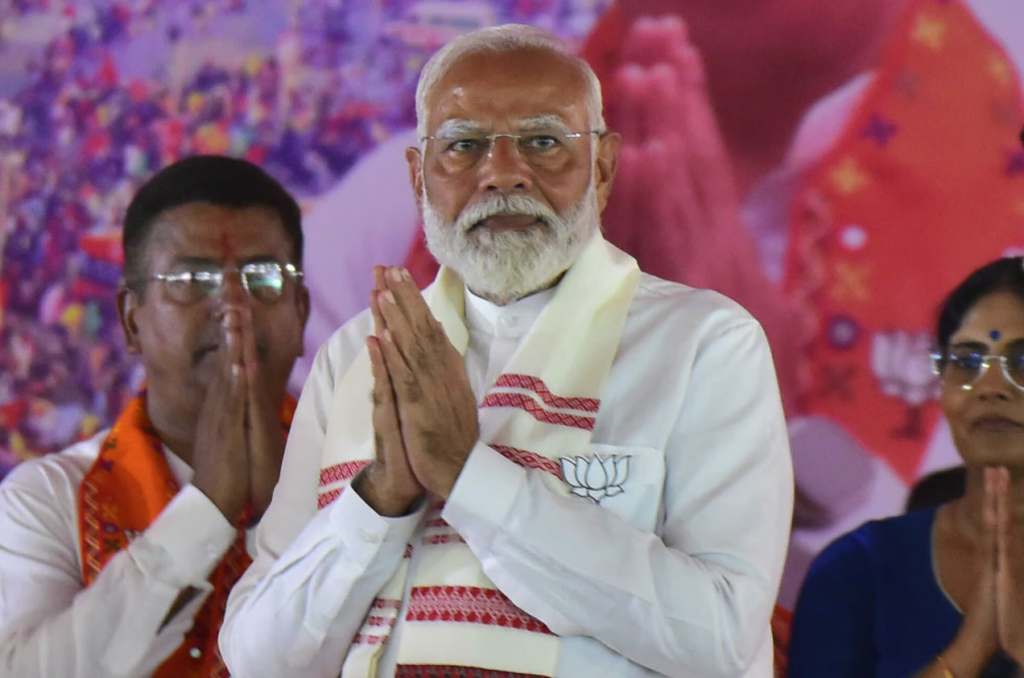
India—the world’s largest importer of liquefied petroleum gas (LPG) from the Gulf—is facing a major energy emergency. Prime Minister Modi’s government invoked emergency powers to ration domestic and industrial LPG consumption, restricted sales of bottled gas to hotels and restaurants, and prohibited consumers connected to the mains gas network from storing or refilling domestic gas cylinders. Rajesh Kumar Sinha, Special Secretary of the Ministry of Ports, confirmed on Saturday the 14th that two Indian-flagged LPG tankers had crossed the Strait of Gibraltar bound for ports in the west of the country—the first having already docked in Mundra on Monday—following personal mediation by Foreign Minister Subrahmanyam Jaishankar with Tehran. But on March 16, Reuters revealed, citing sources with direct knowledge of the negotiations, that Iran has demanded, as a condition for guaranteeing the free passage of the 22 vessels still stranded west of the strait—including six carrying LPG—the return of the three Iranian ghost tankers seized in February in Indian territorial waters: the Asphalt Star (Nicaraguan flag), the Al Jafzia (Mali flag), and the Stellar Ruby (Iranian flag), all of which were involved in illegal bunkering operations. Tehran has also requested the supply of medicines and medical equipment. There are 611 Indian sailors trapped in the Gulf; three have died, and one remains missing.
Implications
The behavior of Tehran’s jihadist oligarchy is a classic example of strategic blackmail: exploiting the desperation of others to maximize its own demands. The Revolutionary Guard regime is demanding the release of three ships that were smuggling oil in violation of international sanctions—and hiding from the US Navy in Indian territorial waters—in exchange for allowing the passage of essential supplies for 1.4 billion people. The fact that India has leverage over Tehran—New Delhi hailed the repatriation of 180 Iranian crew members from a warship that had sought refuge in its waters as a “gesture of goodwill”—does not alter the extortionate nature of the negotiation. India’s LPG crisis is not a temporary situation: 90% of its LPG imports come from the Persian Gulf. If reserves run out by the end of March, as the Modi government fears, the social impact on the more than 333 million households connected to gas will be catastrophic.
Perspectives and scenarios
India faces a major foreign policy dilemma: yielding to Iranian demands means releasing three ships linked to the illegal trafficking of Iranian oil and sending medicine to a regime under immense international pressure; refusing risks a domestic humanitarian crisis with electoral consequences for Modi. Foreign Minister Jaishankar has skillfully presented backroom diplomacy as a tactical success—”every ship movement is an individual event,” he told the Financial Times—but the sustainability of this approach is limited. In a second scenario, if the naval coalition that Trump is demanding of his allies were to materialize, or if the US military were to militarily open the strait, India would be freed from Iranian pressure. This is, for the moment, the least likely scenario in the short term.
2. Gulf states pressure Washington: “Fill out the Iranian problem once and for all”
Facts
In a highly strategic turn of events, Reuters published an analysis on March 16, citing sources in three Gulf states, confirming that members of the GCC (Gulf Cooperation Council)—Bahrain, Kuwait, Qatar, Saudi Arabia, Oman, and the United Arab Emirates—are actively pressuring Washington to “permanently neutralize” Iran. This statement represents a radical shift from previous positions: Oman and Qatar, which had maintained relatively open lines of communication with Tehran, have aligned themselves with the rest of the Gulf after suffering direct Iranian attacks on airports, ports, oil facilities, and shopping centers. Abdulaziz Sager, president of the Saudi Gulf Research Center, told Reuters: “There is a widespread feeling throughout the Gulf that Iran has crossed every red line with all the Gulf countries.” At the same time, these sources confirmed that Washington is pressuring Gulf states to formally join the military campaign, and that Trump is seeking regional support to bolster the operation’s international and domestic legitimacy.
Implications
The GCC’s stance is the most compelling empirical evidence of the real threat the Tehran regime poses to regional stability: even states that for decades favored appeasement over confrontation with Iran have concluded that the regime of the ayatollahs—or their successors in the IRGC—cannot remain capable of blocking the Strait of Hormuz or attacking its energy infrastructure. Professor Bernard Haykel of Princeton University aptly put it: “Now that Iran has demonstrated it can close the Strait of Hormuz, the Gulf faces a qualitatively different threat.” The fact that Gulf states are calling for a definitive downgrading of Iranian military capabilities exposes those in Europe who preach “de-escalation” without proposing a real alternative to this existential threat.
Perspectives and scenarios
The GCC’s position reinforces the regional legitimacy of the operation and provides Trump with political cover in the eyes of his domestic public. However, the formal incorporation of the Gulf states into active military operations—beyond the use of their bases, which is already occurring—is contingent on the military outcome in Iran. If, in the coming weeks, US and Israeli forces achieve a decisive downgrading of the IRGC’s naval and minelaying capabilities in the Strait, the Gulf will become the open ally that Washington is seeking. If the war drags on without conclusive results, the Gulf states could pursue bilateral negotiations with Tehran.
3. Cuba: Total blackout on the island and Trump stages the end of Castroism
Facts
On Monday, March 16, Cuba’s national power grid collapsed completely, leaving the island’s 10 million inhabitants without electricity. The state-owned company, the National Electric Union of Cuba (UNE), confirmed the “total disconnection of the system.” The blackout comes after more than two months without oil imports—the last shipment arrived on January 9—a result of the energy embargo imposed by Trump following the capture of Venezuelan dictator Nicolás Maduro in January. President Trump, speaking to reporters in the Oval Office while signing an executive order, declared, “I think I’ll have the honor of taking over Cuba in some form,” adding, “Whether I liberate them or I take them over, I think I can do whatever I want with them. They’re a very weakened nation right now.” The New York Times simultaneously revealed, citing four people familiar with the negotiations, that Washington has indicated to Cuban negotiators that President Miguel Díaz-Canel must relinquish power, while leaving the next steps to the Cubans themselves. Cuban Deputy Prime Minister Oscar Pérez-Oliva announced that same day that Cuban exiles would be able to invest and own businesses on the island.
Implications
Cuba is in the terminal stage of its systemic collapse. The Castro-Díaz-Canel regime, which has withstood decades of sanctions thanks to the crutches of Venezuela, Russia, and to a lesser extent China, is seeing those supports crumble simultaneously: Venezuela is being politically dismantled by Washington, Russia is trapped in Ukraine, and China—pragmatic as ever—is not going to bear the cost of keeping Cuba afloat. Trump’s statements—for the first time, a sitting president has spoken openly of “taking” Cuba—are of a historical significance that cannot be underestimated: they represent the official end of the commitment made by Kennedy in 1962 not to invade Cuba. The Cuban concession of allowing investment by exiles is an unequivocal sign that the regime is seeking a negotiated solution to the inevitable.
Perspectives and scenarios
Three scenarios are emerging. First: gradual negotiations under the tutelage of Secretary of State Marco Rubio, with a “soft” exit for Díaz-Canel in exchange for economic liberalization and the dismantling of the espionage infrastructure and foreign military bases—the scenario preferred by Washington in the short term, given that the war in Iran is consuming all military resources. Second: the implosion of the regime under the combined pressure of a total blackout, shortages, and popular protests, followed by a humanitarian intervention by the United States. Third: direct military intervention, the least likely scenario in the short term but explicitly on the table according to Trump’s statements. In any case, the end of Castroism is now a matter of time, not of principle.
4. Trump postpones summit with Xi Jinping “by about a month” due to the war in Iran
Facts
President Trump announced on Monday, March 16, that he has asked Beijing to postpone his trip to China —scheduled for March 31 to April 2—by about a month. “We have requested that we delay it a month or so,” Trump told reporters in the Oval Office. “Because of the war, I want to be here, I have to be here.” White House Press Secretary Karoline Leavitt stated that “dates can move” and that the “commander-in-chief’s number one priority is ensuring the continued success of Operation Epic Fury.” Treasury Secretary Scott Bessent, meeting in Paris with his Chinese counterparts, clarified that any delay would be for “logistical reasons” and not as leverage on Beijing regarding the Strait of Hormuz, although Trump had told the Financial Times on Sunday that he expected China to help unblock the passage before the summit. China receives 45% of its oil through the Strait of Hormuz and is the world’s largest buyer of Iranian crude, importing about 12 million barrels per day in the first two months of 2026.
Implications
The postponement of the Trump-Xi summit is a precise indicator of the geopolitical magnitude of the Iranian conflict. The visit to Beijing would have been the first by a US president to China since Trump’s first term in 2017—and the first true restart of bilateral relations since the Busan trade truce of October 2015. Its postponement puts China in an awkward position: on the one hand, its energy dependence on the Gulf is real, although Council on Foreign Relations analyst Edward Fishman points out that Beijing is accelerating its transition to renewable energy and may be using the conflict to deepen that advantage; on the other hand, China has been the main implicit backer of the Iranian economy through its oil purchases, which objectively places it on the opposite side from Washington. The equation is far too complex for Trump to resolve with a tweet from Truth Social.
Perspectives and scenarios
If China decides to act as a constructive mediator in the strait—without deploying warships—it could politically capitalize on this position as a balancing power, bolstering its global prestige without the cost of direct confrontation with Iran. If Beijing remains passive or continues importing Iranian oil in de facto violation of sanctions, the postponement of the summit will lead to a growing estrangement that will damage the prospects for a bilateral trade agreement. The summit will take place, but in a geopolitical landscape radically different from the one that existed before February 28.
5. Allied defection and the attack on Baghdad: Europe abandons Trump, drones attack the US embassy
Facts
In an episode that has defined the character of the current Atlantic crisis, Washington’s main allies—with the partial exception of France, which Macron mentioned to Trump as potentially “willing to help”—have refused to participate in any naval mission to reopen the Strait of Hormuz. Germany was the most categorical: government spokesman Stefan Kornelius declared that “this is not a NATO war and has absolutely nothing to do with NATO.” Italy ruled out any expansion of naval missions in the area. Spain—the European country most vocally critical of the war from the outset—was described by its Defense Minister Margarita Robles as “absolutely unwilling” to make any military contribution. Australia and Japan confirmed they would not send ships. Prime Minister Keir Starmer said he was “pursuing a workable plan” but that the United Kingdom “will not be drawn into the wider war,” although London is considering deploying mine-hunting drones already present in the region. Separately, in the early hours of Tuesday the 17th, a wave of drones and rockets attacked the US embassy in Baghdad—the most intense assault since the start of the conflict, according to Iraqi security sources, with at least five drones used—as well as a hotel and an oil field in southern Iraq. Iraqi Prime Minister Mohammed Shia al-Sudani condemned these “terrorist acts” that “undermine the government’s efforts toward reconstruction and prosperity.”
Implications
The allied refusal exposes the depth of the Atlantic rift. Europe not only failed to support Operation Epic Fury from its inception—Washington, significantly, initially declared European aid “unnecessary and unwelcome”—but now refuses even to protect its own energy dependence on the Strait. It is a major intellectual contradiction that the European governments most reliant on Gulf oil are the most resistant to guaranteeing freedom of navigation there. The argument that “this is not a NATO war” is legally sound but strategically suicidal. The attack on the embassy in Baghdad demonstrates that the pro-Iranian Iraqi militias—the most dangerous and least predictable link in the IRGC’s proxy network—remain operational and capable of escalating, despite previous coalition attacks on their infrastructure.
Perspectives and scenarios
The allied refusal doesn’t change the military equation, but it does change the political one: Trump will have to fight on two simultaneous fronts, the military one in the Gulf and the diplomatic-Atlantic one at home. If the military operation concludes successfully in the coming weeks—Israel claims the conflict will last at least three more weeks—the European defection will be politically etched in Washington’s memory and will strengthen those who advocate for a review of the American commitment to NATO. If the war drags on and energy prices destabilize European economies, the capitals that are currently saying “no” will be forced to renegotiate their position from a weakened standpoint. The attack on Baghdad demands a forceful response to avoid giving the Iraqi Shiite militias the impression of impunity.
6. US intelligence warns: The Iranian regime, wounded but standing, is tougher under the IRGC
Facts
The Washington Post reported on Monday, March 16, citing intelligence assessments from the American community, that despite more than two weeks of relentless bombing, the Tehran regime “will likely remain standing, for now weakened but more radical, with the IRGC (Islamic Revolutionary Guard Corps) exerting increasing control.” The new Supreme Leader, Mukhtaba Khamenei—elected on March 8 by the Assembly of Experts to replace his father, Ali Khamenei, who was killed in the early hours of Operation Epic Fury—is described by analysts as potentially “more extreme” than his father: trained by ultraconservative clerics, actively involved in suppressing previous protests, actively supported by the IRGC, and reportedly close to acquiring nuclear weapons. Admiral Brad Cooper confirmed that the rate of Iranian ballistic missile launches has fallen by 90% since the first day of the conflict and that of drones by 83%, but the IRGC continues to mine the strait and attack energy infrastructure in the Gulf.
Implications
This is perhaps the most inconvenient fact for the architects of Operation Epic Fury: the decapitation of the Iranian leadership has not produced the expected collapse of the system. The IRGC—which is not a conventional army but a political-economic-military organization with tentacles in all sectors of Iranian society, as we have analyzed in detail in previous reports—has survived and consolidated its position. Mujtaba Khamenei is the IRGC’s chosen candidate, not a reformer or a moderate. The fact that American intelligence admits the regime will remain suggests that the goal of immediate regime change is illusory in the short term, which raises the crucial question: what is the end-state of the operation? The degradation of Iran’s nuclear and military capabilities, or regime change? Without clarity on this question, the already tenuous coalition is impossible to build.
Perspectives and scenarios
The persistence of the regime under the IRGC presents three vectors of risk. First, if Mukhta Khamenei decides to pursue nuclear weapons as a guarantee of survival—which intelligence fears—the conflict will have produced the opposite of the intended result. Second, if internal protests intensify, the new leadership could resort to brutal repression supported by the narrative of an “external siege,” thus galvanizing popular support. Third, if the IRGC’s military infrastructure is sufficiently degraded in the coming weeks, a window could open for strategic negotiations through intermediaries—Qatar, Oman, or India—that could produce a lasting agreement on nuclear weapons and the Strait of Gibraltar. This third scenario requires a long-term vision and diplomacy that, for the moment, is conspicuously absent in Washington.
III. MEDIA RACK
The international media landscape of March 16-17, 2026 reveals a deep fracture in narrative frameworks according to geographical origin and editorial line of the world’s leading media outlets.
Anglo-Saxon media:
Reuters and AP are the primary sources of the day with two top-level exclusives: the India-Iran negotiations regarding the ghost tankers and an analysis of the GCC’s pressure on Washington. The New York Times reveals details of the secret talks on Díaz-Canel’s departure in Cuba and publishes an intelligence assessment of the IRGC’s consolidation. The Washington Post and Bloomberg provide in-depth coverage of the postponement of the Trump-Xi summit and the collapse of the Cuban power grid. The Financial Times, which interviewed Trump on Sunday—and published the conversation about the Strait of Hormuz and China—leads the analytical debate with an analysis by Emile Hokayem, a senior fellow at the IISS (International Institute for Strategic Studies), who warns of the risk of the war devolving into a protracted conflict of attrition. CNN, NBC, and CBS offer extensive coverage of the Cuban drama and the European position. Fox News emphasizes the Iranian threat and the need for an allied coalition. The Wall Street Journal gives priority coverage to the impact on energy markets.
European media:
Israel Hayom publishes the day’s most forceful headline: “Europe defies Trump on the Hormuz warships,” detailing the statements from Berlin, Rome, Madrid, and Athens. The Times of London and The Telegraph cover Starmer’s delicate position as he attempts to balance a “no” to open warfare with maintaining the special relationship with Washington. The Guardian criticizes the war with a harsh editorial. Le Monde and Le Figaro highlight European rejection and the internal debate in France regarding the Aspides mission (protection of ships in the Red Sea). FAZ and Die Welt underscore Germany’s position of non-involvement and analyze the energy impact on German industry. Corriere della Sera covers the Italian position and the Cuban drama. The left-leaning Libération harshly criticizes Operation Epic Fury. Die Zeit analyzes the long-term consequences for NATO. L’Osservatore Romano expresses concern for civilian casualties and calls for dialogue.
Gulf and Arab media:
Al Jazeera—from Qatar—maintains its ambiguous coverage: on the one hand, it reports on Qatar’s role in the GCC, while on the other, it adopts a critical tone regarding the US-Israeli military operation. Al Arabiya and Arab News, media outlets close to Riyadh, reflect the Saudi position: implicit support for the pressure on Tehran and an urgency to restore free navigation in the Strait of Hormuz. Asharq Al Awsat features an analysis of the GCC and the pressure on Washington on its front page. Gulf News (UAE) and Khaleej Times cover the economic impact on regional trade. The Times of Oman, the most important media outlet in the sultanate—historically a mediator with Iran—covers Muscat’s shift in the GCC with notable editorial caution. Qatar’s The Peninsula and the Emirati Al Ittihad reflect the hardline stance of the Gulf states against Tehran.
Asian media:
The Times of India and Hindustan Times dedicate their front pages to the LPG crisis and the negotiations with Iran, adopting a supportive tone for Jaishankar’s “policy of active neutrality.” The Indian Express provides an in-depth analysis of the 22 stranded ships. The South China Morning Post and China Daily do not explicitly mention the postponement of the Trump-Xi summit, but they analyze the impact on Chinese energy imports. The Yomiuri Shimbun and Japan Times cover with concern Trump’s pressure on Tokyo to send warships and the internal debate in Japan. Singapore’s Straits Times analyzes the impact on Southeast Asian shipping lanes. WION (India) devotes extensive coverage to the Gulf War and the situation of Indian sailors.
Russian media:
Russia Today and TASS amplify the narrative of US and Israeli “imperialist aggression,” highlight Iranian resistance, and criticize “Western hypocrisy.” TASS quotes the Russian ambassador in London, who states that the US adventure in Iran lacks a clear exit strategy.
Latin American media:
Clarín of Buenos Aires, El Mercurio of Chile, and Reforma of Mexico provide extensive coverage of the Cuban crisis—the one closest geopolitically to their audiences—and the electrical grid collapse. Reforma analyzes the impact on Mexico-Cuba relations and the internal debate surrounding oil.
IV. RISK TRAFFIC LIGHT
🔴 CRITICAL RISK (Imminent):
— Escalation in the Strait of Hormuz: The IRGC continues to mine the passage and attack ships; the absence of an allied naval coalition leaves the US Navy as the sole guarantor, with limited resources for sustained escort.
— Humanitarian collapse in Cuba: without electricity and without oil, the island faces a subsistence crisis that could spill over into social violence and destabilization of the entire Caribbean region.
— Shiite militia attacks in Iraq: the attack on the embassy in Baghdad confirms that the Iraqi front remains open and could escalate with American casualties.
🟠 HIGH RISK (Elevated):
— Consolidation of the IRGC under Mojtaba Khamenei: a more radical and less predictable regime with residual capacity but extreme determination.
— Global energy crisis: Brent crude above $105 threatens a recession in economies most dependent on imported oil, especially in Europe and Asia.
— Atlantic fracture: European refusal to contribute to the naval coalition may produce a profound review of the American commitment to NATO.
🟡 MODERATE RISK (Evolving):
— Postponement of the Trump-Xi summit: risk of deterioration in Sino-American relations if Beijing does not show signs of constructiveness regarding the strait.
— Escalation in Lebanon: Hezbollah — already weakened, but not eliminated — maintains the capacity to attack northern Israel.
— Impact on global food security: The IMF and the World Food Programme warn that the disruption of the Strait of Hormuz threatens the supply of fertilizers and LNG for global agricultural production.
V. EDITORIAL COMMENTARY
The war has reached its seventeenth day, and with it comes the moment for an exercise in intellectual honesty, something sorely lacking in the television studios, talk shows, and columns of those who practice what Emile Hokayem—senior research fellow at the IISS and one of the most rigorous analysts of the contemporary Middle East—quite rightly calls armchair analysis. There is a breed of expert whose sophistication lies in criticizing the war once it has begun, without ever having proposed a viable alternative to prevent Iran from becoming a nuclear power or continuing to export the terror of its proxies from Lebanon to Yemen. These self-proclaimed pundits have spent years embellishing their pronouncements with references to the “complexity” of the Middle East, the “necessary dialogue” with Tehran, and “de-escalation” as a mantra—as if engaging in dialogue with a jihadist oligarchy that finances the systematic murder of civilians were any different from negotiating with Al-Qaeda. Now that war is underway and the map has irreversibly changed, their analyses are reduced to pointing out Washington’s mistakes without offering the slightest alternative proposal. This is not geostrategy: it is intellectual narcissism disguised as prudence.
What the events of March 17th unequivocally reveal is this: Tehran’s jihadist oligarchy has not collapsed. But neither is it invincible. The IRGC—whose hybrid nature as a political-economic-criminal organization we have rigorously analyzed in these reports—has consolidated power under Mukhta Khamenei, but with a radically reduced offensive capacity: 90% fewer ballistic missiles, 83% fewer drones. When the Iranian regime has to negotiate with India—a non-belligerent country—the free transit of gas tankers in exchange for the return of three smuggling vessels, we are not witnessing a power in a position of strength: we are witnessing a regime managing its own agony, selling itself to the highest bidder. The blackmail of India is the best demonstration that the maximum pressure strategy works, albeit at an energy and humanitarian cost that cannot be ignored.
Europe, meanwhile, has committed yet another geostrategic cardinal sin. The governments most dependent on Gulf oil—Germany, Italy, Spain, and Greece—are the most vehemently refusing to contribute to guaranteeing freedom of navigation in the strait that sustains them. Minister Robles’ declaration that Spain is “absolutely unwilling” to make any military contribution is the epitome of the Sánchez government’s Atlantic irresponsibility: the same government that has pushed the Rota and Morón air bases to their limits, the same one that has pursued a foreign policy of moral equidistance between democracies and autocracies, the same one that maintains a poisoned relationship with Washington, now boasts of its non-participation as if it were a sign of independence when it is, in reality, a display of strategic cowardice disguised as pacifism. Berlin, at least, has the consistency to have rejected war from the outset and to articulate a legal and constitutional argument for its non-participation. But the practical result is the same: Europe free-rides (takes advantage of) the security provided by the US Navy and then hides its hand when asked to contribute to it.
The postponement of the Trump-Xi summit deserves separate consideration. China faces a historic opportunity to demonstrate that it is a responsible power with genuine global interests—45% of its oil passes through the Strait of Hormuz, its ships also have the right to free transit, and its economy is also affected by Brent crude at $105 a barrel. If Beijing acts as a constructive mediator, without sending frigates, but facilitating dialogue with Tehran to reopen the passage, it will gain a geopolitical legitimacy that no statement from the Communist Party can buy. If Beijing continues importing Iranian oil under the radar and waiting for Washington to resolve the problem alone, it will have definitively demonstrated that its concept of “multipolarity” is nothing more than maximizing its own profit at the expense of the international order that guarantees its prosperity.
Cuba is the chapter that closes the day with a historical clarity that deserves to be stated without euphemism: Castroism is dying. It is not the Americans who are killing it—it is decades of incompetence, corruption, repression, and dependence on external tutors who have one by one disappeared or withdrawn. The darkness that envelops Havana tonight is not just the darkness of the power outage: it is the terminal darkness of an ideology that has failed on every level and has condemned eleven million people to misery for almost seventy years. The question is not whether the regime will fall, but under what conditions it will fall and what will happen afterward. We hope it will be with the least possible violence and that the transition to democracy and a market economy—which Cuba urgently needs—will occur in an orderly and dignified manner for the Cuban people.
The great strategic question that this conflict has yet to answer is the one posed by the most serious analysts—including Hokayem in the FT and the Atlantic Council in its exhaustive twenty-question analysis of March 11—: what is the true end-state of Operation Epic Fury? If it is the definitive degradation of the Iranian nuclear and missile program, there are reasons for optimism. If it is regime change, American intelligence has just confirmed what many of us already knew: that it will not happen in the short term and that the IRGC in power could produce a more dangerous, not a weaker, Iran. We must understand the apparent contradiction between a weaker, and consequently more dangerous, Iran. It is a strategic paradox that undoubtedly represents the greatest risk of the conflict, and no pundit—nor any senior official in Washington—has yet answered this question with the clarity that the gravity of the moment demands.