By Gustavo de Arístegui,
March 30, 2026
I. BRIEF INTRODUCTION
The thirtieth day of the Gulf War—the most serious armed conflict since World War II in terms of its impact on global energy markets—opens with a double paradox that precisely defines the current situation: Washington speaks of negotiations while the Pentagon devises plans for ground operations; Tehran denies any negotiations while its representatives, according to well-informed sources, simultaneously request a temporary truce of five to seven days. The Strait of Hormuz remains effectively blocked, the price of Brent crude exceeds $115 a barrel, and regional diplomacy—with Pakistan as the emerging mediator and the foreign ministers of Saudi Arabia, Turkey, Egypt, and Pakistan itself meeting in Islamabad—attempts to build a bridge between two sides that publicly refuse to acknowledge they are talking. Meanwhile, Ukraine, at war with Russia, signs defense agreements with the Gulf monarchies, offering its invaluable expertise in anti-drone technology—forged in blood against the Iranian Shahed drones used by Moscow—in a geopolitical move of extraordinary diplomatic astuteness. The world is watching with growing alarm a chessboard in which all players run the risk —as The Economist points out— of overvaluing their hand in this dangerous poker game.
II. MOST IMPORTANT NEWS OF THE LAST 24 HOURS
1. The Pentagon prepares ground operations in Iran; Ghalibaf responds with a direct threat
Facts
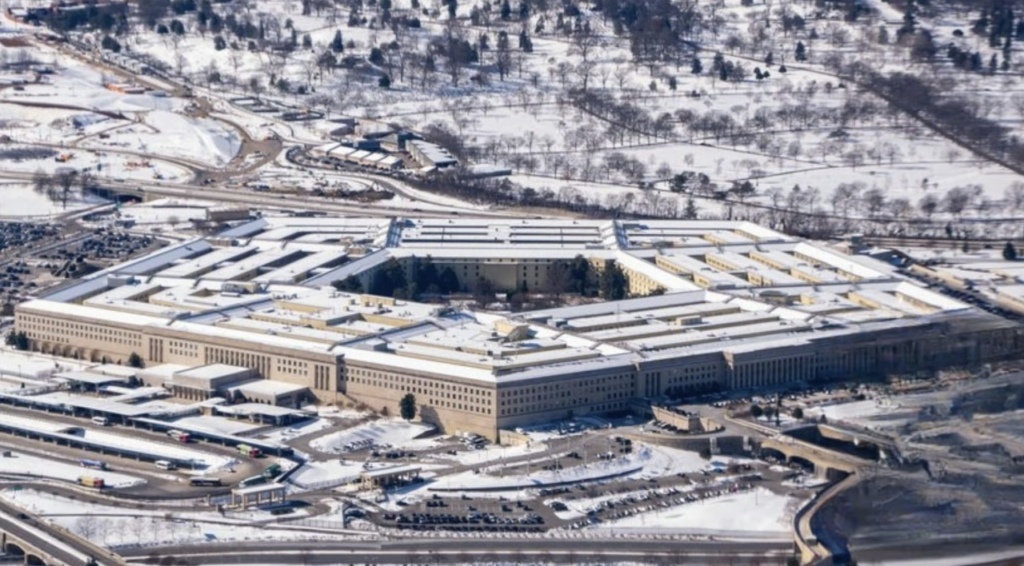
The Washington Post revealed on March 29 that the U.S. Department of Defense has drawn up plans for weeks of limited ground operations in Iran, including incursions by special operations forces and conventional infantry troops against Kharg Island—a key hub for Iranian oil exports—and coastal positions near the Strait of Hormuz. This would not be a full-scale ground invasion, but rather surgical operations with enormous symbolic and military significance. White House Press Secretary Karoline Leavitt confirmed that President Trump has not yet made any decisions on the matter, but emphasized that “it is the Pentagon’s mission to prepare to offer the commander-in-chief maximum operational flexibility.” Meanwhile, the USS Tripoli—an America-class amphibious assault ship—arrived in the region with 3,500 marines and sailors on board, along with fighter jets, transport aircraft, and amphibious assault vehicles. Thousands of additional soldiers from the Army’s 82nd Airborne Division are en route to the area.
The Speaker of the Iranian Parliament, Mohammad Bagher Ghalibaf —a key figure in the power structure of Tehran’s jihadist oligarchy and, according to various sources, the main interlocutor with whom Washington is indirectly negotiating—responded with an extraordinarily harsh message: “The enemy openly sends messages of negotiation and dialogue while secretly planning a ground attack. Our men await the arrival of American soldiers on the ground to set them ablaze and forever punish their regional allies.”
Implications
The Pentagon’s preparation of ground options represents a qualitatively different step in the evolution of the conflict. Coercive pressure—”we negotiate with bombs,” Secretary of Defense Pete Hegseth has said—could work if Tehran concludes that the alternative is worse than giving in, but it could also unleash a spiral of retaliation that spirals out of control. Iran has demonstrated greater resilience than expected: its missiles are still operational, its terrorist proxies—Hezbollah, the Houthi terrorists, the pro-Iranian militias in Iraq—remain active, and the regime has managed to preserve a domestic narrative of dignified resistance that affords it room to maneuver. Israel’s removal of Ghalibaf from its list of priority targets—apparently at the request of Pakistan and the negotiating process—confirms that the Iranian Speaker of Parliament is, in practice, the man to talk to in order to reach any agreement.
Perspectives and scenarios
Scenario A—the most likely in the short term—: Trump extends the pause on attacks against energy infrastructure beyond April 6, Ghalibaf accepts indirect communication channels through Pakistan, and a first round of exploratory talks takes place in Islamabad. Scenario B: Ground operations commence, Iran responds with massive attacks on US bases in the Gulf states and activates Hezbollah and Houthi terrorists, expanding the conflict into the Red Sea and the eastern Mediterranean. Scenario C—the most worrying—: The fragmentation of the Iranian command, with sectors of the Islamic Revolutionary Guard Corps (IRGC) rejecting any negotiations, leads to unauthorized military actions that destroy the diplomatic process before it can even begin.
2. Four-party meeting in Islamabad: Pakistan, Saudi Arabia, Türkiye and Egypt seek a way out
Facts
The foreign ministers of Pakistan, Saudi Arabia, Turkey, and Egypt met on Sunday, March 29, in Islamabad at an emergency summit to coordinate a joint diplomatic initiative aimed at halting the escalating conflict. Pakistan has emerged as the main active mediator in the conflict: Islamabad was the channel through which the fifteen-point peace plan presented by Washington reached Iranian authorities, and the Pakistani government has publicly offered to host direct talks between US and Iranian representatives “in the coming days.” The Pakistani foreign minister stated on social media that his country would be “honored to host and facilitate meaningful talks between both sides for a comprehensive and lasting settlement of the ongoing conflict.” The four foreign ministers plan to meet again on Monday, March 30, to finalize the next steps.
Implications
Pakistan’s emergence as the main mediator reflects several simultaneous realities: the exhaustion of the Omani format, Islamabad’s desire to raise its international geopolitical profile, and the need for both sides to have a credible intermediary in Tehran with good relations with Washington. Saudi Arabia and the United Arab Emirates, which bear the brunt of Iranian missile and drone attacks, have a vested interest in ending the conflict as soon as possible—their economies, their credibility as investment destinations, and their modernization projects depend on regional stability. Turkey, with its usual knack for positioning itself as an indispensable player in every crisis, is seeking diplomatic capital. Egypt, whose Suez Canal is a vital artery of global trade at risk, has compelling economic reasons to join any de-escalation initiative.
Perspectives and scenarios
The four-party format in Islamabad could be the embryo of a multilateral guarantee mechanism—similar to the role played by the EU3 group plus Russia and China in previous nuclear negotiations—that would provide Iran with sufficient security guarantees for Tehran to justify an agreement domestically. The major obstacle remains the asymmetry of demands: Washington calls for complete denuclearization and the dismantling of the missile arsenal; Tehran demands a cessation of hostilities, war reparations, and recognition of its sovereignty over the Strait of Hormuz. Between these two positions lies a chasm that can only be bridged with a massive dose of pragmatism, which, for the moment, is nowhere to be seen in either capital.
3. Oil at over $115: the biggest energy disruption in history
Facts
The price of Brent crude has surpassed $115 per barrel, with US West Texas Intermediate (WTI) firmly anchored above $95. According to the International Energy Agency (IEA), this is the biggest disruption to energy supply in the history of global oil markets: flows through the Strait of Hormuz have plummeted from 20 million barrels per day—the pre-conflict norm—to a mere trickle, and production cuts in the Gulf exceed 10 million barrels per day. The TTF indicator for Dutch natural gas—the European benchmark—has practically doubled, reaching over €60 per megawatt-hour, at a time when European gas storage facilities were barely at 30 percent of capacity after a particularly harsh winter. The Federal Reserve Bank of Dallas has calculated that if the Strait closure lasts for two quarters, the price of a barrel could remain around $115, with devastating impacts on global growth.
Diversion capacity is minimal: Saudi Arabia’s East-West pipeline can transport an additional 2.5 million barrels per day to the Mediterranean, and the UAE can redirect about 500,000 barrels through its pipeline to Fujairah. With 20 million barrels per day blocked, 85 percent of the normal volume remains stranded with no possibility of export.
Implications
Europe is facing a second major energy crisis in less than five years—the first stemming from Russia’s aggression against Ukraine—and this one is exacerbated by the simultaneous rise in oil and natural gas prices. Asian nations—China, India, Japan, and South Korea—which rely on imports from the Persian Gulf for 80 percent of their hydrocarbon supply, are forced to compete in alternative markets, increasing the pressure on global prices. Paradoxically, Russia is benefiting from the crisis by exporting more crude oil to fill the gap, bolstering its war revenues precisely when the West was attempting to strangle its economy.
Perspectives and scenarios
The duration of the energy shock is the critical variable. If the Strait remains virtually closed during the second and third quarters of 2026, the world will enter a synchronized recession of comparable severity to the oil shocks of 1973 and 1979, but with a faster transmission rate given the degree of integration of global value chains. The European Union—which has been preaching strategic autonomy for months without having seriously built it—will find itself facing an energy emergency that will test, once again, its internal cohesion.
4. Zelensky signs defense agreements with Saudi Arabia, the UAE, and Qatar: the Ukrainian paradox
Facts
Ukrainian President Volodymyr Zelensky completed a diplomatic tour of the Persian Gulf monarchies on March 28 and 29, resulting in defense agreements with Saudi Arabia, the United Arab Emirates, and Qatar. The agreements, which center on the transfer of Ukrainian anti-drone technology to the Gulf states and the deployment of military experts from Kyiv to the region, have a clear geopolitical rationale: Ukraine has been combating Iranian-made Shahed drones, which Moscow uses to bomb its cities and power plants, for over four years. Its military understands the vulnerabilities of this technology better than anyone else in the world. Riyadh and Abu Dhabi, which are also targeted by these drones, urgently need this expertise. The Saudi Ministry of Defense signed the memorandum of understanding in Jeddah on Friday, March 27, with the Chief of Staff of the Ukrainian Armed Forces, Lieutenant General Andriy Hnatov.
At the same time, according to the Washington Post, the Pentagon is considering redirecting equipment and weapons intended for Ukraine to the Middle East, which would leave Ukrainian air defenses extremely vulnerable to Russian ballistic missile attacks, which Moscow has intensified in recent weeks.
Implications
Zelensky’s maneuver is remarkably strategically elegant. Instead of passively waiting for Washington to divert its resources to the Middle East, Ukraine is positioning itself as a “security donor”—in Zelensky’s own words—and as an indispensable player in the Gulf’s regional defense architecture. This grants it diplomatic capital, potential alternative sources of funding, and an international narrative that reinforces its relevance at a time when the Iranian conflict threatens to overshadow the Russian-Ukrainian war on the global agenda. The convergence between the two conflicts—Russian aggression against Ukraine and the Gulf war—is already structural: Russia supplies drones and technology to Iran, Iran uses them against Ukraine and is now launching them over the Gulf, and Ukraine offers its expertise and specialists against Iranian technology to those who suffer its attacks in the region.
Perspectives and scenarios
If the Pentagon confirms the diversion of weapons destined for Ukraine to the Middle East, the risk of a significant Russian advance on the Ukrainian front will increase alarmingly. Europe will then have to decide whether it is capable—and whether it has the political will—to compensate for this shortfall with its own defense production capabilities, something for which it is not yet at the required scale. Zelensky’s tour of the Gulf is also an implicit message to Washington: Ukraine has options and alternatives, and it can be useful to allies who have the financial resources to compensate for the reduction in US aid.
5. Escalation in Lebanon: Israel advances, Hezbollah resists, UNIFIL under fire
Facts
Israel has intensified its operations in southern Lebanon , where its ground forces—part of the 91st Division—are advancing north with the stated objective of establishing a “security zone” to protect Israeli settlements in the north. Prime Minister Benjamin Netanyahu ordered the expansion of the security perimeter in southern Lebanon. An Israeli soldier was killed in combat in Lebanon over the weekend. The United Nations Interim Force in Lebanon (UNIFIL) reported that one of its personnel was killed and another seriously wounded in an explosion in the south of the country, adding a new dimension of gravity to the conflict. According to the United Nations, 370,000 children have been displaced by Israeli military operations in Lebanon since the start of the offensive. The terrorist organization Hezbollah, which is holding its ground despite losses, launched a rocket that killed a woman in northern Israel.
Implications
The opening of a significant ground front in Lebanon—in parallel with air operations over Iran—demonstrates that Israel has decided to seize the strategic window opened by the weakening of the Iranian regime to attempt to dismantle Hezbollah’s infrastructure in southern Lebanon once and for all. It is an enormous gamble: if the Tehran regime does not collapse or reach an agreement before Israel reaches the limit of its operational capabilities, Hezbollah could recover, and the destruction of Lebanon will have been in vain. The death of the UNIFIL soldier also opens a delicate diplomatic front with the countries contributing troops to the international force—Italy, France, and Spain—which have demanded explanations and security guarantees.
Perspectives and scenarios
The spokesman for the Israel Defense Forces (IDF, Tsahal) stated on March 29 that the army is “just days away from achieving all of its top priority objectives in Iran.” If this is true, the pressure on Tehran could increase enough for the more pragmatic elements of the jihadist oligarchy—Ghalibaf at the forefront—to impose some kind of interim agreement. But the key will remain whether Iran is willing to accept US conditions regarding its nuclear program, or whether it prefers an indefinite war of attrition.
6. The Economist and the risk of overvaluing one’s own cards: the dilemma for all players
Facts
In its March 29th edition, The Economist published a remarkably insightful analysis entitled “All sides in the Gulf war are at risk of overplaying their hands.” The publication notes that none of the parties have achieved their stated objectives: the United States and Israel have failed to bring down the regime or force Tehran to accept their terms; Iran, despite its resistance, has suffered severe military damage and destruction of civilian infrastructure that its citizens will pay for for generations; the Gulf states are seeing their image as a stable destination for investors and expatriates rapidly erode. The World Economic Forum estimates that the conflict is causing a structural shock to the global economy—not just a temporary price shock—that will affect supply chains, food security, investment, and political stability for years to come.
Implications
The Economist’s warning is not mere rhetoric. The escalating dynamic in which all the players are trapped has its own perverse logic: each side fears that backing down would amount to an unacceptable strategic defeat, leading it to escalate rather than de-escalate. Trump fears that an insufficient agreement would be interpreted as capitulation; Netanyahu needs tangible results for his political survival; the remaining Iranian leaders know that any concessions could be perceived internally as a betrayal of the Islamic Republic’s foundations. In this context, Islamabad’s diplomacy and four-party mediation are the only real path toward some form of solution, however imperfect.
Perspectives and scenarios
The Economist’s analysis aligns with the assessment of the Center for Strategic and International Studies (CSIS) in Washington: without the reopening of the Strait of Hormuz, the world is headed for the largest synchronized economic contraction since the Great Recession of 2008. This economic pressure—already affecting even the United States’ own allies in Europe and Asia—could, paradoxically, be the factor that finally compels an agreement. The pain is real, and the longer it persists, the harder it becomes for any government to justify prolonging the conflict to its own public.
III. MEDIA RACK
The Financial Times and the Wall Street Journal lead the economic coverage with in-depth analyses of the impact of the Strait of Hormuz closure on energy markets and global supply chains, agreeing that it is the biggest energy shock in the history of the modern oil market. The Economist provides the most insightful political analysis of the day with its warning about the risk of all players “overplaying their hand.”
The New York Times and the Washington Post offer the most detailed information on the Pentagon’s preparations for ground operations and on indirect negotiations through Pakistan, with visible access to top-level government sources. CNN and NBC maintain exceptionally dense, real-time coverage. The Times of London and The Telegraph follow the crisis with particular attention to the implications for European allies and UNIFIL.
Al Jazeera—with its bureaus in Doha and Beirut—offers the most comprehensive coverage of the conflict from the Iranian and Lebanese perspectives, as well as the best tracking of regional diplomatic initiatives. Arab News in Riyadh and the Kyiv Independent provide the Saudi and Ukrainian perspectives, respectively. Le Monde and Le Figaro maintain a more detached but equally rigorous tone, paying particular attention to the implications for European energy security and for the French UNIFIL troops in southern Lebanon.
Russia Today and TASS continue their propaganda line, portraying the conflict as an Anglo-Ionian imperialist aggression and downplaying Iran’s destabilizing role, whose military cooperation with Moscow against Ukraine is indefensible in light of the facts. The Israeli press—Jerusalem Post, Times of Israel, Haaretz—is divided between those who support intensifying the campaign and those who warn of the risk of an endless conflict with no plan for the aftermath. The CSIS, the International Institute for Strategic Studies (IISS), and the French Institute of International Relations (IFRI) have published analyses of remarkable technical quality on conflict resolution scenarios in recent hours.
IV. RISK TRAFFIC LIGHT
| RISK | LEVEL | DESCRIPTION | |
| ⬤ | US-Iran land escalation | CRITICAL 🔴 | The Pentagon has drawn up plans for ground operations. The USS Tripoli, with 3,500 marines, is in the area. The IRGC is awaiting orders to respond. |
| ⬤ | Global energy crisis | CRITICAL 🔴 | Brent > $115/barrel. Hormuz virtually closed. Biggest energy disruption in history according to the IEA. Risk of synchronized global recession. |
| ⬤ | Failure of the diplomatic process | STOP 🟠 | Iran rejects the 15-point plan. The Iranian counteroffer is unacceptable to Washington. The Islamabad window is the only real opportunity. |
| ⬤ | Expansion of the conflict into Lebanon | STOP 🟠 | Israeli ground advance. One UNIFIL soldier killed. 370,000 children displaced. Hezbollah maintains operational capability. |
| ⬤ | Diversion of military aid to Ukraine | STOP 🟠 | The Pentagon is considering redirecting Ukrainian weaponry to the Middle East. There is a risk of collapse of Ukrainian air defenses against Russia. |
| ⬤ | Global food security | MODERATE 🟡 | Fertilizers, sulfur, urea, and cereals are in critical condition. The World Food Programme warns of a crisis similar to that of 2022. |
| ⬤ | Success of the Islamabad format | LOW 🟢 | There is a real, albeit small, possibility that the four-party mediation will produce a provisional agreement in the coming days. |
V. EDITORIAL COMMENTARY
The Gulf War—a name now universally accepted, though some commentators initially resisted using it—has entered its most dangerous phase precisely when it seemed that the accumulated military pressure might force some kind of negotiated solution. The coexistence of Pentagon ground operations plans and four-party diplomatic initiatives in Islamabad is not a contradiction: it is the essence of coercive diplomacy, the art of making the adversary believe that the alternatives to negotiation are worse than negotiation itself. The problem is that this strategy only works when the adversary shares the same framework of rationality.
And herein lies the Gordian knot of this conflict. The jihadist oligarchy in Tehran—contrary to what many Western analysts, victims of chronic wishful thinking, have been maintaining for years—does not operate with the same parameters of strategic rationality as a democratic state. For the IRGC and for the regime’s hardliners, the humiliation of accepting American conditions would be worse than physical destruction. This does not mean they are irrational: it means that their utility function includes variables—the survival of the theocratic model, the narrative of resistance, their image as guardians of the regime’s essence and ideology—that Western analytical models tend to systematically underestimate.
Mohammad Bagher Ghalibaf is the most powerful and influential man left in the regime. Israel’s removal of him from its list of priority targets—apparently at the behest of Pakistan and the negotiating process—is the most hopeful sign in recent weeks. Ghalibaf knows that Iran cannot win this war militarily, and he probably also knows that the price Iranian citizens are paying—deprivation of water, electricity, and internet for thirty days, destroyed infrastructure—is unsustainable in the long run. But he also knows that any agreement he signs must be palatable to the domestic public, to a Revolutionary Guard that would not forgive him a complete surrender.
Washington’s fifteen-point peace plan—complete denuclearization plus a drastic limitation of the missile arsenal—is, in this context, maximalist to the point of being counterproductive as a starting point. Not because the objectives are wrong—they are the right ones and must be defended—but because no serious negotiator begins in the end position. Reagan’s diplomacy with the Soviet Union—which is the model Trump himself should have in mind—did not begin by demanding the immediate dissolution of the Warsaw Pact. It began with maximum pressure and gradual talks. The difference is that Reagan had a plan for the day after. Trump, for now, does not.
Europe, meanwhile, watches the spectacle unfold with its usual mixture of impotence and self-proclaimed principles. The second energy crisis in less than five years—a direct consequence of passivity in the face of Russian aggression first, and the disastrous energy transition afterward—should be the final wake-up call. If the Old Continent does not build its strategic autonomy and genuine energy security, take its defense seriously, and promote its most cutting-edge industry in the next five years, Europe will cease to be an influential player on the world stage. Zelensky’s actions in the Gulf—so active and so skillful—should shame more than one European foreign minister who continues to expect problems to resolve themselves.
The world is at a moment of systemic fracture—a term we have been using in these pages for months—in which the post-Cold War international order is unraveling with a speed no one foresaw. The Gulf War is not only the consequence, it is the catalyst, and certainly not the cause. The cause is deeper: the accumulation of strategic errors piled up over decades, the naiveté regarding authoritarian regimes, the illusion that trade alone civilizes and that globalization eliminates conflict. None of that has proven true. And the price of that illusion is being paid today by Iranian civilians, merchant mariners stranded in the Gulf, the inhabitants and workers of the Gulf states who see their cities bombed, and consumers around the world who are paying unprecedented prices for fuel and gas.
A solution exists, but it requires something that is lacking among all the actors involved: courage, audacity, a sense of national duty and historical awareness, magnanimity, and long-term strategic vision. An imperfect agreement that stems the bleeding, opens the Strait, and lays the groundwork for verifiable nuclear negotiations would be infinitely preferable to a conflict that drags on until someone makes an irreparable mistake. Islamabad, with its four foreign ministers gathered around a table this Sunday, is today the most important place on the planet. Let’s hope they rise to the occasion.