By Gustavo de Arístegui,
April 1, 2026
I. BRIEF INTRODUCTION
The world awakens on this April 1, 2026—not by chance, a date steeped in deceit and trickery—to a scenario of extraordinary geopolitical complexity. The war against the Iranian jihadist oligarchy (theocracy) reaches its thirty-second day with profoundly contradictory statements from Washington and Tehran regarding the true state of negotiations, while the European front fragments under the demands of a Trump administration that seems unwilling to accept the tepid response of its allies. In the Indo-Pacific, Japan takes a historic and irreversible step toward offensive deterrence, breaking with seven decades of pacifist constitutionalism. And at home—in Spain—football, with shameful punctuality, reflects back to us our collective failings. Today’s analysis covers five major news stories.
II. MOST IMPORTANT NEWS OF THE LAST 24 HOURS
1. Trump announces the end of the conflict in 2-3 weeks; Iran denies it and prepares for six months of war
Facts:
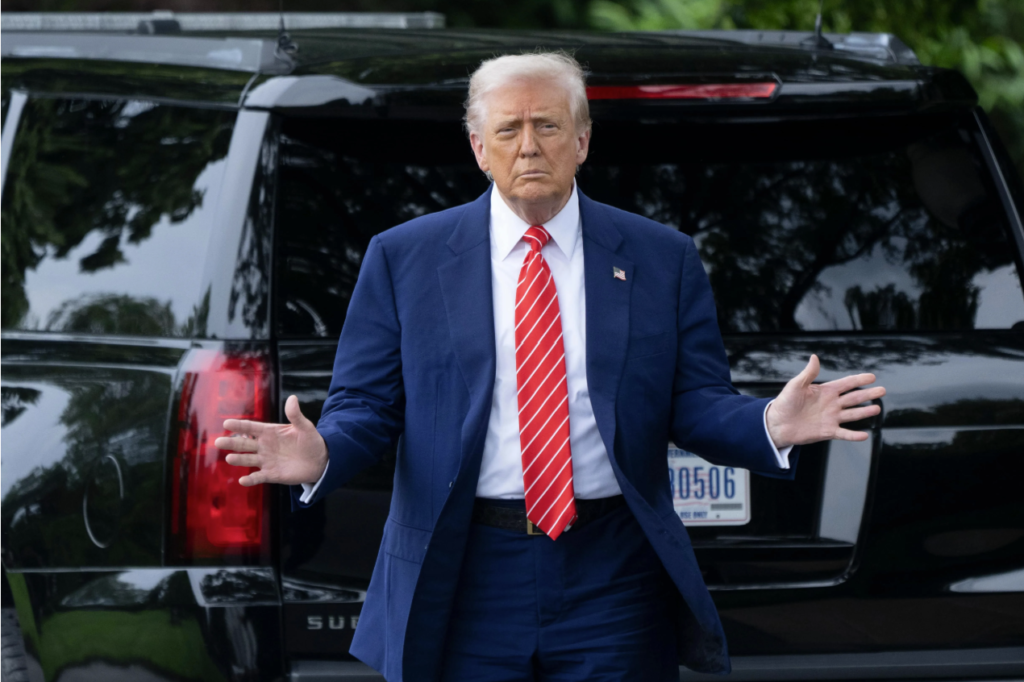
President Donald Trump declared at the White House that the United States could end its military operations against Iran within two to three weeks, noting that the primary objective—preventing Tehran from acquiring nuclear capabilities—was well on its way to being achieved. “We’ll be leaving very soon,” the president told reporters, adding that the withdrawal was not contingent on a prior agreement. Simultaneously, Secretary of State Marco Rubio stated that U.S. forces had largely destroyed the Iranian navy and air force and were “well on track” to achieve their objectives.
However, Iranian Foreign Minister Abbas Araghchi strongly rejected Washington’s narrative: “Negotiation is when two countries sit down to reach an agreement, and that doesn’t exist between us and the United States.” Araghchi stated that Tehran was prepared for at least six months of war. Iranian military spokesman Ebrahim Zolfaqari was even more emphatic: “We will never reach an agreement with you. Not now. Not ever.” The Associated Press (AP), citing sources in Islamabad, confirmed that a 15-point peace plan drawn up by the Trump administration had been formally delivered to Tehran through Pakistani intermediaries.
Secretary of War Pete Hegseth stressed that “the next few days will be decisive” and that the Armed Forces would continue the conflict “with greater intensity” if Iran did not agree to the terms. The Joint Operations Command confirmed that B-52 strategic bombers flew over Iranian territory for the first time, an unmistakable sign of the deterioration of the regime’s air defenses.
Implications:
The divergence between Trump’s statements and the Iranian position reveals a systemic fracture in the narratives of both sides: Washington is trying to construct an image of imminent victory for domestic consumption, given that two-thirds of Americans, according to Reuters/Ipsos, desire a swift resolution to the conflict; Tehran, for its part, maintains its rhetoric of resistance as an element of internal cohesion and credibility with its allies and close terrorist groups. The paradox of decapitation remains: the more commanders of the Islamic Revolutionary Guard Corps (IRGC) are eliminated, the fewer valid interlocutors remain for any eventual negotiations.
The delivery of the 15-point plan through Islamabad confirms the existence of active indirect channels—Pakistan has officially offered its mediation—but the gap between the fundamental positions remains enormous. Trump demands denuclearization, the reopening of the Strait of Hormuz, and the dismantling of the network of proxy terrorist organizations; Tehran doesn’t even acknowledge that it is negotiating.
Perspectives and scenarios:
Scenario 1 — Tactical exit without a deal: Trump announces the end of the active phase of operations around April 6—the next deadline for the destruction of energy infrastructure—but without a formal agreement. The regime remains damaged but not overthrown, the Strait remains disputed, and pressure on energy markets continues.
Scenario 2 — Substantive Indirect Negotiation: Pakistan or Qatar manage to narrow their differences on the nuclear framework within the next 72 hours, reaching a minimal agreement that allows both sides to declare a relative success. This scenario would require the involvement of Mohammad Bagher Ghalibaf as the Iranian interlocutor, a hypothesis that CNN sources and the Administration itself consider the only viable one.
Scenario 3 — Renewed Escalation: The terrorist organization IRGC carries out attacks against US technology company facilities in the Gulf — whose deadline expires this April 1st at 8:00 PM, Tehran time — which would provoke a maximum intensity military response and close any window for negotiation.
2. The IRGC threatens to destroy 18 US technology companies starting today
Facts:
The terrorist organization Islamic Revolutionary Guard Corps (IRGC) issued a formal statement threatening to destroy the facilities of 18 major US corporations in the Gulf region, effective from 8:00 PM (Tehran time) on April 1. The list includes Apple, Microsoft, Google, Meta, IBM, HP, Intel, Tesla, Boeing, Dell, Cisco, Oracle, JPMorgan Chase, General Electric, Palantir, Nvidia, Spire Solutions, and G42.
The IRGC justified the threat by stating that “the primary element in the design and tracking of assassination targets are US ICT (Information and Communication Technologies) and artificial intelligence companies.” It ordered employees of these firms to “immediately leave their workplaces to preserve their lives” and warned residents within a one-kilometer radius of these facilities to stay away from the area.
The State Department issued an alert for U.S. citizens in Saudi Arabia, advising them to remain in safe locations. The White House indicated that military forces were prepared to counter any attack. It’s worth noting that the IRGC had already attacked Amazon Web Services facilities in Bahrain and the United Arab Emirates at the start of the conflict.
Implications:
The IRGC threat represents a significant qualitative escalation: for the first time, the Iranian terrorist organization is explicitly extending its battlefield from military and energy targets to civilian technological and commercial infrastructure in the Gulf. This move has several simultaneous objectives: to punish companies whose technology—artificial intelligence, satellites, secure communications—has been used for Israeli-American operational planning; to generate panic in the markets; and to pressure Gulf governments to reduce their cooperation with Washington.
The threat also reveals the regime’s perception of its own vulnerabilities: if it resorts to economic and psychological warfare against civilian corporations, it is because its conventional military capabilities have been significantly degraded—Rubio himself acknowledged the destruction of most of the Iranian navy and air force. This “variable-temperature war” seeks to impose asymmetric costs where the adversary is most vulnerable.
Perspectives and scenarios:
If the IRGC carries out the attacks, the US military response would be swift and decisive, definitively eliminating any possibility of short-term negotiations. Technology companies with operations in the United Arab Emirates and Qatar are evaluating evacuation plans. Financial markets have already shown nervousness at the prospect of attacks on data centers in the Gulf. The key question is whether this is a psychological warfare maneuver—for which Iran has a long history—or a genuine intention to carry out an attack.
3. Europe fractures: France, Italy, and Spain block US military operations; Hegseth questions NATO’s commitment
Facts:
France, Italy, and Spain have adopted actively confrontational positions with Washington regarding the Iranian conflict. France barred Israeli aircraft carrying US weaponry destined for Iran from passing through its airspace—the first time Paris had taken such a measure since the conflict began on February 28. The Israeli Ministry of Defense accused France of “actively obstructing” the transfer of munitions and announced a halt to all purchases of French military equipment. Italy denied US bombers permission to land at the Sigonella air base in Sicily before they headed to the Middle East theater of operations. Spain confirmed that its airspace has remained closed to US aircraft involved in the conflict since the start of operations, and Defense Minister Margarita Robles clarified that Spanish bases can only be used for NATO’s “collective defense.”
Trump responded sharply on Truth Social, calling France “very unhelpful” and writing that countries without fuel due to the closure of the Strait of Hormuz should “stir up some belated courage, go to the Strait and just TAKE IT.” Secretary of War Hegseth declined to reaffirm NATO’s Article 5 collective defense commitment, leaving open a question of historical consequence: “That’s for the president to decide. But a lot has been laid bare.”
Implications:
The Atlantic fracture that many analysts feared as a long-term scenario is unfolding in real time. The decision by three key allies—one of them Spain, with the Rota and Morón de la Frontera bases of vital importance for US military projection—to refuse to facilitate operations in which they were not consulted sets a precedent of enormous gravity. This is not just about the Iran-Contra affair: it is about the Western security structure as it has been conceived since 1949.
Hegseth’s questioning of Article 5 is the most disturbing element: if Washington is willing to challenge the guarantee of mutual defense as a bargaining chip with wayward allies, NATO enters a zone of strategic ambiguity that its adversaries—Russia and China first and foremost—will not fail to exploit. The conduct of Sánchez’s government—whose internationalist rhetoric is selective and opportunistic, like its entire administration—is politically petty, but the underlying issue is more serious: Europe, once again, is facing a war that will be decisive for its own security without having previously defined its position.
Perspectives and scenarios:
NATO faces its deepest existential crisis since the Suez Crisis of 1956. Two scenarios dominate the immediate horizon: the first, a negotiated restructuring in which the United States accepts European distancing in exchange for concrete rearmament commitments—something the President of the European Commission has already indicated as urgent; the second, a structural rupture that would leave Europe without a US security umbrella at the worst strategic moment in recent decades. The historical irony is profound: while Europe refuses to participate in a war that directly affects its energy security, it remains incapable of formulating a credible, independent defense policy.
4. Japan deploys its first long-range missiles: a strategic revolution in the Indo-Pacific
Facts:
On March 31, 2026, the Japanese Self-Defense Forces officially deployed their first long-range missile system, the Type 25 (an evolution of the older Type 12), with a range of approximately 1,000 kilometers—five times the previous range of 200 km—at Camp Kengun in Kumamoto Prefecture, in the southwest of the archipelago. The system, manufactured by Mitsubishi Heavy Industries, places parts of mainland China—including Shanghai, about 900 km away—within its engagement range. Simultaneously, a hypersonic glide vehicle (Hyper Velocity Gliding Projectile/HVGP), also designated Type 25, was deployed at Camp Fuji. Defense Minister Shinjiro Koizumi described the milestone as “extremely important” for strengthening Japanese deterrence in “the most serious and complex security environment of the postwar period.”
The defense budget approved by Prime Minister Sanae Takaichi’s Cabinet last December exceeds 9 trillion yen ($58 billion) for the fiscal year beginning in April, the largest in Japanese history. Japan also plans to deploy US-made Tomahawk missiles—with a range of 1,600 km—aboard the destroyer JS Chokai before the end of 2026. Residents near Camp Kengun staged protests, arguing that the deployment of offensive weapons in residential areas makes their communities potential targets.
Implications:
The Japanese deployment constitutes a historic turning point in the Indo-Pacific security architecture. For more than seventy years, Japan’s pacifist constitution—Article 9—restricted the country to a strictly defensive posture, without the capacity to attack enemy bases. The addition of a long-range counterstrike capability, backed by the largest defense budget since World War II, signals that Tokyo has definitively internalized that passive deterrence is insufficient in the face of China’s growing military power, North Korea’s nuclear program, and regional instability amplified by the Iranian conflict.
Takaichi’s announcement last November—that Japan could intervene militarily in the event of a Chinese attack on Taiwan—has given this deployment a direct deterrent dimension against Beijing. China, which considers the Type 25 missiles a direct threat to its mainland, has protested vehemently, but it faces a strengthened ally operating under the strongest security umbrella in the region. The appearance last June of two Chinese aircraft carriers operating simultaneously off remote Japanese islands only accelerated the deployment timeline.
Perspectives and scenarios:
Japan is moving toward a distributed defense posture along the Nansei (Ryukyu) island chain, integrating new missiles with state-of-the-art maritime and air surveillance systems. The further deployment of Tomahawk missiles aboard destroyers and the launch of the first ISR (Intelligence, Surveillance, and Reconnaissance) satellite constellation in April 2026 will complete the first echelon of Japan’s new deterrent architecture. China is expected to respond with increased naval and air activity in the East China Sea, which will create new tensions but also strengthen the cohesion of allies in the region.
5. Shame in Cornellà: Islamophobic chants at the RCDE Stadium overshadow the Spain-Egypt friendly and jeopardize the 2030 World Cup
Facts:
The friendly football match between the Spanish and Egyptian national teams, played on March 31st before 35,895 spectators at the RCDE Stadium in Cornellà-El Prat (Barcelona), was marred by repeated Islamophobic and xenophobic chants from a section of the fans identified with the “La Curva” group of RCD Espanyol, located in the south stand of the stadium. From the 20th minute onwards, shouts of “Anyone who doesn’t jump is a Muslim!” were repeated at least three times, preceded by booing of the Egyptian national anthem during the pre-match warm-up. The Royal Spanish Football Federation (RFEF) displayed messages on the video screens during halftime and activated the public address system urging the fans to stop the chants, without immediate success. Spanish coach Luis de la Fuente expressed his “total and absolute condemnation” of any xenophobic and racist behavior.
The incident takes on added significance for two reasons: the Catalan government has pointed to the far right as the organizers of the chants; and Spain, along with Portugal and Morocco—a predominantly Muslim country—is a co-host of the 2030 FIFA World Cup. The Spanish Football Federation (RFEF) faces potential FIFA sanctions, including playing a national team match with a limited number of spectators and a minimum fine of 20,000 Swiss francs. The Catalan police (Mossos d’Esquadra) and other state security forces have opened investigations.
Implications:
What happened in Cornellà is not an isolated incident—RFEF president Rafael Louzán’s insistence on describing it as “isolated situations” is as understandable as it is intellectually dishonest. It is yet another manifestation of a structural racism that takes root in certain sectors of Spanish society and that sport, due to its visibility and tribal nature, amplifies, turning it into an international scandal. The paradox highlighted by the press could not be more painful: the most acclaimed player in the stadium was Lamine Yamal—Spanish, of Moroccan descent, and Muslim—while part of the stands insulted his fellow Egyptians.
The impact on the 2030 World Cup is real and cannot be underestimated: the event will be co-hosted with Morocco as a key partner, and any perception of endemic Islamophobia in Spain would directly affect relations with the Arab world and with FIFA. The Catalan government, whose moral credibility in pointing the finger at the far right is questionable at best given its long history of identity politics, is nevertheless correct in its description of the promoters’ profile.
Perspectives and scenarios:
Spain must act decisively and swiftly: identify and prosecute those responsible, partially close the stadium for the national team’s next match, and make a credible commitment to FIFA, UEFA, and the Egyptian Football Association that such behavior will not be repeated. The 2030 World Cup is at stake, but more importantly, coexistence and mutual respect—foundational values of Spanish democracy—cannot be hijacked by a group of fanatics who exploit football to display their pettiness.
III. MEDIA RACK
Reuters and Associated Press (AP): Comprehensive coverage of Trump’s statements about ending the conflict in two to three weeks and Iran’s denial. Reuters also reports the European blockade of US military operations. AP confirms the delivery of the 15-point peace plan to Iran through Islamabad.
CNN (Day 32): Follow the conflict live, paying particular attention to the IRGC’s threats against technology companies and the drone attack on Kuwait Airport and the port of Dubai. It confirms that Rubio is “on track” to achieve his stated objectives.
Bloomberg: Headline: “Trump pressures allies on Iran as frustration grows over protracted conflict.” It points out the contradiction between the rhetoric of imminent victory and the reality on the ground.
Financial Times / The Economist: Both publications focus their analysis on the Atlantic divide and Hegseth’s questioning of NATO’s Article 5, calling it “dangerously destabilizing”.
Le Monde/Le Figaro: Extensive coverage of the French decision to block Israeli aircraft carrying US weaponry from its airspace. Le Monde describes it as an “unprecedented Atlantic crisis since Suez.”
Corriere della Sera: Exclusively confirms Italy’s denial of landing at Sigonella. Highlights Israel’s declaration of economic war against France.
Haaretz/Jerusalem Post: Israeli Perspective. Netanyahu says the war “is definitely going beyond the middle ground.” The Jerusalem Post reports on the IRGC’s threat against tech companies in the Gulf.
Al Jazeera: Live interview with Foreign Minister Araghchi, who denies the existence of negotiations and states that Iran is prepared for six months of war. Critical coverage of the Western position.
Reuters / ABC News / Military.com / The Manila Times / Taipei Times: Extensive coverage of the deployment of Japanese Type 25 missiles, with emphasis on their 1,000 km range and ability to reach mainland China.
The Week India / Foreign Policy / Al-Monitor: In-depth analysis of the NATO rift and the IRGC threat to tech companies. Foreign Policy highlights the burning of a Kuwaiti oil tanker in Dubai as a new Iranian escalation.
La Razón / El Español / Infobae / The Objective / COPE: Extensive Spanish coverage of the racist incidents in Cornellà, with emphasis on the potential consequences for the 2030 World Cup.
IV. RISK TRAFFIC LIGHT
🔴 RED — MAXIMUM RISK
Iran-US-Israel War (Day 32): Active escalation. The IRGC’s threat against technology companies in the Gulf, if carried out tonight, opens a new phase of maximum intensity. The April 6 deadline for the destruction of Iranian energy infrastructure hangs over all scenarios.
Strait of Hormuz: Six or fewer ships transit per day (compared to 130 before the conflict). The overall energy impact is critical.
🟠 ORANGE — HIGH RISK
Atlantic fracture / NATO: Hegseth’s challenge to Article 5 and the European blockade of military operations constitute the Alliance’s most serious structural crisis in decades. There is a real risk of a permanent breakdown of the transatlantic consensus.
Lebanon: Israel has relaunched its ground offensive against Hezbollah (a terrorist organization). Beirut was attacked on March 31. The humanitarian situation is catastrophic.
🟡 YELLOW — MODERATE-HIGH RISK
Indo-Pacific / China-Japan: The deployment of Japanese Type 25 missiles raises tensions with Beijing. China is expected to intensify its naval activities in the East China Sea, although a direct armed conflict remains a possibility in the medium term.
Iran-US negotiations: High volatility expected in the next 72 hours. The “traffic light” is flashing amber-red, with a risk of complete collapse if the IRGC attacks facilities in the Gulf.
🟢 GREEN — PREVENTIVE SURVEILLANCE
Spanish football / 2030 World Cup: The incidents in Cornellà are manageable if there is firm political will. The main risk is inaction or minimization by the sports authorities.
V. EDITORIAL COMMENTARY
Three scenes, three mirrors.
The first is the war that no one wants to admit they don’t control. For five weeks now, Trump has been announcing that it will all be over in two or three weeks—the cynical joke of the news cycle repeats itself with metronomic precision—while the Tehran regime, that jihadist oligarchy whose profoundly corrupt and repressive nature we have analyzed in these pages with ample evidence, declares itself ready for six months of combat. The “decapitation paradox” that we have described in our analyses is fully relevant here: eleven thousand military targets can be destroyed, the IRGC leadership can be eliminated, Iranian air defenses can be degraded to the point of allowing B-52s to fly over Tehran—something unthinkable a month ago—but without a plan for the day after, without a clear roadmap for the transition of power in Iran, tactical victory can turn into the most costly strategic chaos in recent history. The Trump Administration has reasons for military satisfaction. It has very few for political complacency.
The second mirror is European, and it is the one that should most shame those of us who believe in the Atlantic project and in Europe’s vocation as a global actor. France, Italy, and Spain—three of the historical pillars of NATO in the Mediterranean—are blocking military operations by their allies in a war that directly affects their energy security, their economic stability, and the geopolitical balance in their immediate vicinity. Not because they have a better alternative. Not because they are offering a credible diplomatic solution. But because they were not consulted, because their leaders have domestic problems to manage, because public opinion prefers the comfort of legalism to the discomfort of responsibility. Hegseth’s reaction—preferring not to reaffirm Article 5 rather than feign a loyalty that is not reciprocated—is untimely and dangerous, but his underlying diagnosis has a logic we cannot ignore: an alliance that fails to function when it is most needed ceases to be an alliance and becomes a charade.
The third mirror is the smallest, but in some ways the most painful, because it reflects who we are inside: a group of fanatics in the stands of Cornellà, in the heart of cosmopolitan Barcelona, hurling insults at Muslims while cheering for Lamine Yamal—who is also Muslim. The perfect expression of boundless stupidity. Spain is a great country, with a model transition, a largely tolerant and open society, and the best football in the world. But it has its monsters, like every country. The difference between mature democracies and those that are not is the determination with which they confront them. That stadium cannot host the 2030 World Cup if we are not capable of demonstrating that the Spain that welcomed millions of Arabs for eight centuries, that coexisted with Jews and Muslims in its best times, that today has in Lamine Yamal its most luminous symbol, prevails over the wretches who shout slogans that belong to another era.
The world we have inherited allows for no half measures or complacency. It demands clarity.