By Gustavo de Arístegui,
April 10, 2026
Islamabad: Delegations, NATO, Lebanon and the Strait
Special coverage on four fronts: the Serena Hotel negotiators · NATO facing the abyss · The Lebanese tragedy · Hormuz and its consequences
Operation Epic Fury | Day 41 | April 10, 2026
I. THE DELEGATIONS FROM THE HOTEL SERENA: WHO THEY ARE, WHAT THEY BRING, AND WHAT THEY CAN SIGN
The Serena Hotel in Islamabad—located next to the Foreign Ministry in the Red Zone of the Pakistani capital, known for its carved wood paneling and pink chandeliers—has been requisitioned by the Islamabad government since the afternoon of Wednesday, April 8. Its regular guests were relocated with compensation. Access to the Red Zone is sealed. April 9 and 10 are official holidays in the capital. The security deployment is unprecedented in Pakistan’s diplomatic history. In that building, which this writer knows well from having lived there, the most important talks on global security since the 1995 Dayton Accords will be held this weekend.
Next, an analysis of each of the confirmed negotiators—who they are, their actual track record, the personalities they bring to the table, and, above all, what they can actually commit to without consulting their respective superiors again.
| NAME AND POSITION | BIOGRAPHICAL PROFILE | PERSONALITY ANALYSIS AND NEGOTIATING ROLE |
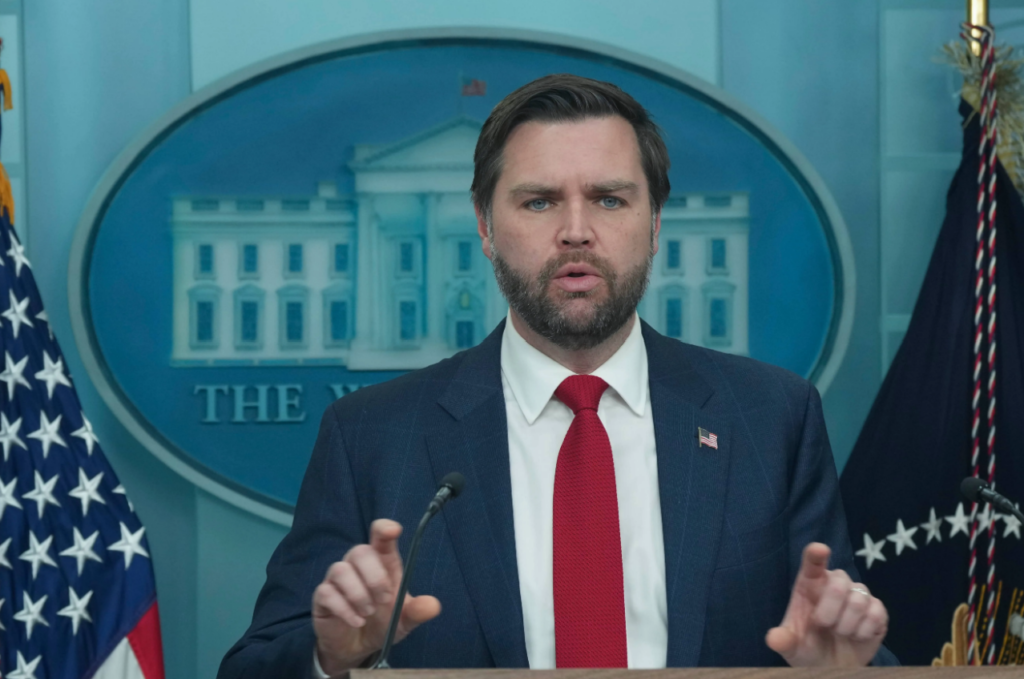
| 🇺🇸 JD Vance, Vice President of the United States — Head of Delegation | Born in 1984 in Middletown, Ohio. Former Marine Corps combatant in Iraq (2003-2005). Law graduate from Yale (2013). Author of “Hillbilly Elegy” (2016). Senator from Ohio (2023-2025). Vice President since January 2025. | Vance is the most complex piece on the Islamabad chessboard. Iran demanded him as chief negotiator because it considers him a skeptic of military intervention in the Middle East—which is true. But Vance is also Trump’s most likely political heir, and any agreement he signs will affect his political standing in 2028. This makes him a negotiator with two simultaneous audiences: Tehran and the Republican electorate, especially the MAGA base. His performance in Budapest on April 8—attempting to explain the confusion over Lebanon with the comment that Sharif perhaps didn’t understand English well—reveals a politician who is more adept at narrative than technical diplomacy. For Iran, this is acceptable precisely because he wasn’t in Geneva in February; for the Iranians, he’s not one of “those who deceived us before bombing us.” |
| 🇺🇸 Steve Witkoff, US Special Envoy for the Middle East | Born in 1957 in New York. Real estate magnate. A personal friend of Trump since the 1980s in New York business circles. No formal diplomatic training. He negotiated the Abraham Accords in 2020 during Trump’s first term. Appointed special envoy to the Middle East in January 2025. | Witkoff is Trump’s “fixer”—the man who closes deals using the logic of real estate: price, margin, and signature. He led the three rounds of nuclear negotiations in Muscat, Rome, and Geneva (April 2025–February 2026) that ended with the outbreak of war while they were underway. Iran considers him, along with Kushner, responsible for having deceived Tehran in the pre-war negotiations—the Iranian equivalent of having been “betrayed.” The fact that he is going to Islamabad despite Iranian hostility toward him reveals that his presence serves Trump as a sign of continuity, even though in practice Vance will bear the brunt of the negotiations. |
| 🇺🇸 Jared Kushner, Informal Advisor to the President — Parallel Envoy | Born in 1981 in New Jersey. Trump’s son-in-law. Real estate mogul and businessman. Senior White House Advisor during the first term (2017-2021). Architect of the Abraham Accords (2020). Founder of Affinity Partners (investment fund). No current official position—role of “parallel envoy.” | Kushner’s presence in Islamabad is the most politically problematic element of the US delegation. Iran considers him directly linked to Israel—his family has historical ties to the State of Israel—and Iranian sources describe him as “an Israeli asset who dragged a president into a war he wants to abandon.” The fact that Iran explicitly demanded that Witkoff and Kushner leave the room in the final phase of negotiations on April 7—and that Washington complied—is the clearest indication of the Iranians’ aversion to Kushner. Nevertheless, he has demonstrated excellent political instincts and is a very skilled negotiator. |
| 🇮🇷 Moh. Bagher Ghalibaf Speaker of the Iranian Parliament — HEAD OF DELEGATION | Born on August 23, 1961, in Torqabeh (near Mashhad, Khorasan). Kurdish father, Persian mother. He enlisted in the Revolutionary Guards at age 19 during the Iran-Iraq War. He commanded the Imam Reza Brigade (1982) and the Nasr Division (1983-84). Commander of the IRGC Aerospace Force (1997-2000). Chief of the National Police (2000-2005). Mayor of Tehran for twelve years (2005-2017). Three unsuccessful presidential bids (2005, 2013, 2024). Speaker of Parliament since 2020. PhD in political geography. | Ghalibaf is not a diplomat—he is a general in civilian clothes. Foreign Policy portrayed him in March 2026 as “the Iranian Trump”: populist, nationalist, pragmatic in the media, and ruthless in power. But he is also a hardliner, and very, very corrupt. His record includes overseeing the crackdown on the 1999 and 2009 protests, signing the lethal fire order against the January 2026 demonstrators, documented municipal corruption scandals worth $3 billion linked to IRGC contracts, and luxury apartments in Istanbul in his family’s name. He arrives in Islamabad as the man who assumed strategic leadership of Iran after Larijani’s death—and who, on April 8 (as we reported in these pages before his rise to power), the first day of the ceasefire, had already declared negotiations for Lebanon “unreasonable” (sic). His presence guarantees the agreement and the voice of the IRGC. His track record suggests he will not be very willing to sign any capitulations. |
| 🇮🇷 Abbas Araghchi, Foreign Minister of Iran | Born on December 5, 1962, in Tehran, to a family of carpet merchants from Isfahan. He joined the IRGC at the age of 17 during the Islamic Revolution. He holds a degree in International Relations from the Iranian Foreign Ministry School and a PhD in Political Thought from the University of Kent (UK). He served as Ambassador to Finland (1999-2003) and Japan (2007-2011). He was Deputy Foreign Minister (2013-2021) and Deputy Chief Negotiator for the 2015 JCPOA under Zarif. He has been Minister of Foreign Affairs since July 2024. He is the author of the book “The Power of Negotiation” (2024). | If Ghalibaf is the IRGC’s enforcer, Araghchi is the delegation’s technical mastermind and the man who knows every detail of Western nuclear agreements. European diplomats who know him from the negotiations of the disastrous JCPOA agreement describe him as “serious, technically impeccable, and direct.” In his book, he wrote that the Iranian negotiating style is that of a bazaar: “patience and plenty of time,” but cautioning that “when you’re selling snow in the sun, haggling more than necessary is a loss.” This is the key to his negotiating personality: tough but pragmatic when time is running out. His doctorate from the University of Kent—which analyzed the intersection between liberal democracy and Islamic governance—makes him an interlocutor who speaks the conceptual language of the West without subscribing to its values. Israel and Pakistan protected him from attacks by removing him from their target lists. He arrives in Islamabad with the legitimacy of a survivor and the pragmatism of someone who knows that Iran’s time is limited. |
I.1. The dynamics of delegations: who really dominates
On the American side: the Vance-Witkoff-Kushner triangle
The US delegation presents an authority structure that is not what it seems. Vance is the nominal head and the interlocutor Iran has accepted. But Witkoff is the one who knows the record inside and out—every round of negotiations in Muscat, Rome, and Geneva—and who has direct, real-time access to Trump. Kushner provides the ties with Israel, which, paradoxically, are simultaneously his greatest asset (with Netanyahu) and his greatest liability (with Tehran). The triangle works: Vance is the public face, Witkoff provides the substance, and Kushner ensures synchronization with Israel. Iran rejects two of the three, but they are not in a position to impose the US delegation.
On the Iranian side: the Ghalibaf-Araghchi pincer movement
The Iranian delegation is a deliberately designed pincer movement. Ghalibaf represents legitimacy within the IRGC—no one can accuse a general with 39 years of revolutionary militancy of having capitulated. Araghchi brings the technical expertise and the language that Westerners understand: a PhD from Kent, a JCPOA negotiator, and a connoisseur of every detail of International Nuclear Law. Together, they form the most complete duo Iran could send: the hawk who guarantees there will be no excessive concessions, and the technocrat who guarantees there will be negotiations.
The question no source has yet been able to answer is whether Ghalibaf is traveling with the authority to reach a compromise—or merely to convey the maximalist positions of the Revolutionary Guard’s hardliners. If IRGC chief Ahmed Vahidi has not given Ghalibaf a mandate to sign an agreement, Islamabad will produce statements, not agreements.
I.2. The Hotel Serena as a setting: three rooms, three logics
The Islamabad negotiations are expected to proceed in the indirect format that has characterized all previous rounds: delegations in separate rooms, messages relayed by the Pakistani mediators—with Field Marshal Asim Munir, the all-powerful head of the Pakistani army, acting as de facto arbiter. Pakistan does not recognize the State of Israel. It has no troops in the Gulf. It shares a 900-kilometer border with Iran and has a historical debt to Washington. These characteristics give it a unique position—equidistant from both sides, without its own agenda on the substantive issues—which is what makes Pakistan the most suitable mediator at this time.
Vance’s room and Ghalibaf’s room will not be open to each other. Whatever reaches each delegation’s table will first pass through Munir’s filters. This filtering process—inevitable in indirect negotiations—is the greatest source of constructive ambiguity and also of dangerous misunderstandings. The precedent of April 7—three versions of the same agreement—originated precisely from this process.
II. NATO FACING THE ABYSS: SCENARIOS AND PROSPECTS OF A POSSIBLE US WITHDRAWAL
The most strategically significant news of April 8th wasn’t the ceasefire. It was the Wall Street Journal report, corroborated by multiple administration sources, that Trump is considering withdrawing or redeploying troops from NATO countries deemed “unsupportive” during the Iran-Contra conflict. Spain and Germany are at the top of the list. That same evening, Trump posted in all caps on Truth Social: “NATO WASN’T THERE FOR US WHEN WE NEEDED THEM, AND THEY WON’T BE THERE IF WE NEED THEM AGAIN.” He also added his usual threat regarding Greenland.
NATO Secretary General Mark Rutte, known in Europe as Trump’s “whisperer” for his skill in managing the transatlantic relationship, met with Trump on April 8. His public description of the meeting—”very frank and very open, between two good friends”—was the most diplomatic possible formulation of the fact that Trump conveyed his “disappointment” with the Alliance. Rutte later acknowledged to CNN that Trump is “clearly disappointed with many NATO allies.”
The following is an analysis of the four possible scenarios and their consequences for global security and the unresolved Gulf conflict.
| SCENERY | DESCRIPTION | STRATEGIC CONSEQUENCES |
| A — Complete withdrawal from NATO (“America First” total) PROBABILITY: ~8% | Trump is withdrawing the US from NATO, either formally or de facto, by removing all troops from Europe. This requires either congressional approval—which will likely be blocked—or an executive order that the courts could overturn. | Immediate collapse of conventional deterrence on the eastern flank. Russia advances in Ukraine. The Baltic states are exposed. China accelerates its presence in the Indo-Pacific. Point 7 Iran becomes geopolitically viable. This scenario simultaneously benefits Moscow, Beijing, and the IRGC. |
| B — Partial withdrawal, De Gaulle type (withdrawal from the integrated military structure) PROBABILITY: ~25% | As France did in 1966 under De Gaulle—withdrawing from NATO’s integrated military command structure but maintaining political membership—the US is withdrawing its troops from “disloyal” countries and redirecting deployments towards more subservient allies (Poland, Romania, Baltic states, Greece). | It fragments the European defensive architecture without formally breaking it up. It creates a two-speed NATO: the “loyal” bloc (Poland, Baltic states) with a reinforced presence and the “disloyal” bloc (Spain, Germany, France) exposed to reputational reprisals and a reduction in its presence. Spain would lose Rota and Morón—NATO’s two most strategic bases on the southern flank. The European southern flank would be left with a significantly degraded missile defense. |
| C — Transactional renegotiation (NATO as a paying club) PROBABILITY: ~50% | Trump uses the threat of withdrawal as leverage to force all allies to increase their defense spending to 3-4% of GDP. Countries that support the war in Iran receive a reinforced presence; those that blocked it are pressured but not formally expelled. | This is the most likely and manageable scenario for Europe. In the short term, it leads to increased European defense spending—which is structurally positive—but at the cost of a more transactional NATO, less based on shared values. Spain must actively negotiate the continued operation of the Rota and Morón air bases by offering verifiable alternative contributions. |
| D — Reconfiguration towards the Indo-Pacific (NATO as a secondary theater) PROBABILITY: ~17% | The US maintains its NATO membership but transfers the bulk of its military resources to the Indo-Pacific to contain China. Europe becomes a secondary theater of defense with a reduced but not eliminated US presence. | This is the scenario that most favors China in the long term—which is the exact opposite of the Trump administration’s stated strategic objective. For the Gulf, it produces the same effect as a partial withdrawal: the US presence fluctuates according to the Asian agenda, and point 7 on Iran gains political plausibility. |
II.1. The case of Spain: between sovereignty and strategic responsibility
Spain blocked the use of its airspace by aircraft participating in Operation Epic Fury—a sovereign and legally sound decision within the context of a war not sanctioned by the UN Security Council. However, the Iranian threat that motivated this war is real, permanent, and imminent, which considerably nuances the debate about the legality of the military response. Spain may legitimately choose not to participate in an operation whose legality it questions; it cannot ignore the threat that prompted it.
The practical consequences of closing or downgrading Rota and Morón would be devastating for Spain itself: Rota hosts the US 4th Destroyer Squadron—the backbone of NATO’s southern flank missile defense. Morón is AFRICOM and CENTCOM’s most valuable logistics platform in the Eastern Mediterranean and North Africa. Losing these bases would not only weaken the US—it would weaken the European southern flank, of which Spain is a part.
The correct path is that of the best Spanish diplomatic tradition: a calm defense of legal positions, an active offer of alternative contributions to collective security—including increased defense spending and participation in the missile defense of the southern flank—and frank dialogue with Washington on the terms under which the presence of the bases can continue to be mutually beneficial. The Rota and Morón bases are an asset of Spain, not a concession to anyone.
II.2. The dangerous convergence: Iran’s point 7 and Trump’s isolationist instinct
The most alarming strategic dimension of the moment is the convergence—uncoordinated, but functionally equivalent—between Iran’s demand in point 7 (withdrawal of all US forces from the region) and Trump’s isolationist push toward NATO. The IRGC doesn’t need Trump to do this deliberately. It is enough for transatlantic frictions to generate a dynamic of gradual withdrawal, simultaneously in Europe and the Gulf.
If this convergence materializes in either Scenario A or B, Iran’s oligarchic-jihadist regime will have achieved—as a side effect of a war intended to destroy it—what no military campaign could have accomplished: the erosion of the United States’ security commitment in the two regions where that commitment is most crucial to the world order. Russia and China are watching. They are the only net beneficiaries of both scenarios.
III. LEBANON: THE TRAGEDY OF A COUNTRY THAT ONCE AGAIN BECOMES THE BATTLEGROUND OF ITS OWN AND FOREIGN WARS
There is a truth that geopolitical analyses of the Iran-Iraq conflict tend to silence for the sake of narrative convenience: the first and foremost victims of Hezbollah—and by extension, of Iran—in Lebanon are the Lebanese themselves. Before Israel, before the Gulf, before the international community, it is the citizens of Lebanon who pay with their lives, their homes, and their futures the price of their territory being the permanent battleground of wars they did not choose and that no legitimate Lebanese government has ever been able to fully control.
Lebanon is the Arab country with the most significant Christian presence in the Middle East. It is also the only Arab country where sectarian coexistence—albeit fragile and often broken—has produced a distinct political culture, a cosmopolitan intellectual class, and a civil society of a vitality that no other Arab state has managed to replicate. It is precisely this uniqueness that Iran and Hezbollah have held hostage since 1982—the year the IRGC created Hezbollah in occupied Lebanon, funding and training it, as an instrument of the Shiite revolution and as a permanent weapon against Israel.
The facts of the tragedy: 40 days of war in Lebanon
◆ More than 1,500 people have died since the start of the Lebanon War on March 2, 2026 — including a significant number of civilians, including women and children.
◆ More than 1.2 million displaced people—20% of the country’s total population—according to Lebanese authorities. A humanitarian catastrophe of biblical proportions for a country of six million inhabitants.
◆ April 8—the first day of the ceasefire between the US and Iran—was the deadliest day of the Lebanon War: 254 people were killed in ten minutes of Israeli bombing of central Beirut, the Bekaa Valley, and the south. “Operation Eternal Darkness” struck residential and commercial neighborhoods of Beirut without warning during the morning rush hour.
◆ Israeli evacuations now cover 15% of Lebanese territory. Israel occupies parts of southern Lebanon and has declared that its forces will remain there until the safety of Israeli citizens in the north is guaranteed.
◆ Hezbollah attacks have wounded more than 400 Israeli soldiers and killed twelve. They have launched thousands of missiles and drones at northern Israel—most intercepted, but enough to keep the population of northern Israel displaced.
The root of the tragedy: forty years of instrumentalization
Hezbollah is not a terrorist organization that spontaneously emerged from the Lebanese people. It is a creation of the Iranian IRGC—founded, financed, armed, and trained by Tehran since 1982 as an instrument for exporting the Shia revolution and as a vector of constant pressure on Israel. In four decades, Hezbollah has achieved something no other non-state actor has managed in the modern world: becoming simultaneously a political party with parliamentary representation, a network of social services (hospitals, schools, infrastructure), a military force with the capabilities of a regular army, and a terrorist organization with international reach.
This multiplicity of roles gives Hezbollah extraordinary resilience in the face of attacks: destroying its military infrastructure does not destroy its social network; killing its commanders does not destroy its political structure. And each Israeli attack on Beirut generates the dual effect the IRGC needs: real damage to Hezbollah’s military capabilities, and a narrative of victimization that consolidates its social base and justifies the continuation of the war in the eyes of the Iranian domestic audience.
Lebanon is, in this sense, the most sophisticated laboratory for the IRGC’s strategy: using an entire country—its territory, its population, its infrastructure—as both a shield and a lever. It is a ruthless strategy. It is also extremely effective.
The situation as of April 10: between ceasefire and implosion
At the time of writing, Israel has declared its willingness to begin direct negotiations with Lebanon—separate from the Islamabad process—to stabilize its northern flank. Netanyahu has conditioned any agreement in Lebanon on the full implementation of UN Security Council Resolution 1701 (2006): Hezbollah’s withdrawal north of the Litani River, the deployment of the Lebanese army in the south, and an end to rearmament. These are the same conditions that have been systematically violated since 2006.
Lebanese Prime Minister Nawaf Salam—an international jurist elected in January 2026, with no ties to Hezbollah, and the most serious leader Lebanon has had in decades—condemned the Israeli attacks as “war crimes” and called for Lebanon’s inclusion in any regional agreement. His voice carries moral weight. His ability to impose solutions is limited as long as Hezbollah remains the most powerful armed actor in the country.
The only sustainable way out for Lebanon is not military—neither side has the capacity for a decisive victory over the other. It is political and hinges on three simultaneous conditions: the cessation of funding and arming of Hezbollah by the IRGC (which can only occur as a result of a comprehensive agreement with Iran); the genuine and verifiable implementation of Resolution 1701; and the consolidation of the Lebanese army as the sole legitimate armed force in the country. All three conditions are unattainable without an agreement in Islamabad that includes Lebanon. And that is precisely the vicious cycle the IRGC has created.
IV. THE IRANIAN LINK: FROM LEBANON TO HORMOUZ AND BACK — CONSEQUENCES OF THE STRAIT CLOSURE
In less than twelve hours after announcing the ceasefire, the IRGC activated the most revealing chain of moves in its negotiating strategy: it linked the Strait of Hormuz to Israeli attacks in Lebanon, closed the Strait in retaliation, and declared the ceasefire “unreasonable” before its own negotiators had even arrived in Islamabad. It is a remarkably sophisticated lever-and-pull maneuver—and its economic and geopolitical consequences are what define the true scope of the two-week pause.
| DIMENSION | FACTS AND FACTS | CONSEQUENCE ANALYSIS |
| Suspension of Hormuz traffic on Day 40 (April 8) | Only 11 ships transited the canal on Wednesday, April 8—down from approximately 100 per day under normal circumstances. Iran suspended transit in response to Israeli attacks in Lebanon. Fars published maps of alternative routes to avoid mines in the main canal. | Crude oil, which had fallen below $100 after the ceasefire announcement, began to recover. Energy markets closed Wednesday with maximum uncertainty. Global airlines reported that jet fuel costs will not return to normal levels for months. |
| The Iranian toll: $2 million per ship as an operational policy | Iran is effectively charging between $1 million and $2 million per vessel—with supertankers carrying up to 3 million barrels—as a condition of passage. The maritime intelligence agency Windward confirmed the payments. Fars spoke of “mandatory coordination with the Iranian Armed Forces.” | On an annual basis, with 100 ships per day at $2 million each, the IRGC would be capturing $73 billion annually in transit revenue. This transforms the closure of the Strait of Hormuz from a military tactic into a permanent business model. This is precisely what point 6 of the Iranian proposal aims to institutionalize. |
| Naval mines: the silent threat that goes unmentioned | The alternative routes published by Fars to avoid the main channel imply the existence of naval mines or a credible threat of their presence. Three crew members of a Thai-flagged freighter—sunk on March 11—were confirmed dead on April 8. | Naval mines are the most difficult weapon to neutralize in the Strait. Their removal requires sweeping operations lasting weeks to months, posing risks to demining teams. The EIA (U.S. Energy Information Administration) warned that even if the Strait is formally reopened, it will take months for traffic to recover to pre-conflict levels. |
| Global economic consequences: the cumulative cost | Oil was trading at $117 a barrel before the ceasefire announcement. East Asian economies—Japan, South Korea, and China—are the most affected by the closure of the Strait of Hormuz, as they rely on the Gulf for 70-80% of their crude oil imports. South Korea has been directly impacted for five weeks. | The cumulative closure of the Strait of Hormuz over 40 days has removed the equivalent of 10% of global liquid hydrocarbon production from the international market, according to Russian Prime Minister Mishustin. The International Monetary Fund revised its global growth forecasts downward by 1.2 percentage points. |
| The Gulf paradox: the GCC pays for the closure of a Strait that is also its own. | The GCC states export their oil through the Strait of Hormuz—the same strait that Iran has closed as a weapon of war. Saudi Arabia has activated the East-West pipeline (capacity of 5 million barrels/day) as an alternative, but it is insufficient to cover the total volume of Gulf exports. | The structural irony of the conflict: the weapon Iran uses against the world is also a tourniquet on its own exports—and those of the GCC. This explains why the IRGC maintains a selective, not total, closure: it needs the Strait for its own revenue as much as the world needs it for its own. |
IV.1. The strategic logic of selective closure
The IRGC does not completely close the Strait of Hormuz—it closes it selectively. Pakistan has been allowed to allow ships to pass without restrictions. Countries that have “coordinated” with the Iranian armed forces have been granted passage. Those that have not paid the toll or requested permission have been blocked or forced to use longer and more expensive alternative routes.
This selectivity is key to the model: the IRGC is not simply closing a strait—it is building, in real time, the system of “mandatory coordination” that point 6 of its proposal aims to permanently institutionalize. Each day of selective closure is a day of training the international market to accept that passage through the Strait of Hormuz requires Iran’s permission. If this habit takes hold for two weeks—the duration of the ceasefire—Islamabad will find a fait accompli that will be difficult to dismantle.
IV.2. The legal trap of “coordination”
Araghchi’s formulation—”safe passage through coordination with the Iranian Armed Forces and taking into account technical limitations”—is a masterpiece of active legal ambiguity. Before the war, transit through the Strait of Hormuz was governed by the innocent passage regime of the International Law of the Sea (UNCLOS, Articles 17-32): no vessel in transit on the high seas needs permission from any coastal state. The Iranian formulation unilaterally transforms that right into a privilege that Iran grants and can revoke.
If Islamabad accepts—even implicitly, even as a “transitional measure”—Iranian “coordination” as a condition for transit, it will have produced the greatest erosion of the Law of the Sea since the Suez Canal crisis of 1956. This is precisely what the IRGC needs: not the military victory it has failed to achieve, but international legal recognition of its control over Hormuz. With such recognition, point 6 of its proposal ceases to be a maximalist demand and becomes an acquired right.
IV.3. The implications for GCC states: twice victims
The GCC states are doubly victimized by this conflict: first, as direct targets of the criminal attacks by the oligarchic-jihadist regime—refineries, desalination plants, airports, and ports, from Kuwait to Oman—and second, as dependent on the very Strait that Iran uses as a weapon. Saudi Arabia has the East-West pipeline as a partial alternative (with a capacity of 5 million barrels per day, insufficient to cover total Gulf exports). The UAE and Qatar have no alternative.
The UAE’s position in this context deserves special attention. Abu Dhabi has explicitly demanded that the final agreement address “the full range of Iranian threats, including its nuclear capabilities, ballistic missiles, drones, and proxies,” putting an end to “threats to freedom of navigation and economic warfare and piracy in the Strait of Hormuz.” This is the most direct formulation of its minimum conditions by any GCC state—and it aligns precisely with this report’s analysis of what a reasonable agreement should include.
V. EDITORIAL COMMENTARY
April 10, 2026—Day 41 of Operation Epic Fury—is the day the delegations arrive at the Serena Hotel. It is also the day the reality of what is about to be negotiated collides head-on with the narrative of what is supposedly already agreed upon. Trump said that “almost everything” is agreed upon. Ghalibaf said the ceasefire is “unreasonable” (sic). Both statements are true from the perspective of their respective audiences. Neither describes what is actually happening in the rooms of the Serena.
What is really happening is this: two delegations with opposing mandates, separated by decades of structural mistrust, mediated by a country that cannot force either side, are negotiating a text with three incompatible versions, under the simultaneous threat of Lebanon, the Strait of Gibraltar, and NATO. Any one of these three variables could collapse the process before it produces a single line of substantial agreement.
However—and this is the central paradox of Islamabad—the alternative to the process is worse than the process itself. Without Islamabad, the IRGC has all the time in the world to reconstitute itself under the ceasefire umbrella while Ghalibaf declares the negotiations “unreasonable.” With Islamabad, there is at least a chance that the framework will produce something verifiable regarding nuclear weapons, the Strait, and terrorist organizations. It is a small chance. It is the only one that exists.
The GCC states—Bahrain, Kuwait, Qatar, Saudi Arabia, the UAE, and Oman—cannot be mere spectators in this process. Their interests are more directly at stake than those of any other actor, including Israel. The Emirati demand that the agreement encompass the full range of Iranian threats is the right starting point. What follows is sustained diplomatic pressure to prevent Islamabad from producing a text that grants Iran what the IRGC has been unable to achieve in forty days of war: international recognition of its regional hegemony.
The delegations are in the Serena. The windows are open. The time remaining to use them is exactly as long as it takes Ghalibaf to receive from Vahidi the mandate he does not yet have—or to leave without it.