Gustavo de Arístegui,
May 29, 2026
I. BRIEF INTRODUCTION
This May 29th, the negotiations between the United States and Tehran’s dictatorial and mafia-like oligarchy are hanging in the balance, always on the verge of collapse. We are witnessing yet another perfect example of what I have termed a “contained systemic fracture,” that state in which the great powers seem to peer over the abyss, gauge the fall, and, at the last moment, ease off the gas without having resolved anything fundamental. In the Strait of Hormuz, they fire on each other and sit down to talk on the same day; in southern Lebanon, Israeli aircraft attack the terrorist organization Hezbollah. Beirut buries its civilians.
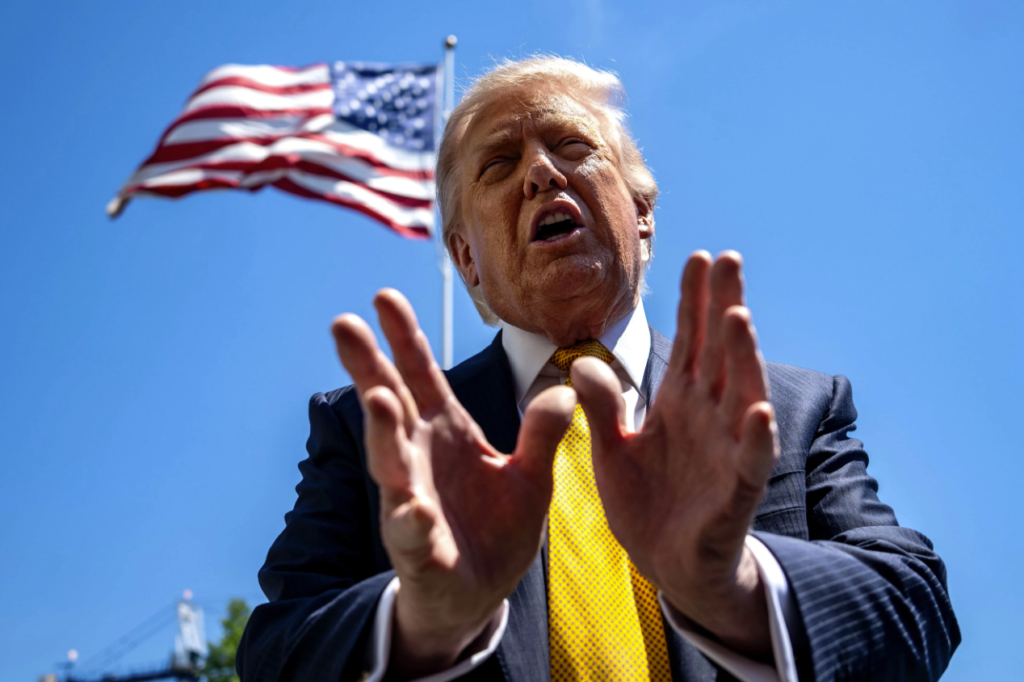
In Washington, the public conversation is no longer about the war, but about the president’s stock market dealings and a two hundred and fifty dollar bill with his image on it.
Meanwhile, on the flanks neglected by the media—and this analyst insists that this is precisely where the century is being shaped—Ukraine is turning its drone industry into diplomatic currency, and China is once again testing the waters in the Indo-Pacific, taking advantage of the fact that the American colossus is looking toward the Gulf. It is a portrait of an era without statesmen of the highest caliber, in which short-termism and impulsive actions replace strategy. Let us review, with our usual rigor and without compromise, the six news stories that have truly shaken things up.
II. MOST IMPORTANT NEWS OF THE LAST 24 HOURS
1. Hormuz: fire and negotiation on the same day; the Iran deal, “largely closed” but without Trump’s signature
Facts
In the early hours of Thursday, US and Iranian forces exchanged fire near the Strait of Hormuz. US Central Command (CENTCOM) confirmed that Iran launched a ballistic missile at Kuwait—which was intercepted—and that the Iranian Revolutionary Guard Corps (IRGC) attacked a US air base. Washington responded by striking drones and an Iranian launch site around the strait. Despite this, Vice President Vance spoke of “progress,” and Treasury Secretary Scott Bessent claimed to have received assurances from Oman that it would not impose tolls on transit through Hormuz, after having threatened Muscat with sanctions hours earlier. President Trump, true to form, insisted that he remains “not satisfied” with the terms of the memorandum of understanding (MOU) and denied the Iranian version that the draft agreement includes the withdrawal of US forces and the end of the blockade of Iranian ports.
Implications
We are facing the clearest example of a “variable-temperature war”: a low-resolution conflict with extremely high destructive capacity, one that no one can win and no one can afford to lose. The contradiction between Tehran’s and Washington’s statements regarding the content of the MOU reveals that there is still no agreement worthy of the name, but rather a choreographed display of gestures for their respective domestic audiences. And here, the paradox of decapitation reappears in all its force : with the one who could impose internal discipline eliminated, the Revolutionary Guard triumvirate—all of them ultraconservatives—lacks the authority, rank, and personality necessary to force their peers to accept concessions.
Perspectives and scenarios
Scenario A (high probability): The ceasefire remains in place, with intermittent skirmishes and a semi-open Strait of Hormuz sufficient to partially alleviate the energy crisis, but without a substantive agreement on the nuclear and ballistic missile programs. Scenario B (around 40%): A poorly calculated incident—a missile that goes unintercepted, a sunken platform—reopens the kinetic phase with immediate consequences for the price of crude oil. What I don’t foresee, because it would be wishful thinking , is a quick and orderly pacification: it won’t happen as long as power in Tehran remains fragmented.
2. Lebanon, martyred once again: Israel intensifies its offensive against Hezbollah and orders mass evacuations
Facts
The Lebanese Ministry of Health reported at least eleven deaths—including two children—from Israeli attacks on Thursday morning. A bombing of a building in Sidon left five dead and 21 wounded, while another attack south of Beirut killed a woman and two children. The Israeli army, which claims to have “precisely struck” targets belonging to the Hezbollah terrorist organization, issued evacuation orders for Tyre, Nabatiyeh, and dozens of other towns in the south, in one of the most intense bombing campaigns in recent weeks. The United Nations reports a rate of displacement exceeding that of 2024, with hundreds of thousands of Lebanese fleeing north once again.
Implications
Allow me, as I have written so many times and for reasons known to readers of my essay on Lebanon, to refrain from feigning sentimental neutrality in the face of yet another ordeal for this martyred state. Having said that, the analysis must be dispassionate: Hezbollah—not “the militia,” not “the group,” but the terrorist organization that it is, and each of its members a terrorist—has once again dragged Lebanon into a war not chosen by the Lebanese people, firing on northern Israel “in solidarity” with the Tehran oligarchy. President Aoun has even gone so far as to openly accuse Hezbollah of wanting to “collapse” the state and has expressed his willingness to engage in direct negotiations with Israel: an internal Lebanese fracture not seen with such starkness for decades.
Perspectives and scenarios
The big question is whether Washington, which through Secretary of State Marco Rubio has condemned Hezbollah’s call to overthrow the Lebanese government, will manage to contain the offensive before it destroys the country’s last remaining institutions. My prognosis is grim: as long as Tehran needs its Lebanese proxy as a bargaining chip in the Strait of Hormuz, Lebanon’s suffering will remain, for the regime, a expendable asset.
3. Ukraine turns drones into diplomatic weapons while negotiations remain frozen
Facts
Ukrainian Foreign Minister Andriy Sibiha argued that drone strikes on Russian territory could pressure Putin to end the war, and he touted his country’s capabilities in this area. Kyiv, which estimates it can produce up to $55 billion worth of defense equipment by 2026, although it only has funding for about $15 billion, is moving toward a major drone deal with the United States and has deployed interceptors and pilots to the Middle East to help US allies shoot down the same Iranian-designed Shahed drones that Russia is using against Ukrainian cities. Peace negotiations, however, remain stalled, with Washington preoccupied by its own war against Iran.
Implications
Here is one of those strategic paradoxes worth highlighting: the Iran-Contra affair, which has consumed American attention, has ultimately highlighted the value of Ukrainian expertise. Where President Trump once dismissed Kyiv’s prowess with arrogance—”we know more about drones”—the reality of the Gulf battlefield has taught us a lesson. Ukraine, which manufactures millions of FPV drones compared to the few hundred thousand produced by the American industry, has gone from begging for weapons to exporting technology. This is yet another example of how innovation is born of necessity, and how a serious Europe should already be integrating this experience into its own defense, as Baltic diplomacy rightly demands.
Perspectives and scenarios
I am, as I have said many times, only moderately critical of Trump’s foreign policy, except in the Russia chapter, where his transactional approach—based on intuition rather than principle—strikes me as a grave error. Easing sanctions on Russian crude while Moscow bombards Kyiv with missiles is rewarding aggression. I trust, as always, that the level-headedness of those around him, and particularly that of Marco Rubio, will ultimately prevail over this outburst.
4. Trump, under suspicion of corruption for his fund’s stock market operations, and a $250 bill with his face on it
Facts
The political conversation in Washington these days revolves around the corruption allegations stemming from the trading of individual shares in President Trump’s trust—an unprecedented practice for a sitting president in the modern era—and the revelation that the Treasury has taken steps to design a $250 bill featuring Trump’s likeness, which would be the first time a living person has appeared on U.S. currency. Treasury Secretary Scott Bessent confirmed the existence of a design. Democrats are calling it “stunning corruption” after the discovery of multimillion-dollar stock market transactions coinciding with presidential announcements on Iran; the White House denies it as “irresponsible.”
Implications
Here I must draw a line carefully, because this publication’s editorial line is clear: I wholeheartedly applaud Trump’s culture war against the “Wokism” movement and the excesses of the left, as well as many of his diplomatic successes—Cambodia-Thailand, Gaza, Azerbaijan-Armenia—but praise cannot become obsequiousness. Presidential stock market maneuvering and a banknote bearing his own image belong to the realm of excess, not statesmanship. This isn’t about making a spectacle of him: it’s about demanding consistency. A president who combats the moral decline of his adversaries is obligated to demonstrate exemplary integrity in his own conduct.
Perspectives and scenarios
With the November midterm elections on the horizon, these episodes will be ammunition for an opposition that, incidentally, is hardly setting a good example—the radical wing of the Democratic Party, those misnamed “democratic socialists,” and the Squad are waging their own internal civil war over stock trading. The risk for Trump is not immediate legal, but reputational and electoral.
5. The Indo-Pacific is on the move: China probes Dongsha while Washington looks to the Gulf
Facts
In late May, a Chinese Coast Guard (GCC) vessel entered the restricted waters off Pratas/Dongsha Island, prompting a response from Taiwan’s Coast Guard after a tense exchange of words. This move comes after the Trump-Xi summit in Beijing in mid-May and the US president’s troubling ambiguities regarding Taiwan. Indo-Pacific analysts warn of a potential “three-sea link”—the East China Sea, the Taiwan Strait, and the South China Sea—that could trigger a chain reaction.
Implications
I have been warning, report after report, that the true challenge of the century lies not in the Gulf but in the Indo-Pacific, and that we must be relentlessly vigilant regarding Chinese expansionism in the South China Sea, the Pacific, Africa, and Latin America, as well as its attempt to control strategic raw materials and rare earth elements. Beijing does not act impulsively, but methodically: it seizes upon every distraction of the American colossus to make its move. For Xi, Washington’s focus on the Strait of Hormuz presents a window of opportunity. It is worth emphasizing that the Sino-American rivalry is a systemic rivalry between an established power and an emerging one with incompatible models, not a rehash of the Cold War.
Perspectives and scenarios
I don’t expect an open strait crisis in the short term, but I do anticipate an intensification of gray-zone pressure: Coast Guard incursions, naval maneuvers, and a narrative war aimed at Taiwanese public opinion in the lead-up to the local elections. The fundamental question, as always, is whether the United States can sustain two simultaneous theaters of conflict without neglecting either.
6. The reset of global security: the Iran war accelerates regional alliances and rearmament
Facts
The Middle East conflict is accelerating a reset of global security cooperation, with defense alliances becoming more regionalized, spending targets increasing, and new arms procurement models emerging, from the Gulf to Europe and the Asia-Pacific region. In parallel, European states are racing to develop drone warfare capabilities in partnership with Ukraine, in a race for strategic autonomy that, however, does not in itself solve the problem of deterrence.
Implications
I cannot be lenient here. The mediocre and short-sighted political class of the 21st century—and especially a Europe incapable of taking its own defense, security, and destiny seriously—is once again late to the party. Only when the fire is at its feet does the continent discover that drones are half the answer and deterrence is the other half. The fact that the integration of the Ukrainian experience is being debated today at Baltic summits, and wasn’t implemented three years ago, is the precise measure of our strategic negligence.
Perspectives and scenarios
The trend toward regional alliances and increased spending is structural and will not be reversed; the question is whether Europe will use it to build real autonomy or to continue buying off other countries’ capabilities. As the reader knows, I remain an Atlanticist at heart and a staunch Europeanist—and for that very reason, relentless in my criticism of European inertia.
III. MEDIA RACK
Summary of the dominant editorial approach in the main newspapers and agencies of the last twenty-four hours:
| Media / Agency | Dominant editorial focus (24 h) |
|---|---|
| The New York Times/Washington Post | They focus on the domestic front: the presidential stock market operations, the $250 bill project and the corruption accusations occupy the front page; skeptical coverage of the “progress” in Hormuz. |
| The Wall Street Journal/CNBC/Bloomberg | Economic reading of the conflict: impact of the partial blockade of Hormuz on crude oil and inflation; the “largely closed” agreement as a market variable. |
| The Times / The Telegraph / The Guardian / BBC | British emphasis on the humanitarian dimension of Lebanon and on Ukraine’s drone capabilities; The Guardian, more critical of Israel. |
| Le Monde / Le Figaro / Libération / La Croix | Attention to the reset of European security and strategic autonomy; a concerned tone regarding the regionalization of alliances. |
| FAZ / Die Welt / Die Zeit | Focus on European rearmament and the Ukrainian lesson on drone warfare; debate on continental deterrence. |
| CNN / Fox News / CBS / PBS | CNN and PBS, minute-by-minute details of the exchange of fire in Hormuz and the MOU; Fox, emphasis on Trump’s negotiating firmness. |
| Times of Israel / Jerusalem Post / Haaretz | Intensive coverage of the offensive in Lebanon and Hezbollah’s drone attacks; Haaretz, more critical of the civilian cost. |
| Al-Jazeera / Al-Arabiya / An-Nahar / L’Orient-Le Jour | Lebanese newspapers emphasize the plight of the displaced and the Aoun-Hizbollah rift; Gulf newspapers highlight the demand to reopen Hormuz. |
| Reuters / AFP / AP / DPA | A factual and verified report of the exchange of fire, the Lebanese evacuations, and the Omani guarantees regarding Hormuz. |
| SCMP / China Daily / Global Taiwan Institute | SCMP and China Daily, reading of the Trump-Xi summit; GTI warns of Chinese probe over Dongsha as a new point of pressure. |
| Kyiv Post / Kyiv Independent / Ukrainska Pravda | Claiming Ukrainian drone capabilities and the “mega-deal” with Washington; putting pressure on Putin. |
| Foreign Affairs / The Economist / EIU / RUSI / IISS / CSIS | Background analysis: “contained systemic fracture”, reset of security alliances and systemic rivalry with China. |
IV. RISK TRAFFIC LIGHT
● Strait of Hormuz / Iran-US war (RED): active exchange of fire and unsigned agreement; high risk of kinetic reactivation and new energy shock.
● Lebanon / offensive against Hezbollah (RED): escalation to peaks, mass evacuations and Lebanese institutional fracture; no roof in sight.
● US domestic front / corruption and midterms (ORANGE): growing reputational erosion of the Executive; no immediate legal risk but with electoral cost.
● Indo-Pacific / Chinese pressure on Taiwan (ORANGE): Increasing gray area (Dongsha); no open crisis in the short term, but an upward trend.
● Ukraine-Russia / frozen negotiations (YELLOW): diplomatic stalemate with cross-bombing; the drone trump card revalues Kiev without unlocking peace.
● Global security reset / rearmament (YELLOW): structural trend towards regional alliances and increased spending; both an opportunity and a risk for Europe.
● Successful presidential diplomacy (Gaza, Caucasus, Southeast Asia) (GREEN): consolidated assets that should be preserved against the drift of outbursts.
V. EDITORIAL COMMENTARY
If the day we’ve just analyzed teaches us anything, it’s that we live in an era of gestures without strategy. In Hormuz, shots are fired and negotiations take place at dawn, not because a plan exists, but because neither side has been able to construct one: Tehran’s leaderless and fragmented dictatorial and mafia-like oligarchy has no one to sign off on; and Washington, caught between the president’s haste and the prudence of those around him, can’t seem to decide what it wants. I’ve maintained this since the first day of this war, and I reiterate it unequivocally: I have been and remain in favor of strikes against the Iranian regime, but I am and will continue to be extremely critical of the complete lack of planning for the day after—for the moment when the regime gives in or implodes. Without such a plan, military victory becomes a power vacuum, and a power vacuum, as we know, is the prelude to chaos.
Lebanon is bleeding again from a war it did not choose, dragged into the fray by a terrorist organization whose members are all, individually, terrorists, and which serves Tehran’s interests at the expense of Lebanese civilians. President Joseph Aoun’s accusation that Hezbollah seeks to subjugate the state marks a point of no return, the full extent of which we have yet to grasp. And while the Middle East basks in all the light, in the shadows China is making its move in Dongsha, and Ukraine is once again offering us a lesson in innovation that Europe stubbornly refuses to learn.