Gustavo de Arístegui,
June 8, 2026
I. BRIEF INTRODUCTION
On June 8, 2026, the stark reality of the situation brooks no euphemisms. The armistice between Iran and Israel in early April was never a true peace, but a fragile truce over a smoldering ember. I have maintained this from the very beginning—as I stated in my column in La Razón, “The Armistice No One Has Won (So Far)”—and last night’s events unfortunately prove me right: for the first time since that ceasefire, Iran launched a barrage of ballistic missiles against Israel, and Israel responded by attacking military targets on Iranian territory. We are, once again, facing a war of fluctuating intensity in which neither side can fully win nor afford to lose completely.
Four additional axes underpin today’s analysis: the geo-financial escalation represented by a dollar at a two-month high and a Federal Reserve shifting toward monetary tightening after spectacular employment data; the harassment by the Chinese Coast Guard east of Taiwan, which its Ministry of Defense describes as a “provocative act” and “cognitive warfare”; the extraordinary moral and spiritual dimension of Leo XIV’s apostolic journey to Spain, which catalyzed a resurgence of faith whose depth deserves in-depth analysis today; and, finally, Peru, which went to the polls yesterday in a second round as momentous for the continent as Colombia’s was in its day. The sum of these news items paints, with unsettling clarity, the map of an international order under pressure—but also the outline of a horizon of hope that the world’s youth are beginning to demand.
II. MOST IMPORTANT NEWS OF THE LAST 24 HOURS
1. Israel and Iran break the ceasefire: the armistice that no one has won
Facts
On the night of June 7, Iran launched its first barrage of ballistic missiles against Israel since the ceasefire took effect in early April, in retaliation for an Israeli attack on the southern Beirut suburb of Dahieh, which killed two people and wounded about 20. Sirens sounded in northern Israel; air defenses intercepted at least three waves of projectiles, one of which targeted the Ramat David air base. The Islamic Revolutionary Guard Corps (IRGC) threatened “far-reaching” responses against all American and Zionist targets in the region if Israeli attacks in Lebanon continued. Israel responded by attacking military targets on Iranian territory.
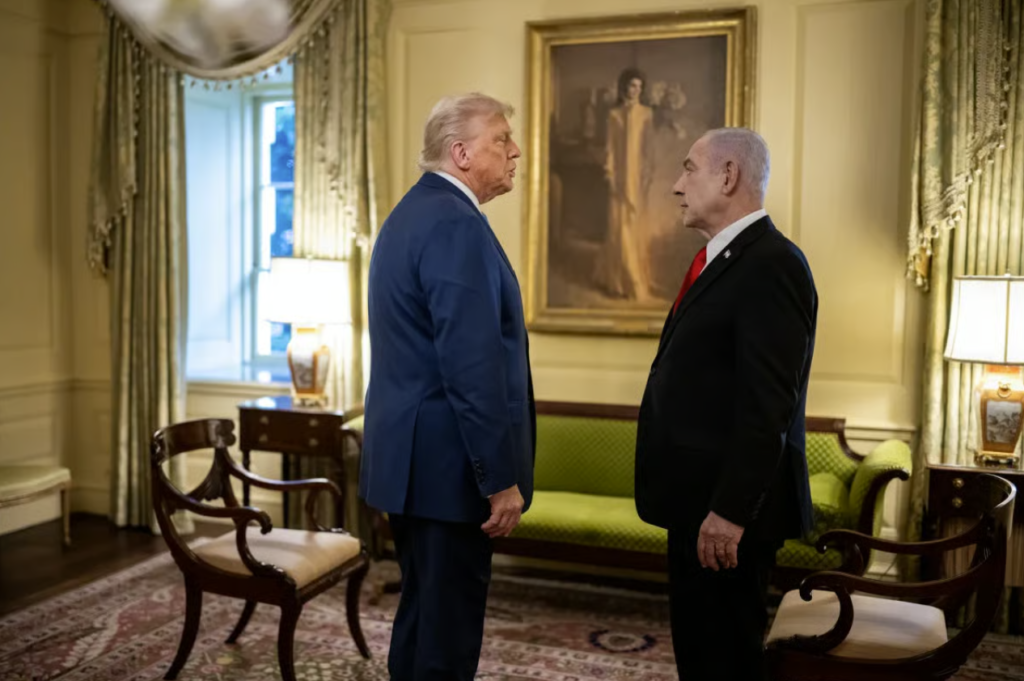
President Donald Trump told Axios that he would call Benjamin Netanyahu to urge restraint; hours later, he admitted to calling him “crazy” and accused Israel of complicating peace negotiations. Meanwhile, the U.S. Central Command is maintaining its naval blockade around the Strait of Hormuz—129 ships diverted since its inception—and Hezbollah, the Lebanese terrorist organization, has rejected the ceasefire agreement negotiated between Lebanon and Israel under U.S. mediation.
Implications
This is precisely what I predicted in my article: the armistice resolved nothing because it couldn’t. The Decapitation Paradox operates here in all its starkness : the paradox lies not in the elimination of moderates—there were none to eliminate—but in the fact that the survivors, all of them ultraconservatives, lack the ideological authority, hierarchical rank, and dominant personality necessary to impose themselves on their peers and force the acceptance of negotiated concessions. Where Ali Khamenei could impose internal discipline solely through his moral and institutional weight, the IRGC triumvirate—Generals Vahidi, Zolghadr, and Rezaei—are equals without a mediator, although the bloodthirsty Vahidi holds a certain preeminence as head of the Revolutionary Guard. It is a paradox of governance, not of moderation.
Tehran’s jihadist oligarchy—never a “theocracy”—cannot rein in its subsidiary terrorist organizations because it no longer even controls itself; and Mukhta Khamenei, inexplicably called “supreme,” presides over a fragmented power structure in which no one can sign off on a concession without risking being devoured by their peers. In contrast, Trump’s policy suffers from the flaw I have been denouncing: a transactional improvisation with no plan whatsoever for the day after the regime collapses or implodes.
| “The armistice resolved nothing because it couldn’t: the Decapitation Paradox makes it impossible for the ultraconservative triumvirate of the IRGC, equals without a referee, to accept any concessions. There is no hidden moderate waiting to emerge; there is a power vacuum that blocks any real negotiated solution.” |
Perspectives and scenarios
In the most likely scenario—to which this analyst assigns a 40% probability—the combined pressure from Washington and the logic of mutual exhaustion lead to a new, fragile containment: the “contained systemic fracture” perpetuates itself without victory for anyone. A second scenario, equally plausible with another 40% probability, envisions a “war of variable temperature” that drags on gradually, with Hezbollah and the Houthis acting as low-intensity vectors and the Strait of Hormuz as a permanent hostage. The scenario of an uncontrolled regional war—20% probability—would require a miscalculation by the triumvirate without an arbiter, with unpredictable consequences, but it cannot be ruled out.
2. The dollar is at record highs, and the Federal Reserve is turning towards tightening.
Facts
The dollar reached its highest level in two months on Monday, boosted by spectacular US jobs data: 172,000 non-farm payrolls were created in May, well above expectations, with the unemployment rate at 4.3%. Markets have shifted their bets toward a Federal Reserve rate hike before the end of the year: the vast majority of major banks have already abandoned their forecasts of cuts. The yen is flirting dangerously with intervention levels. The year-on-year CPI for April jumped to 3.8%, the highest since May 2013, with the benchmark interest rate at 3.50%–3.75%. The yield on the 10-year Treasury note rose to 4.55%. The May CPI data will be released on June 10. The Federal Open Market Committee (FOMC) meets on the 16th and 17th, its first meeting under the new chairmanship of Kevin Warsh.
Implications
Geoeconomics and geopolitics are inexorably intertwined: the war against Iran and the ongoing threat to the Strait of Hormuz are putting pressure on oil prices and, consequently, on a persistent inflation rate. A tightening of monetary policy by the Fed strengthens the dollar, makes global financing more expensive, and hits emerging economies and a rudderless Europe. Added to this is a factor that this column cannot endorse: Trump’s tariff protectionism, contrary to the international free trade championed by the incomparable Reagan—the best US president of the second half of the 20th century—fuels price pressures and eliminates all predictability. Here, we trust, as always, that the wisdom of the system and of individuals like Secretary of State Marco Rubio will ultimately prevail.
Perspectives and scenarios
In the most likely scenario—55% probability—the Fed maintains rates in June but tightens its forward guidance, supporting the dollar and putting pressure on emerging markets. With a 35% probability, persistent inflation forces a rate hike before year-end, which could exacerbate tensions in fixed-income markets. The scenario of a turn toward a rate cut—10% probability—would require a sharp deterioration in employment or an external shock that reverses the current momentum.
3. China harasses Taiwan: “provocative” patrols east of the island
Facts
Taiwanese Defense Minister Wellington Koo on Monday denounced Chinese Coast Guard (GCC) patrols east of the island as a “provocative act” and “cognitive warfare,” warning that the military would closely coordinate its response with the Taiwanese coast guard. Beijing’s actions followed an announcement by Japan and the Philippines that they would begin formal talks to demarcate their maritime borders in waters that China considers its own. On Saturday, Chinese state media announced a “special law enforcement operation on maritime traffic” east of the island; Taiwan claims to have “expelled” four Chinese vessels from restricted waters near its southwest coast. Koo described the operation as an attempt to “sling a large web” over those waters.
Implications
We are witnessing a new turn of the screw in Chinese expansionism in Asia, executed with the patience of a salami ploy and cloaked in lawfare: Beijing is invoking the UN Convention on the Law of the Sea (UNCLOS) to claim exclusive economic zones and continental shelves where it has never before operated systematically. We must be, as we are, especially vigilant regarding China’s advance in Asia, in the South China Sea, in the Pacific, in Africa and Latin America, and its determination to control strategic raw materials and rare earth elements—China controls between 75 and 80 percent of global production and 95 percent of refining capacity. This maneuver is also a test of tripartite cohesion for Japan, the Philippines, and the credibility of US deterrence in the Indo-Pacific.
Perspectives and scenarios
The most likely scenario—55%—is the normalization of coercion in the gray zone: Beijing consolidates patrols as the new de facto status quo without any power willing to impose a real cost. With a 30% probability, a skirmish or incident between coast guards sharply escalates tensions in the strait without leading to open war. The scenario of a larger crisis in the Indo-Pacific—15% probability—would require the standoff to draw in third-party powers beyond the bilateral framework, igniting a regional conflict.
4. Leo XIV in Spain: the resurgence of faith and the legacy of a deeply spiritual pope, a true moral beacon and very approachable
Facts
The apostolic journey of Leo XIV to Spain—from June 6 to 12, the first by a pontiff in fifteen years—under the motto “Lift Up Your Eyes,” possessed an extraordinary spiritual depth. Received by King Felipe VI and Queen Letizia at the Royal Palace in Madrid, the Pope urged against “fanning the flames of polarization” in a politically turbulent country. The most powerful image of the day was the prayer vigil in Lima Square before half a million young people, to whom Leo XIV delivered a disarmingly simple message: “Be human, men and women of flesh and blood,” and “You can change history; do it with love.” The actor Antonio Banderas, from Málaga—who the previous day had produced and directed a performance of the musical “Godspell” on that same vigil—spoke on Sunday at the Movistar Arena, transformed into a modern “Courtyard of the Gentiles,” at an encounter between faith and contemporary culture, and delivered a memorable confession: “I am under God’s spell.” At the Corpus Christi Mass in Cibeles Square, the Pope warned that faith cannot become a “museum of the past.”
Implications
What is truly newsworthy is not the protocol or the intense agenda packed with momentous events, but the resurgence of spirituality and faith that these days have brought to the surface with a vitality that many analysts believed to be extinct. Half a million young people gathered of their own volition in a square (not forgetting the impressive multitude of more than 1.2 million faithful gathered with complete devotion and faith in the area surrounding the Plaza de Cibeles) refute, in one fell swoop, the narrative of a dying Church and a generation numbed by noise. And they do so drawn not by an institution, but by a person: the singular imprint of this Pope—his warmth, his profound spirituality, his approachability, his wisdom, and his brilliant moral beacon—exerts a moral and ethical authority that goes far beyond believers and has become a point of reference for all humanity. This influence is much deeper and more lasting than any political or institutional power. Leo XIV has revealed himself as a moral and ethical beacon for believers and non-believers alike; The extraordinary significance of his messages transcends the ecclesial sphere and reaches the very core of a generation that, in the midst of a cultural battle against relativism and superficiality, is grateful to finally find a guiding light, a moral leadership deeply rooted in example, faith, and respect for the principles of morality and values common to all humanity.
| “Half a million young people in Lima’s Plaza de Mayo is not a statistic: it is irrefutable proof of a resurgence of faith and spirituality that the relativism of our time had tried to bury prematurely. That is the most significant news story of the week.” |
Background reflection
It is worth pausing here because what we have seen in Madrid is not an anecdote, but a symptom of a civilization that has not lost its thirst for meaning, even though it has been pretending otherwise for years. In an era that has confused freedom with the absence of all limits and maturity with cynicism, the fact that half a million young people respond with enthusiasm to a call to “be human” reveals a profound hunger that neither consumerism, nor screens, nor the noise of social media can satisfy. The secret of this pontiff lies not in grandiloquence, but precisely in the opposite: in a closeness without condescension, in a wisdom and moral and ethical authority born of an authenticity that, in today’s intellectual and moral landscape, seems almost revolutionary. The legacy of Leo XIV is not institutional, but moral, spiritual, and rooted in respect for the most sacred rights common to all humanity, always defended with the utmost courage and respect. Therefore, it is a message of profound human, spiritual, and pastoral significance. That a missionary, seasoned for years in Peru, should today challenge an entire generation to change history “with love” is, in my opinion, the most hopeful event of recent years and a glimmer of hope in a landscape that grows ever bleaker in every respect.
5. The cry for peace: the messages of Leo XIV and the future of humanity
Facts
In his address to the King and Queen and the diplomatic corps at the Royal Palace, Leo XIV affirmed that “our era, shaken by terrible imbalances and conflicts, cries out from its depths for peace,” and acknowledged that this message “today seems naive to some and provocative to others,” when it should be “embraced by those who do not confine themselves to preconceived ideologies.” The Pope thanked Spain for its “faithful adherence to international law and multilateralism” and its “active commitment to peace and solidarity among peoples.” This gesture continues Leo XIV’s repeated appeals since the beginning of his pontificate—at New Year’s he asked for “building a year of peace by disarming hearts”—to put an end to the violence in the Middle East, in Ukraine, and in all the war zones that plague humanity today.
Implications
Amid three simultaneous conflagrations—Iran-Israel, Ukraine, and Gaza—the Pope’s voice gives shape and visibility to a yearning that humanity carries deep within, a yearning that politics, trapped in the domestic electoral cycle, often ignores: the profound and universal desire for peace. It is not a naive cry; it is the collective awareness that no society can survive indefinitely on hatred, perpetual war, and the collapse of the moral order. That it is young people who are embracing this message with the enthusiasm we have witnessed adds a decisive historical dimension: the future belongs to those who learn today that peace is not decreed, it is built, and that it needs credible witnesses. This analyst, however, cannot fail to point out a nuance that emotion should not obscure: true peace is not neutrality between aggressor and victim, and the Pope’s moral appeal does not absolve states from arming themselves with credible deterrence and political will. Ethical demands and real security are not contradictory: they need each other.
Background reflection
The significance of these messages for the future of humanity is measured on a scale that far exceeds the immediate situation. In a world that has lost its ethical compass—where cynicism masquerades as realism, indifference as prudence, and nihilism as intellectual sophistication—someone reminds us that human dignity is non-negotiable and that peace begins within each of us. The youth who fill the squares are not looking for slogans: they are looking for genuine hope, and they find it in a moral beacon that does not treat them with paternalism or condescension, but rather speaks to them with truth, with tenderness, and with an authority born from the consistency between words and actions. Therein lies, in my opinion, the true geopolitical dimension of the week: in a time of wars of varying intensity, of leaders prone to outbursts and of institutions in crisis, the renewed commitment of millions of young people to a horizon of meaning and peace is, perhaps, the moral reserve on which, in the long run, the very security and cohesion of our societies depends.
6. Peru decides: the ballot box as the continent’s border
Facts
Peru held the second round of its presidential elections yesterday, June 7, between conservative Keiko Fujimori (Popular Force) and leftist Roberto Sánchez (Together for Peru), former Minister of Foreign Trade under the imprisoned former president Pedro Castillo. The first partial results from the National Office of Electoral Processes (ONPE) give Fujimori the advantage—around 52.7% compared to Sánchez’s 47.2%—with the count still underway and no final proclamation from the National Elections Board (JNE). The backdrop is challenging: Peru produces nearly 12% of the world’s copper, has a mining portfolio valued at approximately US$64 billion, is experiencing 2.8% growth and a poverty rate exceeding 33%, and has insecurity as its primary citizen concern. Some 45,000 military and police personnel ensured security throughout the day. This is Fujimori’s fourth consecutive second round, who in 2021 made unproven allegations of fraud.
Implications
We are facing elections as momentous for the Latin American continent as those in Colombia once were. In my view, the risk looming over Peru was that a revolutionary far-left project, inspired by Marxism-Leninism and a direct heir to Castillo’s legacy, would attain the presidency of one of the countries with the greatest strategic importance in the Ibero-American Pacific. I also want to emphasize a point of fairness: it is time to definitively separate Keiko Fujimori from the figure of her father—Alberto Fujimori has already paid for his excesses and crimes before the Peruvian justice system—and judge her on her own proposals and her own record. Underlying this process is an issue that transcends domestic concerns: the Chancay megaport and Beijing’s penetration of strategic sectors make the outcome a fork in the road between consolidating Peru as a partner of the West or drifting toward the orbit of Chinese geopolitical competition. Consistent with our staunch opposition to dictatorships of any kind in Latin America—and especially to the Chavista narco-dictatorship in Venezuela and the regimes in Cuba and Nicaragua—we will continue to follow the recount with the utmost attention and the ever-present risk of the narrative of fraud.
Perspectives and scenarios
In the most likely scenario—55% probability—Fujimori’s lead is confirmed in the final count, preserving the market-oriented economic model and Peru’s alignment with the West in the face of Chinese penetration. With a 30% probability, the margin narrows in the rural recount—the historical stronghold of Castillo’s regime—making the result contestable or even reversible, reopening the battle for legitimacy with all the institutional risks that entails. The scenario of a prolonged institutional crisis—15% probability—would once again trap Peru in the cycle of instability that has paralyzed it for the past decade.
III. MEDIA RACK
| HALF | EDITORIAL LINE / COVERAGE |
|---|---|
| Reuters / AP / AFP / DPA | News agencies are leading the coverage of the first missile exchange since the April truce: Reuters confirms the sequence—Israeli attack on Dahieh, Iranian salvo, Israeli response in Iran—and exclusively reports the IRGC’s threat to extend the attacks to “all US and Zionist targets.” AFP and AP add the Trump-Netanyahu conversation and the continuation of the Hormuz naval blockade. |
| The New York Times / The Washington Post / Axios | The New York Times and Washington Post frame the ceasefire breakdown as the most serious threat to the peace negotiations since their inception. Axios reports Trump’s admission of calling Netanyahu “crazy.” Washington Post adds Trump’s stance on potentially unfreezing Iranian funds “if they behave,” highlighting the erratic nature of his foreign policy. |
| Wall Street Journal / Bloomberg / Financial Times / CNBC | Combined coverage of the May jobs blowout and its impact on Fed expectations. Bloomberg details the rise in the 10-year Treasury yield to 4.55%, the weakening yen, and the pressure on emerging markets. The FT contextualizes Trump’s tariff protectionism as an additional inflation risk factor. |
| BBC / The Times (London) / The Telegraph / The Guardian | The BBC publishes a detailed analysis of the ceasefire breakdown and questions whether Pakistani diplomacy can rebuild the negotiating channel. The Times and The Telegraph address the implications for European energy security given the risk to the Strait of Hormuz. The Guardian dedicates space to the papal visit and the youth phenomenon in Madrid. |
| Le Monde / Le Figaro / Libération / Le Point / La Croix | Le Monde highlights the Iranian onslaught as confirmation of the failure of peace diplomacy. Le Figaro criticizes European strategic passivity in the face of the threat to Hormuz. La Croix and Le Point devote extensive coverage to Leo XIV’s trip to Spain, with particular attention to the youth vigil and Banderas’s speech. |
| FAZ / Die Welt / Die Zeit | The FAZ analyzes the Federal Reserve’s tightening policy shift and its implications for European fixed-income markets. Die Welt addresses the Chinese Coast Guard’s patrols east of Taiwan as a prime example of coercion in a gray area. Die Zeit publishes a report on the impact of the Strait of Hormuz blockade on German industrial supply chains. |
| CNN / CBS / Fox News / CNBC | CNN is broadcasting live coverage of the collapse of the Iran-Israel ceasefire. Fox News and CNBC highlight Trump’s firmness in refusing to accept Iranian nuclear concessions, though they point out the inconsistency of calling an ally “crazy.” CBS reports Hezbollah’s rejection of the Lebanese ceasefire agreement. |
| Haaretz / Jerusalem Post / Yedioth Ahronoth / Israel Hayom | The Israeli press agrees in presenting the Iranian attack as confirmation of the impossibility of trusting any truce with Tehran. Haaretz and Yedioth analyze the divisions within Netanyahu’s cabinet regarding whether and how strongly to respond. Israel Hayom gives voice to those who see the Iranian attack as the definitive justification for the military campaign. |
| Al-Jazeera / Al-Arabiya / Asharq Al-Awsat / Arab News | Al Jazeera presents the Iranian barrage as a “defensive response” to “Zionist aggression” on Beirut, a framing this column rejects. Al Arabiya and Asharq Al-Awsat are substantially more critical of the IRGC and warn of the consequences for Gulf stability. Arab News emphasizes the impact of the Hormuz blockade on Saudi hydrocarbon exports. |
| TASS / Russia Today | They present the breakdown of the ceasefire as a direct consequence of “Zionist-Western aggression” and systematically silence the Iranian terrorist threat in Europe. Russia Today—whose editorial line serves the interests of the Kremlin, not the truth—spreads falsehoods about alleged incitement of the Iranian internal protests by Mossad and the CIA. The duty of this platform is to expose these falsehoods with facts, not slogans. |
| South China Morning Post / China Daily / Global Times / CGTN | Chinese media portray the Coast Guard patrols east of Taiwan as “routine law enforcement” in legitimate defense of Chinese sovereignty. The Global Times invokes international law—the same UNCLOS that Beijing selectively violates in the South China Sea—to justify the operation. The contrast with Taiwan’s assessment is a prime example of cognitive warfare. |
| Clarín / El Mercurio / Reforma / Colombia One / AS/COA | Leading Latin American newspapers dedicate their front pages to the Peruvian runoff election. Clarín and El Mercurio analyze the geopolitical implications for the Pacific region. Colombia One reports in real time on the ONPE vote count, with Fujimori in the lead. AS/COA contextualizes the result within the framework of regional polarization between models of government. |
IV. RISK TRAFFIC LIGHT
| RISK LEVEL | RISK DESCRIPTION |
|---|---|
| 🔴 RED — MAXIMUM RISK | The Iran-Israeli ceasefire has collapsed. The first missile exchange since the truce in early April has occurred. The Decapitation Paradox blocks any genuine negotiated solution: the ultraconservative IRGC triumvirate lacks the authority to enforce internal discipline and accept concessions. |
| 🔴 RED — MAXIMUM RISK | The Strait of Hormuz and global energy security. The US Central Command has diverted 129 ships since the start of the naval blockade. Twenty percent of the world’s oil transits this waterway. This energy blackmail is structurally fueling global inflation. |
| 🟠 ORANGE — HIGH RISK | Iranian terrorist proxies: Hezbollah rejects the Lebanese ceasefire, and the IRGC threatens to launch attacks on “all US and Zionist targets” in the region. The Houthi terrorist organization maintains its capacity to disrupt the Red Sea. |
| 🟠 ORANGE — HIGH RISK | Federal Reserve tightening policy and putting pressure on markets. Robust employment (172,000 new hires in May) and a 3.8% CPI: the Fed under Warsh faces its first meeting on June 16-17 with market pressure to raise rates. Emerging markets and Europe are experiencing financial turbulence. |
| 🟠 ORANGE — HIGH RISK | China–Taiwan: Progressive Coercion in a Gray Zone. The Chinese Coast Guard operates east of Taiwan in response to the Japan-Philippines border demarcation talks. Salami-slicing expansionism in the Indo-Pacific: A Test for Washington’s Alliances. |
| 🟠 ORANGE — HIGH RISK | Chinese expansionism and rare earth elements. China controls 75–80% of global production and 95% of refining capacity. Its penetration of Latin America—the Chancay megaport, mining sectors, and infrastructure—is advancing faster than the Western response. |
| 🟠 ORANGE — HIGH RISK | Protectionism and international trade. Trump’s tariffs distort global supply chains, contribute to inflationary pressure, and contradict the free trade that this column defends in the Reagan era. |
| 🟡 YELLOW — MODERATE-HIGH RISK | Peru: Election results and challenges. Fujimori leads the preliminary count (~52.7%), but the precedent of 2021 and the polarization keep the risk of a challenge alive. The Chancay factor and Chinese influence heighten the strategic implications of the final result. |
| 🟡 YELLOW — MODERATE RISK | European strategic passivity and Spanish inconsistency. Europe continues to shirk its own defense. Spain maintains the contradiction of offering Rota and Morón as targets for the conflict while its government is more hostile to Washington than to Tehran in its public discourse. |
| 🟢 GREEN — STABILIZING FACTOR | Spiritual resurgence and moral beacon. The journey of Leo XIV and the response of half a million young people in Madrid represent the most encouraging factor of ethical and social cohesion of the day: the moral reserve that every civilization needs to sustain itself in the long term. |
1. EDITORIAL COMMENTARY
June 8, 2026, will confirm in the history books what had been foretold with crystal clarity: the armistice between Iran and Israel was, more than a truce, a postponement. Last night’s missiles are not an anomaly; they are the logical consequence of a Decapitation Paradox that Western optimism stubbornly refuses to acknowledge. When a command structure is decapitated without being replaced by an authority capable of imposing discipline, what remains is not a more manageable regime, but a hornet’s nest of ultraconservatives without an arbiter—the IRGC triumvirate—who are incapable of agreeing to the slightest concession for fear of appearing weak before their own peers. That is, today, the jihadist oligarchy of Tehran.
Faced with this, the power that should be leading the containment effort is improvising. I maintain my position, measured but firm: I am only moderately critical of Trump regarding his negotiations with third parties, and I acknowledge his undeniable diplomatic successes—Cambodia-Thailand, Gaza, Azerbaijan-Armenia—when he acts prudently and is advised by Marco Rubio. But I cannot help but lament the erratic and transactional drift—based on nothing more than intuition and impulsive outbursts—that leads him to call an ally “crazy” on the phone while lacking a serious plan for the aftermath in Iran. The White House is right in its diagnosis but too often wrong in its prescription. Marco Rubio remains the indispensable adult in the room; we trust that the system’s common sense will ultimately prevail.
Meanwhile, Beijing is playing its long game east of Taiwan with the cool demeanor of someone who knows that time, and rare earth elements, are on its side; markets are reeling from a Federal Reserve that discovers inflation cannot be tamed by tariffs; and Europe, once again, is looking the other way, incapable of taking its own defense, its own security, and ultimately, its own destiny seriously. Spain maintains the structural inconsistency that this column cannot fail to point out: Rota and Morón are active components of the conflict’s logistics, and yet the government presents itself to the world with a discourse of neutrality that borders on irresponsibility and reveals more hostility toward Washington than toward Tehran. The demand is not for maximalism: it is for basic consistency.
And yet, the image I take away from this day is not that of the crossfire over northern Israel, but that of half a million young people gathered in a Madrid square to listen to a man who asks them, with disarming simplicity, to “be human.” It is unwise to dismiss this phenomenon as a devotional interlude unrelated to geopolitics. In a time dominated by relativism, superficiality, and the cult of outbursts, this resurgence of faith and spirituality that Leo XIV ignited in Spain—and which the youth of the world are demanding with an intensity that analysts had not foreseen—is, in my opinion, the most significant underlying news of the week. The secret of this Pope lies not in pomp or institution: it lies in his warmth, his approachability, a wisdom that speaks to him directly, and the moral authority that emanates from one who consistently preaches what he lives. Leo XIV is a moral and ethical beacon for believers and non-believers alike; The extraordinary significance of their messages—the cry for peace from an exhausted humanity, the renewed commitment of a youth grateful to finally find a direction—points to something that strategists often forget: that the security and cohesion of nations ultimately rest on a moral reserve without which there is no deterrence, no alliance, no order that can be sustained.
Here, then, is the lesson of the day. In the Ibero-American Pacific, Peru reminds us that freedom is also defended at the ballot box, against the Marxist-Leninist revolutionary temptation and against the silent infiltration of powers that do not wish us to be free. Peace is not neutrality between the executioner and the victim, and the Pope’s moral outcry does not exempt states from arming themselves with deterrence and political will. But that this peace is once again desired—and desired by young people—is, perhaps, the only good news capable of lifting our gaze. The demand, it is worth emphasizing, is not one of maximalism: it is one of coherence, and also of hope.