
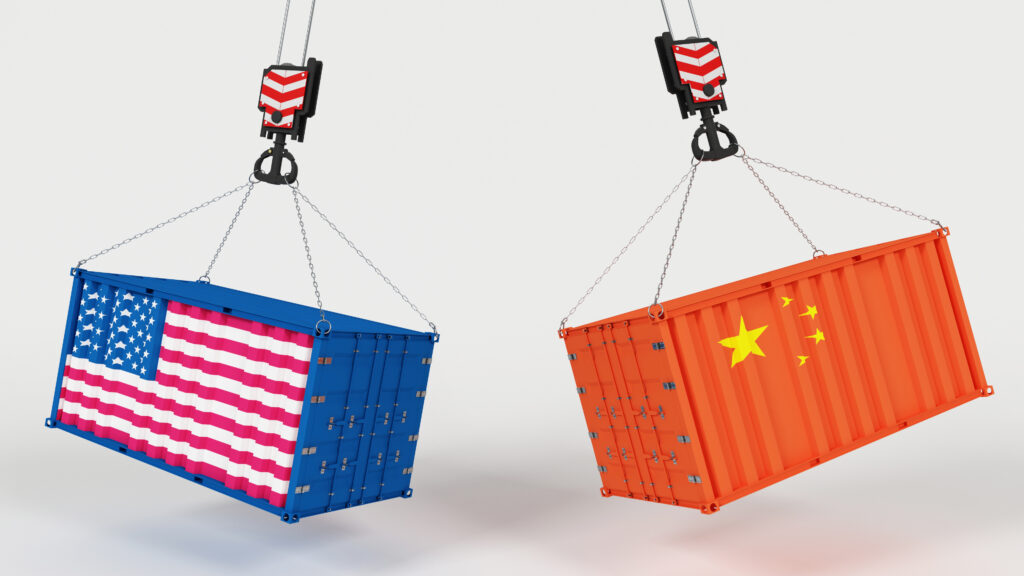
By Gustavo de Arístegui, as published by Tribuna Norteamericana.
July 01, 2025.
Gustavo de Arístegui
Career Spanish Diplomat
He joined the Foreign Service in 1989. He served as Deputy Chief of Mission at the Spanish Embassies in Libya (1991–1993) and Jordan (1993–1996), where he was also in charge, from Amman, of the Embassy in Iraq. In 1996 he was appointed Chief of Staff (Directeur de Cabinet) to the Spanish Minister of the Interior. In 2000 he was elected to Parliament, being re-elected in 2004 and again in 2008 (12 years in the National Parliament, the “Cortes Generales”). He served as spokesperson for Foreign Affairs for his parliamentary group and party during three legislatures. Arístegui was a member of the Spanish Government’s Committee on Religious Freedom (2000–2008), as an expert on Islamic affairs. He was Spain’s Ambassador to India, with concurrent accreditation to Bhutan, Nepal, the Maldives, and Sri Lanka.
He has written hundreds of articles for various Spanish and international publications, dozens of academic articles, and four books: Islamism against Islam (Ediciones B, 2004); Jihad in Spain: The Obsession with Reconquering Al-Andalus (La Esfera de los Libros, 2005); Against the West: The Emerging Anti-System Alliance (La Esfera de los Libros, 2008); Arab Crossroads: What Spain and the World Are at Stake (Singular, 2011).
**SYSTEMIC RIVALRY BETWEEN THE UNITED STATES AND CHINA:
A MULTIDIMENSIONAL ANTAGONISM IN THE 21ST CENTURY**
Gustavo de Arístegui
We are witnessing the most profound geopolitical reconfiguration since the end of the Cold War. The emergence of the People’s Republic of China as a global actor with ambitions to redefine the international order has placed the world before a systemic rivalry with the United States, the hegemonic power since 1945. This confrontation, far from being limited to a single domain, permeates all spheres of international interaction: economy, technology, resources, military projection, global narratives, and regional dynamics. Understanding its multiple dimensions is essential for strategists, diplomats, and citizens aware of its impact on the complex 21st century (Mearsheimer, Allison).
This analysis breaks down the main fronts of this struggle, its strategic implications, and future scenarios, integrating three previous texts to offer an exhaustive and rigorous narrative, supported by prestigious academic sources.
1
The Economic Heart of Discord: Confronting Models and Trade Wars
The rivalry between the United States and China has its epicenter in the economic sphere, where the world’s second-largest economy challenges U.S. primacy not only in scale but also in model. The “Chinese socialism,” a dirigiste system with state intervention, massive subsidies to strategic companies (many state-owned, known as SOEs), and control of the financial sector, contrasts with the free-market model championed by Washington (and much of the Western democracies, not all), although not always practiced without nuances (Naughton). This structural divergence generates persistent tensions that have redefined global trade.
The United States denounces unfair practices: dumping (selling below cost), facilitated by manipulation of the yuan downward in the international foreign exchange market (FOREX), theft, plagiarism, and systematic espionage of intellectual property on an industrial scale, non-tariff barriers, and subsidies that seriously distort competition (United States Trade Representative). China’s decision in 2025 to eliminate restrictions regarding intellectual property, de facto legitimizing the appropriation of Western innovations, has exacerbated the conflict. This move, which allows copying technical and scientific creations without legal consequences, has been described as a “strategic blow” against Western innovation (Segal).
The U.S. response, intensified since 2018 under the Trump Administration and continued with adjustments, has taken the form of a tariff war which, by the spring of 2025, reached tariffs of 145% on Chinese goods, with Chinese retaliation of 125% (WTO). This escalation has disrupted global supply chains, generated inflationary pressures, and polarized global trade, forcing third countries to navigate between two economic poles (Baldwin). The consequences include disruptions in sectors such as electronics and automotive manufacturing, as well as growing uncertainty for global investment. Bilateral negotiations, far from closing these chapters, have unfolded positively amid tensions and interruptions. Forecasts point to much more reasonable tariffs on both sides.
The technological struggle is an equally critical front. China has invested massively in artificial intelligence (AI), 5G networks, and semiconductors, challenging U.S. primacy (Kania). Companies such as Huawei and TSMC are emblematic of this race, where Beijing seeks not only self-sufficiency but global leadership. The paradox is striking: Washington, traditionally a defender of free markets, has adopted protectionist measures, such as restrictions on the export of advanced chips, while Beijing, with a model of state capitalism, depends on open markets for its exports (Farrell & Newman). The logic of “de-risking” (reducing strategic dependencies) is redefining trade and investment flows, eroding global interdependence and fostering economic fragmentation that threatens the stability of the multilateral system (Tooze).
2
The Geopolitics of Money and Resources: Influence and Strategic Control
China’s projection of power rests on its formidable financial capacity, with the Belt and Road Initiative (BRI) as its spearhead. This program, which spans more than 140 countries, finances infrastructure to secure markets, resources, and geopolitical alliances (Cai). Unlike Western aid, conditioned on governance and human rights criteria, China offers loans with fewer financial requirements, making them attractive to developing governments (Dollar), but with geostrategic and geoeconomic conditions that are not visible at first glance and end up becoming mortgages that are difficult, if not impossible, to manage. Nevertheless, this “debt diplomacy” has generated severe criticism. Countries such as Sri Lanka, which handed over the port of Hambantota to China after failing to meet loan payments granted to build it, or Zambia, trapped in a suffocating spiral of indebtedness, illustrate how these loans can lead to the loss of strategic assets and a certain—no minor—subordination of sovereignty to external debt with China (Hurley et al.).
As the world’s largest energy consumer, China competes fiercely for oil and gas, forging alliances with Russia, Iran, and Gulf countries.
Chinese sovereign wealth funds, such as the China Investment Corporation (CIC), complement this strategy, acting more as essential instruments than as mere components of it, investing in key sectors such as technology, logistics, port infrastructure, and energy (Shirk). These investments, often opaque, project influence in a subtle but effective manner, allowing Beijing access to critical assets without triggering immediate alarms, yet ultimately becoming an implacable claw from which debtor countries cannot free themselves. Moreover, China, as the second-largest holder of U.S. Treasury bonds, possesses a blunt financial weapon, although excessive pressure could also seriously damage the Chinese economy if it chose to sell U.S. bonds en masse. In contexts such as Africa and Asia, debt generates direct control, consolidating an implacable economic dominance, while seeking control over energy sources (oil and gas), strategic raw materials (lithium, copper, phosphates, uranium, titanium, vanadium), and even raw materials of which they are already primary producers.
World producers (77% of global graphite production, for example) seek to dominate the sources of their competitors, Madagascar and Mozambique being the second and third producers respectively (Ester, Brautigam). In fact, China has managed with enormous efficiency to secure mining rights (majority or exclusive, depending on the country) for strategic raw materials, as is the case with its agreements with Argentina, Bolivia, Chile, Afghanistan, or uranium in Niger and Namibia.
The battle for resources is another crucial front. As the world’s largest energy consumer, China competes fiercely for oil and gas, forging solid energy alliances (and others of a different nature as well) with Russia, Iran, and Gulf countries (Yergin). Its relationship with Tehran, a destabilizing actor in the Middle East, adds geopolitical tension, especially due to Iranian support for terrorist militias such as Hezbollah, the Houthis, or Hamas (Gause).
In the energy transition, China dominates the production of solar panels, wind turbines, and batteries, controlling 70% of supply chains for critical raw materials (lithium, cobalt, graphite) and 80% of the global rare earths market, essential for technology and defense. This dependence represents a strategic vulnerability for the West, which seeks to diversify sources and develop its own capabilities, an effort that, according to the International Energy Agency, is progressing with delay compared to China’s near-monopoly (IEA).
3
The Military and Maritime Chessboard: Disputed Seas and Accelerated Modernization
Economic rivalry is underpinned by an escalating military competition, where China is immersed in the most ambitious modernization of its armed forces in contemporary history. With aircraft carriers, nuclear submarines, sixth-generation fighters, advanced drones, and hypersonic missiles, Beijing seeks to erode U.S. superiority, at least in the Indo-Pacific, and to project power globally (O’Rourke). Its arsenal includes anti-access/area denial systems (A2/AD), designed to hinder U.S. intervention in its periphery, and a growing nuclear arsenal that, according to estimates, could reach 1,500 warheads by 2035 (DOD). In fact, an exponential increase in nuclear warhead production has been detected, as China seeks to match or even surpass U.S. or Russian arsenals.
The United States responds by reinforcing its capabilities and revitalizing alliances such as AUKUS (Australia, United Kingdom, United States), which includes the supply of nuclear-powered attack submarines, not missile-launching submarines, to Australia (of the Virginia class, something unprecedented in the history of U.S. military cooperation), and QUAD (Japan, India, Australia), a framework to counterbalance Chinese influence in the Indo-Pacific (White). However, China’s military projection, supported by a defense budget growing at an annual rate of 7%, is redefining the regional and global strategic balance (SIPRI), which could imply an exponential increase in tensions in the region with unpredictable consequences.
The Indo-Pacific is the epicenter of tension. In the South China Sea, China claims sovereignty over more than 90% of its waters, militarizing artificial islands in violation of International Law, generating skirmishes with the Philippines, Vietnam, and Malaysia, and prompting freedom of navigation operations (FONOPs) by the United States and its allies (Kaplan). Even more critical is the Taiwan Strait, where Beijing’s belligerent rhetoric and its refusal to rule out the use of force raise the risk of a direct conflict with potentially apocalyptic consequences (Shirk). A report by the Council on Foreign Relations estimates that a war over Taiwan could cost $10 trillion in global GDP, equivalent to 10% of the world economy (CFR). The most reliable studies conceive several possible scenarios of China–Taiwan conflict, from less to more probable: first, a total landing in a Normandy-style invasion to seize the island; second, a naval blockade of Taiwan carried out by China’s navy, which would be considered an act of war under International Law and would have serious consequences; or third, a “quarantine” of the island, in the style of the U.S. response to Cuba during the 1962 missile crisis, carried out by China’s powerful and formidable coast guard, stronger than most of the region’s navies.
China’s maritime ambition extends beyond the Indo-Pacific, seeking influence over strategic waterways such as the Strait of Hormuz (via Iran), the Panama Canal (through investments in ports and control of companies along both ends of the canal), the Bab el-Mandeb Strait (naval base in Djibouti), the Arctic route (in collaboration with Russia), and the Indian Ocean (agreements in the Maldives and Sri Lanka) (Erickson and Martinson).
China’s rise as a geopolitical actor is evident in the Middle East, where its mediation in the restoration of diplomatic relations between Saudi Arabia and Iran in 2023 marked a milestone.
4
The Invisible War: Technology, Espionage, and Narratives
The confrontation is fought intensely in intangible domains, with the race for leadership in artificial intelligence, quantum computing, biotechnology, and 5G networks as a central axis (Scharre). China, supported by a national strategy that prioritizes innovation, has achieved significant advances, although the West accuses Beijing of relying on massive espionage to close the technological gap (Kania). Cyberwarfare is a daily reality, with Chinese actors launching persistent cyber-espionage campaigns to steal industrial secrets, military data, and personal information on a large scale (Buchanan). The U.S. Department of Justice reports two daily cases related to Chinese espionage, spanning from industry to academia (DOJ).
The theft of intellectual property, especially in sectors such as defense and technology, has been a pillar of China’s rise and a central element of its rivalry with the West and its hybrid war against those whom, in its official rhetoric, it labels as enemies rather than rivals or competitors. Companies such as Boeing and Intel have suffered colossal losses, estimated at $600 billion annually for the U.S. economy (CSIS). In space, the BeiDou navigation system rivals U.S. GPS, while China expands its presence with satellites and anti-satellite capabilities, threatening Western space infrastructure (Harrison et al.).
The “cognitive war” through narratives (propaganda, information manipulation, and control of global media) is another key front. China deploys a vast propaganda apparatus through state media (CGTN, Xinhua), social networks, and an implacable public diplomacy to justify its policies, discredit Western democracies, and counter criticism regarding repression in the predominantly Muslim province of Xinjiang, the theoretically autonomous city of Hong Kong, or Tibet. This effort seeks to shape global perceptions and legitimize its expansionism, while the United States responds with its own soft power, although its global cultural influence has been seriously eroded (Nye).
Concern over the use of the Chinese diaspora in the West for intelligence or influence purposes is a delicate but unavoidable issue. Although it is crucial to avoid unjust generalizations, documented cases of pressure from Beijing, especially on individuals in influential positions, raise complex dilemmas of security and civil liberties (Joske).
5
Regional Influence and Geopolitical Reconfiguration
China’s rise as a geopolitical actor is evident in the Middle East, where its mediation in the restoration of diplomatic relations between Saudi Arabia and Iran in 2023 marked a milestone (Fulton). This success, combined with the perceived decline of U.S. influence, has led Gulf powers to seek a balance between Washington and Beijing, especially since China is the main buyer of their oil (Gause).
In Southeast Asia, countries such as Vietnam and Indonesia adopt hedging strategies, cooperating economically with China while strengthening security ties with the United States and its allies (Acharya). Africa is another theater where China consolidates its presence through investment, infrastructure, and military cooperation, including its first overseas naval base in Djibouti, reinforcing its capacity to project power in key maritime routes (Brautigam).
India emerges as a key counterweight. As a rising power and strategic rival of China, New Delhi deepens its alignment with Washington through the QUAD and bilateral agreements, while maintaining a tradition of strategic autonomy (Jaishankar). Border tensions in Ladakh and the competition for influence in South Asia and the Indian Ocean underscore the fragility of regional stability.
Europe faces a dilemma. While China is a crucial trading partner, concerns over economic dependence, technological security, and human rights have driven the European Union to adopt a more assertive stance, defining China as a “systemic rival” while seeking selective cooperation on issues such as climate change (Borrell). This ambivalence reflects Europe’s struggle to reconcile economic interests with strategic values.
6
Conclusions: A Rivalry That Will Shape the Century
The systemic rivalry between the United States and China is not a temporary phenomenon, but a structural reality that will define international relations in the 21st century. Its multidimensional nature—economic, technological, military, financial, and ideological—makes it a complex and potentially destabilizing confrontation. Unlike the Cold War, this rivalry unfolds in a deeply interconnected world, increasing both the costs of conflict and the risks of miscalculation.
For the United States, the challenge lies in preserving its leadership while adapting to a multipolar world, strengthening alliances, and renewing its domestic foundations. For China, the dilemma is balancing its global ambitions with internal vulnerabilities, demographic decline, economic imbalances, and growing resistance to its assertiveness. The outcome of this rivalry will shape not only the balance of power, but also the future of global governance, technological standards, and the norms that underpin the international order.
Avoiding a catastrophic conflict will require strategic prudence, credible deterrence, and sustained dialogue. However, competition is inevitable. The question is not whether the United States and China will compete, but whether they can do so without plunging the world into a confrontation whose consequences would be devastating for all.
References
Acharya, A. The End of American World Order. Polity Press.
Allison, G. Destined for War: Can America and China Escape Thucydides’s Trap? Houghton Mifflin Harcourt.
Baldwin, R. The Globotics Upheaval. Oxford University Press.
Borrell, J. “EU–China Relations: A Systemic Rivalry.” European External Action Service.
Brautigam, D. The Dragon’s Gift. Oxford University Press.
Buchanan, B. The Hacker and the State. Harvard University Press.
Cai, P. Understanding China’s Belt and Road Initiative. Lowy Institute.
Council on Foreign Relations (CFR). The Global Economic Costs of a Taiwan Conflict.
CSIS. Intellectual Property Commission Report.
Department of Defense (DOD). Annual Report on Military and Security Developments Involving the PRC.
Dollar, D. “China’s Rise as a Global Investor.” Brookings Institution.
Erickson, A., & Martinson, R. China’s Maritime Gray Zone Operations. Naval Institute Press.
Farrell, H., & Newman, A. Underground Empire. Henry Holt.
Fulton, J. China’s Relations with the Gulf Monarchies. Routledge.
Gause, F. The International Relations of the Persian Gulf. Cambridge University Press.
Harrison, T., et al. Space Threat Assessment. CSIS.
Hurley, J., Morris, S., & Portelance, G. “Examining the Debt Implications of the BRI.” CGD.
IEA. Critical Minerals Market Review.
Jaishankar, S. The India Way. HarperCollins.
Joske, A. Spies and Lies. Hardie Grant.
Kania, E. Battlefield Singularity. CNAS.
Kaplan, R. Asia’s Cauldron. Random House.
Mearsheimer, J. The Tragedy of Great Power Politics. Norton.
Naughton, B. The Chinese Economy. MIT Press.
Nye, J. Soft Power. PublicAffairs.
O’Rourke, R. China Naval Modernization. CRS.
Segal, A. The Hacked World Order. PublicAffairs.
Shirk, S. China: Fragile Superpower. Oxford University Press.
SIPRI. Military Expenditure Database.
Tooze, A. Shutdown. Viking.
United States Trade Representative (USTR). Section 301 Report.
World Trade Organization (WTO). Trade Monitoring Reports.
Yergin, D. The New Map. Penguin.