The Iran-Contra conflict has not yet ended, and therefore there is no victor. Peace is not coming, only its cold and intermittent administration.
By Gustavo de Arístegui, as published by La Razón, 7 June, 2026
The war that began on February 28 against the jihadist oligarchy in Tehran has entered its negotiated phase without having concluded—and it does so with the unsettling fact that the guns have not fallen silent while the emissaries speak—and it could end prematurely with potentially disastrous consequences for the region and global geopolitical and geoeconomic stability. In terms of the damage, it matters little that reality differs greatly from perception. The fact that the most execrable elements on the planet—terrorist organizations of every ideology and stripe, dictatorial, authoritarian, revisionist regimes, or all of the above—could emerge from this crisis convinced they have won constitutes, in itself, a disaster whose consequences will not be measured in months but in decades.
It is important to establish from the outset the central thesis that underpins what follows, because without it, the interpretation of events would be an illusion. The sense of triumph that pervades the Iranian revolutionary nomenklatura today is real in its perception and, in part, based on its immediate results ; but it is structurally false, propagandistic, desperate, and fragile, while still remaining corrosive to the United States and the West.
Two leading analyses—Arash Azizi’s in *The Atlantic*, “Why Iran’s Leaders Think They’ve Won,” and Jennifer Kavanagh and Rosemary Kelanic’s in *Foreign Affairs*, “Trump’s Least Bad Option in Iran”—coincide, albeit from opposing perspectives, in describing the pillars of a provisional agreement considered imminent. Both sources, corroborated by numerous additional reports, suggest the pact would entail the reopening of the Strait of Hormuz with the simultaneous lifting of the blockades imposed by Iran and the United States; a formula for shared sovereignty over the passage between Iran, Oman, and other riparian states; and the replacement of tolls with an “environmental protection levy” (an absurd euphemism as dangerous as it is cowardly) shared with Oman.
I cannot overstate the absurdity of both of these things. First, moving from de facto Iranian control of the Strait of Hormuz to de jure control is a colossal blunder that renders the United Nations Convention on the Law of the Sea (Montego Bay) practically worthless. Second, it is simply an outrageous idea that makes the previous catastrophic nuclear agreement with Iran (the shameful JCPOA) look like the Peace of Westphalia. These irresponsible concessions would give the Iranians and their new Omani lackeys access to between $100 billion and $200 billion a year. This is like giving an arsonist a chain of gas stations equipped with flamethrowers.
Finally, the partial release of billions of dollars in frozen Iranian assets that shocked us during Biden’s time , compared to the two previous monstrosities, is like a furtive fart at a formal dinner, an embarrassing but inconsequential episode.
In the nuclear chapter, the deactivation or destruction (a far from easy process) of highly enriched uranium – more than a thousand pounds above 60% and an undetermined amount at least at 83.7%, according to the International Atomic Energy Agency (IAEA) – within Iran, instead of handing it over to the United States or a neutral country with sufficient technological capabilities (Switzerland?) is another incomprehensible concession, and that makes four, each more shameful than the last.
US intelligence sources have revealed that around 70% of Iran’s missile arsenal and launchers survived the campaign . This is a strategic, not tactical, catastrophe with unpredictable consequences. Because if these parameters are confirmed, we are not facing a negotiated surrender, but rather what can only be described as a political triumph for the jihadist oligarchy : the regime would not only have survived a joint military offensive by the two powers it feared most, but would have emerged with a better agreement than any it rejected before the war.
Let’s not sugarcoat this reading, however uncomfortable it may be for Western sensibilities. A revisionist and openly terrorist power that provokes a war, sustains it, and ends it with net gains sends a devastating message to the entire international dictatorship and revisionist order—from Pyongyang to Caracas, from Moscow to the Tehran of tomorrow: geostrategic coercion and blackmail yield undeniable results, despite the internal disasters the terrorist state may suffer . Therein lies, and not in the technical details of the enrichment, the true strategic price of the pacts we are only now beginning to understand.
The only hope is that, in the next sixty days, the United States will manage to impose the conditions it tried to extract from the Iranians in the Geneva negotiations of February 27. It is here that a single premise corrects the illusion: the paradox of the decapitation. The surviving leaders of the Revolutionary Guard and other sectors of the regime, all of them hardline ultraconservatives, individually lack the ideological ascendancy, hierarchical rank, and authority necessary to prevail over their comrades and extract from them the concessions that any lasting agreement requires. We are not witnessing the disappearance of the regime’s moderate wing, since no moderate was eliminated on February 28. Where the previous leader of the revolution, the ousted Ali Khamenei—ideological protégé of the “Imam” Khomeini—could impose internal discipline and settle factional disputes, the triumvirate that succeeds him is a conclave of equals without an arbiter, not even a primus inter pares. It is composed of General Ahmed Vahidi, commander-in-chief of the Revolutionary Guard; IRGC General Mohamed B. Zolghadr, secretary of the National Security Council and former commander of the Al-Quds Brigades (the elite terrorists of the IRGC terrorist organization, basically, terrorists squared); and General Rezaei, interim military advisor to the Leader of the revolution, Mojtaba Khamenei.
An agreement is only as strong as the chain of command capable of enforcing it; and this leaderless chain is precisely what the pact needs. Almost everything else follows from this single premise: why the regime can sign and yet cannot guarantee it; why the reopening of the Strait of Hormuz will be negotiated and yet fragile; and why the most likely scenario is neither stable peace nor total war, but that corrosive intermediate category of variable-temperature warfare— low-intensity conflicts without imminent resolution, but highly destructive , in which no one can win or afford to lose.
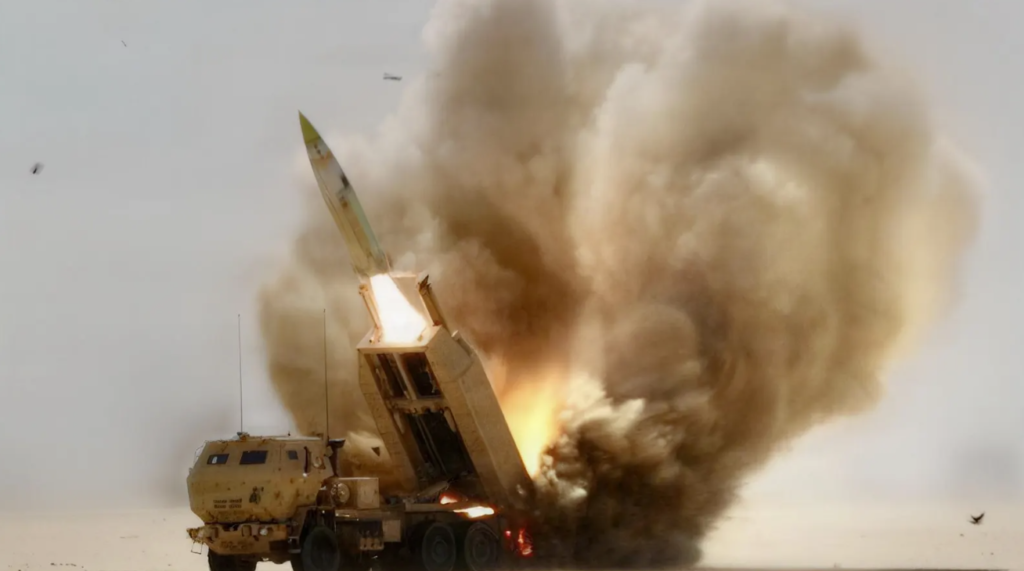
The US Central Command (CENTCOM) announced it had launched new attacks on southern Iran against missile sites and vessels attempting to deploy mines. The strike targeted a military installation that threatened US forces and commercial shipping in the Strait of Hormuz. US forces successfully intercepted drones launched from Iranian territory targeting US Navy ships.
The simultaneous negotiation and bombing is, paradoxically, stabilizing in the short term , because each side demonstrates that it can punish without breaking the negotiation, but it is seriously destabilizing in the medium term, because it multiplies the chances of a fortuitous incident.
US President Donald Trump has posted a clear demand on the social network Truth Social (one he hopes to enforce) regarding enriched uranium—which he calls “nuclear dust”—: it must be immediately handed over to the United States for destruction or on-site destruction, a concession unthinkable before the start of the war, with verification entrusted to the IAEA. Behind the assertive and firm language lies, in reality, an inexplicable concession by the United States to the Iranian regime. The fact that the fissile material remains on Iranian soil —diluted, yes, but under the regime’s custody and with deliberately imprecise verification—is a sure source of tensions that could very well escalate.
This is the characteristic pattern of Donald Trump 2.0: maximum verbal belligerence, remarkable flexibility in practice ; to put it mildly, others call it TACO, Trump Always Chickens Out.
Qatar is currently the only possible mediator, and therefore the most vulnerable to unfair criticism. An Iranian delegation is seeking an agreement in Doha regarding frozen assets and the blockade of the Strait of Hormuz. The financial structure of the agreement is as central as the military aspect, and the battle for the narrative is already as fierce as the battle for the Strait itself. Qatar cannot be accused of favoring Iran in the negotiations, as it is clear that it will do absolutely nothing in this area without clear and direct instructions from Washington.
In the Gulf monarchies, relief and unease coexist. Their main demand—a return to the previous status quo in the Strait—seems unattainable, and a high-ranking Qatari official bluntly summarizes their fears: the pact “could make us hostages of the Iranians.” The response would be intense and accelerated diversification and coordination of defense.
Let’s be blunt and straightforward: the emerging agreement is not a victory for the West, and pretending otherwise would be a highly dangerous form of self-deception. Iran’s offensive capabilities have been seriously affected, but they haven’t disappeared. This war, which began with the hope of weakening Iran, if not permanently, then at least for a decade, but without an exit strategy, ends with a dangerous and aggressive revisionist power that survives, negotiates from what they perceive as a position of strength, and obtains a better deal than all those they rejected. The ayatollahs’ regime will claim victory, and in terms of narrative and public perception, they will have a point.
I end where I began. No one has won the war, and precisely for that reason, it hasn’t ended. What’s coming is not peace, but its cold and intermittent administration; not order, but chaos managed as if it were order. And in that landscape—that of contained systemic fracture—the only reliable compass will continue to be lucidity, so as not to confuse the regime’s survival with its strength, nor the mirage of its euphoria with a defeat for the United States. For the moment, there is no clear victor (what a tragedy for the United States); the 60 days of negotiations that follow the signing of the MOU will determine that.
*Gustavo de Arístegui is a diplomat and was ambassador to India, Bhutan, Maldives, Nepal, and Sri Lanka (2012-2016) gustvodearistegui.substack.com