Global geopolitical stability is once again hanging in the balance. Just a few hours after analysing the risks of a false end to the conflict, the reality on the ground has confirmed the worst fears.
By Gustavo de Arístegui, as published by Atalayar, 8 June, 2026
Below, we outline the ten key points for understanding the critical current situation and the fragility of an armistice hanging by a thread.
The war in the Middle East that is not over
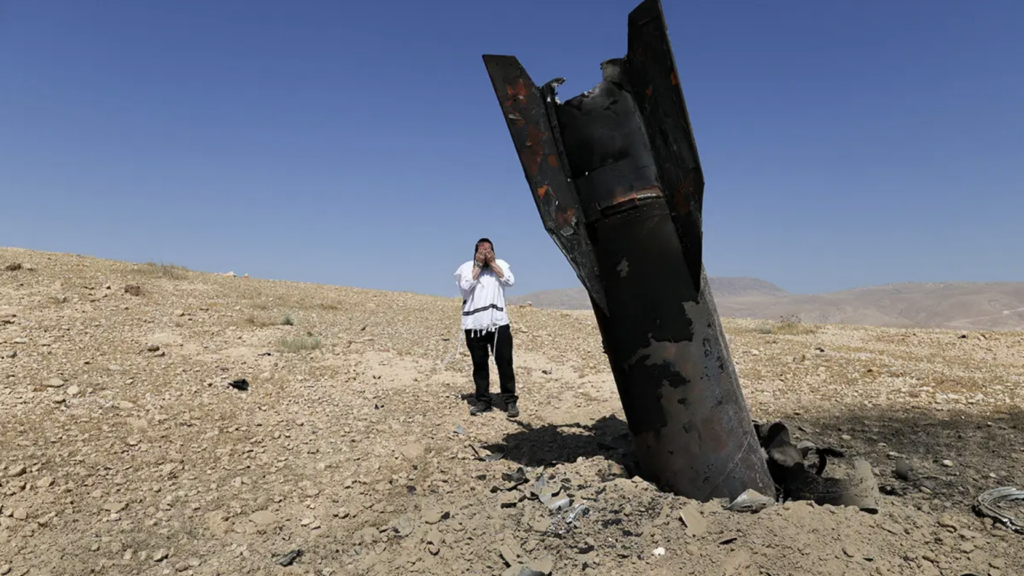
Just yesterday I wrote in La Razón that this war “could end in a false conclusion with potentially disastrous consequences for the region and global geopolitical and geo-economic stability”. Tonight, the IRGC has launched eleven ballistic missiles at the Israeli airbase at Ramat David. The ceasefire has just been broken. It comes as no surprise. It is exactly what I warned about.
“The war launched on 28 February against the jihadist oligarchy in Tehran is entering, without having concluded, its negotiation phase — and it does so with the uncomfortable peculiarity that the guns have not fallen silent whilst the emissaries talk.” — G. de Arístegui, La Razón, 7 June 2026
The trigger in Beirut: Israel breaks the ceasefire
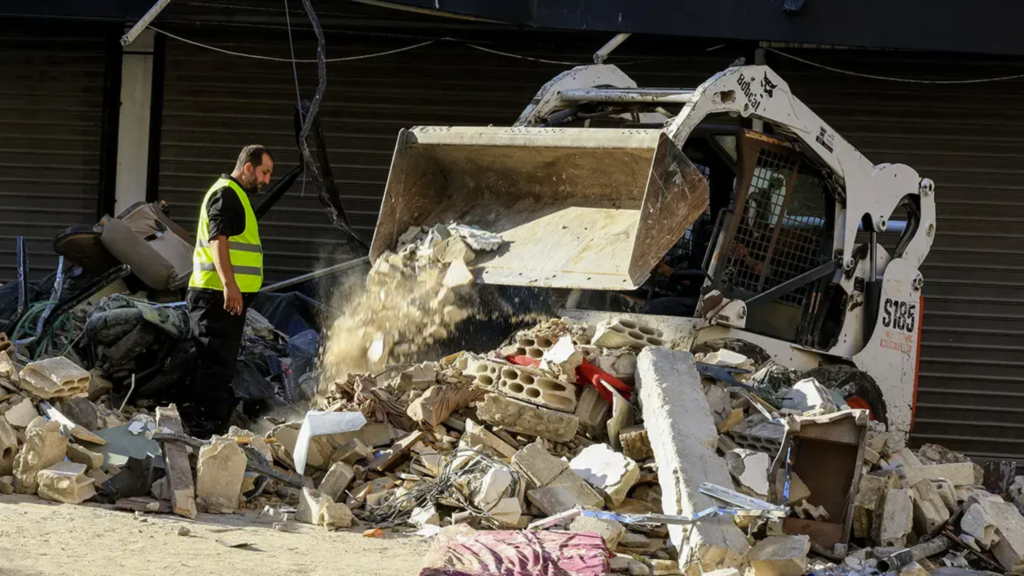
Tonight’s trigger is Beirut. Israel has bombed Dahiyeh — the Shia stronghold in the south of the Lebanese capital — without warning, violating the ceasefire that Washington had negotiated with such effort. Trump was not happy. Netanyahu has acted on his own. And Tehran has responded with missiles.
“The simultaneous occurrence of negotiations and bombing is paradoxically stabilising in the short term, because each side demonstrates that it can punish without breaking off negotiations; but it is seriously destabilising in the medium term, because it multiplies the chances of an accidental incident.” — G. de Arístegui, La Razón, 7 June 2026
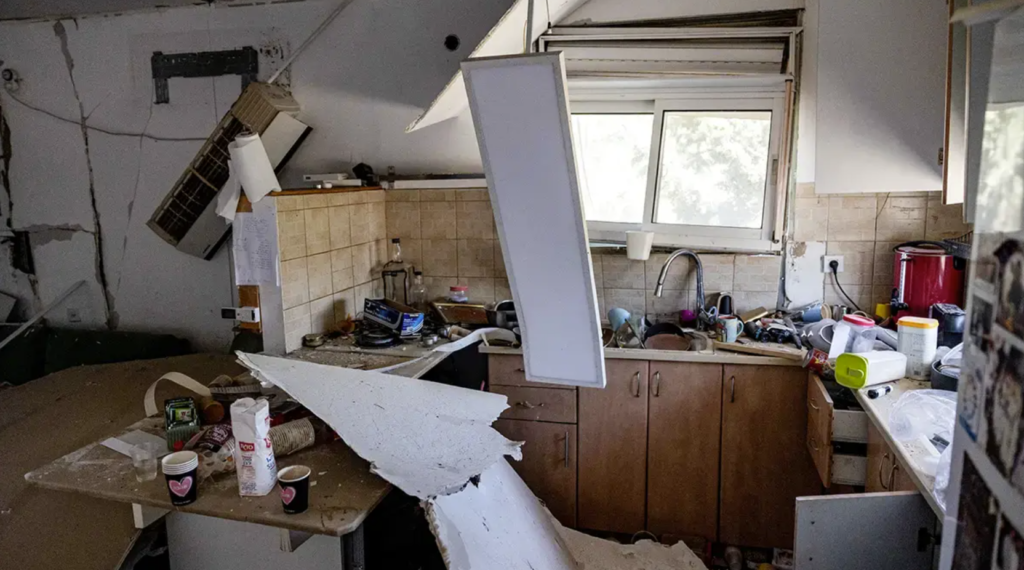
Damage to a kitchen caused by a missile striking nearby, following Iran’s missile strikes against Israel, in an Israeli settlement in the Israeli-occupied West Bank on 8 June 2026 – REUTERS/ NAAMA STERN
The paradox of decapitation in Tehran
Why can the IRGC fire tonight and still continue negotiating tomorrow? Because in Tehran there is no longer anyone with sufficient authority to impose the discipline of a ceasefire on their own generals. I explained it yesterday in these very pages: the ruling triumvirate — Vahidi, Zolghadr, Rezaei — is a conclave of equals without an arbiter.
“The paradox of decapitation: the surviving leaders individually lack the ideological influence, hierarchical rank and authority necessary to impose themselves on their comrades-in-arms and extract from them the acceptance of the concessions that any lasting agreement requires.” — G. de Arístegui, La Razón, 7 June 2026
An agreement as solid as its chain of command
The IRGC warned tonight that the attack on Ramat David is merely a “warning” and that any new Israeli offensive will receive a devastating response. But who really controls that response in Tehran? I gave the answer yesterday: no one with sufficient authority to guarantee anything.
“An agreement is only as strong as the chain of command capable of enforcing it; and this chain, decapitated, is precisely what the pact needs.” — G. de Arístegui, La Razón, 7 June 2026
The Trump 2.0 doctrine reins in Netanyahu
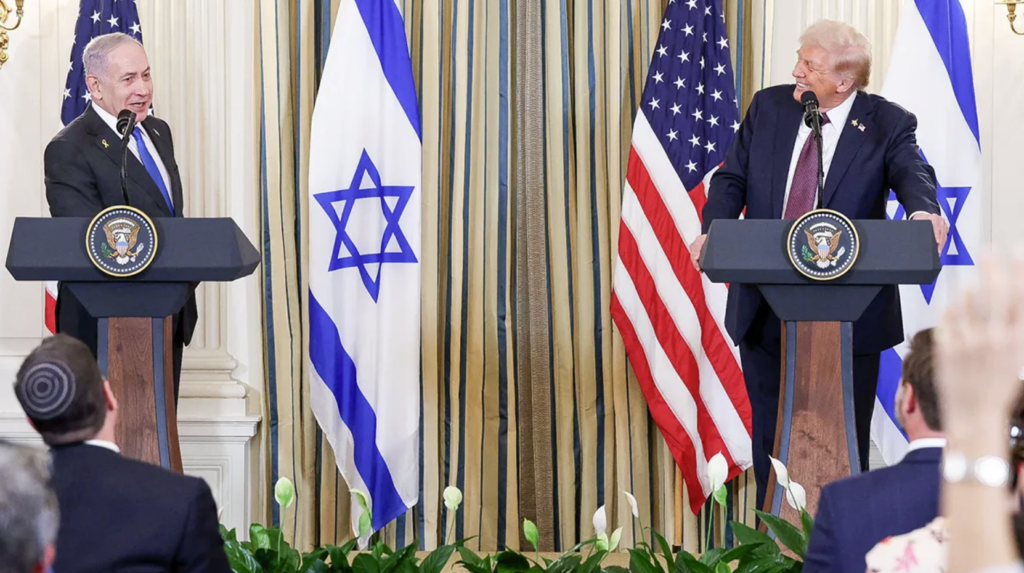
Trump has intervened in real time. He called Axios journalist Barak Ravid to say, and I quote: “I’m going to call Bibi right now and tell him not to retaliate. Everyone’s had their bombing. We don’t need another one.” And he added: “If Bibi retaliates, things will keep happening as they have for the last 3,000 years.” That is not allied solidarity. That is presidential desperation.
“This is the characteristic pattern of Donald Trump 2.0: maximum verbal belligerence, remarkable flexibility in practice. To put it mildly, others call it TACO: Trump Always Chickens Out.” — G. de Arístegui, La Razón, 7 June 2026
The IRGC: A terrorist organisation squared
It is worth being precise. Those who launched the missiles tonight are not “Iranian armed forces” in the conventional sense. They are the Islamic Revolutionary Guard Corps (IRGC), a terrorist organisation that includes the Al-Quds Brigades, elite terrorists. Terrorists squared. To call them anything else is semantic complicity with terror.
“Terrorist organisations of every ideology and stripe, dictatorial, authoritarian and revisionist regimes — or all of the above at once — may emerge from this crisis convinced they have won. That in itself constitutes a disaster whose consequences will be measured not in months but in decades.” — G. de Arístegui, La Razón, 7 June 2026
70% of Iran’s missile arsenal has survived
This is the game-changer. Yesterday I published a devastating piece of information: US intelligence sources confirm that around 70% of Iran’s missile arsenal and launchers have survived the campaign. Tonight’s eleven missiles are not a final death rattle. They are a demonstration of capability. Iran remains dangerous.
“This is a strategic, not a tactical, catastrophe with unpredictable consequences. We are not facing a negotiated surrender, but what can only be described as a political triumph for the jihadist oligarchy.” — G. de Arístegui, La Razón, 7 June 2026
The geopolitical pact is not a victory for the West
Let’s be brutally honest: the pact emerging from these negotiations — Iran’s access to between $100 billion and $200 billion a year through control of the Strait — is not a Western victory. I wrote yesterday that it is like giving an arsonist a chain of petrol stations with flamethrowers. Tonight, that arsonist has just lit another fire.
“It bears saying bluntly and without sugar-coating: the agreement taking shape is not a victory for the West, and to pretend otherwise would be a dangerous self-deception.” — G. de Arístegui, La Razón, 7 June 2026
Wars of variable intensity and managed chaos
What we are witnessing tonight has a name. It is not total war. It is not peace. It is what I have been describing for months as a war of variable intensity: a conflict of low intensity but high destruction, in which no one can win and no one can afford to lose. And in that landscape, every missile that falls on Israel and every bomb that falls on Beirut is a thermometer reading that rises.
“What lies ahead is not peace, but its cold and intermittent administration; not order, but chaos managed as if it were order. And in that landscape — that of contained systemic fracture — the only reliable compass will remain lucidity, so as not to confuse the regime’s survival with its strength.” — G. de Arístegui, La Razón, 7 June 2026
Conclusion: Nobody has won the war
I ended yesterday’s article with a sentence that takes on its full weight tonight: “Nobody has won the war, and that is precisely why it is not over.”
The IRGC’s missiles on Ramat David are the most brutal proof of that truth. Netanyahu bombs Beirut. Trump desperately calls his ally to rein him in. Iran fires and negotiates at the same time. And Lebanon, as always, pays the price for wars that are not its own. This is not over. Not by a long shot.
“I end where I began. No one has won the war, and that is precisely why it is not over. What lies ahead is not peace, but its cold and intermittent administration.”