By Gustavo de Arístegui, as published by La Razón, 22 February, 2026
Ukraine has endured for eleven years an existential pressure that is unparalleled in contemporary Europe.
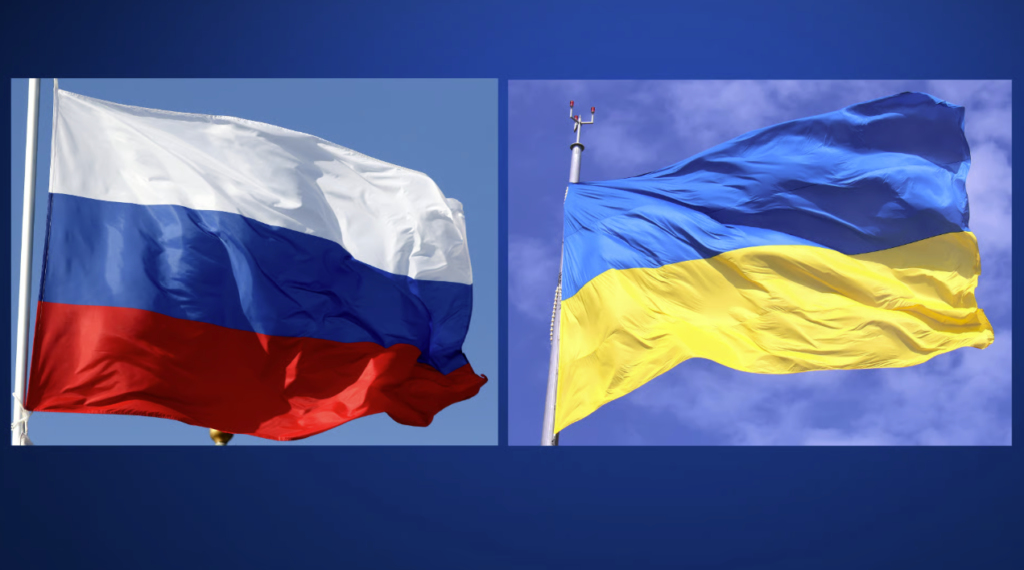
Some wars are won by force. Some wars are lost through exhaustion. And some wars—like Russia’s war of aggression against Ukraine—are deliberately prolonged in the hope that the adversary will surrender before the aggressor collapses. The full-scale invasion launched by Vladimir Putin in February 2022, far from being the three-day “special military operation” the Kremlin promised its own people, has become the deadliest conflict waged by a European power since World War II: a slow-motion war , in which time is both the battlefield and the most dangerous weapon.
This theory of simultaneous exhaustion: the Western exhaustion in its will to support Ukraine; the profound exhaustion of Ukrainian society itself; and the growing and irreversible exhaustion of Russia itself.
In his classic work ‘Arms and Influence’, the American political scientist Thomas Schelling warned that in wars of attrition, the resolve of the supporter—not just the combatant—can be the decisive factor. That warning resonates with a piercing force in Europe and Washington.
The Trump administration, with its transactional rhetoric and impatience with protracted conflicts, has sent mixed signals that have weakened transatlantic cohesion at a critical juncture. In Europe, the governments that have most strongly supported Ukraine—Poland, the Baltic states, and the United Kingdom—are facing stretched budgets and electorates that are beginning to call for peace , even if it is an unjust peace.
However, this Western exhaustion is neither irreversible nor as profound as Moscow would have us believe. Europeans who lived under Soviet rule know perfectly well what it means to yield to Putin. And they know, with the clarity that comes from lived experience, that a peace agreement freezing the current lines will not be the end of the conflict but rather the prologue to the next one.
Ukrainian exhaustion: eleven years in the trenches
There are peoples forged by suffering into unbreakable resilience. But even the most extraordinary resilience has biological, psychological, and demographic limits. For eleven years— since the illegal annexation of Crimea in 2014 and the start of the conflict in Donbas that same year—Ukraine has endured an existential pressure unparalleled in contemporary Europe. When Putin ordered the full-scale invasion in February 2022, the nation had already spent eight years in a state of latent war, preparing for the worst.
Today, Ukraine is fighting with its own resources and those of its European allies, in a context where US military support has been drastically reduced—by 99% since January 2015. The result is an army that heroically holds its ground but bears the weight of years of sacrifice. The mobilization of new cohorts of soldiers, in a population that war and emigration have considerably reduced, raises ethical and operational dilemmas of enormous gravity. The men fighting on the front lines have gone months—some, years—without sufficient rotation.
Economist Barry Eichengreen noted that the Ukrainian economy, supported by Western funding that accounts for up to 20% of its GDP, has shown surprising resilience: average growth of 4.4% over the past two years, with inflation contained and exports revived after the neutralization of the Russian Black Sea Fleet. But the sustainability of this model ultimately depends on Western political will, which, as we have seen, is neither unconditional nor eternal.
Russian exhaustion: the truth the Kremlin is keeping under lock and key
And this brings us to the core of the argument that I feel is most urgent to emphasize, because it is the one most systematically silenced or minimized in certain circles: Russia is bleeding itself dry. It is doing so at a rate that no Western power could have politically endured for three weeks. And it is doing so for a territorial gain that borders on the ludicrous. The facts are irrefutable.
According to a report published in January 2026 by the Center for Strategic and International Studies (CSIS ) in Washington—an institution of unquestionable analytical rigor—Russia has suffered 1.2 million casualties since the start of the large-scale invasion, including up to 325,000 deaths. This figure makes this conflict the deadliest for Russia since World War II: Russian losses are five times greater than those accumulated in all Soviet and Russian conflicts combined since 1945, including Afghanistan and the two Chechen wars.
And the advance achieved at that price in blood is simply indefensible in strategic terms: throughout 2025, according to the Institute for the Study of War (ISW), Russia conquered 4,322 square kilometers of Ukrainian territory, equivalent to 0.7% of the country’s total area. The cost was 85 Russian soldiers for every square kilometer occupied.
In the Kharkiv region, the average advance did not exceed 50 meters per day . CSIS itself compared this to the rate of advance at the Battle of the Somme, that 1916 slaughterhouse that forever changed the Western perception of war. This comparison is not rhetorical: it is mathematically precise and strategically devastating to the narrative of the “inevitable Russian victory” that some Western media outlets and political leaders have accepted as revealed truth, in a ridiculous and perverse display of ignorance, manipulation, and bad faith.
Sociological exhaustion: the pain that goes unpublished
There is also a dimension to Russian exhaustion that autocracies are masters at concealing, but which sociology cannot indefinitely hide: the accumulated suffering of hundreds of thousands of Russian families who have lost a son, a brother, a husband, on the battlefields of Ukraine. The mothers of soldiers—heirs to those courageous soldier mothers who protested against the Chechen war in the 1990s—are silently assimilating a grief that the regime does not allow them to express openly, but which builds up like a subterranean pressure within the social fabric.
History teaches that even the most iron-fisted autocracies are not immune to the exhaustion of their societies. The USSR was able to sustain the war in Afghanistan for ten years, but the social cost was one of the factors that accelerated its disintegration. Putin has been astute in protecting the Moscow and Petersburg elites from the effects of the war—the sons of oligarchs do not die in the trenches of Donbas—but this very asymmetry fuels a simmering anger in the outlying regions where conscription does occur and their sons do die.
Budgetary and economic exhaustion: the relentless arithmetic
There is an arithmetic that no amount of manipulation can alter. Russian military spending reached 7.1% of its GDP and 19% of total public spending in 2024, according to SIPRI data. By 2025, the defense budget had risen to $133.63 billion, 24.4% more than the previous year, representing 6.31% of official GDP and no less than 32.5% of the state budget, as confirmed by Russian Defense Minister Andrei Belousov himself. A war economy that absorbs more resources than education, healthcare, social programs, and economic development combined is unsustainable: it is a suicidal gamble.
Applying purchasing power parity—the methodology the IISS used in its report, The Military Balance 2025—Russia’s military purchasing power now exceeds that of the 27 countries of the European Union plus the United Kingdom combined. This figure is impressive, but it masks a more somber reality: Russia is consuming its productive capital, its human capital, and its technological capital to finance a war it cannot reasonably win militarily.
Russian economic growth in 2025 was 0.6% . Inflation has skyrocketed. Labor shortages have reached historic levels because hundreds of thousands of young workers are on the front lines, in prison, or have fled abroad. A power that aspires to redefine the world order from a position of strength but is falling behind in all knowledge economy indicators is not a rising power: it is a power in accelerated decline.
Pyrrhic gain and Pyrrhus’ mirror
Pyrrhus of Epirus defeated the Romans at Asculum in 279 BC, but at such a devastating cost in troops and irreplaceable officers that he declared, “One more victory like this and we are lost.” The expression entered the lexicon of failed military strategies. Today, in the blood-soaked fields of Donbas, a new chapter of that story is being written.
Russia occupies roughly 20% of Ukrainian territory , including Crimea, which it illegally annexed in 2014. Since January 2024, it has increased its control by less than an additional 1.5%, at a rate the Center for Strategic and International Studies (CSIS) calls “slower than almost any major offensive campaign in any war of the last century.” That’s not advancing toward victory: it’s dying toward a stalemate.
The demographic collapse of the military is perhaps the least visible but most irreversible factor of all. Russia has conscripted convicts from its prisons. It has incorporated more than 10,000 North Korean soldiers. It has issued decrees for covert mobilization to avoid the social backlash that followed the partial mobilization of September 2022, when more than a million men of military age left the country. The Russian army remains numerically superior— 400,000 soldiers compared to 250,000 Ukrainians on the front lines, according to estimates by Western military analysts—but the quality of the contingent, the state of the equipment, and above all, morale, are factors that the Russian Ministry of Defense’s statements fail to reflect.
Conclusion: the time trap
The slow-motion war in Ukraine is, above all, a war of narratives. Putin is betting that time is on his side: that the West will tire, that Ukraine will surrender before Russia collapses. It is a bet based on a false premise: that Russia can sustain this effort indefinitely without irreversible internal consequences. As Raymond Aron—that master of political realism so necessary today—wrote in his monumental Peace and War Among Nations: “Wars end when one of the belligerents concludes that the cost of continuing outweighs the benefit of resisting .”