By Gustavo de Arístegui
January 22, 2026
In the last 24 hours, the geopolitical chessboard has been dominated by Trump’s about-face on Greenland, the economic impact of that reversal, new macroeconomic data from Asia and Europe, and the consolidation of a European security architecture increasingly distrustful of Washington. The focus is shifting to the Arctic, the transatlantic relationship, and the growing strategic competition between the United States, China, and Russia, against a backdrop of global slowdown and financial volatility.[1][2][3][4]
I. BRIEF INTRODUCTION
President Trump’s announcement that he was explicitly renouncing the use of force to acquire Greenland and withdrawing his threat of new tariffs against several European allies marks a turning point in the open crisis with the European Union and NATO. The decision does not signify the end of his ambitions in the Arctic, but rather a tactical course correction forced by the outright resistance of European partners in Davos and by the immediate impact of his threats on financial markets and the price of gold.[2][3][4][1]
From an Atlanticist and liberal center-right perspective, the day leaves an ambivalent feeling: relief at the containment of military adventurism and the intra-Western trade war, but also concern about the erosion of confidence in US leadership and the parallel advance of China and Russia in the Eurasian space and in strategic commodity markets.[3][4][1][2]
II. TEN TOP NEWS STORIES FROM THE LAST 24 HOURS
1. Trump backtracks on military option and tariffs in the Greenland case
Facts
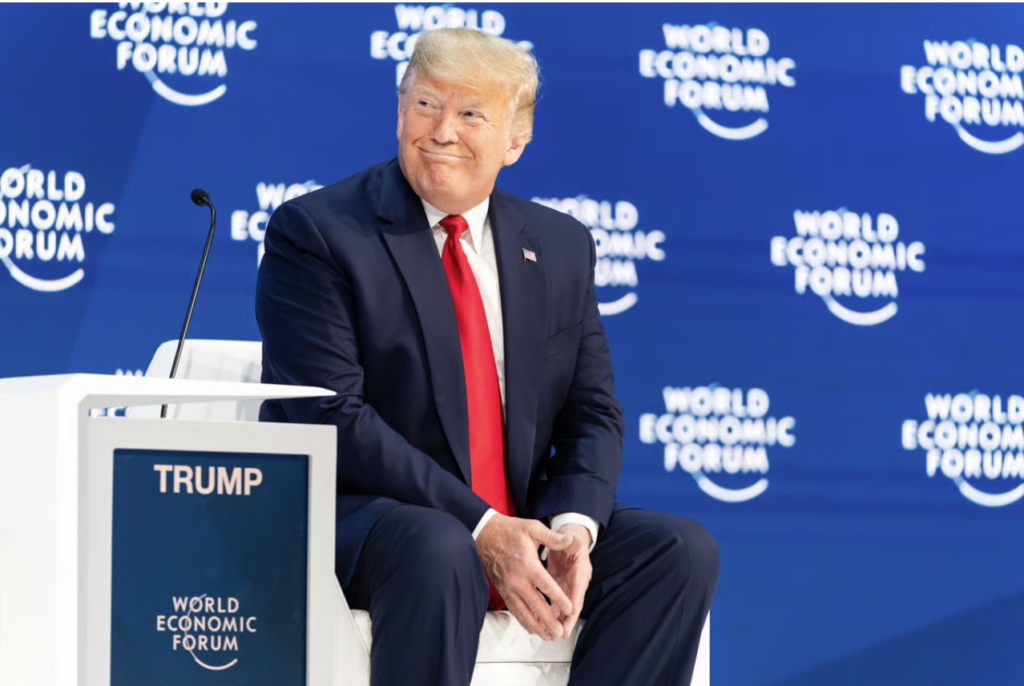
– Trump declared in Davos that he will not resort to the use of force to acquire Greenland and that he is ruling out, for now, the new tariffs announced against several European allies, after weeks of ambiguity and internal pressure in the White House.[4][1]
The reversal comes after an intense standoff with European leaders who hardened their stance at the Davos Forum, making it clear that Greenland’s future belongs to its inhabitants and Denmark, and warning against any temptation to coerce.[1][3]
Implications
– The withdrawal of the military threat, for the moment, deactivates a scenario of symbolic rupture of the international order based on the prohibition of acquiring territories by force, already sufficiently eroded by Russia in Crimea and Ukraine.[3][1]
– By suspending the tariffs, Washington avoids an economic war within the Atlantic bloc that would have further weakened Western cohesion against China and Russia, objectively benefiting Beijing and Moscow.[4][1]
Perspectives and scenarios
– A phase of silent negotiation can be expected, with emphasis on basic agreements, dual-use infrastructure and preferential access to strategic resources in Greenland, rather than a formal annexation.[1]
The risk is that presidential instability will erode American credibility: European allies will strengthen their strategic autonomy plans and their own deterrent capabilities, including French and British nuclear weapons.[3]
2. “Relief” effect on markets after the shift on Greenland and tariffs
Facts
– Following Trump’s reversal, the dollar held firm and Wall Street registered strong gains, with the Dow Jones gaining nearly 600 points boosted by the averting of the tariff threat.[2][4]
– Gold , which had climbed to a new record above $4,800 an ounce amid escalating tensions, began to partially correct, reflecting a change in the immediate perception of systemic risk.[2][4]
Implications
– The sequence confirms that “Trump” volatility has become a structural variable of the markets: every threat and every correction generates sharp movements that reward those who know how to read the president’s instincts, not the fundamentals.[4][2]
– In the medium term, this rollercoaster of announcements and denials deteriorates the perception of the United States as an anchor of stability in the international financial system and fuels temptations to diversify towards other currencies and financial centers, including China.[2][4]
Perspectives and scenarios
– If the White House maintains a more predictable approach in its relationship with Europe, markets could consolidate a “risk-on” phase, but any new shock—whether from technology, defense, or digital taxation—will reignite the defensive impulse toward gold and safe-haven assets.[4][2]
– The episode reinforces the need for coordinated Western economic governance: the EU should seize this opportunity to propose clear transatlantic rules of the game that limit the discretionary scope for future tariff escalations.[3][4]
3. Europe stands firm in Davos and accelerates its strategic autonomy
Facts
– In Davos, European leaders showed unusually firm opposition to US threats regarding Greenland and tariffs, and are already discussing ways to strengthen their security without relying exclusively on Washington’s umbrella.[5][3]
– There is a growing number of calls to prioritize the purchase of European military equipment, strengthen domestic nuclear deterrence capabilities, and explore forms of defensive cooperation outside the strict logic of NATO.[5][3]
Implications
– Classical Atlanticism is entering a phase of review: without abandoning the alliance, several European capitals are preparing for a scenario in which the United States is a less predictable and more transactional partner, especially under the current occupant of the White House.[5][3]
– From a pro-European perspective, the moment is an opportunity to build a credible European defense that complements NATO and corrects years of “strategic parasitism”, but the risk is that it will result in inefficient duplications and anti-American rhetoric.[5][3]
Perspectives and scenarios
– In the short term, the priority will be to strengthen coordination within NATO, taking advantage of Secretary General Rutte’s presence in Davos to articulate a common language that combines firmness and pragmatism with Washington.[5]
– In the long term, a more autonomous Europe in defense may emerge, but also one more internally divided between those who support deepening the relationship with the United States and those who dream of an impossible equidistance between Washington, Beijing and Moscow.[3][5]
4. Japan: Export slowdown and doubts about recovery
Facts
– Japanese exports grew 5.1% in December, below the expected 6.1%, weighed down mainly by a sharp fall in shipments to the United States.[2]
– This moderation adds to several quarters of weak growth in the Asia-Pacific region, in a context of cooling global demand and readjustment of value chains after years of trade tensions and pandemic.[2]
Implications
– The data reveals the vulnerability of Japan – and by extension much of Asia – to a slowdown in US consumption and regulatory uncertainty surrounding international trade.[2]
– The slowdown opens the door to further stimulus measures and complicates the Bank of Japan’s monetary normalization, which in turn fuels “currency war” criticism from partners who see the weak yen as an unfair competitive advantage.[2]
Perspectives and scenarios
– If Washington stabilizes its trade policy, Japanese exports could regain traction, but a new protectionist turn would reignite tensions, forcing Tokyo to accelerate its diversification towards Southeast Asia and Europe.[2]
– The combination of demographic aging, massive public debt and dependence on external demand will continue to act as a structural brake, consolidating Japan as a leading diplomatic player but with contained economic growth.[2]
5. Asia-Pacific: fragile stock market rebound and South Korean slowdown
Facts
– Asia-Pacific markets point to a rebound following easing in the intra-Western trade war, as analysts absorb Trump’s decision to withdraw threats of European tariffs.[2]
– Meanwhile, South Korea recorded growth of 1.5% in the fourth quarter, below forecasts, with domestic demand weakening as the effects of fiscal stimulus dissipate.[2]
Implications
– The stock market rebound is more of a breather than a solid recovery: Asia depends as much on Western consumption as on the stability of supply chains, both of which are still under pressure.[2]
– The South Korean slowdown confirms that the Asian model, oriented towards exports and easy credit, is beginning to show signs of fatigue, in an environment where China is reorienting its growth inwards and geoeconomic fragmentation is becoming structural.[2]
Perspectives and scenarios
– A scenario of “partial decoupling” between US-led and China-led blocs will force capitals such as Seoul, Tokyo, or Singapore to refine their strategic balance, reducing critical dependencies on both giants.[2]
– The political risk is that social frustration over the economic slowdown will fuel populism and nationalism in key countries, with a direct impact on territorial disputes in the South China Sea and the Korean Peninsula.[2]
6. United Kingdom: rising inflation and pressure on the middle class
Facts
– British inflation rose to 3.4% in December, above the expected 3.3%, prolonging a period of erosion in the purchasing power of households already reeling from the price shock of recent years.[2]
– The data comes in a context of relatively high interest rates and heated debate about the Bank of England’s room to tighten further without stifling activity.[2]
Implications
– Persistent inflation fuels discontent with political and economic elites, giving oxygen to populist discourses on both the right and the left, in a country that is still searching for its post-Brexit place.[2]
– Pressure on the middle class reinforces the cultural battle around identity, migration and wokism, terrain where the “law and order” right and a radicalized left compete to capitalize on frustration, while the political center is cornered.[2]
Perspectives and scenarios
– If inflation does not clearly ease by 2026, the United Kingdom may enter a phase of chronic political instability, marked by weak governments and short-term agendas.[2]
– A shift towards supply-side policies, smart deregulation and selective tax relief could rebuild the social contract, but it requires leadership and clarity that the current British landscape does not guarantee.[2]
7. India: a giant trapped between geopolitics and its own internal rigidities
Facts
– India’s largest company, with heavy exposure to strategic businesses, is caught in external geopolitical tensions while facing slowing sales in its domestic retail business, prompting several firms to cut their price target.[2]
– The case comes as New Delhi tries to preserve its balance between its partnership with the West, its historic link with Russia and an inevitably competitive relationship with China.[2]
Implications
– The episode shows that the “India moment” is not immune: large Indian corporations are vulnerable to both international sanctions and realignments as well as their own internal inefficiencies.[2]
– From a liberal perspective, India needs to accelerate structural reforms – legal certainty, regulatory simplification, infrastructure – if it wants to convert its demographic potential into real economic power.[2]
Perspectives and scenarios
– If the government takes advantage of the current pressure to deepen pro-market reforms, India can consolidate itself as a partial alternative to China in manufacturing and services; if not, it risks remaining an unfulfilled promise.[2]
– The temptation to resort to economic nationalism and anti-Western rhetoric as an escape valve would be a strategic mistake that would only benefit Beijing.[2]
8. Latent tension in space: alert on Russian-Chinese capabilities
Facts
– Security sources in Europe have again pointed to the increase in Russian and Chinese space warfare capabilities, including close-up maneuvers toward Western satellites and potential jamming and espionage capabilities.[6]
– At the same time, several governments have announced substantial increases in spending on space defense, recognizing that orbital communications and navigation infrastructure is now a priority target in any conflict.[6]
Implications
– The progressive militarization of space adds to the cyber front as a critical dimension of the new hybrid warfare, where the boundary between peace and conflict becomes deliberately blurred.[6]
– For Europe, which is lagging behind in this area, the challenge is twofold: to invest enough to protect its assets without falling into an uncritical following of the United States’ technological agenda.[6]
Perspectives and scenarios
– The emergence of new regulatory frameworks – or at least codes of conduct – that attempt to set “red lines” in space is foreseeable, although the experience with Russia in Ukraine invites skepticism about their compliance.[6]
– In the absence of binding rules, true deterrence will come from system redundancy, rapid replacement capability and civil-military integration of the Western space industry.[6]
9. Bolivia: Liberal-conservative political shift in a critical economic context
Facts
– Rodrigo Paz has assumed the presidency of Bolivia promising a model of “capitalism for all” after two decades of social-communist-indigenist hegemony, amid the country’s worst economic crisis in 40 years.[6]
– The new leader pledges to stabilize inflation, restore relations with the United States and maintain certain social programs, although economists doubt the compatibility between fiscal discipline and expansionary spending.[6]
Implications
– The Bolivian change is a symbolic setback for the Latin American populist left-wing axis, which is already showing signs of wear and tear on its egalitarian promises in the face of a reality of corruption, inefficiency, and stagnation.[6]
– The success or failure of Paz will be closely watched in countries caught between failed Chavista models and a right wing incapable of articulating inclusive reforms; the region needs examples of a reformist and socially responsible center-right.[6]
Perspectives and scenarios
– If Paz manages to stabilize the macroeconomy without completely dismantling the social safety net, Bolivia could become a laboratory for a pragmatic liberalism that combines market forces with protection for the vulnerable.[6]
Otherwise, disenchantment could reopen the door to radical populism, something that Chavista narco-authoritarianism and its allies would immediately try to exploit.[6]
10. Failed negotiations between Pakistan and Afghanistan and North Korean threats
Facts
Peace talks between Pakistan and Afghanistan in Istanbul have ended without an agreement, with both sides blaming each other for the failure of negotiations aimed at easing border tensions and consolidating a fragile ceasefire.[6]
Meanwhile, the North Korean defense minister has warned of “more offensive actions” following the arrival of a US aircraft carrier in South Korea and new sanctions from Washington, denouncing the joint exercises as preparation for aggression.[6]
Implications
– The inability of Islamabad and Kabul to seal a solid pact keeps open a front of instability that fuels regional jihadist terrorism and reinforces the influence of actors such as China and Russia, delighted to fill the strategic vacuum.[6]
– Pyongyang’s threats highlight that the Korean peninsula remains one of the most dangerous powder kegs on the planet, where a miscalculation can trigger a rapid escalation between nuclear powers.[6]
Perspectives and scenarios
Without a more coherent involvement of the United States and its allies – combining military deterrence with a credible diplomatic path – the Afghan-Pakistani space will remain a sanctuary for terrorist organizations and a corridor of influence for Tehran and Beijing.[6]
– In Korea, the balance between firmness and restraint will remain fragile: any missile test or naval incident will reignite the debate about the need for their own nuclear capabilities in Tokyo and Seoul.[6]
III. MEDIA RACK
In the absence of an individualized sweep of the 90 headlines, the predominant trends are grouped by media families around the topics of the day.
– Mainstream American and British press (NYT, Washington Post, WSJ, Financial Times, The Times, The Guardian, USA Today, Politico, The Hill, etc.) :
– Focus on Trump’s reversal on Greenland and tariffs, with columnists combining relief with criticism of the White House’s strategic improvisation.[1][4][3][2]
– Pay attention to market volatility, record gold prices and the risks of a global slowdown, with emphasis on Japan, South Korea and the United Kingdom.[4][2]
– Continental European media (Le Monde, Le Figaro, FAZ, Die Welt, El País, Corriere, La Stampa, etc.) :
– Reading the Greenland crisis as a symptom of the need for European strategic autonomy, with an increasingly critical discourse towards American unpredictability.[3][5]
– Coverage of British inflation and the EU’s internal economic challenges, with particular attention to the pressure on the middle class and rural unrest.[2]
– Global television networks and agencies (BBC, CNN, Fox News, CNBC, Reuters, AP, AFP, DPA, etc.) :
– Treatment in breaking news terms of the “Trump climbdown” (rectification) and its immediate effect on stock markets, currencies and commodities, presented as an example of “political risk” in the markets.[1][4][2]
– Panoramic coverage of tensions in Asia-Pacific, including data from Japan and South Korea and the rebound of regional stock markets.[2]
– Geopolitical analysis media and think tanks (Foreign Affairs, The Economist, National Interest, Geopolitical Futures, Stratfor, etc.) :
– They interpret the Greenland episode as part of a larger struggle for the Arctic, with emphasis on resources, shipping routes and military presence, and on the need for a stable governance framework.[7][8][1]
– They warn about the militarization of space and the consolidation of multidimensional hybrid warfare (cyber, satellites, disinformation).[6]
– Media outlets from Asia, the Middle East, Latin America and Eastern Europe (SCMP, China Daily, Times of India, Al-Jazeera, Clarín, El Mercurio, Kyiv Independent, Ukrinform, etc.) :
– From Asia, the regional sensitivity to Western volatility and the need to diversify partners are emphasized, with a narrative where China tries to present itself as a responsible actor in the face of an erratic America.[9][2]
– In Latin America and the post-Soviet space, attention is divided between the political shift in Bolivia, the processes in Venezuela and the consequences of the war in Ukraine, although today the immediate focus shifts to Davos and the Arctic.[10][7][6]
IV: RISK TRAFFIC LIGHT
Red (immediate high risk)
– US-European allies relations : Although a head-on clash over Greenland and tariffs has been avoided, strategic trust has suffered and the perception persists that US foreign policy is volatile and personalistic.[1][3]
– Stability in Afghanistan-Pakistan and the Korean Peninsula : The combination of failed negotiations, the presence of jihadist groups and inflammatory North Korean rhetoric creates a high-risk environment with the potential for regional spillover.[6]
Amber (significant risk, but contained)
– Economic slowdown in Asia and Europe : Data from Japan, South Korea and the United Kingdom illustrate a cooling that is not yet an acute crisis, but could become one if monetary policy errors and new trade tensions are combined.[2]
– Militarization of space and hybrid warfare : Continued increase in Russian-Chinese capabilities and still fragmented Western response; the risk is growing, although without a triggering incident in these 24 hours.[6]
Green (monitoring, but without immediate alarm)
– Political transitions in Latin America (Bolivia case) : The liberal-conservative shift opens a window of opportunity for responsible reforms; the risk lies in the implementation and the reaction of the Bolivarian axis, rather than in an immediate explosion.[7][6]
– European strategic autonomy : A long-term structural process that, if well managed, can strengthen the West, although if poorly managed it could lead to an Atlantic fracture and neutralist temptations.[5][3]
V. EDITORIAL COMMENT
The day leaves a lesson as uncomfortable as it is obvious: the main risk to the Western liberal order no longer comes solely from declared enemies—Russian expansionism, Chinese hegemonic ambition, Islamist terrorism—but also from the internal oscillations of the American leadership itself. That such an extravagant project as the “acquisition” of Greenland was even considered in terms of the use of force, only to be abandoned in an impromptu speech in Davos, speaks volumes about the state of the superpower that for decades was synonymous with predictability and respect for the rules.[7][1][3]
From an Atlanticist and liberal center-right perspective, Trump’s course correction deserves a cool but sincere acknowledgment: not all leaders backtrack in time when they realize they have gone too far. However, this relief should not mask the accumulated erosion of credibility, nor the fact that every improvised about-face by Washington is free ammunition for the propaganda of Beijing, Moscow, and Tehran, always ready to portray the West as a decadent and incoherent bloc.[9][10][7][1]
Meanwhile, Europe is experiencing a kind of late strategic adolescence: it rightly protests the White House’s excesses, but still lacks the military, energy, and technological tools necessary to be a true actor and not just a forum for good intentions. If Europeans want to be more than mere bystanders in the struggle for the Arctic, space, and critical raw materials, they will have to abandon comfortable rhetorical pacifism and accept that defending liberal democracy costs money, demands sacrifices, and requires moral clarity in the face of dictatorships and terrorists.[11][12][7][3][5]
In this context, Bolivia’s shift towards “capitalism for all” offers a hopeful counterpoint in a Latin America burdened by narco-strongman rule and left-wing populism, and demonstrates that there are still societies willing to give fiscal responsibility and the rule of law another chance. But if reformist governments do not show tangible results soon, the pendulum will swing back to the same old demagogues, including allies of the Chavista narco-regime, with the well-known consequences of misery, exodus, and repression.[7][6]
Ultimately, the map these 24 hours paint is one of a world in which the declared enemies of freedom—revisionist autocracies, religious fanatics, political mafias—advance when the West is distracted by its internal squabbles and forgets why the rule of law, the market economy, and liberal democracy are worthwhile. Faced with this world, recovering a serious, coordinated, and morally clear Western foreign policy is not an academic matter: it is the minimum condition to prevent Greenland, Ukraine, Taiwan, or the Sahel from becoming new pieces on a chessboard divided between dictatorships and terrorist organizations.[10][9][7]
Sources
[1] Trump reversal on Greenland followed by push by aides … https://www.reuters.com/world/europe/trump-reversal-greenland-followed-push-by-aides-against-military-option-sources-2026-01-22/
[2] International Business, World News & Global Stock Market Analysis https://www.cnbc.com/world/
[3] In Davos, European leaders met Donald Trump with … https://www.abc.net.au/news/2026-01-22/european-leaders-stood-up-to-trump-at-davos/106256300
[4] Business News | Today’s International Headlines – Reuters https://www.reuters.com/business/
[5] NATO Secretary General to attend the World Economic Forum … https://www.nato.int/en/news-and-events/events/media-advisories/2026/01/20/nato-secretary-general-to-attend-the-world-economic-forum-in-davos
[6] The last 24 hrs in geopolitics https://www.youtube.com/watch?v=xGloKXwlkZA
[7] Geopolitical Monitor https://www.geopoliticalmonitor.com
[8] Stratfor: The World’s Leading Geopolitical Intelligence Platform https://worldview.stratfor.com
[9] Economy | Today’s latest from Al Jazeera https://www.aljazeera.com/economy/
[10] World News | Latest Top Stories | Reuters https://www.reuters.com/world/
[11] Commission announces €1.9 billion humanitarian aid budget … https://ec.europa.eu/commission/presscorner/detail/en/ip_26_165
[12] Geopolitical Futures: Homepage https://geopoliticalfutures.com
[14] Geopolitics https://foreignpolicy.com/tag/geopolitics/
[15] World | Latest News & Updates | BBC News https://www.bbc.com/news/world
[16] Geopolitics News | Latest News – NewsNow https://www.newsnow.com/us/World/Geopolitics