By Gustavo de Arístegui
January 26, 2026.
I. STRATEGIC INTRODUCTION – THE WORLD IN FOUR OVERLAPPING RISK AXES
The international chessboard has contracted dramatically around four interconnected risk axes that define the start of 2026 and that interact with each other with an implacable logic: the silent but brutal purge in the Chinese military leadership, reaching the very heart of Beijing’s nuclear program; the gradual but decisive consolidation of security guarantees for Ukraine, redefining the eastern flank of the Atlantic world while Russia intensifies energy terror as a doctrine of war; the growing strategic pressure on Israel and Gaza, with Washington attempting to write the architecture of the “day after” while Tehran and its proxies carry out systematic sabotage; and the spectacular leap of gold above $5,000 an ounce, an undeniable symptom of an international system that has ceased to trust the word of governments and desperately seeks refuge in tangible assets.
At the same time, we are witnessing a fundamental shift that is reshaping alliances and economic balances: India is attempting an ambitious trade opening with the European Union that challenges the old protectionism of the Global South and signals a strategic competition of the first magnitude; Europe is trying not to be reduced to a mere spectator while simultaneously negotiating its energy security, its transatlantic relationship and its role in the Indo-Pacific; and the United States, under the Trump presidency, is combining selective hardline measures—against narco-dictatorships, the Iranian theocracy, transnational organized crime—with a transactional pragmatism that worries both Western adversaries and more than one European partner accustomed to soft rhetoric without consequences.
Meanwhile, the Greenland crisis—which has dominated headlines for days—continues to act as a stress test for Atlanticism: when the leader of the world’s most powerful democracy speaks of unlimited “total access” to the territory of a European ally and threatens economic retaliation, he is not reinforcing strategic deterrence; he is creating structural distrust. And distrust is precisely the fertilizer Putin needs to see his objectives flourish without firing a single additional missile.
The result is an international system where there are no longer “exceptional crises” susceptible to one-off management, but a succession of overlapping shocks that demand moral clarity and nerves of steel: faced with Chinese expansionism, revanchist Russian imperialism and theocratic terrorism exported from Tehran, ambiguity is not diplomatic sophistication, it is moral resignation disguised as prudence.
II. THE 10 CRITICAL NEWS STORIES OF THE LAST 48 HOURS
1. Trump: The “Greenland deal” promises “full access” without time limits – warning about US debt
Facts
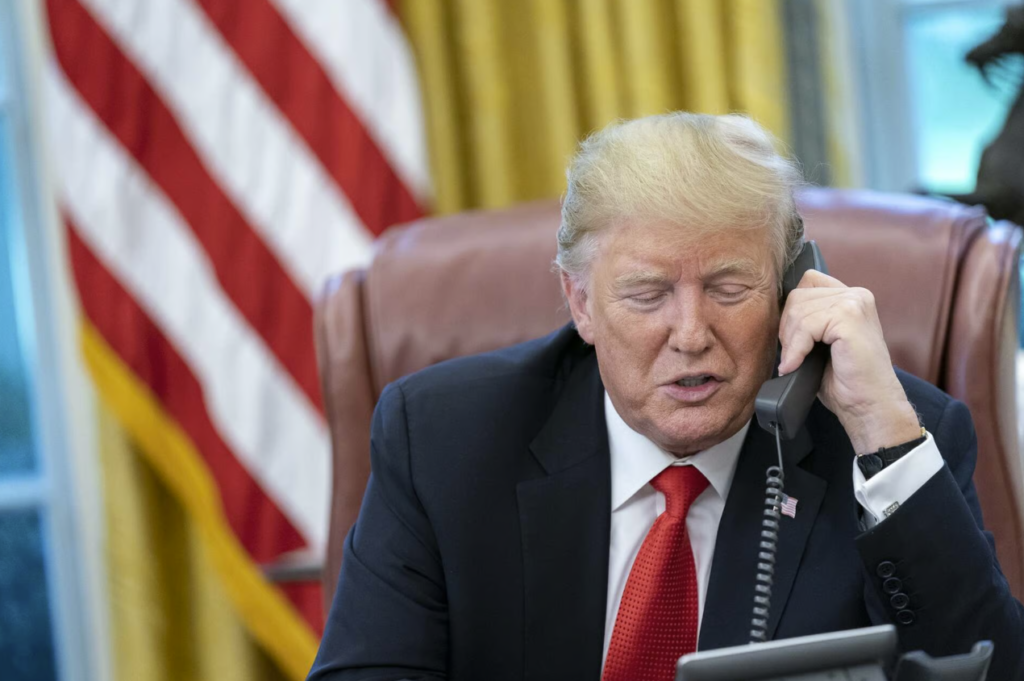
Speaking from Davos, President Trump described the negotiated Greenland agreement as “full access” without time restrictions or “direct costs,” after withdrawing tariff threats and explicitly ruling out the use of military force. Simultaneously, he warned of potential retaliation if European governments proceed with massive sales of US sovereign debt as a political protest.
Profound implications
This is not a diplomatic technicality that can be resolved in bilateral committees. It is an existential struggle over the very concept of allied sovereignty in the 21st century. The Arctic holds critical mineral resources for energy transition and defense (rare earth elements, lithium, uranium), maritime routes that climate change is opening up, and crucial military positions for monitoring Russian and Chinese hypersonic missiles.
The West needs a reinforced presence in Greenland: early warning radars, deep-water ports for nuclear submarines, air bases for interceptors, and logistical infrastructure for power projection into the North Atlantic and Central Arctic. All of this is legitimate, necessary, and urgent.
But the language of “full access” without time limits invites structural misunderstanding with devastating consequences: allies can—and should—accept enhanced cooperation under NATO architecture; they cannot, under any circumstances, accept a de facto protectorate that erodes the sovereign dignity of a consolidated European democracy.
The warning about retaliation for selling US debt is even more revealing: it confirms that the conflict transcends the geopolitical dimension and enters a spiral of bilateral economic coercion with systemic potential. If the United States uses the dollar and Treasury as leverage against allies, it not only destroys trust but also irreversibly redefines the rules of the global financial game, accelerating the dedollarization that Beijing and Moscow have been pursuing for decades.
Outlook and scenarios (30-90 day horizon)
∙ Optimal scenario (35%): Limited contractual agreement specifying dual-use infrastructure (“Golden Dome” missile defense, logistics bases, SIGINT/ELINT surveillance), with an explicit Danish sovereignty clause, five-year review mechanisms and institutional NATO participation.
• Controlled tension scenario (45%): Intermittent return of tariff threats as a negotiating lever. Conflict management through escalation-de-escalation cycles that keep crises at a boiling point without a formal rupture.
• Strategic fracture scenario (20%): Accelerated erosion of transatlantic trust; proliferation of anti-American narratives in mainstream European politics; ideological ammunition for sovereignist, populist, and pro-Russian movements; structural weakening of NATO cohesion. Exactly the objective pursued by China and Russia: a divided, demoralized, and paralyzed Western bloc.
2. NATO: Rutte delimits the debate – “Greenland’s sovereignty is not up for discussion”
Facts
NATO Secretary General Mark Rutte stated categorically that the issue of Greenland’s political status with respect to Denmark was not discussed with President Trump. Rutte redirected the debate toward enhanced strategic cooperation in the Arctic in light of increasing Russian and Chinese military and economic activity.
Strategic implications
Rutte executes a textbook defensive-diplomatic maneuver: building a conceptual firewall that removes from the “territorial-sovereign” plane what should remain strictly as a discussion of defense architecture, military presence and conventional deterrence.
The real risk is that this rhetorical firewall will not withstand pressure from presidential statements that contradict or exceed the NATO framework. If explicit political limits are not established in writing—with parliamentary validation in Washington and Copenhagen—the conceptual vacuum will be inexorably filled by presidential impulses and the media narrative of “full access.”
NATO cannot afford for its northern flank—traditionally its most cohesive—to shift from being a vector of strategic deterrence to a source of intra-allied conflict. That would be geopolitical self-inflicted wounds with lasting consequences.
Outlook and scenarios (60-90 days)
• Constructive scenario (40%): NATO formally frames the issue as operational reinforcement (updated contingency plans, dual military infrastructure, integrated surveillance systems) under full allied sovereignty. Deactivation of the “territorial delusion”.
• Strategic dissonance scenario (45%): Persistent dissociation: NATO speaks of standard military cooperation; the White House maintains “full access” rhetoric; Copenhagen navigates between both poles. Latent crisis without resolution.
• Adversarial exploitation scenario (15%): Moscow and Beijing exploit the contradiction through disinformation campaigns, increased naval and air patrols in the Arctic, and diplomatic pressure on Nordic states. Acceleration of poorly coordinated European strategic autonomy.
3. Unprecedented purge in the Chinese military high command: nuclear general falls under suspicion of treason
Facts
The Wall Street Journal revealed that Zhang Youxia, the number two in China’s armed forces and the top political and military official in charge of Beijing’s nuclear program, is accused of leaking nuclear secrets to the United States, triggering an internal earthquake within the People’s Liberation Army. Chinese media pointed to Zhang as corrupt and challenging Xi Jinping’s authority; accusations also extend to the Chief of the General Staff, Liu Zhenli; both were placed under investigation on January 24. Taipei described the move as “abnormal” due to its scale and abrupt nature.
Profound implications
A purge of this magnitude at the heart of the communist regime’s nuclear apparatus confirms what analysts warned: Xi’s personalistic power model, far from providing stability, generates factions, fear, and internal struggles where the strategic security of the planet becomes a bargaining chip.
The fact that the top official in charge of the nuclear program can be accused simultaneously of leaking information to the adversary and of systemic corruption demonstrates that the Communist Party’s supposed meritocracy is nothing more than a veneer over a huge, opaque, clientelist structure, far removed from the official narrative of technocratic efficiency.
Outlook and scenarios (immediate horizon: 30-60 days)
• Chaotic reconfiguration scenario (40%): If relevant leaks are confirmed, Beijing will be forced to review protocols, commands and perhaps nuclear sites, with the risk of miscalculations in the midst of a strategic race with the United States in the Indo-Pacific.
∙ Authoritarian consolidation scenario (35%): Xi uses purges to eliminate potential rivals and further centralize control over armed forces, with consequences of greater unpredictability in Chinese foreign policy.
• Signaling scenario to Taiwan (25%): For Taiwan, Japan, and Indo-Pacific allies, the combination of political purges and expansionist ambition reinforces the need for a robust, Atlanticist, and unpretentious security architecture. No one wants a nuclear arsenal controlled by an elite that purges generals based on personal loyalties.
4. Ukraine and the United States agree on “one hundred percent” security guarantees – Russia intensifies energy terror
Facts
President Volodymyr Zelensky announced that the security guarantee document with the United States is “one hundred percent” ready. According to diplomatic sources, the text is based on the logic of NATO’s Article 5, without formally committing Ukraine to immediate membership in the Alliance. The last 48 hours have been marked by massive Russian attacks against Ukrainian energy infrastructure, part of a campaign of attrition that is systematically degrading the electrical grid throughout the fall of 2025 and the winter of 2025-2026. Reuters described a dramatic worsening of the situation: power outages regularly exceed 12 hours in urban areas and 20 hours in outlying areas, with average temperatures of -8°C and nighttime lows of -15°C.
Moral and strategic implications
Moscow has made it clear that any step towards Ukraine becoming more integrated into the Western security architecture will be paid for with blackouts and missiles, in a typically imperial strategy of collective punishment that has nothing to do with legitimate defense and everything to do with state terrorism.
What Russia is carrying out is not simply conventional warfare with collateral damage. It is energy terror as a deliberate, refined, and systematized military doctrine. The objective is not merely to degrade Ukrainian military capabilities—classic military logic—but to destroy the will to resist civilian resistance through unbearable cumulative suffering.
Russia seeks psychological, not just military, surrender. Energy terror is not a side effect; it is the primary objective. And it constitutes a litmus test for the West: if we tolerate systematic coercion against civilian populations as a tool for strategic victory, we open Pandora’s box for this logic to be exported to other theaters (Moldova, the Baltic, European submarine infrastructure).
Outlook and scenarios (60-90 days)
• Robust Response Scenario (30%): Qualitative leap in air defense (additional Patriot, IRIS-T, and NASAMS systems), reinforced protection of critical nodes, accelerated deployment of distributed generation. Ukrainian resilience is maintained, and civilian morale is preserved.
• Controlled degradation scenario (50%): Normalization of civilian suffering as an “inevitable price.” Europe provides humanitarian aid but not sufficient air defense. Each winter is progressively worse. Russia wins by attrition.
• Catastrophic scenario (20%): A serious incident in critical infrastructure (collapse of a hydroelectric dam, destruction of the last functioning thermal power plant) generates a massive humanitarian shock. The nature of the war changes. Pressure to negotiate on Russian terms becomes unbearable.
5. Ukraine: Senior executive of electricity operator dies while supervising repairs under fire
Facts
Reuters confirmed the death of a senior executive of Ukraine’s national electricity grid operator while he was overseeing urgent repairs at a facility damaged by Russian attacks. Circumstances: -12°C temperature, strong winds, persistent risk of secondary attacks (Russian military doctrine: attack infrastructure first, then attack repair teams), and inadequate protective equipment due to shortages.
Symbolic and operational implications
This seemingly minor event in the midst of the media frenzy is a brutal symbol of a reality that Europe must internalize: energy warfare is not measured solely in lost megawatts. It is measured in human lives: technicians, engineers, and operators who literally hold with their hands and their lives the possibility of the Ukrainian state continuing to function.
Ukraine is keeping a country operational under constant bombardment, in icy and pitch-black conditions. This isn’t poetry: it’s engineering under fire, highly skilled personnel risking death to reconnect transformers, teams working 18-hour days, and critical spare parts that must be manufactured or imported while Russia destroys faster than repairs can be made.
Europe should read this as an existential warning: national resilience is not motivational rhetoric. It is concrete material capacity: spare transformers, trained technical personnel, and an anti-aircraft shield that allows for repairs without turning every operation into Russian roulette.
Outlook and scenarios (14-30 days)
• Accelerated reinforcement scenario (25%): Europe and partners massively provide repair equipment, technical support personnel, physical protection for equipment (armored vehicles, portable anti-drone systems), life insurance and family compensation.
• Insufficient adjustment scenario (60%): Marginal increase in aid, without the necessary scale. Every repair remains a high-risk operation. Casualty rate increases. Network degradation accelerates because there is not enough staff to keep pace.
• Systemic collapse scenario (15%): Extreme fatigue + critical shortage of spare parts + sustained attacks = inability to maintain minimum operational capacity. Permanent blackouts across large areas. Mass exodus. Pressure to negotiate on Russian terms becomes overwhelming.
6. Gaza, Lebanon and Israel: operation to recover last hostage and pressure on Hezbollah
Facts
Israel launched a large-scale operation in Gaza to locate the body of the last remaining hostage, Sergeant Major Ran Gvili, in coordination with the United States and under the framework of a fragile ceasefire with Hamas that is being violated daily. Meanwhile, the IDF is conducting targeted strikes against Hezbollah infrastructure and positions in southern Lebanon, following weeks of crossfire.
Implications for postwar architecture
While Tehran continues to fund, arm, and guide Hezbollah and Hamas, Israel is forced to live in an impossible balance between international pressure to consolidate a truce and the reality of terrorist proxies that only understand the language of force.
The growing presence of US special envoys in Israel to negotiate the future of Gaza reveals an uncomfortable truth: without a secure Israel and without the effective dismantling of Islamist militias, there will be no lasting peace for either Israelis or decent Palestinians held hostage by Hamas.
Outlook and scenarios (30-90 days)
• Dignified closure scenario (35%): Operation to recover body concludes without further escalation. Israeli government reinforces narrative of absolute commitment to citizens, but structural conflict with Hamas and Hezbollah remains unresolved.
• Iranian sabotage scenario (50%): Proxies carry out provocations designed to break the truce and undermine any post-war architecture. Targeted attacks, assassinations of moderate figures, disruption of humanitarian aid flows.
∙ Regional escalation scenario (15%): Serious incident (mass attack, high-level assassination) that triggers a large-scale Israeli response and chain reaction with Hezbollah, Iraqi militias or directly Iran.
7. Syria: United States demands respect for truce between Damascus and SDF – 4-day deadline extended to 15
Facts
The Syrian army extended its ceasefire with the Syrian Democratic Forces (SDF), a predominantly Kurdish militia supported by the United States, for fifteen days in exchange for the FDF handing over heavy weapons and integrating its personnel into Damascus’s regular forces. According to diplomatic sources, Washington has pressured the Bashar al-Assad regime to refrain from launching a large-scale offensive, given the continued presence of pro-Iranian militias.
Implications for regional security
The extension of the truce demonstrates that the Assad regime remains a hostage of Tehran and Moscow, willing to sacrifice the promise of reconciliation in exchange for consolidating authoritarian control and neutralizing those it considers allies “too close” to the West.
For Syrian Kurds, the dilemma is brutal: integrate into armed forces tainted with war crimes or risk being crushed by a regime that has never tolerated real autonomy and by Islamist militias that consider them existential enemies.
The most dangerous variable: the safety of approximately 10,000 Islamic State fighters and 50,000 family members in detention camps. If the prison system collapses, global jihadism gains strategic oxygen: experienced fighters, reconstituted networks, and a narrative of “miraculous liberation.”
Outlook and scenarios (30-60 days)
• Functional integration scenario (30%): Agreement that preserves limited FDS autonomy in local security, maintains effective control of prisons under international supervision, and establishes verification mechanisms.
• Instrumentalized truce scenario (50%): Damascus uses the deadline to impose faits accomplis: infiltration, pressure on Kurdish leadership, marginalization of the Arab component. The truce technically holds, but tension increases.
• Catastrophic collapse scenario (20%): Violent rupture due to an incident, provocation by an Iranian proxy, or unilateral decision by Damascus. Chaos, riots, or escapes in ISIS detention camps. Release of hundreds of fighters. Jihadist resurgence.
8. Iraq announces prosecution of ISIS detainees transferred from Syria – massive volumes expected
Facts
The Iraqi government announced it will assume the prosecution of Islamic State detainees transferred from Syria. Reuters confirmed that 150 prisoners have already been transferred and thousands more could follow in the coming months. Those detained include Iraqi and Syrian citizens, as well as nationals of third countries (European, North African, and Central Asian).
Legal and security implications
A significant phase shift: from territorial containment in Syria to judicialization in Iraq. An understandable move for security reasons—Iraq has greater state capacity—but it opens up multiple dilemmas:
1. Capital punishment: Iraq maintains and applies the death penalty for terrorism. Europe and NGOs will oppose it.
2. Procedural guarantees: Fair or expedited trials?
3. European nationals: Repatriation for trial in Europe? Recognition of Iraqi sentences?
4. Prison radicalization: Problematic history of prisons turned into jihadist universities.
From an editorial standpoint: jihadism must be pursued unequivocally. But the West—particularly Europe—cannot indefinitely outsource the problem. Terrorism that is not managed with robust justice and effective security returns as an amplified threat.
Outlook and scenarios (90-180 days)
• Robust management scenario (30%): Iraq develops a specialized judicial system with international advice, acceptable procedural guarantees, coordination with Interpol and European agencies, and prison anti-radicalization protocols.
• Political protest scenario (50%): Proliferation of high-profile cases of European nationals sentenced to death. NGOs demand repatriation. European governments caught between public pressure and legal constraints. Recurring political crisis.
• Systemic collapse scenario (20%): Overburdened judicial and prison systems. Conditions deteriorate. Corruption networks (release through bribery), escape attempts, riots. Reactivation of ISIS networks in Iraq. Threat is exported to Europe.
9. India opens the door: tariff cut of up to 40% on European cars
Facts
India is set to cut up to 40% of its tariffs on car imports as part of a trade agreement with the European Union, according to sources familiar with the matter cited by Reuters. This move is part of a broader package aimed at attracting European investment, technology, and high-value-added production, amid a partial decoupling of supply chains from China.
Strategic implications
The Indian movement challenges the protectionist inertia of the Global South and positions New Delhi as a key partner—and strategic competitor—for both the EU and the United States in the battle for industrial relocation and security of supplies.
For Europe, the opportunity is clear: to diversify markets, reduce dependence on the Chinese market, and strengthen its industrial presence in Asian democracies with global ambitions. But there are also risks if openness is confused with naiveté and it is forgotten that India is playing its own game.
Outlook and scenarios (horizon: closing the deal in the coming months)
• Trade redesign scenario (45%): Agreement is closed. Redesign of trade flows in the automotive sector affects Europe, India, but also Japan, South Korea and China, which will see the consolidation of an Indo-European bloc less dependent on its value chains.
∙ Triangular competition scenario (35%): India simultaneously plays the European and American cards, extracting maximum concessions from both while preserving strategic autonomy.
• Blockage scenario due to internal resistance (20%): Protectionist sectors in India or Europe block or weaken the agreement. An opportunity is wasted due to an inability to overcome short-term corporate interests.
Clear political message:
In a world where dictatorships—from Beijing to Moscow—use trade as a weapon, democracies must speak the language of well-understood interests, without complexes and without giving up strategic autonomy in exchange for mirages of an “infinite market”.
10. Gold above $5000: structural fear and hard safe haven
Facts
The price of gold surpassed $5,000 per ounce, marking an all-time high driven by a surge in demand for safe-haven assets amid a combination of geopolitical tensions, growth concerns, and worries about debt sustainability in major developed economies. This move comes after a period of less intense rhetoric regarding Iran and other hotspots, but against a backdrop of persistent uncertainty.
Implications for global financial architecture
The fact that gold is soaring amid supposed monetary “normalization” is a definitive indicator that the international system is in a phase of structural distrust: citizens and markets no longer believe in either the fiscal discipline of states or the capacity of political elites to manage a chain of crises.
For emerging economies, the increased cost of safe havens is a double-edged sword: it protects reserves held by some central banks, but makes financing more expensive and amplifies the vulnerability of those who depend on external capital.
Outlook and scenarios (horizon 60-120 days)
• Consolidation scenario at the top (40%): Gold consolidates above the threshold. Increasing pressure on weak currencies, tensions in sovereign debt, debate on fiscal restraint that governments have irresponsibly postponed.
• Technical correction scenario (35%): After a speculative rally, a 10-15% correction returns gold to the $4200-$4500 range. However, a structural floor has permanently risen.
• Accelerated dedollarization scenario (25%): A world rushing towards gold is preparing for greater volatility, where reputation, keeping promises, and institutional strength will matter more than speeches in Davos. Central banks are accelerating diversification away from the dollar: yuan, gold, multilateral baskets.
III. MEDIA RACK – METHODOLOGY AND COVERAGE BY FAMILIES
Anglo-Saxon media (USA / UK)
The NYT, Washington Post, Wall Street Journal, Financial Times, The Times, The Telegraph, The Guardian, BBC, CNN, Fox News, and CNBC have focused attention on three vectors: geopolitical reorganization in Davos, the closing of security guarantees for Ukraine, and pressure on Israel and Gaza regarding the ceasefire and the political future of the enclave.
Continental European media (France, Germany, Italy, Spain)
Le Monde, Le Figaro, FAZ, Die Welt, Corriere della Sera, La Repubblica underline Europe’s ambivalent role: aspiring to be a strategic actor, but hostage to internal divisions and energy, technological and security dependence on the United States and unreliable suppliers.
Media from the Middle East and the Arab world
Al-Jazeera, Al-Arabiya, Asharq al-Awsat, and Arab News focus on the Tehran-Hezbollah-Hamas triangle, Israeli maneuvers in Gaza and Lebanon, and the forced redefinition of the role of Gulf countries in an environment where no one believes promises of “economic peace” as a substitute for serious political solutions.
Asian media (China, India, Japan)
South China Morning Post, China Daily, Times of India, Hindustan Times, Yomiuri Shimbun highlight purge in China’s military leadership, India-EU trade negotiations, and readjustment of the balance in the Indo-Pacific, with China more aggressive and simultaneously more insecure internally.
International agencies
Reuters, AP, AFP, DPA maintain the backbone of information on Ukraine, Gaza, Syria, the US winter storm and the gold rush, with a constant flow of figures, official statements and updates on damage and sectoral impacts.
IV. RISK TRAFFIC LIGHT – DETAILED, EXPLAINED, ACTIONABLE
🔴 VERY HIGH RISK —
Transatlantic crisis over Greenland and bilateral economic coercion
Why it matters strategically: It destroys a founding principle of the Western democratic bloc: allies who do not treat each other as hostages. Without that principle, NATO is an empty shell.
Specific catalysts (7-14 days):
• Public return of tariff threats against Denmark or the EU
∙ Implementation of reprisals against European governments for the sale of Treasury bonds
• Unresolved conflicting messages between NATO and the White House
• Leaking of internal memos revealing rejected Danish “red lines”
Indicators to monitor:
∙ Presidential language: “full access” or “enhanced cooperation”?
• Folketing (Danish parliament) reaction: unanimous resolutions?
• Positioning of European foreign ministries: individual or coordinated statements?
• Bond market movements: European coordinated sale of Treasuries?
Recommended countermeasures:
• EU level: Joint declaration by the European Council reaffirming sovereignty and cooperation under NATO
• NATO level: Formal framework as an update of Arctic plans with non-negotiable Danish sovereignty
• Denmark level: Concrete proposal for military cooperation with clauses on timeliness and sovereignty
• Legal level: Preparation of proportionate legal responses (WTO, EU mechanisms)
🔴 VERY HIGH RISK — Ukraine: Energy terror and social fatigue as a Russian military target
Why it matters existentially: If systematic terror against civilians works as a tool for victory in Ukraine, it will become normalized as applicable doctrine in Europe (Baltic, underwater infrastructure). Lethal precedent.
Specific catalysts (7-14 days):
• New massive waves against remaining energy infrastructure
• Irreversible cumulative degradation of the electrical grid
• Breakdown of urban resilience: hospital collapse, heating failure, water crisis
∙ Exceptional temperatures (sustained -20°C)
Indicators to monitor:
• Average duration of power outages: if it exceeds 16-20 hours, critical signal
• Repair capacity: time between attack and reconnection
• Availability of critical spare parts: transformers, SCADA equipment
• Fatality rate among technical staff: if it increases, it indicates attacks against repairers
Recommended countermeasures:
• Air defense: Qualitative leap: Patriot PAC-3, IRIS-T, additional NASAMS
Distributed generation: Mass deployment of generators, microgrids, solar + battery systems
• Spare parts: Accelerated stockpiling of transformers, cables, and technical training
• Personal protection: Armored vehicles, anti-drone systems, reinforced life insurance
🔴 VERY HIGH RISK — Reconfiguration of the Chinese nuclear military command: extreme opacity and miscalculations
Why it matters strategically: A purge at the heart of China’s nuclear apparatus during strategic competition with the United States in the Indo-Pacific creates a risk of miscalculations, security leaks, and signals of internal regime instability.
Specific catalysts (30-60 days):
• Confirmation of nuclear leaks relevant to the United States
• Purge extended to other critical military commanders
• More aggressive Chinese military maneuvers to “demonstrate unity”
• Incidents in the Taiwan Strait during the reorganization period
Indicators to monitor:
• Extension of the purge: Does it affect more generals?
• Changes in Chinese nuclear doctrine: a shift from a no-first-use stance?
• Military activity in the Indo-Pacific: increased patrols, exercises?
• Reaction from Taiwan, Japan, South Korea: heightened alert?
Recommended countermeasures:
• Enhanced intelligence: Close monitoring of changes in the Chinese military leadership
• Allied coordination: Synchronization between the United States, Japan, Korea, and Australia
• Clear deterrence: Reaffirmation of defense commitments in the Indo-Pacific
• Incident preparedness: De-escalation protocols in the event of miscalculations
🟠 HIGH RISK — Syria/Iraq: Jihadist resurgence due to pressure on prisons and mass transfers
Why it matters for European security: ISIS doesn’t need strategic victories; an institutional crack (escape, riot, custodial collapse) is enough for it to reappear. Europe is a primary target for attacks by returnees.
Catalysts (14-30 days):
• Violent breakdown of the Damascus-SDF truce
• Coordinated riot at detention camp during transfer to Iraq
• Systemic corruption that allows releases through bribery
• ISIS cell attack against convoy or prison
Indicators to monitor:
• Incidents in Al-Hol, Roj, and Hasakah camps
• ISIS propaganda celebrating “liberations”
• Coordinated attacks that suggest centralized planning
• Arrest of cells in Europe with connections to detainees in Syria/Iraq
Countermeasures:
• Prison security: Immediate reinforcement (personnel, surveillance, walls, anti-drone)
• Counterterrorism cooperation: Enhanced intelligence sharing
• Judicial processes: Technical assistance to Iraq for judicial capacity
• Funding control: Monitoring of flows (cryptocurrencies, hawala)
🟠 HIGH RISK — Middle East: Post-war architecture Gaza under Iranian sabotage
Why it matters regionally: If the reconstruction of Gaza fails due to sabotage, the war-truce-war cycle becomes the structural norm. Each iteration is more costly.
Catalysts (30-90 days):
∙ Iranian proxy attacks against reconstruction infrastructure
• Border provocations to force closures at Rafah
• Assassinations of moderate Palestinian figures
• Unresolved disputes over funding, security control, and governance
Indicators to monitor:
• Incidents at border crossings: rocket attacks, infiltration, smuggling
∙ Rafah: Does it remain open or does it have recurring closures?
• Attacks against projects: explosions, sabotage
• Iran’s rhetorical escalation: “treacherous normalization”?
• Effective funding: Are donor pledges being fulfilled?
Countermeasures:
• Verifiable security: Robust control system in Rafah
• Exclusion of Hamas: Dismantling of reconstitution capacity
• Pressure on Iran: IRGC sanctions, interdiction of arms smuggling
• Arab participation: Incentives for moderate states to assume visible roles
🟡 MODERATE RISK — Markets and energy: volatility due to erratic policy
Why it matters economically: It penalizes long-term investment, makes financing more expensive, erodes growth, and weakens social cohesion in Europe just when it needs industrial rearmament and an energy transition.
Catalysts (14-30 days):
• New tariff threats against the EU, Japan, and South Korea
• Escalations in regional conflicts (Middle East, Taiwan, Korea)
• Contradictory presidential statements
Indicators to monitor:
• Dollar (DXY): Sharp movements indicate changes in risk perception
∙ European sovereign risk premiums: spreads on Bunds
• Energy prices: Brent, TTF natural gas, spot electricity
• Sectoral rotation: flight to refuge or return to risk?
Countermeasures:
• European coordination: Speaking with one voice, avoiding fragmented national responses
• Regulatory predictability: Integration of energy markets, banking union
• Energy diversification: Accelerate LNG infrastructure, storage, interconnections
🟢 STRATEGIC OPPORTUNITY — India-EU trade opening: diversification and rebalancing
Why it matters: An opportunity to diversify supply chains and strengthen ties with major Asian democracies, provided that naiveté is avoided and strategic interests are protected.
Success factors:
• A balanced agreement that protects sensitive European sectors
• Intellectual property protection clauses
• Effective dispute resolution mechanisms
• Coordination with partners (United States, Japan)
Risks to manage:
• India simultaneously plays European and American cards
• Protectionist resistance on both sides
• Inflated expectations that generate frustration
V. EDITORIAL COMMENTARY – ATLANTISM WITHOUT SERVILISM, REALISM WITHOUT CYNICISM
The world has returned to the essentials: power, deterrence, and will. The liberal democracies that built the postwar international order are being challenged simultaneously by external revisionist powers (Russia, China, Iran) and by internal fractures that threaten to be more lethal than any geopolitical adversary.
The greatest danger of the last 48 hours has not come from Moscow, which is carrying out systematic energy terror against Ukrainian civilians. Nor from Beijing, which is purging its nuclear military leadership amidst strategic competition. Nor from Tehran, which is mobilizing proxies to sabotage stability in the Middle East.
The greatest danger comes from a temptation that is all too human: confusing strength with whim, imagining that power allows one to do without allies, believing that coercion is an effective substitute for trust.
Greenland: the acid test of 21st-century Atlanticism
Greenland is strategic. This is an undeniable geopolitical fact. The Arctic concentrates critical mineral resources, emerging shipping routes, and crucial military positions for hypersonic missile surveillance.
The West needs a reinforced presence: radars, ports, bases, logistical infrastructure. All of this is legitimate, necessary, and urgent.
But a great power that aspires to lead the free world cannot treat a consolidated democratic ally like a piece of land up for auction.
When the US president speaks of “full access” without time limits and suggests financial retaliation, he is not strengthening deterrence: he is sowing distrust. And distrust is Putin’s favorite fertilizer.
Every reckless word about Danish sovereignty, every tariff threat used as leverage, every insinuation that alliance is a transaction where the strong dictate terms, is a strategic gift to Moscow and Beijing. They don’t need to win militarily. It’s enough for them if the West is divided, demoralized, and paralyzed.
The difference between alliance and vassalage
Atlanticism is not blind obedience or submission. It is an alliance between equals, founded on shared values (liberal democracy, the rule of law, a market economy, human dignity) and converging strategic interests.
An alliance between equals is based on three pillars:
1. Firmness: Willingness to defend common interests even when it is costly. Europe must increase defense spending, develop its own military capabilities, and assume responsibilities in its strategic neighborhood.
2. Loyalty: Mutual support in times of existential threat. The United States defended Europe during the Cold War. Europe invoked Article 5 after 9/11 and sent troops to Afghanistan.
3. Dignity: Courage to say “no” when a partner crosses red lines, because complicit silence destroys mutual respect.
Europe must find its voice. Not the voice of populist anti-Americanism, which is music to Putin’s ears. But the voice of a mature partner, capable of loyal cooperation and firm resistance when necessary.
Ukraine: The moral test of the West
While we debate Greenland in Davos, Ukraine is literally surviving in darkness and cold. Millions of civilians are without electricity for 12-20 hours a day, temperatures plummet to -15°C, hospitals have failing generators, and heating systems have collapsed.
Russia has discovered that massive and sustained civilian suffering can be a more effective political weapon than conventional military victories. Energy terror is not collateral damage; it is a primary strategic objective. Putin is betting that the West—comfortable, prosperous, and risk-averse—will tire of the situation before Ukraine does.
The day the West gets used to the idea that terror against civilians works, we will have lost more than a war: we will have lost the moral right to call ourselves a civilization that protects innocents.
Aid to Ukraine cannot be measured with accounting logic. It must be measured with the strategic logic of “how much will it cost us if Putin wins?” Because that victory wouldn’t stop at the Dnieper River. It would extend as far as the West demonstrates its willingness to compromise.
China: When the dragon devours itself
The purge in the Chinese military leadership reveals something that serious analysts have been warning about: Xi’s personalistic power model, far from providing stability, generates factions, fear, and internal struggles where the strategic security of the planet becomes a bargaining chip.
The fact that the top official in charge of the nuclear program can be accused of leaking information and corruption demonstrates that the Communist Party’s supposed meritocracy is a veneer over an opaque clientelist structure.
For Taiwan, Japan, and their Indo-Pacific allies: no one wants a nuclear arsenal controlled by an elite that purges generals based on personal loyalties. This reinforces the need for a robust, Atlanticist security architecture, free from naiveté.
Gold doesn’t lie: when markets vote with their feet
The surge in the price of gold above $5,000 is not a technical anomaly. It is a definitive indicator that the international system is in a phase of structural distrust. Citizens and markets alike have lost faith in both fiscal discipline and the capacity of elites to manage a series of crises.
A world that races towards gold is a world that prepares—consciously or not—for scenarios of greater volatility, where reputation, keeping one’s word, and institutional strength will count for more than speeches in Davos.
Conclusion: Atlanticism is a choice, not destiny
The transatlantic order is not a law of nature. It is a fragile political construct that requires constant maintenance, periodic adjustments, and the will of successive generations to preserve it.
That order survived the Cold War, Soviet collapse, 9/11, the 2008 financial crisis, Brexit, and Trump 1.0. But no political structure survives indefinitely internal erosion combined with external pressure.
The real challenge of 2026 is not Greenland as a territory. It is Greenland as a symbol of what kind of alliance we want: transactional or transformative, based on power or principles, sustained by coercion or trust.
If Europe doesn’t say “cooperation yes, but sovereignty is non-negotiable,” it will be inviting blackmail to become normalized. If the United States doesn’t understand that treating allies as vassals is handing Putin a strategic victory without Moscow even firing a missile, it will be making a mistake with historic consequences.
Because if we don’t build together the line that separates firmness from arrogance, loyalty from submission, cooperation from coercion… history will draw it for us in a blatant fashion. And it will be too late to rectify the situation.
Twenty-first-century Atlanticism must be an alliance of adults: capable of loyal cooperation, firmly demanding reciprocity, and courageously saying “no” when a partner crosses red lines. Only in this way will it survive the challenge that Putin, Xi, and revisionist authoritarianism pose to democratic civilization.
The alternative is not the European strategic autonomy dreamed of by some. It is Western fragmentation, geopolitical paralysis, a victory by default for those who bet on our division.
We must choose. And we must choose now.
Spain knows well that exemplary transitions are built with courage, moderation, and moral clarity, like the one led by King Juan Carlos I. That legacy is not a museum piece: it is a reminder that tyranny can be defeated without resorting to revenge, freedom can be expanded without destroying institutions, and one can be firm without being sectarian.
Today, when drug trafficking, jihadism, and new forms of authoritarianism seek to impose their law on us by force, the response cannot be retreat or cynicism, but rather a self-assured recovery of a civilizational project that believes in itself.
Because, in the end, history is not written by the loudest or the most fanatical, but by those who, amidst the noise, have the courage to call things by their name: aggression when it is aggression, terrorism when it is terrorism, dictatorship when it is dictatorship.
And today, more than ever, the West’s duty is to stop apologizing for existing and start behaving as what it claims to be: a space of freedom, justice, and responsibility that is not willing to hand over its future to Beijing, Moscow, Tehran, or the suicidal complacency of its own elites.