By Gustavo de Arístegui,
February 3, 2026
I. REFINED INTRODUCTION
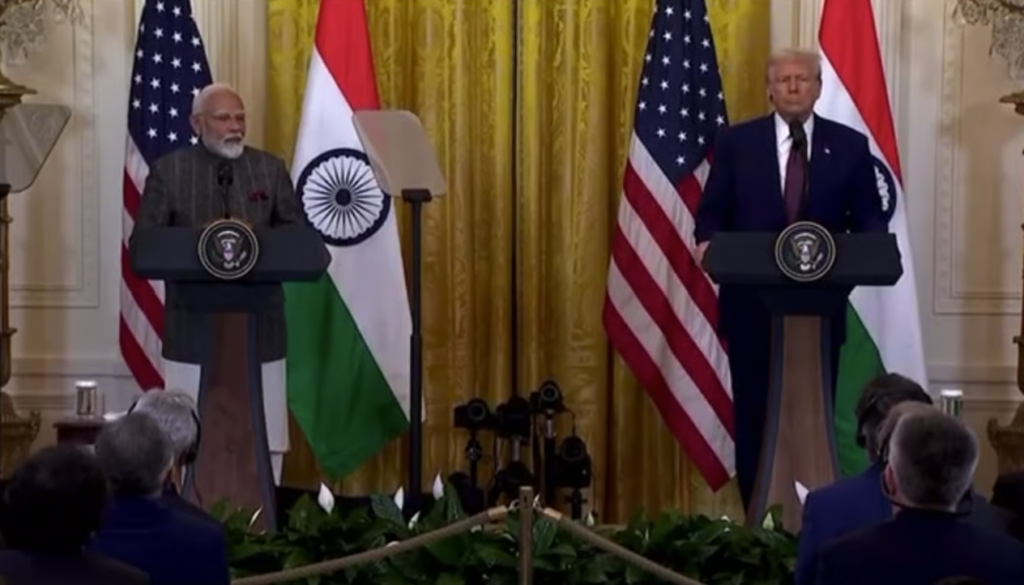
The last 24 hours have solidified a prevailing pattern: Washington is using trade, tariffs, and energy as instruments of strategic pressure; the mega-fusions of space, communications, and artificial intelligence are shaping a new technological-strategic complex ; the nuclear arms control architecture is entering a phase of dangerous decay; dictatorships are displaying their own repressive obscenity; and revisionist powers are exploiting the vacuum of Western presence in Latin America and the developing world. Donald Trump’s agreement with India turns access to the US market and tariff reductions into leverage to strangle Russian oil revenues; the SpaceX-xAI integration elevates geopolitical competition to the realm of orbits and algorithms; Moscow is unequivocally announcing its willingness to live in a world without verifiable nuclear limits; Tehran is mocking its victims and demonstrating the extent to which it fears that fear will cease to be effective; Beijing is redoubling its seductive offensive in Latin America; Washington is building a “shield of critical minerals” against China. and Caracas returns to the center of hemispheric diplomacy with an institutional shift of enormous depth and energetic resonance.[2][3][1]
II. KEY NEWS FROM THE LAST 24 HOURS
1. US-India: Lower tariffs in exchange for cutting off oxygen to Russian oil
Facts
Reuters confirms that the United States has agreed to reduce tariffs on imports from India from 25% to 18%, as part of an understanding that links trade, energy, and strategic alignment. In return, the government of Narendra Modi has committed to halting purchases of Russian oil and redirecting some of its imports toward US and potentially Venezuelan crude, with a complementary package of purchases of US energy, technology, agricultural products, and other goods valued at more than $500 billion over the medium term. India, the world’s third-largest importer of crude, had already been gradually reducing its purchases of Russian oil and is preparing to bring them below one million barrels per day, according to market sources cited by Reuters.[4][5][6][1]
Implications
- Energy geopolitics in its purest form. The Indian decision, if implemented substantially, erodes one of Moscow’s main financial lifelines since 2022: its ability to sell discounted crude in Asia to compensate for the closure of Western markets. This is not moralizing, but strategic accounting: less Russian volume to India means less foreign currency flowing into the Kremlin’s war and repression machine, reducing its margin for sustaining a prolonged war of attrition against Ukraine.[1][4]
- Trump unifies sanctions, trade, and energy into a single tool of pressure. The agreement reflects his method: the credible threat of raising tariffs (up to 50% in previous episodes) is transformed into a carrot when the partner agrees to align its geopolitical behavior with Washington’s priorities. It is not free trade; it is transactional negotiation based on the balance of power and the exploitation of the attractiveness of the US market.[7][8]
- Domino effect on global crude oil flows and energy diplomacy. The combination of increased US crude in India and the eventual influx of Venezuelan volumes will reshape routes, transport premiums, discounts, and, foreseeably, the relative position of OPEC+ vis-à-vis Washington. For Moscow, the loss of quota in India reinforces its dependence on China and other buyers willing to assume reputational and sanctions risks.[6][4][1]
Perspectives and scenarios
- Scenario A (likely): gradual reduction, negotiated with technical exceptions and a flexible timetable that allows Indian refineries to close existing contracts and reconfigure their crude mix without creating internal price tensions.[4][6]
- Scenario B (tense): If Russia responds with aggressive discounts or opaque triangulation via intermediaries, Washington will increase pressure through secondary sanctions, compliance checks and enhanced surveillance of maritime and financial flows.[7][4]
- Scenario C (strategic): Once the shift is consolidated, Europe would indirectly benefit from a reduction in Russian oil revenue and a Kremlin forced to negotiate from a weaker position, with less room to finance military adventures and destabilization operations.[3][1]
2. The great technological lever: SpaceX acquires xAI and an AI-space-communications complex is born
Facts
SpaceX has acquired xAI, the artificial intelligence company founded by Elon Musk and creator of the Grok model, in a deal that values the combined entity at around $1.25 trillion, the largest corporate acquisition in history. Reports from Bloomberg and Reuters, picked up by specialized media outlets, place SpaceX’s previous valuation at approximately $800 billion and xAI’s in the $230–$250 billion range, following a large Series E funding round. Musk’s stated thesis is to converge launch capabilities, satellite constellations (Starlink), data centers, and AI models into a single corporate powerhouse capable of operating, in part, from orbit.[9][10][11][2]
Implications
- A new “technological-strategic complex” is born. The combination of reusable rockets, mega-constellations of satellites, global communications networks, and large-scale AI models makes the new entity a central player not only economically, but also in national security, intelligence, and information control. The qualitative leap lies in the possibility of integrating near real-time observation, processing, and communication capabilities, with dual civilian and military applications.[11][2][9]
- Intensification of systemic competition with China and the technology giants. The SpaceX–xAI merger foreshadows a duel with the Sino-tech ecosystem, where Beijing is advancing the civil-military integration of space, AI, and telecommunications, while simultaneously putting pressure on other large American and European groups that lack their own aerospace platform. The risk for Europe, if it does not accelerate investment and joint projects, is being relegated to the role of a regulatory client, without the capacity to set technological standards or doctrines for their use.[2][11]
- Regulatory, security, and power concentration risks. The clearly dual nature of the infrastructure (civil-military) makes intense scrutiny by US authorities inevitable in terms of national security, competition, and data protection. The accumulation of critical capabilities—launchers, a global communications network, advanced computing, and generative AI—in a single group raises questions about state dependence on a private provider, conflicts of interest, and the need for contractual and regulatory safeguards.[9][2]
Perspectives and scenarios
- Scenario A (likely): The Musk ecosystem gains speed, capital, and integration capacity; Washington accepts the deal but imposes safeguards, compartmentalization clauses, and enhanced oversight on sensitive projects (defense, intelligence, critical infrastructure).[11][9]
- Scenario B (friction): Intense debate in Congress and regulatory agencies over concentration and systemic risks, with pressure to limit the dependence of the Pentagon and other agencies on an almost irreplaceable conglomerate.[9][11]
- Scenario C (systemic competition): China accelerates its own integration of constellations, computing and AI models, while Europe explores “technological sovereignty” projects that, without critical mass or real coordination, risk falling short.[2][11]
3. Ukraine: “Multi-layered” plan for a ceasefire with operational deterrence
Facts
According to reports from Reuters and the Financial Times, Kyiv has agreed with its Western allies on a tiered response plan to address potential Russian violations of a future ceasefire. The plan includes three levels: an initial response within 24 hours through diplomatic warnings and limited Ukrainian action; if violations persist, activation of a European and other partners’ “coalition of the willing” to support Ukraine with additional capabilities; and, in the event of a serious escalation, a third level with coordinated US involvement within 72 hours. Meetings are scheduled to take place in Abu Dhabi to finalize the terms, modalities, and rules of engagement.[12][3]
Implications
- Deterrence through mechanisms, not rhetoric. The relevant change is that the security of Ukraine and the containment of Russia no longer rely on generic declarations but are structured as an operational “if-then” system with defined timelines and stages. Moscow has historically exploited ambiguity and the lack of clear costs for violating agreements; this framework seeks to close that gap.[12]
- Europe appears, for the first time, as an explicit part of the military solution. The notion of a “coalition of the willing” refers to a group of European states prepared to assume additional risks—from air defense support and enhanced ISR capabilities to presence in verification or protection tasks—breaking the logic of indefinitely outsourcing security to Washington.[12]
- Tension between credibility and escalation control. For Russia, the formalized involvement of Western powers in guaranteeing the ceasefire will be unacceptable in terms of narrative and strategic calculation; it is likely to use it to justify its own rhetorical or tactical escalation. The fine line between “credible guarantee” and “risk of direct clash” becomes the heart of the problem.[3]
Perspectives and scenarios
- Scenario A (likely): The scheme is used as a framework for negotiating pressure; Russia tests it with “gray” violations, incidental incidents and electronic warfare, without crossing thresholds that would trigger the full activation of the coalition.[12]
- Scenario B (dangerous): serious incident between Russian forces and European units on support or verification tasks, suddenly raising the escalation threshold and testing allied cohesion.[3][12]
- Scenario C (desirable): The mere fact of having a credible, tiered mechanism reduces Russian incentives to default, promotes a less underhanded negotiation, and improves kyiv’s position at the table.[12]
4. Iran: a regime that mocks its dead and displays its panic
Facts
The Financial Times describes a wave of internal outrage following Iranian state media broadcasts that ridiculed victims of repression, with symbolic boycotts, protests, and social pressure forcing partial retractions. Reuters, citing internal sources, notes that there is a real fear within the regime that a limited US attack —for example, against infrastructure linked to proxies or military capabilities—could act as a psychological trigger for new mass protests, in a context of accumulated social discontent and the erosion of the deterrent effect of terror.[12]
Implications
- Public cruelty as a symptom of weakness, not strength. The organized scorn of the victims reveals that the theocratic-revolutionary leadership no longer relies on obedience based on conviction or on revolutionary legitimacy: it relies only on fear. When a regime needs to humiliate the dead in order to try to govern the living, it confesses that it has lost the respect of broad sectors of society.[12]
- Tehran perceives the combination of “external shock + internal rage” as an existential risk. The experience of previous waves of protest, amplified by social media and the diaspora, weighs heavily on the regime’s calculations; even a limited US military action could act as a catalyst for accumulated anger, calling into question the repressive capacity of the apparatus.[12]
- Proxies, regional blackmail, and the temptation to push forward. A regime that feels cornered will tend to activate its levers of pressure: allied militias in Iraq, Syria, and Lebanon; attacks or sabotage against energy infrastructure and shipping lanes; escalating rhetoric against Israel and the West. The West cannot afford another decade of looking the other way while the cost of inaction accumulates in the form of regional insecurity, proliferation, and erosion of credibility.[12]
Perspectives and scenarios
- Scenario A (likely): Tehran buys time through delaying diplomacy—tactical concessions, interminable negotiations—while perfecting mechanisms of selective repression and technological social control.[12]
- Scenario B (high risk): Regional escalation if the United States significantly strengthens its military presence or responds to proxy attacks; Iranian asymmetric response with indirect attacks, cyber operations and maritime pressure.[12]
- Scenario C (rupture): confluence of external shock, fissures in the elites and breaking of the wall of fear, leading to a reactivation of mass protests with a cascading effect, difficult to manage even with extreme repression.[12]
5. US launches Project Vault: strategic reserve of critical minerals
Facts
The Financial Times and Reuters report the launch of “Project Vault,” a US initiative with a budget of approximately $12 billion to create a strategic stockpile of critical minerals—rare earth elements, lithium, copper, and other essential inputs for the energy transition and defense—equivalent to roughly 60 days of industrial consumption in key sectors. The scheme is structured through a public-private consortium involving the US Export-Import Bank and major companies in the industrial, technology, and defense sectors, which will participate in financing, stockpile management, and procurement coordination.[12]
Implications
- Strategy where it really hurts: dependence on China in the critical minerals value chain. Beijing not only extracts, but also concentrates a very substantial part of the global refining and processing capacity for rare earths and other minerals, which has allowed it to use export restrictions as a political instrument. A strategic reserve does not eliminate structural dependence, but it significantly reduces immediate vulnerability to shocks or retaliation.[12]
- Defensive industrialization and competition for inputs. The energy transition (electric vehicles, grids, storage) and advanced military capabilities (sensors, electronics, weapons systems) compete for the same materials. Controlling stable access to critical minerals is now an essential component of national power, on par with energy or semiconductor technology.[12]
- Warning to Europe. If the European Union does not put together comparable instruments—purchasing consortia, coordinated strategic reserves, support for refining and recycling on European territory—it will remain exposed to “material blackouts” just as it tries to reindustrialize, decarbonize and strengthen its defense base.[12]
Perspectives and scenarios
- Scenario A (likely): The program stabilizes price volatility in specific crises and strengthens the bargaining power of US companies and authorities against dominant suppliers.[12]
- Scenario B (Chinese response): Beijing tightens export controls, uses selective licensing regimes to divide allies, and rewards or punishes companies based on their political alignment.[12]
- Scenario C (Atlantic): Window for a coordinated transatlantic consortium, with participation from Asian allies, combining financial muscle, refining capacity and standards of transparency and sustainability.[12]
6. China courts Uruguay: “multipolar world” and penetration in Latin America
Facts
Reuters reports on Xi Jinping’s remarks during his meeting with the Uruguayan president, in which the Chinese leader invoked an “equal and multipolar world” and presented the relationship with Uruguay as an example of “win-win” cooperation in Latin America. The visit is part of a long-standing campaign of Chinese economic diplomacy in the region, based on infrastructure investment, soft loans, preferential trade agreements, and purchases of strategic raw materials.[6]
Implications
- Chinese “multipolarity” is selective and asymmetrical. Beijing speaks of equality and mutual respect, but pursues relationships of structural dependence: captive markets for its companies, assured access to raw materials, political influence through indebtedness and participation in strategic sectors (ports, energy, telecommunications).[6]
- Latin America is returning to the center of systemic competition. Uruguay, with its institutional stability and its image as a relatively open and predictable economy, is a reputational trophy for China’s narrative as a “serious partner” in contrast to a West perceived as distant and moralizing. Each new investment, credit, or infrastructure agreement further reinforces Beijing’s footprint in a region historically linked to Europe and the United States.[6]
- Europe cannot limit itself to discourses on values. Without financial presence, infrastructure projects, attractive trade agreements and real technical support, the rhetoric about the “European model” loses credibility with governments that need tangible results.[6]
Perspectives and scenarios
- Scenario A (likely): China deepens trade and investment agreements in Uruguay, framing them in a “win-win” narrative and respecting sovereignty, while consolidating positions in strategic sectors.[6]
- Scenario B (tension): The United States reacts with instruments of trade pressure, conditioning access to technologies or alternative incentives to counter the Chinese presence.[6]
- Scenario C (desirable): A coordinated Western response—EU, US and democratic partners—that combines competitive financing, technology and transparency standards, offering Montevideo and other partners a real alternative to dependence on Beijing.[6]
7. Russia announces a “world without nuclear limits” after the end of New START
Facts
Russian Deputy Foreign Minister Sergei Ryabkov stated that Russia is prepared to live in a world without limits on nuclear arms control after the New START treaty expires on February 5, in the absence of a last-minute agreement with Washington. The treaty, signed in 2010 by Barack Obama and Dmitry Medvedev, established verifiable limits on the strategic arsenals of the United States and Russia and, above all, inspection and transparency mechanisms that reduced mutual uncertainty.[13][14][3]
Implications
- Opening of a strategic black hole. Without verifiable limits or regular inspection channels, uncertainty, mistrust, and the temptation to overreact to any indication of deployment or doctrinal modification increase. The history of the Cold War demonstrates that periods without arms control frameworks are conducive to arms races and crises of perception.[14][3]
- Destabilization as a strategy. Putin doesn’t need to fire a single missile to increase the cost of Western security: it is enough to undermine the frameworks of predictability and force the US and its allies to invest more in nuclear capabilities, missile defense, and complementary systems. The opportunity cost for open economies and democracies multiplies, while the Russian regime can justify its own militarization internally.[3]
- Europe must translate “deterrence” into resources, industry, and resilience. A world without New START forces NATO to review doctrines, capabilities, and readiness levels, and Europeans to accept that Atlanticism is not a sentiment, but an insurance policy paid for with budget, production, and political will.[14][3]
Perspectives and scenarios
- Scenario A (likely): absence of a formal treaty, accompanied by occasional signs of unilateral self-restraint or non-binding “minimal understandings”, instrumentalized for propaganda purposes by Moscow.[14][3]
- Scenario B (worst): open race of deployments, accelerated modernization of vectors, more aggressive doctrines and experimentation with emerging systems, raising the risk of incidents or miscalculations.[14][3]
- Scenario C (difficult but necessary): search for a minimum framework of transparency, notification of exercises and time limits to certain systems, perhaps partially or regionally, as a bridge to a renewed control architecture.[3][14]
8. Türkiye and Saudi Arabia: Erdogan in Riyadh, economic pragmatism and regional realignment
Facts
According to The Economist and regional media, Recep Tayyip Erdogan is traveling to Riyadh to meet with Crown Prince Mohammed bin Salman, with an agenda focused on trade, investment, defense cooperation, and political coordination regarding key regional theaters of conflict (Syria, Gaza, the Red Sea). The visit fits within Turkey’s strategy to attract foreign capital to alleviate internal imbalances and within Saudi Arabia’s agenda to diversify alliances and strengthen its position as a pole of relative stability in the Middle East.[12]
Implications
- Hard pragmatism in the Middle East. Ankara and Riyadh are leaving behind phases of acute rivalry (the Khashoggi case, disagreements over political Islam) to prioritize economic interests, macroeconomic stability, and large-scale projects. For Erdogan, Saudi capital is oxygen; for MBS, Turkey is an actor whose position regarding Syria, the Muslim Brotherhood, and the Eastern Mediterranean matters for the regional architecture.[12]
- Impact on Syria, Gaza, and the Red Sea. Coordination (or the lack thereof) between Turkey and Saudi Arabia can affect the dynamics of proxy wars, the balance between Islamist and nationalist blocs, and the management of energy and trade routes. Riyadh aims to limit volatility, while Ankara seeks to maximize its influence without relinquishing its ideological and security networks.[12]
- Europe faces an uncomfortable but indispensable partner. Turkey is key to managing migration flows, the security of NATO’s southeastern flank, energy, and crisis containment in its neighborhood; but its foreign policy is often ambivalent and its internal drift worrying. Treating it solely with moralizing or, conversely, with blank checks will be equally counterproductive.[12]
Perspectives and scenarios
- Scenario A (likely): realization of economic agreements, investments and limited forms of defensive cooperation, with messages of stability and coordination towards external partners.[12]
- Scenario B (friction): reopening of divergences over political Islam, networks of influence and relations with Qatar, Iran and other actors, which would limit the depth of the alliance.[12]
- Scenario C (opportunity): If Ankara moderates certain positions and Riyadh maintains its gradual reform agenda, the relationship may contribute to a certain “pacification” of some theaters; if not, it will add noise to an already saturated environment.[12]
9. Venezuela: Delcy Rodríguez meets with the US envoy and opens a diplomatic channel with an energy dimension
Facts
Reuters and Le Monde report a meeting at Miraflores Palace between interim president Delcy Rodríguez and US envoy Laura Dogu, as part of a process to gradually restore diplomatic relations between Washington and Caracas. According to the same sources, a three-phase roadmap attributed to Secretary of State Marco Rubio (stabilization, recovery and reconciliation, and transition) is being considered, linking gradual sanctions relief to verifiable reforms and concrete commitments regarding democracy, human rights, and the fight against organized crime. The energy dimension is central: the US seeks to rebalance its supply mix, offer alternatives to Russia, and manage the regional effects of the Venezuelan crisis, especially in terms of migration and security.[15][4][12]
Implications
- The Venezuelan case has returned to the category of hard geopolitics. Beyond the humanitarian tragedy, Venezuela is today a nexus where energy issues, transnational criminal networks, Russian, Chinese, and Iranian presence, and the stability of the American continent intersect. The reactivation of dialogue with Washington alters the calculations of Havana, Managua, and other allies of Chavismo.[15][4]
- An indirect message to other dictatorships in the region. The signal is twofold: on the one hand, that sustained pressure has costs; on the other, that a negotiated solution exists if real reforms are accepted and the mafia-like component of the regime is deactivated (even if only partially). The risk, for Washington and its allies, is confusing cosmetic gestures with structural changes.[12]
- Danger of “laundering” mafia structures and a simulated transition. The temptation to quickly close an agreement for energy or migration reasons can lead to whitewashing criminal networks entrenched in the state apparatus and accepting a “showcase democratization” that perpetuates the same de facto powers behind the scenes.[12]
Perspectives and scenarios
- Scenario A (likely): gradual progress, conditioned on verifiable steps (release of prisoners, minimal electoral reforms, controlled opening of political spaces), with adjustments in sanctions linked to compliance.[12]
- Scenario B (risk): fractures within the regime, resistance from narco-criminal sectors and sabotage of the roadmap, generating episodes of violence and abrupt setbacks.[12]
- Scenario C (desirable): negotiated transition with guarantees, progressive reinstitutionalization and real dismantling of the narco-repressive network, with coordinated regional support.[12]
10. US: The House seeks to restore federal funding and avoid gridlock
Facts
Reuters reports that the US House of Representatives is set to vote on an agreement to restore federal government funding, following a new episode of budget tension that had brought the country closer to a partial government shutdown. The compromise, if successful, would offer temporary relief and prevent the disruption of essential services and programs at a time when the Trump administration needs fiscal and political leeway to sustain its foreign policy agenda.[12]
Implications
- Domestic politics as a vector of geopolitics. Every budget crisis, every threat of “shutdown,” is interpreted in Moscow, Beijing, or Tehran as an indicator of systemic dysfunction in the leading Western democracy. The United States’ ability to lead coalitions, uphold security commitments, and project stability is eroded by the perception of recurring domestic chaos.[12]
- Strategic credibility and institutional normality. Deterrence is not only exercised with aircraft carriers and missile systems, but also with the image of a functioning state that fulfills its commitments and is not regularly paralyzed by partisan gridlock. A Washington consumed by internal crises conveys fragility and offers opportunities to revisionist actors.[12]
- Trump’s transactional approach needs a minimum of stability. In order to use tariffs, sanctions, trade incentives, and military pressure as part of a coherent foreign policy, the White House requires a Congress capable of passing reasonable budgets and avoiding the policy of the permanent cliff.[8][1]
Perspectives and scenarios
- Scenario A (likely): approval of the agreement and temporary relief, with mutual recriminations but recognition that a shutdown would be too politically costly.[12]
- Scenario B (repetition): reappearance of the same pattern of almost cyclical crises, fueled by extreme polarization and by media and electoral incentives for permanent confrontation.[12]
- Scenario C (better): a more structural pact that reduces the frequency of budgetary pulses and improves the capacity for planning foreign and defense policy.[12]
III. MEDIA RACK (HIGHLY CONCENTRATED VERSION)
– Reuters, AP, AFP and DPA provide the factual backbone of the day: US-India agreement, dynamics of the ceasefire in Ukraine, Iran, New START and Venezuela; the British agency dominates the hard news agenda with a focus on verifiable data and key quotes.[1][4][3]
– The Financial Times emphasizes the intersection between economics and security, especially in critical minerals, Ukraine and the power architecture derived from the SpaceX–xAI megafusion.[10][2]
– The Economist frames India, SpaceX–xAI and Erdogan’s visit to Riyadh as pieces of the same epochal transition, where power is measured in supply chains, technological capabilities and flexible alliances.[12]
– Le Monde and other European media outlets emphasize the Venezuelan shift, the diplomatic dimension of the rapprochement with Washington, and the regional interpretation within the EU.[12]
– The Straits Times and other Asian newspapers report the Russian warning about the end of New START, a sign that the erosion of nuclear arms control is now perceived as a global problem, not just a Euro-Atlantic one.[13][3]
IV. RISK TRAFFIC LIGHT
| Risk | Level | Triggers | 7–14 day indicators | Recommended countermeasures
|———————————————————-|———–|——————————————————————————————–|————————————
| End of New START and nuclear escalation | 🔴 Stop | Expiration of the treaty without a substitute and Russian rhetoric on “no limits” | Russian doctrinal statements; movements of strategic forces; absence of bilateral technical contacts [3][14] | Reopen a minimum US-Russia technical channel; strengthen NATO deterrence; coordinate with Asian allies on messages and positions [3] |
| Iran: Reactivation of protests + asymmetric response | 🔴 High | Convergence of external pressure and erosion of internal fear | New mass arrests; internet blackouts; increased proxy attacks in the region [12] | Targeted pressure on repressive apparatuses; reinforced maritime protection; smart support for civil society and exiles [12] |
| Ukraine: Ceasefire without credible deterrence | 🟠 Medium-high | “Gray” violations by Russia | Border incidents; electronic warfare; limited attacks on critical infrastructure [12] | Pre-agreed rules of response; ISR support and air defense; clear communication of response thresholds [12] |
| Trade war and tariff coercion | 🟠 Medium-high | Use of tariffs as a tool of geopolitical pressure | Partner reactions; WTO disputes; mirror measures by major economies [1][6] | Diversification agreements; anti-coercion clauses; strengthening of alternative supply chains [6] |
| China and its expansion in Latin America | 🟠 Medium-high | Deepening of investments with structural dependency effects | New MoUs; loans in strategic sectors; entries in ports, energy and telecommunications [6] | Coordinated and competitive Western offer; support for critical infrastructure; demand for contractual transparency [6] |
| Venezuela: Incomplete transition / Captured by criminal networks | 🟡 Medium | Internal sabotage or opaque agreements that preserve mafia structures | Pattern of releases and reprisals; quality of reforms; effective control of security forces [12] | Strict conditionality on sanctions; regional support for democratic institutions; robust anti-narco cooperation [12] |
V. EDITORIAL COMMENTARY
The day leaves an uncomfortable truth for Europe: the real world doesn’t wait for self-doubting powers. While the EU remains trapped in introspective debates, Washington has demonstrated—with the agreement with India—that a seemingly technical matter, such as tariff reductions, can be transformed into a first-rate instrument for stifling Russia’s war revenue. The method—the systematic use of tariffs as a persuasive hammer—can be debated, but it would be willful blindness to deny the strategic potential of the move: if the flow of Russian oil to India is significantly reduced, the Kremlin’s coffers shrink, and with them, its capacity to sustain a protracted war in the heart of Europe.[4][1][3][6]
In parallel, the SpaceX–xAI mega-merger has made it abundantly clear that 21st-century geopolitics is no longer played out solely in chancelleries, general staffs, or the negotiating tables of Vienna. It is played out in satellite constellations, global communications infrastructures, continent-scale data centers, artificial intelligence models capable of processing and shaping public discourse, and supply chains of critical minerals without which there can be neither energy transition nor modern defense. Whoever controls this combination of orbits, cables, chips, and algorithms will not only sell services or technology: they will have the capacity for structural influence over the security, the economy, and the narrative of open societies. The risk for Europe is evident: without ambitious and coordinated projects in these areas, it will be reduced to a hybrid role of demanding regulator and captive customer of other countries’ technological-strategic complexes.[10][11][2][9]
At the same time, Ryabkov’s statement about a “world without nuclear limits” after the end of New START should ring in European ears for what it is: a strategic alarm bell, not media hype. For decades, the arms control architecture—imperfect, fragile, but real—has provided a foundation of predictability upon which nuclear stability between the two major nuclear powers rested. If that foundation cracks completely and the verification mechanisms disappear, the relationship between the United States and Russia slides onto much more slippery ground, where the temptation to overreact, doctrinal opacity, and miscalculations combine into a dangerous cocktail. For a Europe that, to a large extent, lives under the umbrella of American extended deterrence, to think that this debate is irrelevant or purely technical would be a historical irresponsibility.[13][14][3]
The case of Iran adds another dimension, moral and political, to this landscape of risks. A regime that publicly mocks its own dead, that turns the victims of repression into objects of televised ridicule, is not displaying strength; it is displaying fear. Fear that terror will cease to be effective, that younger generations will lose respect as loyalty becomes mere resignation. Precisely for this reason, the Islamic Republic becomes more dangerous: internally, because it intensifies selective repression and social control; externally, because it more frequently resorts to its regional proxies, sabotages infrastructure, strains maritime traffic, and uses asymmetric violence as a bargaining chip. This combination of internal fragility and external aggression will be one of the most delicate axes of instability in the coming years.[12]
All of this is happening while China continues to patiently weave its network of influence in Latin America, from major countries to seemingly peripheral partners like Uruguay, and while Venezuela is once again becoming a central piece on the hemispheric chessboard as a channel for structured dialogue with Washington reopens. Beijing is offering credit, infrastructure, and a discourse of sovereign respect; Caracas is seeking a lifeline that combines sanctions relief, the maintenance of internal power, and access to Western energy markets. If Europe and the United States do not formulate coordinated responses that combine principles with realism, investment with demands, and firmness with openness to negotiated transitions, they will see historically aligned regions slide into orbits of dependency that are difficult to reverse.[15][4][6][12]
The conclusion is as simple in its formulation as it is demanding in its consequences: if Europe wants to remain more than a stage on which others play, it must behave like a mature strategic actor. This implies rearming intelligently—not only in terms of spending, but also of industrial, technological, and doctrinal capabilities; securing access to critical minerals and enabling technologies through proactive policies and robust alliances; and engaging with Washington from a position of transatlantic loyalty, yes, but also with seriousness: an alliance of equals, not a relationship between protector and resigned protectee. The world has become harsher, more competitive, and less forgiving of weakness; in this context, tepidness is not neutrality, but an early form of surrender.[16][17][18][3]